Colorado Revocation of Statutory Power of Attorney
Overview of this form
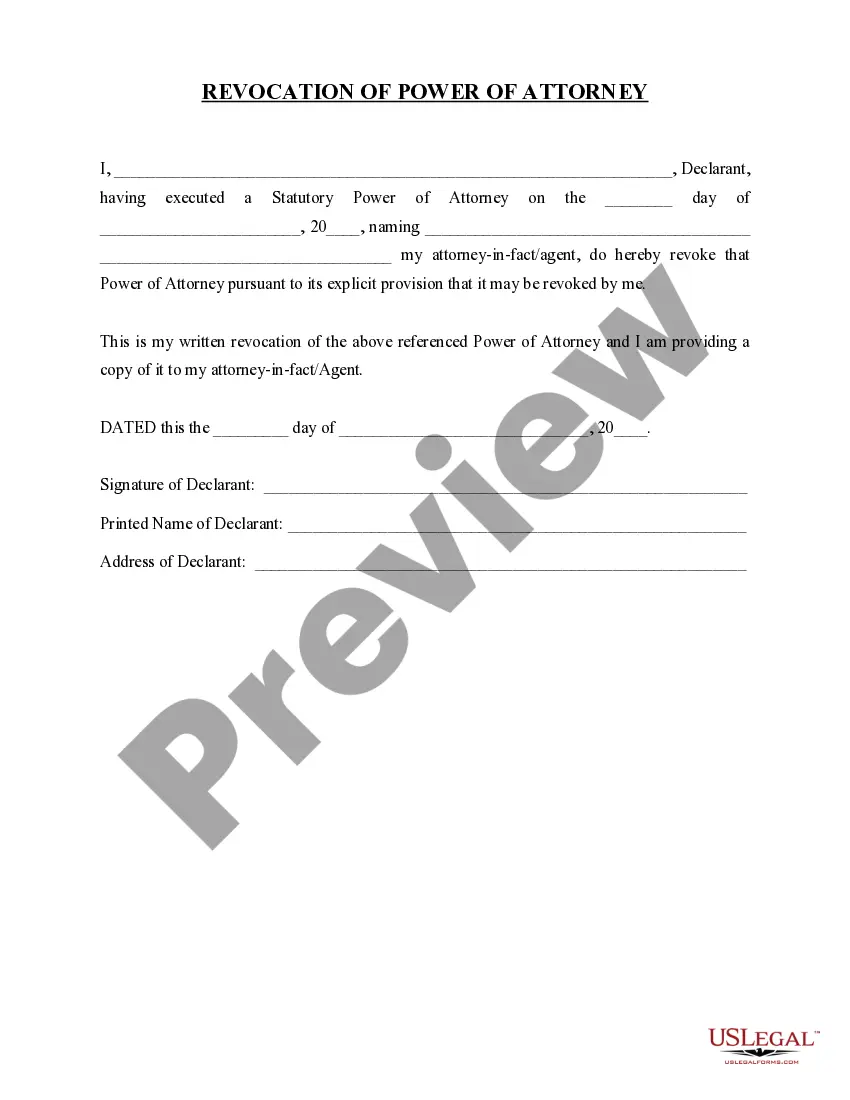
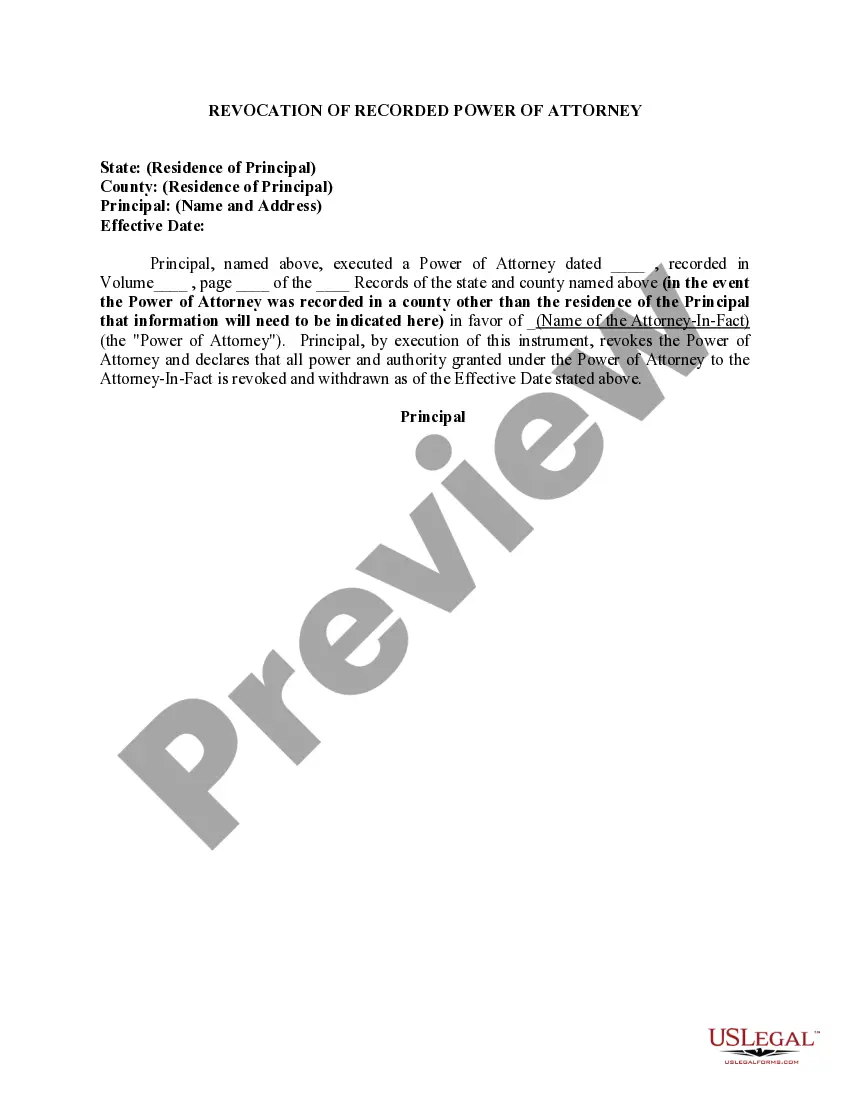
The Revocation of Statutory Power of Attorney is a legal document used to formally revoke a previously granted power of attorney. This form nullifies the authority given to an agent, as specified in Form CO-P010, whether it is general, durable, or limited. It serves to inform the agent that their powers have been terminated and provides protection to the declarant's interests by ensuring that no further actions can be taken by the agent on their behalf.
Key components of this form
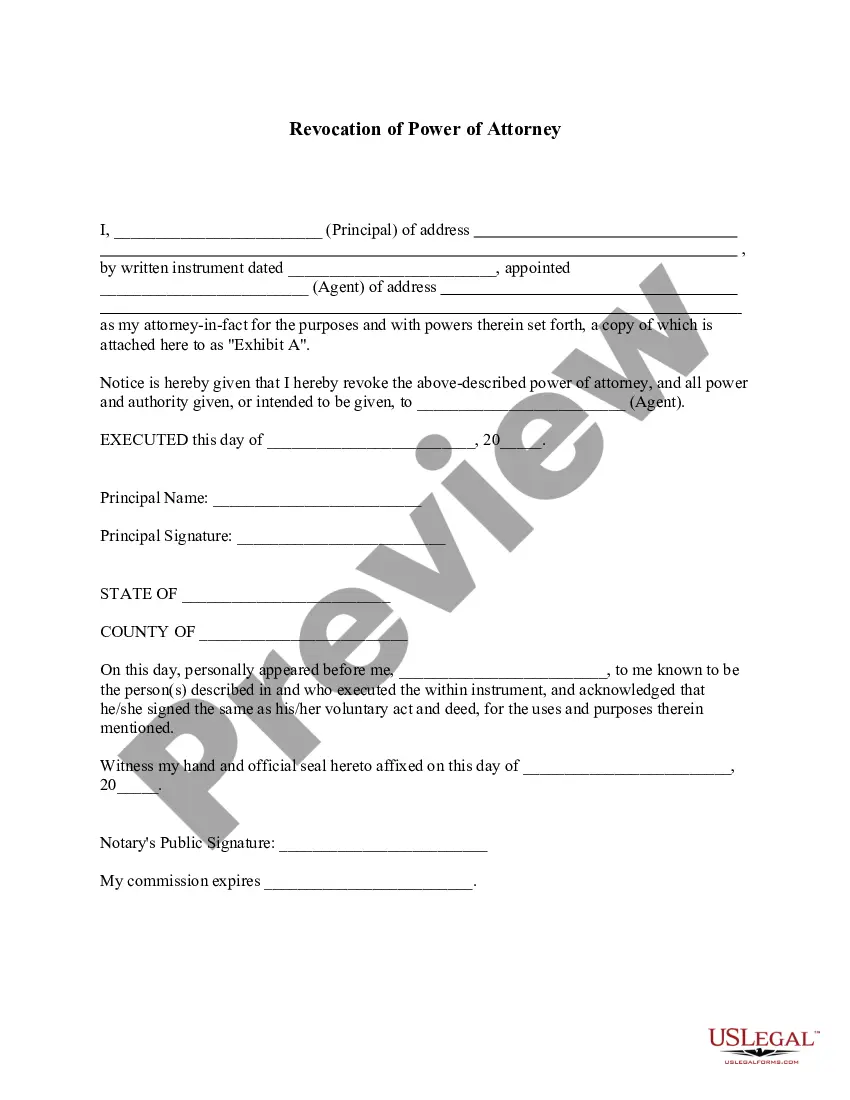
- Declaration by the declarant to revoke the previous power of attorney.
- Details of the original Statutory Power of Attorney, including date and names involved.
- Confirmation that the revocation is in accordance with the provisions of the original form.
- Date of the revocation.
- Signature of the declarant to validate the revocation.
- Printed name and address of the declarant for identification.
Situations where this form applies
This form should be used when you wish to revoke a previously granted power of attorney, whether due to a change in circumstances, loss of trust in the agent, or the completion of the task for which the power was initially granted. By executing this form, you ensure there are no misunderstandings regarding the authority of your former agent.
Who can use this document
- Individuals who have previously established a Statutory Power of Attorney.
- Persons who wish to terminate the authority of their agent for any reason.
- Individuals seeking to formalize the revocation for legal and financial clarity.
Steps to complete this form
- Identify and enter your name as the declarant in the designated area.
- Provide the date when the original power of attorney was executed.
- Fill in the name of the agent you are revoking the authority from.
- Write the date of the revocation at the bottom of the document.
- Sign the document to make the revocation effective.
- Include your printed name and address for verification purposes.
Is notarization required?
To make this form legally binding, it must be notarized. Our online notarization service, powered by Notarize, lets you verify and sign documents remotely through an encrypted video session.
Get your form ready online
Our built-in tools help you complete, sign, share, and store your documents in one place.
Make edits, fill in missing information, and update formatting in US Legal Forms—just like you would in MS Word.
Download a copy, print it, send it by email, or mail it via USPS—whatever works best for your next step.
Sign and collect signatures with our SignNow integration. Send to multiple recipients, set reminders, and more. Go Premium to unlock E-Sign.
If this form requires notarization, complete it online through a secure video call—no need to meet a notary in person or wait for an appointment.
We protect your documents and personal data by following strict security and privacy standards.

Make edits, fill in missing information, and update formatting in US Legal Forms—just like you would in MS Word.

Download a copy, print it, send it by email, or mail it via USPS—whatever works best for your next step.

Sign and collect signatures with our SignNow integration. Send to multiple recipients, set reminders, and more. Go Premium to unlock E-Sign.

If this form requires notarization, complete it online through a secure video call—no need to meet a notary in person or wait for an appointment.

We protect your documents and personal data by following strict security and privacy standards.
Typical mistakes to avoid
- Not signing the revocation form, which can render it invalid.
- Failing to provide the original date of the power of attorney, making it unclear which authority is being revoked.
- Neglecting to deliver a copy of the revocation to the agent.
Advantages of online completion
- Convenience of immediate access and download from US Legal Forms.
- Editability to customize the form to fit your specific needs.
- Reliability, knowing the forms are created and reviewed by licensed attorneys.
Looking for another form?
Form popularity
FAQ
To write a revocation, begin with a clear statement indicating your intention to revoke the power of attorney. Include your name, the agent's name, and details about the original power of attorney. Be sure to specify that the revocation aligns with the Colorado Revocation of Statutory Power of Attorney provisions. After drafting the document, sign it and share copies with your agent and any relevant parties to ensure everyone is informed of the change.
A revocation clause typically states that any prior powers of attorney are no longer in effect. For example, it might read, 'This document serves as the revocation of all previous powers of attorney issued by me, effective immediately.' Including such a clause in your revocation document is crucial for reinforcing your intent under Colorado Revocation of Statutory Power of Attorney. This clarity ensures that no conflicting authority exists, thereby protecting your legal standing.
The revocation of the statutory power of attorney was executed according to Colorado law, ensuring that the previous agent can no longer act on behalf of the principal. When you need to withdraw your authority, a clear sentence indicating the revocation is vital for legal documentation. This clarity helps prevent misunderstandings and protects your rights. Consider documenting this event in accordance with Colorado Revocation of Statutory Power of Attorney guidelines.
An example of a revocation is when a person who granted someone else the power of attorney decides to cancel that authority. For instance, if you initially appointed a family member to manage your finances, you can execute a revocation to terminate that power. This is particularly relevant in the context of Colorado Revocation of Statutory Power of Attorney, as it ensures that any decisions made after the revocation are valid and in line with your current wishes. Always inform your agent and any relevant institutions about this change.
A letter of revocation is a formal document that officially cancels a previously granted power of attorney. In the context of Colorado Revocation of Statutory Power of Attorney, this letter notifies relevant parties that the authority given to an agent is no longer valid. You may use this letter to prevent an agent from acting on your behalf, ensuring your interests are protected. It's essential to deliver this letter properly to avoid any confusion.
In many cases, a family member cannot revoke a power of attorney online unless they have been explicitly granted that authority through the legal document itself. While some forms of revocation can be processed electronically, the typical procedure involves executing a formal revocation document. UsLegalForms provides resources and templates to help navigate the revocation process easily, ensuring that the Colorado Revocation of Statutory Power of Attorney is carried out effectively.
Yes, creating a new power of attorney generally revokes any prior powers of attorney, as long as the new document specifies that intention. This is a crucial part of ensuring that your latest wishes are honored. Being familiar with the Colorado Revocation of Statutory Power of Attorney process will help you manage your legal documents effectively.
A power of attorney can be revoked under various circumstances, such as when the principal regains capacity or decides to make a change in their representation. Additionally, you can revoke the document by creating a new power of attorney that explicitly states this revocation. Keeping the Colorado Revocation of Statutory Power of Attorney guidelines in mind ensures that your changes are acknowledged legally.
Certain critical decisions cannot be made by a legal power of attorney, such as making healthcare decisions if a separate medical power of attorney is not in place, altering someone's will, or executing a divorce on behalf of another person. These limitations help protect individual choices and rights. It's important to be aware of these restrictions, especially when considering any Colorado Revocation of Statutory Power of Attorney.
A statutory power of attorney in Colorado is a legal document that allows a person to appoint someone else to manage their financial or legal matters. This arrangement gives your appointed agent the authority to make decisions on your behalf, which can be very beneficial. Understanding the Colorado Revocation of Statutory Power of Attorney is key for anyone considering this option, as it explains how you can withdraw that authority when necessary.