Colorado General Warranty Deed from a Trust to a Trust
About this form
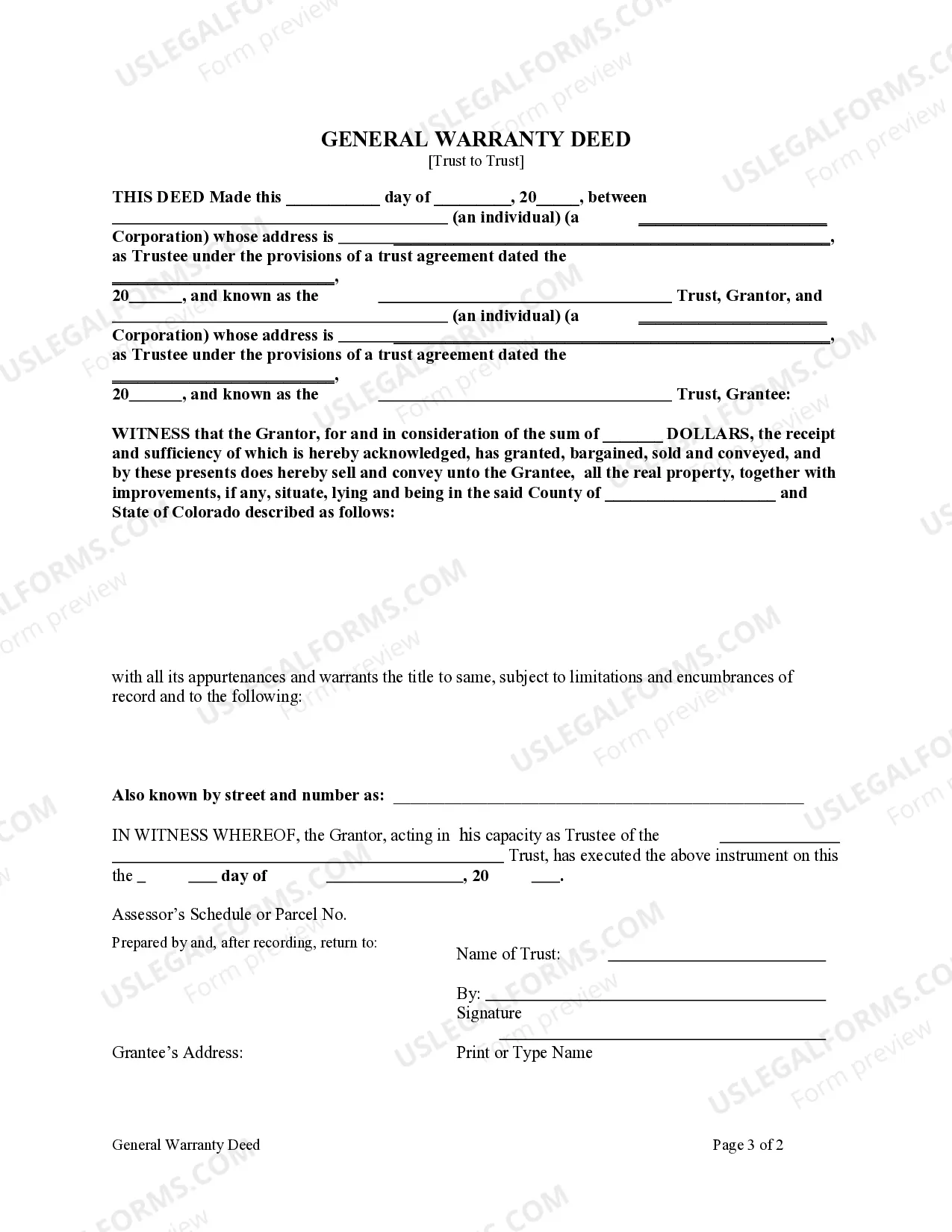
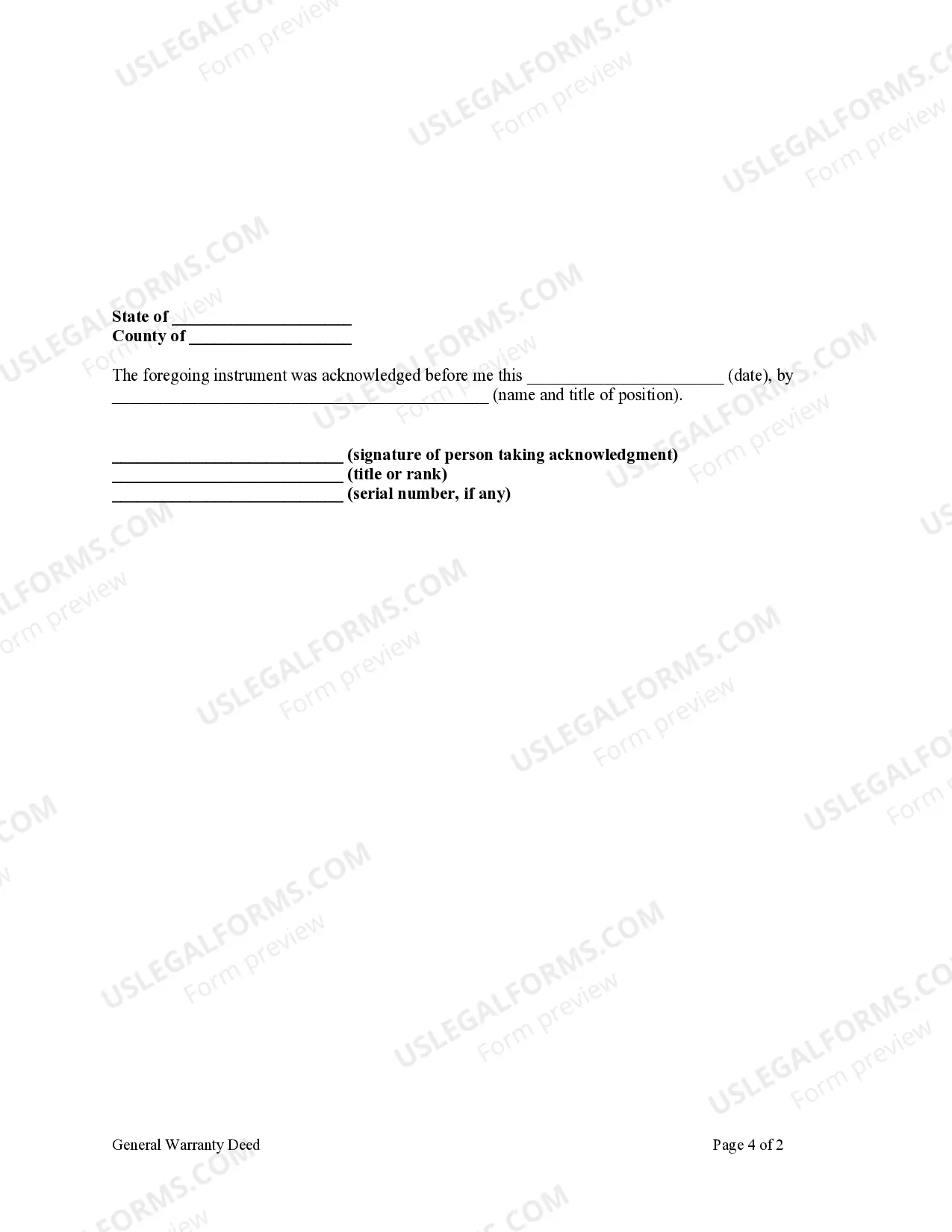
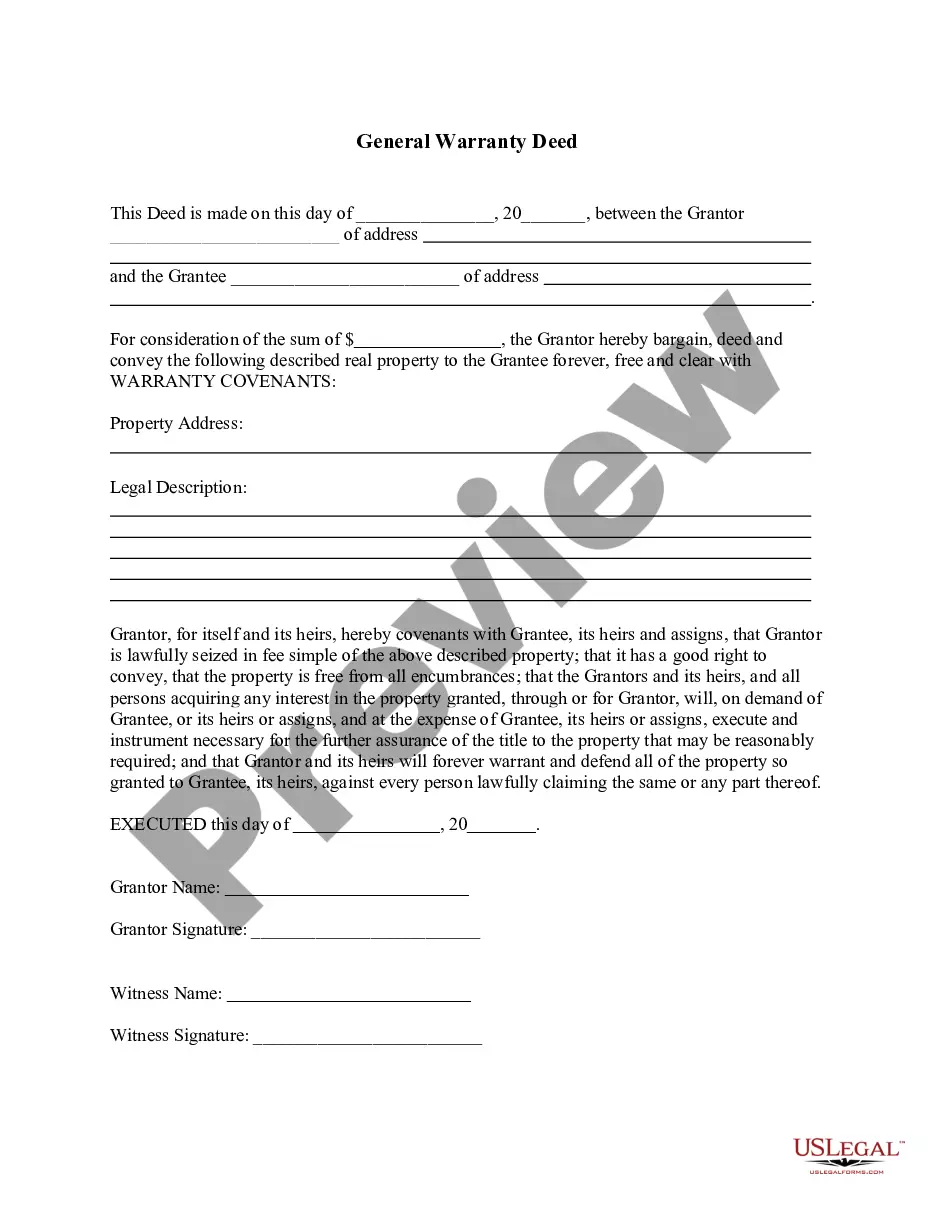
The General Warranty Deed from a Trust to a Trust is a legal document that facilitates the transfer of property ownership between two trusts. It ensures that the Grantor, a trust, conveys the property to the Grantee, also a trust, while providing a guarantee against any potential claims to the property. This deed is particularly valuable because it offers comprehensive warranty assurances, distinguishing it from other types of deeds that may have limited protections.
Key parts of this document
- Identification of the Grantor (the trust transferring the property)
- Identification of the Grantee (the trust receiving the property)
- Description of the property being transferred
- Warranties provided by the Grantor regarding clear title
- Signatures of authorized representatives of both trusts



When to use this document
This form is used when a trust is transferring property to another trust. Common scenarios include estate planning, refinancing processes, or when the trust aims to consolidate assets. It's ideal for ensuring legal assurance and protection against claims on the property being transferred, making it a reliable choice for inter-trust transactions.
Who can use this document
- Trustees of an existing trust looking to transfer property to another trust
- Individuals managing family trusts as part of estate planning
- Estate administrators coordinating trust-to-trust property transfers
Completing this form step by step
- Identify and enter the names of the Grantor and Grantee trusts.
- Clearly describe the property being transferred, including legal descriptions.
- Review any warranties being offered by the Grantor regarding the property title.
- Have the authorized representatives of both trusts sign the document.
- Ensure the date of the transaction is recorded accurately.
Is notarization required?
This form does not typically require notarization unless specified by local law. However, having it notarized can add an additional layer of authenticity and may be beneficial in specific situations.
Get your form ready online
Our built-in tools help you complete, sign, share, and store your documents in one place.
Make edits, fill in missing information, and update formatting in US Legal Forms—just like you would in MS Word.
Download a copy, print it, send it by email, or mail it via USPS—whatever works best for your next step.
Sign and collect signatures with our SignNow integration. Send to multiple recipients, set reminders, and more. Go Premium to unlock E-Sign.
If this form requires notarization, complete it online through a secure video call—no need to meet a notary in person or wait for an appointment.
We protect your documents and personal data by following strict security and privacy standards.

Make edits, fill in missing information, and update formatting in US Legal Forms—just like you would in MS Word.

Download a copy, print it, send it by email, or mail it via USPS—whatever works best for your next step.

Sign and collect signatures with our SignNow integration. Send to multiple recipients, set reminders, and more. Go Premium to unlock E-Sign.

If this form requires notarization, complete it online through a secure video call—no need to meet a notary in person or wait for an appointment.

We protect your documents and personal data by following strict security and privacy standards.
Common mistakes to avoid
- Failing to include complete descriptions of the property.
- Missing signatures from required representatives of the trusts.
- Not verifying that the trusts have the authority to transact.
Benefits of using this form online
- Convenient access to the form 24/7 without needing to visit a physical location.
- Edit and customize the form directly on your computer for added flexibility.
- Forms are prepared by licensed attorneys, ensuring reliability and legal compliance.
Looking for another form?



Form popularity
FAQ
To transfer assets into a trust, begin by identifying the assets you wish to include, whether real estate, bank accounts, or investments. Prepare the necessary documents, typically a Colorado General Warranty Deed from a Trust to a Trust for real estate. For other assets, you may need different forms, such as assignment documents for personal property. It’s often helpful to consult with professionals through platforms like uslegalforms to ensure a smooth transfer.
Transferring property into a trust in Colorado involves preparing a Colorado General Warranty Deed from a Trust to a Trust. Start by creating the trust document, which outlines the terms of the trust and names the trustee. Next, execute the warranty deed by signing it, and then file it with the county clerk and recorder's office. This process ensures that the property is held within the trust, providing benefits such as asset protection and easy management.
When comparing a quitclaim deed and a trust, many find that a trust offers more robust protections and a clearer transfer of ownership. A quitclaim deed simply relinquishes any interest in a property without warranties, while a trust allows for comprehensive management and distribution of assets. For those considering a Colorado General Warranty Deed from a Trust to a Trust, using a trust often proves to be the more secure and effective option.
Typically, a warranty deed is created by the property owner or their legal representative. This may include an attorney or a trusted advisor who understands the property transfer process. In cases involving a Colorado General Warranty Deed from a Trust to a Trust, a trustee ensures that the document accurately reflects the intentions of the trust and its beneficiaries.
To release a Deed of Trust in Colorado, the beneficiary must complete a Release of Deed of Trust form, which must then be recorded at the county clerk's office. This process officially removes the lien from the property, indicating that the debt secured by the deed has been satisfied. If you're transitioning to a Colorado General Warranty Deed from a Trust to a Trust, it is crucial to complete this step to ensure a smooth property transfer.
Typically, a warranty deed can be issued by the property owner or a trustee acting on behalf of a trust. This means that anyone with the legal authority to sell or transfer the property can issue a Colorado General Warranty Deed from a Trust to a Trust. It is essential to ensure that the issuer has the appropriate rights to make such transfers.
Yes, a quit claim deed can be used to transfer property from a trust, but it offers less protection than a warranty deed. With a quit claim deed, the transferor conveys their interests without guaranteeing that the title is clear. Therefore, when using a Colorado General Warranty Deed from a Trust to a Trust, you ensure more security and a clear title transfer.
A trustees warranty deed is a legal document that allows a trustee to transfer property held in a trust. This deed assures the buyer that the title is clear and that the trustee has the authority to make the transfer. If you are working with a Colorado General Warranty Deed from a Trust to a Trust, this deed provides additional protection and assurance to the recipient about the ownership rights.
Yes, a warranty deed serves as proof of ownership for your property. It provides a legal document detailing the transfer of property and guarantees that the title is clear of any encumbrances. The Colorado General Warranty Deed from a Trust to a Trust offers additional assurance concerning the title's integrity, making it more reliable. Always ensure your warranty deed is recorded with the local authority to solidify your ownership rights.
To get a new warranty deed, you typically need to complete a new deed form and have it signed in front of a notary. The new warranty deed should be recorded with the local county clerk and recorder's office. For transactions involving trust ownership, it’s crucial to ensure the deed reflects the correct title format, such as the Colorado General Warranty Deed from a Trust to a Trust, which you can facilitate through platforms like US Legal Forms.