Colorado Amendment to Prenuptial or Premarital Agreement
Overview of this form
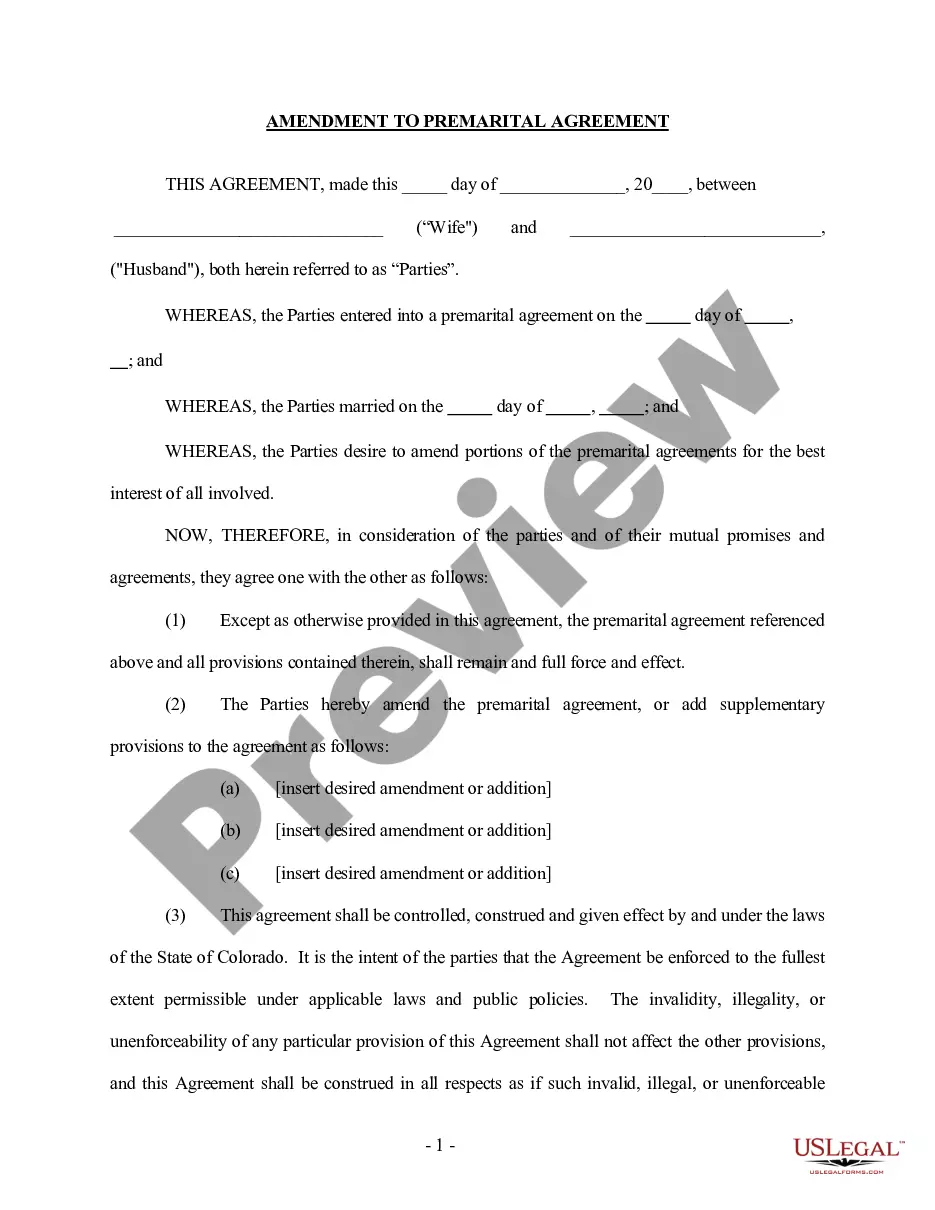
The Amendment to Prenuptial or Premarital Agreement is a legal document specifically designed for couples in Colorado who wish to modify or add provisions to an existing premarital agreement. Unlike the original agreement, this amendment allows both parties to clarify or change specific terms while keeping the original conditions intact. This form is essential in ensuring both parties are in agreement about any changes and that these modifications are legally recognized.
Main sections of this form
- Identification of the parties involved (Wife and Husband).
- Statement explaining the intent to amend the existing premarital agreement.
- A section to specify the desired amendments or additions.
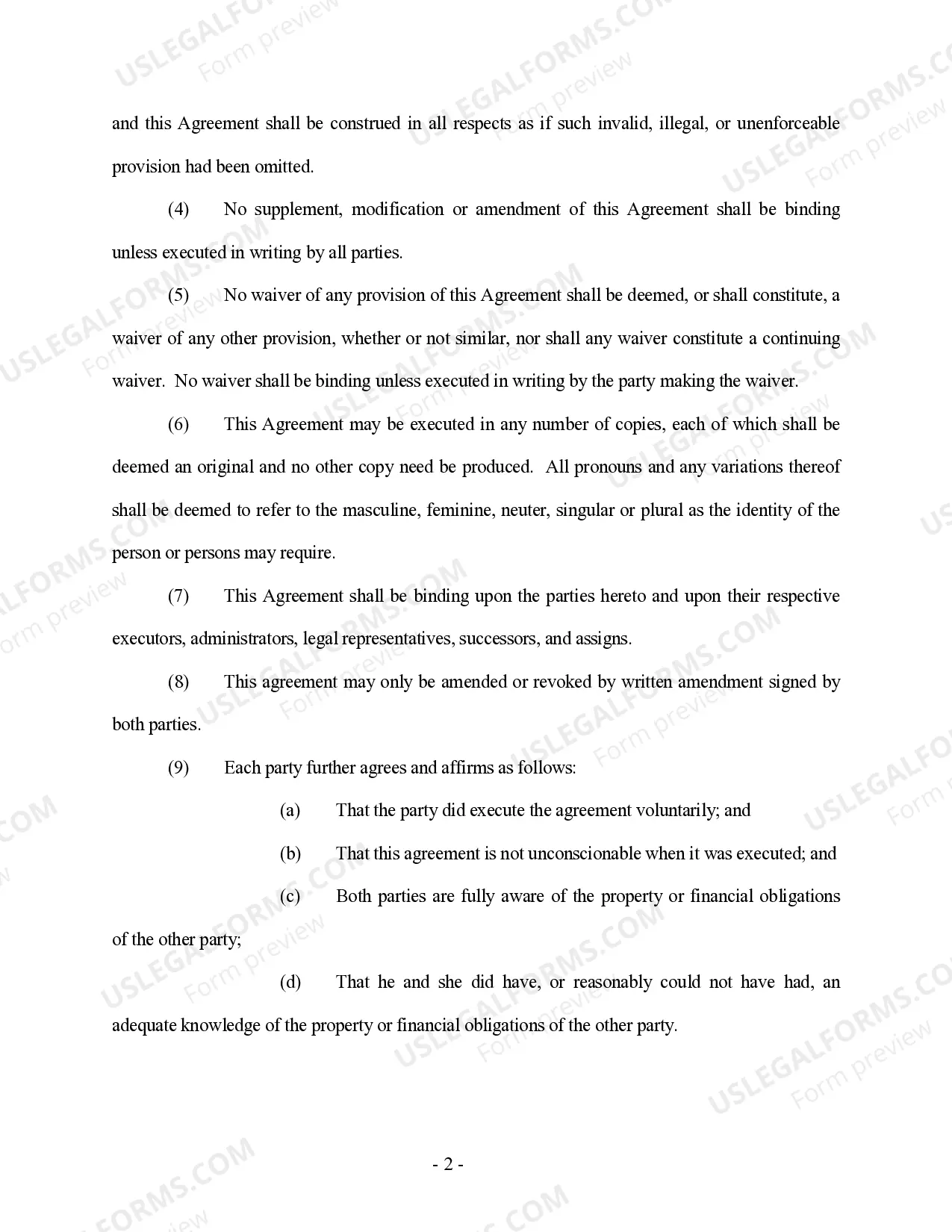
- Legal jurisdiction clause affirming that the agreement is governed by Colorado law.
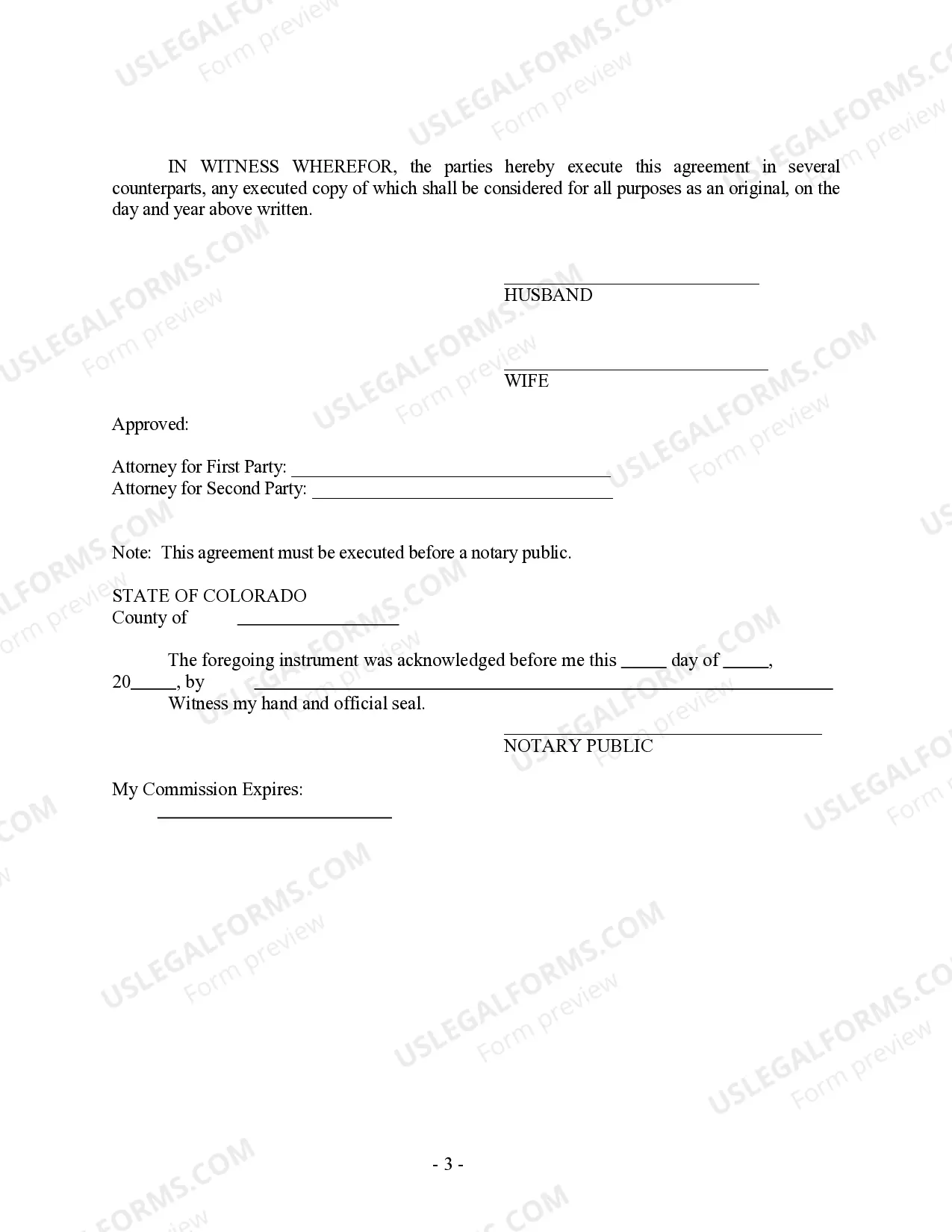
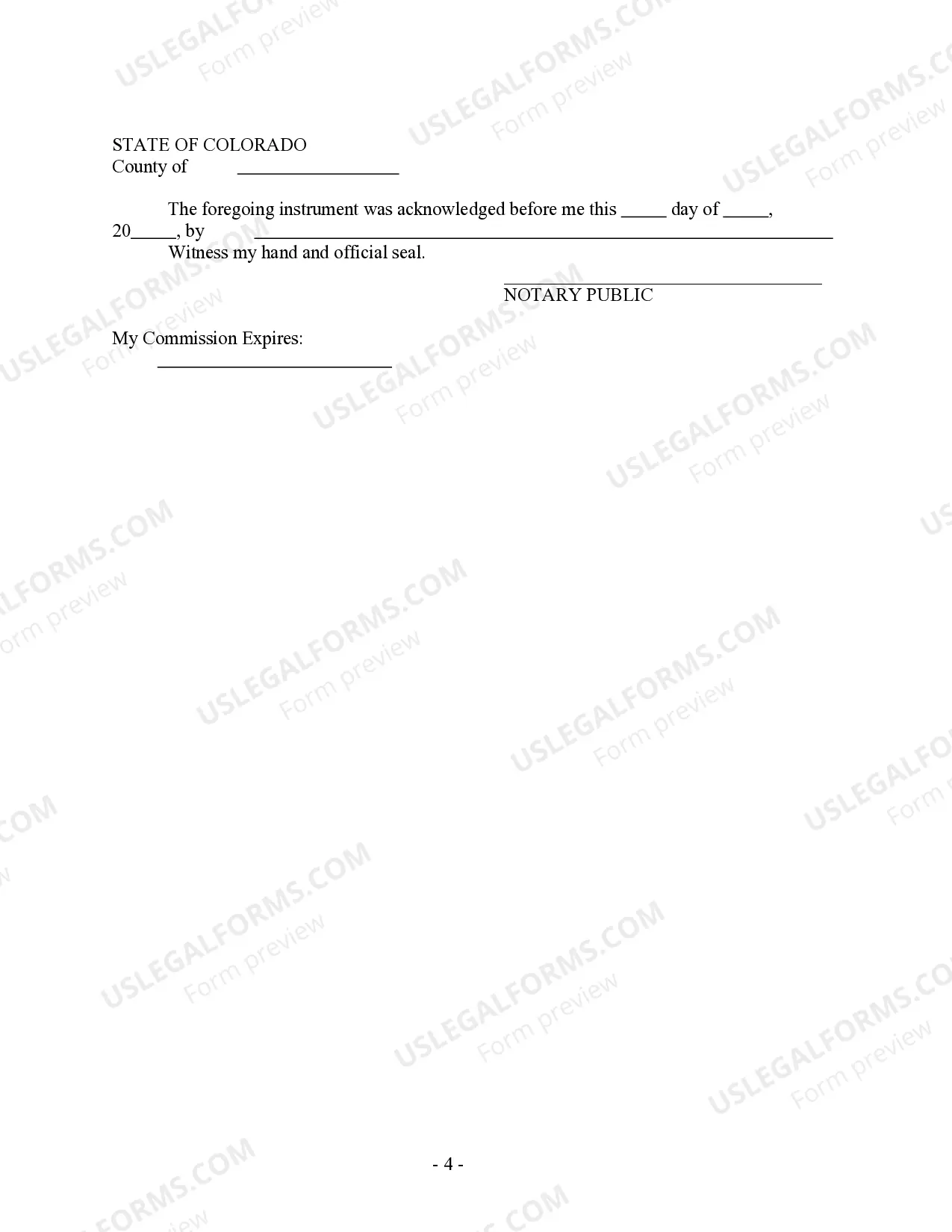
- Signatures of both parties, along with notary acknowledgment.
When to use this form
This form should be used when one or both parties to a premarital agreement decide that certain terms need to be changed or expanded. Common scenarios include changes in financial circumstances, the addition of new assets, or a shift in mutual responsibilities. It is also valuable when both parties have agreed to modify their initial agreement due to evolving situations in their relationship.
Who this form is for
- Couples who have an existing premarital agreement in Colorado.
- Partners looking to make modifications due to changes in circumstances.
- Individuals who want to ensure their updated agreements are legally binding and enforceable.
Instructions for completing this form
- Identify both parties by entering their names clearly at the beginning of the document.
- Specify the effective date of the amendment at the designated line.
- Detail the changes or additions to the original premarital agreement in the amendment section.
- Ensure both parties sign the document and provide their respective dates of signing.
- Have the document notarized to validate the signatures and the form's legal standing.
Does this form need to be notarized?
This document requires notarization to meet legal standards. US Legal Forms provides secure online notarization powered by Notarize, allowing you to complete the process through a verified video call, available 24/7.
Get your form ready online
Our built-in tools help you complete, sign, share, and store your documents in one place.
Make edits, fill in missing information, and update formatting in US Legal Forms—just like you would in MS Word.
Download a copy, print it, send it by email, or mail it via USPS—whatever works best for your next step.
Sign and collect signatures with our SignNow integration. Send to multiple recipients, set reminders, and more. Go Premium to unlock E-Sign.
If this form requires notarization, complete it online through a secure video call—no need to meet a notary in person or wait for an appointment.
We protect your documents and personal data by following strict security and privacy standards.

Make edits, fill in missing information, and update formatting in US Legal Forms—just like you would in MS Word.

Download a copy, print it, send it by email, or mail it via USPS—whatever works best for your next step.

Sign and collect signatures with our SignNow integration. Send to multiple recipients, set reminders, and more. Go Premium to unlock E-Sign.

If this form requires notarization, complete it online through a secure video call—no need to meet a notary in person or wait for an appointment.

We protect your documents and personal data by following strict security and privacy standards.
Common mistakes to avoid
- Failing to include clear descriptions of the amendments or additions.
- Not having the agreement notarized, which is required for enforceability.
- Leaving out necessary signatures from either party.
- Using unclear language that could lead to misunderstandings about the amendments.
Advantages of online completion
- Convenience of accessing and downloading from anywhere, at any time.
- Editability allows you to customize the form to fit your needs easily.
- Reliability, as forms are drafted by licensed attorneys, ensuring legal compliance.
What to keep in mind
- The Amendment to Prenuptial or Premarital Agreement is crucial for making official changes to an existing agreement.
- This form must be signed in the presence of a notary to be enforceable in Colorado.
- Both parties should clearly outline the amendments to avoid future disputes.
Looking for another form?



Form popularity
FAQ
To amend a prenuptial agreement, start by discussing the desired changes with your partner. Once both parties agree, draft a formal amendment document to outline the specific alterations. This process can be recognized as a Colorado Amendment to Prenuptial or Premarital Agreement. Utilizing platforms like uslegalforms can simplify creating and managing these amendments, ensuring your agreement is legally sound.
Yes, you can modify a prenup after marriage. To do so, both parties must agree to the changes, and these changes must be documented in a formal manner. This approach constitutes a Colorado Amendment to Prenuptial or Premarital Agreement, ensuring that the updated terms remain legally enforceable and reflect your current circumstances.
Yes, you can add an addendum to a prenup. This process involves drafting a document that outlines specific changes or additional terms you wish to incorporate into the original agreement. In Colorado, this addendum can be regarded as a Colorado Amendment to Prenuptial or Premarital Agreement, and both parties must agree to and sign it to ensure its validity.
To modify a prenuptial agreement, both parties must agree to the proposed changes. The modification should be documented in a new Colorado Amendment to Prenuptial or Premarital Agreement to ensure legality. It is advisable to consult legal professionals for guidance during this process. Platforms like US Legal Forms provide templates and resources to assist in drafting an amendment.
Yes, prenups can be revised as life circumstances change. To revise a prenuptial agreement, both parties need to consent to the new terms. Creating a Colorado Amendment to Prenuptial or Premarital Agreement formalizes this process and protects both parties. Using resources like US Legal Forms can simplify the revision process and ensure legal compliance.
Yes, a prenuptial agreement can be amended. Both parties must agree to the terms of the amendment for it to be valid. This process involves creating a new Colorado Amendment to Prenuptial or Premarital Agreement that reflects the changes agreed upon. Consulting with an attorney can help ensure the amendment is properly executed.
Yes, you can write your own prenup in Colorado. However, it's crucial to ensure that it meets the legal requirements necessary for enforceability. Using templates or platforms, like US Legal Forms, can help you draft a valid Colorado Amendment to Prenuptial or Premarital Agreement. Just remember, having a lawyer review your document can add an extra layer of protection.
In some cases, a judge can overrule a prenuptial agreement if it does not comply with state laws or is found to be unconscionable. This means that if the agreement was unfair or signed under duress, it could be invalidated. A Colorado Amendment to Prenuptial or Premarital Agreement can help mitigate such risks by ensuring clarity and fairness. It is wise to consult with legal experts when drafting or amending these agreements.
Yes, Colorado does honor prenuptial agreements, provided they meet specific legal requirements. To be enforceable, a Colorado Amendment to Prenuptial or Premarital Agreement must be written, signed, and made with full disclosure of assets. Couples can protect their interests and ensure fairness through these agreements, making them an effective tool in marital planning. Using professional services like uslegalforms can help you navigate the legal nuances.
Prenuptial agreements may not be valid in certain states that impose strict standards or prohibition against them. Some jurisdictions, like Montana and North Dakota, have limitations on prenups, while courts can invalidate agreements that lack full disclosure. A Colorado Amendment to Prenuptial or Premarital Agreement remains a reliable option for couples in Colorado, where the law supports such agreements more robustly. Always check state-specific laws for compliance.