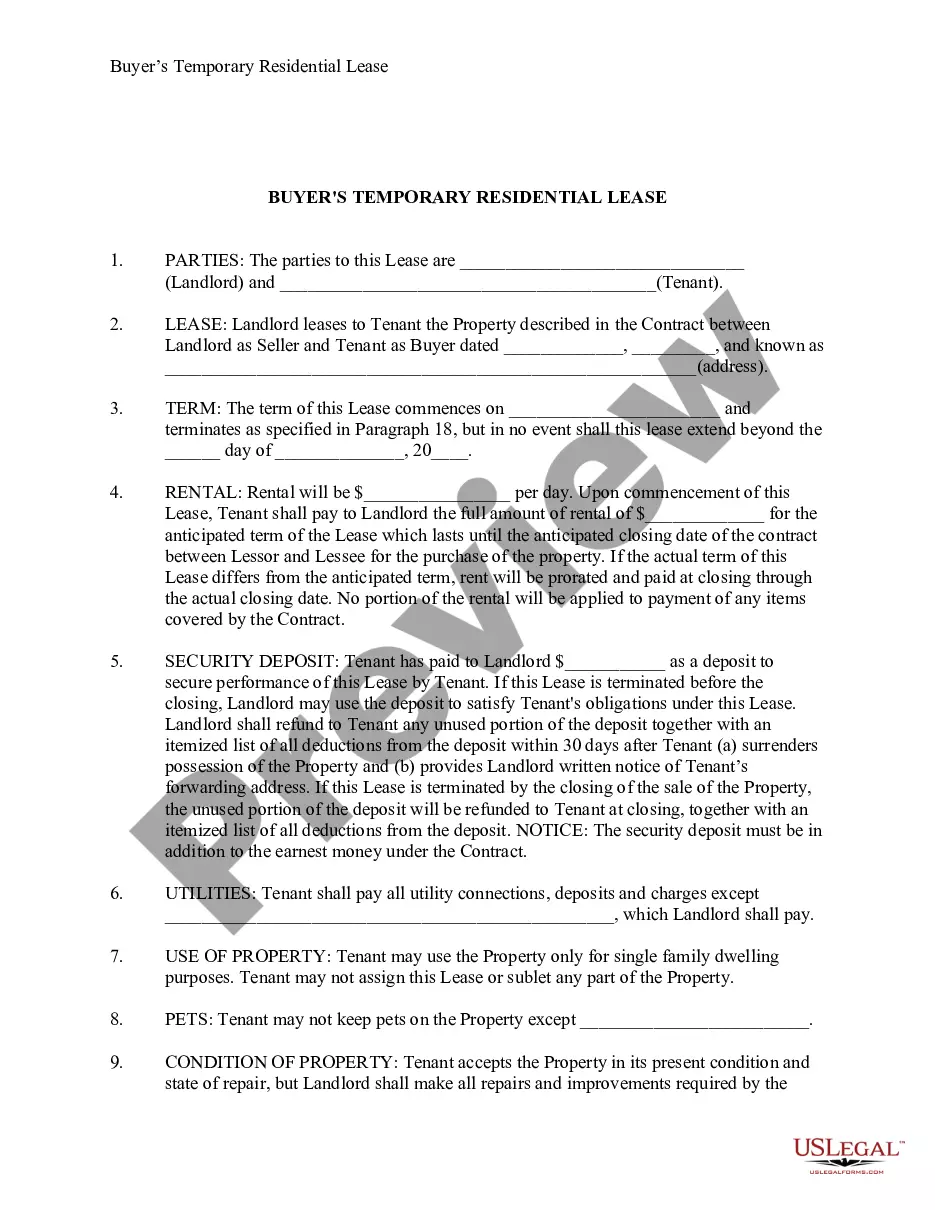
Colorado Notice of Default for Past Due Payments in connection with Contract for Deed
About this form
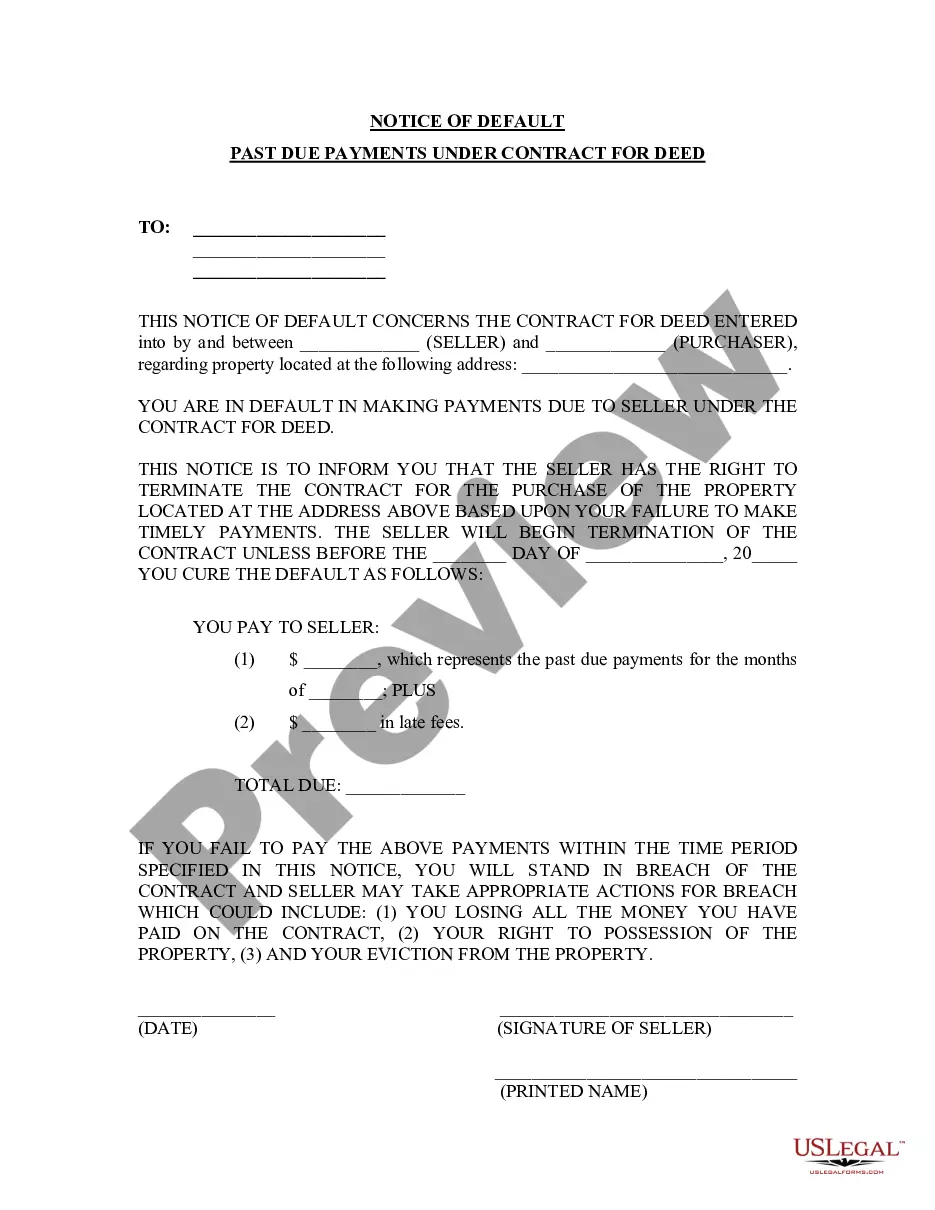
The Notice of Default for Past Due Payments in connection with Contract for Deed is an essential legal document. This form serves as the Seller's formal notification to the Purchaser about overdue payments related to the purchase price of a property under a contract for deed. Its primary purpose is to alert the Purchaser that the payment terms have not been met, and continued failure to comply could result in default of the contract. This form differs from other notices by focusing specifically on the payment default aspects of the contract for deed agreement.
Key parts of this document
- Identification of the Seller and Purchaser involved in the contract.
- Explicit details regarding the overdue payments and the total amounts due.
- Reference to the specific terms of the contract for deed.
- Consequences of failing to rectify the default.
- Instructions for the Purchaser to respond to the notice.

When this form is needed
This form should be used when a Seller finds that the Purchaser has not made timely payments as stipulated in a contract for deed. It's a critical step for the Seller to formally notify the Purchaser of their payment default before proceeding with any further legal actions. Using this notice can also help establish a clear record of communication regarding the default situation.
Who this form is for
- Sellers who have entered into a contract for deed.
- Purchasers who have missed payments and need to understand the implications.
- Real estate attorneys assisting clients in contract for deed transactions.
Instructions for completing this form
- Identify the Seller and Purchaser by providing full names and contact information.
- Specify the details of the overdue payments, including amounts and due dates.
- Cite the relevant sections of the contract for deed that outline payment obligations.
- State the consequences of continued non-payment clearly.
- Include instructions for how the Purchaser should respond to the notice.
Notarization requirements for this form
This document requires notarization to meet legal standards. US Legal Forms provides secure online notarization powered by Notarize, allowing you to complete the process through a verified video call, available 24/7.
Get your form ready online
Our built-in tools help you complete, sign, share, and store your documents in one place.
Make edits, fill in missing information, and update formatting in US Legal Forms—just like you would in MS Word.
Download a copy, print it, send it by email, or mail it via USPS—whatever works best for your next step.
Sign and collect signatures with our SignNow integration. Send to multiple recipients, set reminders, and more. Go Premium to unlock E-Sign.
If this form requires notarization, complete it online through a secure video call—no need to meet a notary in person or wait for an appointment.
We protect your documents and personal data by following strict security and privacy standards.

Make edits, fill in missing information, and update formatting in US Legal Forms—just like you would in MS Word.

Download a copy, print it, send it by email, or mail it via USPS—whatever works best for your next step.

Sign and collect signatures with our SignNow integration. Send to multiple recipients, set reminders, and more. Go Premium to unlock E-Sign.

If this form requires notarization, complete it online through a secure video call—no need to meet a notary in person or wait for an appointment.

We protect your documents and personal data by following strict security and privacy standards.
Common mistakes
- Failing to include all required information about the Seller and Purchaser.
- Omitting specific payment amounts or due dates for clarity.
- Not providing clear consequences for default, which may lead to misunderstandings.
- Neglecting to proofread for accuracy before finalizing the form.
Benefits of completing this form online
- Convenient access allows for quick completion and customization to meet specific needs.
- Editability ensures that all necessary details can be included and revised easily.
- Reliability of professionally drafted forms guarantees legal compliance.
Quick recap
- The Notice of Default is an important document for sellers facing payment issues.
- It outlines late payment terms and potential consequences for the purchaser.
- Proper completion and delivery of the notice are essential for legal validity.
Looking for another form?





Form popularity
FAQ
It’s the seller’s formal notice to the purchaser that payments due under the contract for deed are overdue and that continued nonpayment could default the contract. It also creates a written record of the default and outlines how the purchaser should respond. Use it when the purchaser has not made timely payments as required by the contract.
Default occurs when the purchaser fails to make timely payments as required by the contract for deed. This notice focuses on that payment default, identifies the overdue amounts, and notes the consequences of not curing the default, helping establish the breach and guide next steps.
No. A notice of default is a formal warning about missed payments and should be addressed promptly. Ignoring it can lead to additional consequences or legal action. Consider consulting a Colorado-appropriate attorney to understand options and how to respond.
The form includes the identification of the Seller and Purchaser, explicit details of overdue payments and total amounts due, reference to the contract-for-deed terms, the consequences of failing to cure the default, and instructions for the Purchaser to respond to the notice.
Sellers who have entered into a contract for deed, Purchasers who have missed payments, and real estate attorneys assisting contract-for-deed transactions in Colorado. The notice helps these parties document payment breaches and guide next steps.
This notice specifically targets past-due payments under a contract for deed, detailing the overdue amounts and the contract terms, and providing required response steps. It is tailored for Colorado contract-for-deed transactions and focuses on payment defaults rather than other kinds of breaches.