New Jersey Temporary Lease Agreement to Prospective Buyer of Residence prior to Closing
Description
Definition and meaning
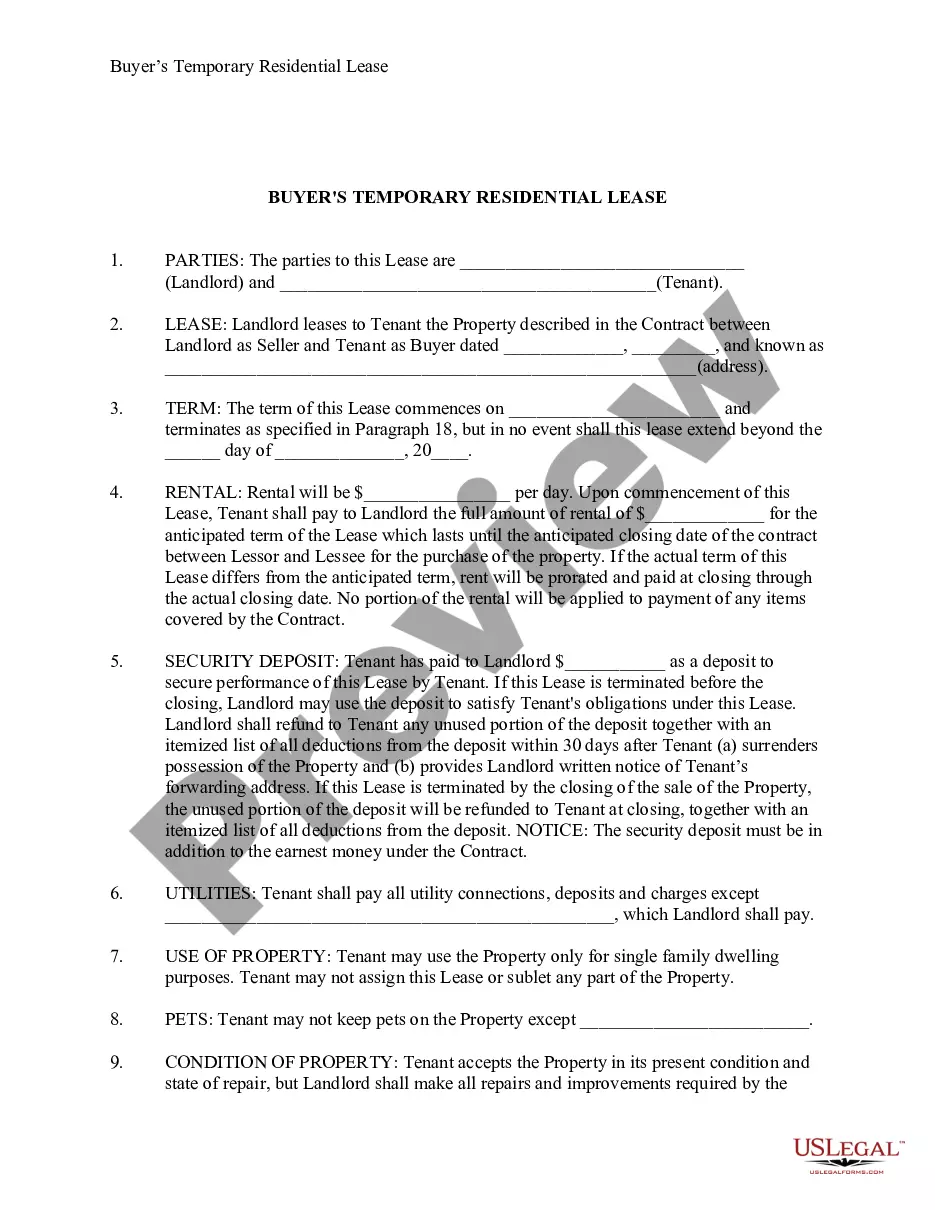
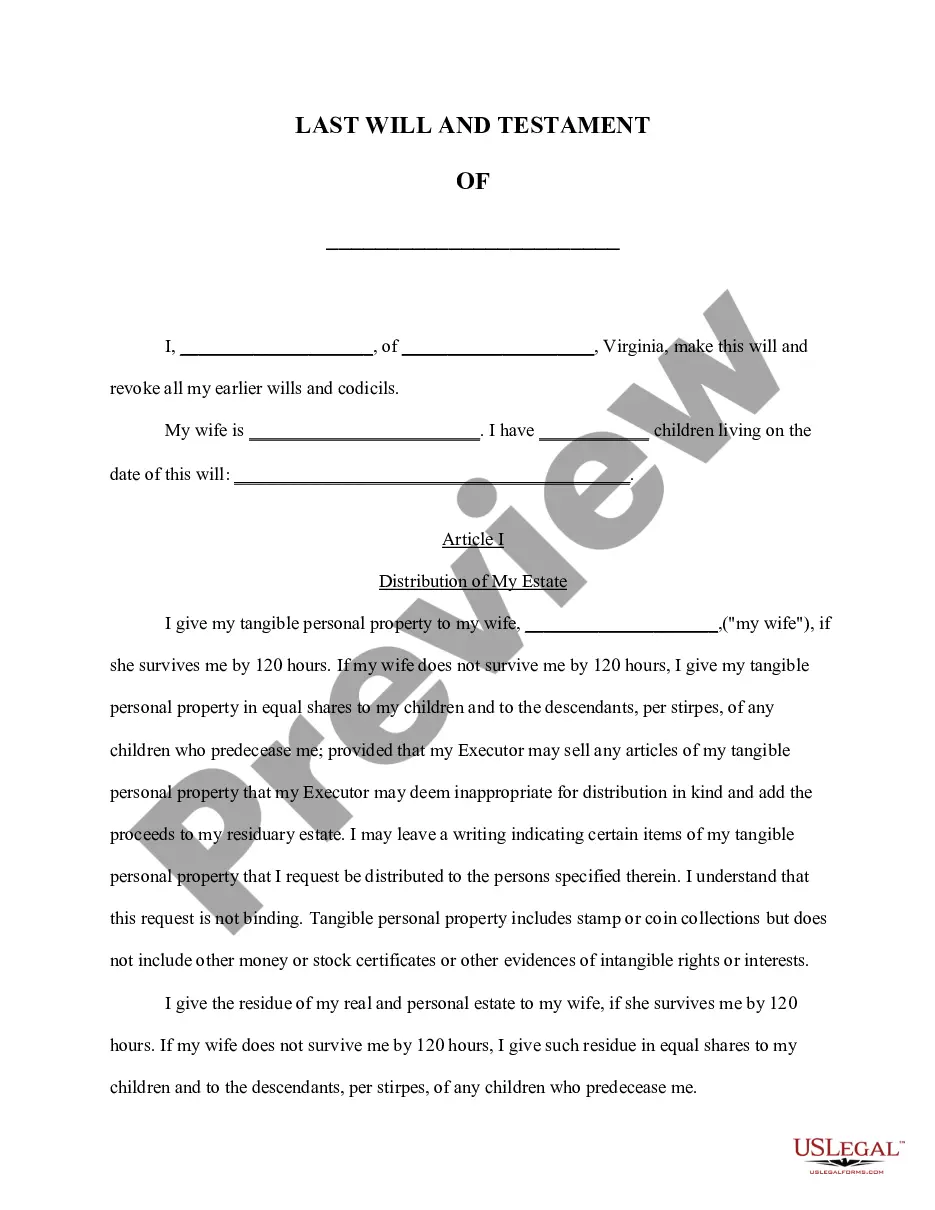
A New Jersey Temporary Lease Agreement to Prospective Buyer of Residence prior to Closing is a legal document that allows a buyer to temporarily occupy the seller's residential property before the actual closing date. This agreement ensures that both parties have clear expectations regarding the use of the property and the terms of occupation. It serves to protect the interests of both the buyer and seller during the transition period.
How to complete a form
Completing the New Jersey Temporary Lease Agreement involves several steps:
- Fill in the names of both the landlord and tenant at the top of the form.
- Provide the property address that is being leased temporarily.
- Specify the start and end dates of the lease.
- Set the rental amount and payment terms.
- Indicate any security deposits required and how these will be handled.
- Detail the terms regarding utilities, maintenance responsibilities, and any restrictions on property use.
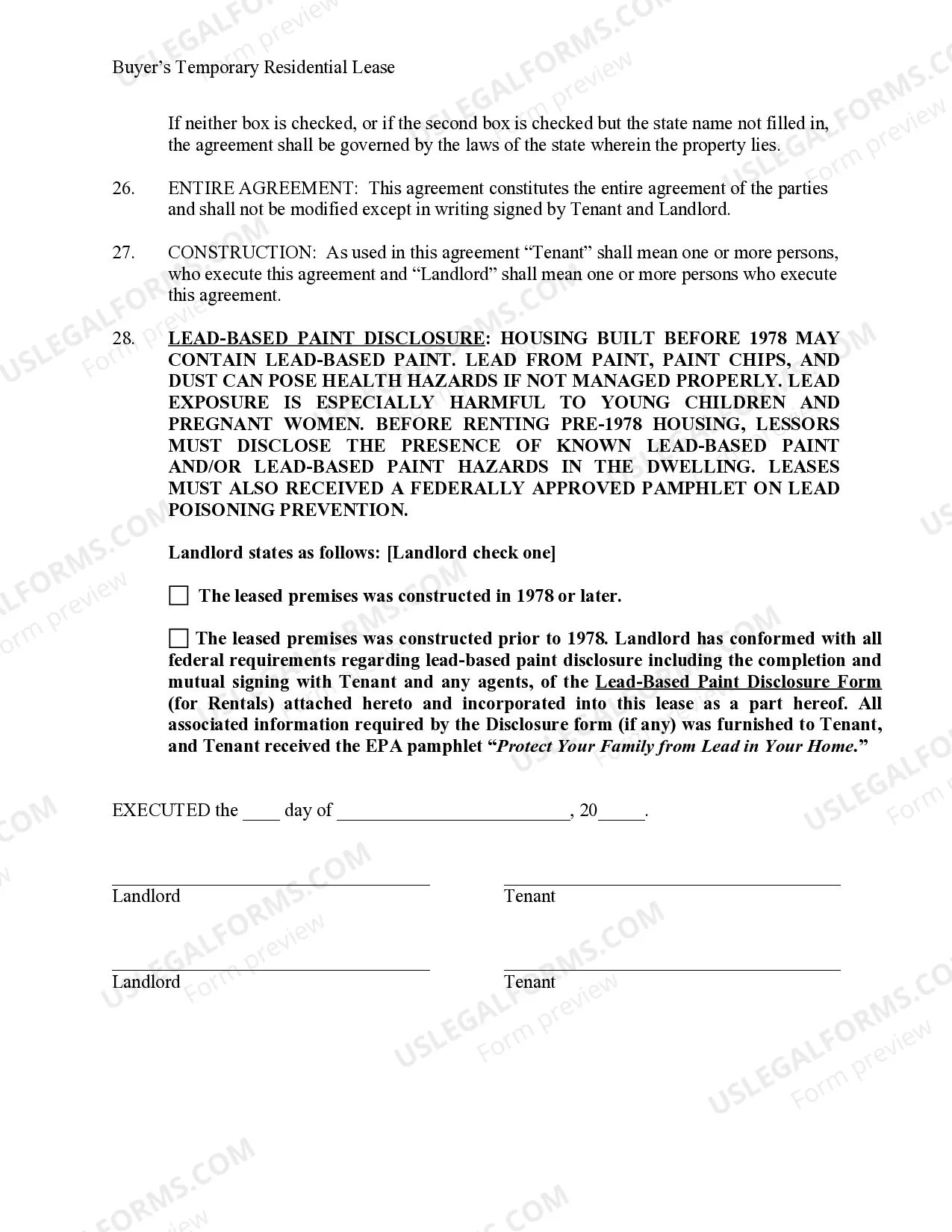
- Sign and date the agreement to finalize it.
Be sure to keep a copy for your records.
Key components of the form
The essential components of the New Jersey Temporary Lease Agreement include:
- Parties: Identification of the landlord and tenant.
- Property Description: Address and details of the property being leased.
- Lease Term: Start and end dates of the lease.
- Rental Amount: Daily rental fee and payment terms.
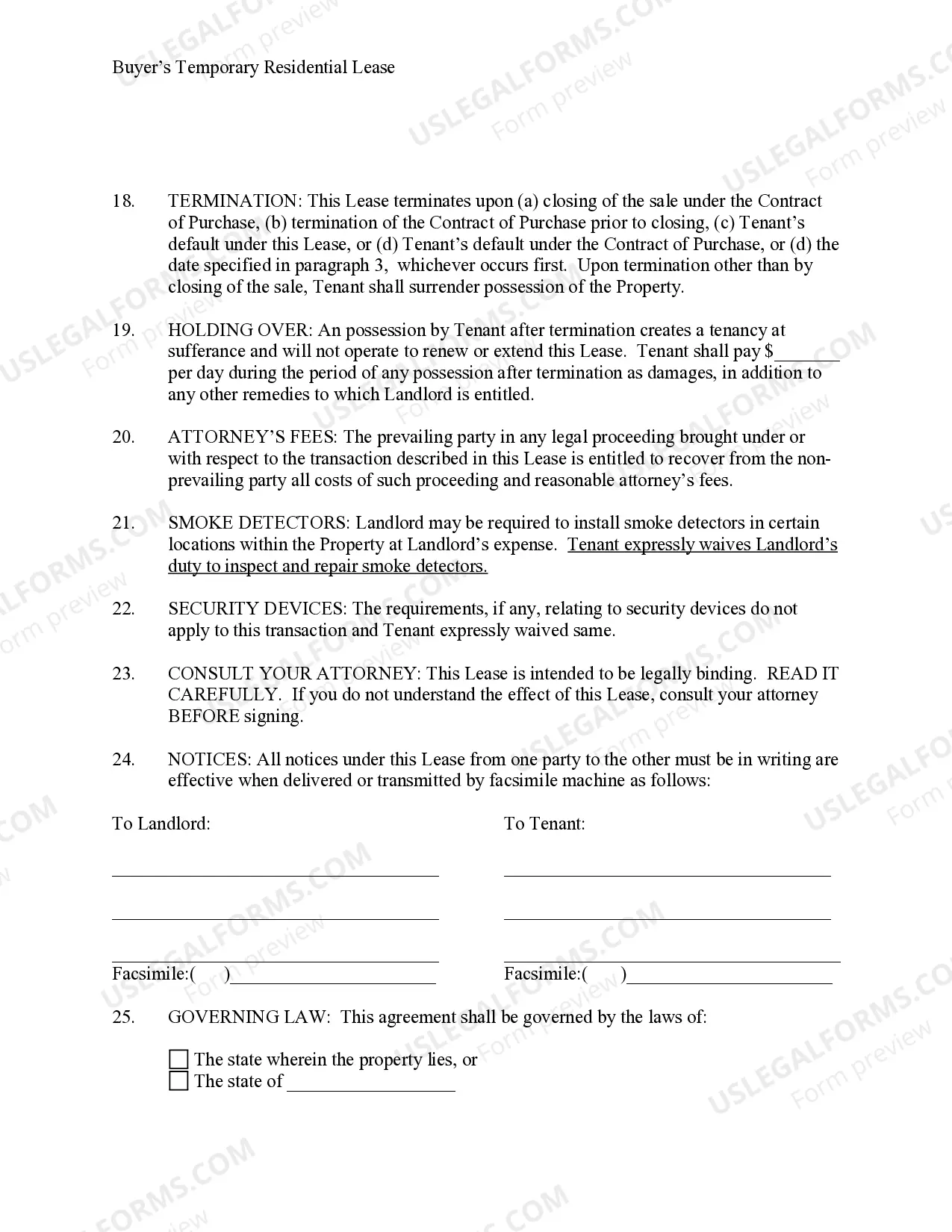
- Security Deposit: Amount required and conditions for its return.
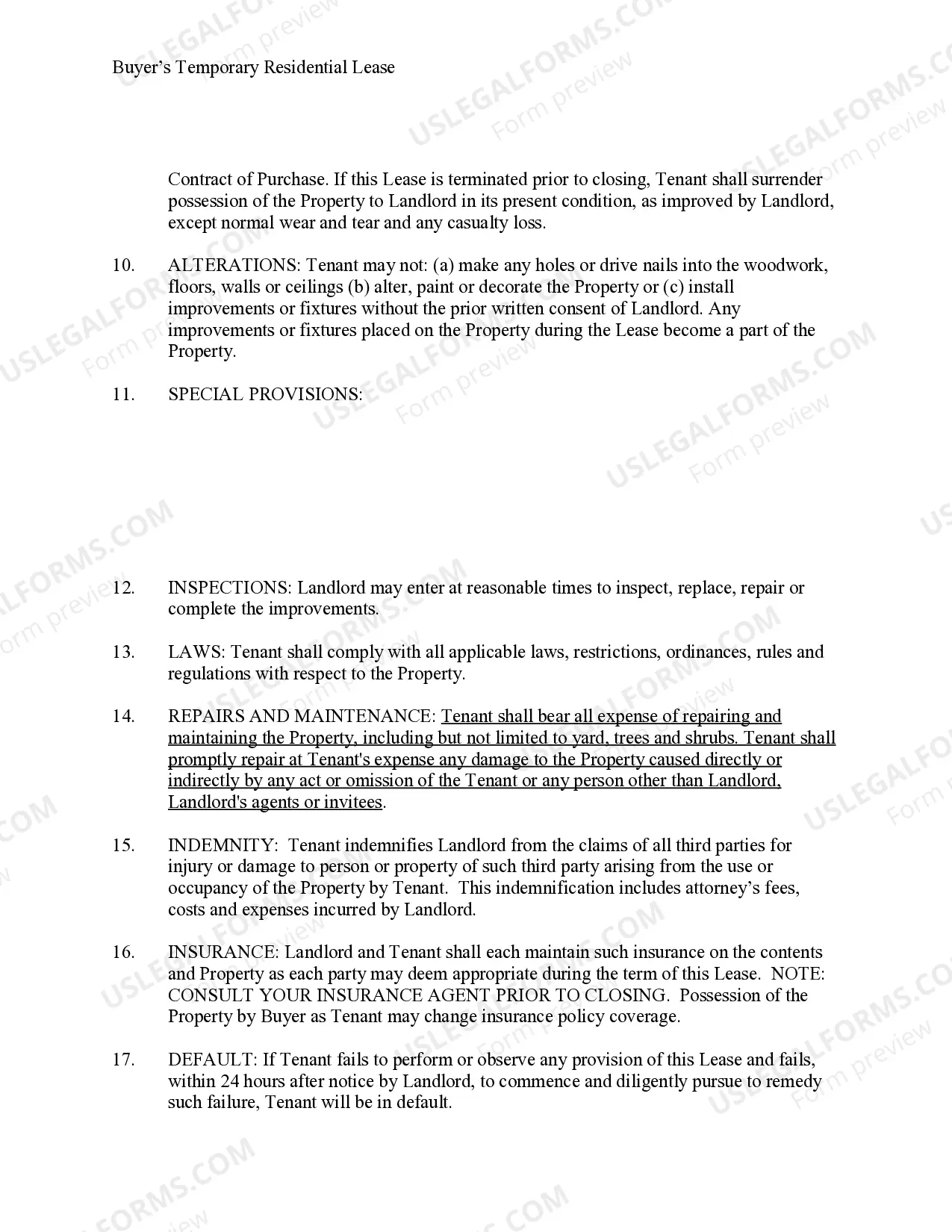
- Tenant Obligations: Responsibility for utilities, maintenance, and repairs.
- Pets Policy: Rules regarding the presence of pets.
- Legal Compliance: Agreement to comply with all applicable laws.
Each of these components plays a crucial role in defining the responsibilities and rights of both the landlord and the tenant.
Who should use this form
This form is particularly useful for:
- Prospective buyers who wish to occupy a property before closing the sale.
- Landlords who want to allow short-term occupancy to buyers to facilitate a smooth transition.
- Real estate professionals facilitating transactions between buyers and sellers.
Using this agreement helps clarify expectations and protect the interests of all parties involved during the pre-closing period.
Common mistakes to avoid when using this form
When completing the New Jersey Temporary Lease Agreement, be vigilant to avoid these common mistakes:
- Failing to specify the exact rental amount or terms.
- Not including all relevant dates and deadlines, including lease termination.
- Omitting important provisions related to security deposits or utility responsibilities.
- Not signing the agreement, which could render it unenforceable.
Double-checking the agreement for completeness can prevent legal issues later on.
State-specific requirements
When utilizing the New Jersey Temporary Lease Agreement, be aware of state-specific considerations:
- Complying with New Jersey tenancy laws, including security deposit regulations.
- Understanding the rights and responsibilities of landlords and tenants under New Jersey law.
- Being aware of any local ordinances that may affect residential leases.
Consulting with a legal professional familiar with New Jersey real estate law can ensure compliance and clarity.

How to fill out New Jersey Temporary Lease Agreement To Prospective Buyer Of Residence Prior To Closing?
US Legal Forms is a unique system to find any legal or tax template for filling out, such as New Jersey Temporary Lease Agreement to Prospective Buyer of Residence prior to Closing. If you’re tired of wasting time looking for appropriate examples and spending money on papers preparation/legal professional service fees, then US Legal Forms is precisely what you’re searching for.
To enjoy all of the service’s benefits, you don't need to install any software but simply choose a subscription plan and register your account. If you already have one, just log in and find the right sample, save it, and fill it out. Saved files are kept in the My Forms folder.
If you don't have a subscription but need to have New Jersey Temporary Lease Agreement to Prospective Buyer of Residence prior to Closing, have a look at the guidelines listed below:
- Double-check that the form you’re looking at applies in the state you need it in.
- Preview the sample its description.
- Simply click Buy Now to reach the register page.
- Select a pricing plan and carry on registering by entering some information.
- Select a payment method to finish the registration.
- Download the document by choosing the preferred file format (.docx or .pdf)
Now, submit the document online or print it. If you are uncertain regarding your New Jersey Temporary Lease Agreement to Prospective Buyer of Residence prior to Closing form, speak to a lawyer to check it before you decide to send out or file it. Get started hassle-free!
Form popularity
FAQ
A written lease should protect both the landlord and the tenant.Both landlord and tenant should agree upon a "subletting" provision in the lease. 3. Some leases specify that the security deposit can be retained by the landlord if cleaning needs to be done by the landlord after the tenant vacates.
Yes, someone can live with the tenant without being on the lease. However, it is important to distinguish the difference between a guest and a long-term guest.
However, it's important to know that even without a lease your landlord is still required to give you a 30-day notice for ending your lease or for increasing your rent. If you refuse to pay the increase in your rent, the landlord has the right to legally begin the eviction process.
No residential landlord may evict or fail to renew a lease, whether it is a written or an oral lease without good cause. The landlord must be able to prove in court that he has grounds for an eviction.
A landlord must have good cause to evict a tenant.Each cause, except for nonpayment of rent, must be described in detail by the landlord in a written notice to the tenant. A Notice to Quit is required for all good cause evictions, except for an eviction for nonpayment of rent.
By not having signed a lease, you have no proof of rights. No signature means no peace of mind. Being in a roommate situation, without the lease, could always end at any second.Without a lease, the landlord would be free to increase rent at the end of every 30 days.
Notice to Terminate the Lease A month-to-month tenant must give written notice of lease termination at least one full month prior to moving. Most yearly leases require a 60 to 90 day notice from the tenants in order to terminate the lease.
The law provides that landlords cannot simply evict a tenant.Essentially, a landlord does have the right to place a unit for sale. In order to have cause for eviction, the buyer of the home must personally occupy the unit and the contract must call for the unit to be vacant at the time of closing.