California Last Will and Testament for Divorced Person Not Remarried with Adult and Minor Children
What is this form?
This Last Will and Testament is specifically designed for individuals who are divorced and have not remarried, with both adult and minor children. Its primary purpose is to outline how your assets will be distributed after your death, appoint a personal representative, and address the care of any minor children through a trust. Unlike other wills, this document includes provisions tailored for those who are divorced, ensuring that your wishes regarding your children and assets are clearly documented and legally binding.
Key parts of this document
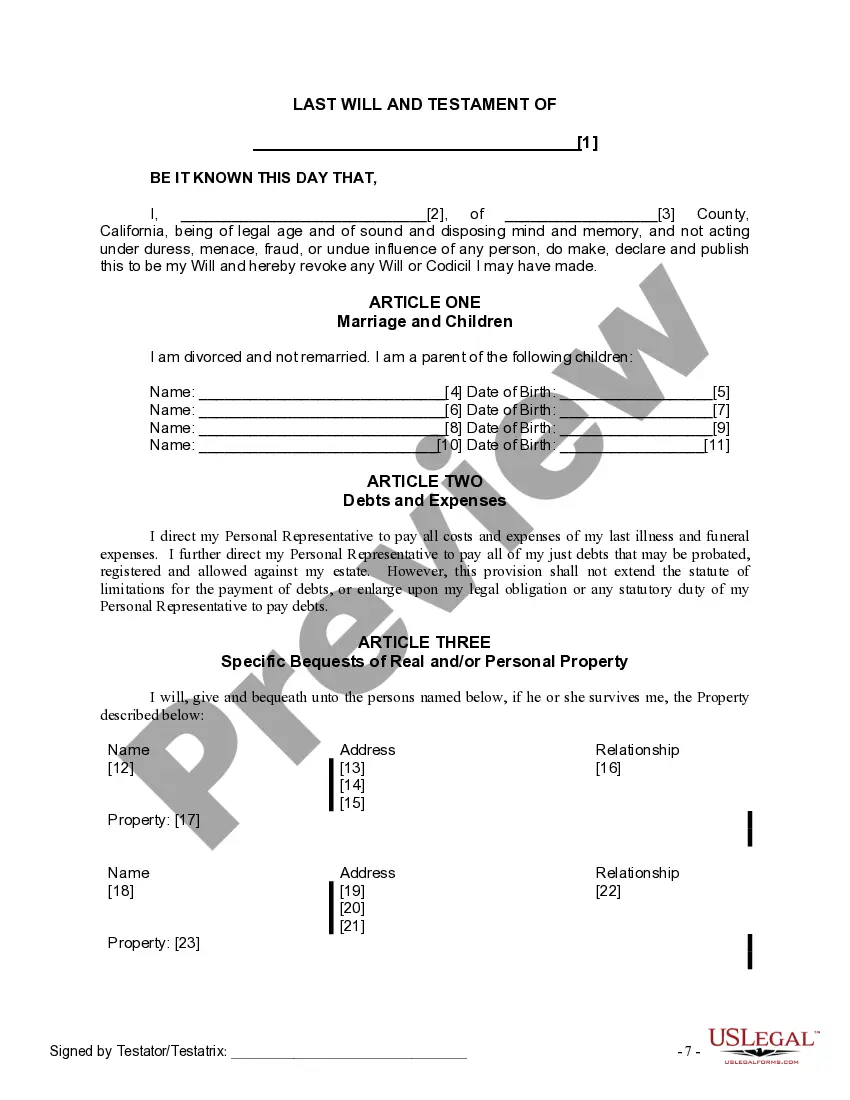
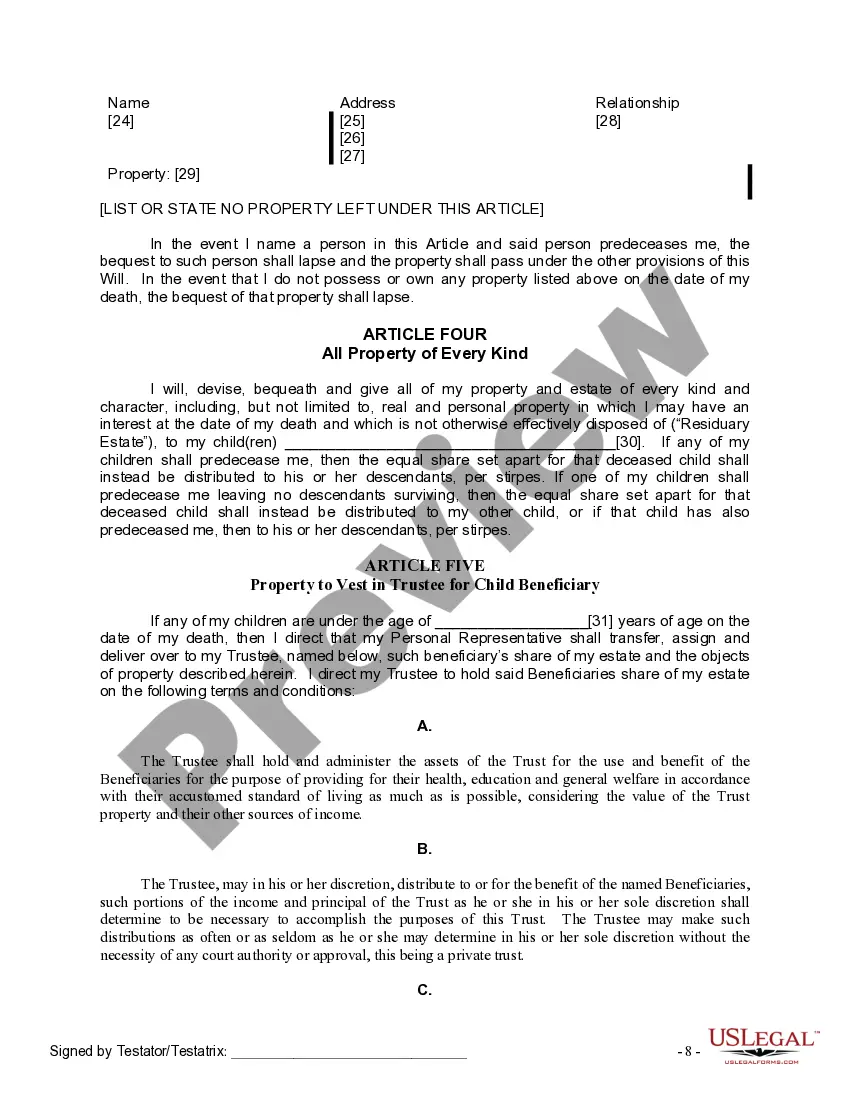
- Appointment of a personal representative to manage your estate.
- Specification of beneficiaries and detailed bequests of property.
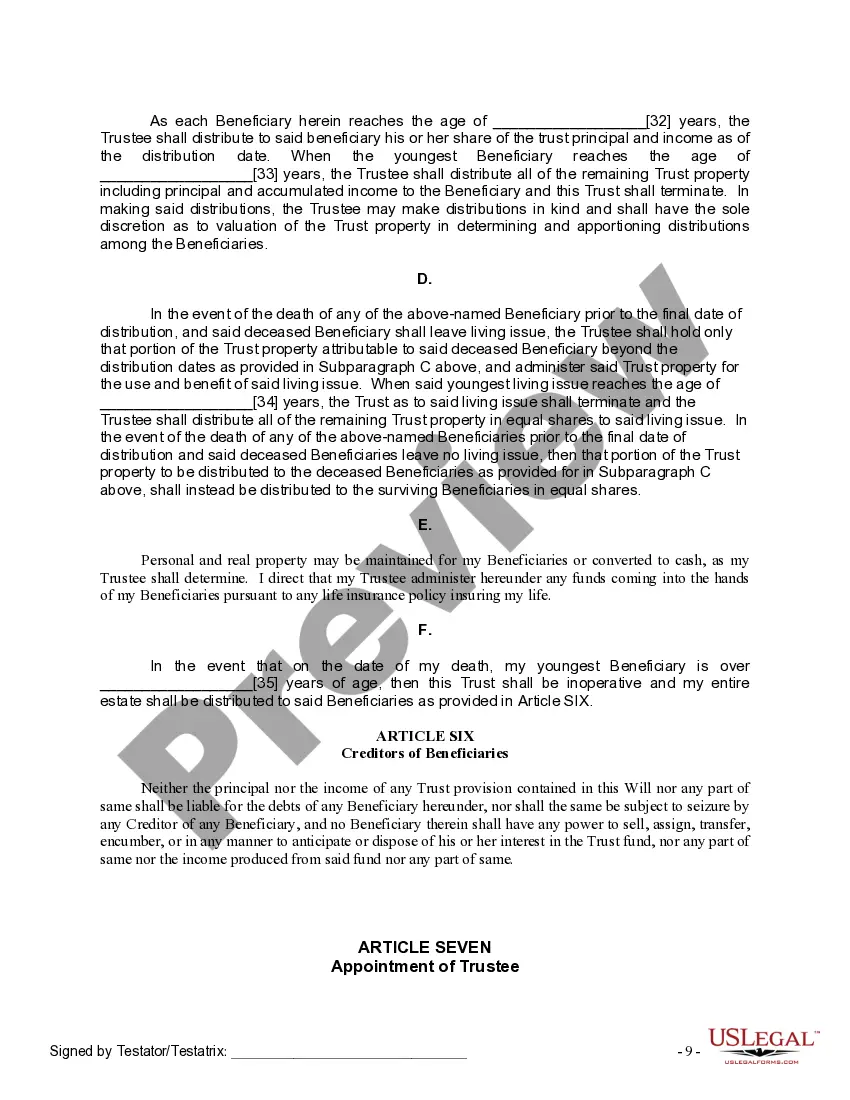
- Trust establishment for minor children to ensure their financial support and welfare.
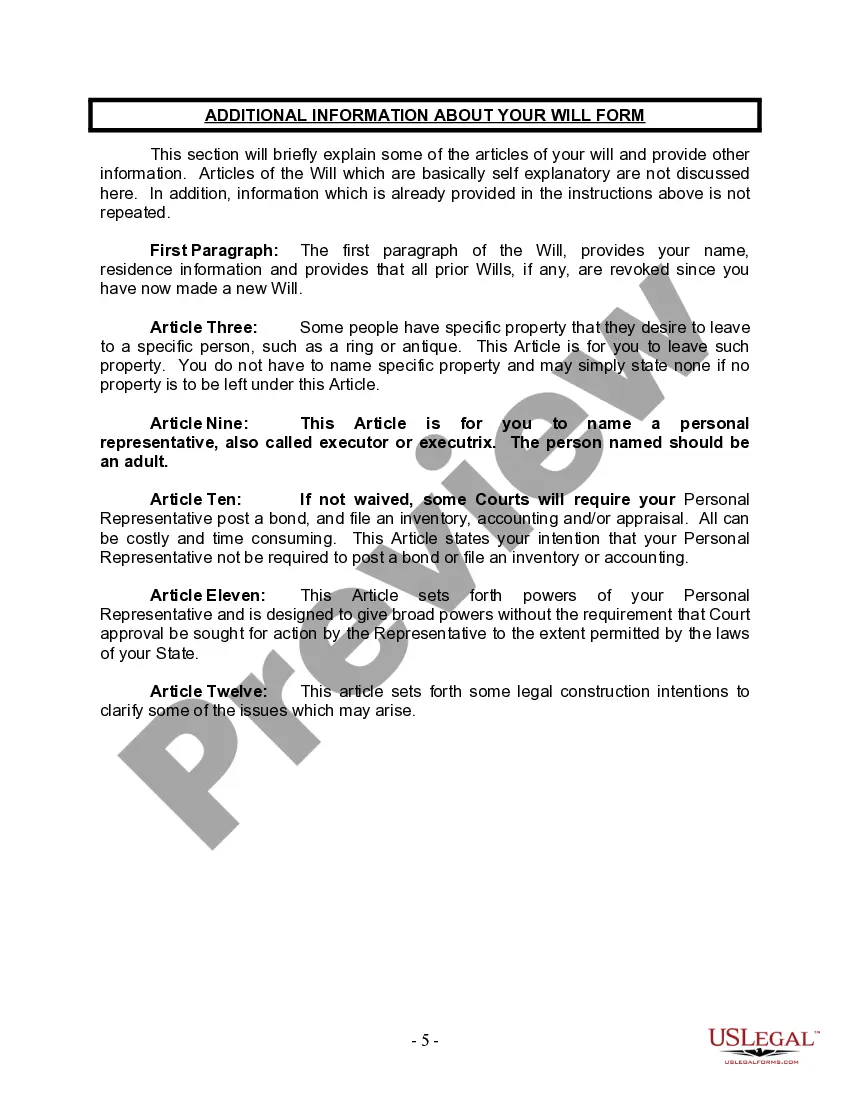
- Provisions for settling debts and funeral expenses from the estate.
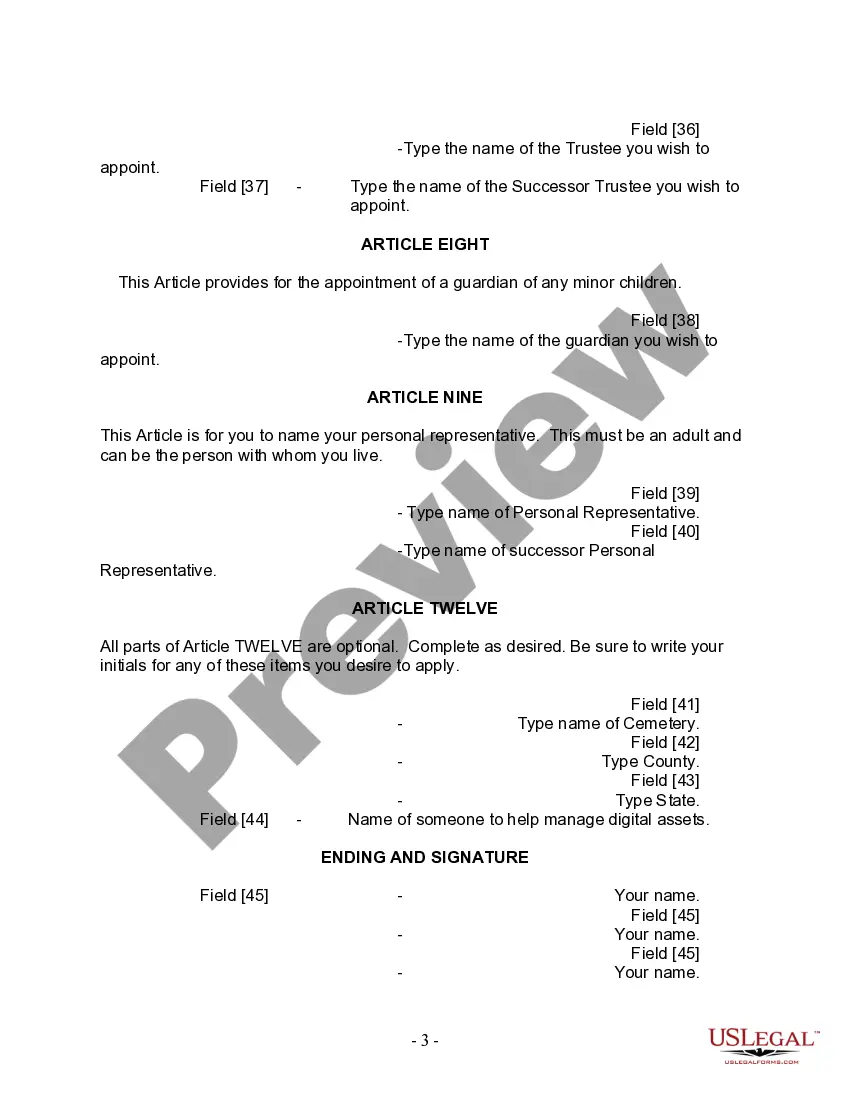
- Appointment of a guardian for minor children, if needed.
- Signature and witness requirements to validate the will.




When this form is needed
You should use this form if you are a divorced individual with children and wish to regulate the distribution of your estate after your death. This can include ensuring that your minor children are cared for financially and that adult children receive specified assets or inheritance. Utilizing this will can clarify your wishes, reduce potential conflicts among heirs, and ensure that your responsibilities towards your children are met following your passing.
Who this form is for
- Divorced individuals without a current spouse.
- Parents of both minor and adult children looking to establish clear asset distribution.
- Any person wanting to ensure their childrenâs welfare is addressed through a trust.
- Individuals seeking to simplify the estate planning process after divorce.
Completing this form step by step
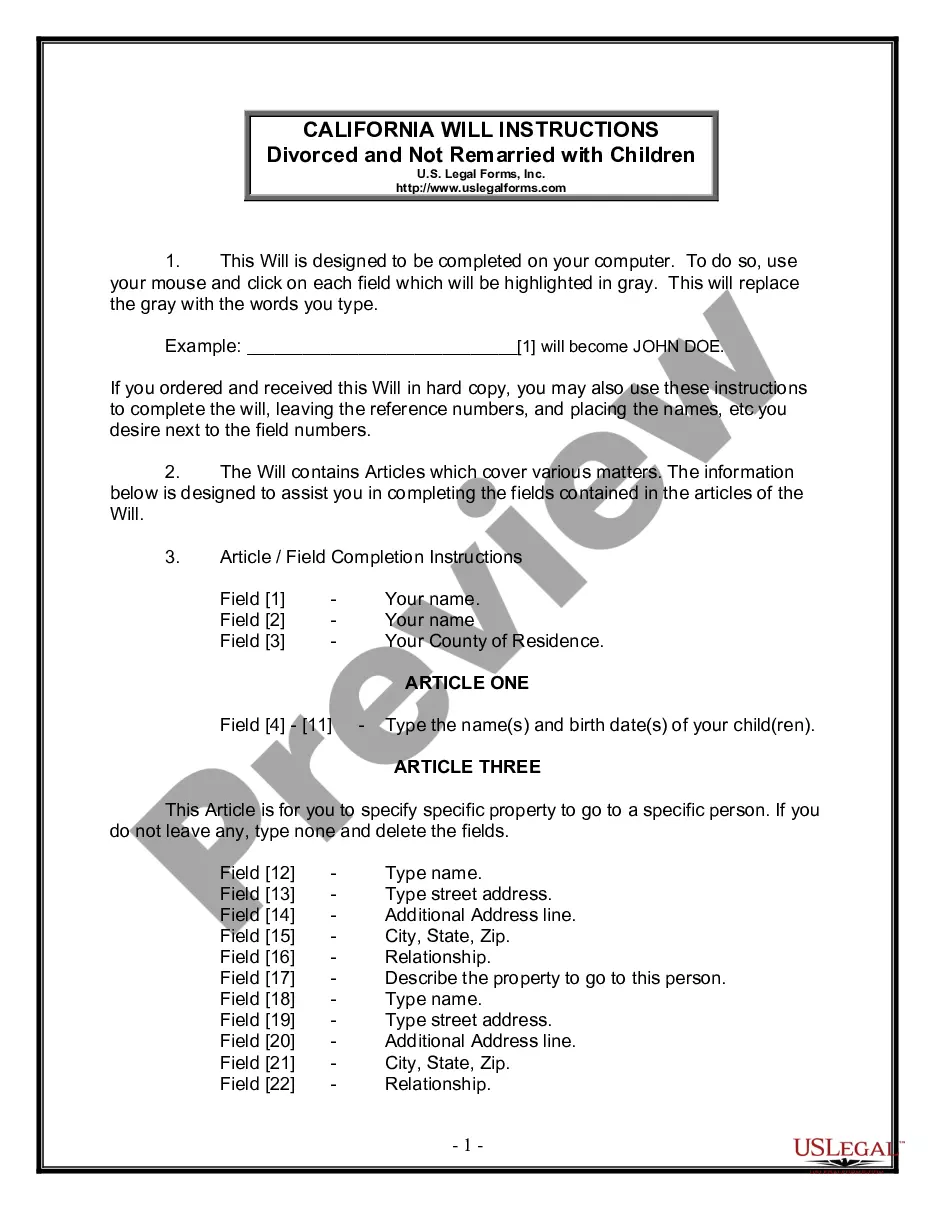
- Identify yourself and ensure the form is titled as your Last Will and Testament.
- List your children, specifying their names and dates of birth.
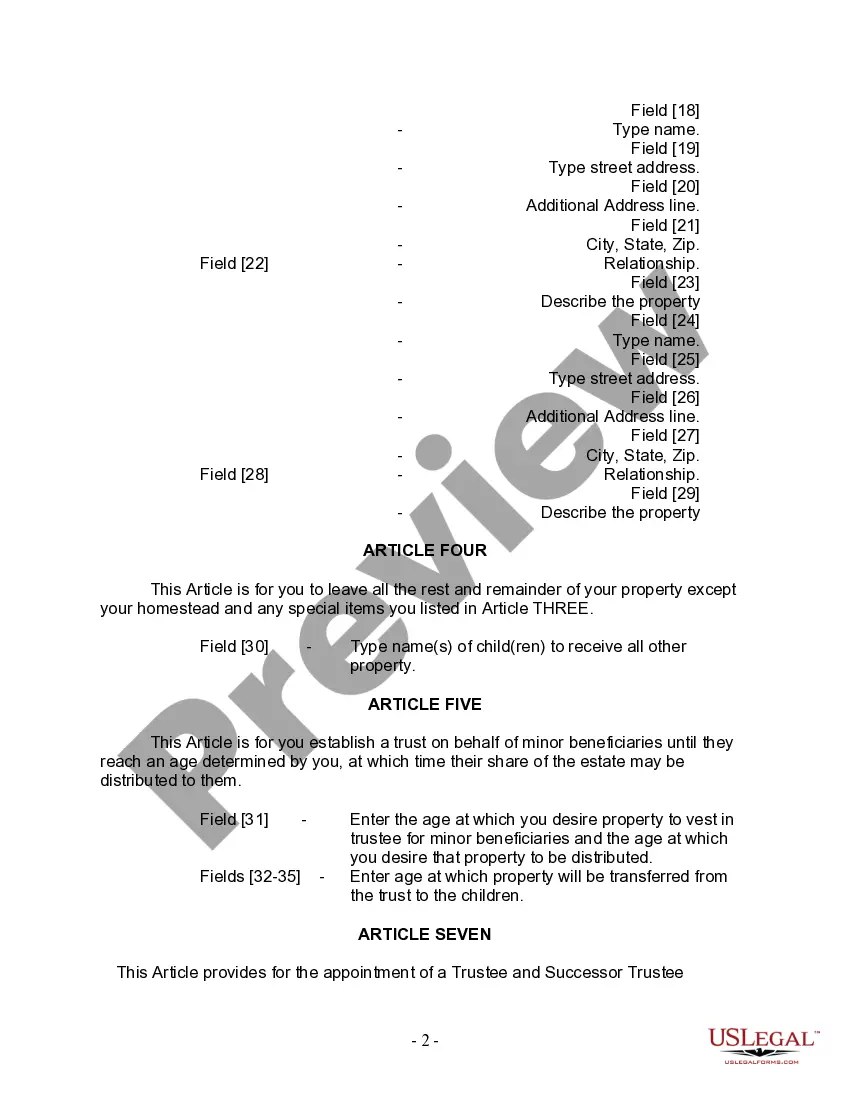
- Detail the specific bequests of property and who will receive them.
- Appoint a personal representative and a trustee for any assets designated for minor children.
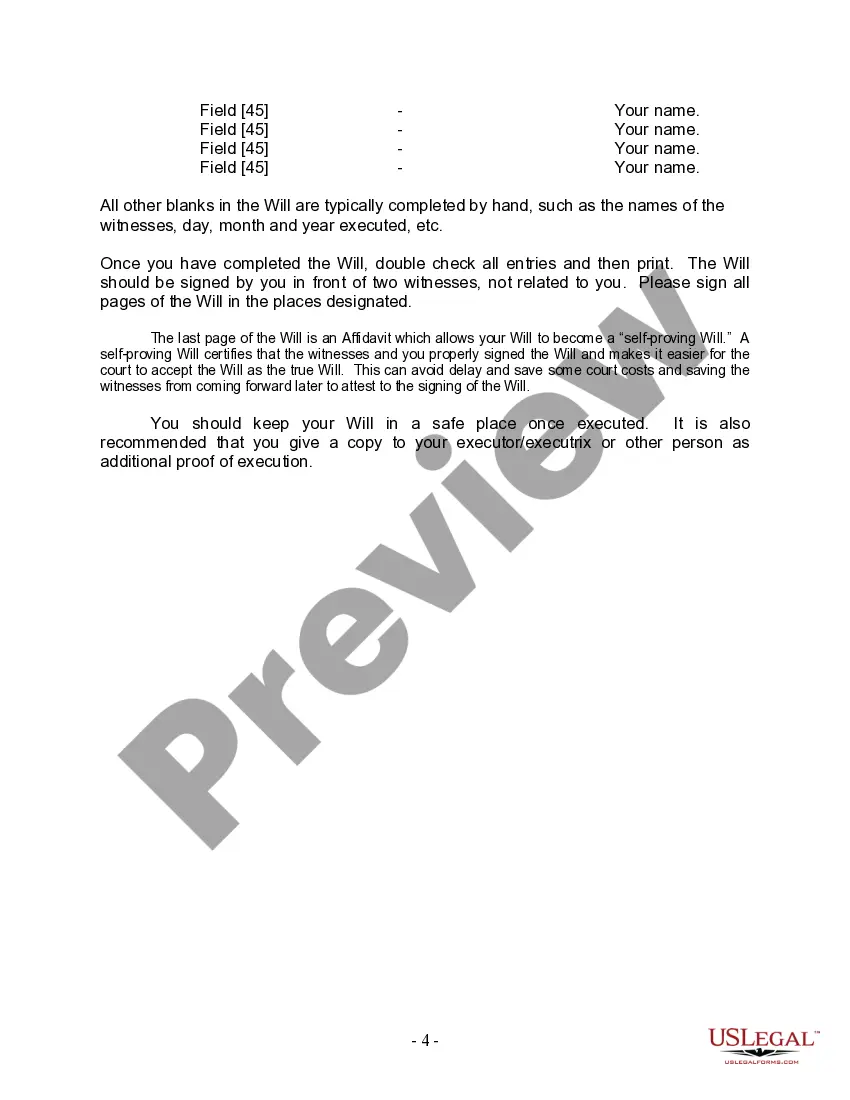
- Have the document signed in the presence of two witnesses who are not beneficiaries.
Is notarization required?
Yes, this form must be notarized to be legally valid. This will ensure that all signatures are authentic and that the document is executed in accordance with legal requirements. US Legal Forms provides integrated online notarization services for your convenience, allowing you to complete the process through a secure video call without the need to travel.
Get your form ready online
Our built-in tools help you complete, sign, share, and store your documents in one place.
Make edits, fill in missing information, and update formatting in US Legal Forms—just like you would in MS Word.
Download a copy, print it, send it by email, or mail it via USPS—whatever works best for your next step.
Sign and collect signatures with our SignNow integration. Send to multiple recipients, set reminders, and more. Go Premium to unlock E-Sign.
If this form requires notarization, complete it online through a secure video call—no need to meet a notary in person or wait for an appointment.
We protect your documents and personal data by following strict security and privacy standards.

Make edits, fill in missing information, and update formatting in US Legal Forms—just like you would in MS Word.

Download a copy, print it, send it by email, or mail it via USPS—whatever works best for your next step.

Sign and collect signatures with our SignNow integration. Send to multiple recipients, set reminders, and more. Go Premium to unlock E-Sign.

If this form requires notarization, complete it online through a secure video call—no need to meet a notary in person or wait for an appointment.

We protect your documents and personal data by following strict security and privacy standards.
Avoid these common issues
- Neglecting to have the will witnessed or notarized, which can invalidate the document.
- Failing to include all children or assets, leading to disputes later.
- Not specifying how to handle debts and expenses, creating financial burdens on beneficiaries.
- Using vague language that may not clearly express intentions regarding asset distribution.
Benefits of completing this form online
- Convenience of filling out the form from home at your own pace.
- Editable fields allow you to customize the document to fit your specific needs.
- Access to expert-drafted templates ensures compliance with legal standards.
- Easy downloading options for immediate use and peace of mind.
Looking for another form?
Form popularity
FAQ
In California, if an individual dies without a will, the surviving spouse typically inherits a substantial portion of the estate. However, if you are a divorced person not remarried with adult and minor children, your ex-spouse does not automatically inherit anything. It is crucial to update your estate planning documents to reflect your current wishes and protect your children’s inheritance. Creating a California Last Will and Testament is a key step in ensuring your estate is distributed according to your desires.
Setting up a will after a divorce involves several straightforward steps. You should first evaluate your current wishes regarding your assets and responsibilities, especially for your adult and minor children. You can use the USLegalForms platform to create a tailored California Last Will and Testament for Divorced Person Not Remarried with Adult and Minor Children, ensuring you address specific considerations like guardianship and property distribution. This proactive approach will help secure peace of mind for you and your children.
Yes, in California, marriage can revoke a previously existing will. This is especially important to consider for a divorced person who has not remarried with adult and minor children. If you decide to remarry, your previous will may no longer reflect your wishes. To secure your intentions after a divorce, it's crucial to create a new California Last Will and Testament that clearly states your desires.
In California, if a person passes away without a will, their surviving spouse is entitled to a significant portion of the estate. However, if you are a divorced person not remarried with adult and minor children, your former spouse does not inherit anything unless specified in your California Last Will and Testament. Understanding the nuances of inheritance laws is essential, especially when children are involved. It is beneficial to draft a will that clearly outlines your intentions and protects your children's interests.
In California, marriage can change how a will functions, especially for divorced persons not remarried with adult and minor children. If a person remarries, their former will may be affected by community property laws, or it might need an update to reflect new family dynamics. However, if you have not remarried, your California Last Will and Testament for Divorced Person Not Remarried with Adult and Minor Children remains valid. It is always wise to review your will after any major life changes.
Yes, an ex-wife can serve as an executor of a will unless there are specific legal reasons preventing this. Choosing an executor requires thoughtful consideration of trust and competency. When creating your California Last Will and Testament for Divorced Person Not Remarried with Adult and Minor Children, think about who would best fulfill this role. Your choice should align with your wishes and the needs of your heirs.
No, a last will and testament does not override a marriage. In California, state laws govern how assets are distributed upon death, which can include community property laws. A California Last Will and Testament for Divorced Person Not Remarried with Adult and Minor Children can specify your intentions. However, if you remarry, ensure you revisit and potentially revise your will to reflect your new circumstances.
To divide assets without a lawyer, begin by making a complete list of all assets and debts. Next, agree on how to divide the assets fairly, taking into consideration the needs of any children involved. Utilizing a California Last Will and Testament for Divorced Person Not Remarried with Adult and Minor Children will help clarify your wishes for asset distribution in your will. This path can lead to a smoother process for both parties.
Yes, a will remains valid after a divorce. However, certain provisions may become ineffective, particularly those that name your ex-spouse as a beneficiary. For a California Last Will and Testament for Divorced Person Not Remarried with Adult and Minor Children, it is crucial to review your will after a divorce. This ensures that your assets are distributed according to your current wishes.
To be valid in California, a will must be written, signed by the testator, and witnessed by at least two individuals who are not beneficiaries. If you are drafting a California Last Will and Testament for Divorced Person Not Remarried with Adult and Minor Children, ensure you meet these requirements to prevent any legal issues down the line. It's also advisable to seek guidance from professionals to navigate the complexities involved.