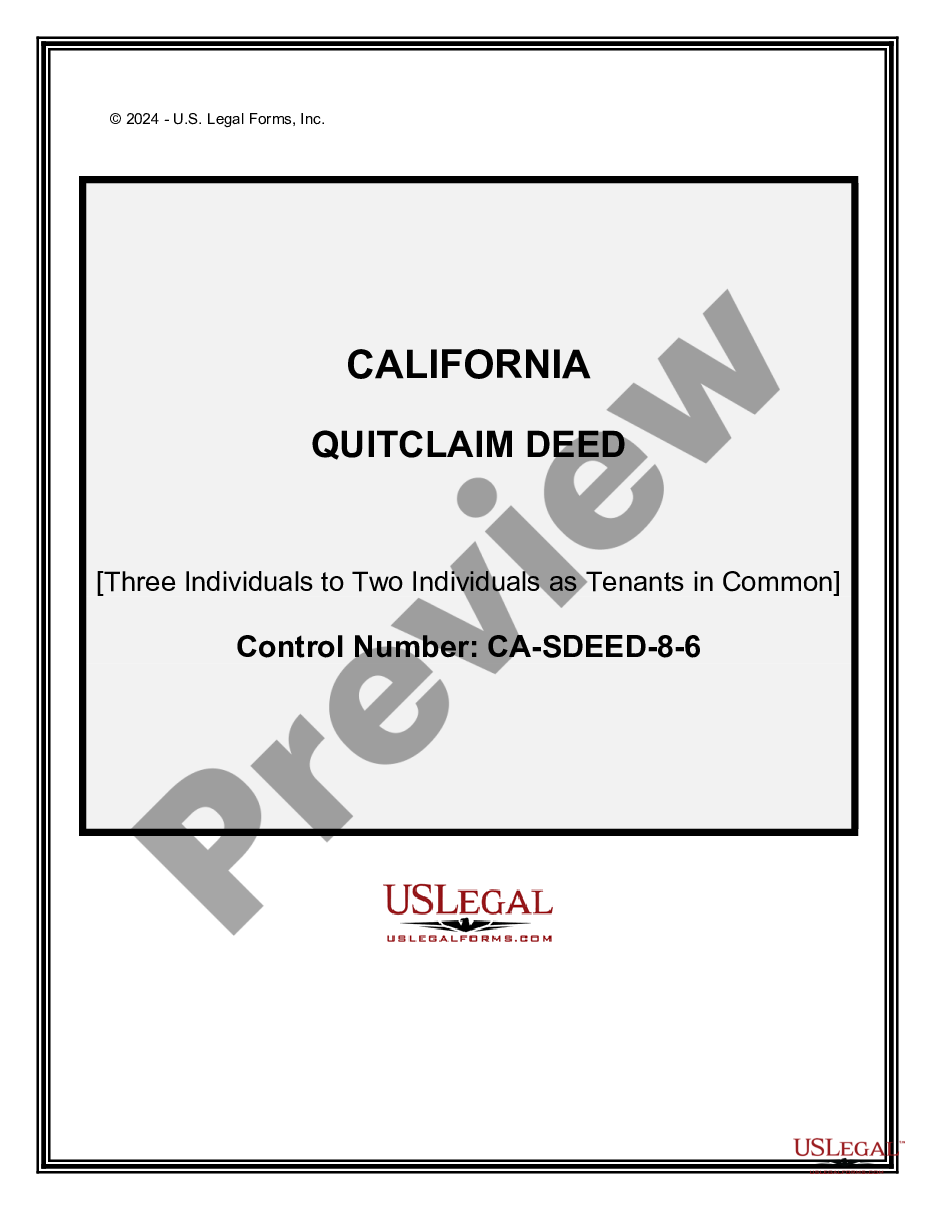
California Quitclaim Deed for Three Individuals to Two Individuals as Tenants in Common
Understanding this form
The Quitclaim Deed for Three Individuals to Two Individuals as Tenants in Common is a legal document that transfers property ownership. In this form, three individuals (the grantors) relinquish their interest in a property to two individuals (the grantees), who will share the ownership as tenants in common. This type of deed is mainly used to clarify property ownership without warranty or guarantee, differing from other deeds by offering no title assurances.
What’s included in this form
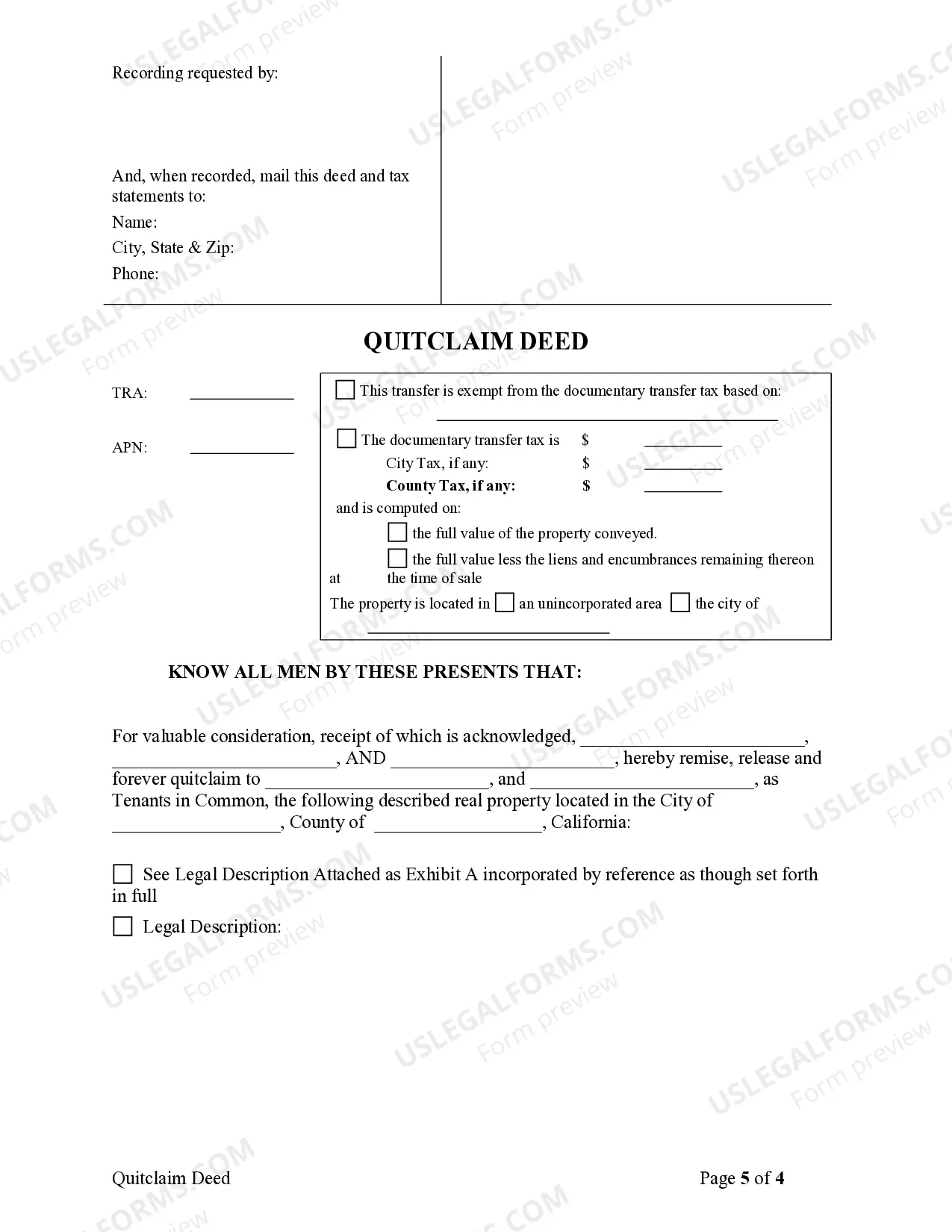
- The names of all grantors and grantees involved in the transaction.
- A description of the property being transferred, including its legal description.
- Clauses affirming that the grantors are transferring their interests without any warranties.
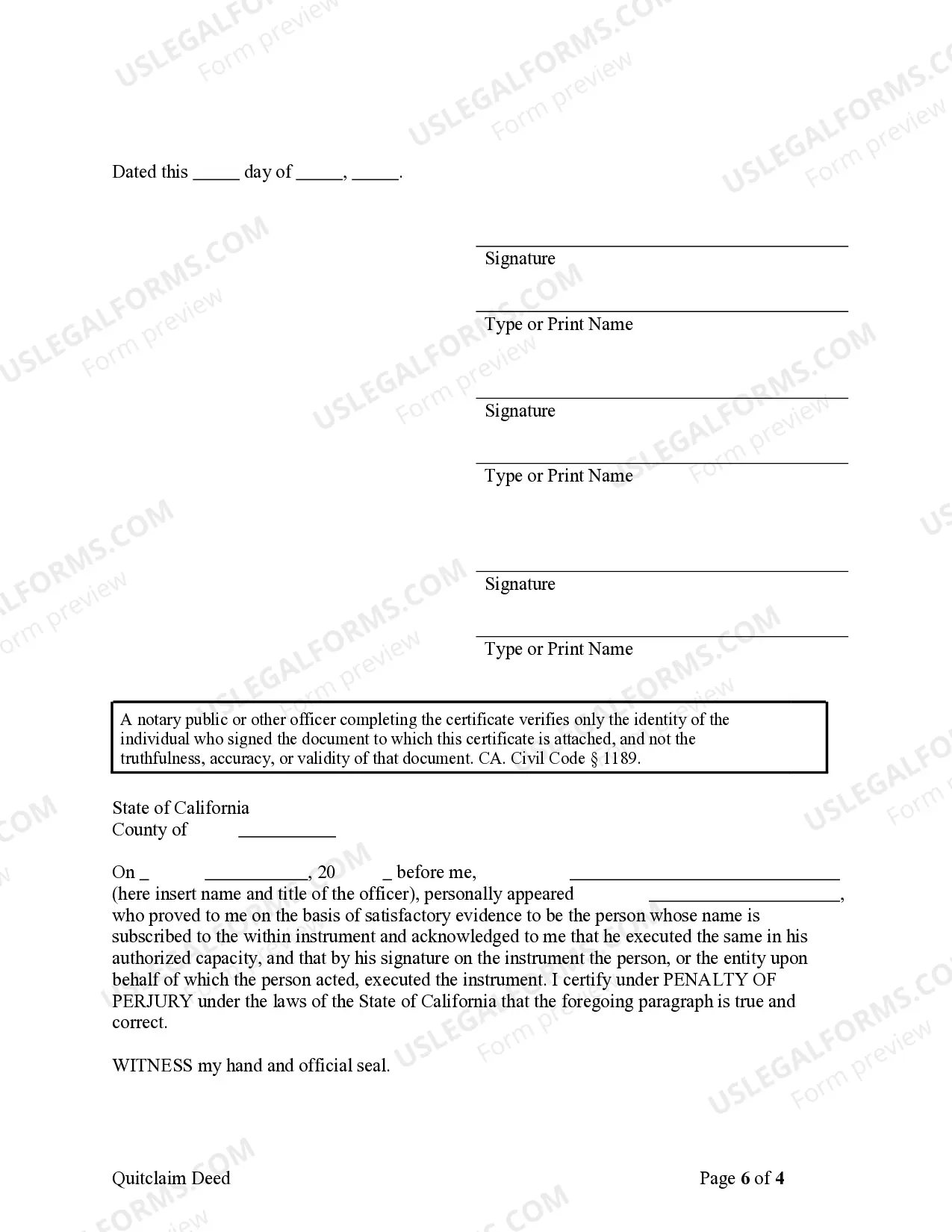
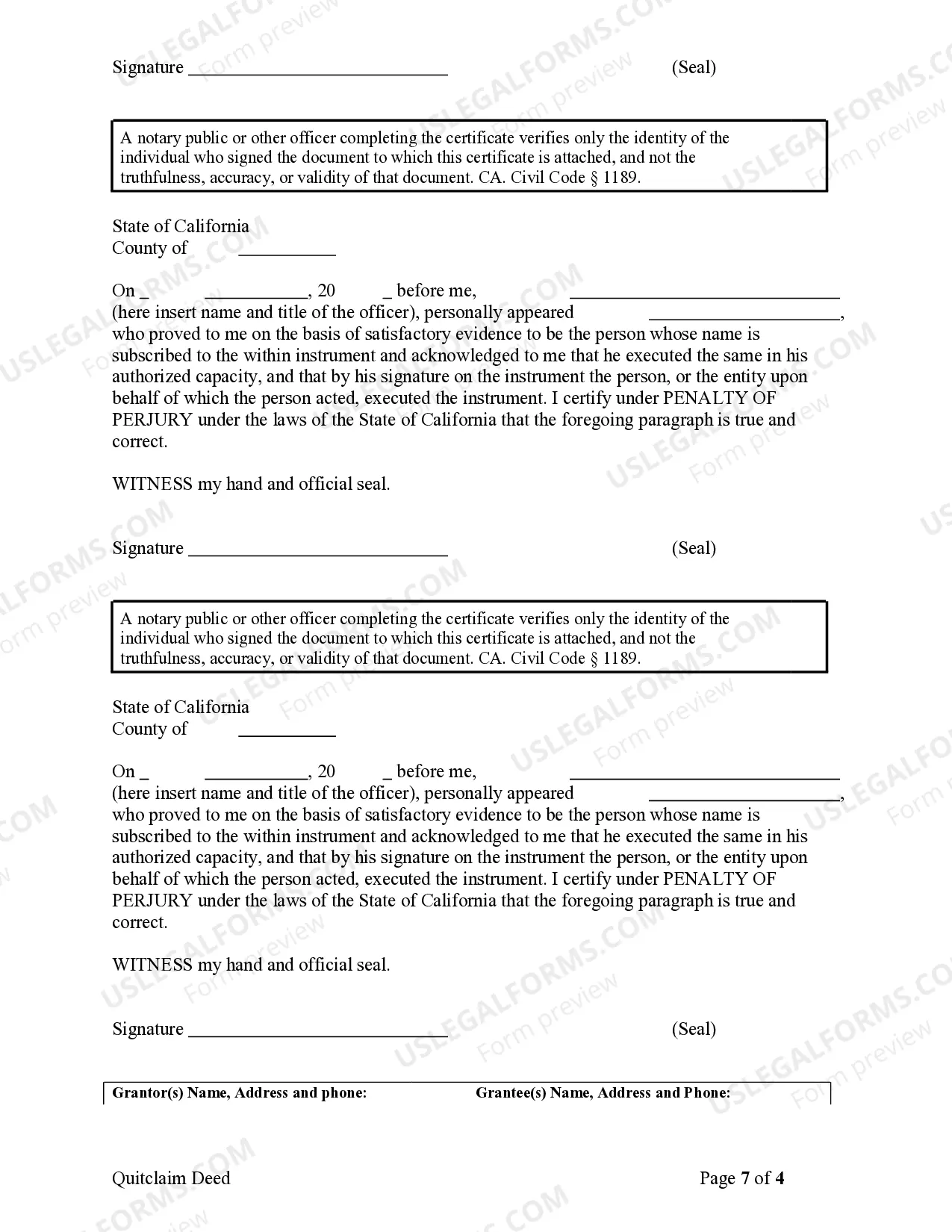
- Signature lines for all grantors, indicating their consent to the transfer.
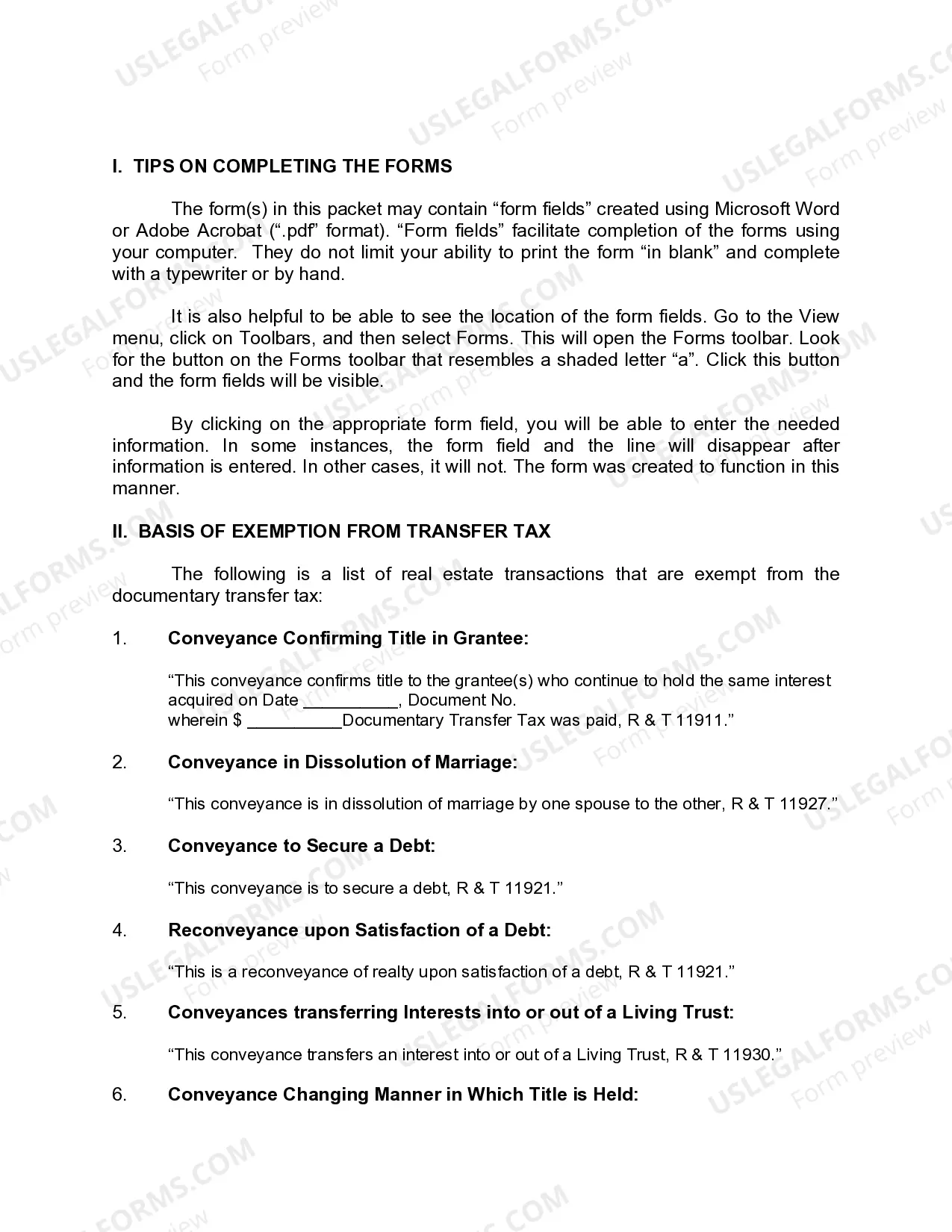
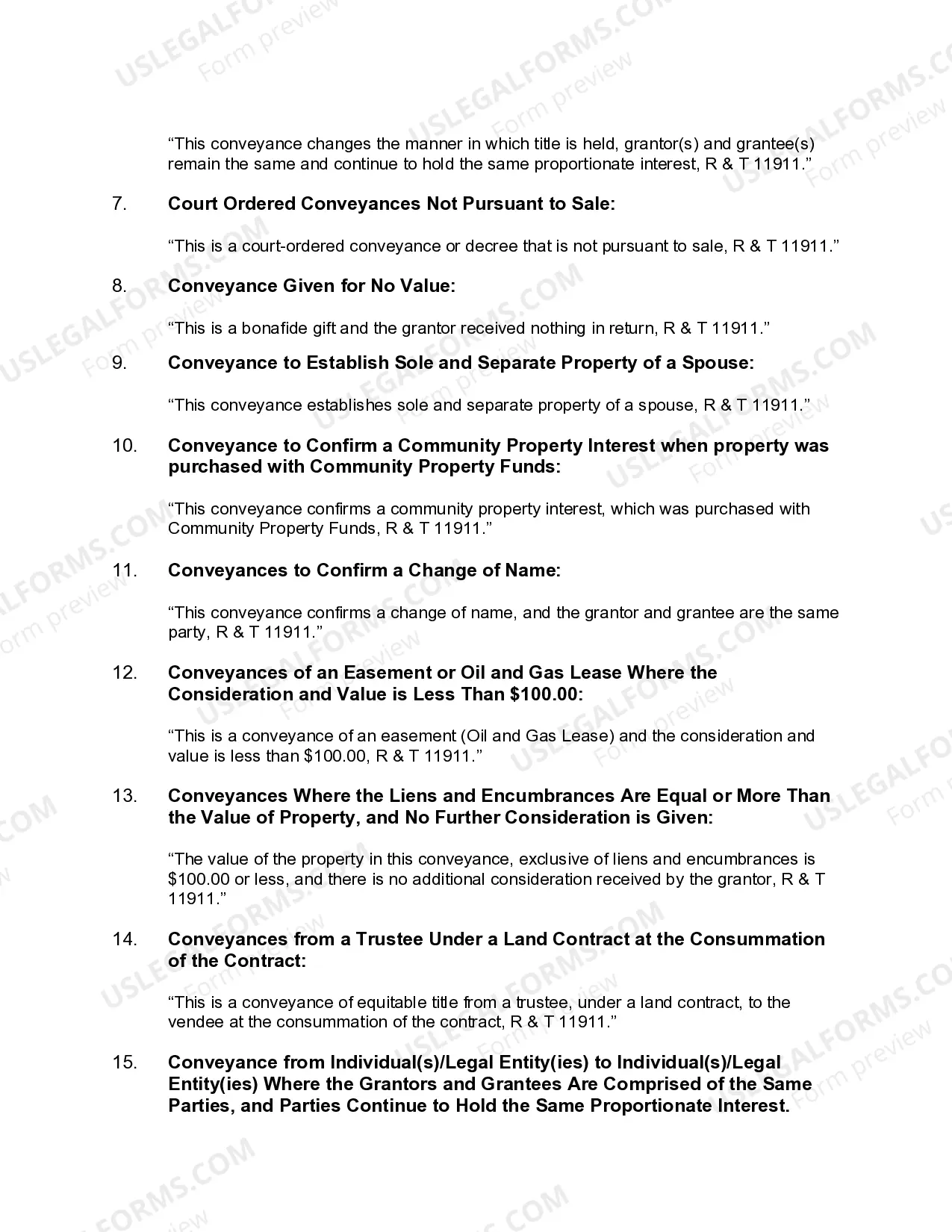
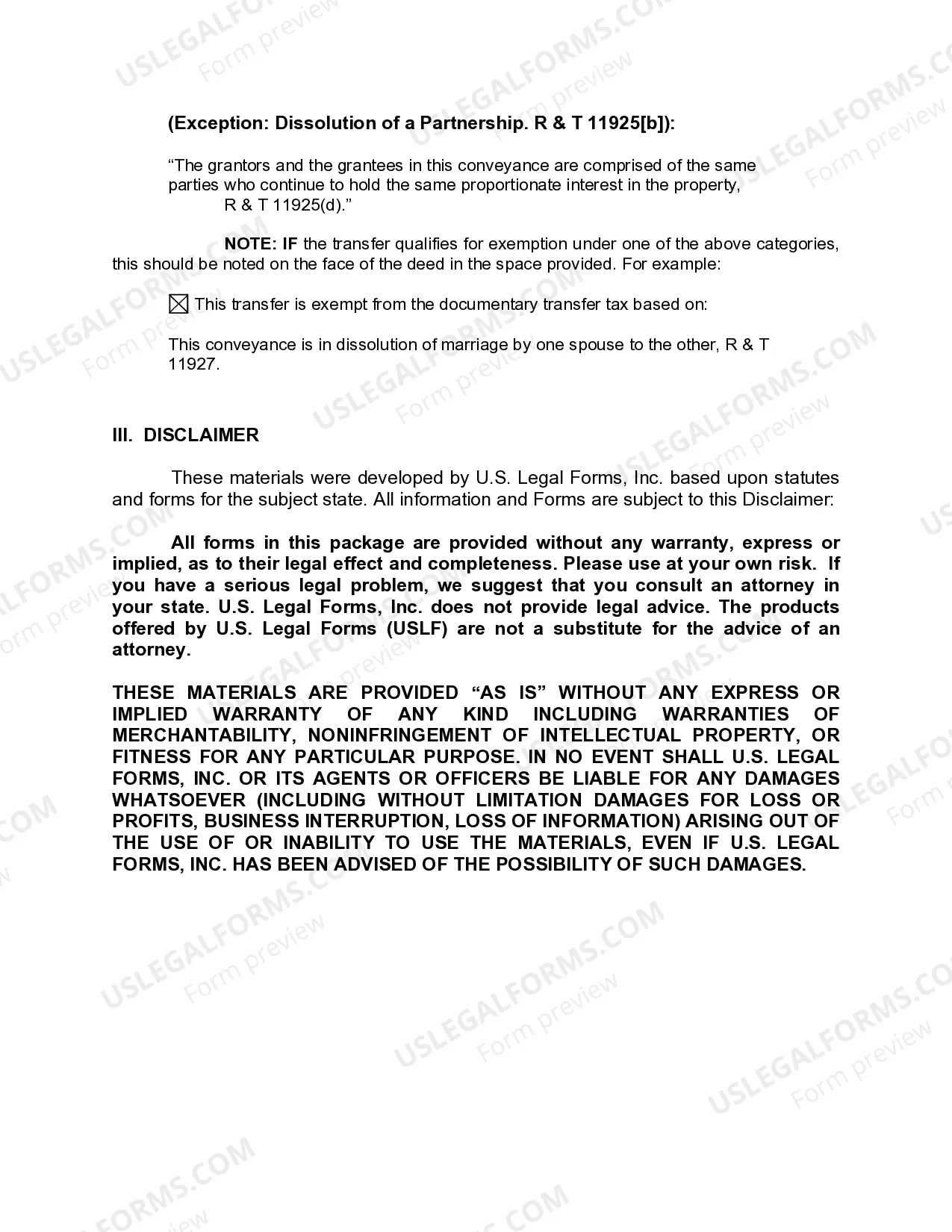
- A section noting any potential exemptions from transfer tax.





When this form is needed
This form is useful when three individuals wish to transfer their shares of property ownership to two new owners as tenants in common. Common scenarios include family estate planning, property transactions among friends, or when simplifying property ownership through a quitclaim deed without needing extensive legal formalities.
Who this form is for
- Individuals acting as grantors looking to transfer property interests.
- Individuals receiving property as grantees and intending to hold it as tenants in common.
- Estate planners managing shared property interests among multiple parties.
- Parties involved in personal or family property agreements.
How to complete this form
- Identify all parties involved: list the names of the three grantors and the two grantees.
- Provide a clear description of the property, including the legal details as required.
- Complete any applicable exemptions from transfer tax, noting relevant codes if necessary.
- Ensure all grantors sign the deed in the presence of a notary if required.
- Review the form for accuracy before finalizing the transfer.
Does this form need to be notarized?
Yes, this form must be notarized to be legally valid. It is essential for the signatures of the grantors to be witnessed by a notary public to ensure authenticity and prevent challenges to the deed later. US Legal Forms offers integrated online notarization services for added convenience.
Get your form ready online
Our built-in tools help you complete, sign, share, and store your documents in one place.
Make edits, fill in missing information, and update formatting in US Legal Forms—just like you would in MS Word.
Download a copy, print it, send it by email, or mail it via USPS—whatever works best for your next step.
Sign and collect signatures with our SignNow integration. Send to multiple recipients, set reminders, and more. Go Premium to unlock E-Sign.
If this form requires notarization, complete it online through a secure video call—no need to meet a notary in person or wait for an appointment.
We protect your documents and personal data by following strict security and privacy standards.

Make edits, fill in missing information, and update formatting in US Legal Forms—just like you would in MS Word.

Download a copy, print it, send it by email, or mail it via USPS—whatever works best for your next step.

Sign and collect signatures with our SignNow integration. Send to multiple recipients, set reminders, and more. Go Premium to unlock E-Sign.

If this form requires notarization, complete it online through a secure video call—no need to meet a notary in person or wait for an appointment.

We protect your documents and personal data by following strict security and privacy standards.
Common mistakes to avoid
- Failing to include all grantorsâ signatures, which can invalidate the deed.
- Not providing the correct legal description of the property.
- Omitting the transfer tax exemption note if applicable.
- Using outdated information about the property or the parties involved.
Advantages of online completion
- Convenience of downloading and completing the form at your own pace.
- Editability allows for easy corrections and adjustments.
- Access to professionally drafted templates that meet legal requirements.
- Immediate availability, reducing delays associated with traditional legal services.
Legal use & context
- This Quitclaim Deed can be used to transfer property ownership within familial or informal agreements.
- It is important to understand that using this deed does not guarantee that the property is free of claims or liens.
- This form is generally suited for situations where parties are familiar with each other and confident in the propertyâs conditions.
Summary of main points
- A Quitclaim Deed allows for the transfer of property interests between known parties.
- It is important to complete the deed accurately to avoid legal complications.
- Consider local laws to determine if notarization is needed.
- This form is particularly useful in familial real estate transactions.
Looking for another form?



Form popularity
FAQ
In California, a quitclaim deed for three individuals to two individuals as tenants in common can be prepared by various professionals, including attorneys, title companies, or real estate experts. While you can draft one yourself, seeking help assures proper compliance with state laws and accuracy in the details. Utilizing platforms like US Legal Forms simplifies this process, providing you with customizable templates and guidance for creating your California quitclaim deed. This ensures that all parties understand the implications and benefits of the deed.
Yes, you can have multiple names on a deed, allowing for various ownership structures, such as joint tenancy or tenancy in common. When creating a deed that reflects multiple owners, it's vital to specify how the ownership will be divided. For example, a California Quitclaim Deed for Three Individuals to Two Individuals as Tenants in Common effectively accommodates these types of arrangements.
To add a person to a deed in California, you must complete a new quitclaim deed that specifies the current owners and the new person's information. This deed should be signed by all existing owners and notarized to ensure validity. Utilizing US Legal Forms can help you create a California Quitclaim Deed for Three Individuals to Two Individuals as Tenants in Common, making this process smoother.
Yes, husbands and wives can hold title as tenants in common in California. This arrangement allows each spouse to own a distinct percentage of the property, which can vary according to their agreement. Opting for a California Quitclaim Deed for Three Individuals to Two Individuals as Tenants in Common can facilitate this type of ownership structure.
The requirements for a quitclaim deed in Washington state include proper identification of all parties, a clear property description, and notarization. The deed must also be recorded with the local county auditor to ensure it is legally binding. Similar to a California Quitclaim Deed for Three Individuals to Two Individuals as Tenants in Common, adhering to these requirements is essential for a valid transfer of ownership.
To change a deed to tenants in common, you will need to draft a new quitclaim deed that specifies the ownership arrangement. This document should clearly state the names of the individuals and their respective shares in the property. You can utilize platforms like US Legal Forms to streamline the process of creating a California Quitclaim Deed for Three Individuals to Two Individuals as Tenants in Common.
A quitclaim deed can include multiple parties, allowing for flexibility in ownership arrangements. Specifically, you can create a California Quitclaim Deed for Three Individuals to Two Individuals as Tenants in Common, which makes it suitable for various co-ownership scenarios. However, all individuals named on the deed must understand their ownership stake and responsibilities.
A quitclaim deed can be deemed invalid when it lacks essential elements such as proper notarization or signatures from all involved parties. Additionally, if the deed does not include a clear legal description of the property, it may lead to issues in the future. Ensuring accurate and complete documentation is crucial when executing a California Quitclaim Deed for Three Individuals to Two Individuals as Tenants in Common.
In California, the rules for joint tenancy include the requirement that all owners hold equal ownership shares and share rights of survivorship. Additionally, a California Quitclaim Deed for Three Individuals to Two Individuals as Tenants in Common can be used to establish joint tenancy by clearly stating the intention to create such ownership. It's essential to follow the proper legal procedures to ensure that the joint tenancy is valid and enforceable.
Quitclaim deeds, such as the California Quitclaim Deed for Three Individuals to Two Individuals as Tenants in Common, are often frowned upon due to their lack of warranties. This characteristic can lead to significant risks for buyers, as they inherit any existing claims against the property without any guarantee of title. Consequently, many prefer traditional transfer methods that offer more protection.