California Bill of Sale of Automobile and Odometer Statement
About this form
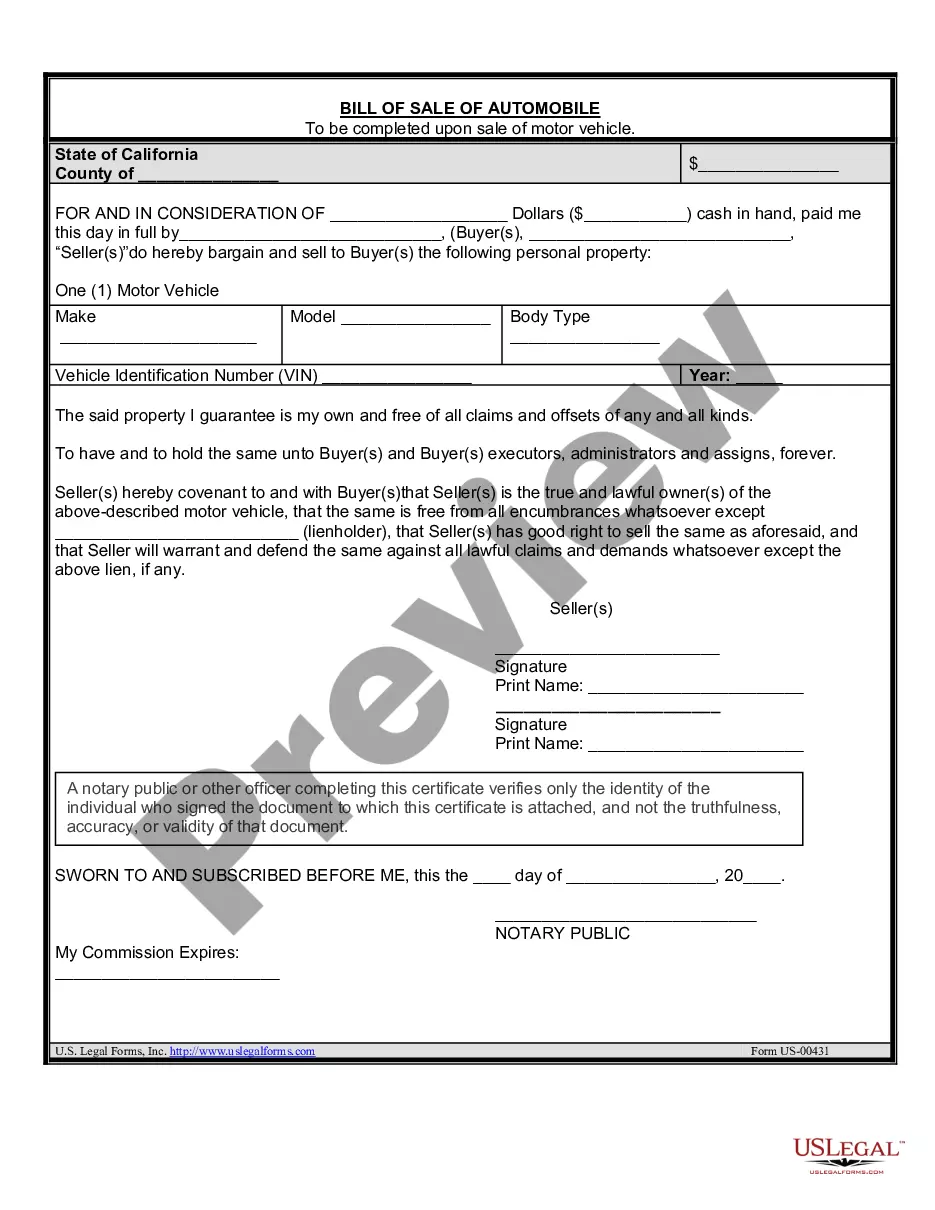
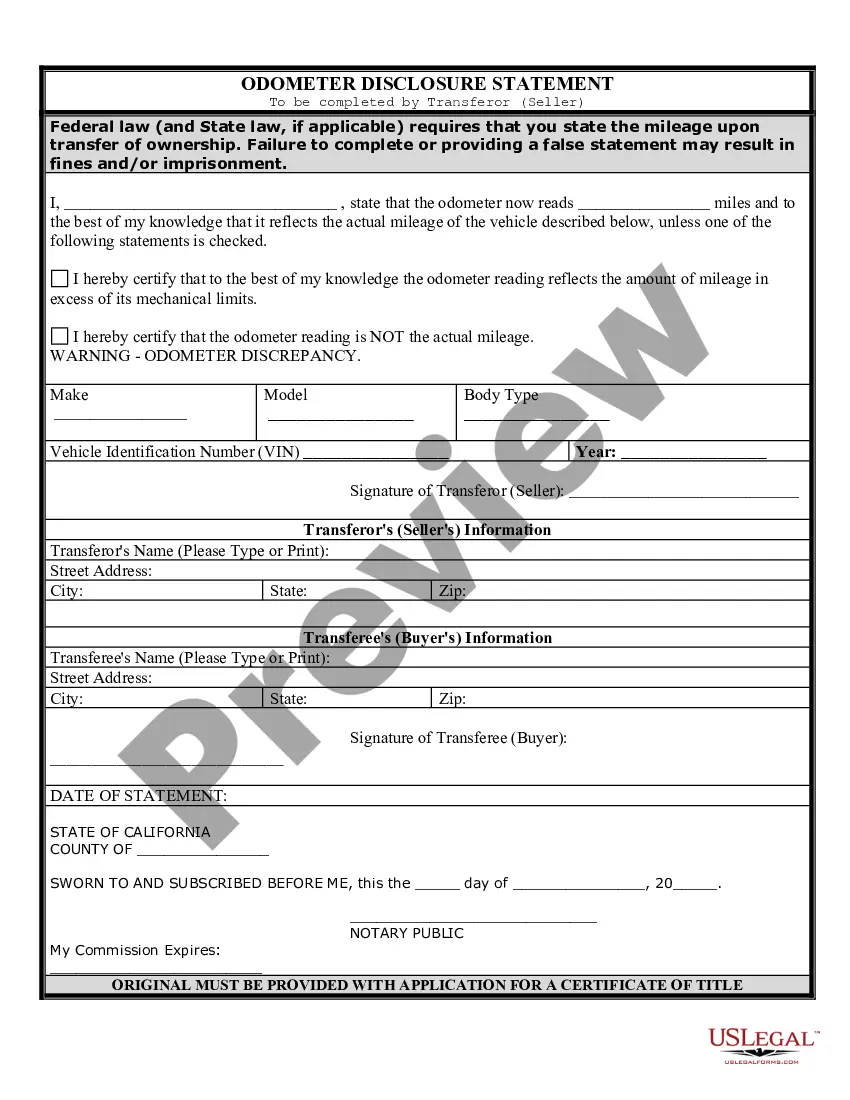
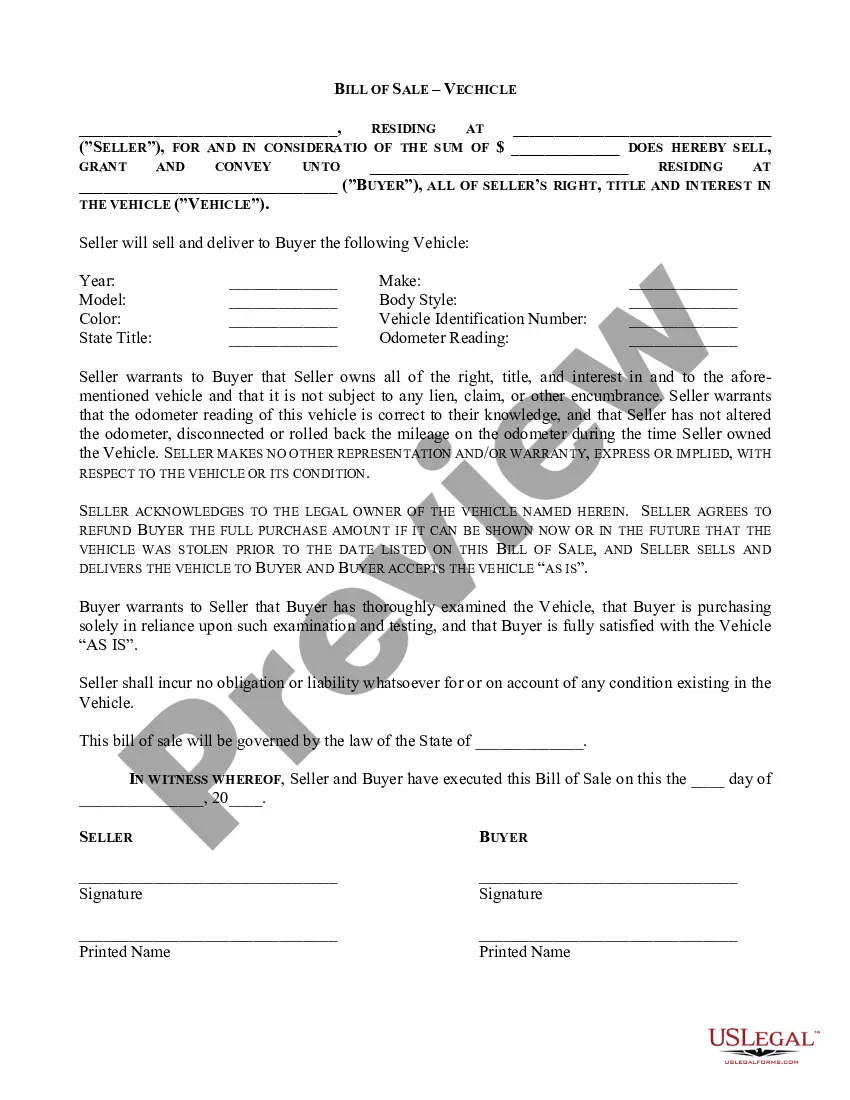
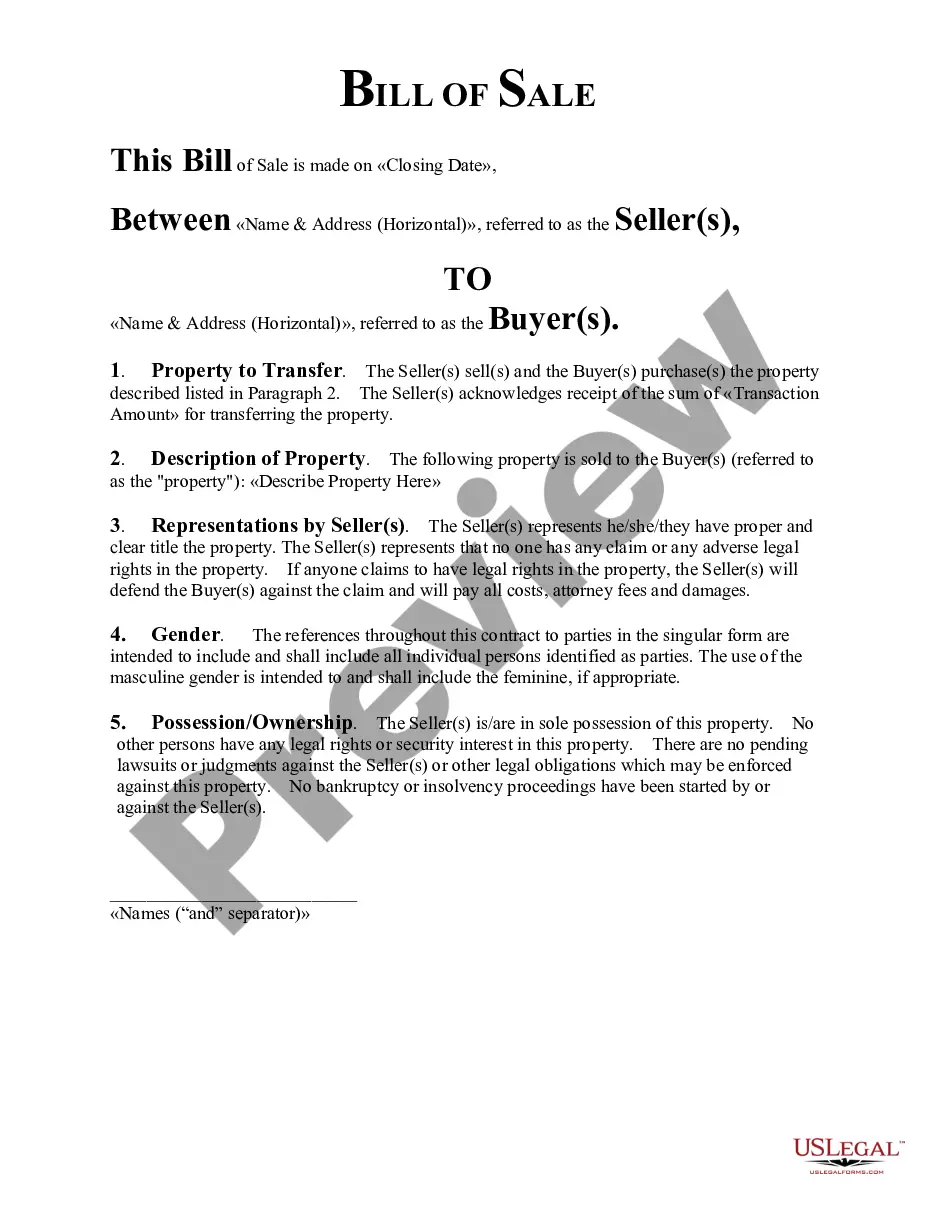
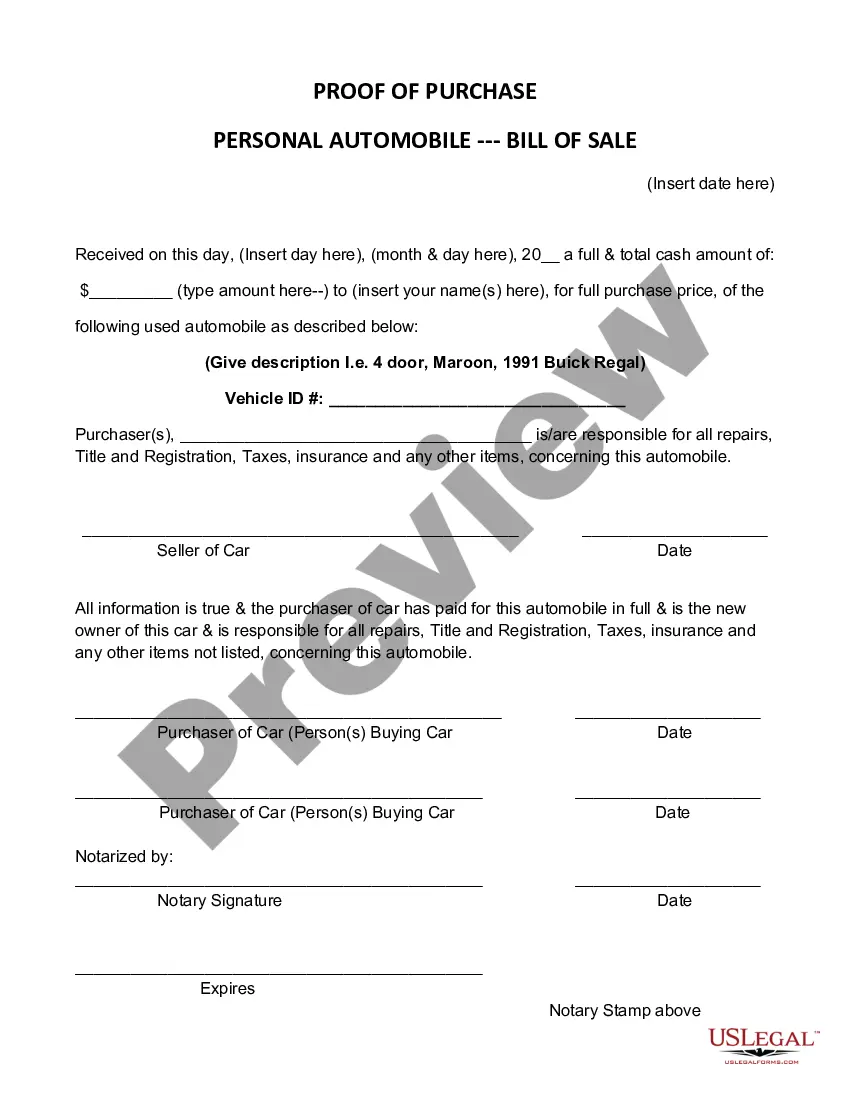
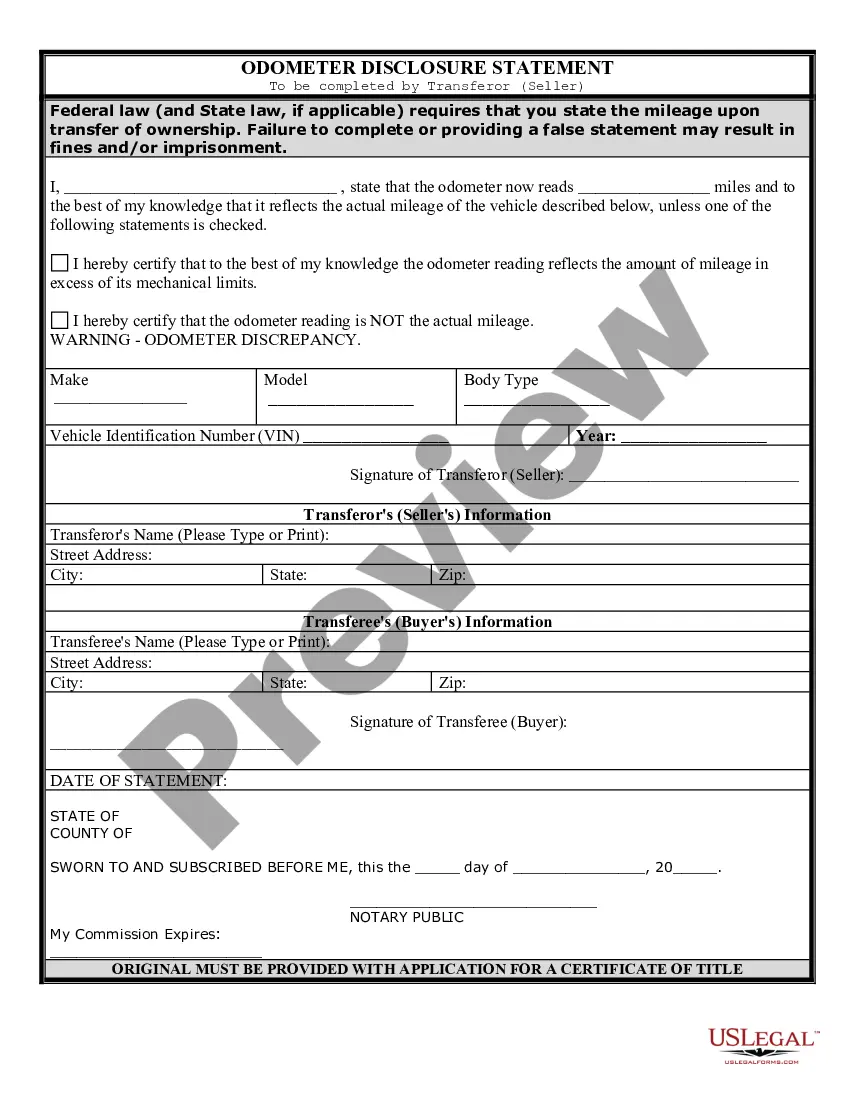
The Bill of Sale of Automobile, also known as a vehicle bill of sale, is a legal document that facilitates the transfer of ownership of a motor vehicle from the seller to the buyer. This form not only documents the sale price, make, model, and Vehicle Identification Number (VIN) but also includes a mandatory Odometer Disclosure Statement as required by federal and state law. This distinction makes it essential for both private sales and transactions involving dealerships.
Form components explained
- Seller Information: Details about the seller, including name and address.
- Buyer Information: Details about the buyer, including name and address.
- Vehicle Details: Includes make, model, year, body type, and VIN.
- Sale Price: The total cash amount paid for the vehicle.
- Odometer Disclosure Statement: Required statement indicating the vehicle's mileage at the time of sale.
- Notary Section: Area for notarization to validate the document.
Situations where this form applies
This form should be used whenever a motor vehicle is sold or transferred from one person to another. It is particularly useful in private sales where there is no dealership involved, as it protects both the seller and buyer by confirming the sale and ensuring that the odometer reading is accurate. It is also required for registering the vehicle under the new owner's name.
Who should use this form
- Individuals selling or buying a used automobile.
- Dealers or auction houses facilitating vehicle sales.
- Individuals wishing to document the transfer of ownership for legal or record-keeping purposes.
How to complete this form
- Identify the parties involved by entering the names of the buyer and seller.
- Provide complete details of the vehicle, including make, model, year, body type, and VIN.
- Specify the sale price in both numeral and written form.
- Complete the Odometer Disclosure Statement with the current mileage.
- Have the seller sign the document and take it to a notary public for notarization.
Notarization requirements for this form
To make this form legally binding, it must be notarized. Our online notarization service, powered by Notarize, lets you verify and sign documents remotely through an encrypted video session.
Get your form ready online
Our built-in tools help you complete, sign, share, and store your documents in one place.
Make edits, fill in missing information, and update formatting in US Legal Forms—just like you would in MS Word.
Download a copy, print it, send it by email, or mail it via USPS—whatever works best for your next step.
Sign and collect signatures with our SignNow integration. Send to multiple recipients, set reminders, and more. Go Premium to unlock E-Sign.
If this form requires notarization, complete it online through a secure video call—no need to meet a notary in person or wait for an appointment.
We protect your documents and personal data by following strict security and privacy standards.

Make edits, fill in missing information, and update formatting in US Legal Forms—just like you would in MS Word.

Download a copy, print it, send it by email, or mail it via USPS—whatever works best for your next step.

Sign and collect signatures with our SignNow integration. Send to multiple recipients, set reminders, and more. Go Premium to unlock E-Sign.

If this form requires notarization, complete it online through a secure video call—no need to meet a notary in person or wait for an appointment.

We protect your documents and personal data by following strict security and privacy standards.
Avoid these common issues
- Failing to provide complete vehicle information, especially the VIN.
- Not completing the Odometer Disclosure Statement correctly.
- Neglecting to notarize the form where required, leading to potential legal issues.
Why use this form online
- Convenience of downloading the form instantly without leaving home.
- Editability to customize the form to accurately reflect the details of the sale.
- Reliable templates drafted by licensed attorneys, ensuring legal compliance.
Looking for another form?
Form popularity
FAQ
In California, a bill of sale is not the official document for transferring a vehicle title, but it plays a crucial role in the process. When completing a sale, the seller must provide the buyer with the vehicle title alongside the California Bill of Sale of Automobile and Odometer Statement. This combination allows for a proper title transfer at the DMV, ensuring all legal requirements are met.
To report the sale of a car in California, the seller should complete the Notice of Transfer and Release of Liability form and submit it to the DMV. Additionally, the seller should provide the buyer with the California Bill of Sale of Automobile and Odometer Statement. This ensures that the DMV updates the vehicle's ownership records promptly and protects the seller from future liabilities.
In California, a bill of sale can be handwritten as long as it includes essential details such as the buyer's and seller's information, vehicle description, and a statement of the odometer reading. Make sure to also include the California Bill of Sale of Automobile and Odometer Statement for completeness. This handwritten document is valid as long as it meets all the legal requirements set by the state.
The odometer statement is typically provided by the seller of the vehicle. It is an essential part of the California Bill of Sale of Automobile and Odometer Statement, assuring the buyer of the vehicle's true mileage. When in doubt, you can utilize services like US Legal Forms to ensure you have the proper documentation to support your sale.
You can get an odometer disclosure statement directly from the seller or dealership involved in the vehicle sale. If you need a formalized document, various platforms, including US Legal Forms, provide specific forms, including the California Bill of Sale of Automobile and Odometer Statement, ensuring you have all the required documentation for your transaction.
Yes, Tennessee law requires an odometer disclosure statement when transferring vehicle ownership. This disclosure is important for ensuring transparency regarding the vehicle's mileage. By using a California Bill of Sale of Automobile and Odometer Statement that includes this information, you can ensure compliance and a smooth transaction.
Generally, an odometer disclosure statement does not need to be notarized in California. The primary requirement is that both the seller and buyer must sign the California Bill of Sale of Automobile and Odometer Statement. For the best practices, consulting with a local authority or utilizing platforms like US Legal Forms can provide clarity tailored to your situation.
Yes, a handwritten California Bill of Sale of Automobile and Odometer Statement is legal in California. However, it is essential to ensure that all necessary details are included, such as the vehicle's description, identification numbers, and the signatures of both parties. If you prefer a more structured document, templates are widely available, and platforms like US Legal Forms can provide reliable options.
An odometer disclosure statement is not a title; rather, it serves as a crucial document that verifies the mileage of a vehicle at the time of sale. This statement is a part of the California Bill of Sale of Automobile and Odometer Statement. It is important for both buyers and sellers to complete this disclosure accurately to prevent future disputes. By using our platform at US Legal Forms, you can easily create a comprehensive bill of sale that includes the necessary odometer statement.
If you are in Tennessee (TN) and selling or purchasing a vehicle, you need an odometer disclosure statement. This requirement parallels that of California, ensuring accurate mileage representation during sales. Utilizing a dependable form service like uslegalforms can help ensure compliance with all state regulations.