Arizona Complaint for Monies Owed
About this form
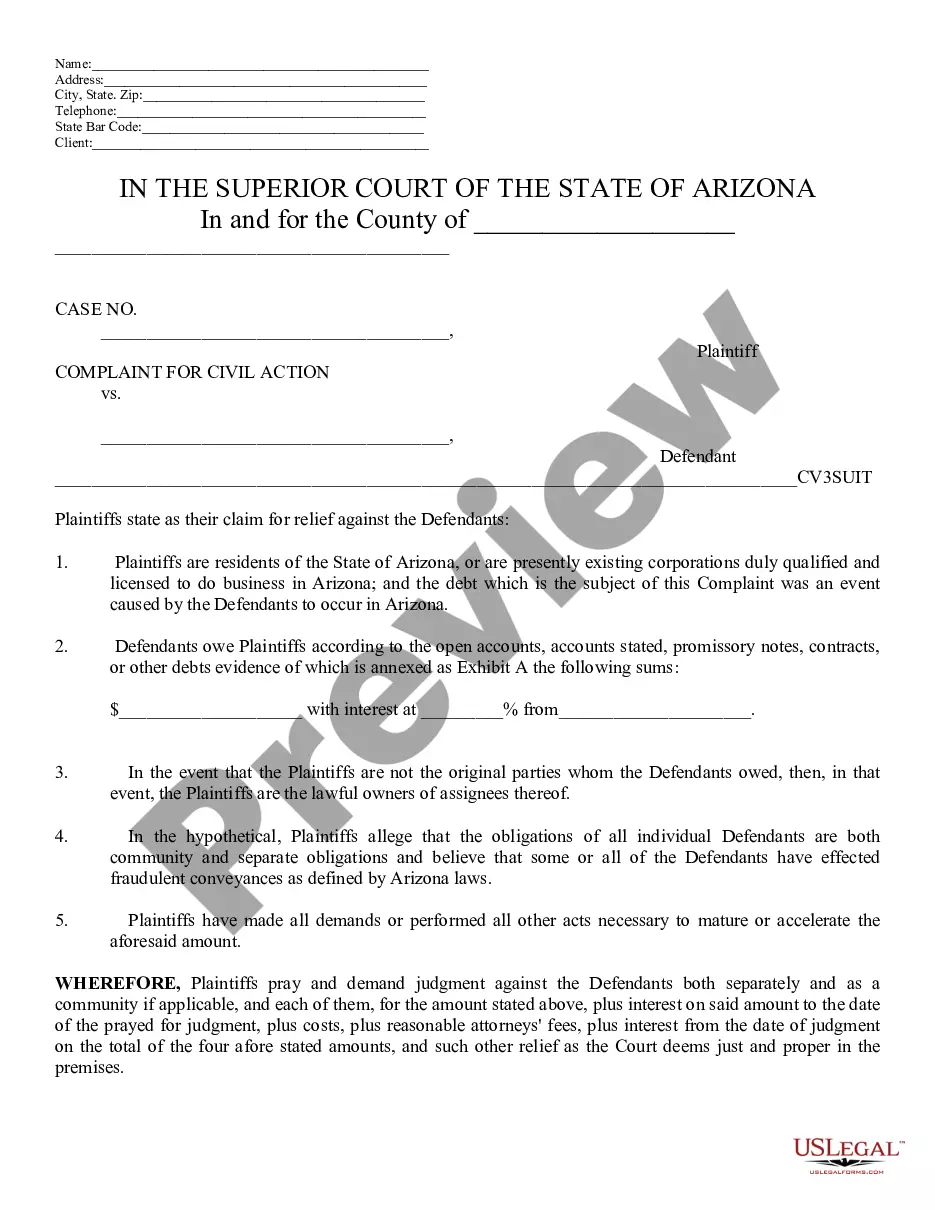
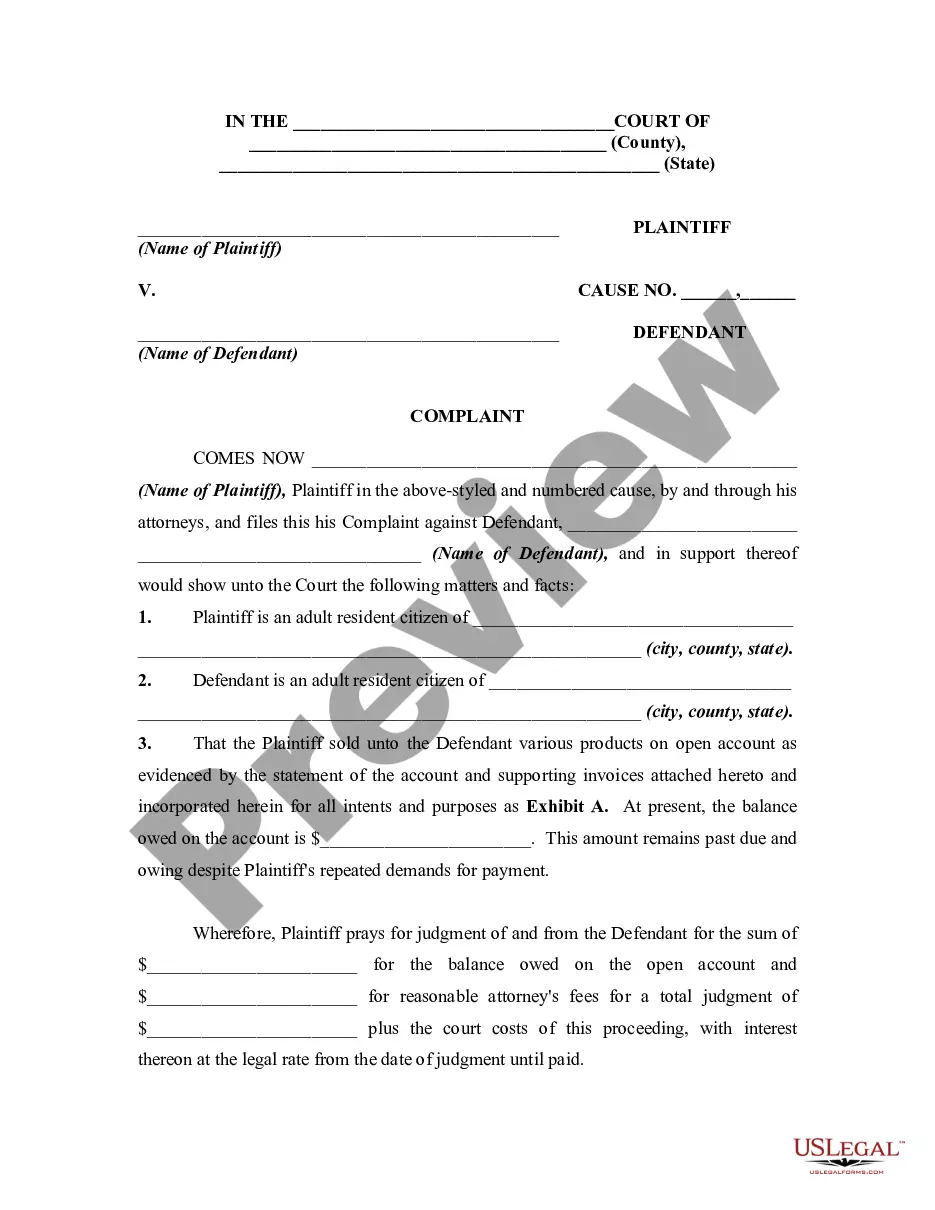
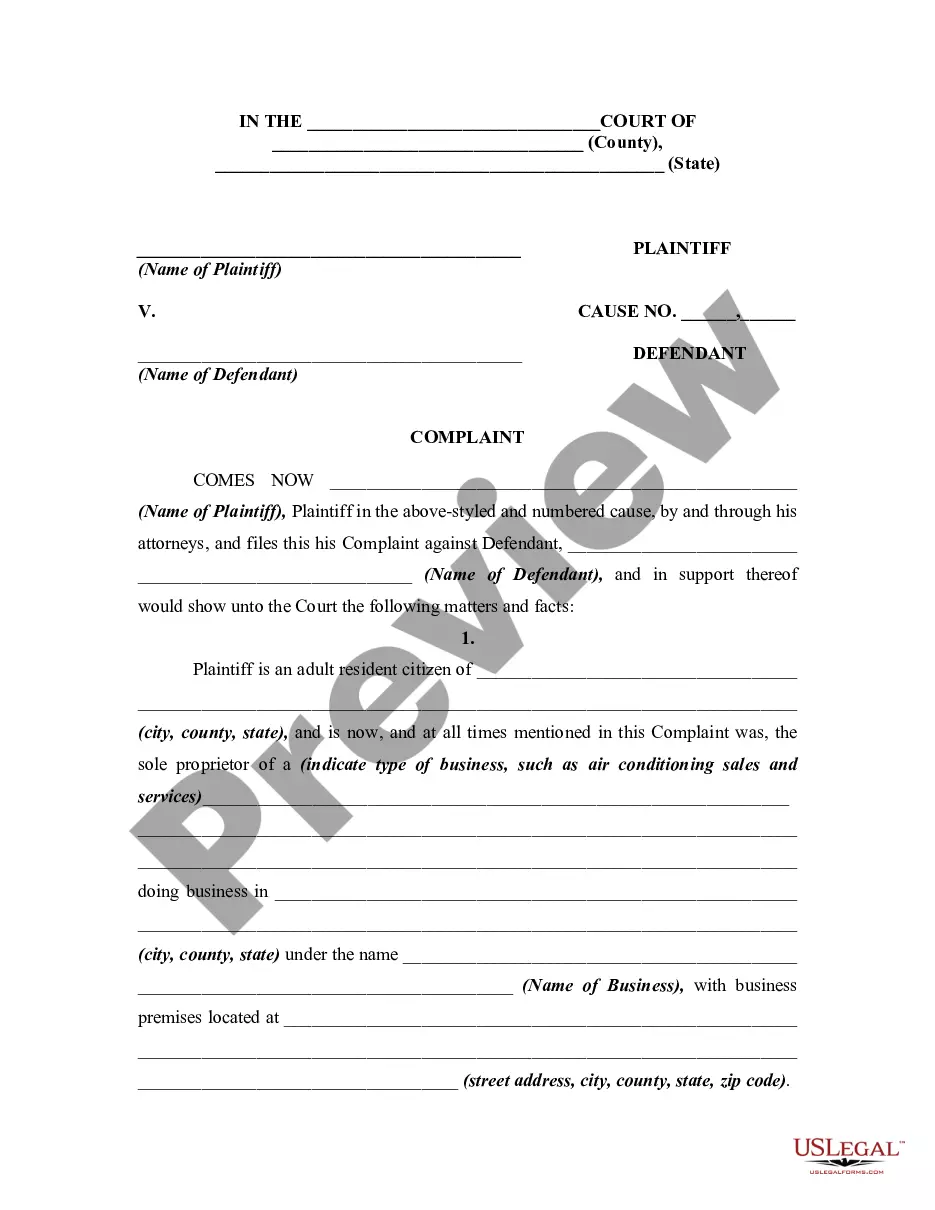
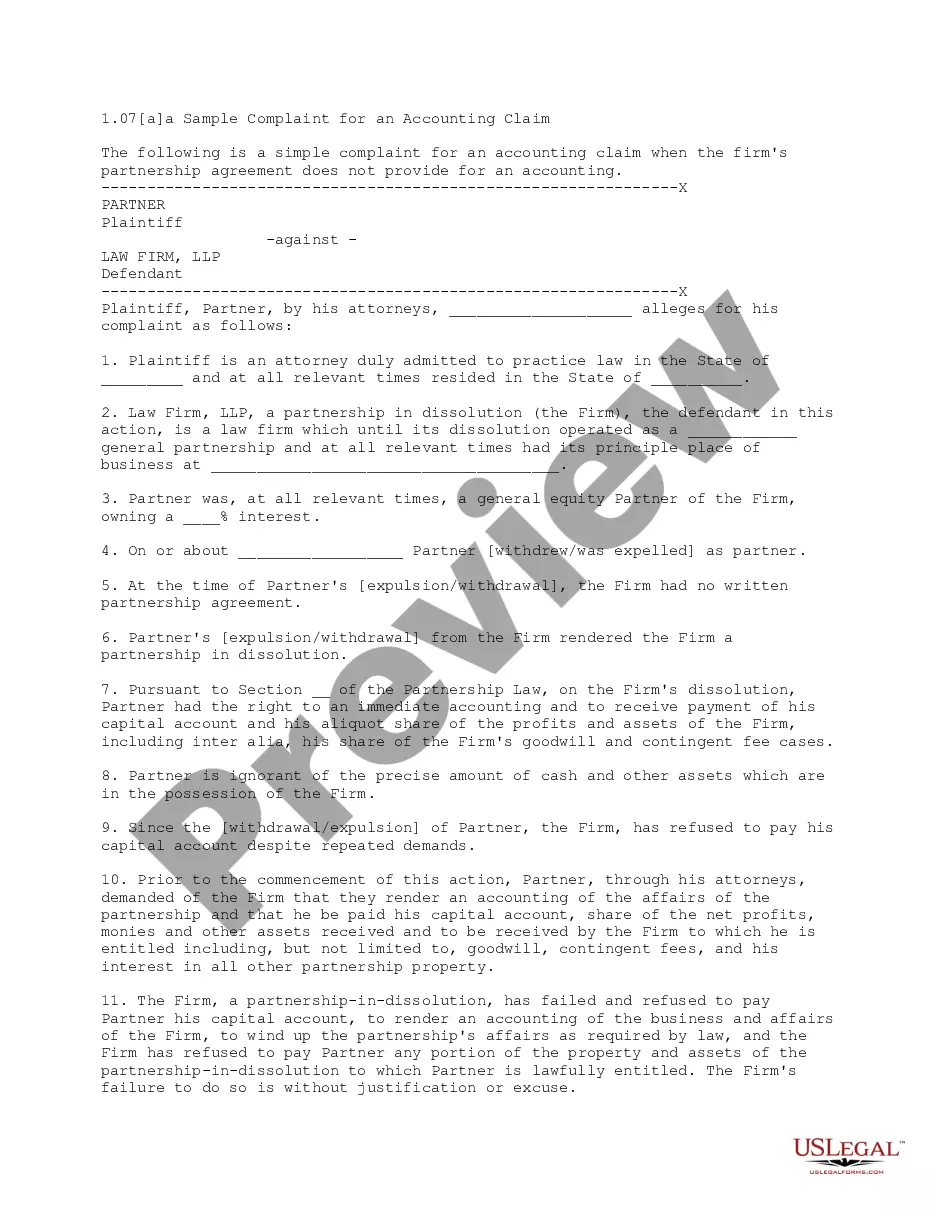
The Complaint for Monies Owed is a legal document used to initiate a civil action when one party claims that another party owes a debt on an open account. This form outlines the complaint and serves to inform the defendant about the claim. It is specifically designed for situations where a monetary obligation is disputed or has not been fulfilled, distinguishing it from other legal documents that may address different types of claims or contracts.
Key parts of this document
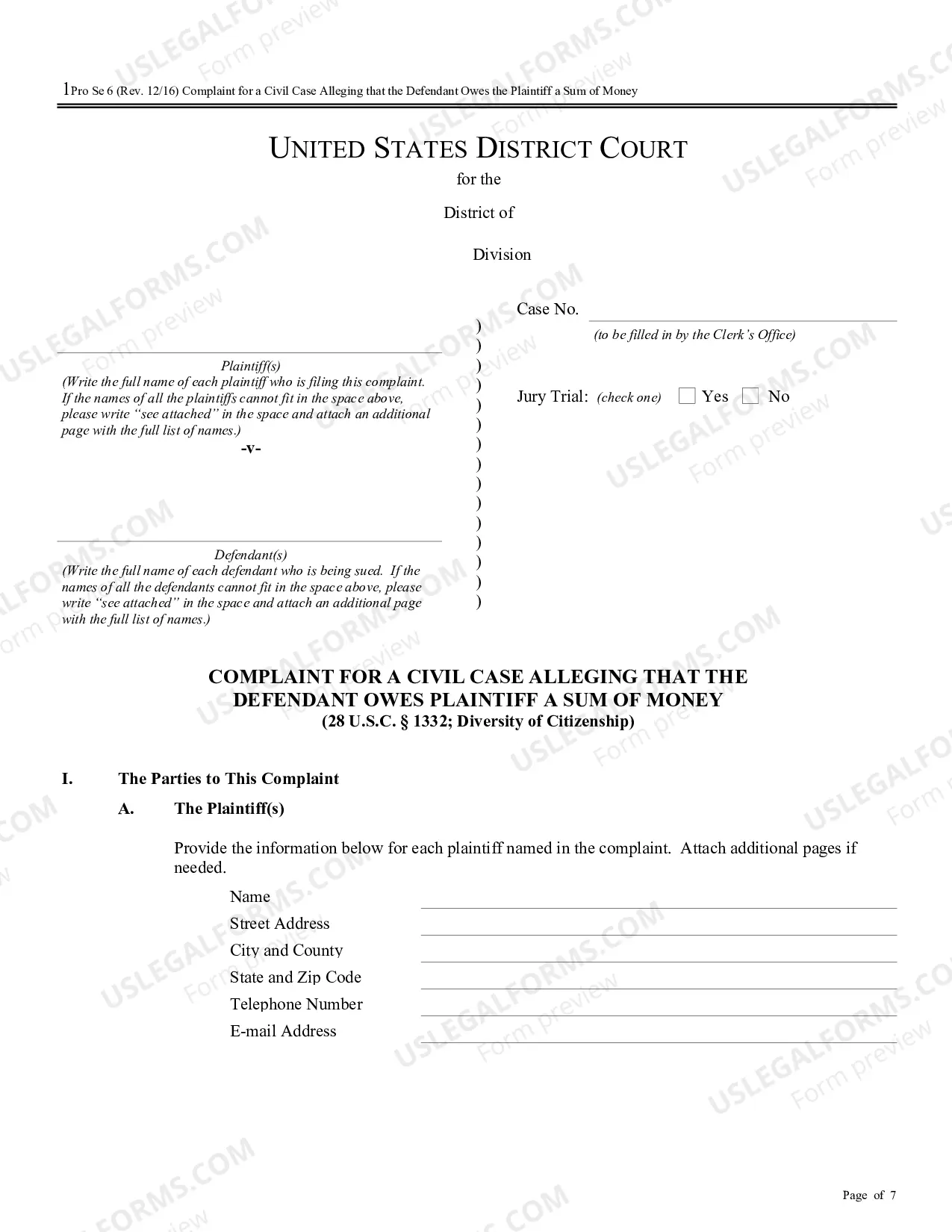
- Address and contact information for both the plaintiff and defendant
- Details of the alleged debt, including the amount owed and any accompanying exhibits
- Statements about the jurisdiction and residence of the parties involved
- Claims regarding the nature of the debt, including potential community obligations and fraudulent conveyances
- Prayer for judgment, specifying the relief sought from the court
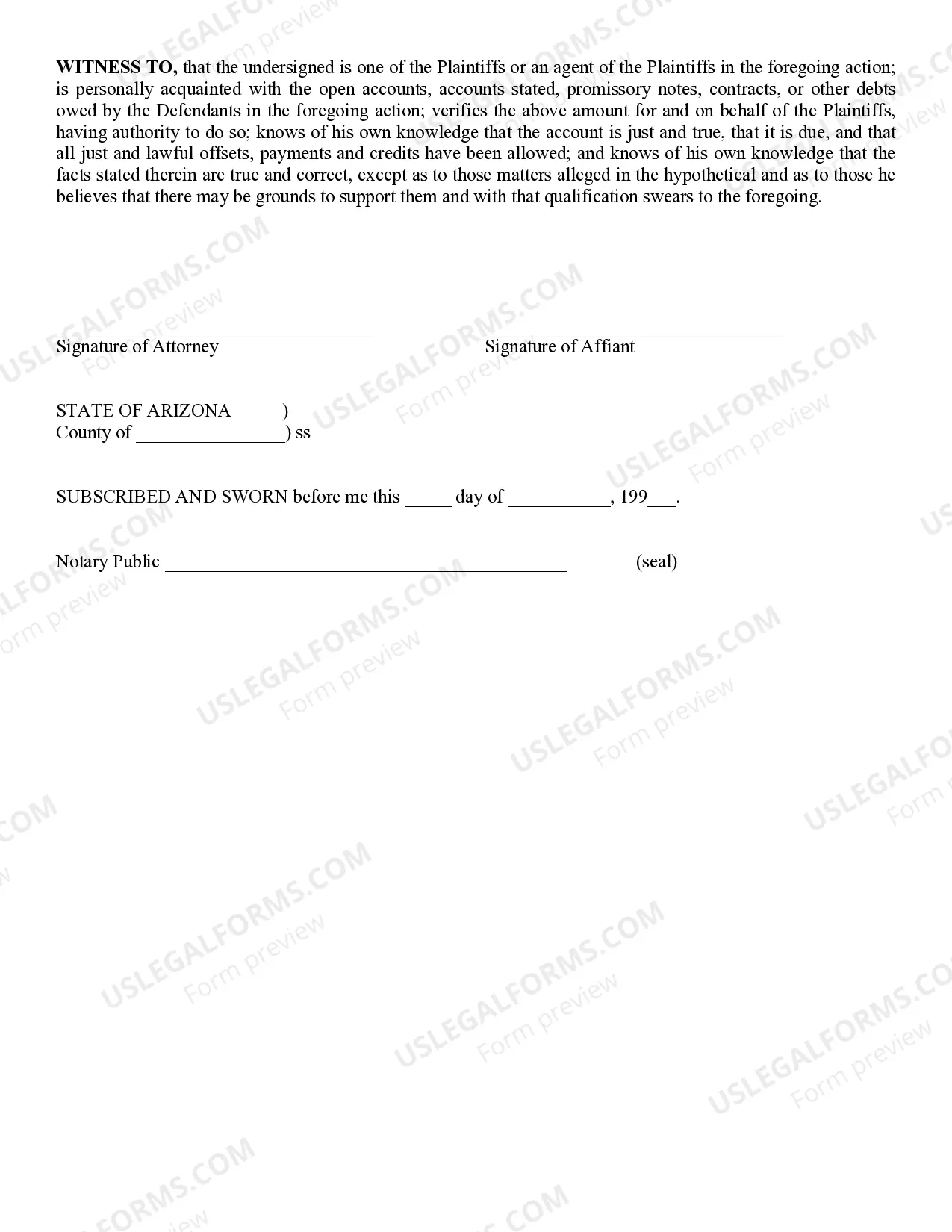
- Notarization section, verifying the claims made in the complaint
When to use this form
This form should be used when a party believes they are owed money by another party and are prepared to take legal action to recover that debt. Typical scenarios include disputes over unpaid invoices, service fees, or loans. This complaint initiates the process of seeking a judgment in court to compel the payment of the owed amount.
Who needs this form
This form is intended for individuals or businesses who:
- Have provided goods or services to another party and have not been paid
- Wish to formally notify the defendant of their outstanding debt
- Are prepared to engage in legal proceedings to recover funds owed to them
Steps to complete this form
- Enter the names and addresses of both the plaintiff and defendant at the top of the form.
- Clearly state the amount owed and include any relevant account information or supporting documents as Exhibit A.
- Specify jurisdiction details, confirming that the debt arose in Arizona.
- Fill out the prayer for relief, detailing the exact amounts requested, including interest and costs.
- Sign the form in front of a Notary Public to make it legally binding.
Is notarization required?
To make this form legally binding, it must be notarized. Our online notarization service, powered by Notarize, lets you verify and sign documents remotely through an encrypted video session.
Get your form ready online
Our built-in tools help you complete, sign, share, and store your documents in one place.
Make edits, fill in missing information, and update formatting in US Legal Forms—just like you would in MS Word.
Download a copy, print it, send it by email, or mail it via USPS—whatever works best for your next step.
Sign and collect signatures with our SignNow integration. Send to multiple recipients, set reminders, and more. Go Premium to unlock E-Sign.
If this form requires notarization, complete it online through a secure video call—no need to meet a notary in person or wait for an appointment.
We protect your documents and personal data by following strict security and privacy standards.

Make edits, fill in missing information, and update formatting in US Legal Forms—just like you would in MS Word.

Download a copy, print it, send it by email, or mail it via USPS—whatever works best for your next step.

Sign and collect signatures with our SignNow integration. Send to multiple recipients, set reminders, and more. Go Premium to unlock E-Sign.

If this form requires notarization, complete it online through a secure video call—no need to meet a notary in person or wait for an appointment.

We protect your documents and personal data by following strict security and privacy standards.
Typical mistakes to avoid
- Failing to provide complete and accurate addresses for both parties
- Not including supporting documentation as required, such as invoices or contracts
- Omitting details about interest rates or dates relevant to the debt
- Not notarizing the form before submission, when required
- Using incorrect court jurisdiction or failing to specify the right court
Advantages of online completion
- Convenient access to a legally vetted template, ensuring compliance with Arizona law
- Edit the form easily to customize it for your specific case
- Download in preferred formats (Word or Rich Text) for flexibility
- Streamlined process saves time compared to drafting from scratch
Looking for another form?








Form popularity
FAQ
In Arizona, the amount you can sue for often depends on the type of case and the court involved. For instances like an Arizona Complaint for Monies Owed, justice courts handle claims up to $10,000. If your claim is higher, you’ll need to seek redress in superior court. Understanding this cap can guide your legal strategy and help you prepare accordingly.
In Arizona, you can sue for various reasons including contracts, property damage, personal injury, and debts, such as an Arizona Complaint for Monies Owed. The key is to clearly present your case to the court with the relevant documentation. Choosing a clear legal basis for your lawsuit can strengthen your position. Make sure to gather all necessary evidence to support your claims.
Serving a complaint in Arizona can take anywhere from a few days to several weeks, depending on various factors. You must ensure that your Arizona Complaint for Monies Owed is properly served to receive a timely response from the defendant. Delays can happen if the defendant is difficult to locate or disputes the service. Utilize professional services to streamline the process.
In Arizona, the most you can sue for in civil court typically depends on the court's jurisdiction. For claims over $10,000, you would submit an Arizona Complaint for Monies Owed to superior court rather than justice court. It's crucial to know the boundaries of your claim to avoid non-compliance. Filing in the correct court can significantly impact the outcome of your case.
The justice court limit in Arizona is $10,000 for civil cases, including an Arizona Complaint for Monies Owed. If your claim exceeds this amount, you will need to file in a different court, such as the superior court. Understanding this limit helps you determine the appropriate venue for your case. Always consider your options wisely to ensure you proceed correctly.
In Arizona, the maximum amount you can claim in small claims court is $3,500. This limit applies to claims filed independently or as part of an Arizona Complaint for Monies Owed. If your claim exceeds this amount, you may need to consider filing in a different court. Using a platform like USLegalForms can help you prepare the necessary documents to efficiently navigate the small claims process.
In Arizona, certain personal properties may be seized to satisfy a judgment, including vehicles, jewelry, and certain bank account funds. However, some items, like household goods and necessary personal items, are generally exempt from seizure. If you're exploring an Arizona Complaint for Monies Owed, understanding these limitations can help you focus your collection efforts more effectively.
To collect on a judgment in Arizona, you can utilize various methods such as wage garnishment, bank levies, or property liens. Each method has its own requirements and processes. If you've initiated an Arizona Complaint for Monies Owed, it can guide you through these procedures effectively, helping you secure the funds you are owed.
In Arizona, a judgment can typically be collected for ten years. This period may be extended if the creditor files for a renewal before the end of the ten years. If you have filed an Arizona Complaint for Monies Owed, it is crucial to keep track of the judgment timeline to maximize your chances of collection.
If you intend to sue someone for more than $10,000 in Arizona, you should file the case in a superior court because small claims court limits apply. Start by drafting an Arizona Complaint for Monies Owed that details your claim and the amount sought. Once you file the complaint, you will need to serve the defendant properly to ensure they receive notice of your lawsuit. This process will allow you to pursue your claim effectively in a higher court.