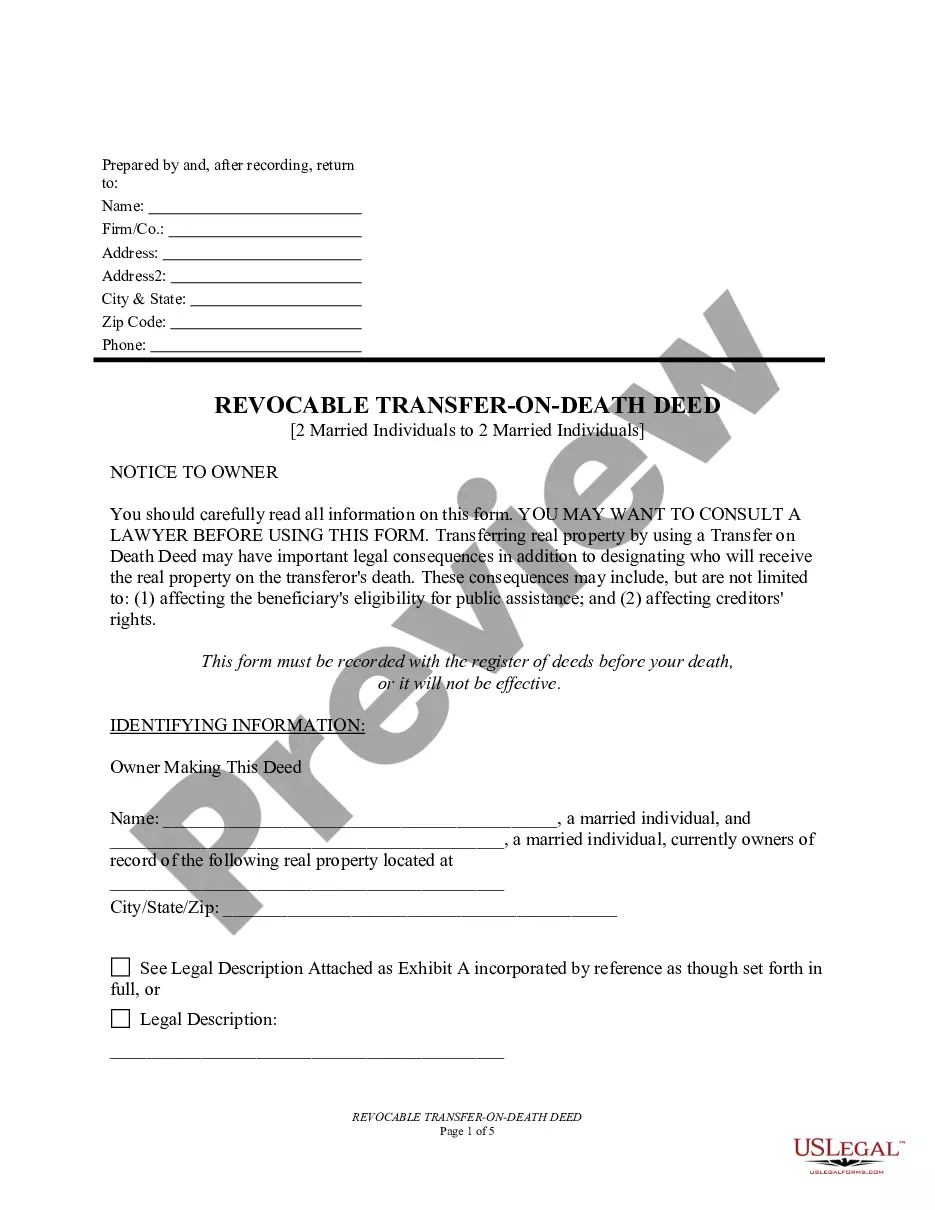
Arizona Guaranty or Guarantee of Payment of Rent
What this document covers
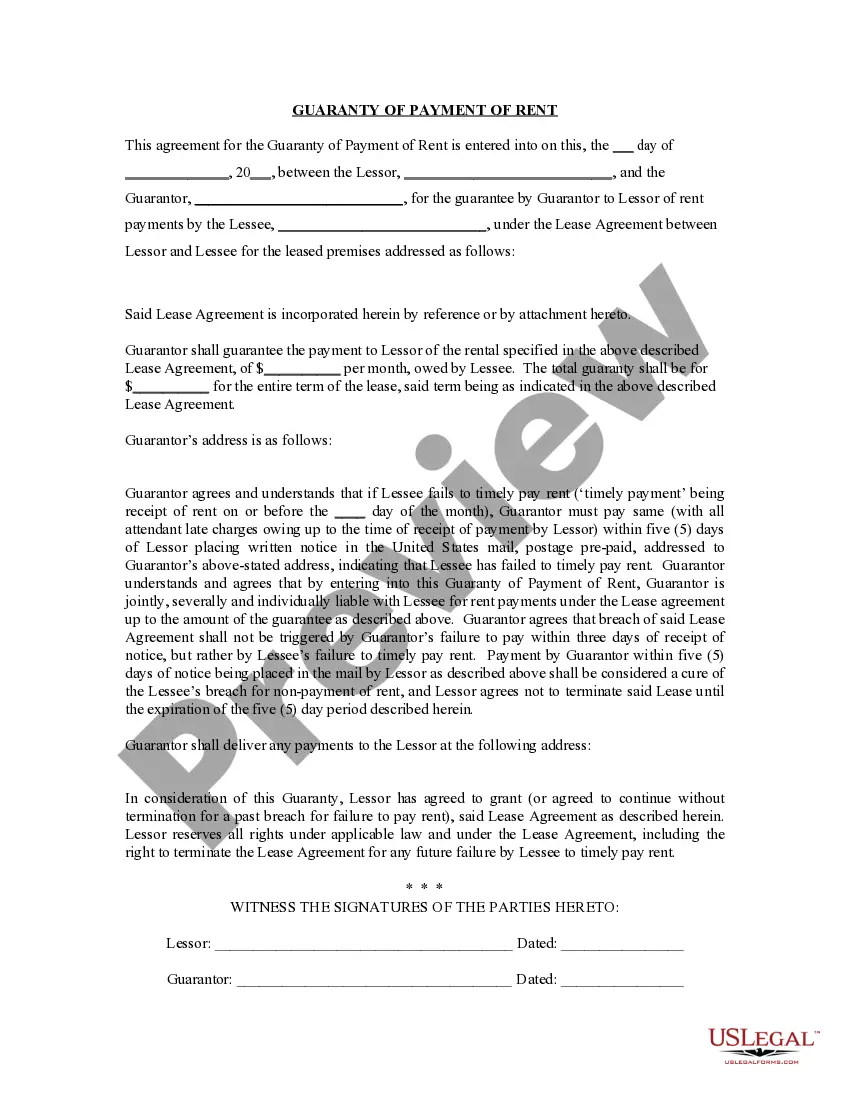
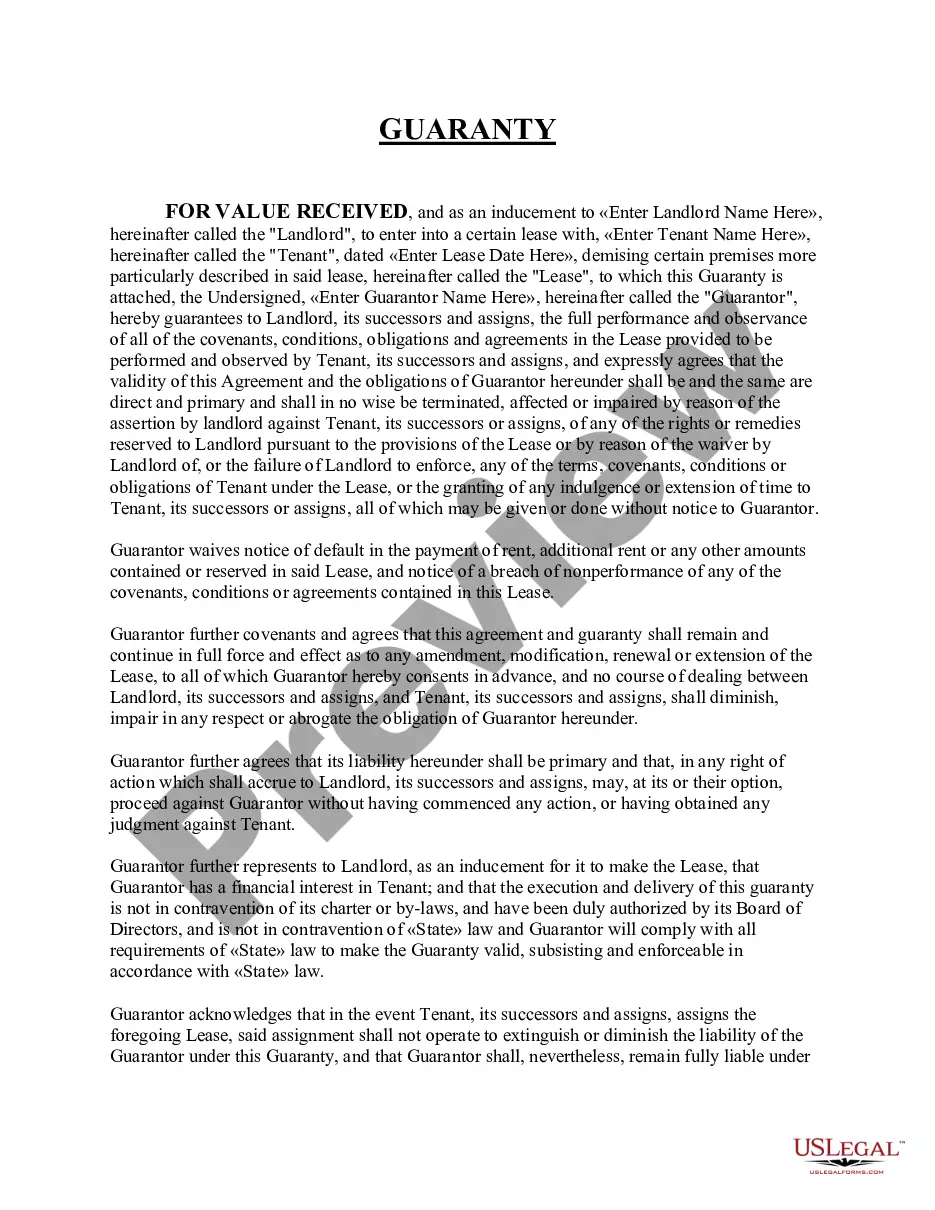
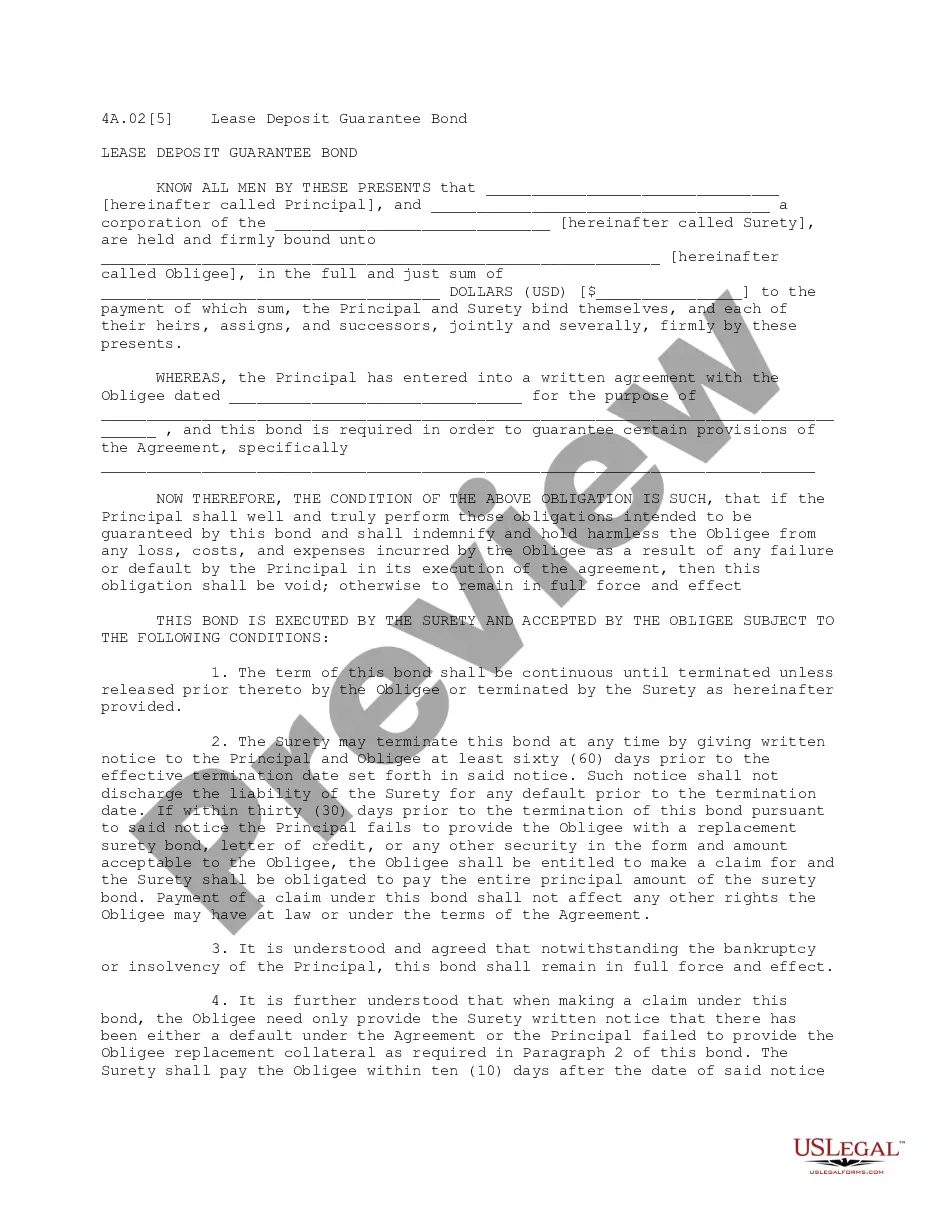
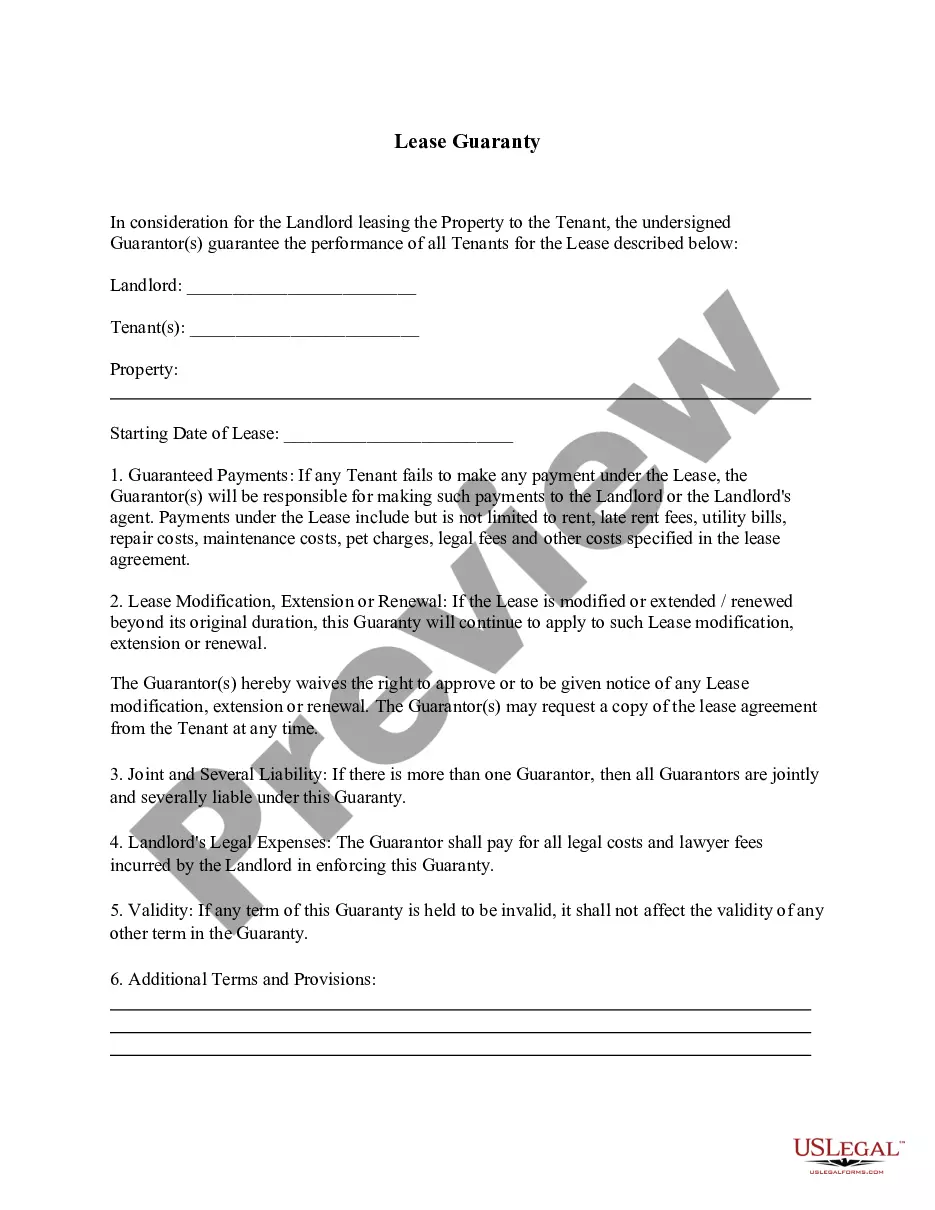
The Guaranty or Guarantee of Payment of Rent is a legal agreement where a guarantor promises to pay rent on behalf of a tenant if the tenant fails to do so. This form serves as a safeguard for landlords, ensuring they receive payment regardless of the tenantâs financial situation. Unlike other rental agreements, this form specifically outlines the obligations of the guarantor, making it vital for situations where the tenant may not have a strong credit history or sufficient income.
Main sections of this form
- Guarantor's address: The contact information of the person offering the guaranty.
- Signatures: Both the lessor (landlord) and the guarantor must sign and date the document.
- Details of the guaranty: Specific conditions under which the guarantor is required to make payments, including any deadline for the tenant to pay rent.
- Identification of the parties: Clearly states who the landlord and guarantor are in the lease arrangement.
Situations where this form applies
This form is useful in scenarios where a landlord requires additional security for a tenantâs rent payments. It is commonly used when the tenant has a poor credit history, is a student without a steady income, or when the landlord seeks extra assurance for a lease agreement. Using this form helps create a clear understanding of financial obligations in rental agreements.
Who should use this form
- Landlords looking for added security in rental agreements.
- Tenants with limited credit history who need a guarantor to secure a lease.
- Guarantors who are willing to support tenants by covering rent if necessary.
Steps to complete this form
- Identify the parties involved: Clearly state the landlord and guarantor's names.
- Enter the guarantor's address: Provide the complete address of the person guaranteeing the payment.
- Specify the property: Detail the address of the rental unit covered by this agreement.
- Outline payment conditions: Clarify the terms that trigger the guarantor's obligation to pay rent.
- Sign and date the form: Both parties must sign and date the document to make it legally binding.
Notarization requirements for this form
This form does not typically require notarization unless specified by local law. However, it is advisable to check local requirements to ensure compliance.
Get your form ready online
Our built-in tools help you complete, sign, share, and store your documents in one place.
Make edits, fill in missing information, and update formatting in US Legal Forms—just like you would in MS Word.
Download a copy, print it, send it by email, or mail it via USPS—whatever works best for your next step.
Sign and collect signatures with our SignNow integration. Send to multiple recipients, set reminders, and more. Go Premium to unlock E-Sign.
If this form requires notarization, complete it online through a secure video call—no need to meet a notary in person or wait for an appointment.
We protect your documents and personal data by following strict security and privacy standards.

Make edits, fill in missing information, and update formatting in US Legal Forms—just like you would in MS Word.

Download a copy, print it, send it by email, or mail it via USPS—whatever works best for your next step.

Sign and collect signatures with our SignNow integration. Send to multiple recipients, set reminders, and more. Go Premium to unlock E-Sign.

If this form requires notarization, complete it online through a secure video call—no need to meet a notary in person or wait for an appointment.

We protect your documents and personal data by following strict security and privacy standards.
Avoid these common issues
- Not including complete contact information for the guarantor.
- Failing to clearly specify the conditions that will trigger payment obligations.
- Leaving the form unsigned, which renders it unenforceable.
Benefits of completing this form online
- Convenience of filling out and downloading the form from anywhere.
- Editability to customize the agreement as per specific needs.
- Access to attorney-drafted forms ensures reliability and legal compliance.
Key takeaways
- The Guaranty or Guarantee of Payment of Rent is essential for landlords requiring additional security.
- Clear definitions and signatures are critical for its enforceability.
- Understanding when and how to use this form can help streamline the rental process and protect both parties.
Looking for another form?


Form popularity
FAQ
The new law for renters in Arizona focuses on increasing transparency and protecting tenants from unjust eviction practices. This includes stricter regulations on landlord notices and enhancing tenants' ability to contest evictions. Staying informed about these laws, particularly the implications for the Arizona Guaranty or Guarantee of Payment of Rent, is vital for tenants.
Tenant rights maintenance in Arizona requires landlords to maintain the property in a condition fit for living. This includes basic repairs, plumbing, heating, and ensuring safety standards. Understanding these obligations is crucial for tenants, especially when referencing the Arizona Guaranty or Guarantee of Payment of Rent.
Renters in Arizona have various rights, including the right to a habitable living environment and protection against illegal eviction. Tenants also have the right to timely repairs and must be informed of significant changes in rental terms. Familiarity with these rights helps ensure safe and secure housing under the Arizona Guaranty or Guarantee of Payment of Rent.
tomonth rental agreement in Arizona allows tenants to live in the property without a fixedterm lease, providing flexibility for both parties. This type of agreement requires a 30day notice from either party to terminate the lease. It’s essential to understand these laws, especially in the context of the Arizona Guaranty or Guarantee of Payment of Rent.
Normal wear and tear in a rental refers to the natural deterioration that occurs in a property over time. This includes minor scuffs on walls, worn carpets, and faded paint. Recognizing the difference between normal wear and tear versus damage can impact your security deposit return and your rights under the Arizona Guaranty or Guarantee of Payment of Rent.
Landlords in Arizona cannot engage in retaliatory actions against tenants, such as raising rent after a tenant asserts their rights. Additionally, they cannot shut off utilities or change locks to force a tenant to leave. Understanding what landlords cannot do helps tenants feel secure in their rights as outlined in the Arizona Guaranty or Guarantee of Payment of Rent.
Recently, Arizona updated several rent laws to enhance tenant protections and ensure fair housing practices. These changes include clearer guidelines for evictions and limits on late fees. Understanding these laws, including the role of the Arizona Guaranty or Guarantee of Payment of Rent, is essential for both landlords and tenants.
If you are late on rent in Arizona, most landlords will begin charging late fees after the grace period expires, typically around 5 days. However, tenants should review their lease agreements, as each landlord may have different policies regarding late payments. It is crucial to communicate with your landlord if you anticipate being late. Knowing the specifics of the Arizona Guaranty or Guarantee of Payment of Rent can also enhance your understanding of potential consequences.
Renters in Arizona have specific rights that help them maintain a safe and stable living environment. For instance, tenants have the right to a habitable home, and landlords must maintain the premises accordingly. They also have rights regarding privacy and timely repairs, which landlords must respect. Understanding these rights, especially in relation to the Arizona Guaranty or Guarantee of Payment of Rent, empowers renters to advocate for themselves.
In Arizona, the grace period for late rent payments typically lasts for five days after the due date. After this grace period, landlords may start the eviction process if the rent remains unpaid, underlining the significance of adhering to payment timelines. The Arizona Guaranty or Guarantee of Payment of Rent serves as a safety net, ensuring full payment obligations are covered should unexpected circumstances arise. If you find yourself consistently late on rent, consider using resources available on platforms like uslegalforms to navigate your options.