Arkansas Last Will and Testament for Married person with Minor Children
What this document covers
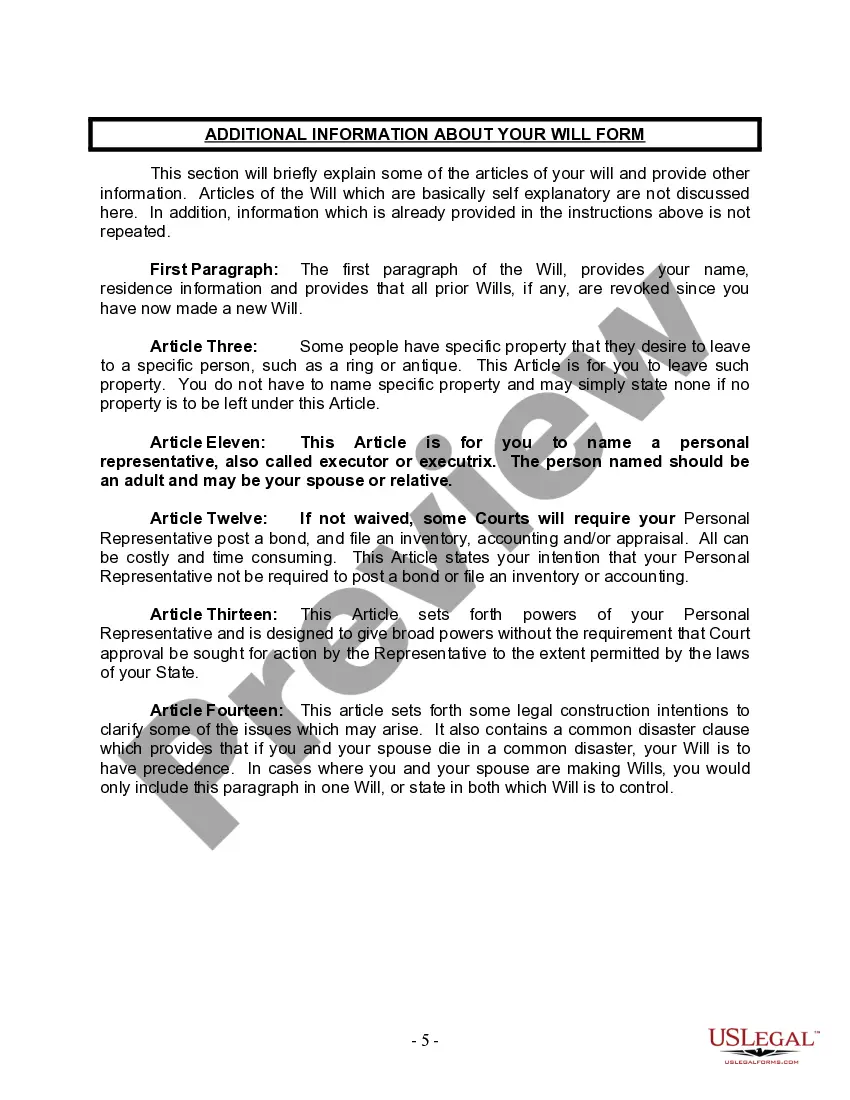
The Last Will and Testament for Married Person with Minor Children is a legal document that outlines how your assets will be distributed after your death, particularly emphasizing the needs of your spouse and minor children. This form allows you to appoint a personal representative to manage your estate, designate beneficiaries, and establish a trust to protect assets for your children. Unlike wills designed for individuals without children or single individuals, this will includes specific provisions catering to families with minor dependents.
Key components of this form
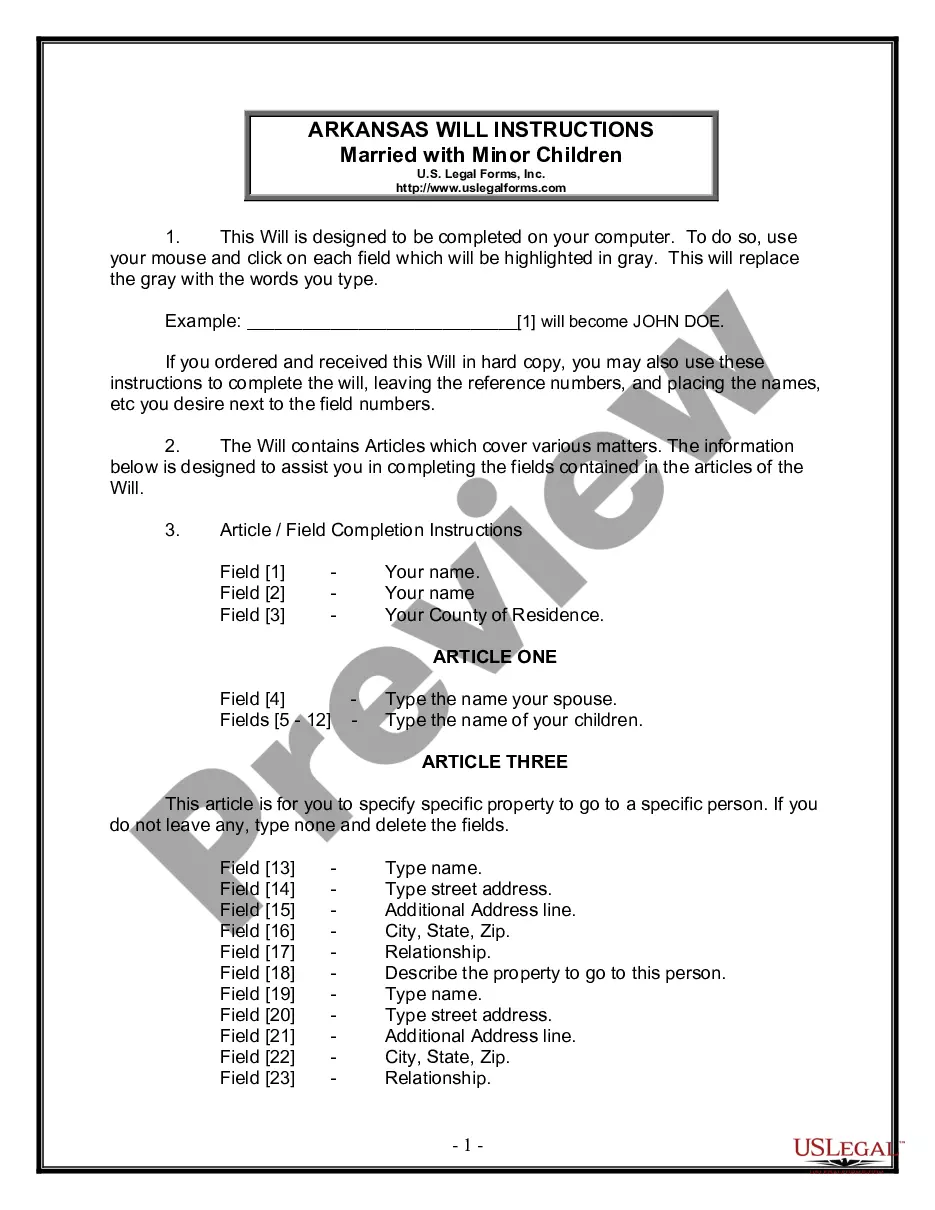
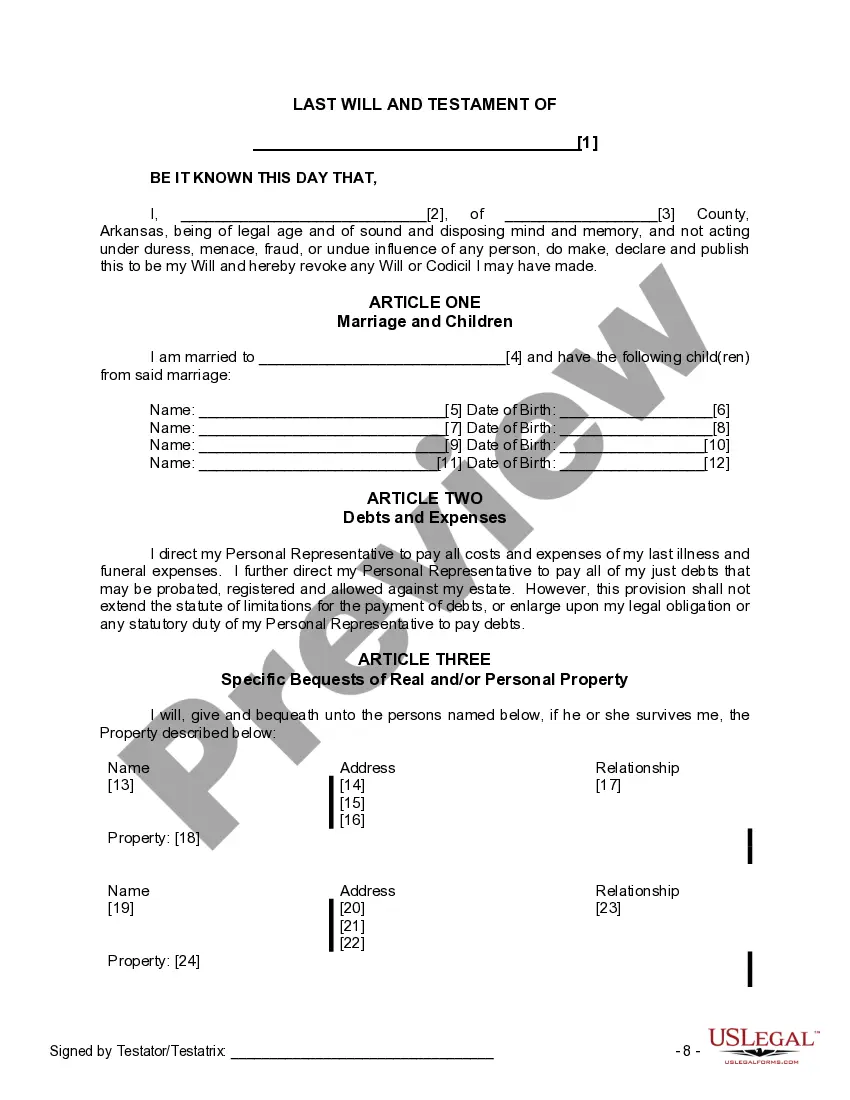
- Article One: Identifies your spouse and children.
- Article Three: Allows for specific bequests of personal property to designated individuals.
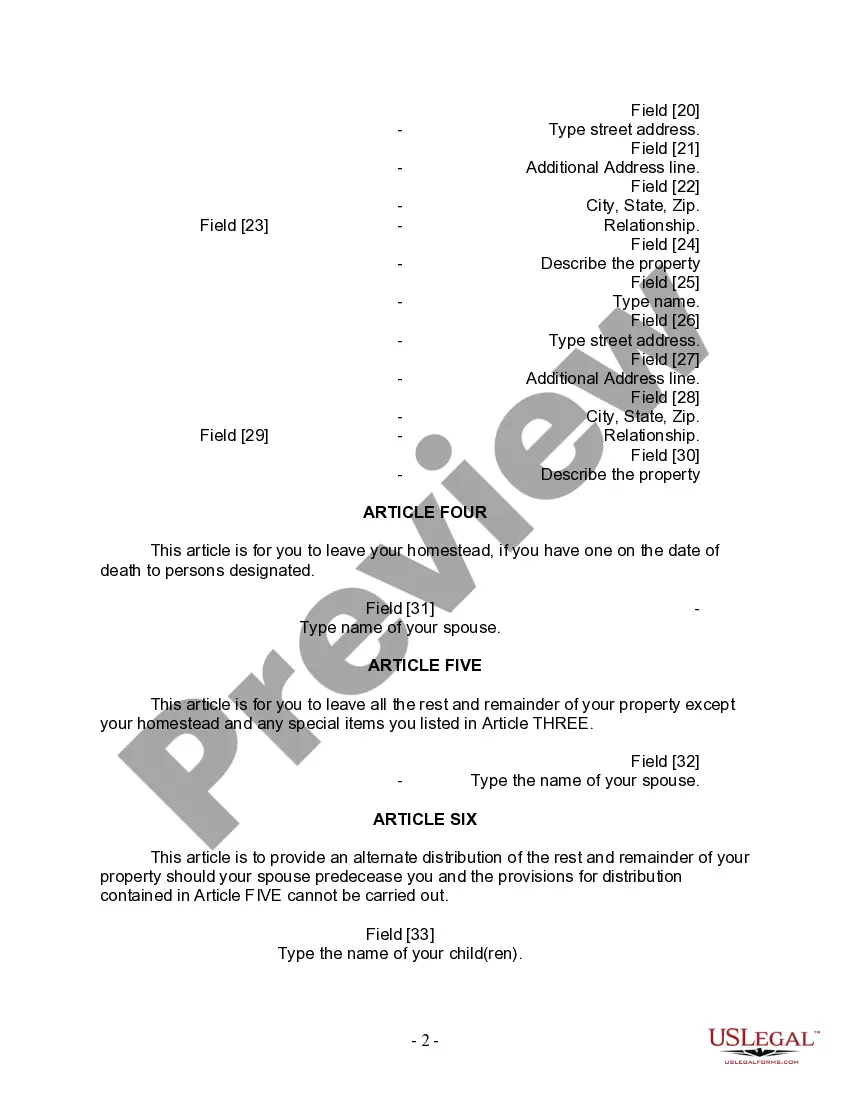
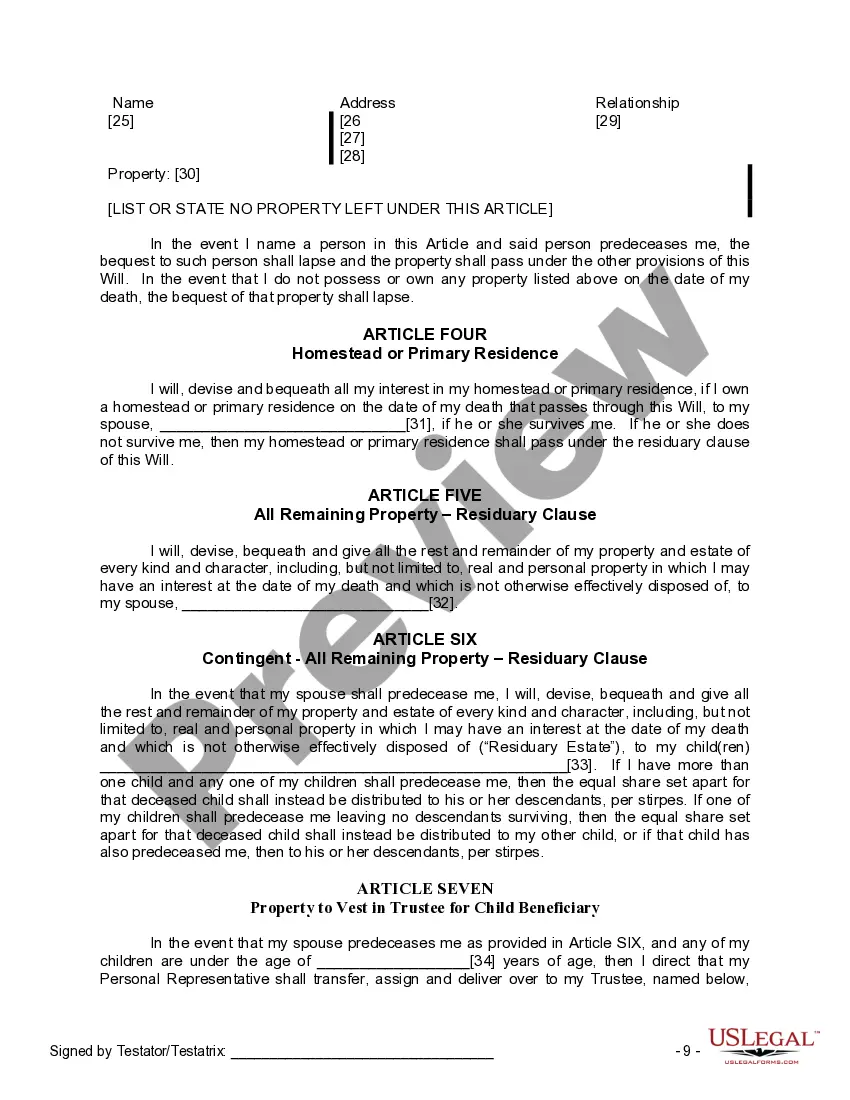
- Article Four: Specifies distribution of your homestead to your spouse.
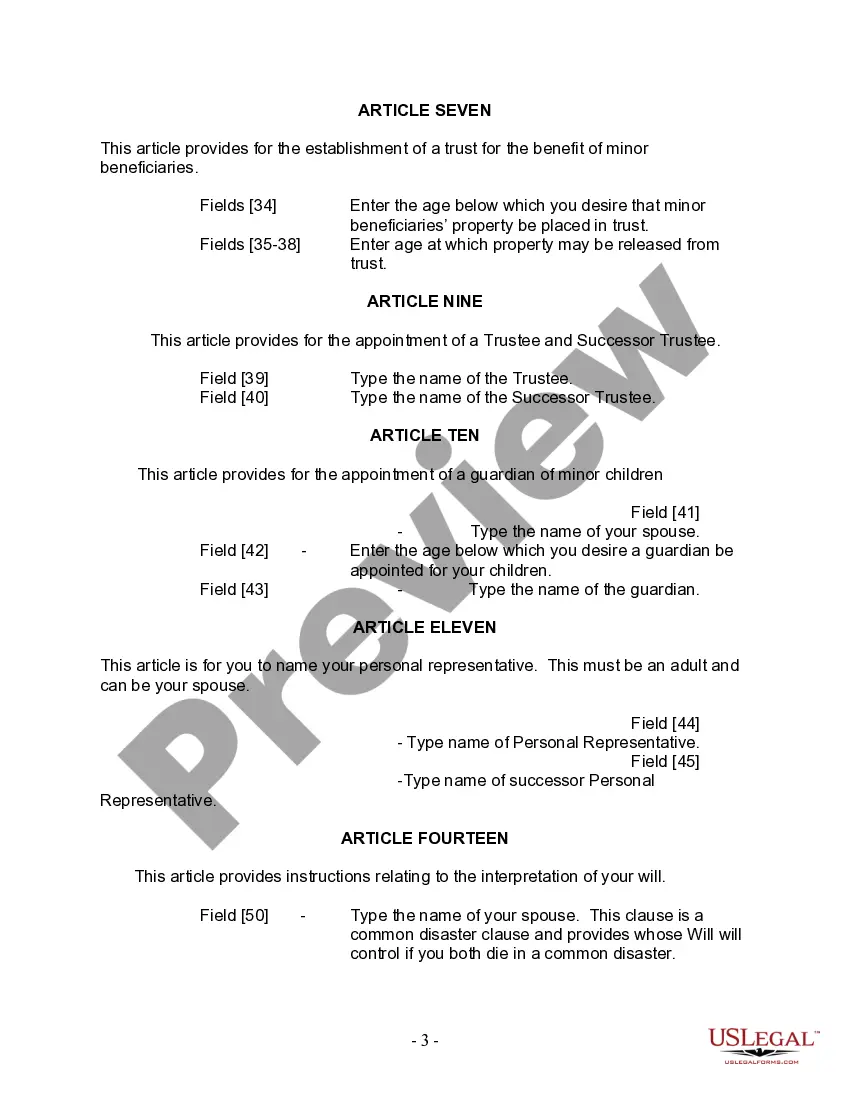
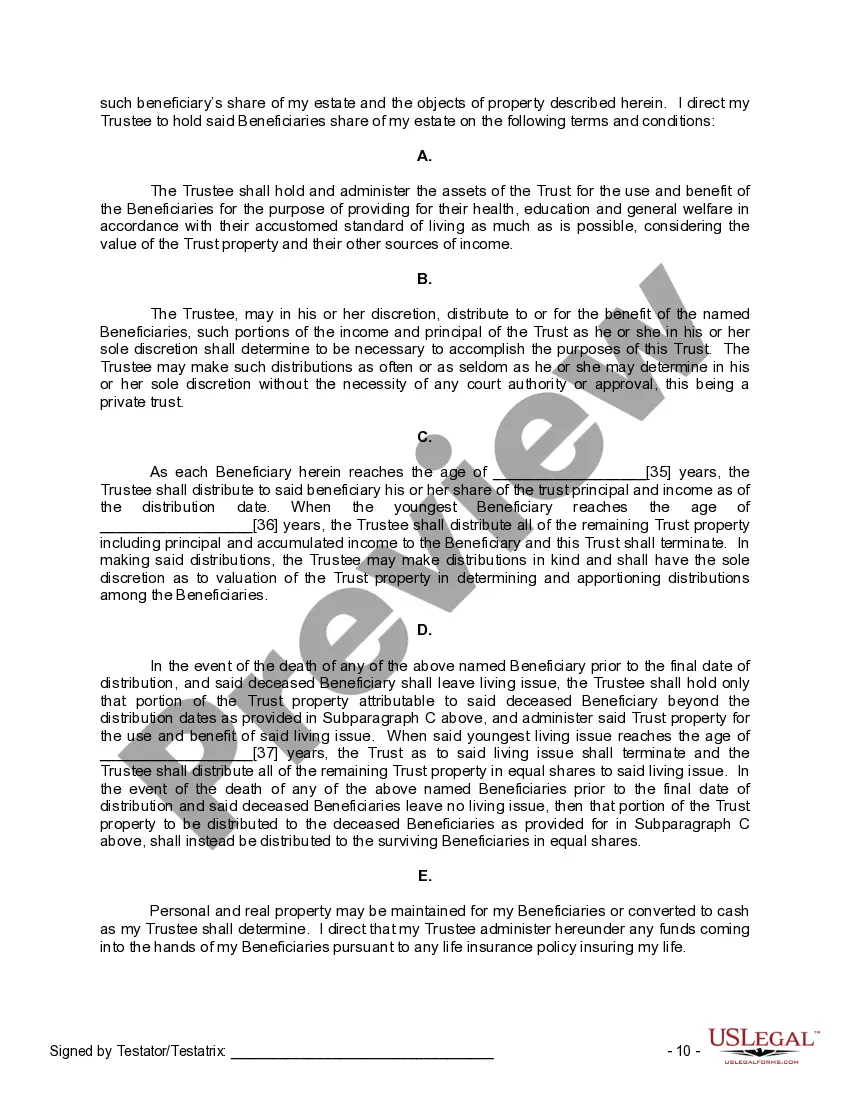
- Article Seven: Establishes a trust for the benefit of your minor children.
- Article Ten: Appoints a guardian for your minor children if both parents are deceased.
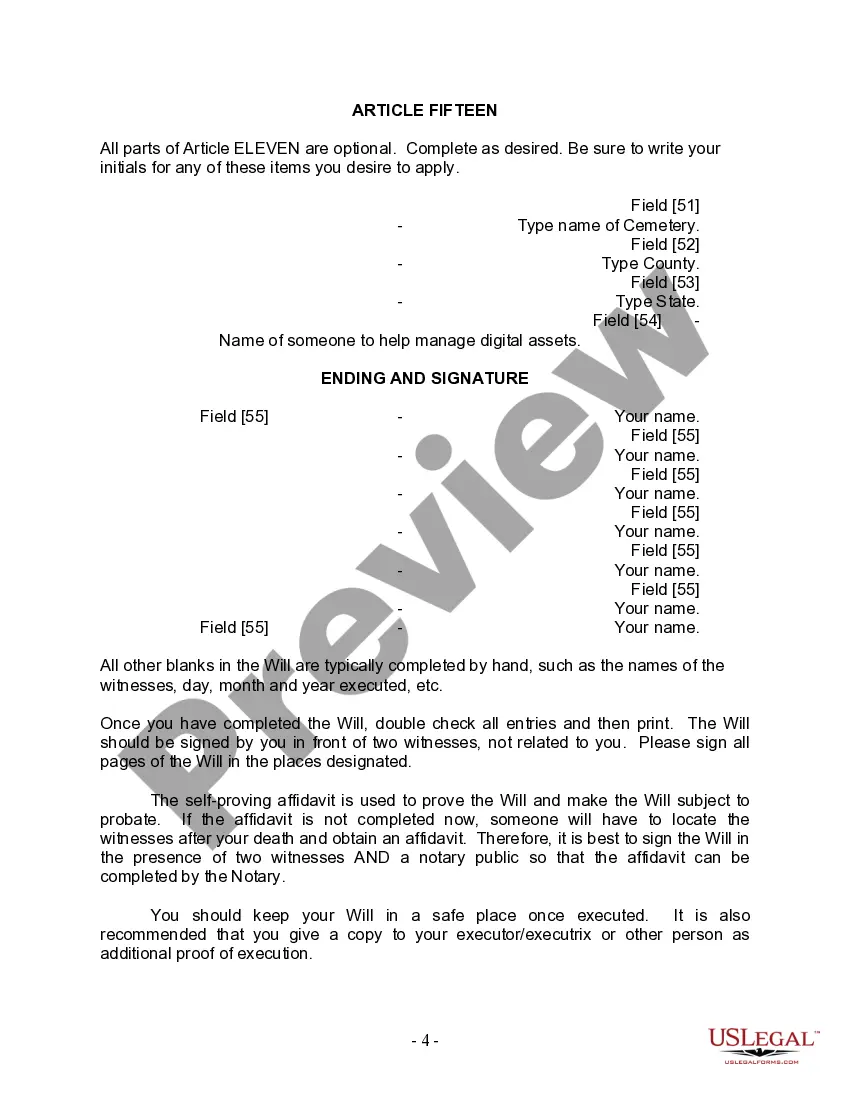
- Final Signatures: Requires signatures from you, witnesses, and potentially a notary.






When this form is needed
You may need this form if you are a married person with minor children and wish to ensure that your estate is managed according to your wishes after your death. It is especially important if you want to establish guardianship for your children and designate a trustee to manage their inheritance until they reach adulthood. Additionally, using this will can prevent state laws from dictating the distribution of your assets in the absence of a legally binding document.
Who this form is for
This form is suitable for:
- Married individuals with minor children.
- Individuals wishing to designate a guardian for their minor children.
- Those wanting to appoint a trustee to manage assets for minor beneficiaries.
- Anyone who wants to ensure their wishes regarding asset distribution are legally documented.
Completing this form step by step
Follow these steps to effectively complete your Last Will and Testament:
- Identify yourself and your spouse, along with the names and details of your minor children.
- Specify any particular gifts of property you wish to make to individuals.
- Designate who will inherit your homestead and any remaining property.
- Appoint a trustee for your children's trust fund.
- Choose a guardian for your minor children in the event both parents pass away.
- Ensure all required signatures and witness statements are completed correctly.
Is notarization required?
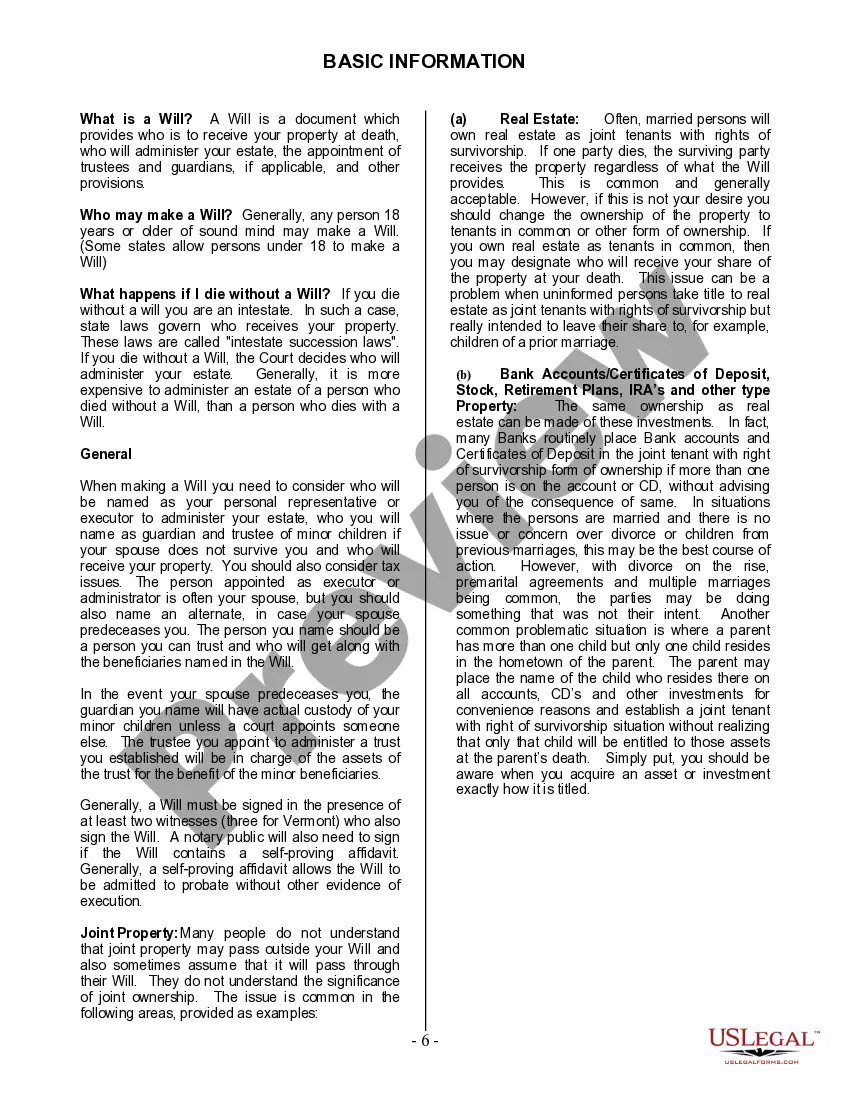
Yes, this form must be notarized to be legally valid. The Last Will and Testament typically includes provisions for a self-proving affidavit that requires notarization, which allows your will to be admitted to probate without additional evidence of execution. U.S. Legal Forms offers integrated online notarization, providing 24/7 availability through secure video calls.
Get your form ready online
Our built-in tools help you complete, sign, share, and store your documents in one place.
Make edits, fill in missing information, and update formatting in US Legal Forms—just like you would in MS Word.
Download a copy, print it, send it by email, or mail it via USPS—whatever works best for your next step.
Sign and collect signatures with our SignNow integration. Send to multiple recipients, set reminders, and more. Go Premium to unlock E-Sign.
If this form requires notarization, complete it online through a secure video call—no need to meet a notary in person or wait for an appointment.
We protect your documents and personal data by following strict security and privacy standards.

Make edits, fill in missing information, and update formatting in US Legal Forms—just like you would in MS Word.

Download a copy, print it, send it by email, or mail it via USPS—whatever works best for your next step.

Sign and collect signatures with our SignNow integration. Send to multiple recipients, set reminders, and more. Go Premium to unlock E-Sign.

If this form requires notarization, complete it online through a secure video call—no need to meet a notary in person or wait for an appointment.

We protect your documents and personal data by following strict security and privacy standards.
Typical mistakes to avoid
- Failing to properly sign the will in front of witnesses.
- Not updating the will after significant life changes (e.g., birth or adoption of children).
- Neglecting to appoint a successor trustee or guardian.
- Leaving out essential details about assets, such as specific property bequests.
- Using outdated forms or templates that do not comply with current state laws.
Benefits of completing this form online
- Convenience of completing the form online from anywhere.
- Ability to edit and customize the form to suit your specific needs.
- Access to guidance from licensed attorneys for assurance and legal compliance.
- Secure storage options for your completed will.
- Time-saving method that avoids lengthy legal consultations.
- Wills must be executed with required witnesses to be considered valid in most jurisdictions.
- A self-proving affidavit allows for a smoother probate process by eliminating the need for witness testimony at the time of probate.
- Failure to follow state-specific requirements can lead to challenges in the enforceability of the will.
What to keep in mind
- The Last Will and Testament is vital for married individuals with minor children to ensure their wishes are known and followed after death.
- Proper execution and notarization of the will can prevent legal disputes and ensure smooth probate proceedings.
- Having a clear estate plan helps protect your children's future and provides peace of mind for you and your family.
Looking for another form?

Form popularity
FAQ
In Arkansas, a will does not need to be notarized to be valid; however, having a will notarized can simplify the probate process. Notarization serves as additional proof of the testator's intent and can reduce disputes later on. When creating your Arkansas Last Will and Testament for married persons with minor children, consider this option for added security. Additionally, working with US Legal Forms can help you understand all steps necessary to protect your family.
Yes, you can write your own will in Arkansas as long as it meets specific legal requirements outlined by the state. It is important to ensure it clearly reflects your wishes regarding the distribution of assets and the guardianship of your minor children. However, using tools and templates available on platforms like US Legal Forms can provide peace of mind, ensuring your Arkansas Last Will and Testament for married persons with minor children is comprehensive and legally binding.
In Arkansas, a will must be probated to be recognized as valid, but it does not need to be recorded with a government office before probate. However, filing the will with the probate court after the testator's death is essential for the legal process. This recording supports the execution of the wishes stated in the Arkansas Last Will and Testament for married persons with minor children, ensuring their interests are protected.
In Arkansas, there is no inheritance tax, which means you can inherit freely without worrying about tax costs. This benefit allows your minor children and spouse to receive their assets without financial burdens. Make sure to establish an Arkansas Last Will and Testament for married persons with minor children to ensure the smooth transfer of your estate. It's always wise to consult with a tax professional for additional advice.
Setting up a will in Arkansas involves several straightforward steps. First, consider your assets, and identify the guardianship of your minor children. Next, write your Arkansas Last Will and Testament, detailing asset distribution and guardianship designations. Finally, sign the document in the presence of two witnesses to ensure it is valid under Arkansas law.
If a will is not probated in Arkansas, the estate will be considered intestate, meaning the state laws will decide how assets are distributed. This process may not align with the deceased's intentions, which can be particularly challenging for a married person with minor children. Not probating the will may also delay the inheritance as the legal matters take longer to resolve. To avoid complications, it’s essential to ensure the Arkansas Last Will and Testament is filed promptly.
In Arkansas, you should file the will for probate as soon as possible after the person's death, ideally within 30 days. This timeframe is crucial for initiating the probate process, especially when children are involved. Delaying may complicate matters for the minor children and affect the distribution of the estate. Establishing a valid Arkansas Last Will and Testament for married persons with minor children ensures their needs are met.
In Arkansas, wills are filed in the probate court located in the county where the deceased resided at the time of death. The court keeps the will on record, available for public inspection. If you are creating an Arkansas Last Will and Testament for Married person with Minor Children, knowing the right court can save time and effort during estate management.
A living will does not need to be notarized in Arkansas, but it is advisable to have witnesses sign it. This ensures that the document is recognized and can be honored by healthcare providers. If you're planning an Arkansas Last Will and Testament for Married person with Minor Children, remember that clear documentation is essential for your family's future.
Yes, in Arkansas, once a person passes away, the will must be filed with the probate court. This step officially opens the probate process, allowing the court to verify the will’s validity. If you have created an Arkansas Last Will and Testament for Married person with Minor Children, ensure you understand this requirement to protect your estate and beneficiaries.