Arkansas Assignment of Lease and Rent from Borrower to Lender
Overview of this form
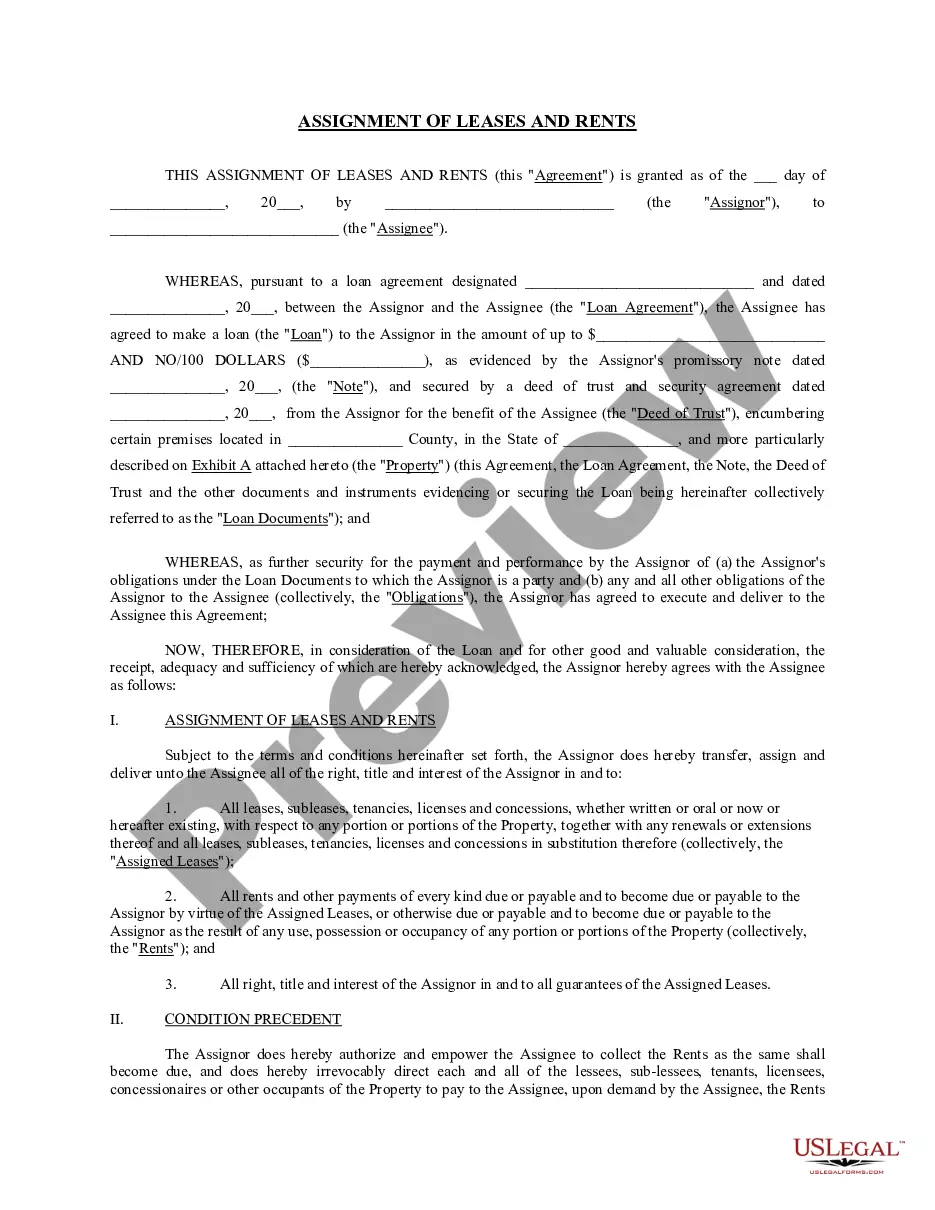
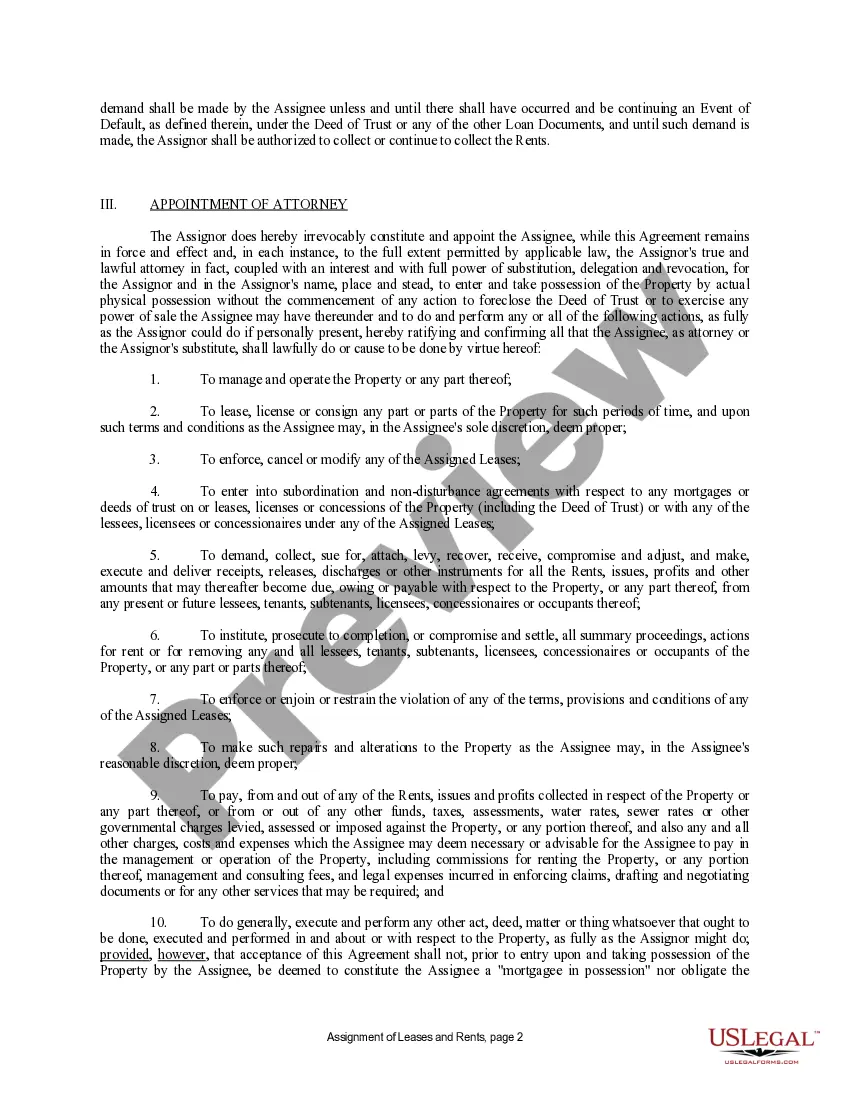
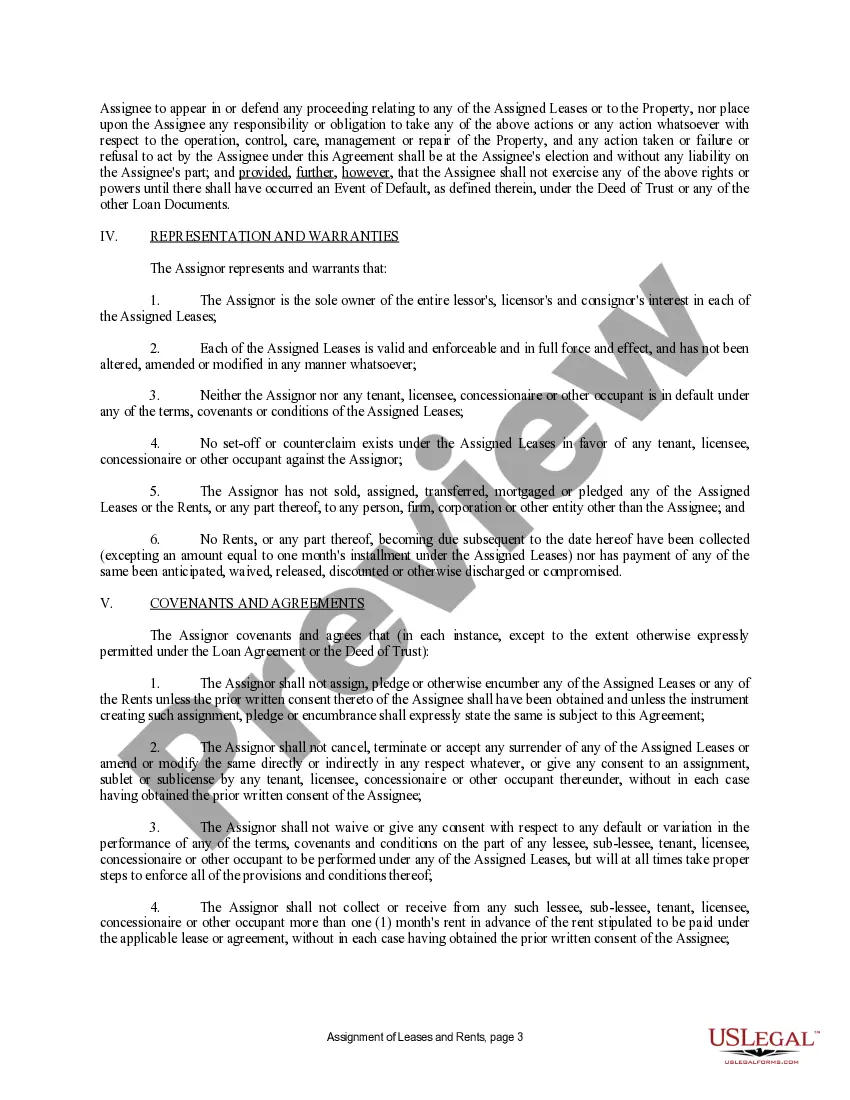
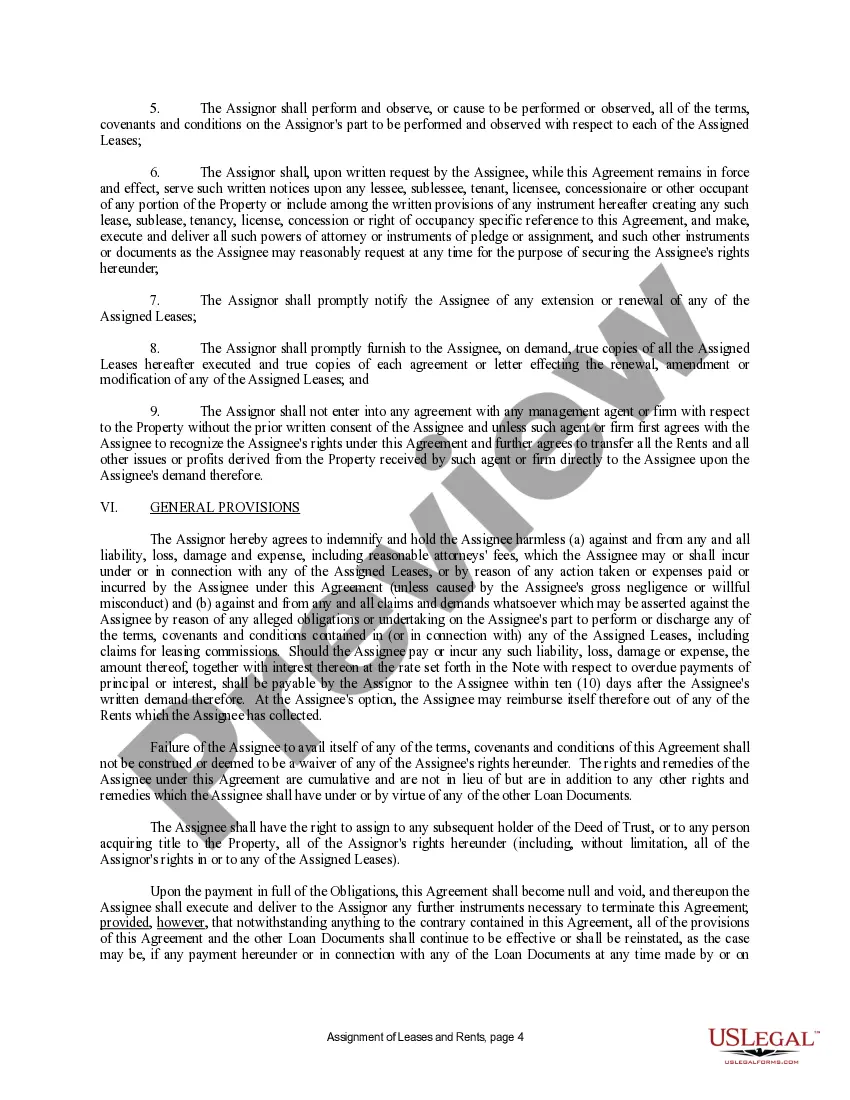
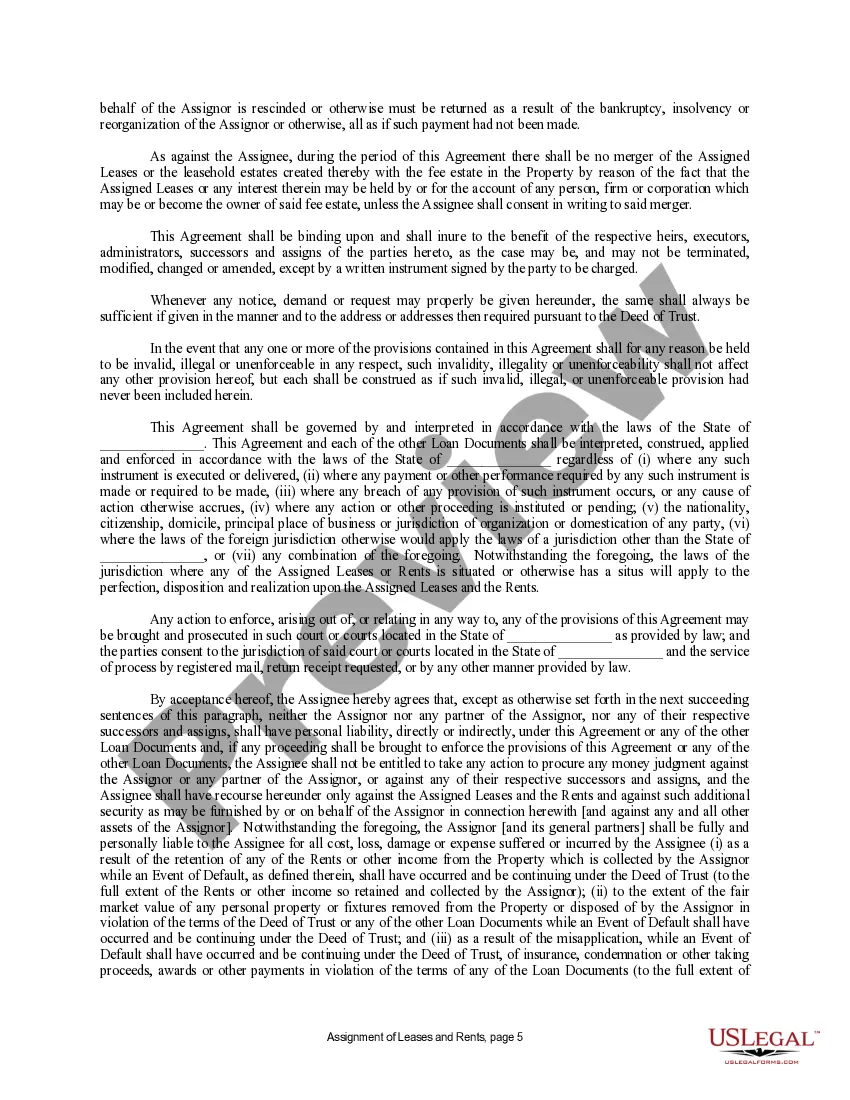
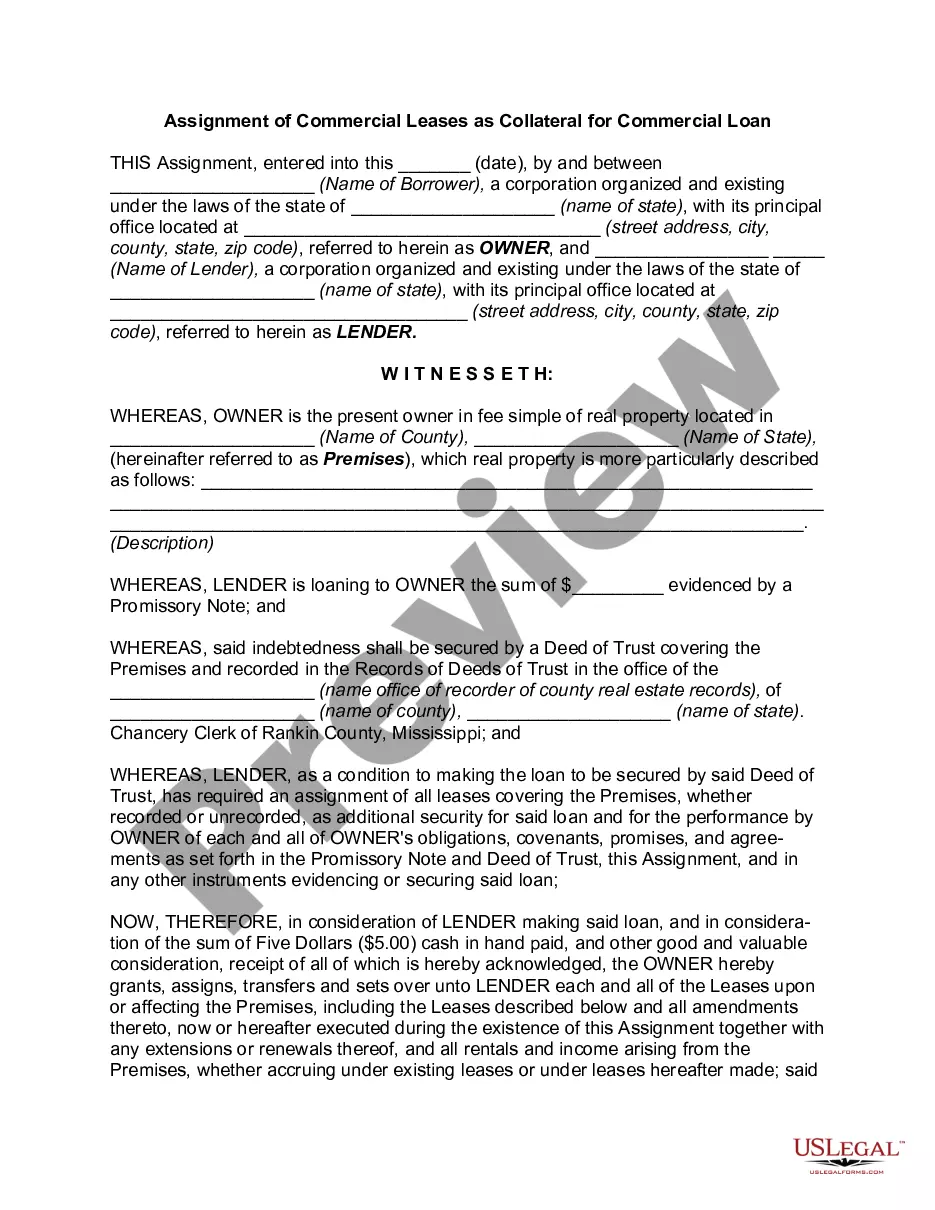
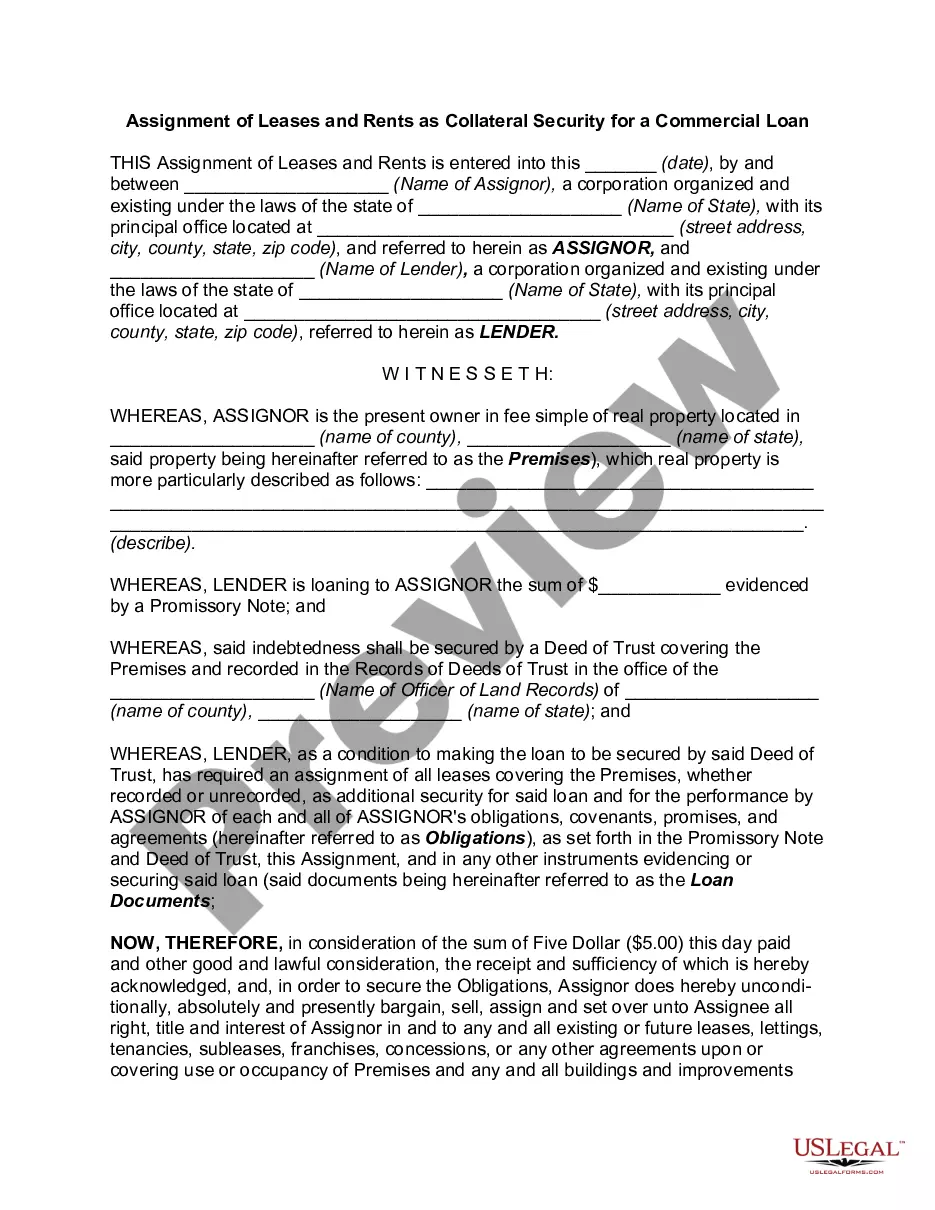
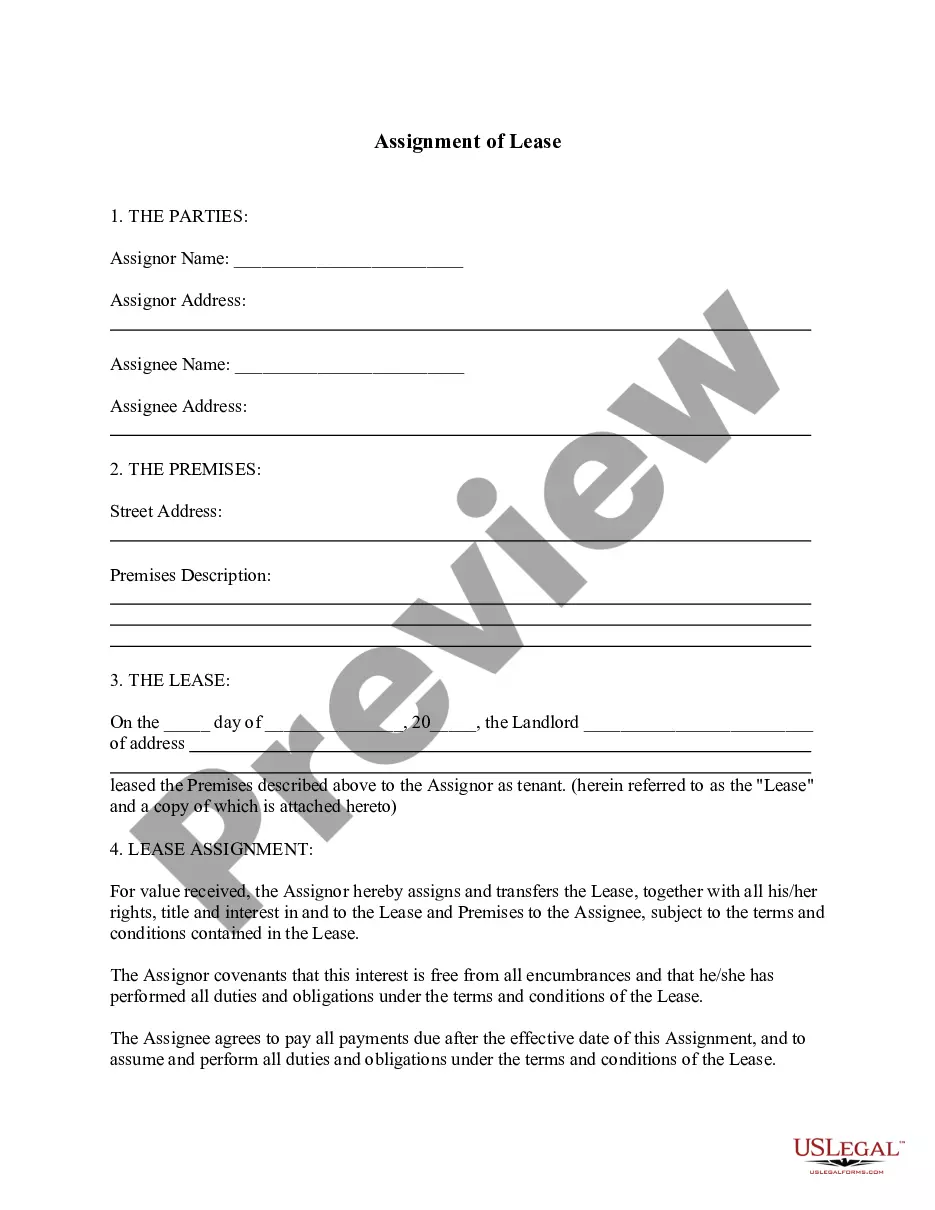
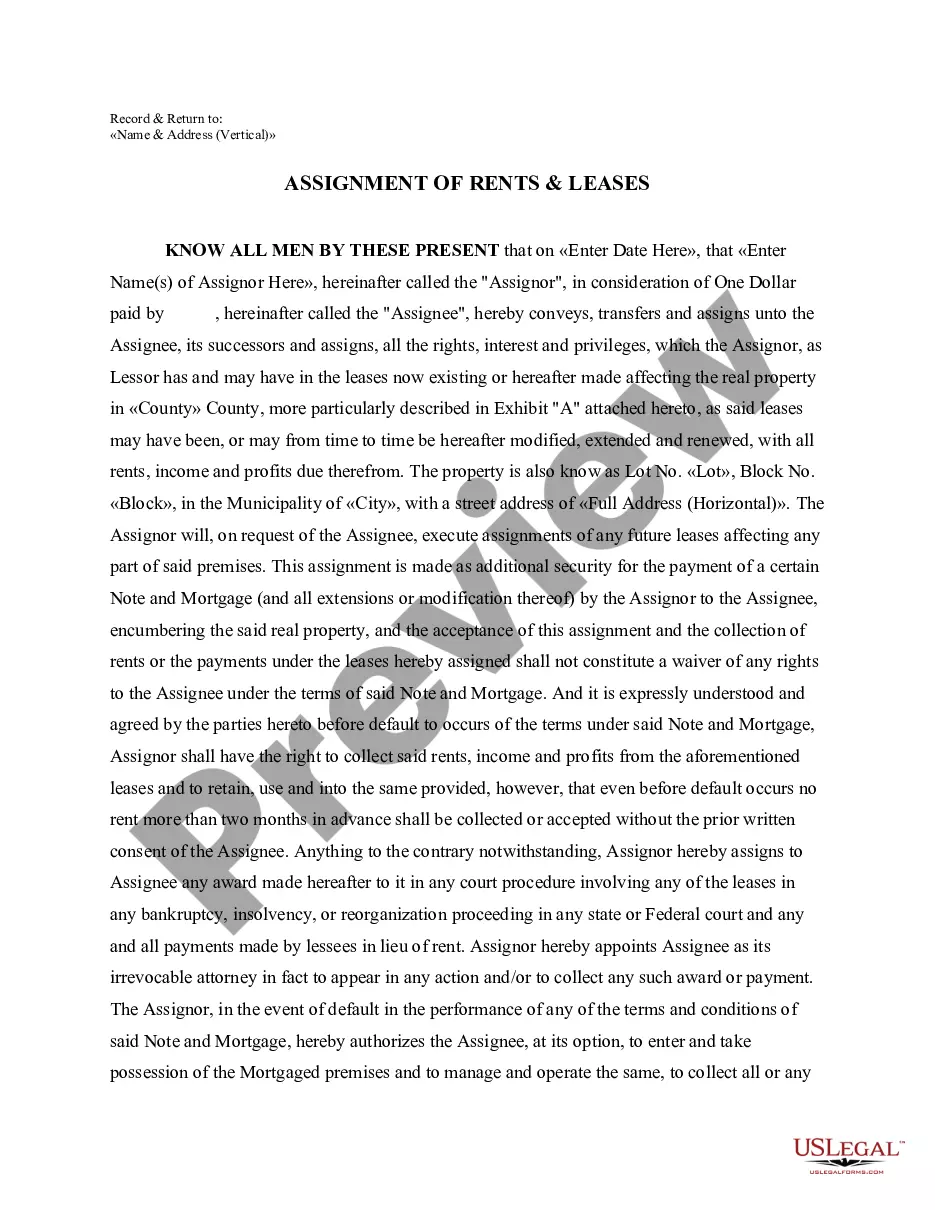
The Assignment of Lease and Rent from Borrower to Lender is a legal document that facilitates the transfer of rental leases and their associated rents from a borrower (the Assignor) to a lender (the Assignee) as a means of securing a loan or repaying a debt. This form is particularly important in financing arrangements where the lender requires additional security beyond traditional collateral. Unlike a standard lease agreement, this form specifically assigns the rights to collect rents and manage leases in case the borrower defaults on their obligations.
Key components of this form
- Identification of the Assignor (the borrower) and Assignee (the lender).
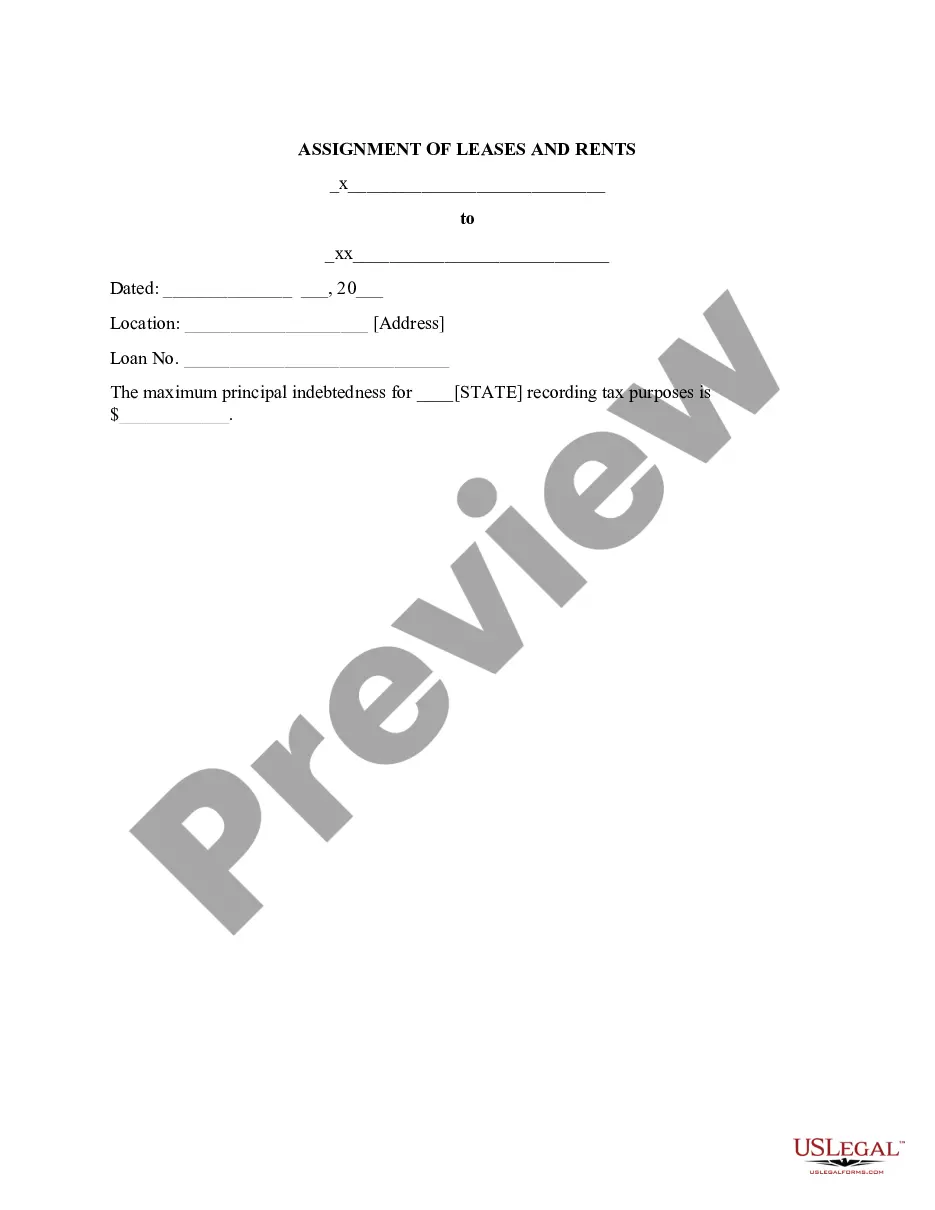
- Details about the loan agreement, including loan amount and related documents.
- Transfer of all rights related to existing leases, rents, and guarantees.
- Conditions under which the Assignee can collect rents and manage the property.
- Representations and warranties by the Assignor regarding lease validity.
- Covenants that outline the responsibilities of the Assignor during the agreement.

Common use cases
This form is needed when a borrower wants to provide additional security to a lender for a loan. It is particularly relevant in real estate transactions where the borrower relies on income from leased property to repay the loan. The form is useful if the borrower is facing financial difficulties and wishes to use current leases and rents as collateral to secure or refinance a loan agreement.
Intended users of this form
- Real estate owners looking to finance their properties with loans secured by future rental income.
- Borrowers who wish to provide additional assurances to lenders regarding repayment.
- Lenders who require formal documentation of rental agreements as part of their security for a loan.
- Property managers and agents involved in managing leased properties.
Completing this form step by step
- Identify the Assignor and Assignee by entering their full names and addresses.
- Specify the loan agreement details, including the loan amount and date.
- Detail the property information and attach a legal description in Exhibit A.
- Include any relevant terms related to the leases and rents being assigned.
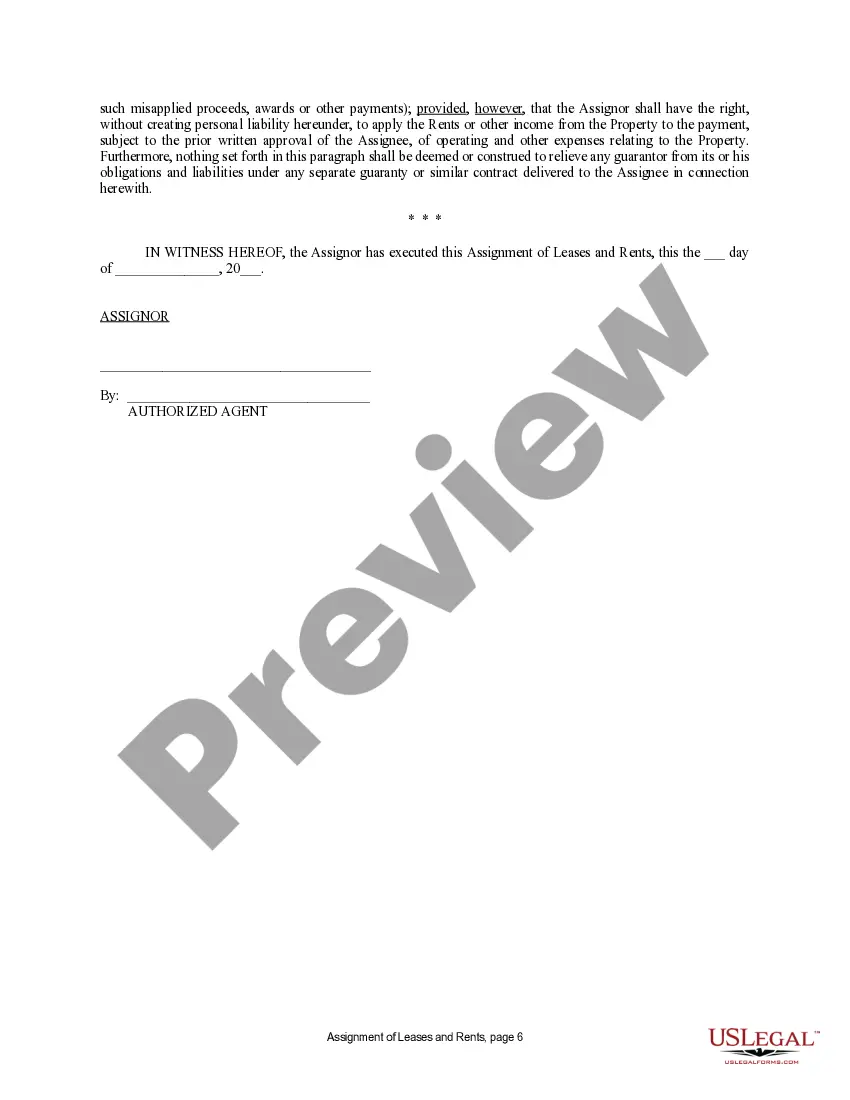
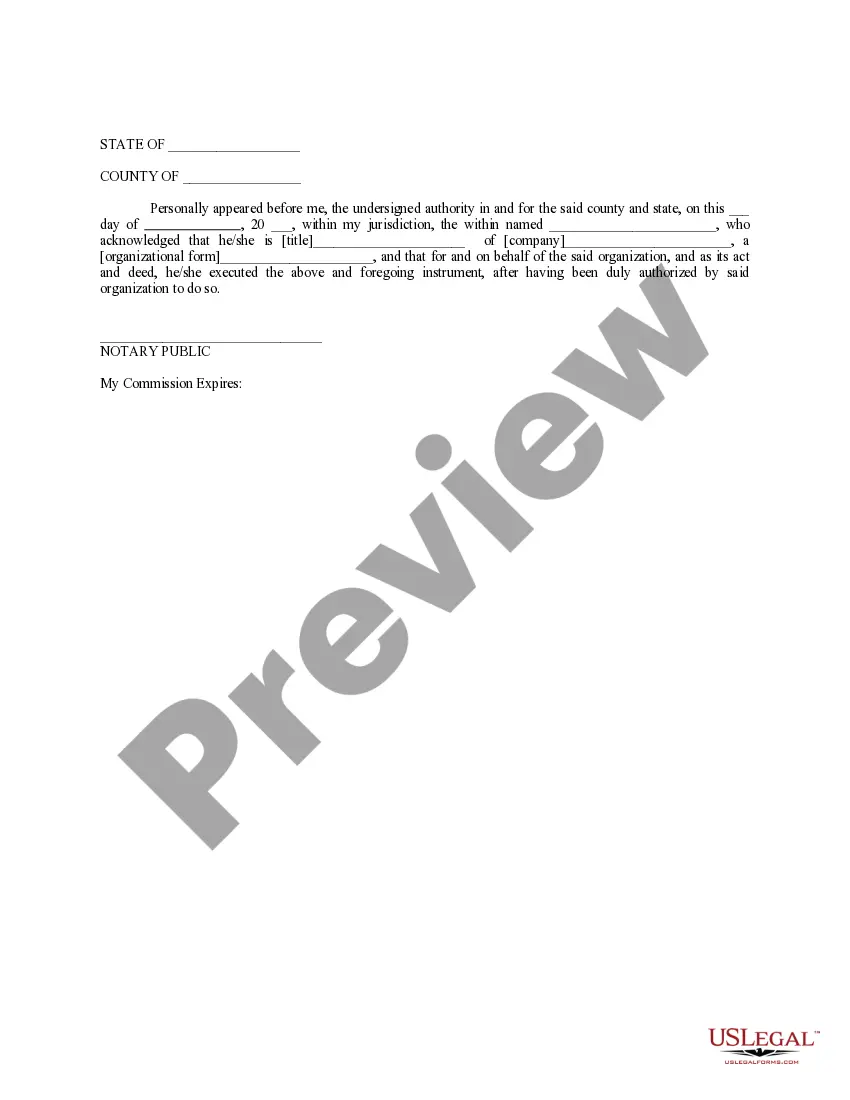
- Sign and date the agreement in the presence of a notary if required.
Is notarization required?
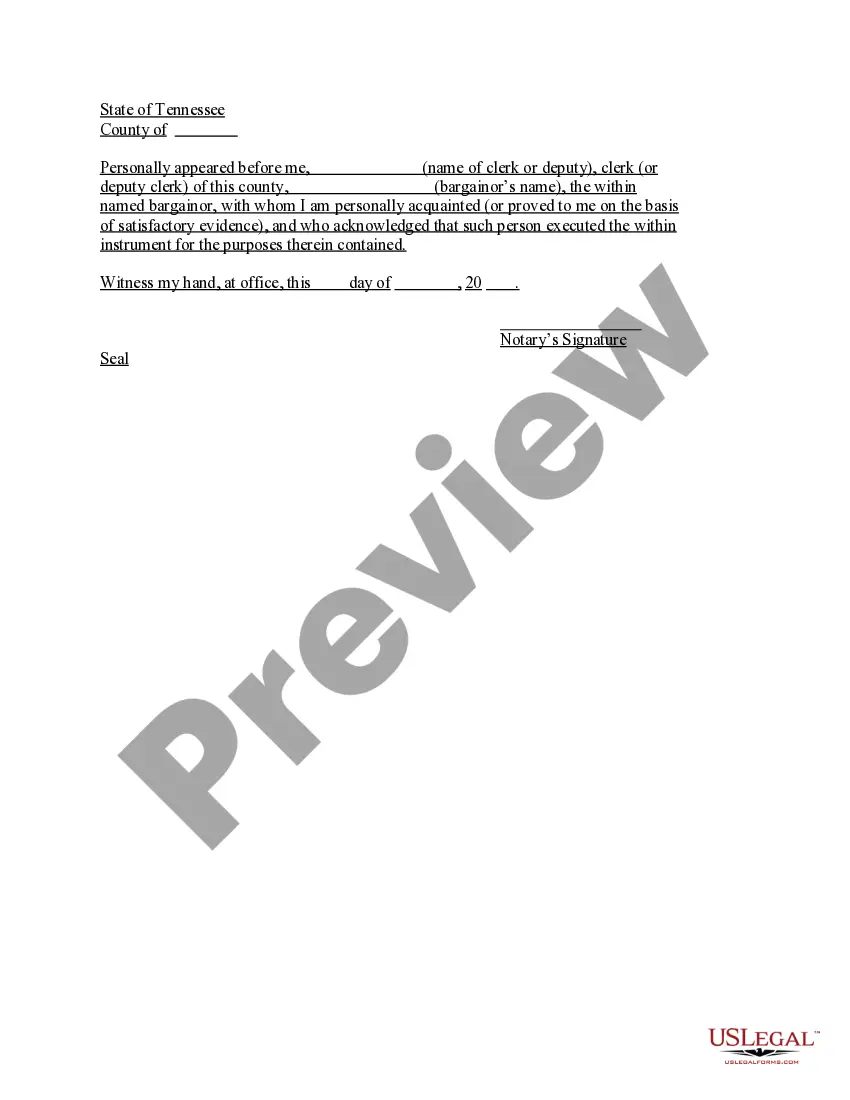
This form needs to be notarized to ensure legal validity. US Legal Forms provides secure online notarization powered by Notarize, allowing you to complete the process through a verified video call, available anytime.
Get your form ready online
Our built-in tools help you complete, sign, share, and store your documents in one place.
Make edits, fill in missing information, and update formatting in US Legal Forms—just like you would in MS Word.
Download a copy, print it, send it by email, or mail it via USPS—whatever works best for your next step.
Sign and collect signatures with our SignNow integration. Send to multiple recipients, set reminders, and more. Go Premium to unlock E-Sign.
If this form requires notarization, complete it online through a secure video call—no need to meet a notary in person or wait for an appointment.
We protect your documents and personal data by following strict security and privacy standards.

Make edits, fill in missing information, and update formatting in US Legal Forms—just like you would in MS Word.

Download a copy, print it, send it by email, or mail it via USPS—whatever works best for your next step.

Sign and collect signatures with our SignNow integration. Send to multiple recipients, set reminders, and more. Go Premium to unlock E-Sign.

If this form requires notarization, complete it online through a secure video call—no need to meet a notary in person or wait for an appointment.

We protect your documents and personal data by following strict security and privacy standards.
Typical mistakes to avoid
- Failing to include accurate property descriptions.
- Not providing the correct loan details or failing to reference the loan agreement.
- Omitting signatures or improperly executed notarizations.
- Not clearly defining the obligations of the Assignor regarding lease management.
- Forgetting to attach any necessary documents as required by the agreement.
Legal use & context
- The Assignment of Lease and Rent is legally binding and protects the interests of the lender.
- It should clearly outline the rights and obligations of both parties to avoid future disputes.
- This document is enforceable as long as it complies with state-specific laws governing assignments.
Looking for another form?


Form popularity
FAQ
Typically, the assignment of rents is signed by the borrower and the lender involved in the Arkansas Assignment of Lease and Rent from Borrower to Lender. Additionally, any third parties that hold an interest in the property may also need to sign. It's important to ensure that all signatures are obtained to prevent any future disputes. Using US Legal Forms can guide you through ensuring that all relevant parties sign the necessary documents.
To enforce the assignment of rents in Arkansas, you must first ensure that the assignment document is correctly executed and includes all necessary details. After that, you can notify the tenant of the assignment to make it binding. If the tenant fails to comply with rental payments, the lender, now an assignee, can take legal action to collect owed rents. Using US Legal Forms can help you create and manage these assignments effectively.
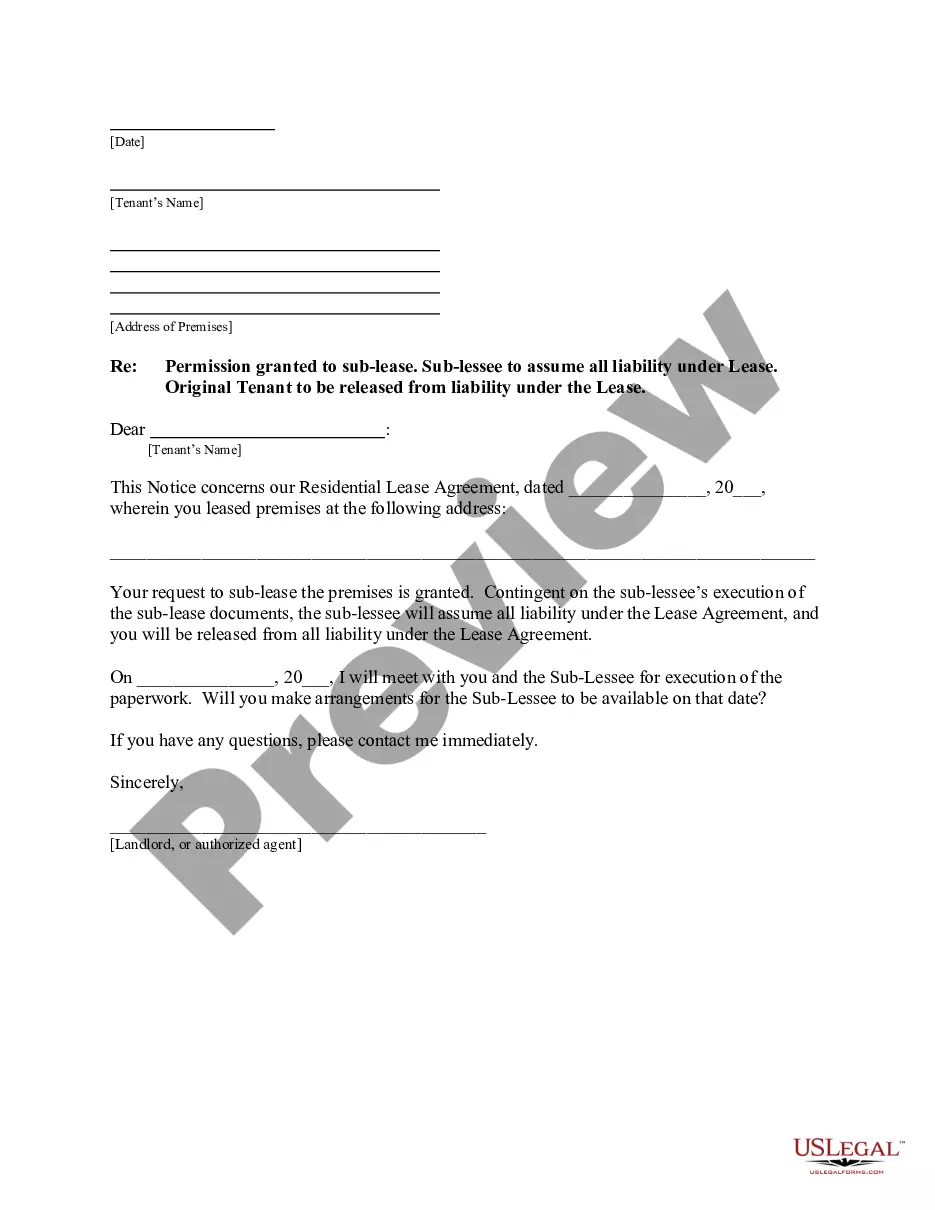
In the context of the Arkansas Assignment of Lease and Rent from Borrower to Lender, the landlord's consent is crucial. This consent ensures that the landlord agrees to the assignment, allowing the borrower to transfer rights and obligations under the lease. Without this approval, the assignment may be considered void, leading to complications for all parties involved. You can streamline this process using US Legal Forms, which provides templates for obtaining landlord consent.
Yes, a landlord can refuse a lease assignment under certain conditions stated in the lease agreement. Typically, the landlord must have valid reasons, which might include concerns about the new tenant's financial stability. Understanding the Arkansas Assignment of Lease and Rent from Borrower to Lender can help both landlords and tenants navigate these situations effectively.
The right of assignment allows a lender to collect lease payments directly from tenants in the event of a borrower's default. This right provides lenders with a means to secure their interests and mitigate losses. Additionally, it enables lenders to closely monitor lease agreements and tenant relationships, ensuring the stability of their investment.
The primary purpose of an assignment of lease is to provide security for lenders in Arkansas. By assigning the lease and rent payments, the lender can ensure a steady income stream until the borrower resolves any financial difficulties. This mechanism also fosters trust between lenders and borrowers, as it formalizes the expectations surrounding lease agreements.
A lender's right of assignment allows them to transfer their rights to collect payments under a mortgage or lease agreement. In the case of an Arkansas Assignment of Lease and Rent from Borrower to Lender, this means the lender can assign their interest in the lease, ensuring they receive the rental income directly. This right enhances the lender's ability to reclaim their investment in case of default. For those seeking clarity in this process, US Legal Forms offers comprehensive resources to guide you.
The purpose of an assignment of a mortgage is to transfer the rights and responsibilities of the mortgage from the original lender to a new party. In the context of an Arkansas Assignment of Lease and Rent from Borrower to Lender, this means the lender can manage the lease and collect rent directly. This process simplifies transactions between involved parties and ensures that obligations are clear and enforceable. Understanding this can help both lenders and borrowers navigate their financial relationships more effectively.
The assignment of rent clause primarily benefits the lender, as it secures their right to collect rent directly. However, borrowers also gain from this arrangement since it can make their financing terms more favorable. By ensuring a continuous rental income stream, both parties can achieve greater financial security, ultimately making the property more appealing to investors.