Arkansas Letter from Tenant to Landlord for Failure of Landlord to comply with building codes affecting health and safety or resulting in untenantable condition - demand for remedy
Overview of this form
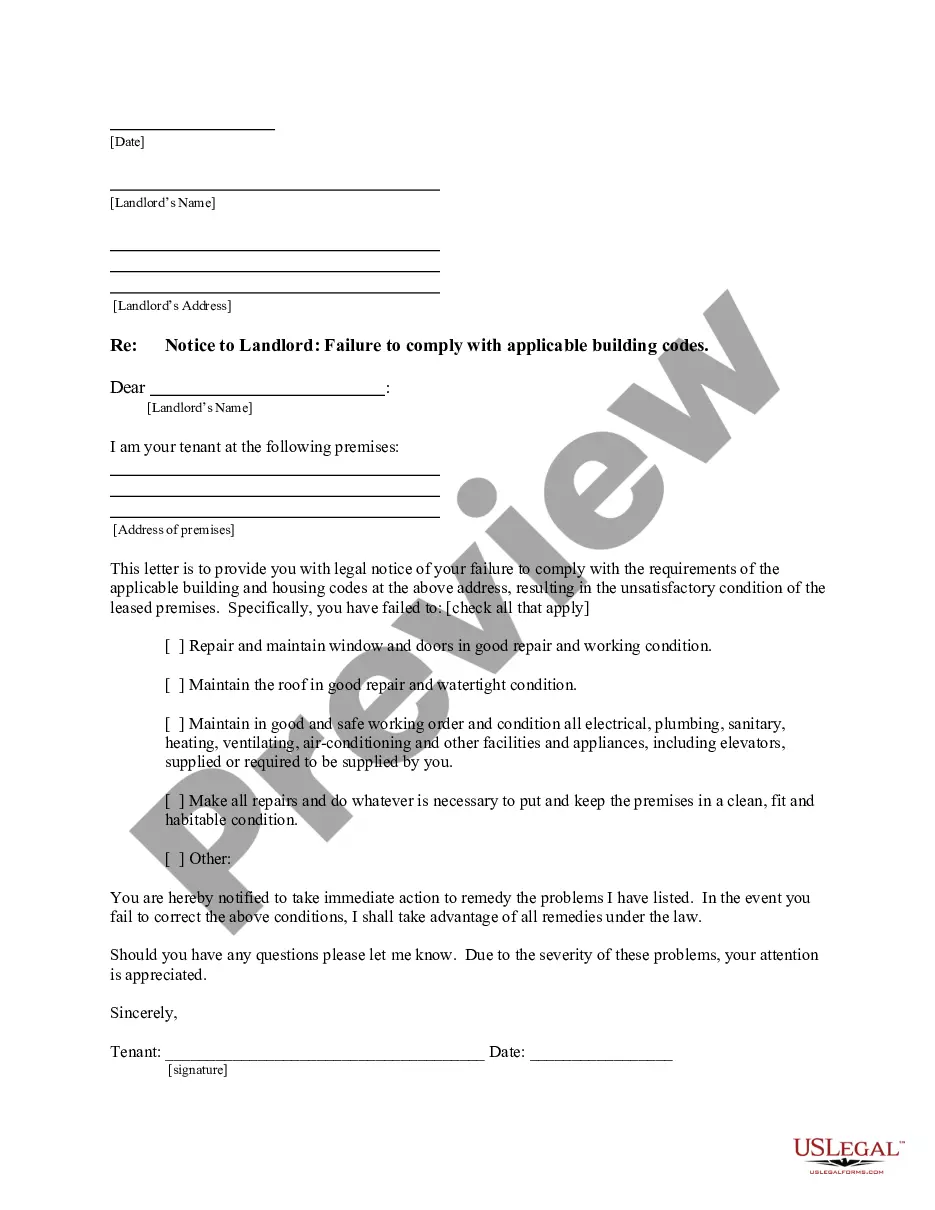
This form is a demand letter from a tenant to a landlord, requesting that the landlord remedy unsafe or unhealthy conditions in a rental property. It emphasizes the necessity to comply with building codes, which is crucial for ensuring tenant safety. Unlike general complaint letters, this form includes specific legal demands and a clear timeline for necessary repairs, making it a formal notice of significant issues that require prompt attention.
Form components explained
- Identification of the parties involved (tenant and landlord).
- Details of the specific health and safety issues that violate building codes.
- A defined timeline (ten days) for the landlord to respond or make repairs.
- Specifications for necessary repairs, such as window and door maintenance and roof conditions.
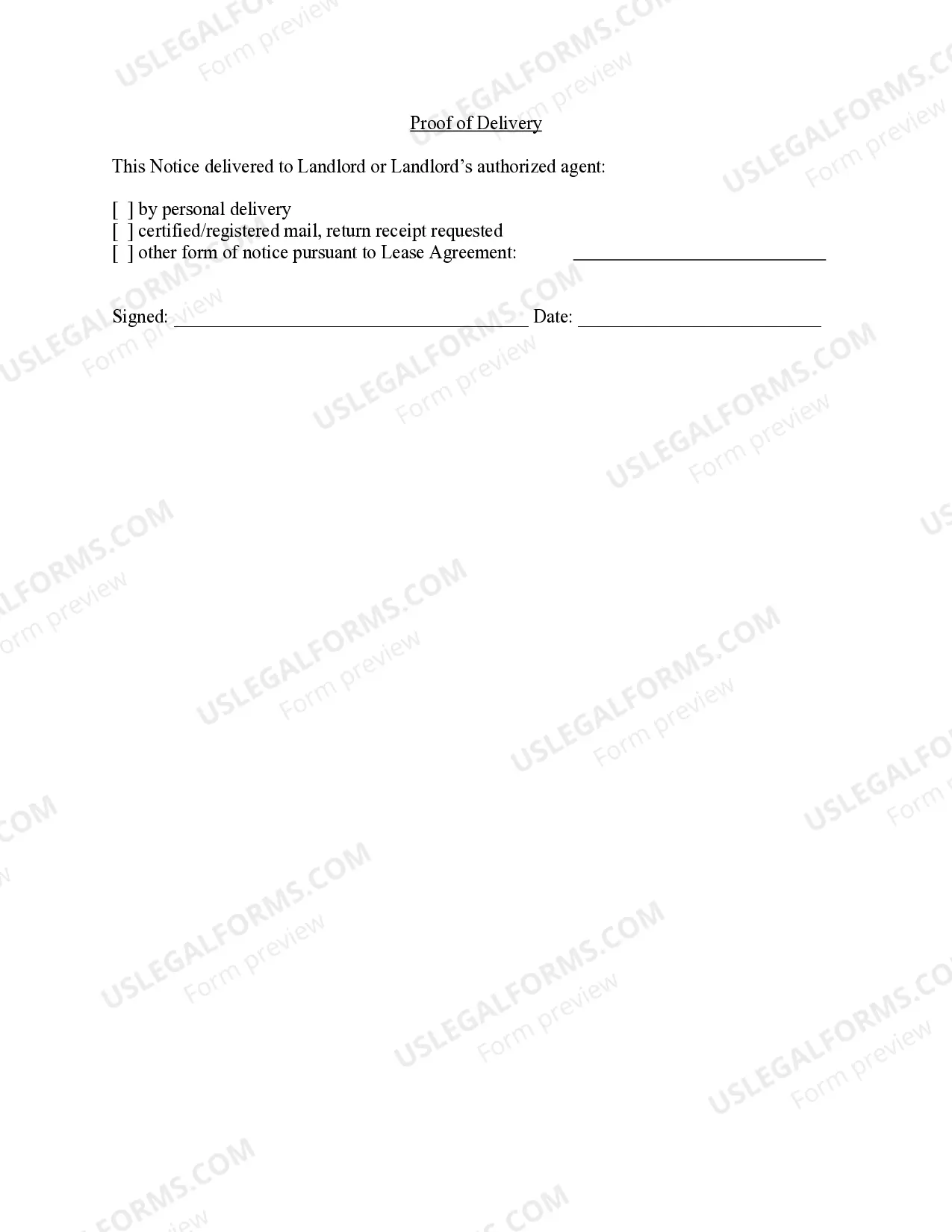
- A section for the tenant's signature and date of notice delivery.


When this form is needed
This form should be used when a tenant identifies serious issues in their rental property that affect their health and safety or render the premises unlivable. Common scenarios include significant leaks, pest infestations, or other violations that the landlord has failed to address after being notified. It provides a documented request for the landlord's compliance within a specified timeframe.
Who this form is for
- Tenants who are experiencing unsafe or unhealthy living conditions in their rental property.
- Individuals seeking to formally notify their landlord of code violations.
- Renters who have already communicated issues verbally or informally but require a more formal approach.
How to prepare this document
- Identify the tenant and landlord by filling in their names and addresses at the top of the form.
- Detail the specific building code violations affecting the property, being clear and precise.
- Specify the repairs needed, such as repairing windows, doors, and the roof.
- Clearly state the ten-day deadline for the landlord to remedy the situation.
- Include the tenantâs signature and the date to authenticate the notice.
Does this form need to be notarized?
This form does not typically require notarization unless specified by local law. However, tenants should ensure they follow any additional requirements that may be established in their state or local jurisdiction.
Get your form ready online
Our built-in tools help you complete, sign, share, and store your documents in one place.
Make edits, fill in missing information, and update formatting in US Legal Forms—just like you would in MS Word.
Download a copy, print it, send it by email, or mail it via USPS—whatever works best for your next step.
Sign and collect signatures with our SignNow integration. Send to multiple recipients, set reminders, and more. Go Premium to unlock E-Sign.
If this form requires notarization, complete it online through a secure video call—no need to meet a notary in person or wait for an appointment.
We protect your documents and personal data by following strict security and privacy standards.

Make edits, fill in missing information, and update formatting in US Legal Forms—just like you would in MS Word.

Download a copy, print it, send it by email, or mail it via USPS—whatever works best for your next step.

Sign and collect signatures with our SignNow integration. Send to multiple recipients, set reminders, and more. Go Premium to unlock E-Sign.

If this form requires notarization, complete it online through a secure video call—no need to meet a notary in person or wait for an appointment.

We protect your documents and personal data by following strict security and privacy standards.
Avoid these common issues
- Failing to document specific incidents or conditions that prompted the need for the letter.
- Missing the deadline for sending the letter; ensure it is sent promptly after identifying issues.
- Not retaining a copy of the letter for personal records.
Benefits of using this form online
- Easy access to a professionally drafted letter tailored for specific legal requirements.
- Allows for quick customization to include relevant details and conditions.
- Digital format makes it easier to save, print, and share with necessary parties.
Legal use & context
- This letter serves as formal documentation of unsafe conditions, which can be important in any future legal disputes.
- It emphasizes the landlord's responsibility to provide habitable living conditions as mandated by law.
- Failure to respond may bolster the tenantâs position in potential tenancy disputes.
What to keep in mind
- This form facilitates a tenant's formal communication regarding unsafe living conditions.
- It legally obligates the landlord to address repairs in a timely manner.
- Documenting communications with this letter is crucial for protection and future actions.
Looking for another form?
Form popularity
FAQ
Yes, a landlord can initiate eviction proceedings by sending you a certified letter, but specific laws and regulations may apply depending on your state. It is crucial to understand your rights as a tenant, especially if the notice relates to the Arkansas Letter from Tenant to Landlord for Failure of Landlord to comply with building codes affecting health and safety or resulting in untenantable condition - demand for remedy. Consider consulting resources like uslegalforms to better navigate your rights and responsibilities in such situations.
To write a certified letter to a landlord, begin with a clear subject line that states your intent. Detail the specific concerns you have, especially those that may pertain to the Arkansas Letter from Tenant to Landlord for Failure of Landlord to comply with building codes affecting health and safety or resulting in untenantable condition - demand for remedy. Make sure to include your contact information and request a response, and remember to send it via certified mail to establish proof of communication.
Writing a letter of confirmation for a rental involves stating the key details of the agreement, including the rental period, property address, and terms agreed upon. Make sure to clearly mention any specific points that relate to issues like the Arkansas Letter from Tenant to Landlord for Failure of Landlord to comply with building codes affecting health and safety or resulting in untenantable condition - demand for remedy. It is best to keep your language straightforward and clear, so that both parties understand the agreement without confusion.
To write a certified letter, start by using a professional format with your address and the recipient's address at the top. Clearly state the purpose of the letter, such as addressing issues related to the Arkansas Letter from Tenant to Landlord for Failure of Landlord to comply with building codes affecting health and safety or resulting in untenantable condition - demand for remedy. Include a request for confirmation of receipt, and use a certified mail service to send your letter, ensuring that your communication is legally recognized.
In Arkansas, a landlord can begin eviction proceedings after a tenant is just a few days late on rent. While most landlords wait until rent is a week or two overdue, it is possible to face eviction sooner. To ensure due process, tenants may want to communicate with their landlord, and if issues arise regarding untenantable conditions, using an Arkansas Letter from Tenant to Landlord for Failure of Landlord to comply with building codes affecting health and safety or resulting in untenantable conditions - demand for remedy can be beneficial.
Landlord harassment in Arkansas may include actions that interfere with a tenant's right to enjoy their home, such as excessive visits without notice, sudden evictions, or threats. Tenants should document any instances of harassment to protect their rights. If necessary, they can send an Arkansas Letter from Tenant to Landlord for Failure of Landlord to comply with building codes affecting health and safety or resulting in untenantable conditions - demand for remedy to address these issues.
A landlord in Arkansas must provide at least 30 days' written notice if they seek to end a month-to-month tenancy. For longer leases, the notice requirements may vary depending on the lease terms. If a tenant faces unfair eviction tactics, formal communication, such as an Arkansas Letter from Tenant to Landlord for Failure of Landlord to comply with building codes affecting health and safety or resulting in untenantable conditions - demand for remedy, can help clarify tenant rights.
Tenants in Arkansas may sue landlords for various reasons, including failure to provide a habitable living space, breach of lease, or unjust eviction. If landlords ignore their obligations, such as failing to comply with building codes, tenants can document these failures. In such cases, an Arkansas Letter from Tenant to Landlord for Failure of Landlord to comply with building codes affecting health and safety or resulting in untenantable conditions - demand for remedy may help in building a solid case.
If your landlord does not address necessary repairs in Arkansas, tenants have rights to take action. They can formally notify the landlord of the issues in writing and request repairs. If the landlord continues to neglect their duties, tenants may use an Arkansas Letter from Tenant to Landlord for Failure of Landlord to comply with building codes affecting health and safety or resulting in untenantable conditions - demand for remedy to seek a resolution.
Recently, Arkansas enacted a law that aims to improve rental housing conditions and tenant rights. This new legislation focuses on the responsibilities of landlords, ensuring they maintain property standards. If a landlord fails to meet these responsibilities, tenants can issue an Arkansas Letter from Tenant to Landlord for Failure of Landlord to comply with building codes affecting health and safety or resulting in untenantable conditions - demand for remedy to prompt necessary changes.