Arkansas Quitclaim Deed from Husband to Himself and Wife
About this form
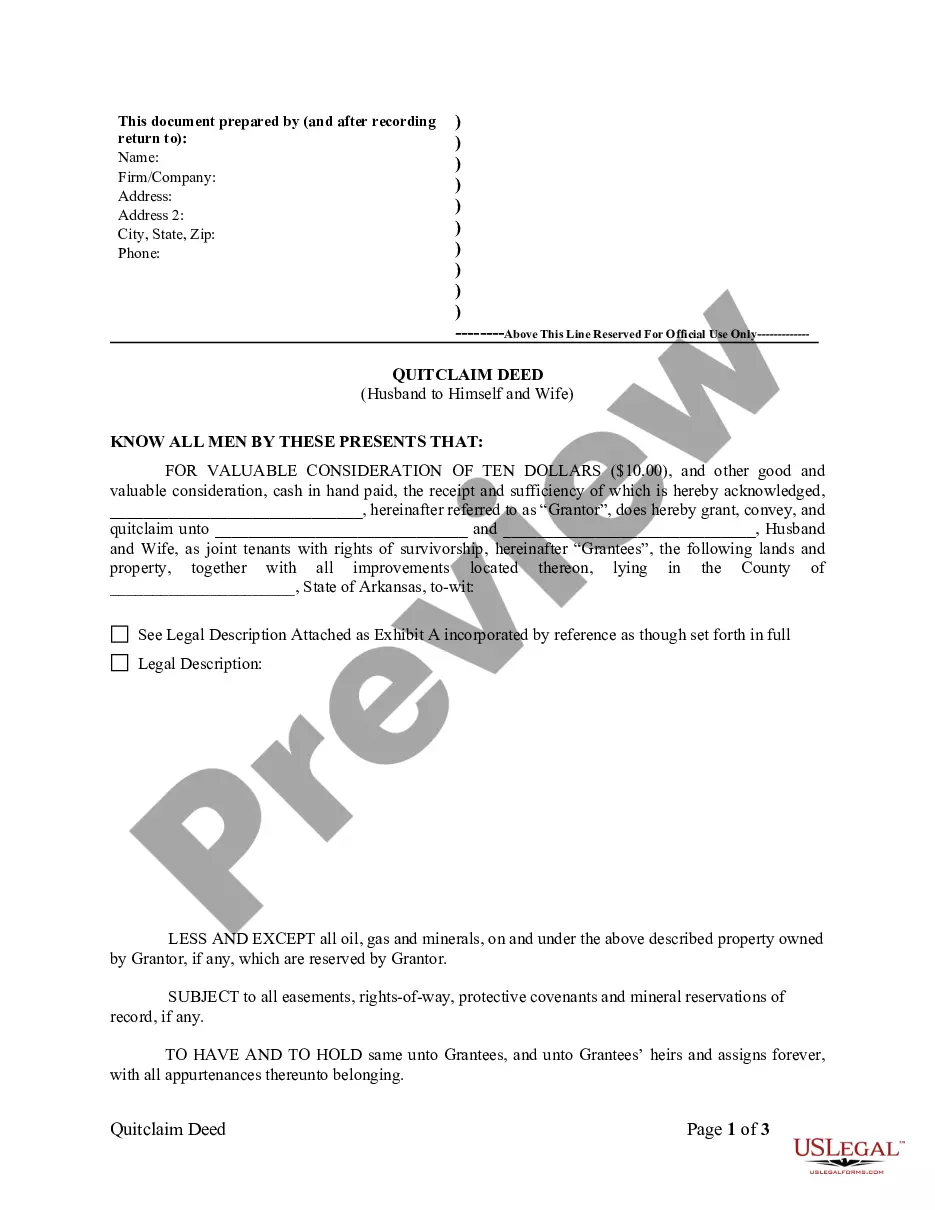
The Quitclaim Deed from Husband to Himself and Wife is a legal document that allows the husband to transfer ownership of property to himself and his wife. This form is unique in that it creates a joint tenancy with right of survivorship, meaning that if one spouse passes away, the entire interest in the property automatically passes to the surviving spouse. Unlike warranty deeds, this quitclaim deed does not provide a guarantee of title, which is suitable for transfers between spouses.
Form components explained
- Identification of Grantor and Grantees: Names and details of the husband (Grantor) and husband and wife (Grantees).
- Property Description: A detailed description of the property being transferred, including legal identifiers.
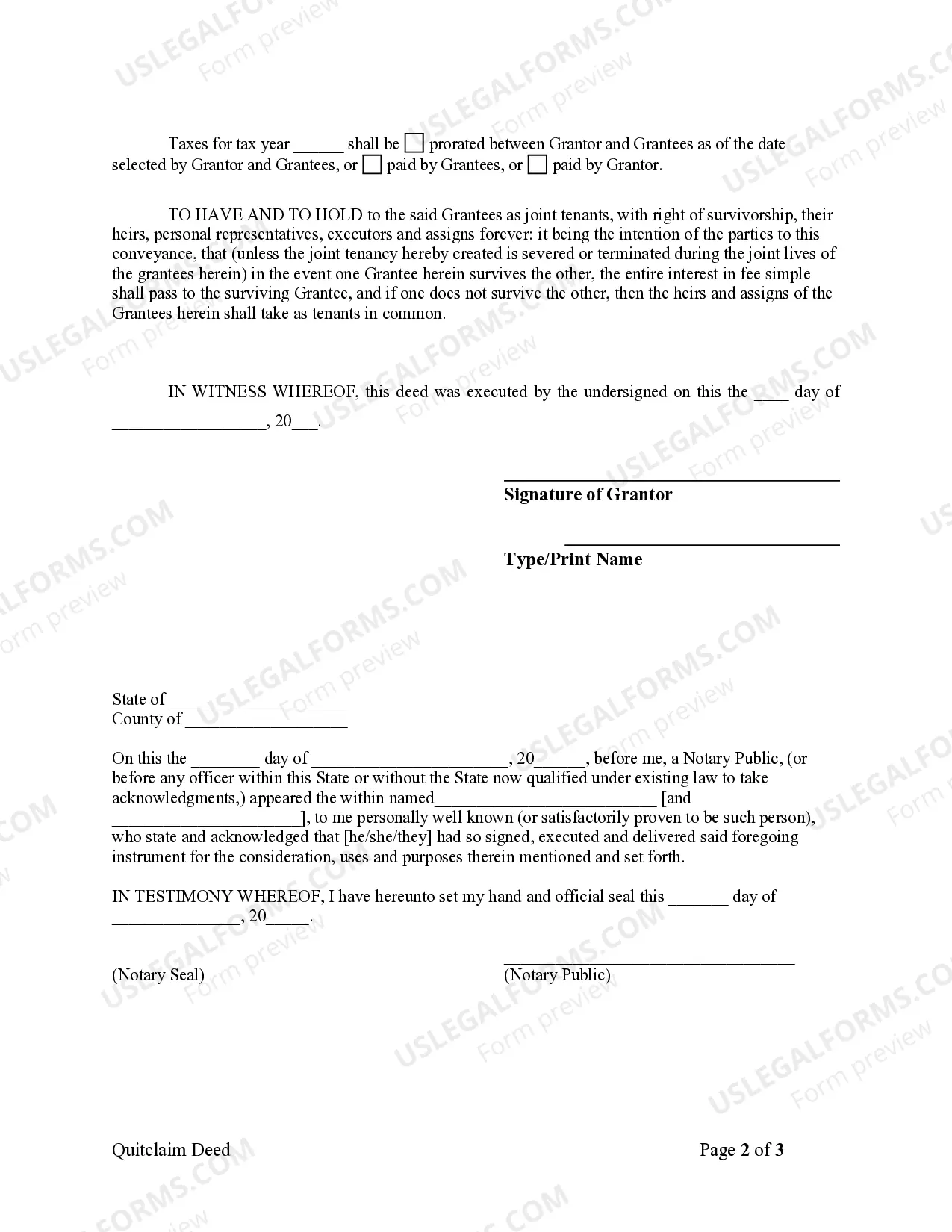
- Transfer Clause: Language specifying the transfer of property rights to the Grantees and the intention to create joint tenancy.
- Reservation Clause: A provision allowing the Grantor to reserve rights to certain resources like oil, gas, and minerals.
- Tax Proration Clause: Instructions on how property taxes will be handled between parties for the specified tax year.
- Notary Signature: Requirement for notarization to validate the deed.







Common use cases
This quitclaim deed is typically used when a husband and wife wish to hold property jointly. Common scenarios include spouses wanting to clarify ownership after a marriage, or simplifying estate planning by ensuring the surviving spouse retains full ownership without needing to go through probate. Additionally, this form is suitable for removing a spouse from title in cases of divorce or separation.
Who this form is for
This form is appropriate for:
- Married couples looking to formalize joint ownership of property.
- Individuals in a marriage who wish to clarify or reassign property rights.
- Spouses seeking to reserve certain rights to resources below the surface of the property.
- Those interested in ensuring that property automatically transfers to the surviving spouse upon death.
Instructions for completing this form
- Identify the parties involved, including the full names and addresses of the Grantor and Grantees.
- Clearly describe the property being transferred, including its legal description.
- Specify any reservations concerning minerals or rights associated with the property.
- Determine how property taxes will be prorated or paid.
- Sign the document in the presence of a notary public and ensure the notary completes their section.
Does this document require notarization?
Notarization is required for this form to take effect. Our online notarization service, powered by Notarize, lets you verify and sign documents remotely through an encrypted video session, available 24/7.
Get your form ready online
Our built-in tools help you complete, sign, share, and store your documents in one place.
Make edits, fill in missing information, and update formatting in US Legal Forms—just like you would in MS Word.
Download a copy, print it, send it by email, or mail it via USPS—whatever works best for your next step.
Sign and collect signatures with our SignNow integration. Send to multiple recipients, set reminders, and more. Go Premium to unlock E-Sign.
If this form requires notarization, complete it online through a secure video call—no need to meet a notary in person or wait for an appointment.
We protect your documents and personal data by following strict security and privacy standards.

Make edits, fill in missing information, and update formatting in US Legal Forms—just like you would in MS Word.

Download a copy, print it, send it by email, or mail it via USPS—whatever works best for your next step.

Sign and collect signatures with our SignNow integration. Send to multiple recipients, set reminders, and more. Go Premium to unlock E-Sign.

If this form requires notarization, complete it online through a secure video call—no need to meet a notary in person or wait for an appointment.

We protect your documents and personal data by following strict security and privacy standards.
Common mistakes
- Failing to provide a complete legal description of the property.
- Not notarizing the document, which is necessary for validity.
- Overlooking tax provisions, which may lead to disputes later.
- Not understanding the implications of joint tenancy versus tenancy in common.
- Using a quitclaim deed in inappropriate situations, such as sales or transfers involving third parties.
Benefits of using this form online
- Convenience of accessing and completing the form from anywhere.
- Editable templates save time and ensure accuracy.
- Reliability, with forms crafted by legal professionals to ensure compliance with state laws.
- Easy download and printing options for physical signatures.
Looking for another form?
Form popularity
FAQ
Yes, you can create a quitclaim deed yourself, provided you follow proper legal procedures. Many individuals choose to use an Arkansas Quitclaim Deed from Husband to Himself and Wife, which can simplify the process. However, it is wise to consult a legal expert or use platforms like uslegalforms to ensure that your document meets all requirements and is appropriately filed.
A quitclaim from husband to wife is a legal process where a husband transfers his ownership interest in a property to his wife. This is commonly done using an Arkansas Quitclaim Deed from Husband to Himself and Wife. It allows both spouses to clarify their ownership interests, especially in cases of marital property.
To transfer a property title to a family member in Arkansas, you can use a quitclaim deed. This document effectively conveys ownership from the current owner to the family member, ensuring a smooth transition. For those considering an Arkansas Quitclaim Deed from Husband to Himself and Wife, remember to file the deed with your local county office for it to be legally recognized.
The best way to transfer property title between family members is often through a quitclaim deed, such as the Arkansas Quitclaim Deed from Husband to Himself and Wife. This method is straightforward and can simplify the transfer process without the need for a lengthy legal procedure. It is important to ensure both parties understand the implications and that the deed is properly recorded.
You can transfer ownership of a property in Arkansas by executing a quitclaim deed. This deed allows the current owner, known as the grantor, to transfer their interest in the property to another party, the grantee. When using an Arkansas Quitclaim Deed from Husband to Himself and Wife, it is essential to follow local regulations and properly file the document with the county clerk.
Yes, you can create an Arkansas Quitclaim Deed from Husband to Himself and Wife by yourself. However, it's crucial to ensure that the document meets all state requirements to be legally valid. While you can find templates online, using a dependable service like US Legal Forms can help you avoid potential mistakes. This way, you can confidently complete the quitclaim deed, knowing it complies with Arkansas laws.
Typically, the party who benefits most from an Arkansas Quitclaim Deed from Husband to Himself and Wife is the grantee, who gains ownership rights without the lengthy process of a traditional property transfer. This streamlined method allows for quick changes in property ownership, making it useful among family members or spouses. However, it can also be valuable for those looking to remove their name from a property due to divorce or other reasons.
When filling out an Arkansas Quitclaim Deed from Husband to Himself and Wife, begin by writing the names and addresses of both parties in the appropriate sections. Clearly describe the property in question, ensuring the details match the original property deed. Lastly, after signing and having your deed notarized, file it with the county to legally document the addition of your spouse as a co-owner.
To create a valid Arkansas Quitclaim Deed from Husband to Himself and Wife, you need to include specific information such as the names of the grantor and grantee, a legal description of the property, and the date. The document must be signed by the grantor and notarized to ensure its authenticity. After preparing the deed, remember to file it with the county clerk's office for proper record keeping.
One major disadvantage of an Arkansas Quitclaim Deed from Husband to Himself and Wife is that it does not offer any guarantees regarding the title. If there are existing liens or issues with the property, these do not disappear with a quitclaim deed. Additionally, this type of deed may not shield the grantee from potential claims by third parties. It’s crucial to conduct thorough research before proceeding with the deed.