Ohio Annulment
Annulment in Ohio is a legal procedure to nullify a marriage. Our attorney-drafted templates are quick and easy to complete.

Similar documents: key differences
- Annulment vs. Divorce — annulment declares a marriage void, while divorce ends a valid marriage.
- Petition for Annulment vs. Application for Annulment — both initiate annulment, but terms may vary by state.
- Decree of Annulment vs. Judgment of Nullity — both signify a marriage is invalid, often used interchangeably.
- Annulment Agreement vs. Settlement Agreement — annulment agreements focus on marriage invalidation, while settlements address divorce terms.
Search for more forms
Types of Annulment forms
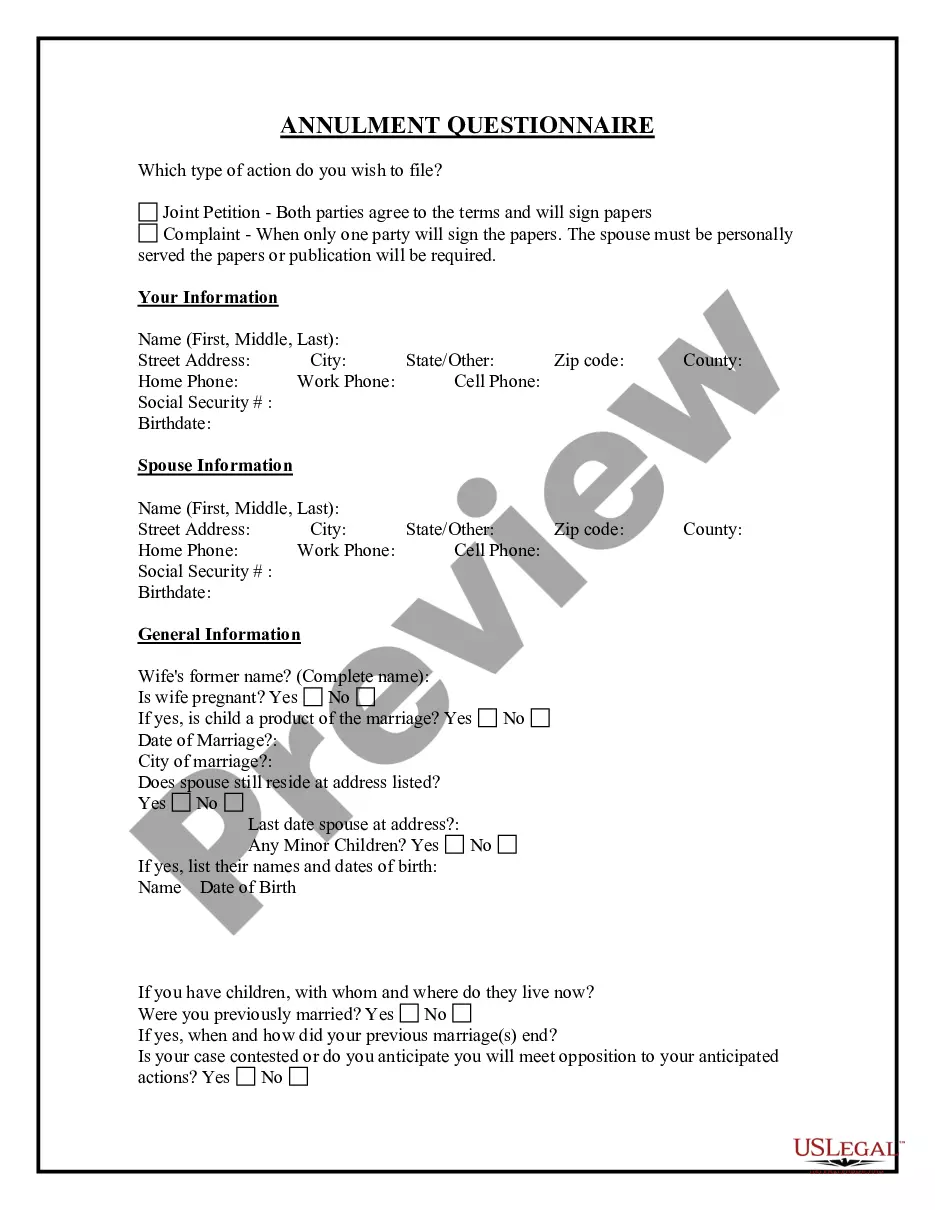
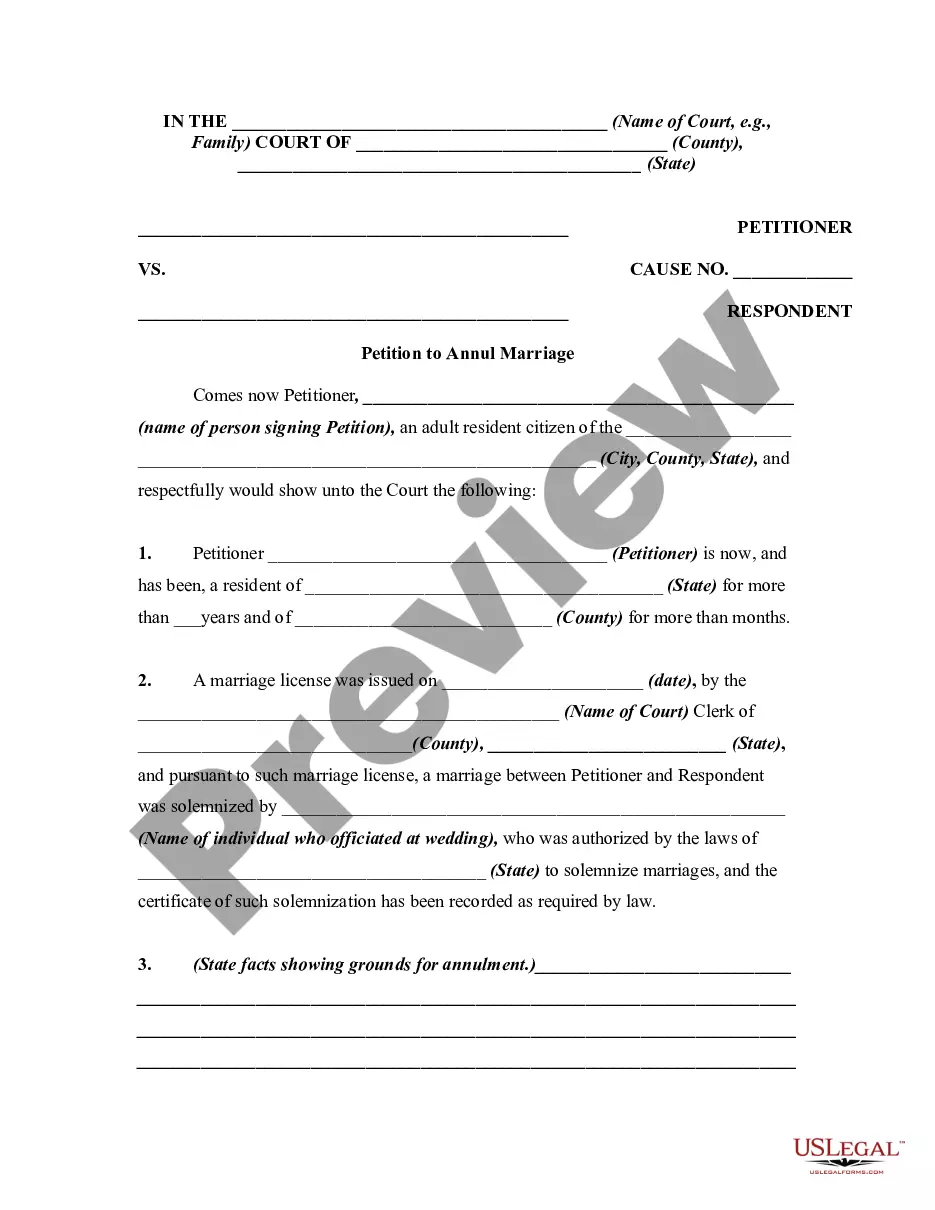
Petition to Annul Marriage
File for an annulment when your marriage has no children or shared property, addressing specific legal grounds for cancellation.
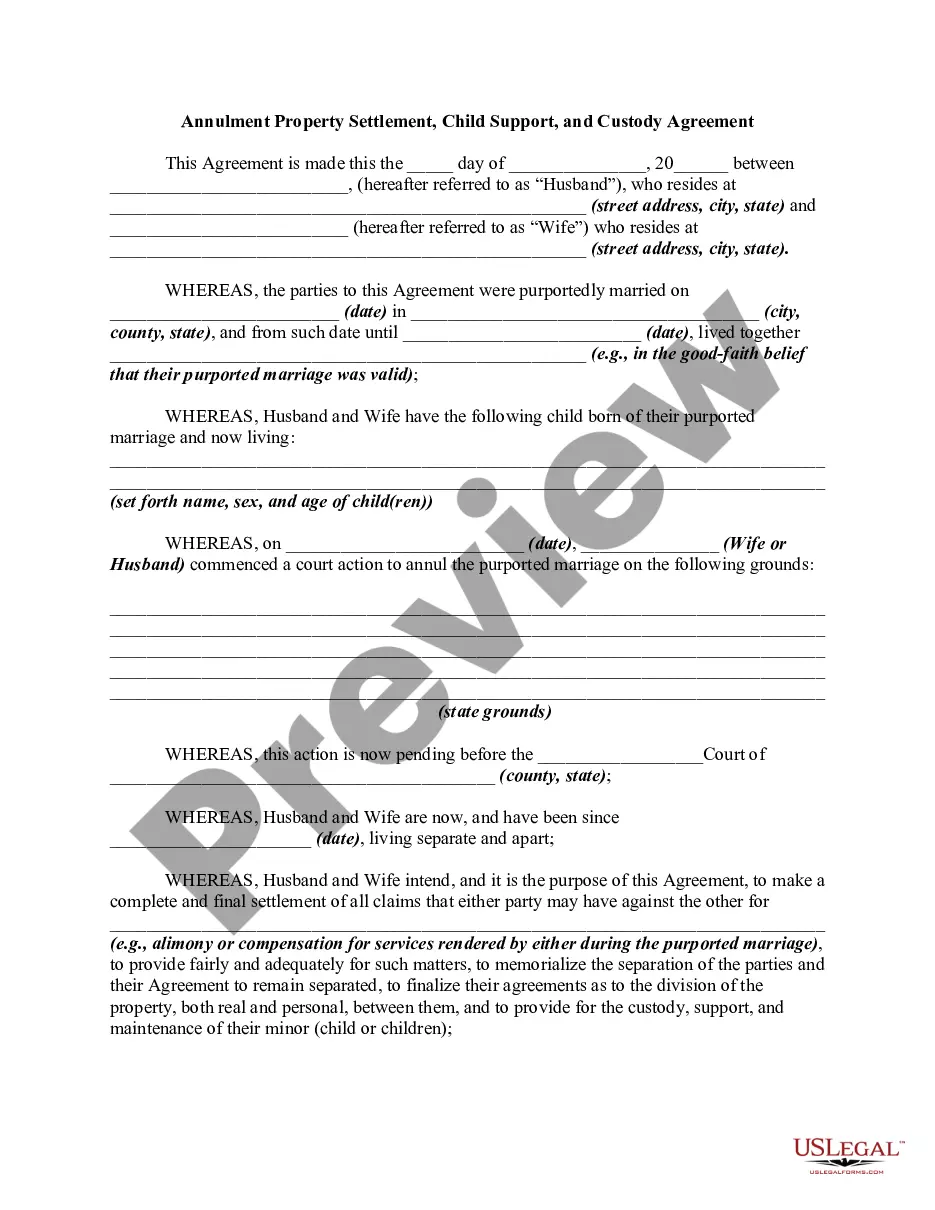
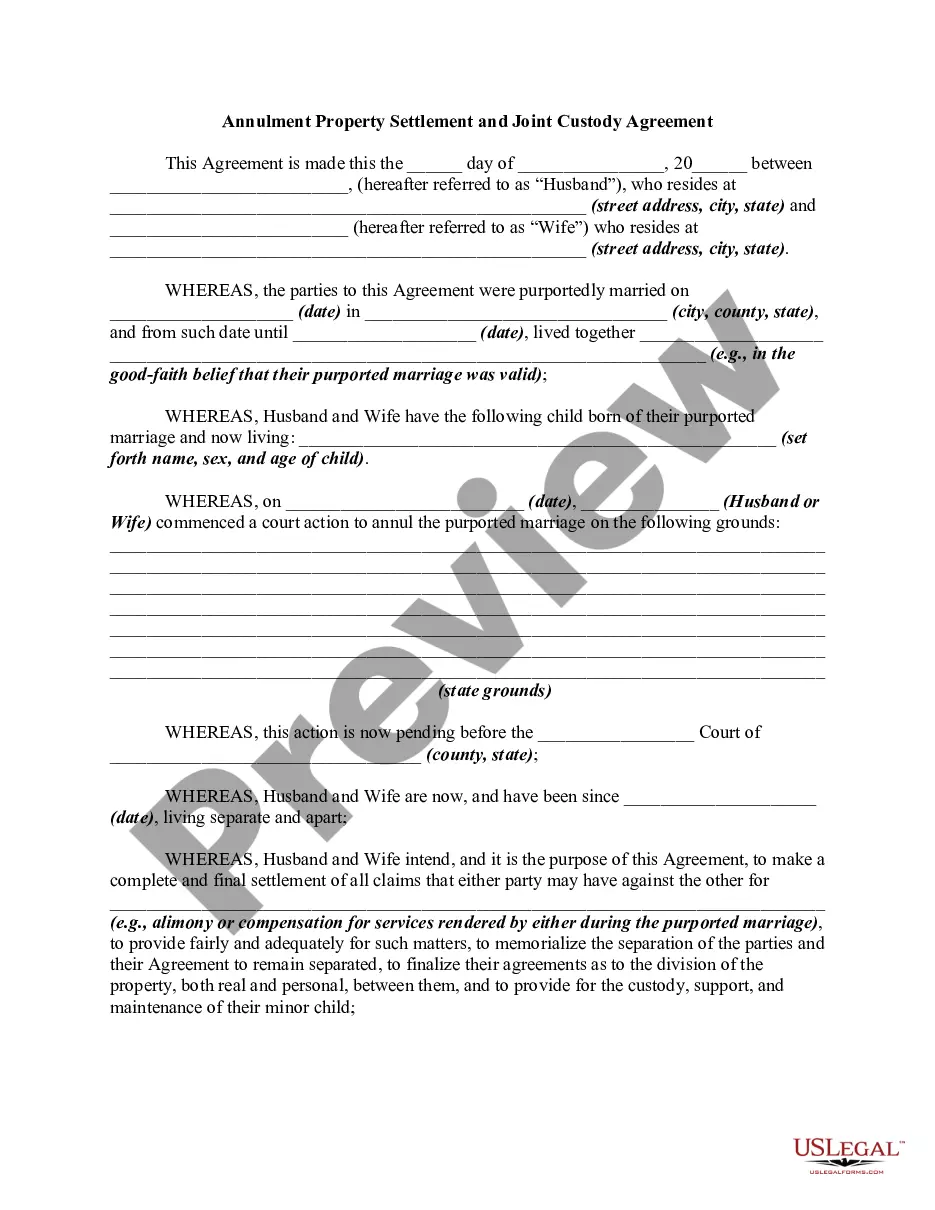
Annulment Property Settlement — Custody and Support
Finalize agreements for property division, child support, and custody after annulment proceedings.
Preliminary Testimony — Catholic Church Annulment
Gather essential information for a formal case regarding your marriage or divorce status through detailed preliminary testimony.
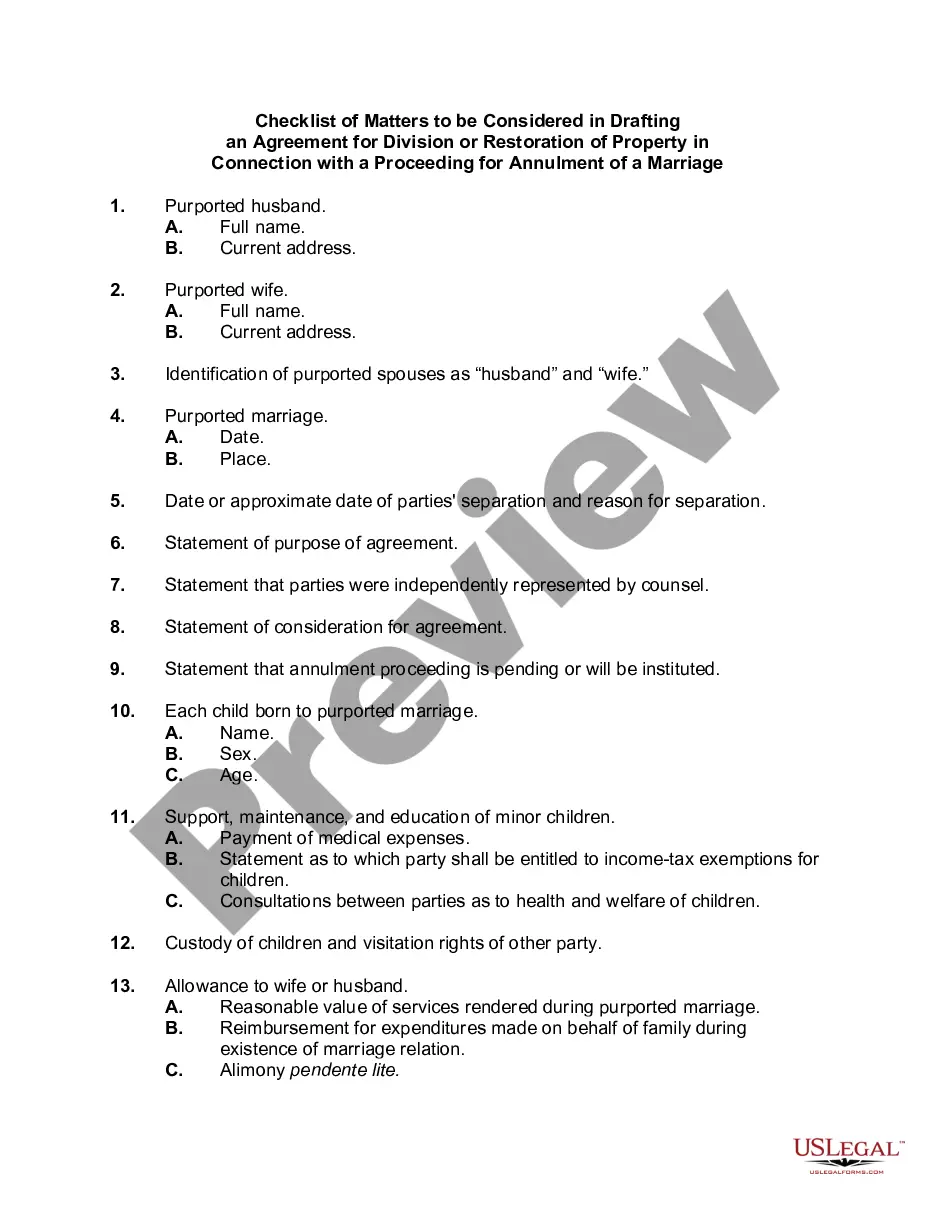
Checklist: Property Division or Restoration Agreement — Annulment
This checklist helps you navigate property division and restoration during an annulment proceeding, ensuring all important matters are considered.
Common Ohio Annulment documents
- Petition for Annulment — initiates the legal process for annulment.
- Application for Annulment — requests the court's approval for annulment.
- Annulment Petition — formal request to declare a marriage invalid.
- Complaint for Annulment — outlines reasons for seeking annulment.
- Decree of Annulment — official court order declaring marriage null.
- Annulment Agreement — outlines terms related to annulment, such as property.
FAQs
Annulment declares a marriage invalid, while divorce ends a valid marriage.
Yes, grounds may include fraud, coercion, or incapacity.
The timeline varies based on court schedules and specific circumstances.
Yes, once an annulment is granted, you can remarry.
Annulments can influence custody arrangements, similar to divorces.
Key legal points
- Annulment is based on specific legal grounds.
- Not all marriages can be annulled.
- Annulment can affect property and custody issues.
- Judicial approval is required for annulment.
- Annulment is different from divorce; it voids the marriage.
How to get started
Begin the process with these easy steps.
- Find a template or package that suits your needs.
- Review the description, preview, and signing requirements.
- Gain complete access with a subscription.
- Fill it out using the online editor.
- Export or send your documents: download, email, or mail.
Practical tip
Consider discussing property division before filing for annulment to clarify expectations.