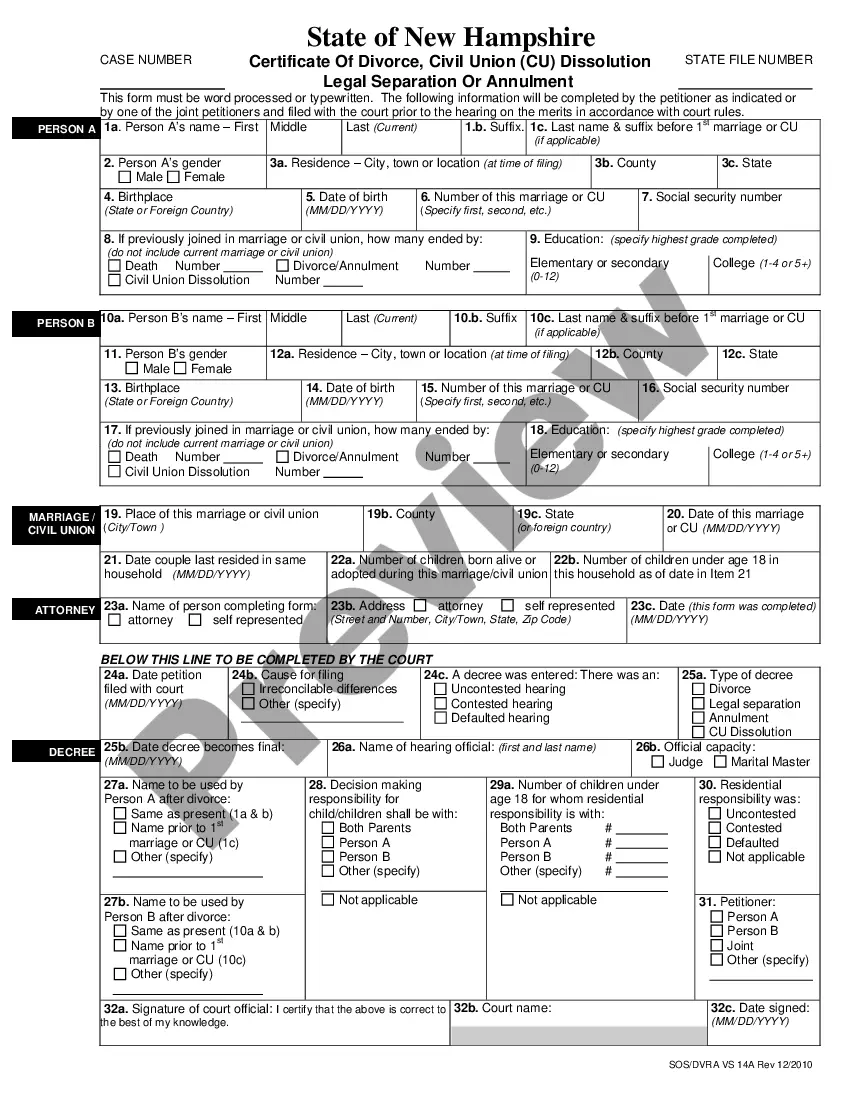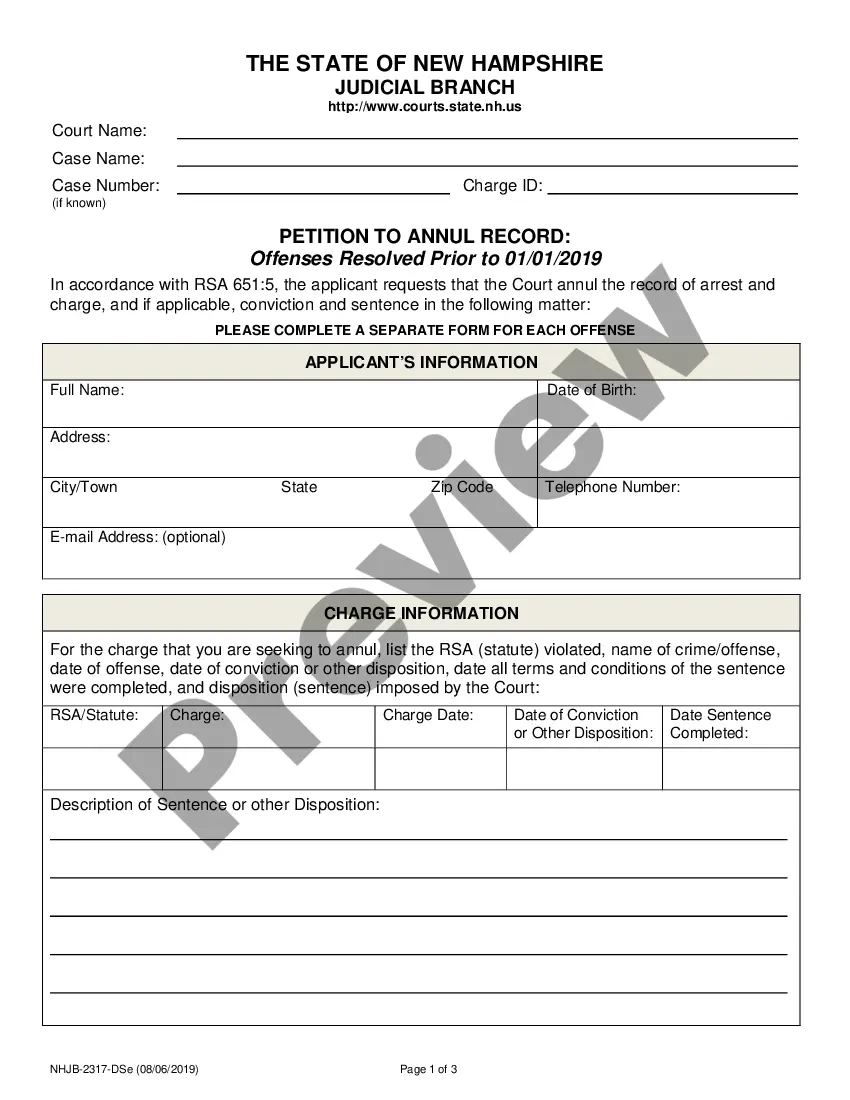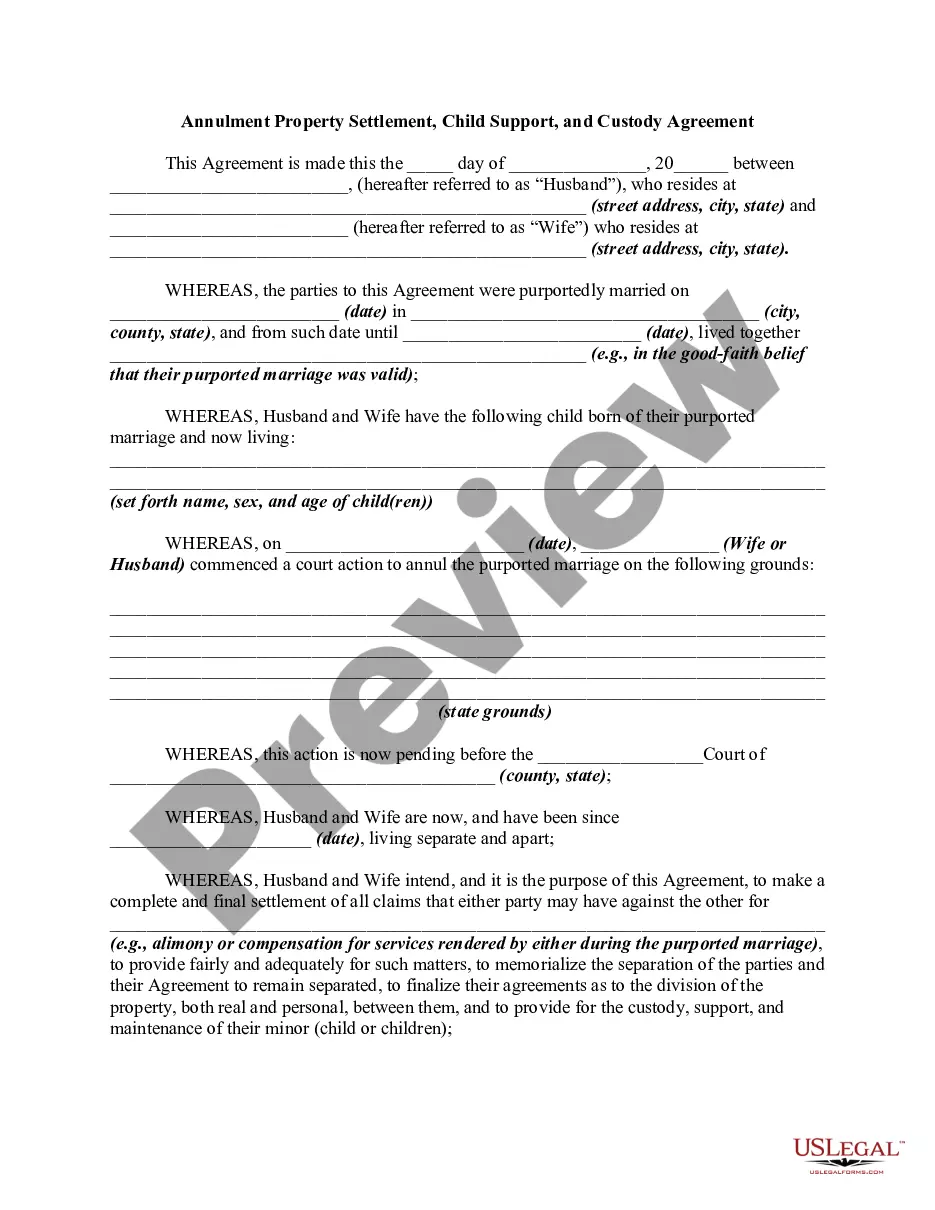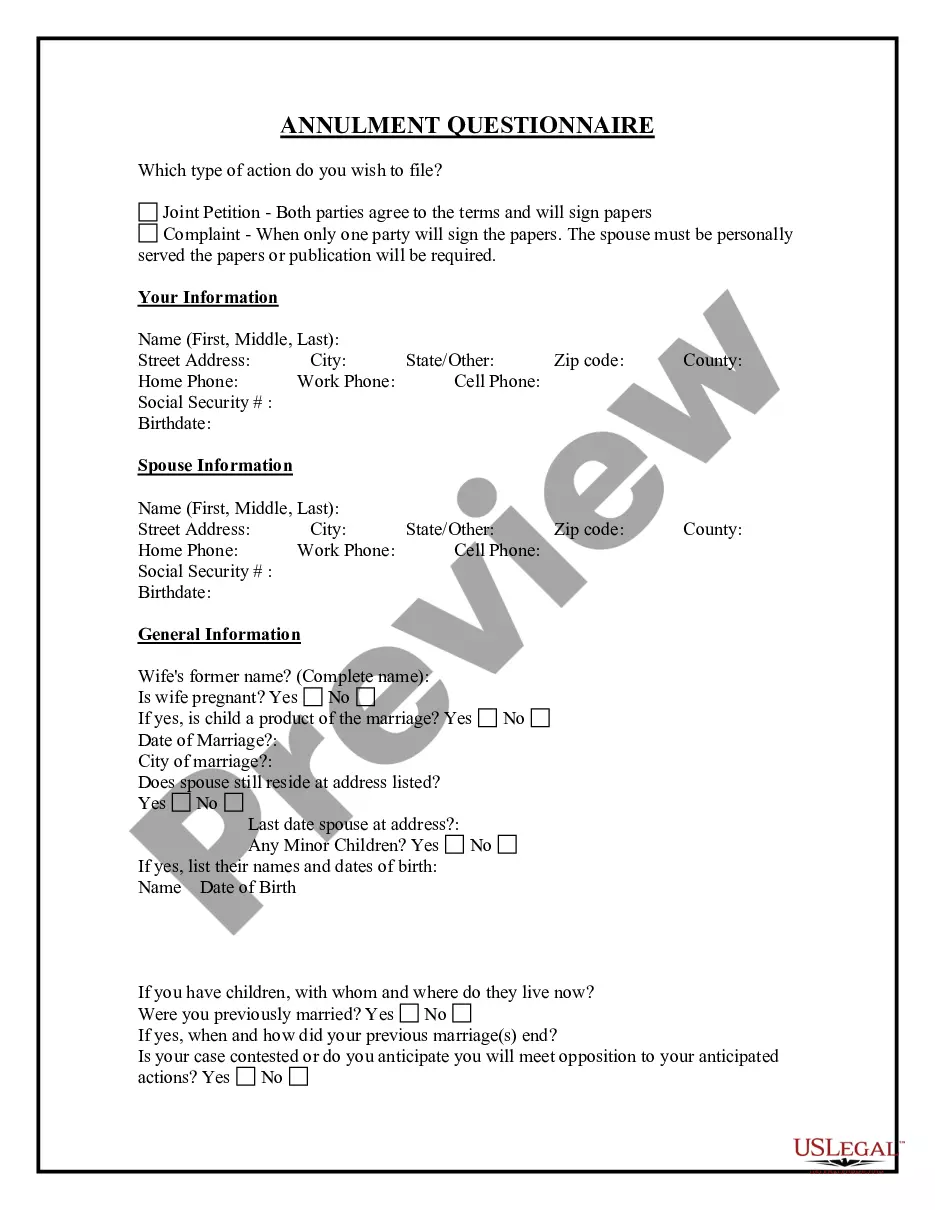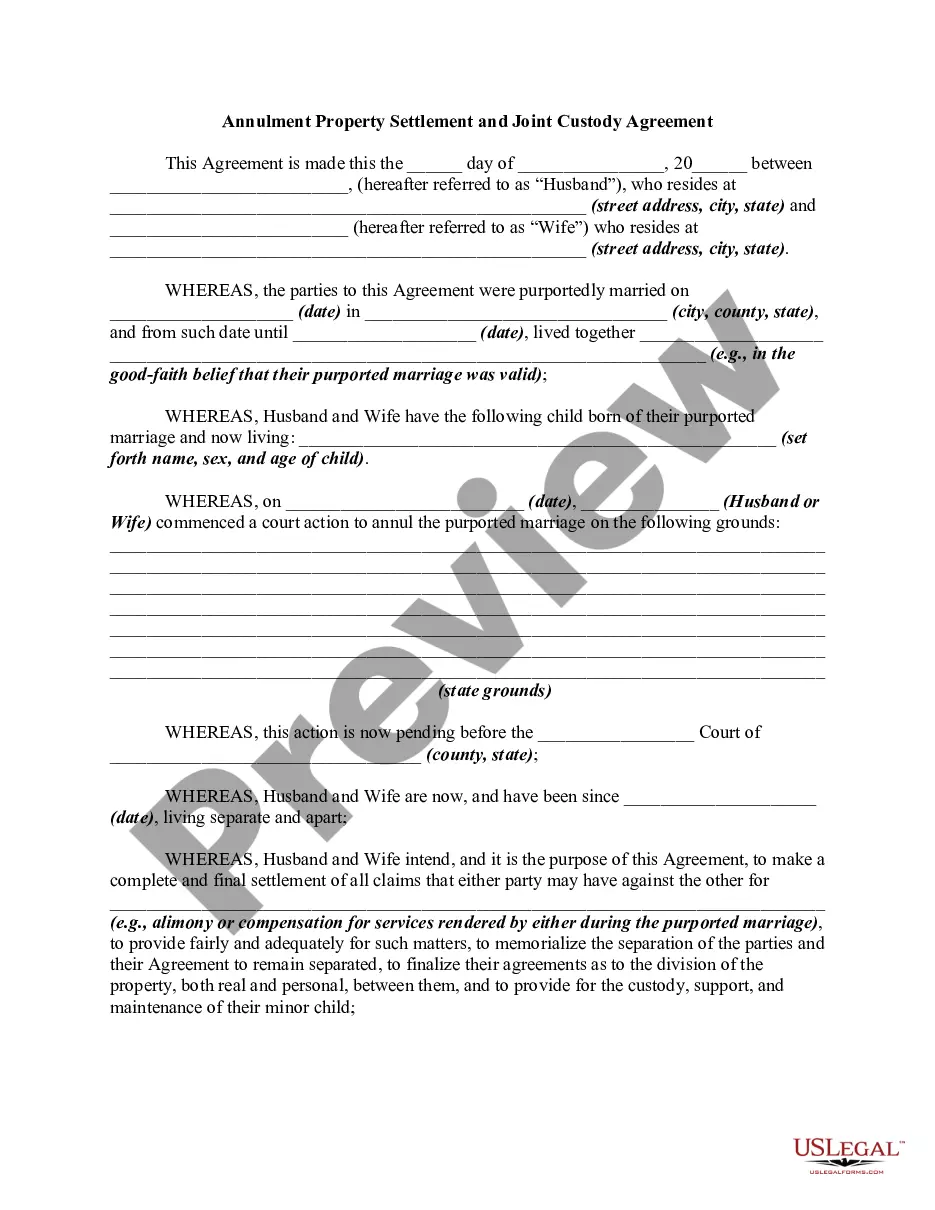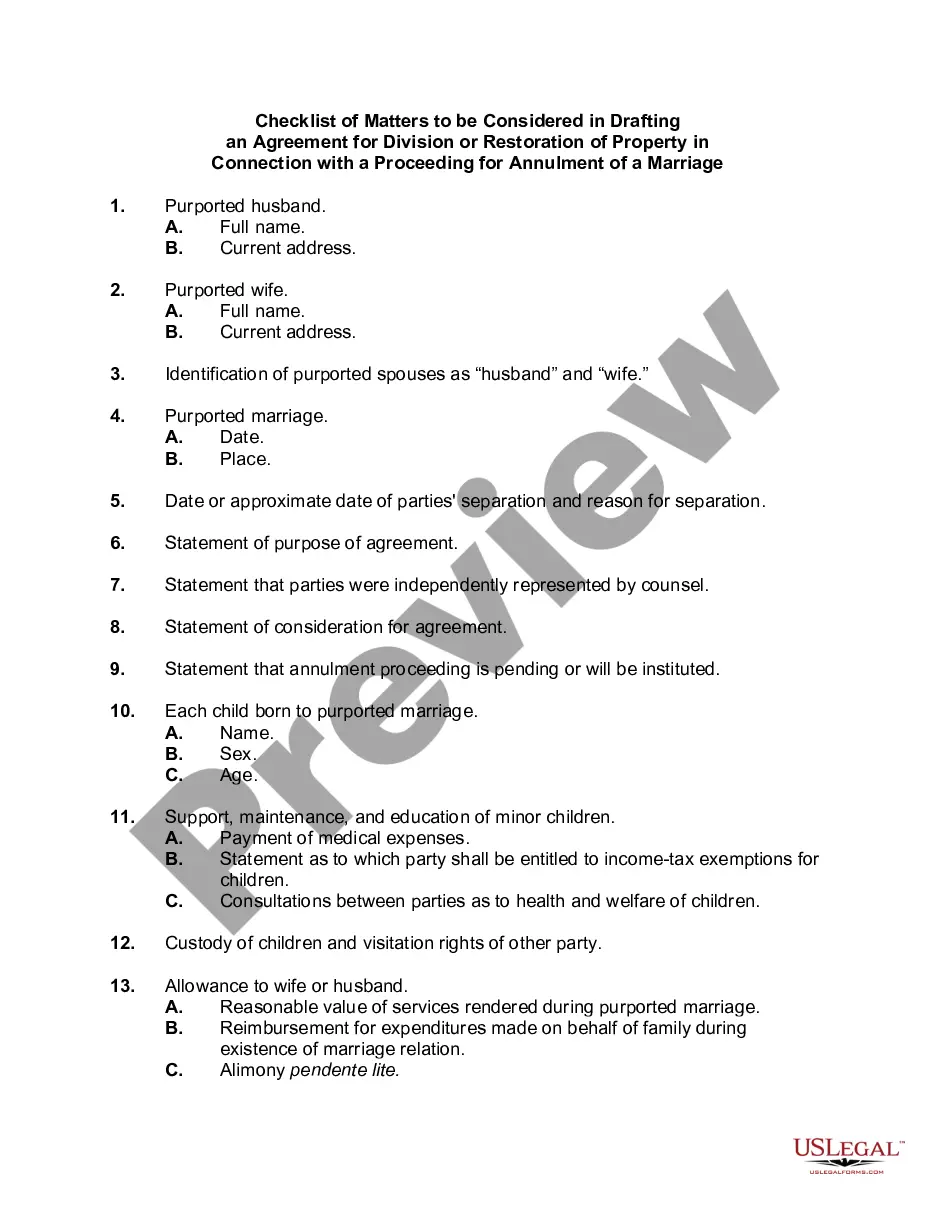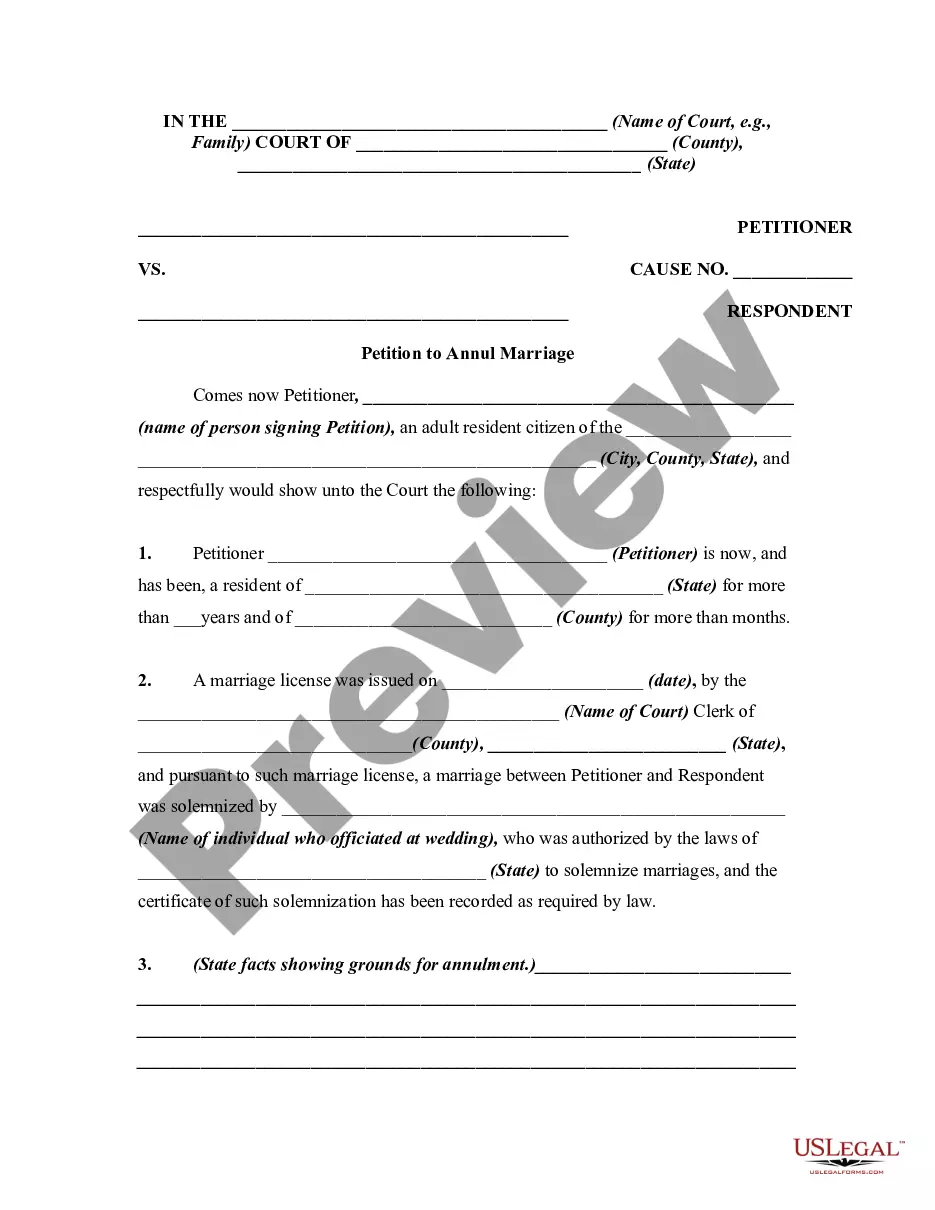
New Hampshire Annulment Forms

We offer thousands of annulment forms. Some of the forms offered are listed by area below. For others, please use our search engine.

New Hampshire Annulment Forms FAQ

What is an annulment?  An annulment is legal decree that states that a marriage was never valid. The legal effect of an annulment is to void the marriage as though it never existed. Generally, the length of time married is not a determining factor to request an annulment. Mere regret alone is generally insufficient grounds for an annulment. Laws vary by jurisdiction, so local laws should be consulted for requirements in your area.

What is the difference between annulment and divorce?  Annulment differs from divorce in that it addresses defects in a marital relationship occurring at the time of the formation of that relationship. Thus, if a marriage is illegally formed, when it is annulled the parties regain their legal rights and responsibilities as they existed before the marriage occurred. By contrast, a divorce deals with problems in a marital relationship arising after the marriage is formed. Traditionally, after a divorce the parties have continuing legal status as ex-spouses involving division of property, custody of children, and alimony.
Annulments are becoming similar to divorces in that with annulments courts may now divide marital property, order the payment of spousal support or alimony, or decree nearly anything that would be common upon a decree of divorce. Unlike with divorce, however, certain rights or entitlements such as worker's compensation benefits or alimony from a previous marriage that may have ended upon marriage will be restarted upon annulment, because the decree legally makes the marriage nonexistent

What are the grounds for an annulment?  Grounds for annulments and prohibited marriages are varied. Insanity, fraud, force, duress, impotency, being underage, and polygamy are all leading grounds for annulment. There are also a few more creative grounds. Colorado, for instance, has an annulment provision considering if the act were done as "Jest or Dare." A couple of states will also make a marriage void or voidable if a party is found to have AIDS or venereal disease.

Top Questions about New Hampshire Annulment Forms

  • How long does a DUI stay on your record near New Hampshire?

    In New Hampshire, a DUI can remain on your record indefinitely unless you pursue an annulment. This is significant for understanding how it may affect your insurance or legal interactions. You can start this process by obtaining and completing New Hampshire Annulment Forms. Consulting with a legal professional can provide further clarity and assistance in navigating your record.

  • How long does it take to legally change your name in NH?

    The time to legally change your name in New Hampshire can vary, but the process generally takes a few weeks after your forms are filed. You will need to attend a hearing and provide the required documentation. Using the correct New Hampshire Annulment Forms, if applicable, can help streamline your application. Always ensure you check the local court's processing times for better planning.

  • Which state is easiest to legally change your name?

    The ease of changing your name varies by state, but many find New Hampshire to have a straightforward process. Completing the required paperwork and filing it with the court can help you achieve your desired name change. Using New Hampshire Annulment Forms, if relevant, alongside your name change forms, can simplify your application. Researching state-specific requirements is essential for a smooth transition.

  • Does DUI clear after 10 years?

    In New Hampshire, a DUI does not automatically clear or drop off your record after ten years. However, if you receive an annulment for the DUI conviction, it may help in removing the offense from your criminal record. Completing New Hampshire Annulment Forms can assist you in this legal process. Always seek professional advice to understand the full implications for your driving record.

  • What is the look back period for a DUI in NH?

    In New Hampshire, the look back period for a DUI is ten years. This means that any subsequent DUI offenses within this timeframe can result in harsher penalties. It's important to understand this timeframe when considering legal options or driving behavior. Always check your record and consult experts if you are unsure about your specific situation.

  • How do I remove a DUI from my record in NH?

    To remove a DUI from your record in New Hampshire, you can start by applying for an annulment of the conviction. This process typically involves submitting New Hampshire Annulment Forms along with supporting documentation. Additionally, meeting specific eligibility criteria, such as having no other recent offenses, is crucial. Consulting with legal professionals can guide you through the process effectively.

  • How long can you be married and still have an annulment?

    Most states, including New Hampshire, allow annulments within a few years of marriage, but this can vary significantly by jurisdiction. It's vital to understand the state-specific regulations that apply to your case. If you're considering annulment, utilizing New Hampshire Annulment Forms can help clarify your timeline and requirements.

  • What qualifies you for an annulment in Kansas?

    In Kansas, annulment can be granted if one spouse was underage, if the marriage was based on fraud, or if there are other significant legal deficiencies. Each case is unique, so reviewing the situation closely is essential. For more assistance, consider checking New Hampshire Annulment Forms.

  • What does it mean to annul a conviction?

    To annul a conviction means to legally erase or set aside a criminal conviction, restoring an individual’s legal status. This process is distinct from marriage annulment and often requires specific legal steps. If you're looking into this process, resources like New Hampshire Annulment Forms can help guide you.

  • Is an annulment the same as a divorce in NH?

    No, an annulment is not the same as a divorce in New Hampshire. While a divorce ends a valid marriage, an annulment declares that the marriage was never legally valid. Understanding these differences is important, especially if you're exploring New Hampshire Annulment Forms.