Maryland Annulment
Annulment in Maryland allows couples to nullify their marriage. Attorney-drafted templates make the process quick and easy.

Similar documents: key differences
- Annulment vs. Divorce — annulment declares a marriage invalid, while divorce ends a valid marriage.
- Petition for Annulment vs. Complaint for Annulment — both terms refer to filing an annulment request, often used interchangeably.
- Judgment of Nullity vs. Decree of Annulment — both are court orders that nullify a marriage, but terminology may differ by state.
- Annulment Packet vs. Annulment Forms — a packet includes all necessary forms for annulment, while forms are individual documents.
Search for more forms
Types of Annulment forms
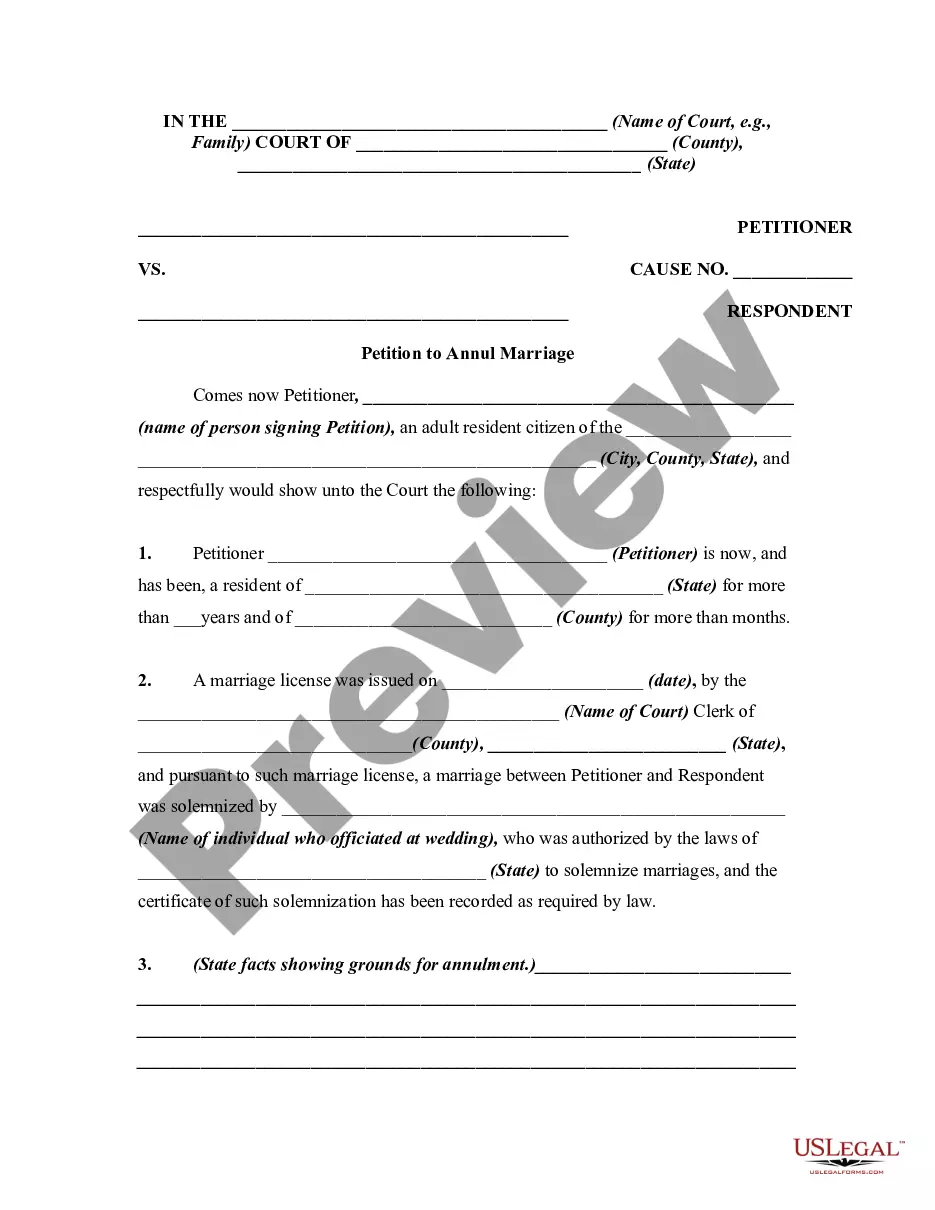
Petition to Annul Marriage
File for an annulment when your marriage has no children or shared property, addressing specific legal grounds for cancellation.
Petition for a Formal Marriage Case
Request a declaration of nullity for your marriage due to defective consent. Essential for pursuing a future marriage within the Catholic Church.
Application for Declaration of Nullity — Catholic Church
Begin the annulment process with this digital application to assess your eligibility for remarriage in the Catholic Church.
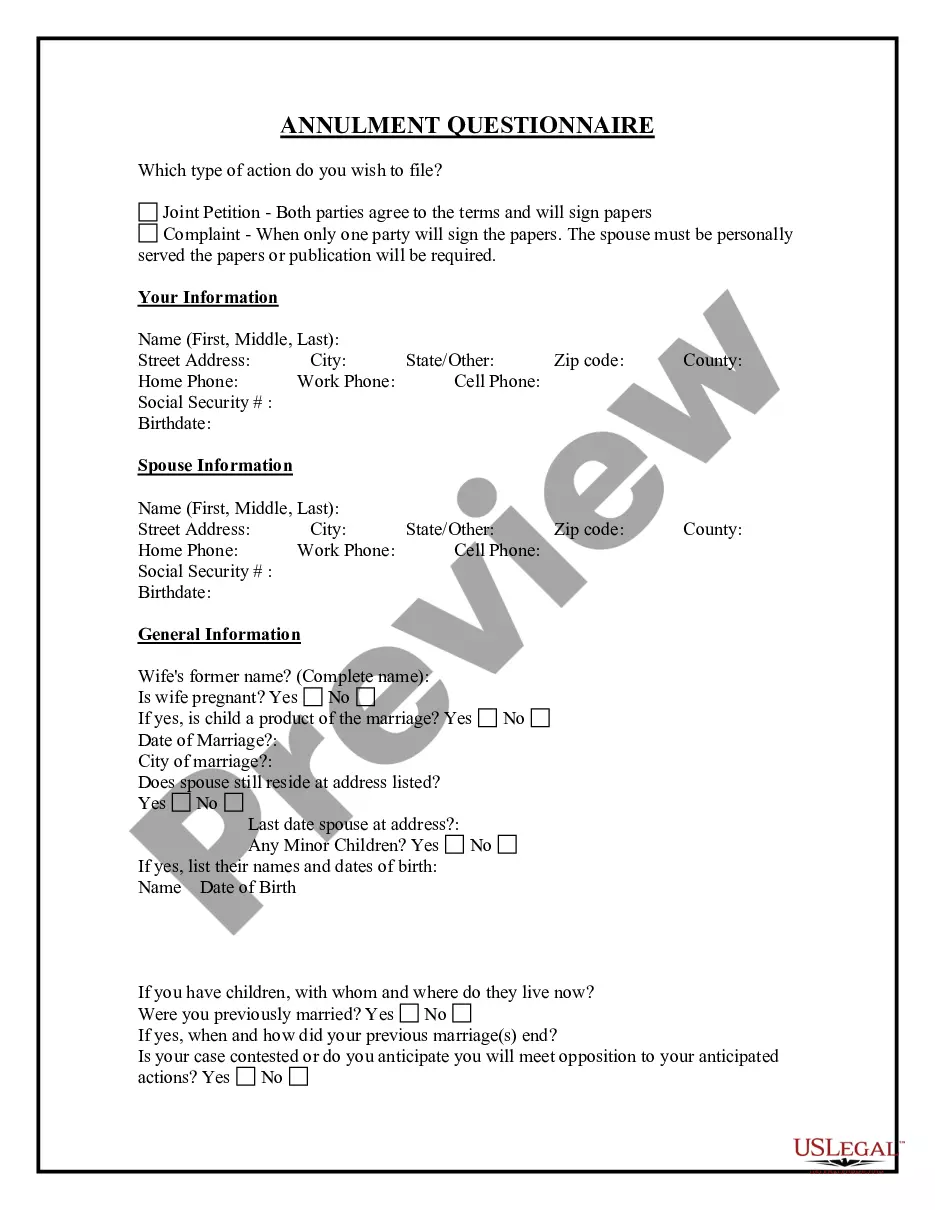
Annulment Questionnaire
Use this questionnaire to determine grounds for annulment and whether both partners agree to the filing process.
Common Maryland Annulment documents
- Petition for Annulment — initiates the annulment process in court.
- Complaint for Annulment — formally requests the court to annul the marriage.
- Decree of Annulment — official court order declaring the marriage invalid.
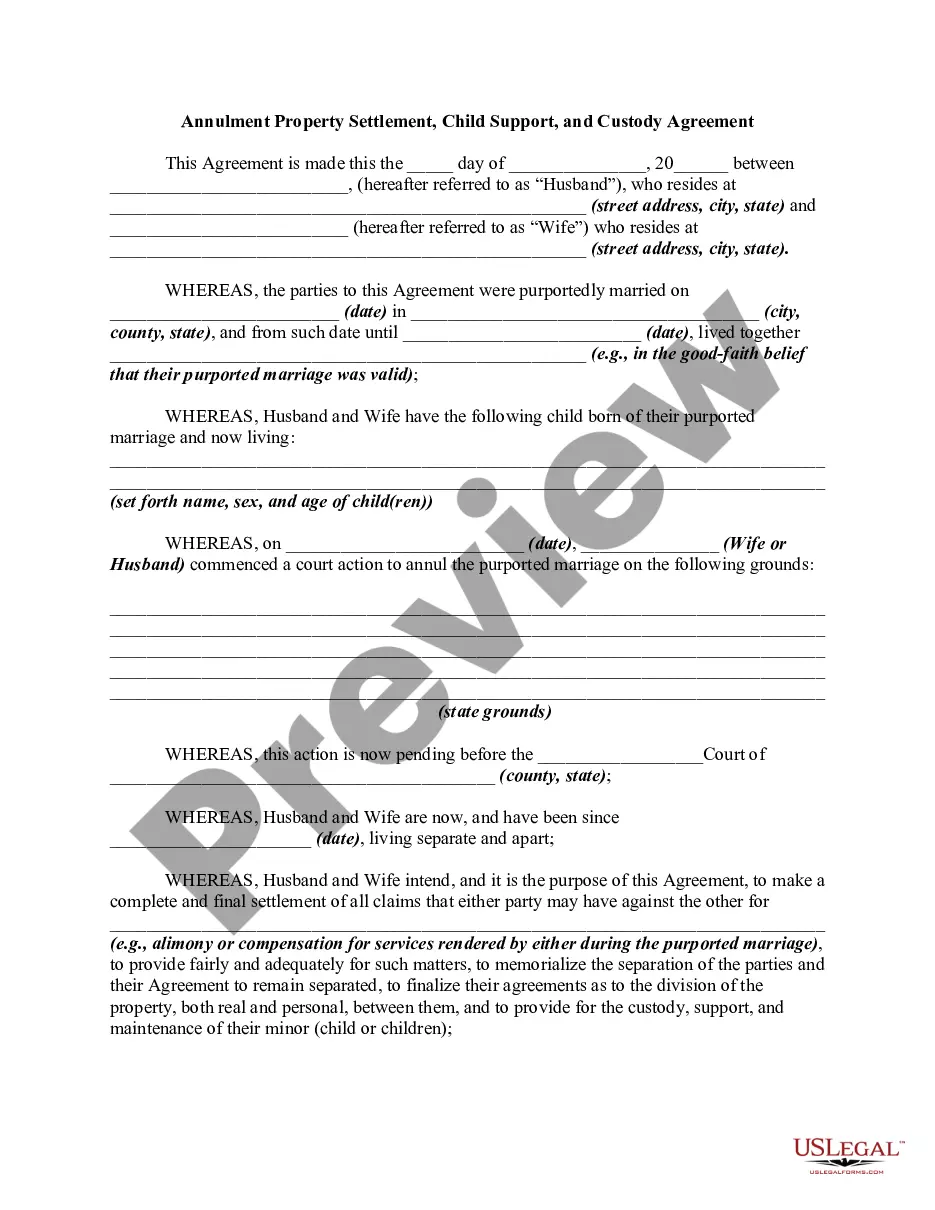
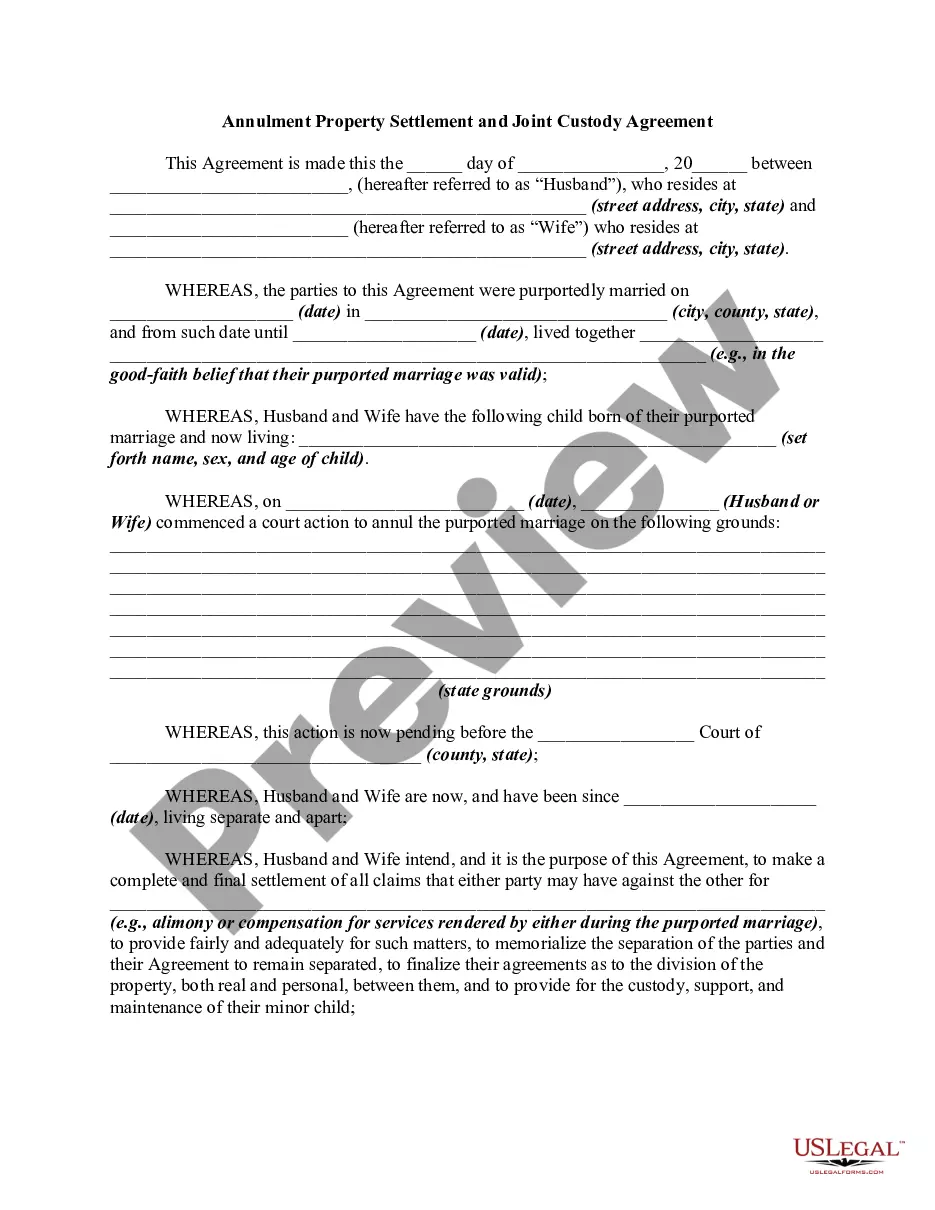
- Annulment Agreement — outlines terms agreed upon by both parties post-annulment.
- Application for Annulment — a request to the court for annulment approval.
FAQs
Annulment declares a marriage invalid, while divorce ends a valid marriage.
Yes, annulments can be sought regardless of the marriage's duration, depending on grounds.
No, annulment invalidates the marriage, while separation is a temporary arrangement.
No, a petition can be filed by one party, but both parties may need to be notified.
Annulment can affect legal obligations; it's important to address these in agreements.
Key legal points
- Annulment is based on specific grounds that invalidate a marriage.
- Common grounds include fraud, coercion, and incapacity.
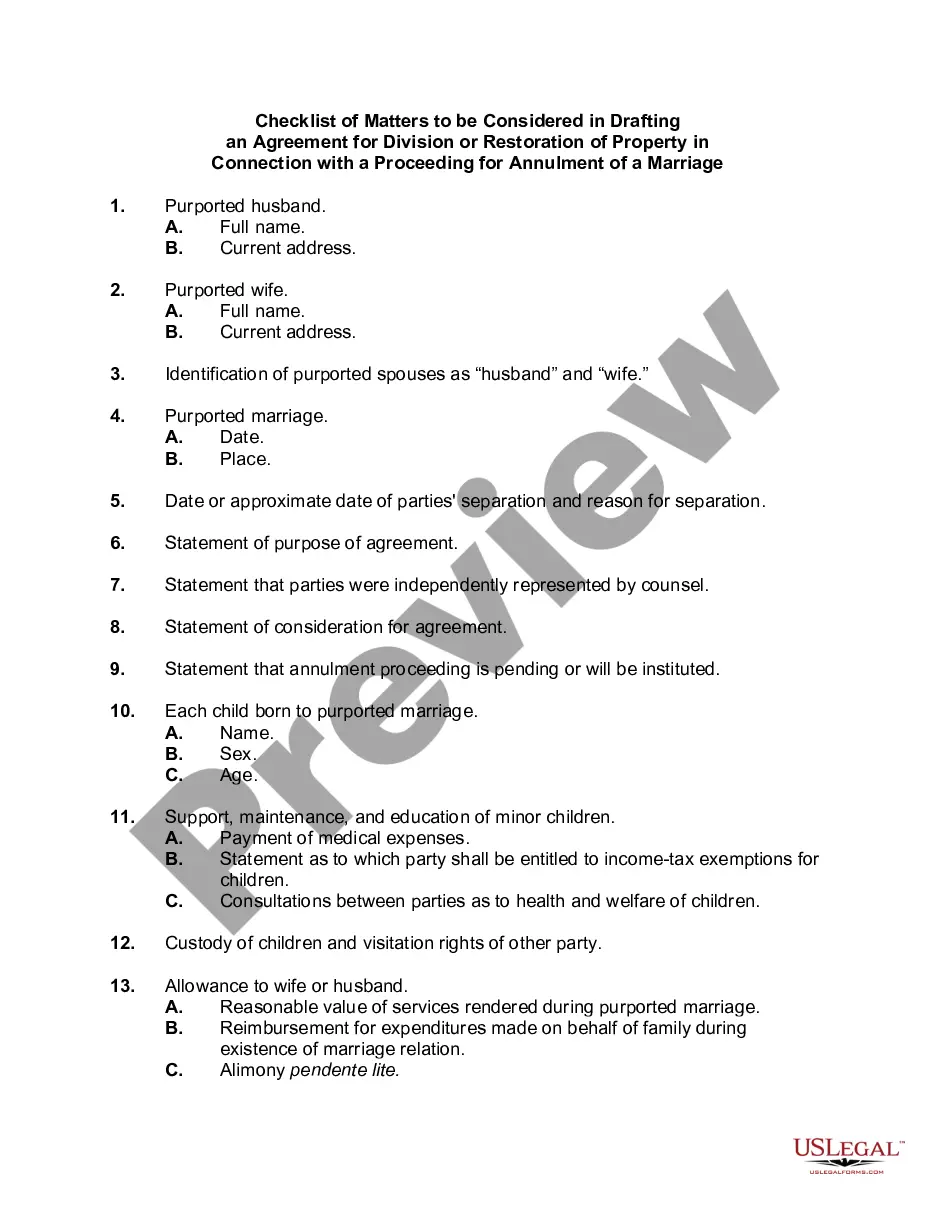
- Annulment may affect property division and custody arrangements.
- The process can be quicker than divorce in some cases.
- Annulled marriages are treated as if they never occurred.
How to get started
Begin the annulment process with these simple steps.
- Find a template or package that fits your situation.
- Review the description, preview, and signing requirements.
- Get full access with a subscription.
- Complete it in the online editor.
- Export or send: download, email, USPS mail, notarize online, or send for e-signature.
Practical tip
Clarify your grounds for annulment to streamline the process and avoid confusion.