What is Annulment?
Annulment is a legal process that declares a marriage null and void. It is used when the marriage is found to be invalid from the start. Explore state-specific templates to assist in this process.
Annulment in Illinois helps individuals legally nullify a marriage. Attorney-drafted templates are quick and easy to complete.

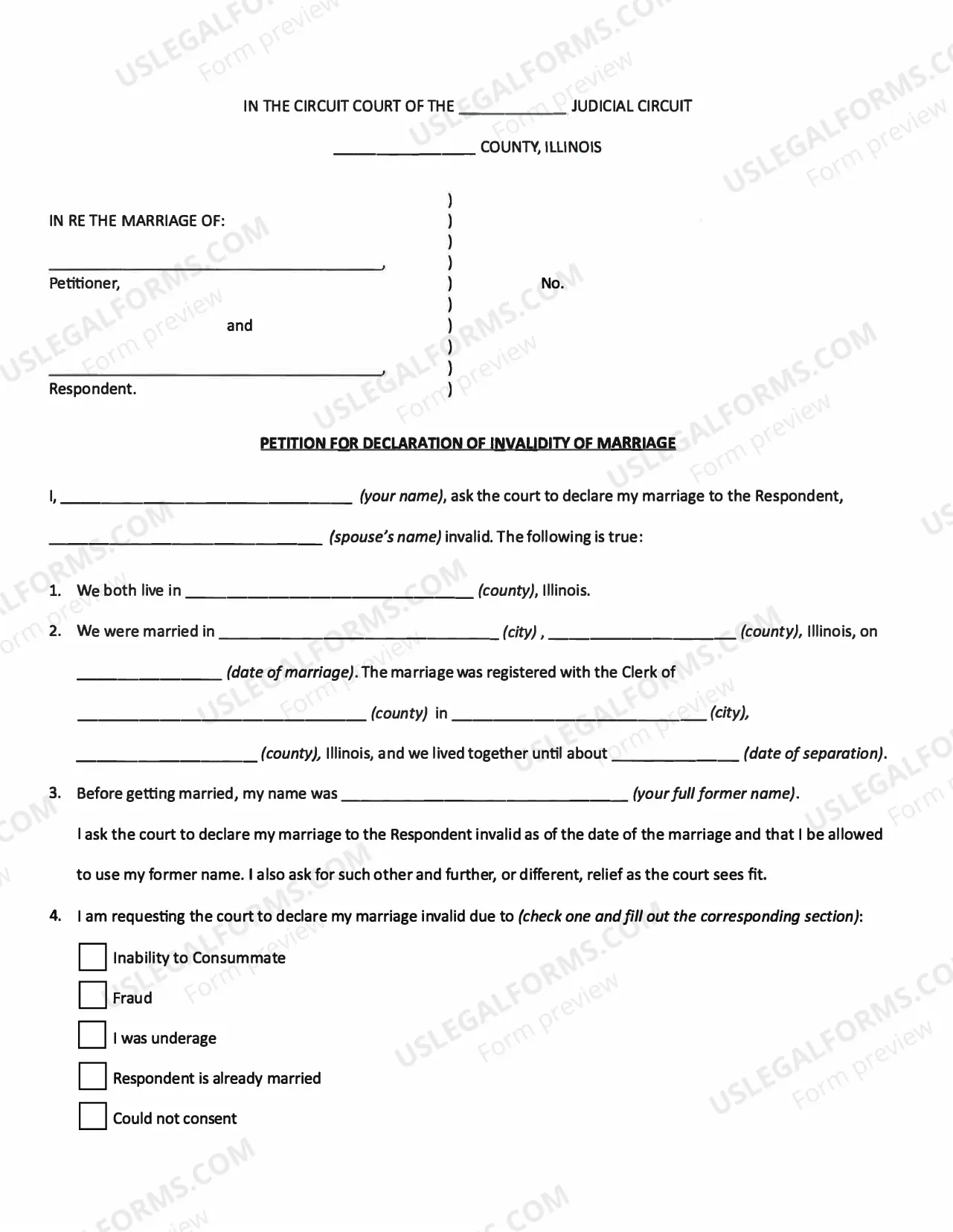
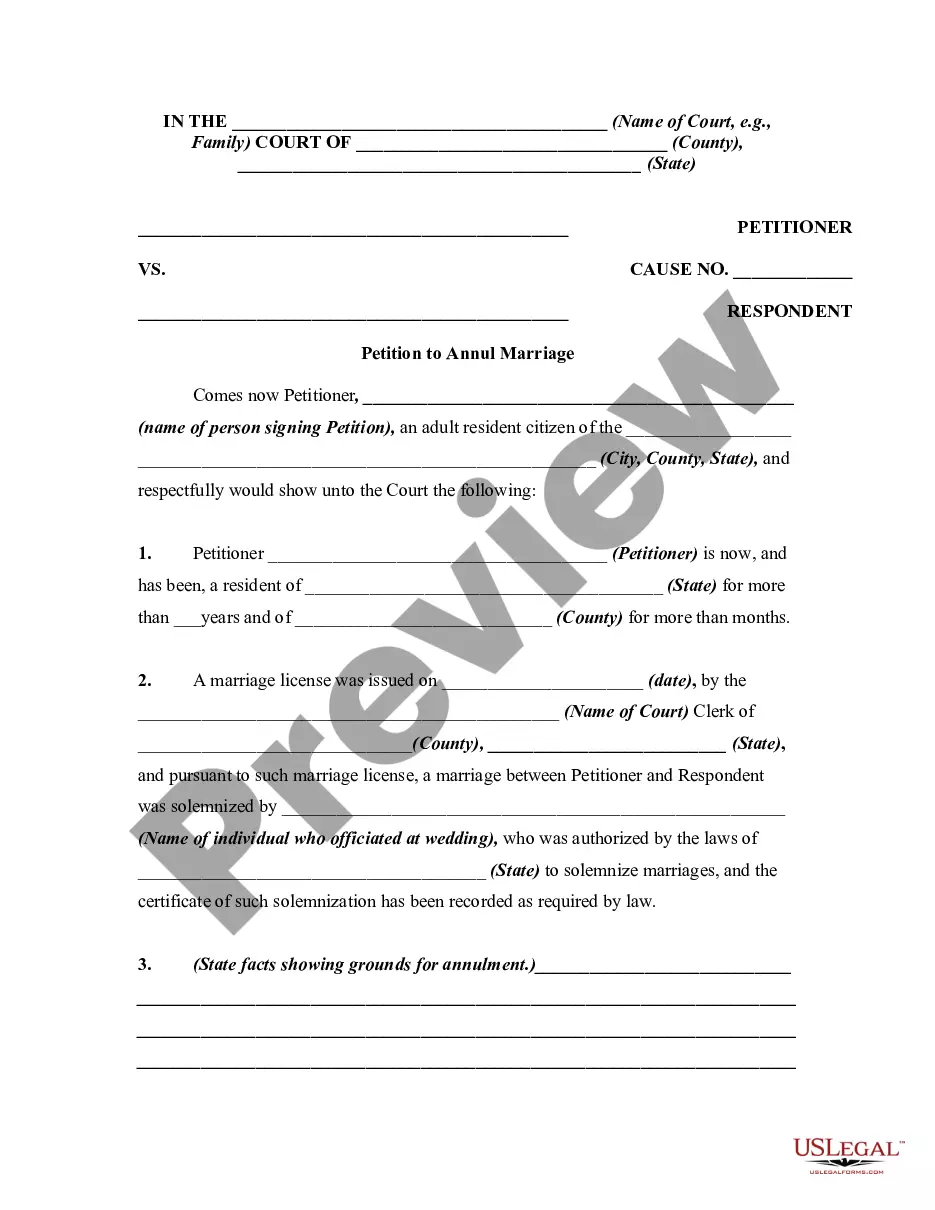
Use this form to request a court's declaration that a marriage is invalid due to specific legal grounds, such as fraud or incapacity.
File for an annulment when your marriage has no children or shared property, addressing specific legal grounds for cancellation.
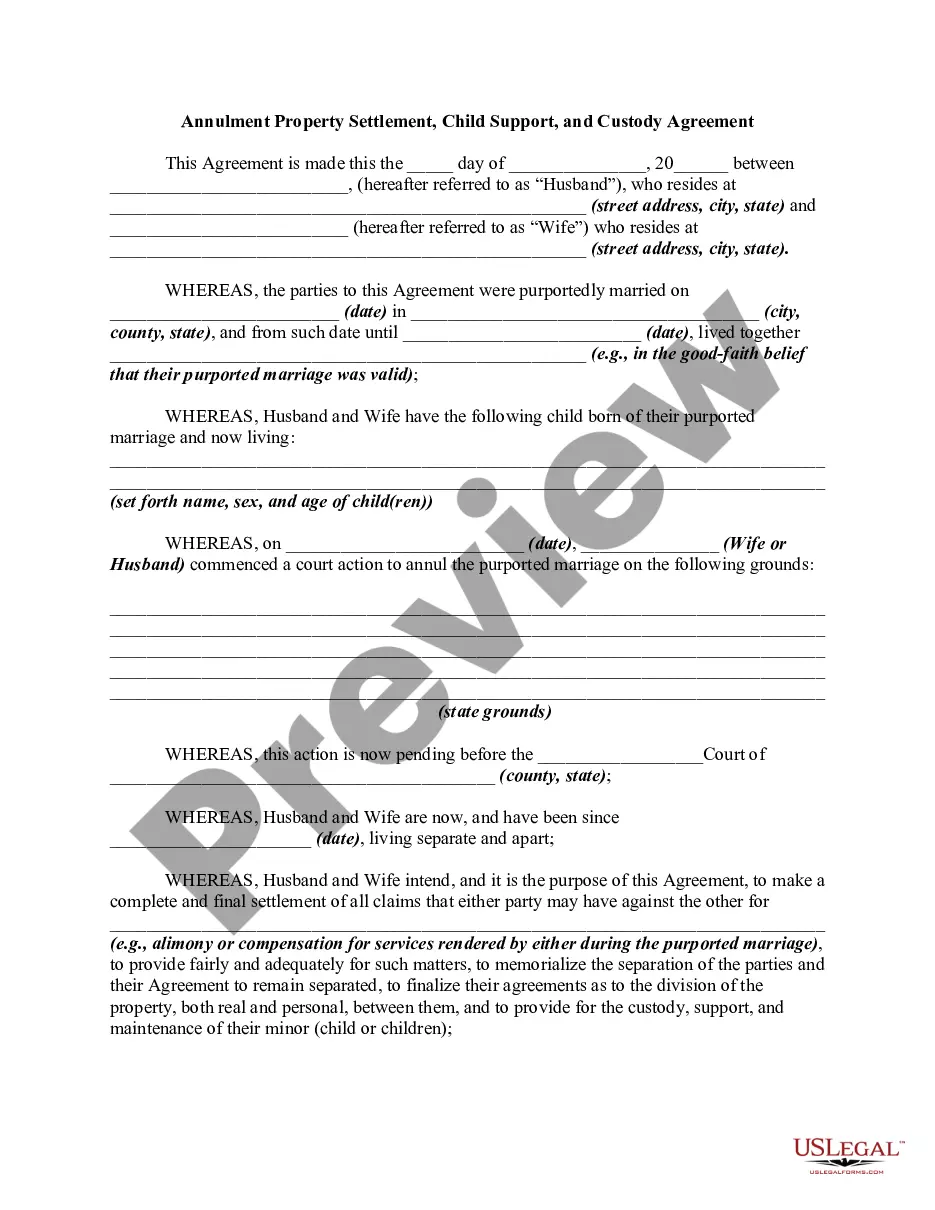
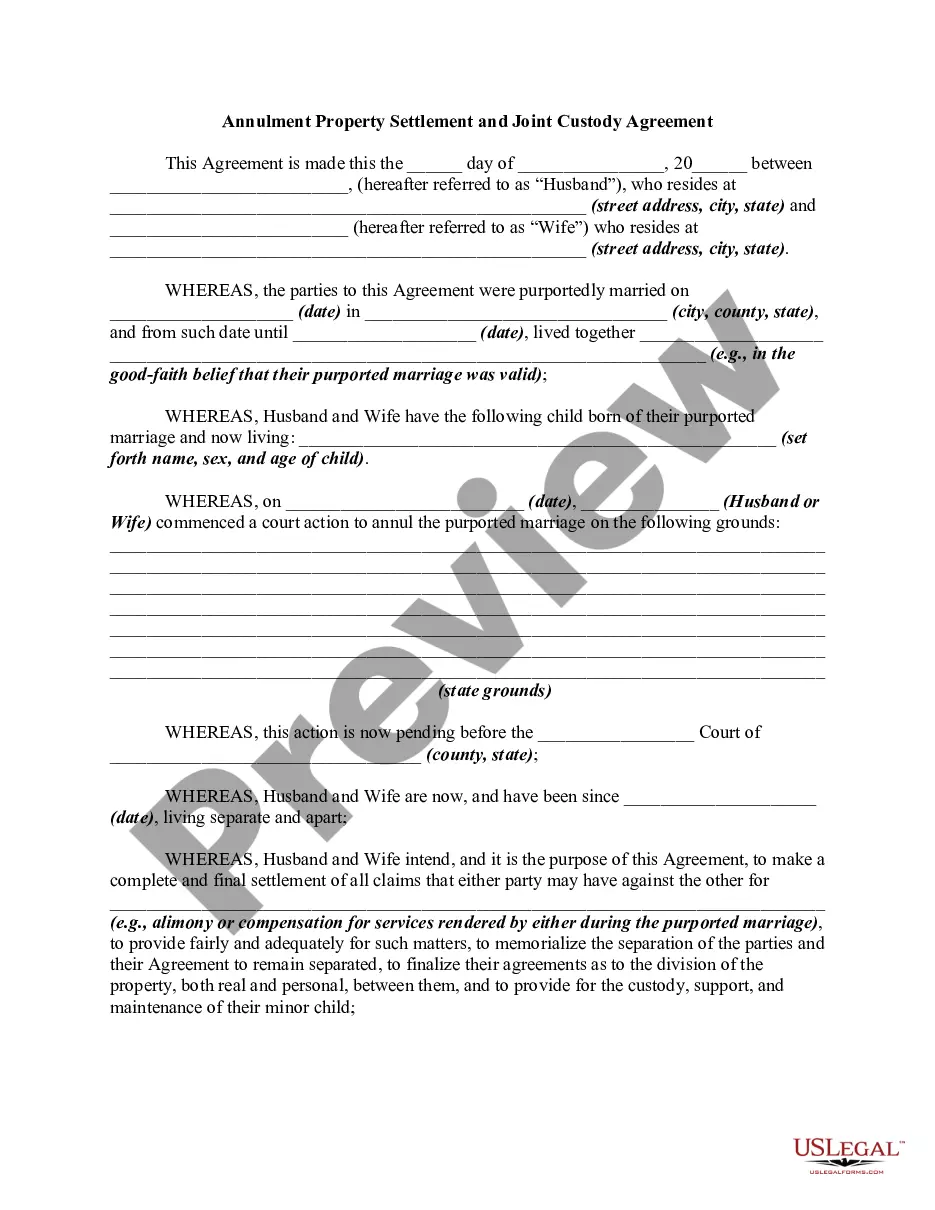
Finalize agreements for property division, child support, and custody after annulment proceedings.
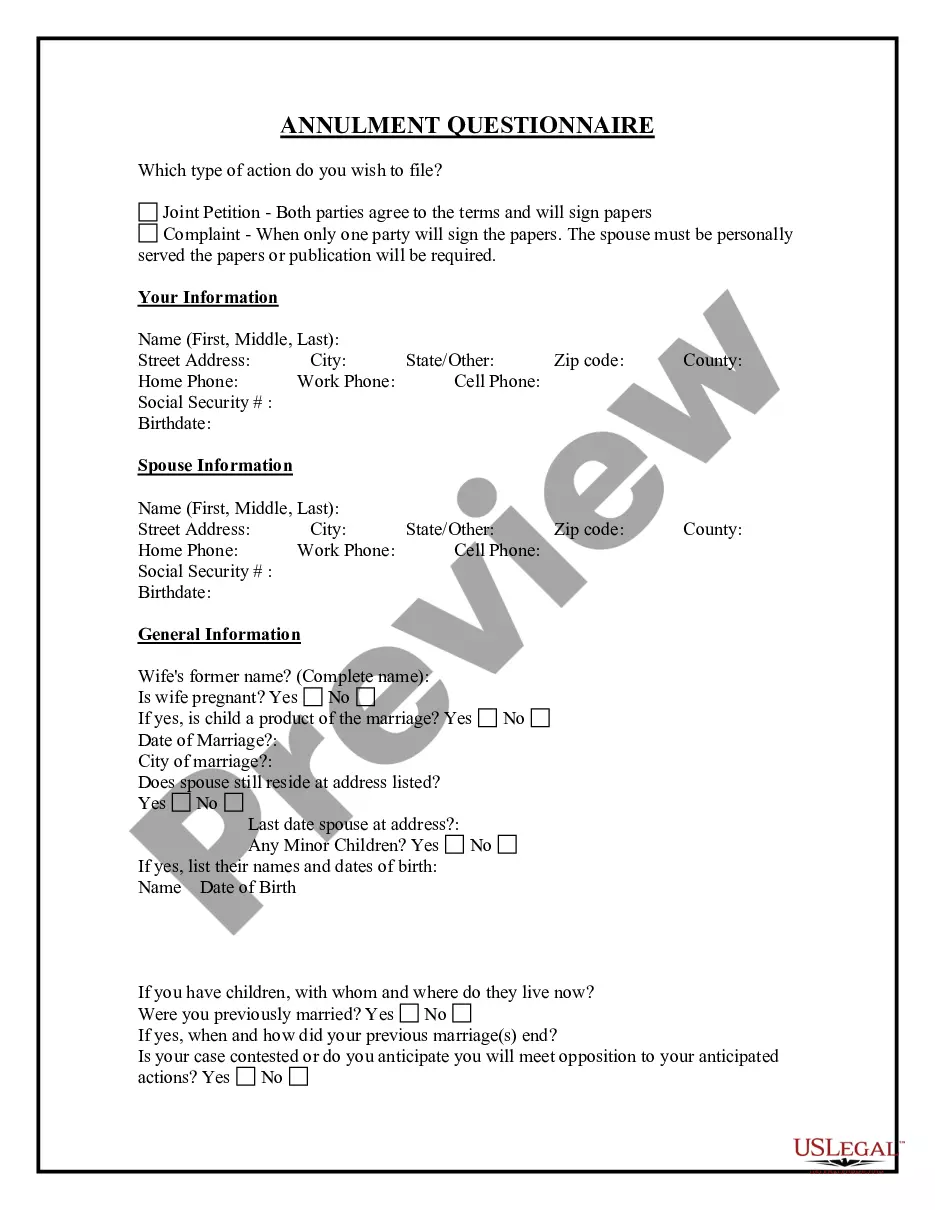
Use this questionnaire to determine grounds for annulment and whether both partners agree to the filing process.
Ideal for couples seeking to annul a marriage while addressing property division and child custody.
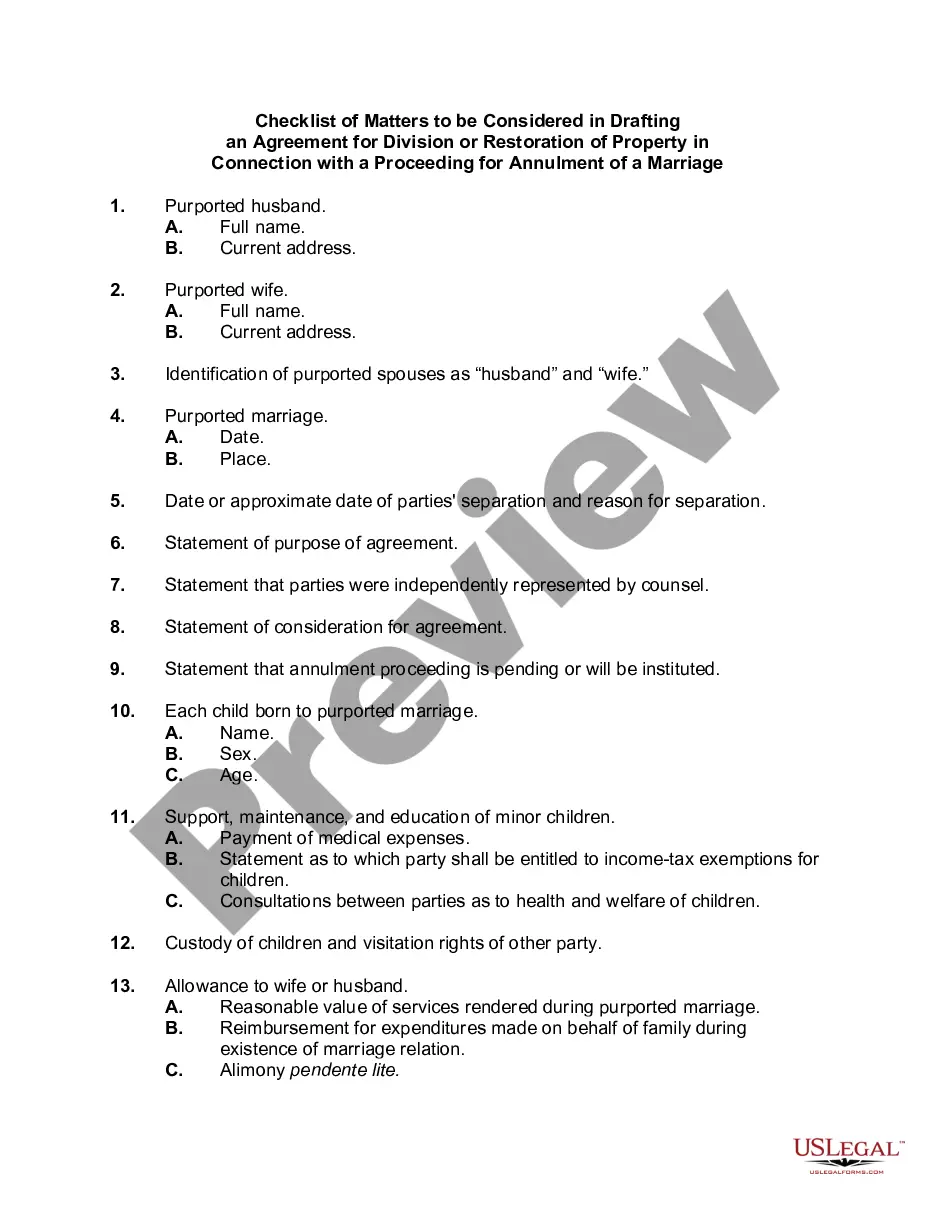
This checklist helps you navigate property division and restoration during an annulment proceeding, ensuring all important matters are considered.
Annulment declares a marriage invalid from the outset.
Grounds for annulment can include fraud, coercion, or incapacity.
Annulment may affect property division and support obligations.
Many annulment documents require notarization or witnesses.
Annulment is different from divorce, as it nullifies rather than terminates a marriage.
Legal grounds must be established to seek an annulment.
Annulment can have implications for future marriages.
Begin the process with these simple steps.
An annulment legally declares a marriage invalid, treating it as if it never existed.
The duration varies depending on the complexity of the case and court schedules.
Yes, once an annulment is granted, you can legally remarry.
Common grounds include fraud, lack of consent, and mental incapacity.
No, annulment nullifies the marriage, while divorce ends a valid marriage.