District of Columbia Annulment
Annulment documents in the District of Columbia help dissolve marriages that are legally void. Attorney-drafted templates are quick and straightforward to complete.

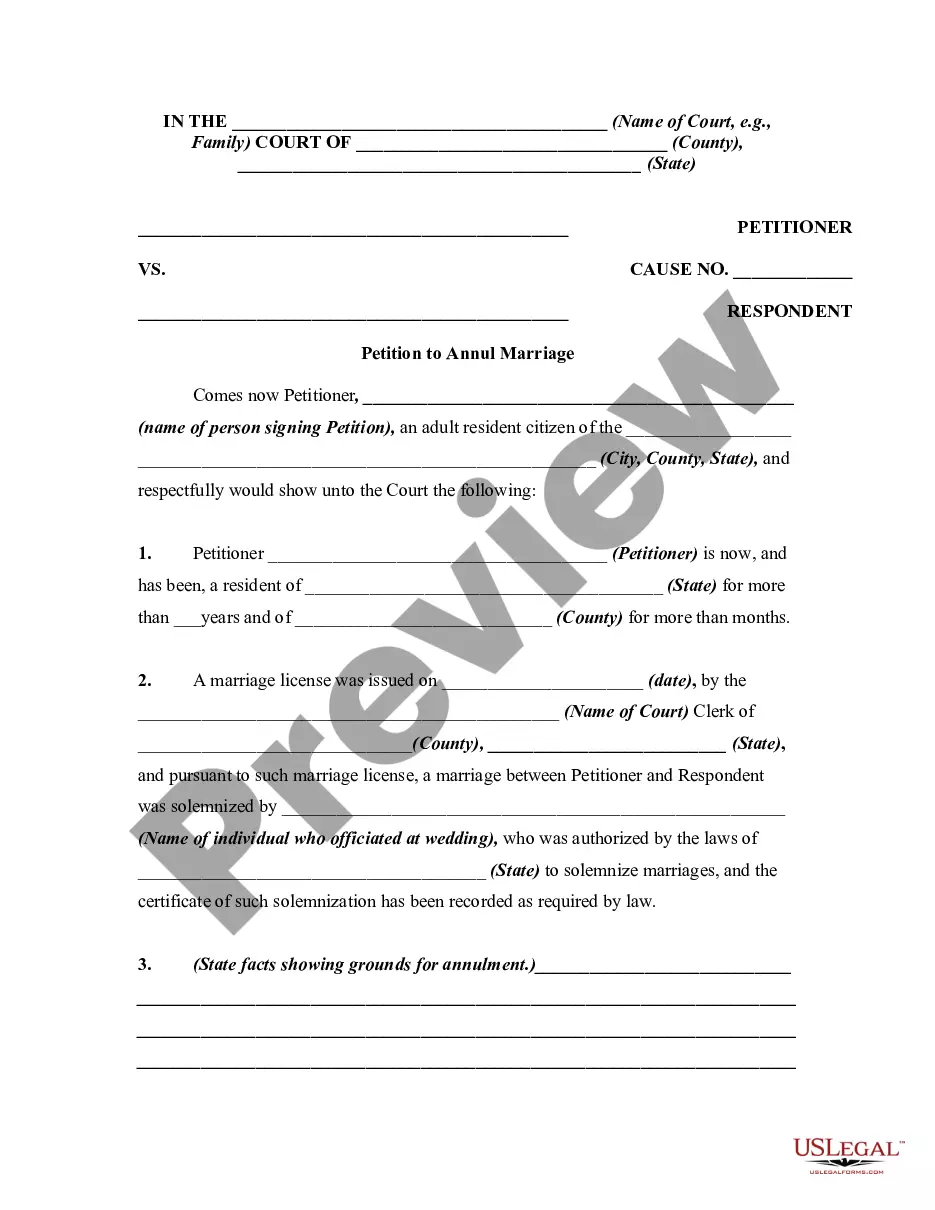
Petition to Annul Marriage - No Children or Property
PopularA legal petition to declare a marriage void for couples with no children or jointly owned property, simplifying the annulment process.
Similar documents: key differences
- Annulment vs. Divorce — annulment declares a marriage void; divorce ends a valid marriage.
- Petition for Nullity vs. Complaint for Annulment — both request annulment, but terminology may vary.
- Decree of Nullity vs. Decree of Annulment — terms often used interchangeably, both confirm annulment.
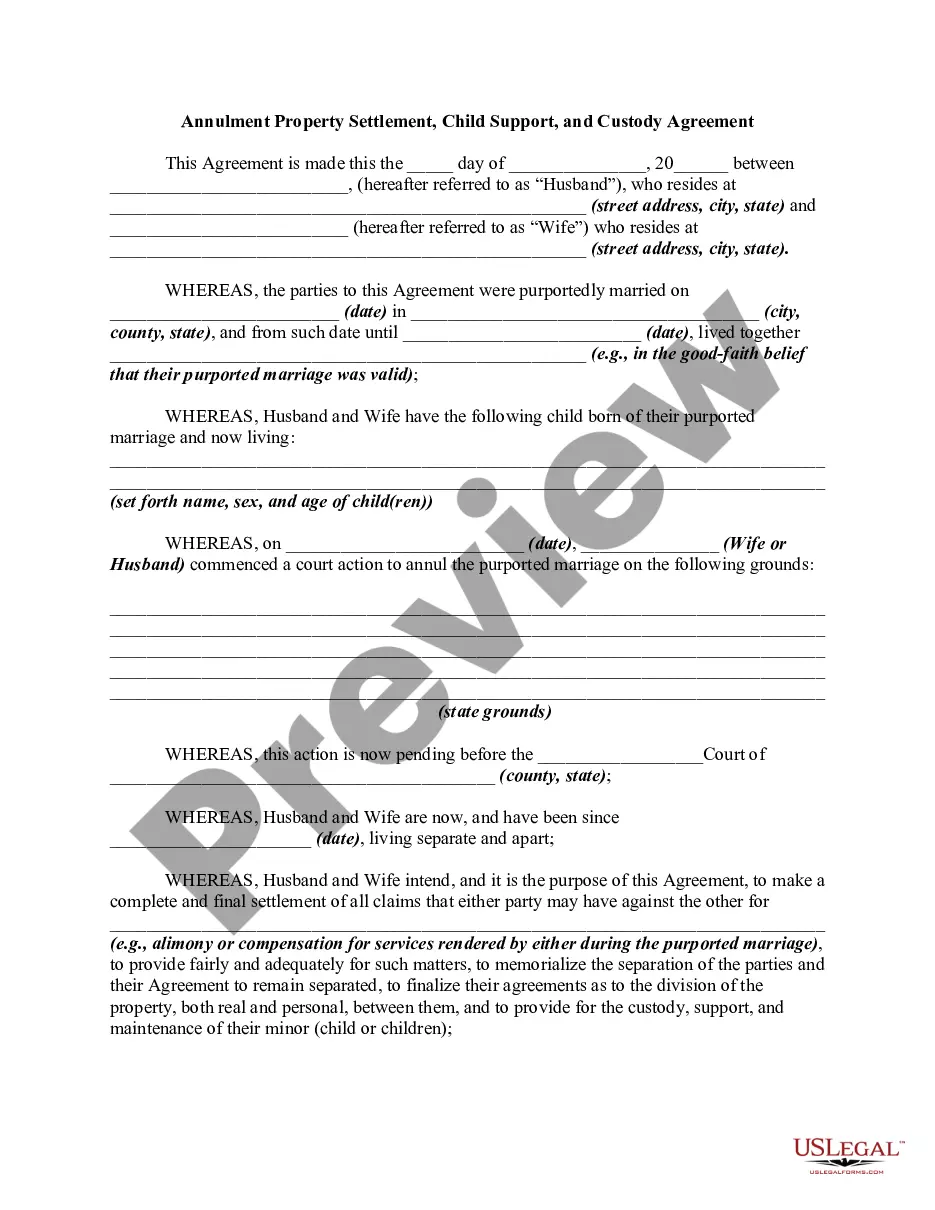
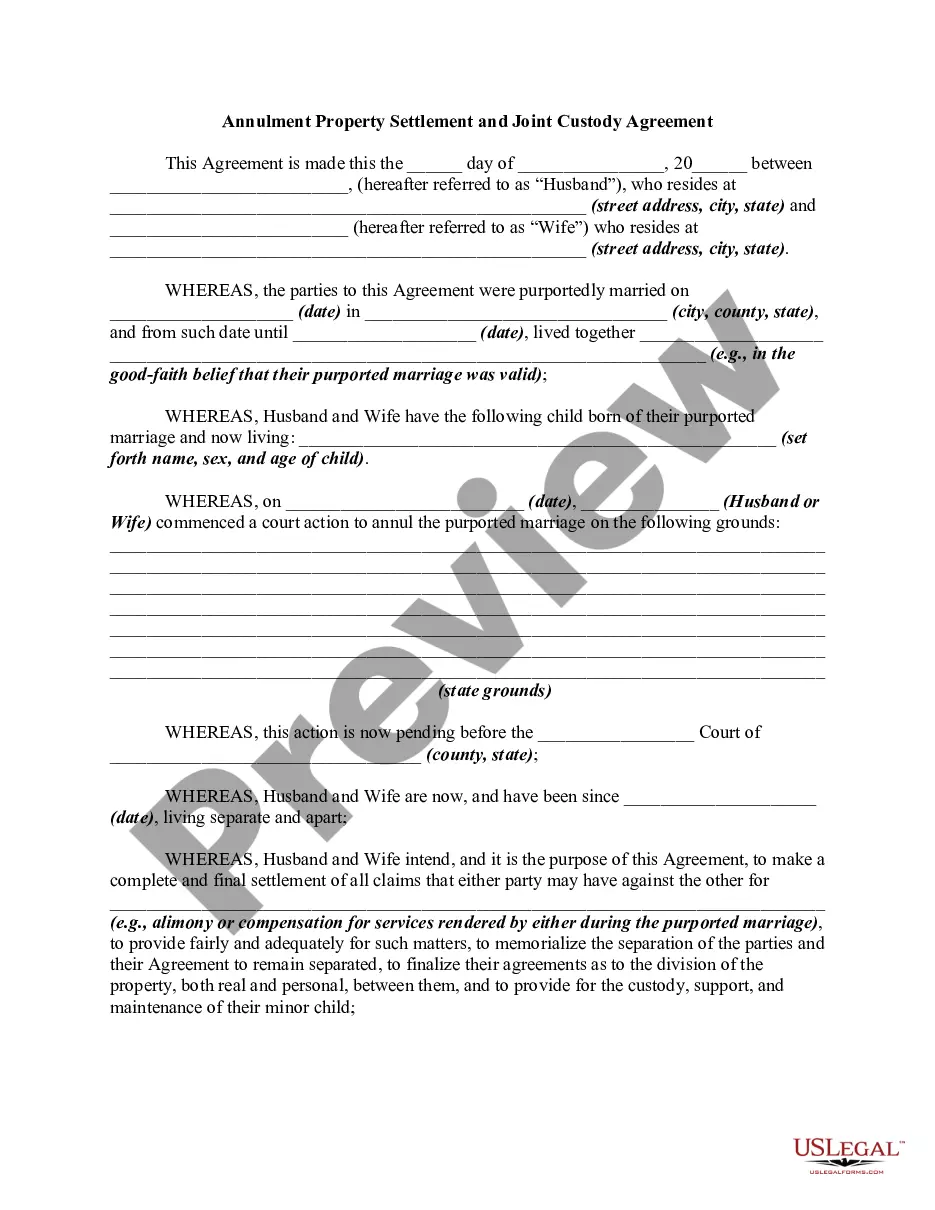
- Annulment Agreement vs. Property Settlement Agreement — annulment agreements focus on marriage invalidation; property settlements address asset division.
Search for more forms
Types of Annulment forms
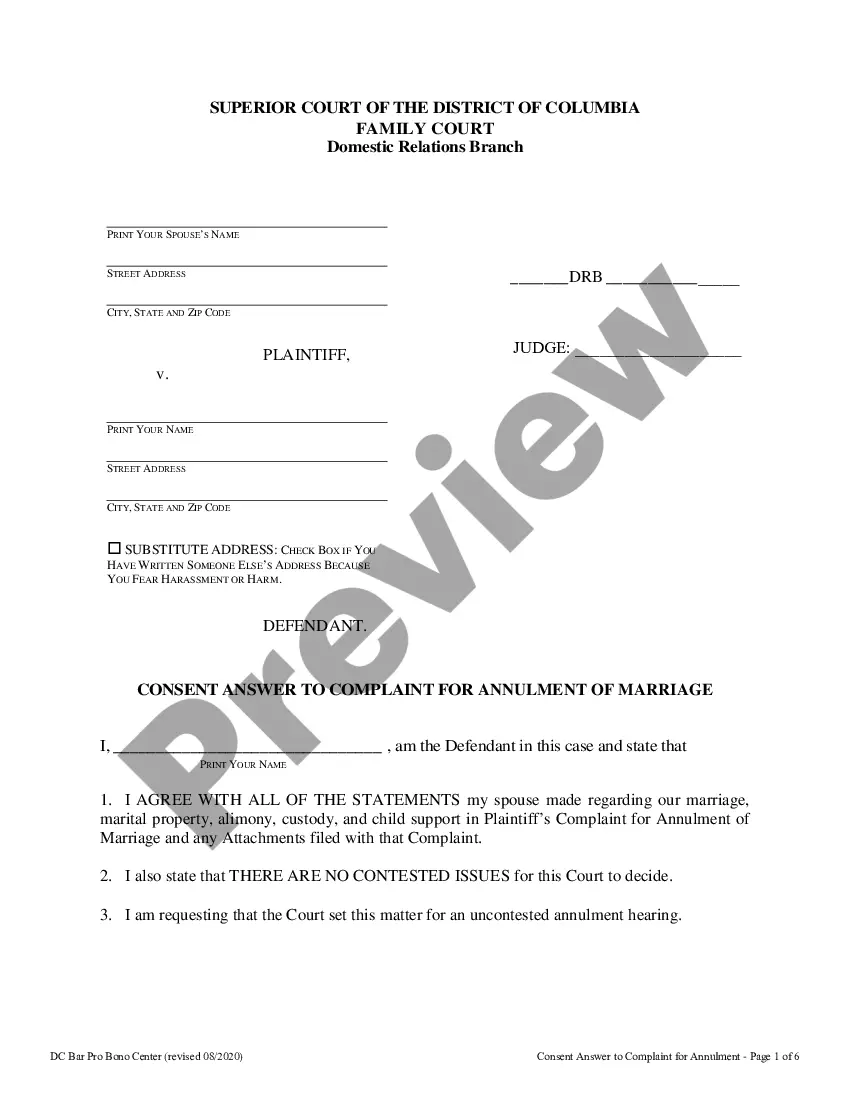
Consent Answer to Annulment Complaint
Use this form to agree to an annulment without disputes over marriage terms, property, or custody.
Petition for a Formal Marriage Case
Request a declaration of nullity for your marriage due to defective consent. Essential for pursuing a future marriage within the Catholic Church.
Application for Declaration of Nullity — Catholic Church
Begin the annulment process with this digital application to assess your eligibility for remarriage in the Catholic Church.
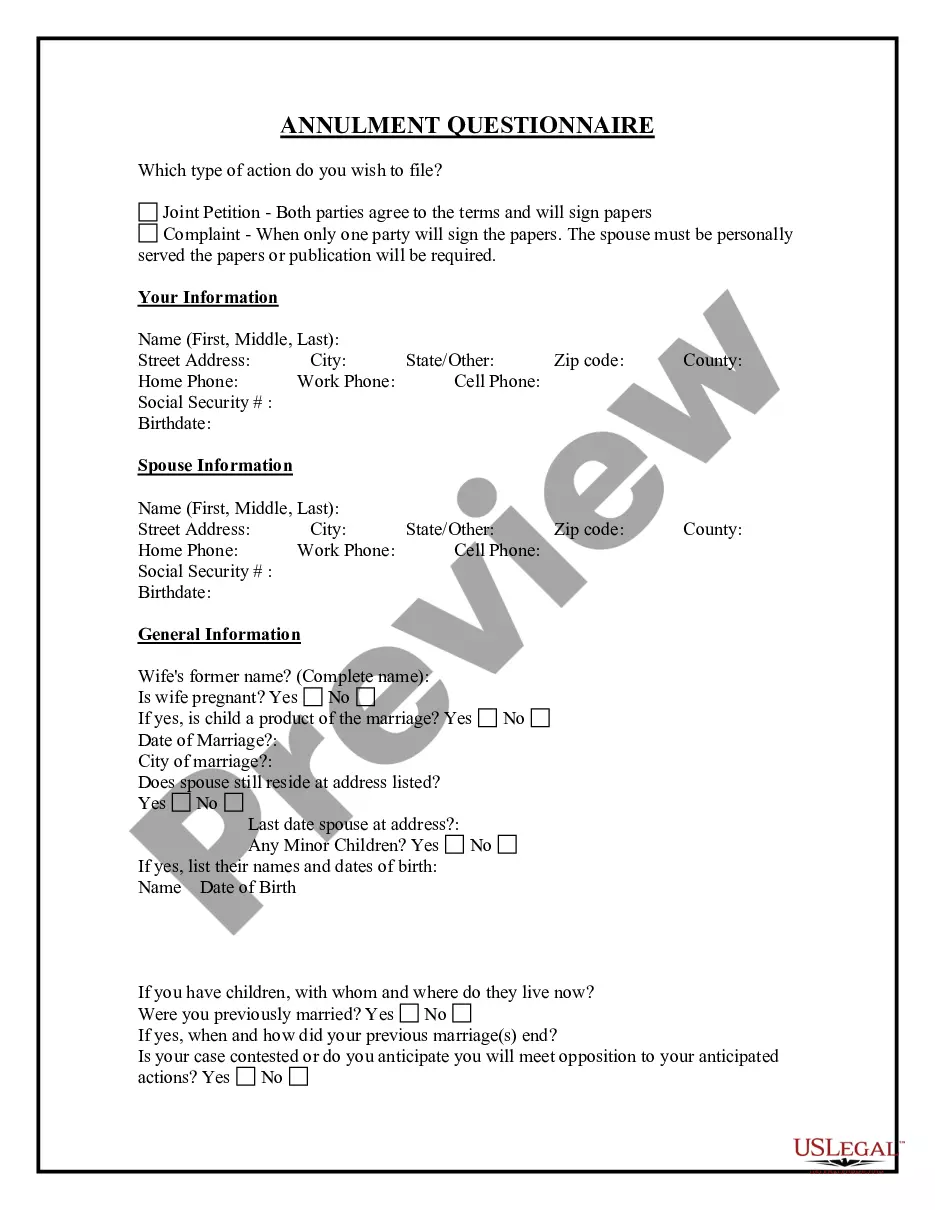
Annulment Questionnaire
Use this questionnaire to determine grounds for annulment and whether both partners agree to the filing process.
Common District of Columbia Annulment documents
- Petition for Annulment — initiates the annulment process based on specific grounds.
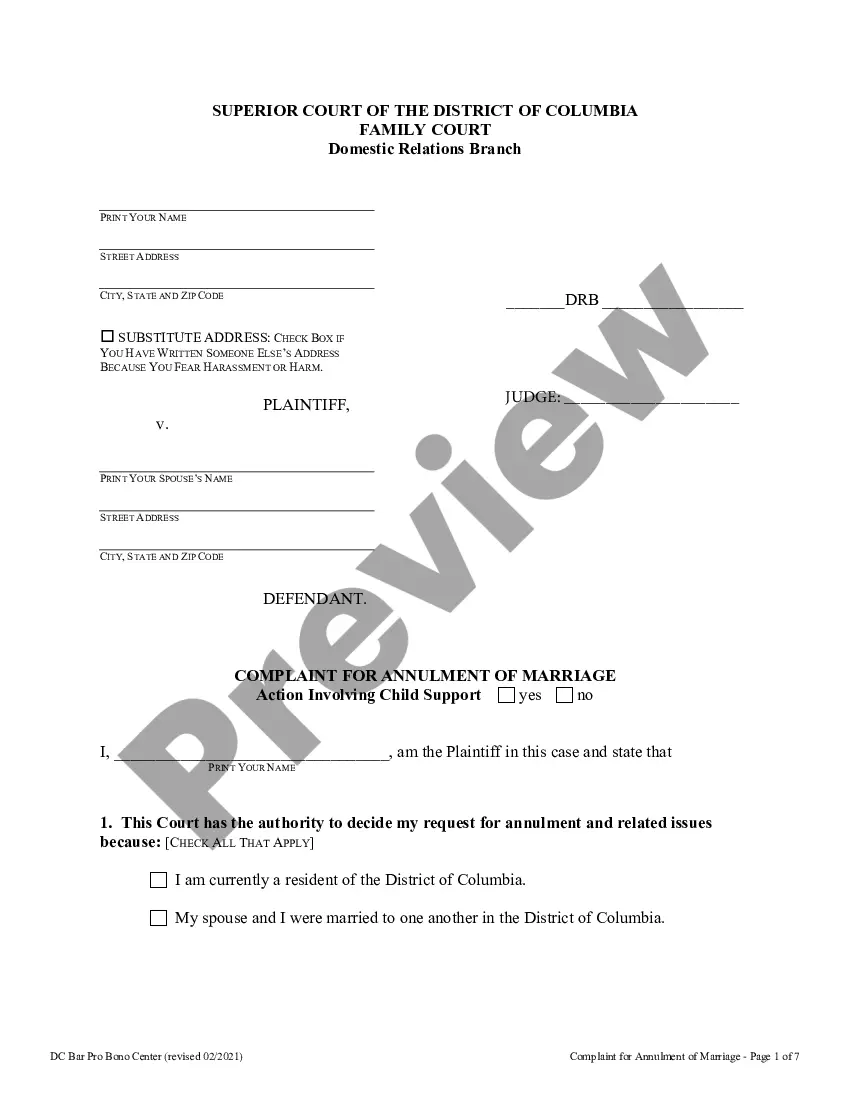
- Complaint for Annulment — formally requests the court to annul a marriage.
- Annulment Agreement — outlines terms of the annulment between parties.
- Application for Annulment — seeks court approval for marriage nullification.
- Decree of Annulment — final court order confirming the annulment.
- Annulment Petition — official request submitted to start the annulment process.
FAQs
Annulment declares a marriage invalid from the start, while divorce ends a valid marriage.
Annulments can still occur with children, but custody and support may be addressed differently.
The duration varies based on jurisdiction and individual circumstances of each case.
An annulment can impact asset division and support obligations, similar to a divorce.
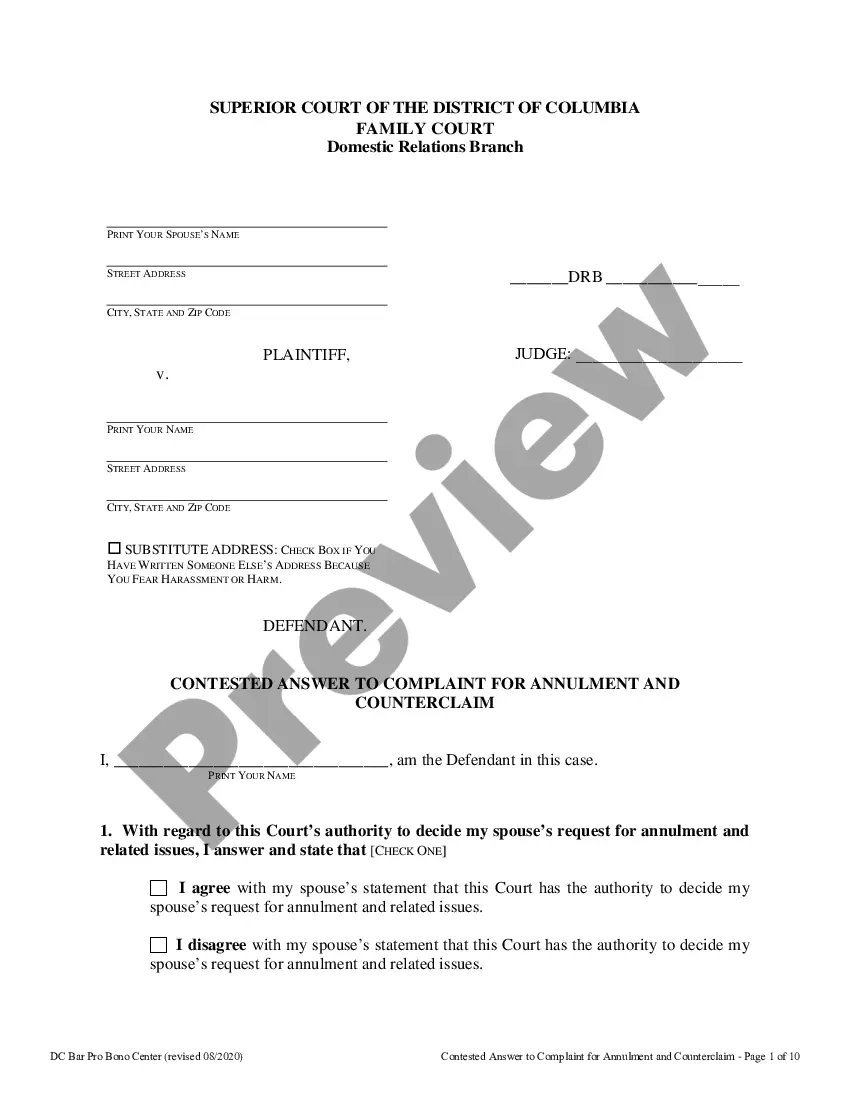
Yes, specific grounds for annulment must typically be stated in the petition.
Key legal points
- Annulment is based on specific grounds, such as fraud or incapacity.
- The process varies by jurisdiction, including filing procedures and required documentation.
- An annulment can affect the division of property and debts.
- Annulled marriages may impact spousal support claims differently than divorces.
- Certain marriages are more likely to be annulled, like those involving minors without consent.
- Annulment does not erase the fact that the marriage occurred.
How to get started
Begin your annulment process with these easy steps.
- Find a template or package that fits your annulment situation.
- Review the description, preview, and signing requirements for your selected form.
- Get full access by subscribing to the service.
- Complete the form in the online editor at your convenience.
- Export or send your completed document via download, email, mail, or e-signature.
Practical tip
Clarifying the grounds for annulment early can streamline the process and avoid delays.