What is Annulment?
Annulment is a legal process that declares a marriage null and void. These documents are used when a marriage is deemed invalid from the start. Explore state-specific templates for your needs.
Annulment documents help end a marriage legally. Attorney-drafted templates make the process quick and easy.

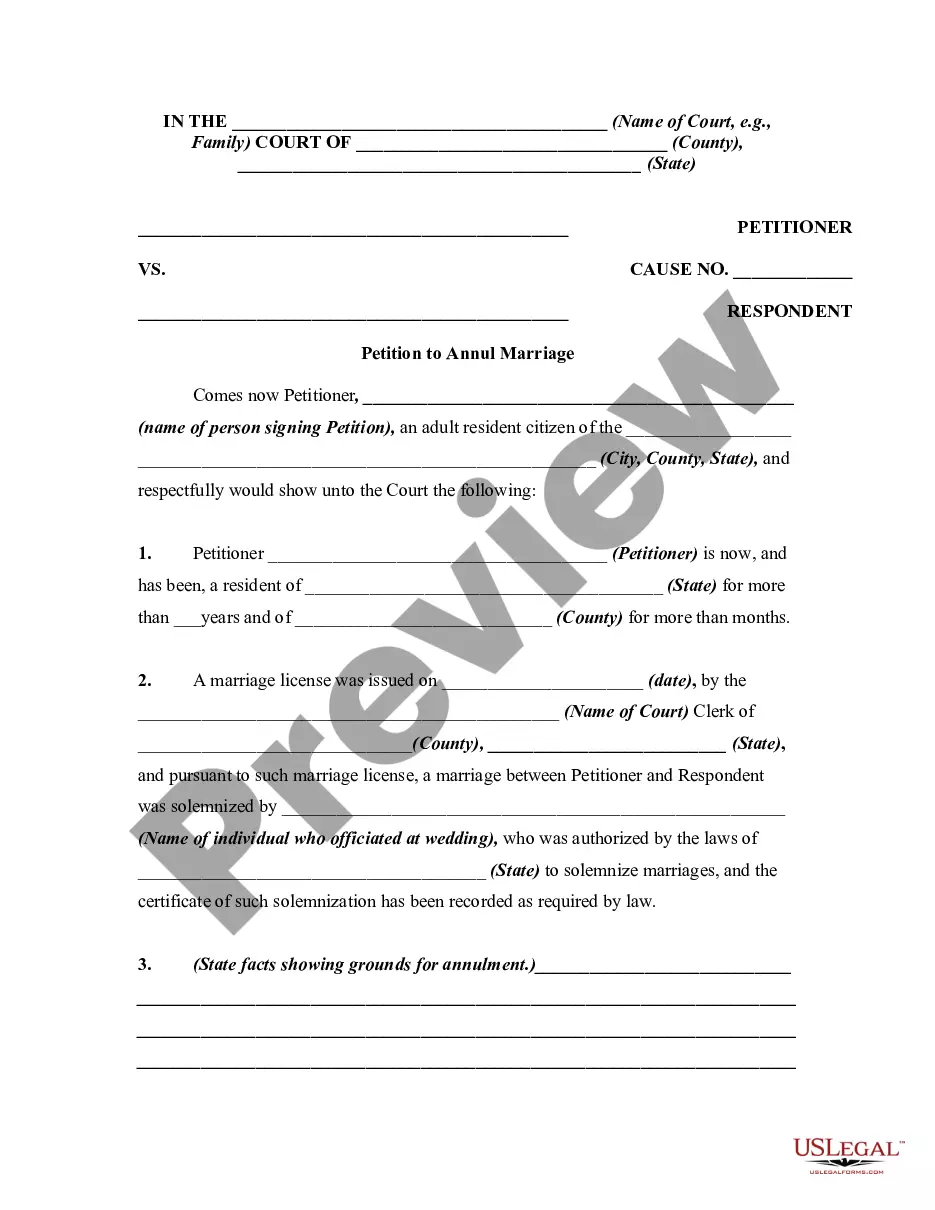
Use this form to legally annul a marriage, confirming that it was never valid. It's essential for individuals seeking to dissolve a questionable marital union.
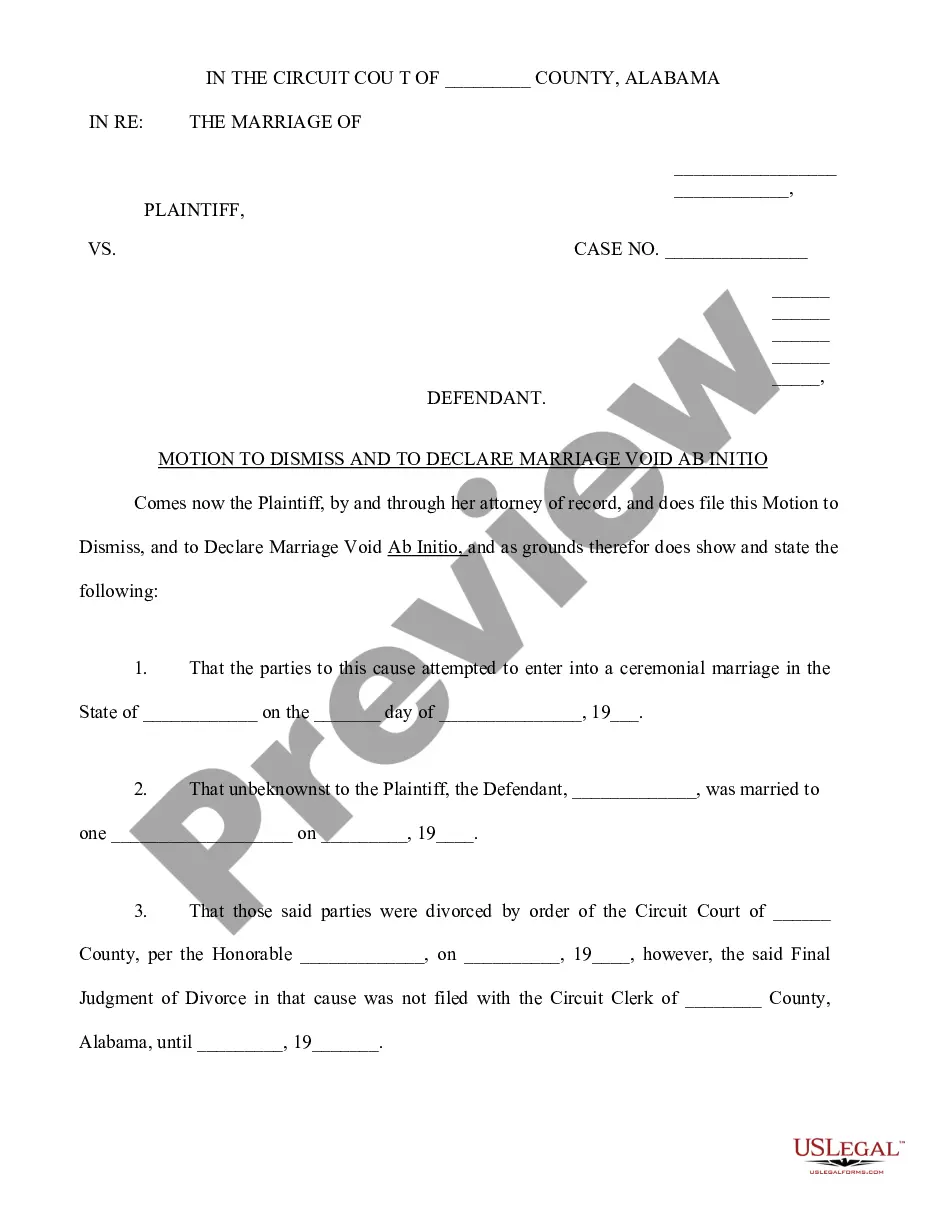
Use this motion to declare a marriage invalid when one party was not legally able to marry, providing a clear path to annulment.
File for an annulment when your marriage has no children or shared property, addressing specific legal grounds for cancellation.
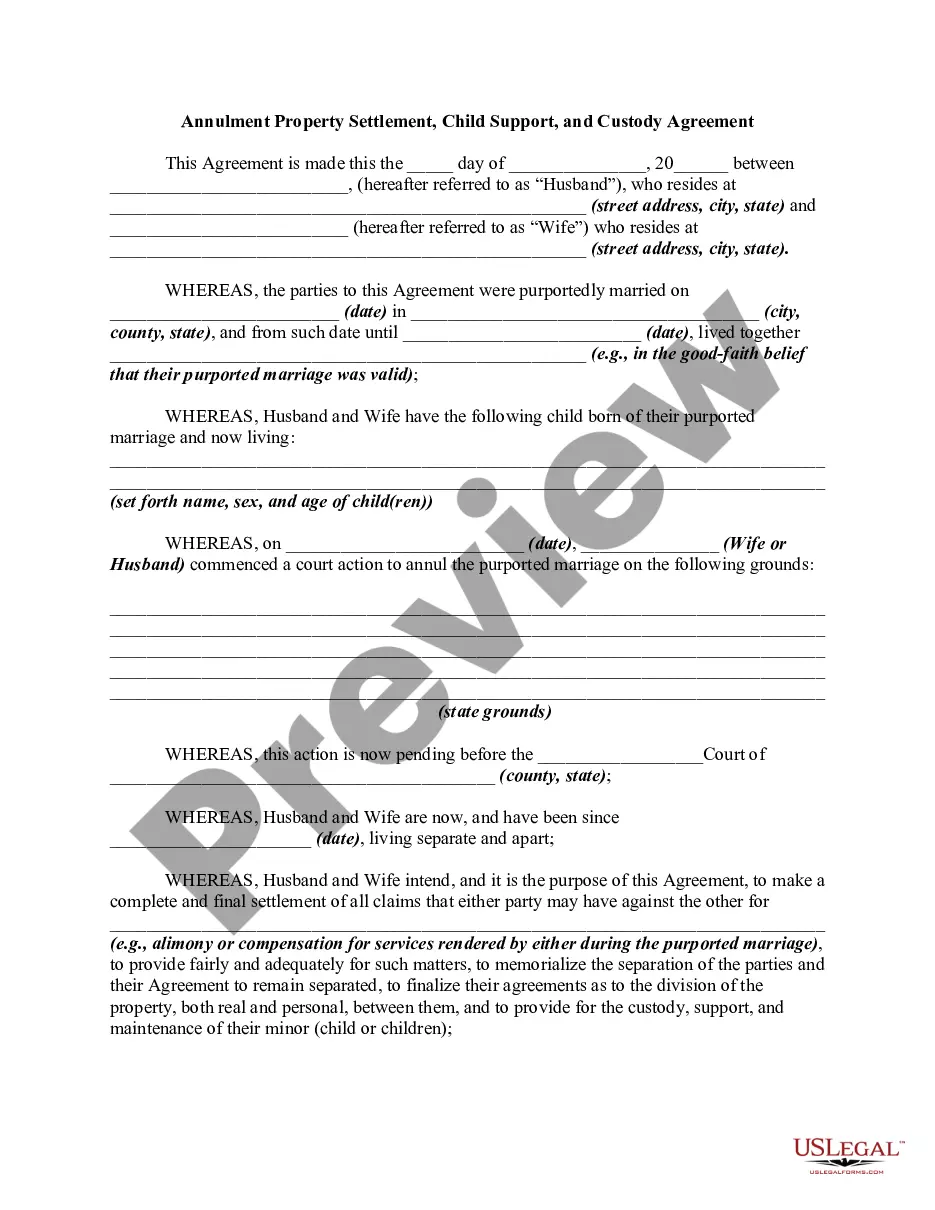
Finalize agreements for property division, child support, and custody after annulment proceedings.
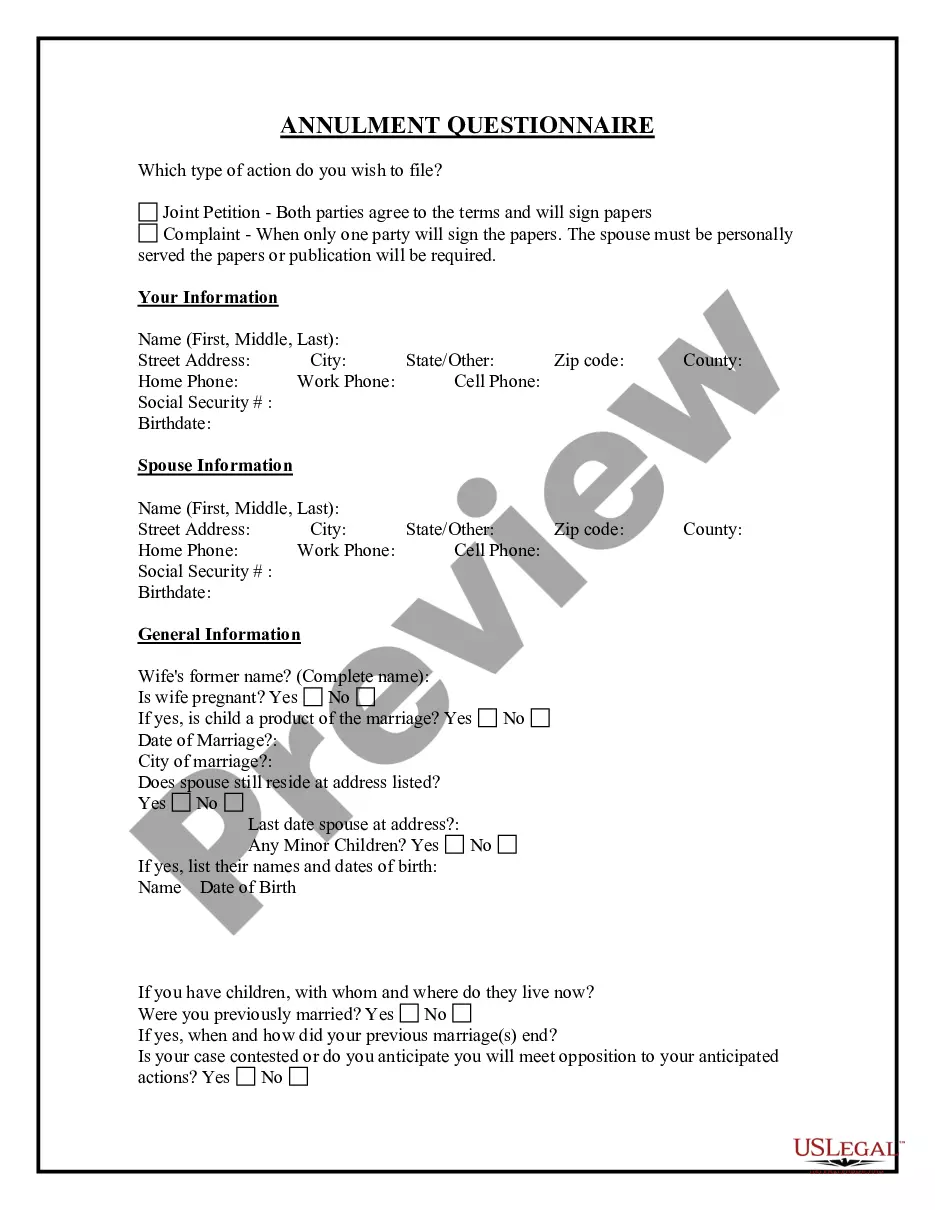
Use this questionnaire to determine grounds for annulment and whether both partners agree to the filing process.
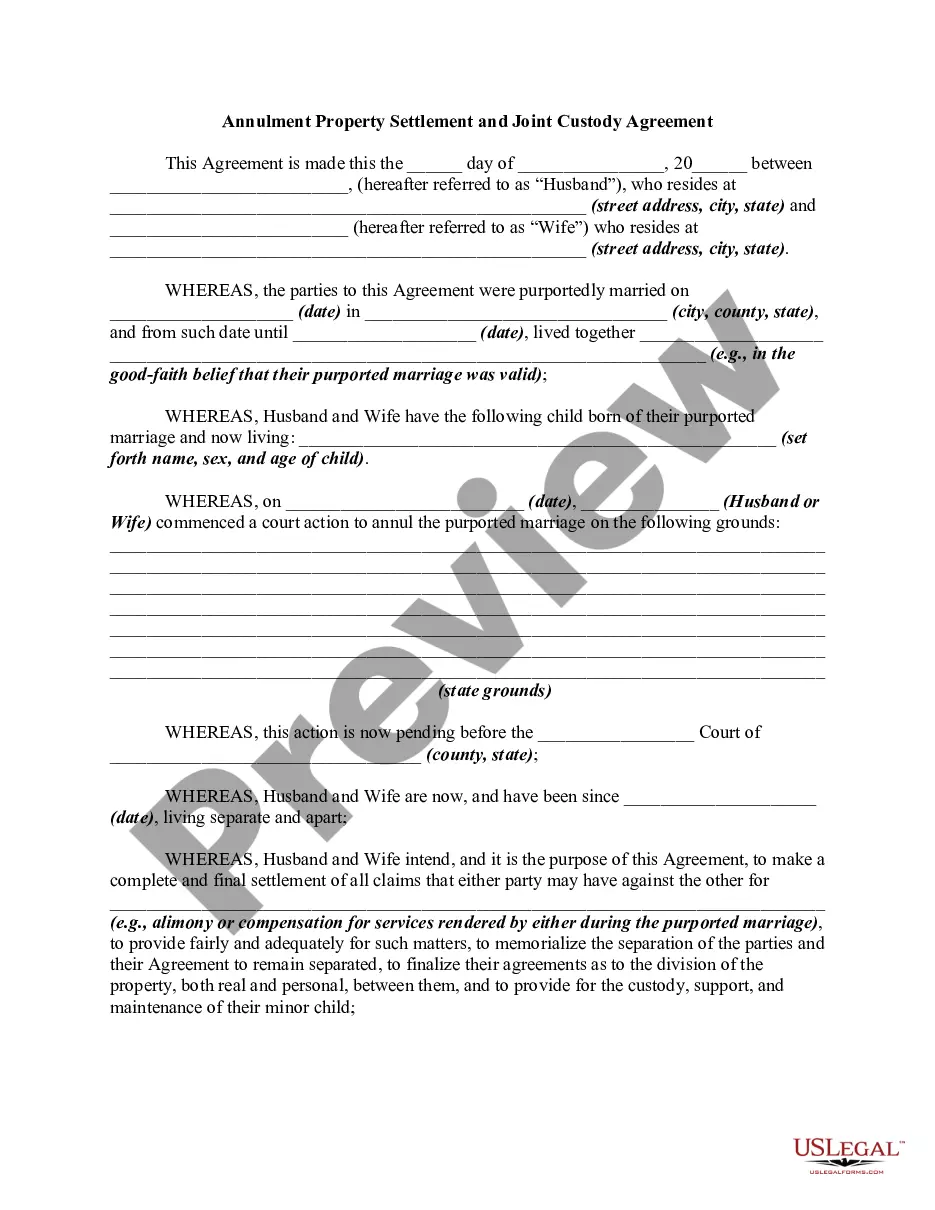
Ideal for couples seeking to annul a marriage while addressing property division and child custody.
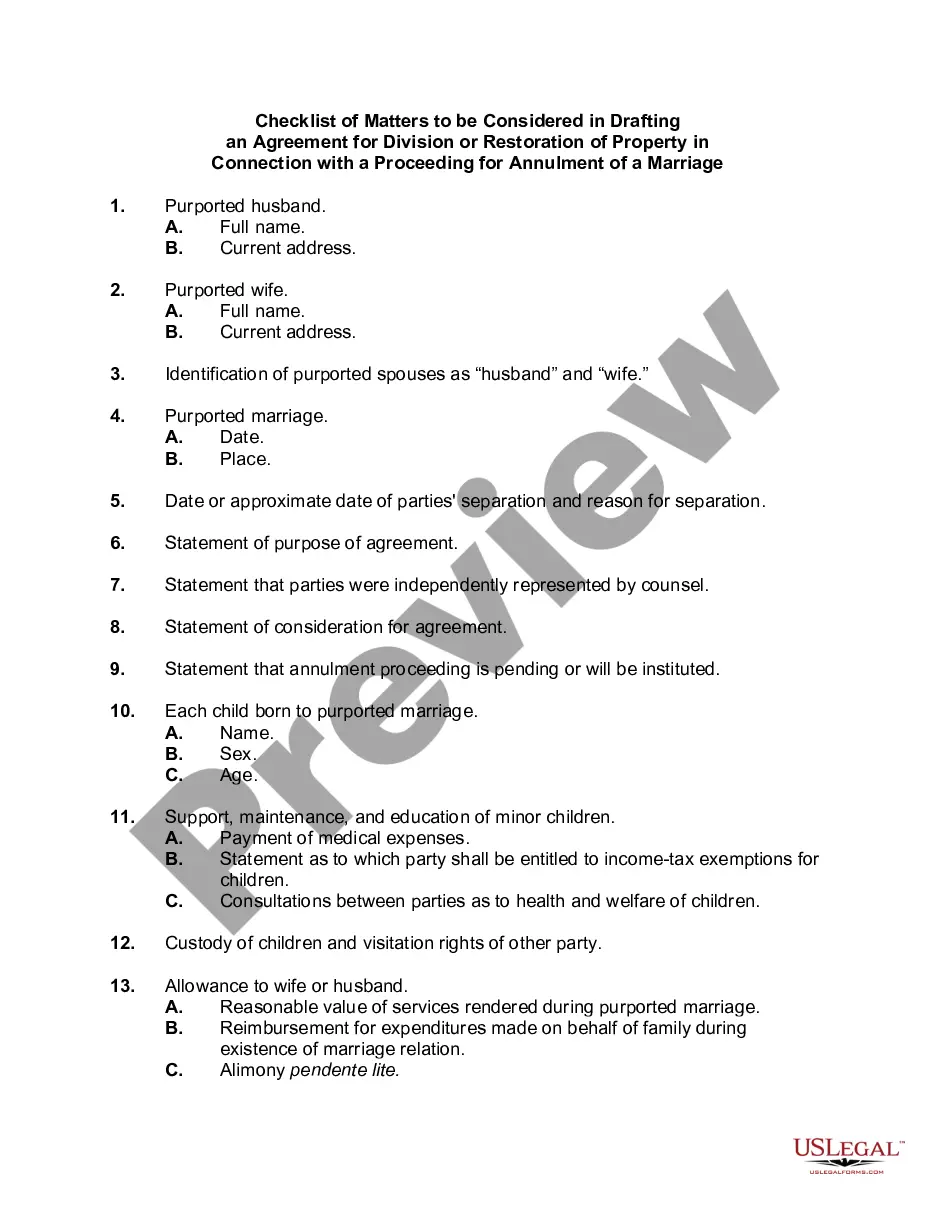
This checklist helps you navigate property division and restoration during an annulment proceeding, ensuring all important matters are considered.
Annulment can be sought for reasons like fraud, coercion, or incapacity.
Annulment does not require a waiting period, unlike divorce in some states.
Both spouses must agree to the annulment for it to be uncontested.
Annulment may affect property division and child custody arrangements.
A decree of annulment restores both parties to single status.
Annulment may involve court hearings to establish validity claims.
Documents often require notarization or witnesses for validation.
Begin your annulment process with these simple steps.
Annulment declares a marriage invalid, while divorce ends a valid marriage.
Yes, annulments can be sought regardless of the marriage duration if valid grounds exist.
Typically, you need a petition for annulment and any supporting evidence for your claim.
The duration varies by case complexity but is often shorter than divorce proceedings.
While not required, having legal representation can simplify the process.