Alabama Last Will and Testament for Divorced person not Remarried with Minor Children
About this form
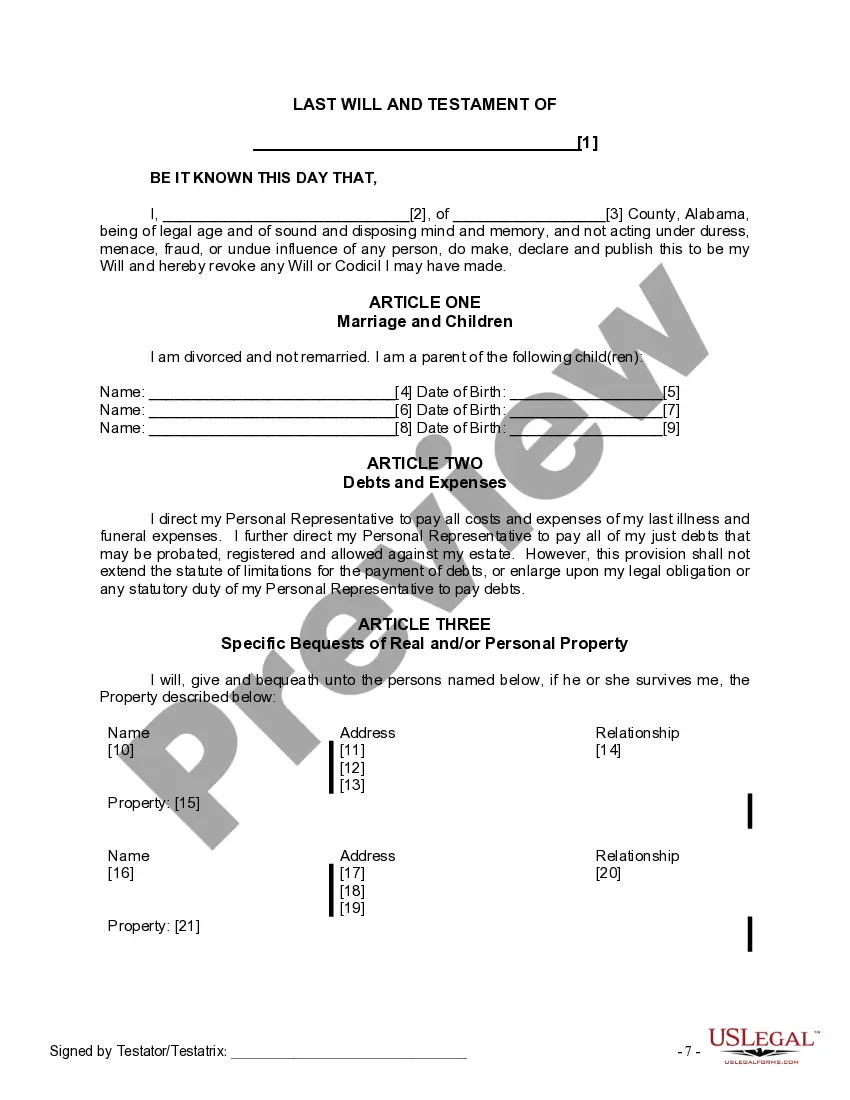
This Last Will and Testament is specifically designed for a divorced person who is not remarried and has minor children. It serves to legally document your wishes regarding the distribution of your property after your death, the appointment of a personal representative or executor, and the guardianship of your minor children. Unlike a typical will, this form addresses the unique situation of a divorced individual, ensuring that the needs of your children and preferences for asset distribution are prioritized.
What’s included in this form
- Identification of the testator (you) and revocation clauses for prior wills.
- Details of your marriage status and names and birthdates of your children.
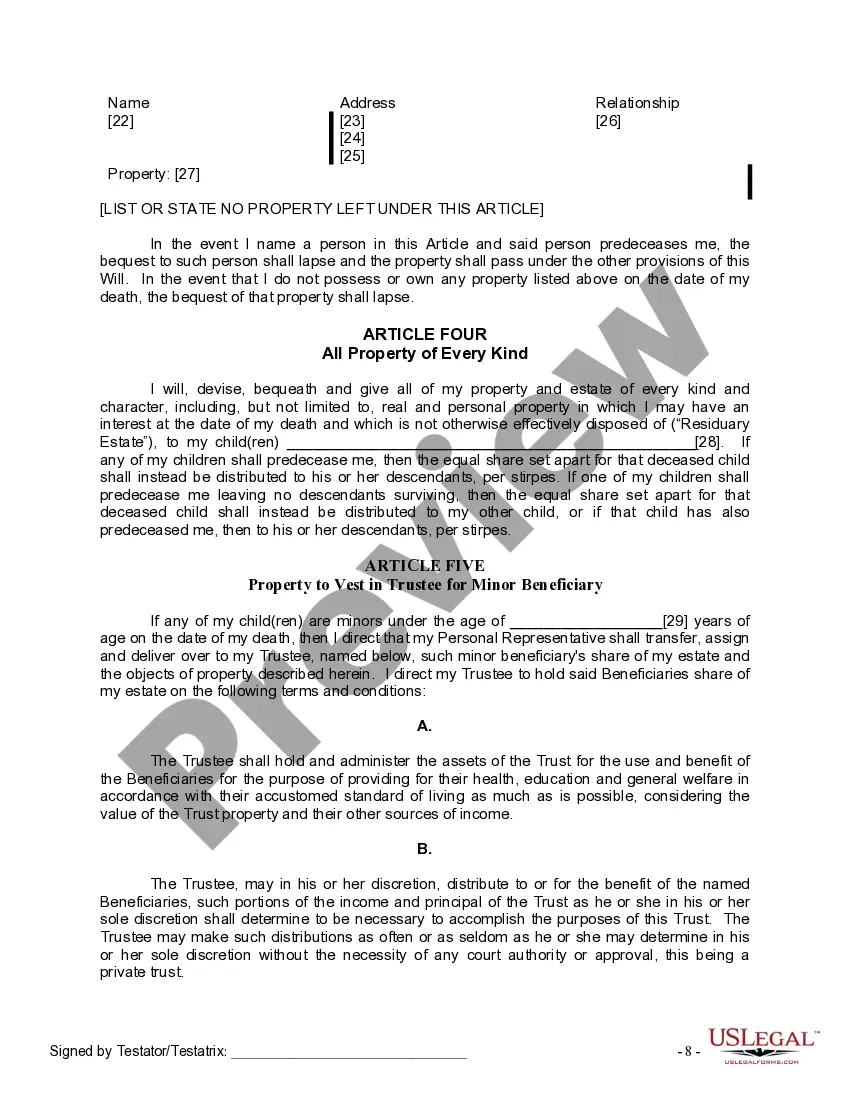
- Provisions for specific bequests to individuals and distribution of the residuary estate.
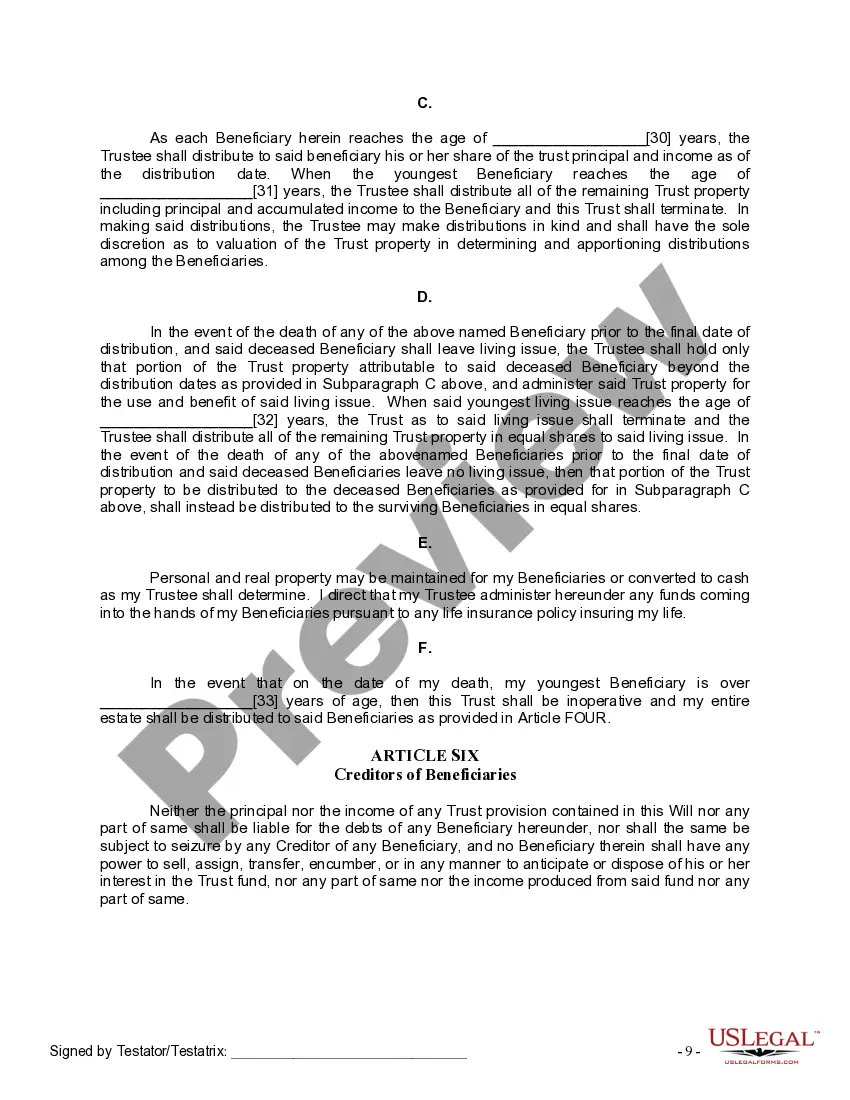
- Appointment of a trustee for managing any assets held in trust for minor beneficiaries.
- Designation of a guardian for minor children in the event of your death.
- Instructions for signing and witnessing the will, including notarization if desired.




When to use this form
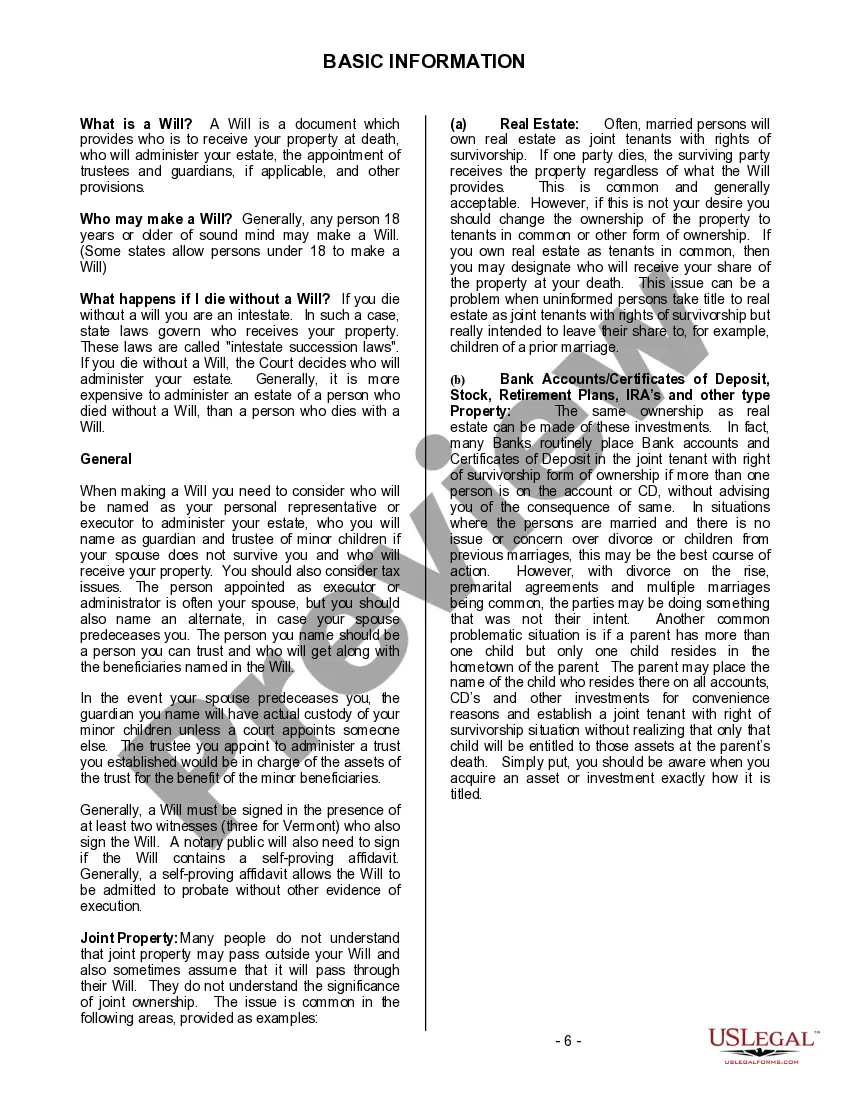
This form should be used when you, as a divorced individual with minor children, want to ensure that your wishes are legally recognized and respected after your passing. It is particularly relevant if you wish to define who will care for your children and who will manage your assets, thereby avoiding potential conflicts or uncertainties among surviving family members. Additionally, using this form can simplify the probate process and ensure your assets are allocated as per your desires.
Who needs this form
- Divorced individuals who have not remarried.
- Parents with minor children.
- Those seeking to establish a clear last will that reflects their current family situation and wishes regarding asset distribution.
- Individuals who want to appoint guardians for their minor children.
Instructions for completing this form
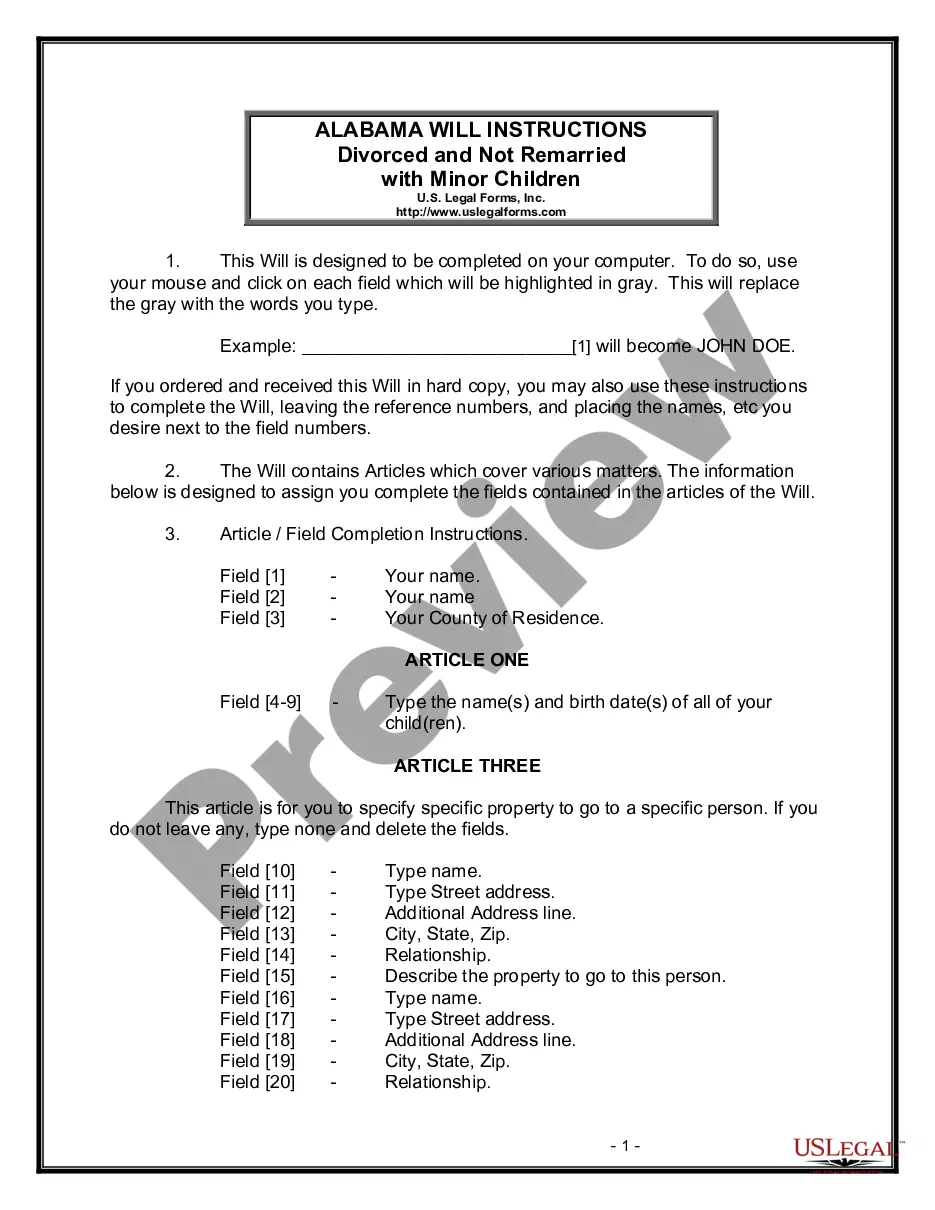
- Start by entering your full name and the county where you reside.
- List the names and birth dates of all your children in the specified fields.
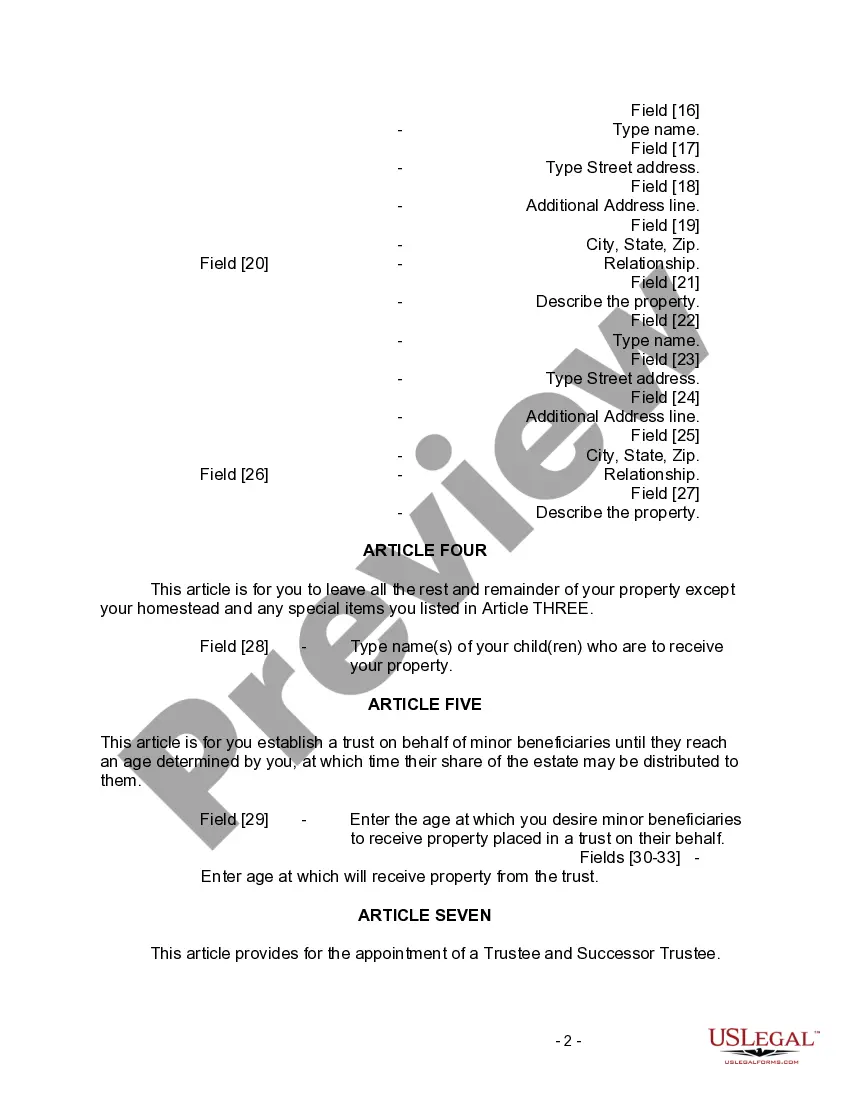
- Detail any specific bequests of property to individuals, including their addresses and relationship to you.
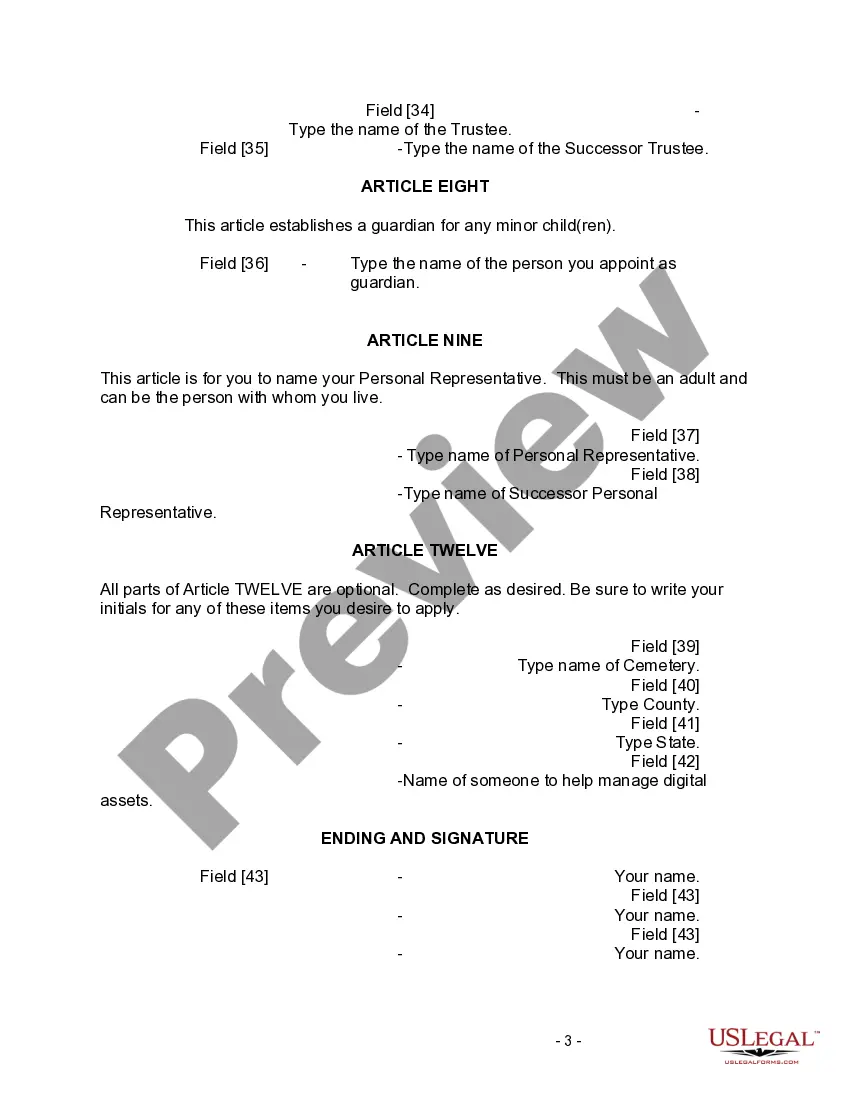
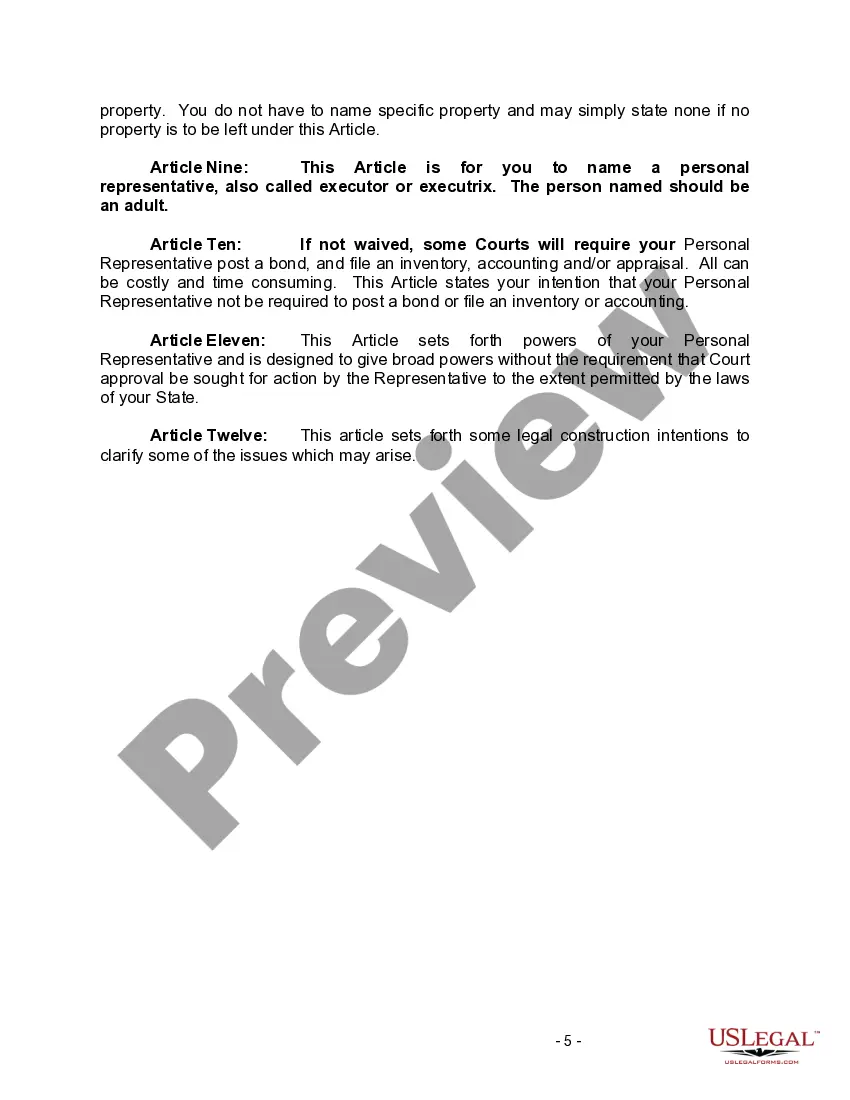
- Determine and enter the name of the guardian for your children and the trustee who will manage any trusts.
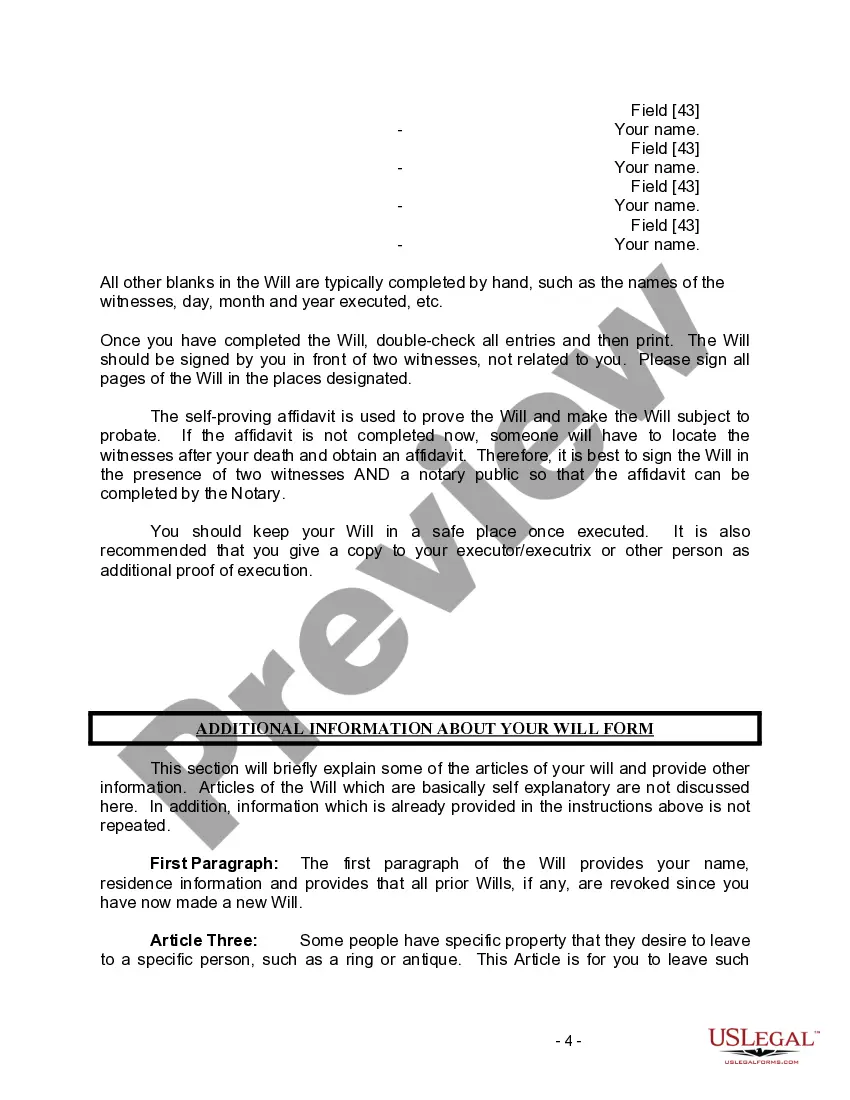
- Once complete, sign the document in front of two witnesses who are not related to you, and consider having it notarized for additional validity.
Is notarization required?
This form must be notarized to be legally valid. US Legal Forms provides secure online notarization powered by Notarize, allowing you to complete the process through a verified video call.
Get your form ready online
Our built-in tools help you complete, sign, share, and store your documents in one place.
Make edits, fill in missing information, and update formatting in US Legal Forms—just like you would in MS Word.
Download a copy, print it, send it by email, or mail it via USPS—whatever works best for your next step.
Sign and collect signatures with our SignNow integration. Send to multiple recipients, set reminders, and more. Go Premium to unlock E-Sign.
If this form requires notarization, complete it online through a secure video call—no need to meet a notary in person or wait for an appointment.
We protect your documents and personal data by following strict security and privacy standards.

Make edits, fill in missing information, and update formatting in US Legal Forms—just like you would in MS Word.

Download a copy, print it, send it by email, or mail it via USPS—whatever works best for your next step.

Sign and collect signatures with our SignNow integration. Send to multiple recipients, set reminders, and more. Go Premium to unlock E-Sign.

If this form requires notarization, complete it online through a secure video call—no need to meet a notary in person or wait for an appointment.

We protect your documents and personal data by following strict security and privacy standards.
Typical mistakes to avoid
- Failing to properly sign the will in front of two witnesses.
- Not providing clear instructions for the distribution of specific assets.
- Omitting the appointment of a guardian for minor children.
- Neglecting to store the will in a safe place or share it with the personal representative.
Why complete this form online
- Convenience of completing the form at your own pace from home.
- Editability allows for easy customization to better fit your unique circumstances.
- Reliability of using state-compliant legal templates drafted by licensed attorneys.
Looking for another form?

Form popularity
FAQ
A will generally does not override a divorce settlement. Any agreements made during a divorce, particularly regarding asset distribution and child custody, must be complied with. For someone creating an Alabama Last Will and Testament for Divorced person not Remarried with Minor Children, ensure that your legal documents, including the will and settlement, are consistent and reflect your current wishes.
A divorce decree may impact how property is held, but it does not automatically supersede a deed. If you own property jointly with your ex-spouse, the divorce decree may dictate who keeps ownership, while the deed is a separate legal document. For an Alabama Last Will and Testament for Divorced person not Remarried with Minor Children, clarify your intentions to avoid confusion in the future.
In Alabama, a will cannot supersede the classification of marital property, which remains separate unless agreements state otherwise. For a divorced person not remarried with minor children, it is important to address how you wish to handle both marital and separate property in your last will and testament. Proper drafting ensures that your wishes are honored.
A will does not override divorce papers, particularly in situations involving minor children. It’s essential to review your Alabama Last Will and Testament for Divorced person not Remarried with Minor Children in conjunction with your divorce decree to ensure alignment with your wishes. If your divorce settlement includes specific terms about asset distribution, your will should reflect those agreements.
Generally, a will does not override spousal rights. Under Alabama law, a spouse has certain rights to inherit regardless of the terms of a will. If you are a divorced person not remarried with minor children, your last will and testament should clearly outline how you wish your property to be distributed to avoid conflicts with spousal rights.
A last will and testament does not inherently override a marriage. However, for individuals creating an Alabama Last Will and Testament for Divorced person not Remarried with Minor Children, it's crucial to explicitly state your wishes regarding inheritances. If you remarry, your former spouse may not automatically inherit anything unless specified in the will.
To ensure that your will is valid in Alabama, you must fulfill several specific requirements. The testator must be at least 18 years old and of sound mind when creating the document. The will must be in writing, signed by the testator or their representative, and witnessed by two individuals. Upholding these requirements will secure your Alabama Last Will and Testament for Divorced person not Remarried with Minor Children against potential challenges.
Multiple factors can render a will invalid in Alabama. If the will fails to meet the legal requirements, such as lacking signatures or witnessing, it will be considered null. Additionally, if the testator lacked mental capacity or was under undue influence when creating the will, it can also be deemed invalid. Therefore, to avoid such pitfalls, ensure your Alabama Last Will and Testament for Divorced person not Remarried with Minor Children follows all guidelines.
Under Alabama law, three primary requirements must be met for a will to be considered valid. First, the testator should be at least 18 years old, indicating their legal capacity. Secondly, the will must be signed by the testator or another person in their presence, and finally, it must be witnessed by two individuals who are present at the same time. Keeping these points in mind will help create an effective Alabama Last Will and Testament for Divorced person not Remarried with Minor Children.
When creating a valid will, you must consider several essential requirements. The testator's signature is necessary, as is the presence of two witnesses who observe the signing. Furthermore, the will must clearly express the testator's intentions and should be in written form. These requirements ensure that your Alabama Last Will and Testament for Divorced person not Remarried with Minor Children accurately reflects your wishes.