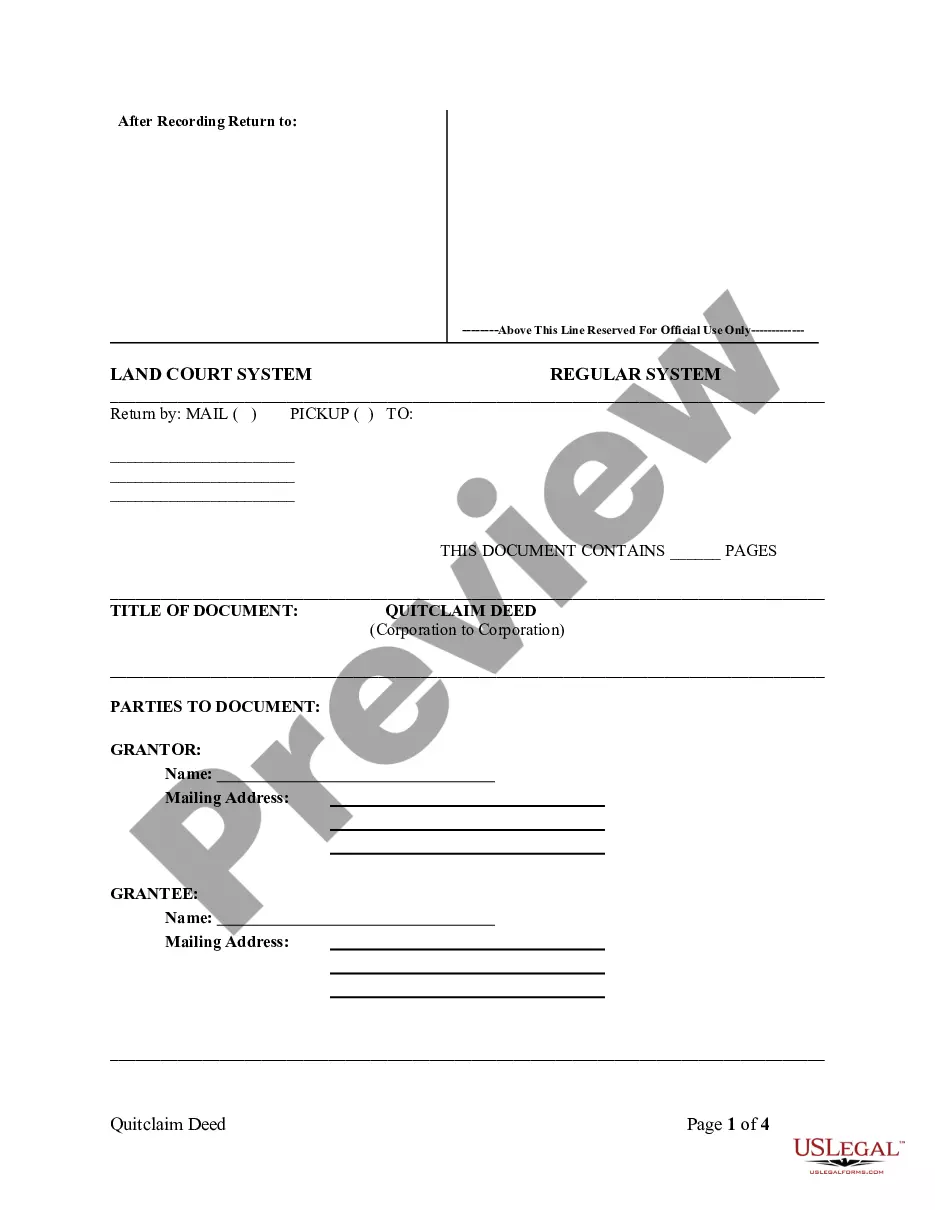
Alabama Last Will and Testament for Divorced Person Not Remarried with No Children
What is this form?
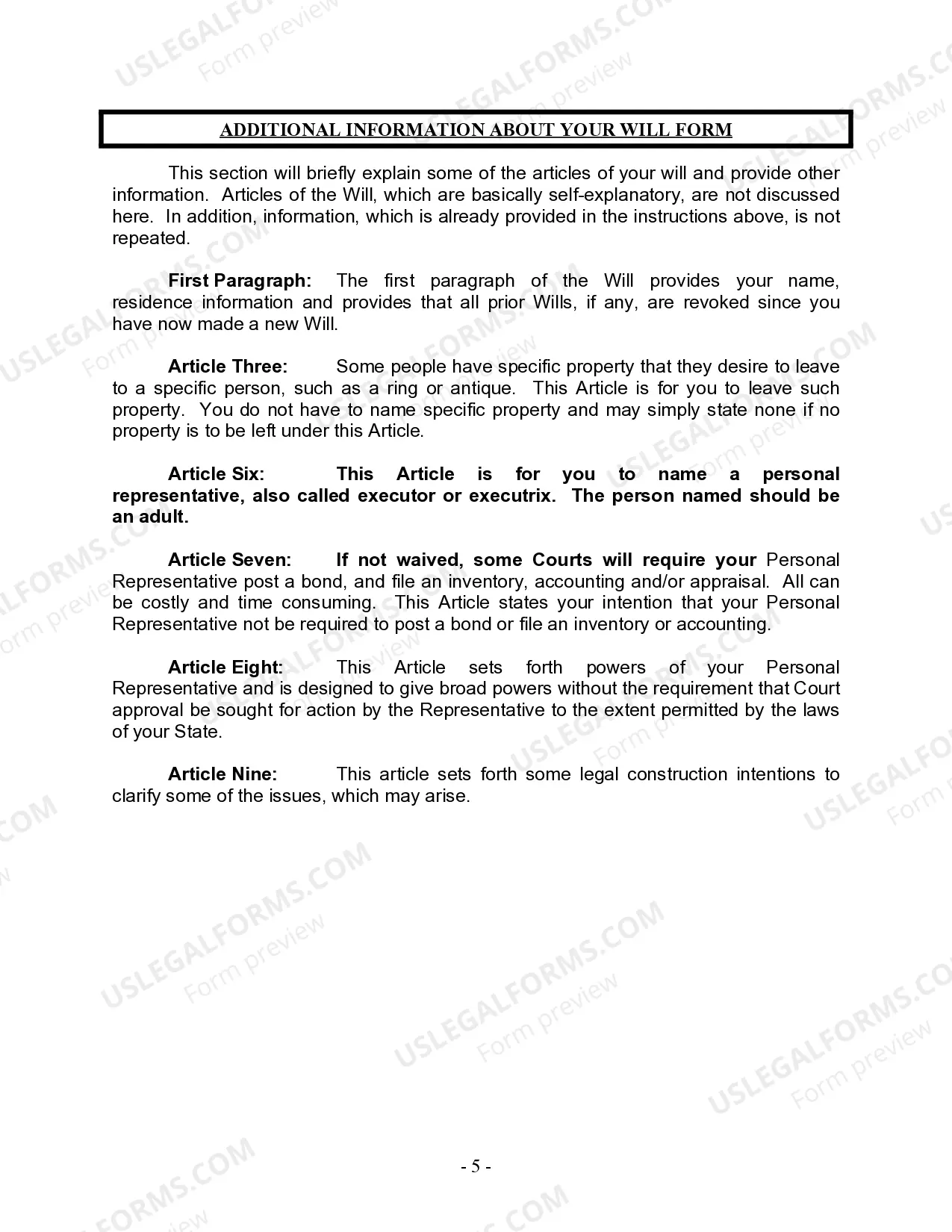
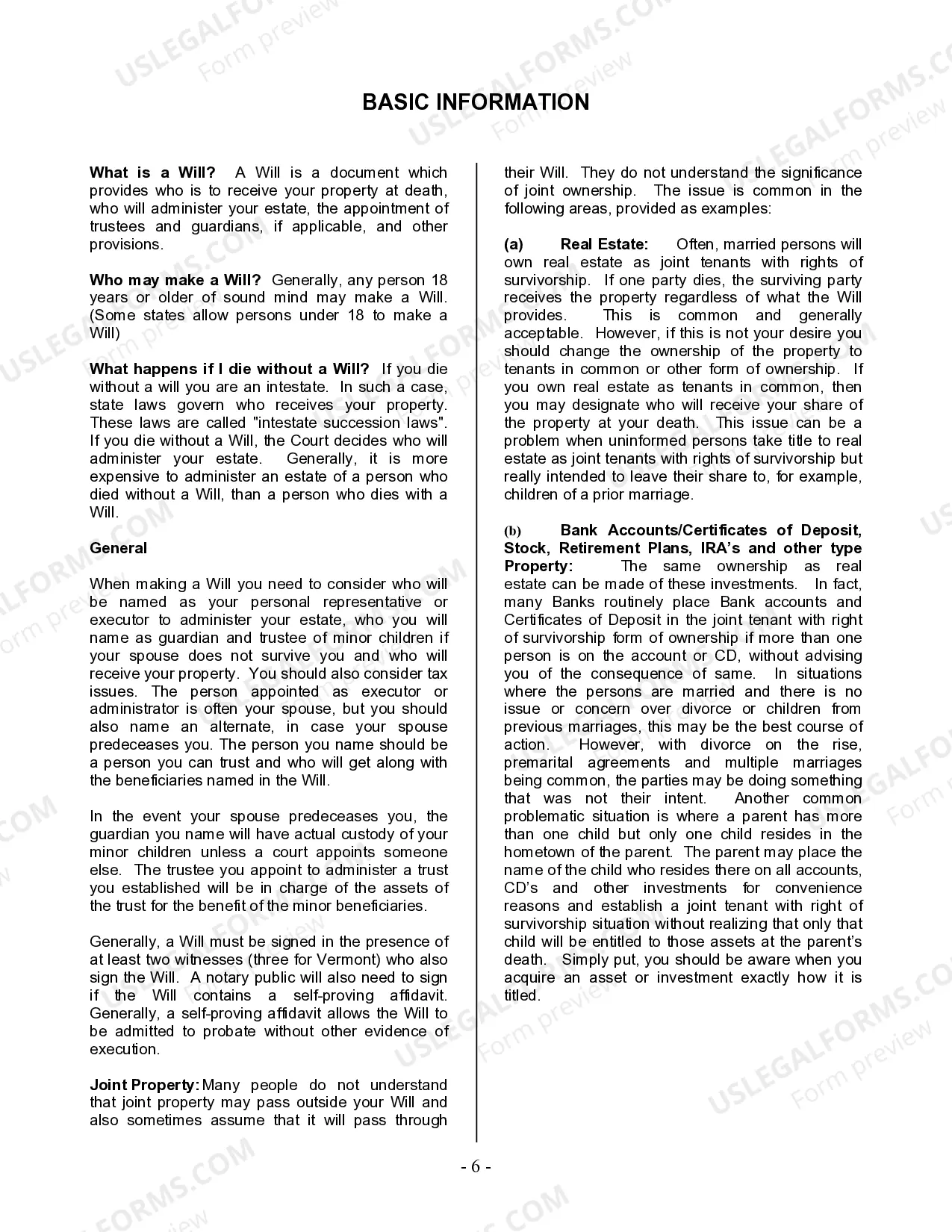
The Last Will and Testament for Divorced Person Not Remarried with No Children is a legal document designed for individuals who have experienced divorce, are not remarried, and do not have any children. This type of will enables the individual to specify how their assets will be distributed upon their passing and appoints a personal representative to manage their estate. Unlike other wills, this form accounts for the unique situation of those without children, ensuring that their assets are passed on according to their wishes.
Form components explained
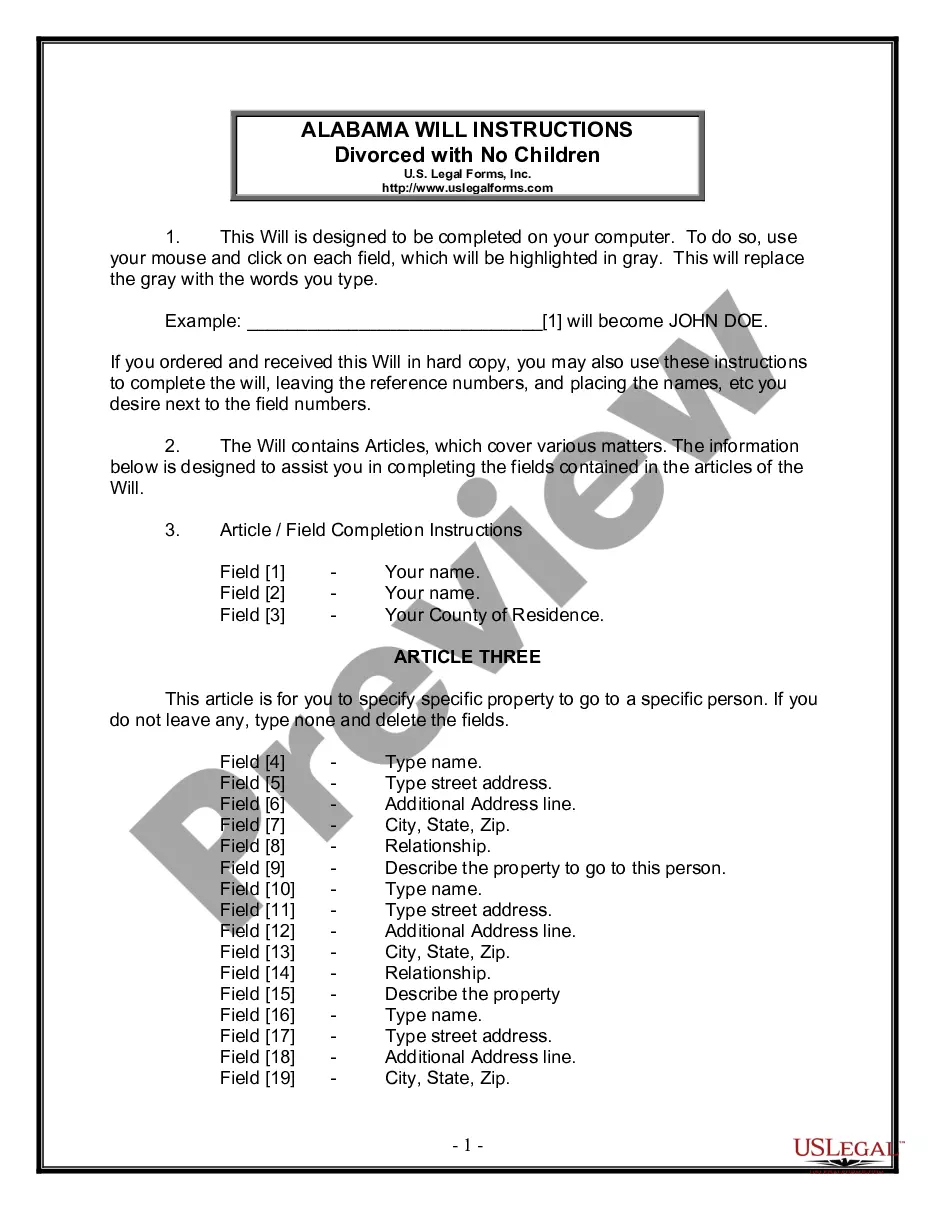
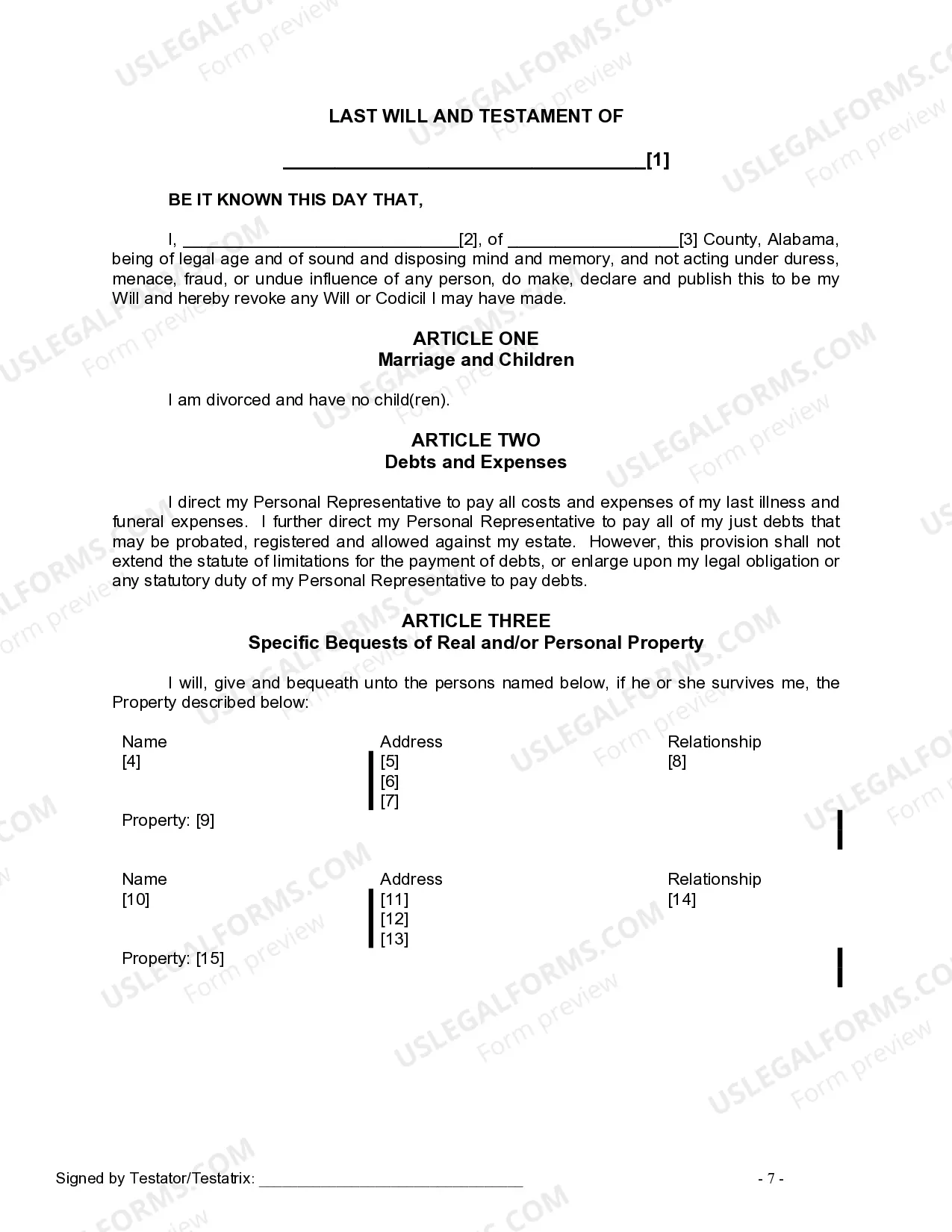
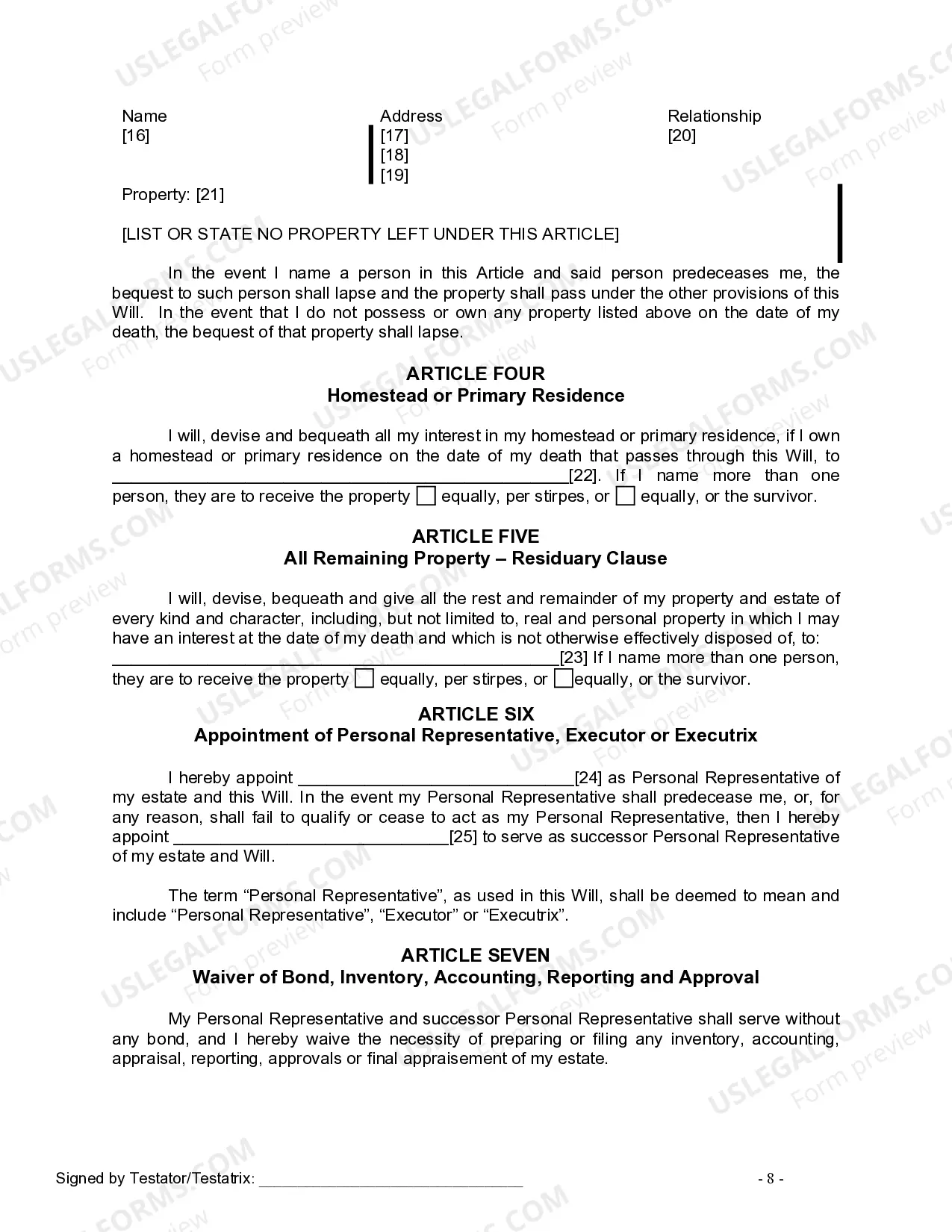
- Your personal details, including name and county of residence
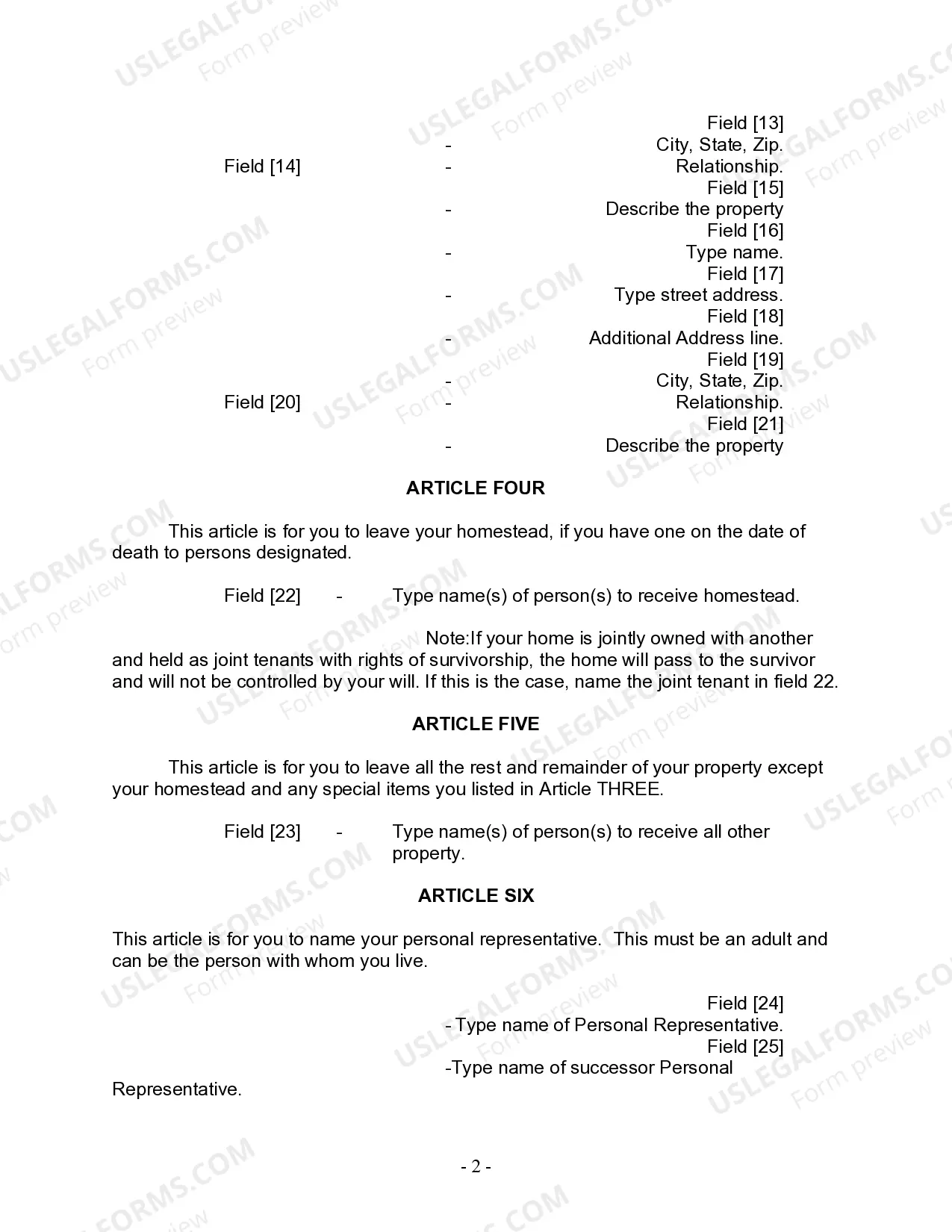
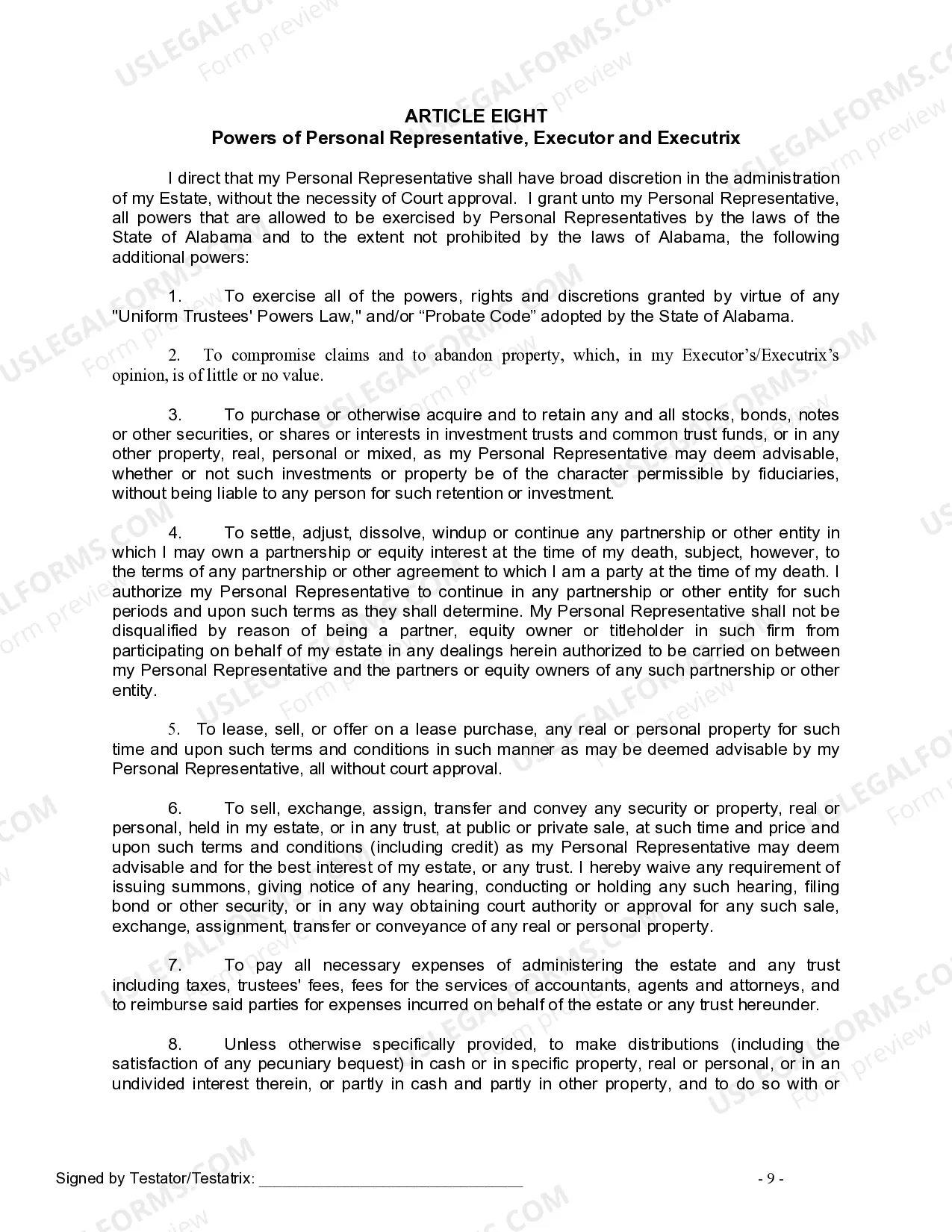
- Appointment of a personal representative (executor) to manage your estate
- Provisions for specific bequests of property to named individuals
- Directions for the distribution of any remaining assets
- Instructions regarding your homestead or primary residence
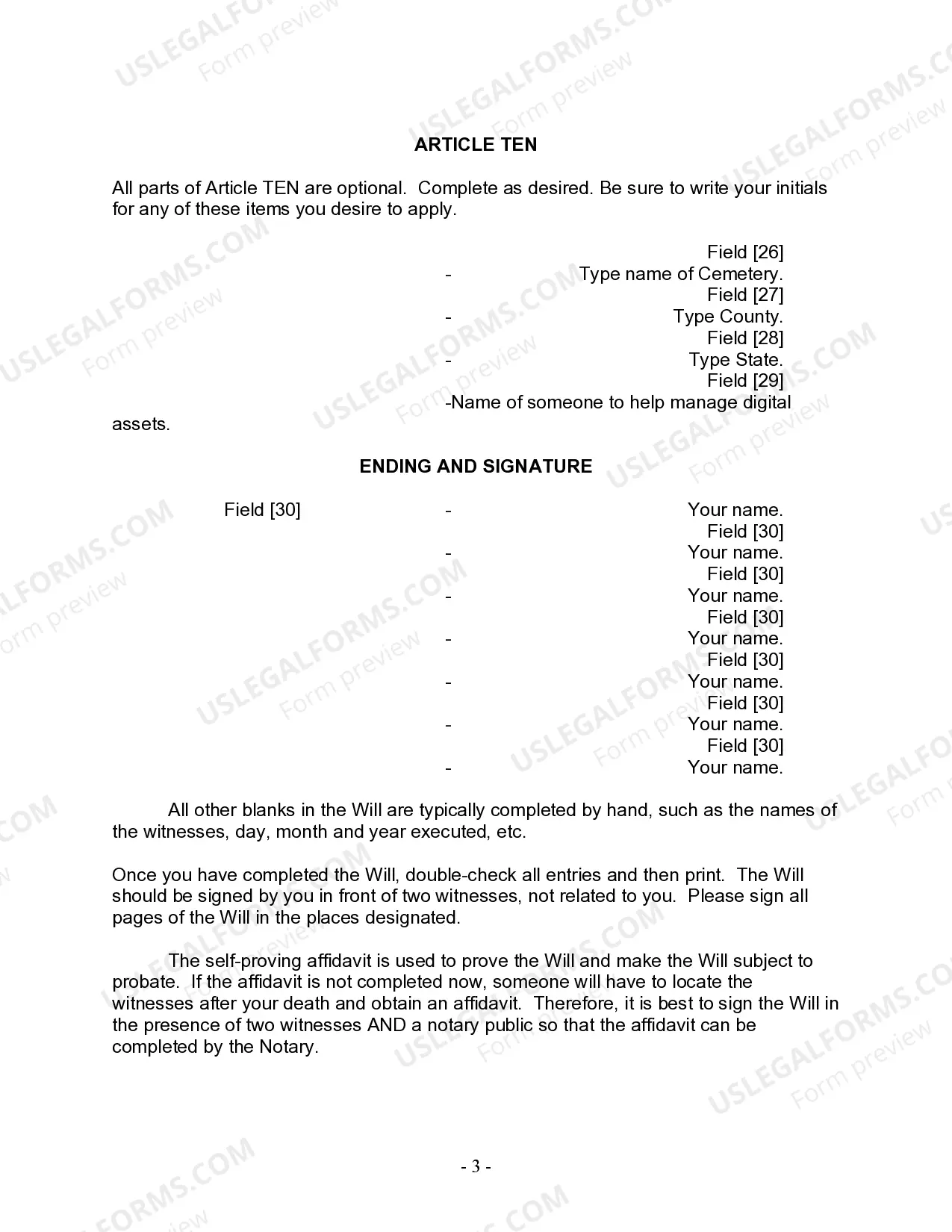
- Witness and notary signature requirements for legal validity



Common use cases
This form is ideal for individuals who have gone through a divorce, have not remarried, and wish to ensure their assets are allocated as per their preferences after death. Examples of when to use this form include if you want to clearly state who should inherit your assets, define your personal representative, or specify special requests for the handling of your estate. Utilizing this will can also prevent disputes among potential heirs in the absence of children.
Who needs this form
- Individuals who are divorced and not currently married
- Those who have no children or dependents
- People wanting to establish clear directives for asset distribution
- Individuals seeking to appoint a trusted personal representative
How to complete this form
- Enter your full name and county of residence in the designated fields.
- List any specific bequests of property and the names of the individuals receiving them.
- Appoint a personal representative, ensuring they are an adult you trust.
- Indicate how any remaining assets should be distributed.
- Sign the document in the presence of two witnesses, ensuring they are not related to you.
- If applicable, have the form notarized to strengthen its legal validity.
Is notarization required?
Yes, this form must be notarized to be legally valid in accordance with local laws. This will require the presence of a notary public when signing the document. US Legal Forms offers integrated online notarization for your convenience through secure video calls, ensuring compliance without the need for travel.
Get your form ready online
Our built-in tools help you complete, sign, share, and store your documents in one place.
Make edits, fill in missing information, and update formatting in US Legal Forms—just like you would in MS Word.
Download a copy, print it, send it by email, or mail it via USPS—whatever works best for your next step.
Sign and collect signatures with our SignNow integration. Send to multiple recipients, set reminders, and more. Go Premium to unlock E-Sign.
If this form requires notarization, complete it online through a secure video call—no need to meet a notary in person or wait for an appointment.
We protect your documents and personal data by following strict security and privacy standards.

Make edits, fill in missing information, and update formatting in US Legal Forms—just like you would in MS Word.

Download a copy, print it, send it by email, or mail it via USPS—whatever works best for your next step.

Sign and collect signatures with our SignNow integration. Send to multiple recipients, set reminders, and more. Go Premium to unlock E-Sign.

If this form requires notarization, complete it online through a secure video call—no need to meet a notary in person or wait for an appointment.

We protect your documents and personal data by following strict security and privacy standards.
Mistakes to watch out for
- Failing to sign the will in front of the required witnesses.
- Leaving blanks or incomplete fields that can create ambiguity.
- Not specifying an alternate personal representative.
- Neglecting to keep the will in a safe location where it can easily be accessed after your passing.
Why complete this form online
- Convenient access allows you to complete the will at your own pace.
- The form can be edited easily if your circumstances change.
- Reliable templates drafted by licensed attorneys ensure legal compliance.
- Immediate download enables quick implementation of your estate planning needs.
Main things to remember
- The form is tailored for divorced individuals without children.
- Proper execution and witness requirements are critical for the will's validity.
- Clear specifications about property distribution prevent legal disputes.
Looking for another form?
Form popularity
FAQ
Divorce does not automatically void your will, but it can change how it is interpreted. In Alabama, your Last Will and Testament may still remain valid even after a divorce, though specific provisions regarding your ex-spouse might be revoked. To avoid confusion, it is important to update your will, especially if you are a divorced person not remarried with no children. Utilizing platforms like USLegalForms can simplify the process of creating a tailored will that aligns with your situation.
A divorce can significantly impact your estate planning, including your Alabama Last Will and Testament for Divorced Person Not Remarried with No Children. Typically, state laws may revoke certain provisions in your will that relate to your former spouse. It is essential to review and update your will after a divorce to reflect your current intentions. By revising your will, you can ensure that your assets are distributed according to your wishes.
To create a valid will under Alabama law, you must be at least 18 years old, of sound mind, and your will should be in writing, signed, and witnessed by two individuals. Ensuring these criteria are met is vital for an Alabama Last Will and Testament for Divorced Person Not Remarried with No Children. Utilizing resources on UsLegalForms can help simplify this process.
Generally, a will can dictate how assets are distributed, but marriage introduces certain rights that may impact that distribution. In the case of divorce, a well-drafted will like the Alabama Last Will and Testament for Divorced Person Not Remarried with No Children ensures your wishes are clear and feel honored.
Yes, you can draft your own will in Alabama, but it must meet certain legal requirements. To ensure your will is valid and effective, consider using a trusted platform like UsLegalForms to create an Alabama Last Will and Testament for Divorced Person Not Remarried with No Children. This can provide peace of mind that your document will meet state laws.
Marriage does not automatically invalidate a will in the USA. However, the introduction of new spousal rights might affect the distribution of your estate. To protect your intentions, it is wise to create a specific Alabama Last Will and Testament for Divorced Person Not Remarried with No Children after marrying.
A divorce typically impacts existing wills, especially concerning spousal rights. In Alabama, a divorced person's will may become partially invalidated if it names the ex-spouse as a beneficiary. Crafting an Alabama Last Will and Testament for Divorced Person Not Remarried with No Children can help clarify your wishes.
In general, a valid will can control how your assets are distributed, even after marriage. However, in Alabama, some property rights might change with marriage. It's important to consult a legal expert familiar with Alabama Last Will and Testament for Divorced Person Not Remarried with No Children to ensure compliance with state laws.
In Alabama, you are not required to file your Alabama Last Will and Testament for Divorced Person Not Remarried with No Children with the court while you are still alive. However, once you pass away, your will must be submitted for probate. The probate process ensures your wishes are followed and assets are distributed correctly. Using a reliable platform like US Legal Forms can help you prepare your will properly and understand the steps required after your death.
A will does not typically supersede marital property laws; however, as a divorced person not remarried, you have the autonomy to dictate the distribution of your separate property through your Alabama Last Will and Testament. It's vital to understand that marital assets may remain subject to division per divorce terms. Consulting with a legal expert can clarify how your wills and property interests interact.