Alabama Last Will and Testament for Divorced person not Remarried with Adult Children
Overview of this form
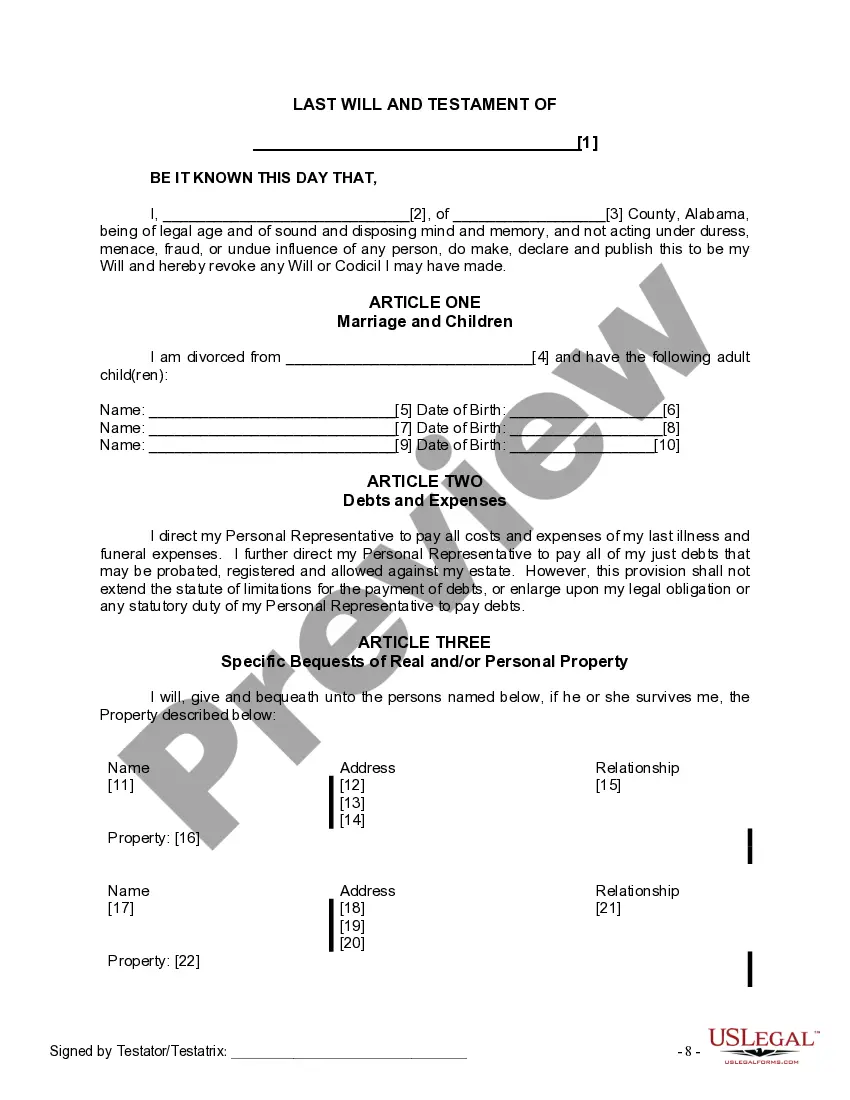
The Last Will and Testament for a divorced person not remarried with adult children is a legal document that sets forth how a person's assets will be distributed after their death. This form caters specifically to individuals who are divorced, have adult children, and have not remarried. It allows them to designate their property heirs and appoint a personal representative to manage their estate. This form differs from other wills by considering the unique family dynamics of divorced individuals with adult children, ensuring that their wishes are clearly documented and legally enforceable.
Key components of this form
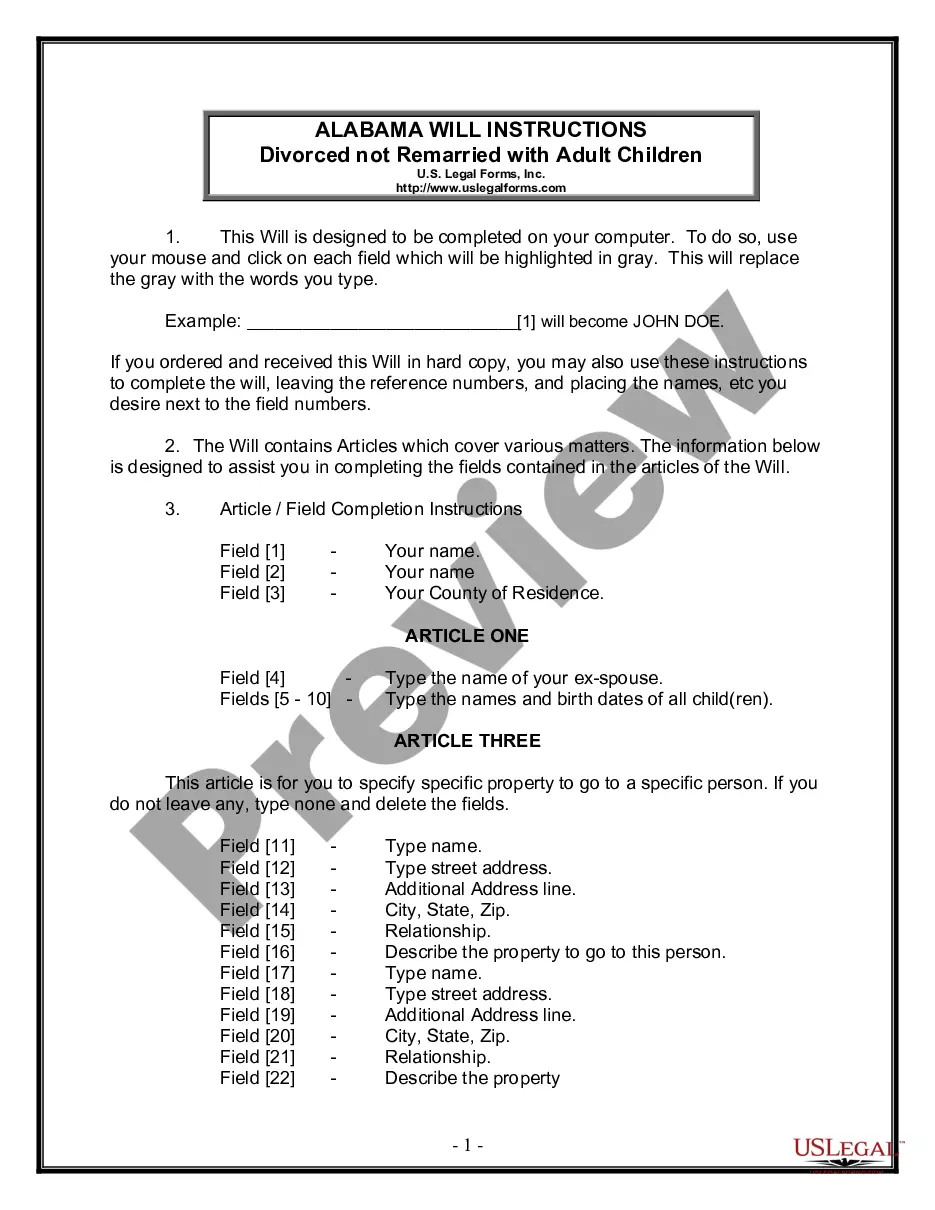
- Personal details: Your name and county of residence.
- Ex-spouse information: Name of your ex-spouse.
- Inheritance details: Names and birthdates of your adult children.
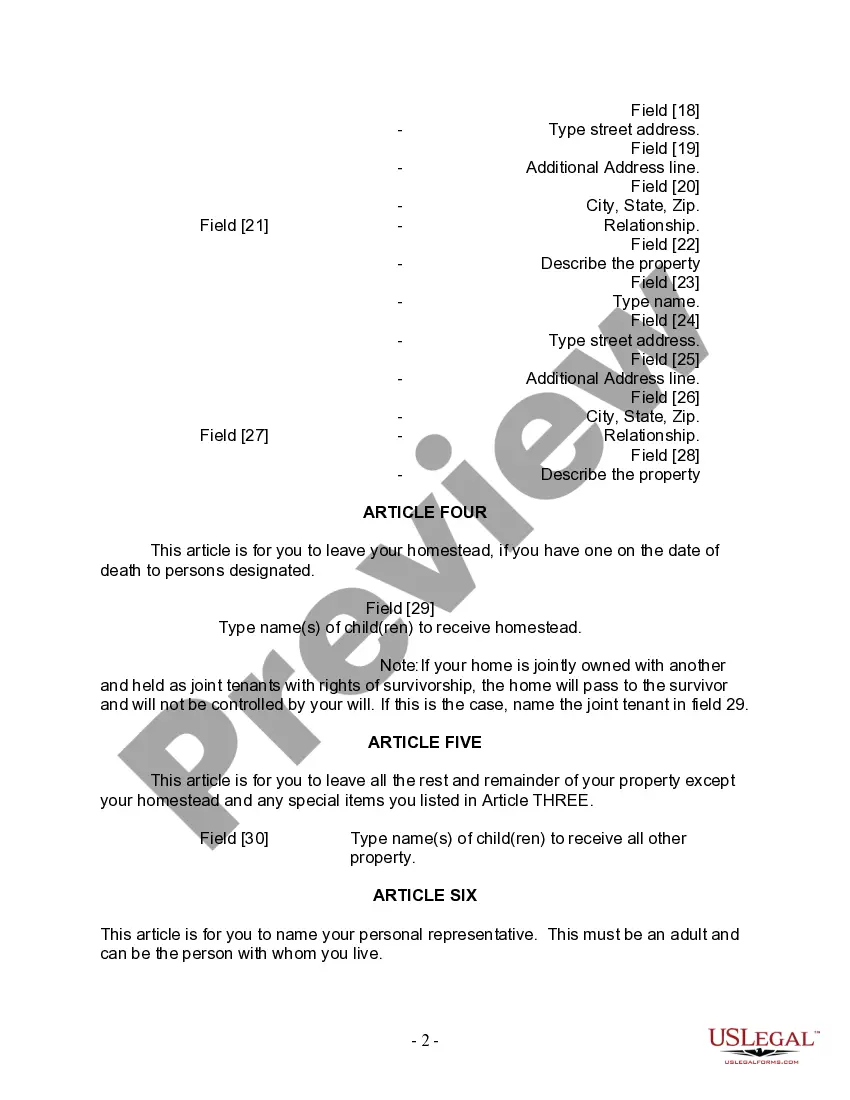
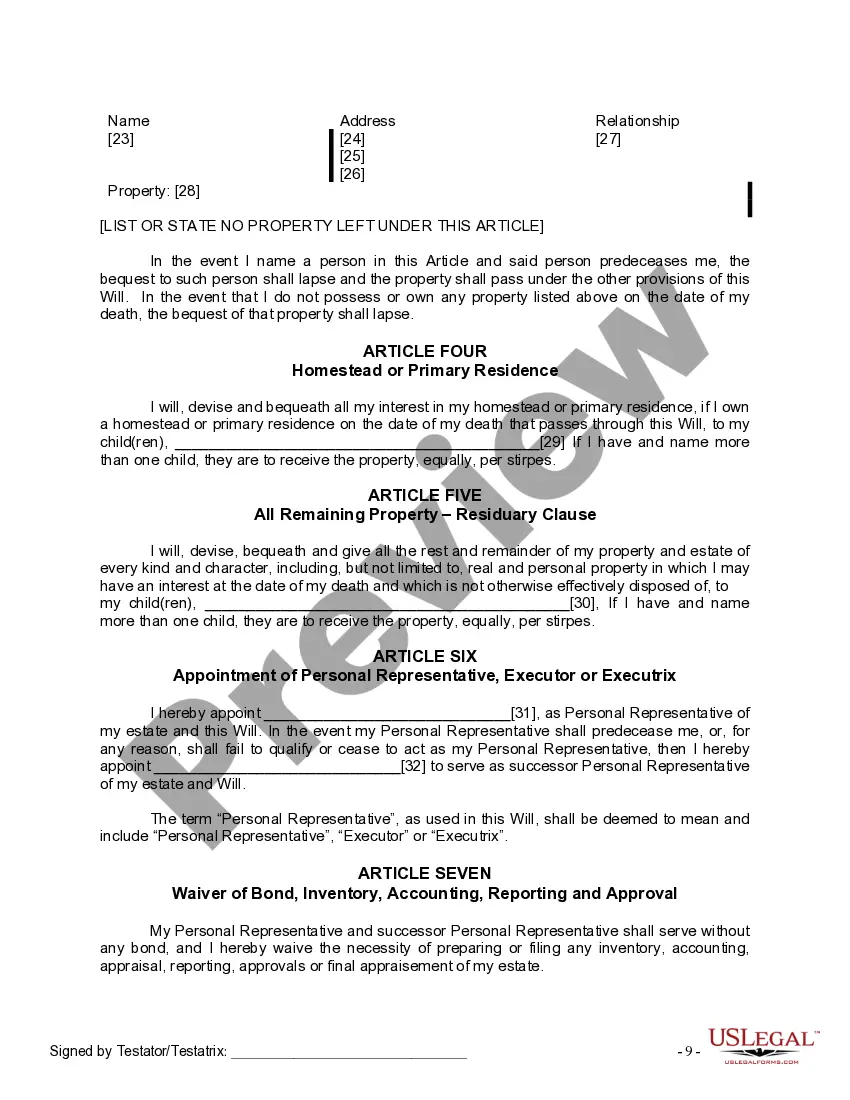
- Specific bequests: Provision for specific assets to designated individuals.
- Homestead designation: Instructions for the distribution of the primary residence.
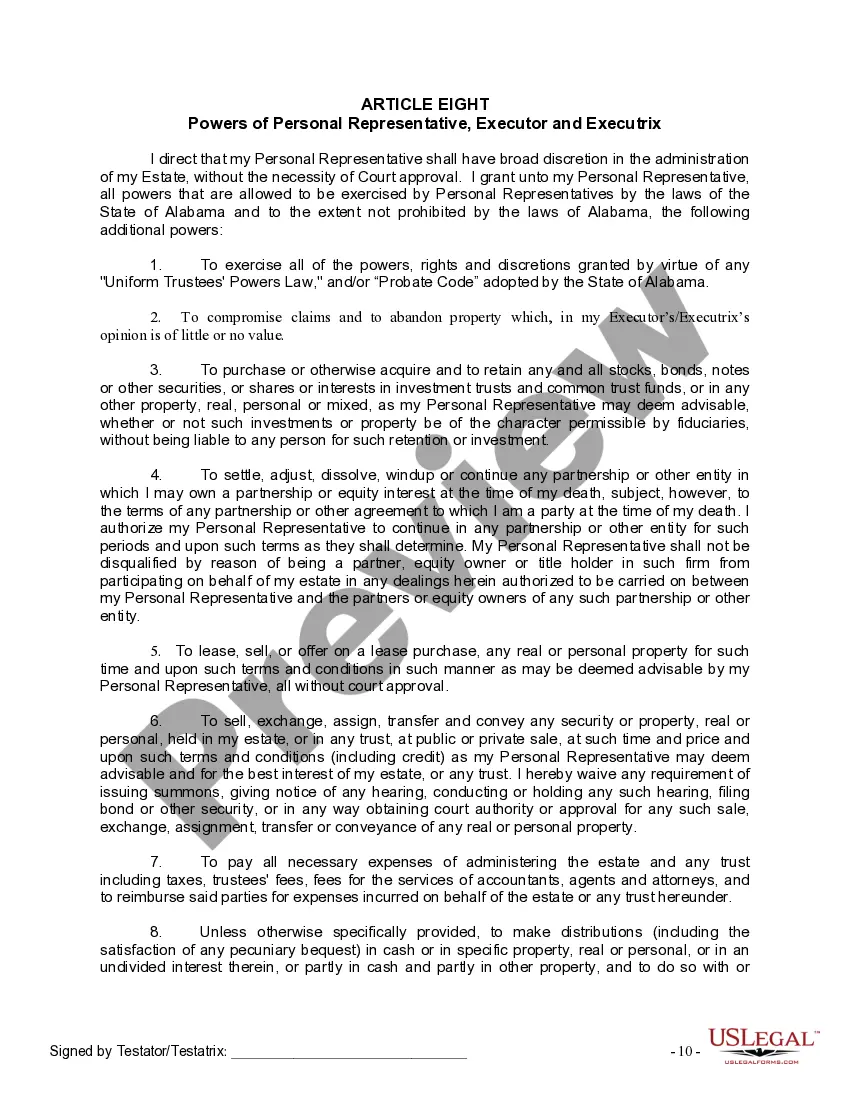
- Executor appointment: Designation of a personal representative to administer the estate.





When this form is needed
This form is suitable for individuals who have gone through a divorce, have adult children, and want to ensure their estate is distributed according to their wishes. It is particularly relevant if you want to exclude a former spouse from inheritance, designate specific assets to your children, or appoint someone trustworthy to handle your estate after your passing. This form is also appropriate if you have significant belongings that you wish to leave to specific recipients.
Intended users of this form
- Individuals who are divorced and have not remarried.
- Parents of adult children who want a clear distribution of their estate.
- Those who wish to appoint an executor to manage their estate.
- Anyone who wants to clarify their wishes regarding their property and assets.
How to prepare this document
- Identify and enter your full name and county of residence.
- Provide the name of your ex-spouse and the names and birthdates of all your adult children.
- Specify any particular properties or assets you wish to bequeath to individuals.
- Designate your children as the recipients of your homestead or primary residence.
- Appoint a personal representative to manage your estate and ensure they are willing to serve in this role.
Does this document require notarization?
This document requires notarization to meet legal standards. US Legal Forms provides secure online notarization powered by Notarize, allowing you to complete the process through a verified video call, available 24/7.
Get your form ready online
Our built-in tools help you complete, sign, share, and store your documents in one place.
Make edits, fill in missing information, and update formatting in US Legal Forms—just like you would in MS Word.
Download a copy, print it, send it by email, or mail it via USPS—whatever works best for your next step.
Sign and collect signatures with our SignNow integration. Send to multiple recipients, set reminders, and more. Go Premium to unlock E-Sign.
If this form requires notarization, complete it online through a secure video call—no need to meet a notary in person or wait for an appointment.
We protect your documents and personal data by following strict security and privacy standards.

Make edits, fill in missing information, and update formatting in US Legal Forms—just like you would in MS Word.

Download a copy, print it, send it by email, or mail it via USPS—whatever works best for your next step.

Sign and collect signatures with our SignNow integration. Send to multiple recipients, set reminders, and more. Go Premium to unlock E-Sign.

If this form requires notarization, complete it online through a secure video call—no need to meet a notary in person or wait for an appointment.

We protect your documents and personal data by following strict security and privacy standards.
Typical mistakes to avoid
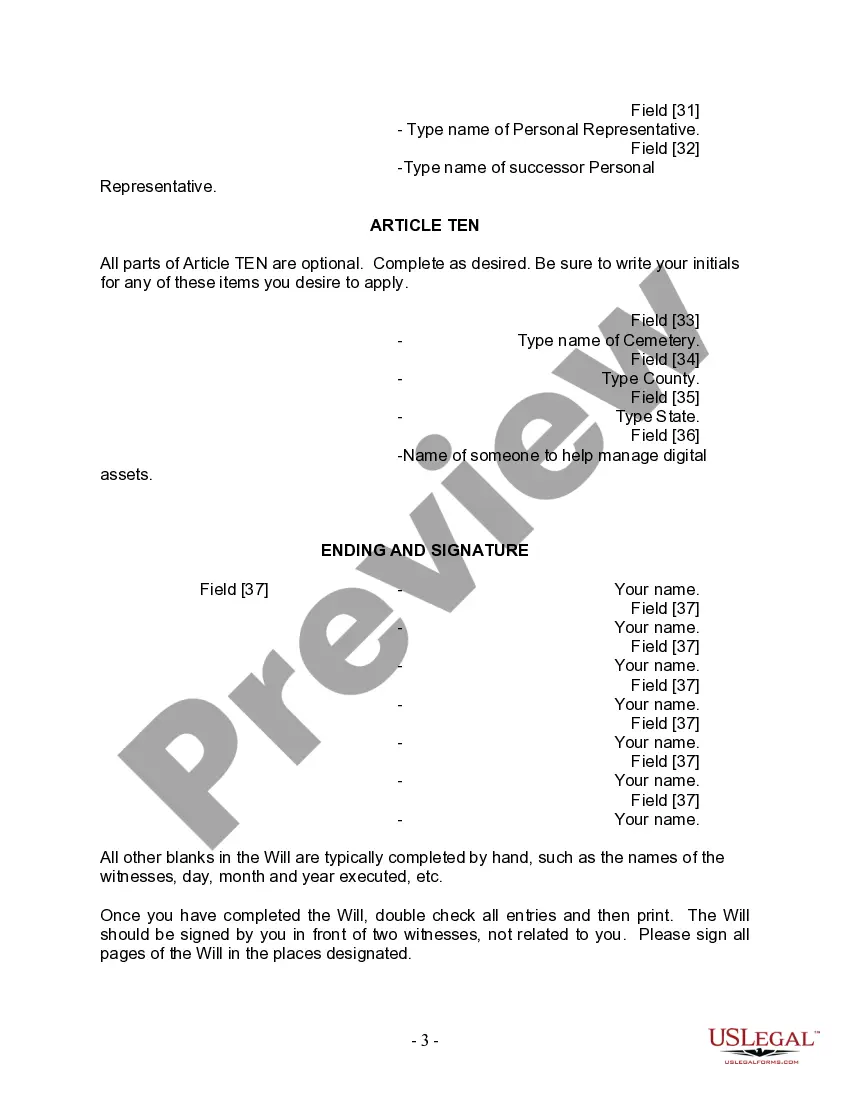
- Failing to have the will signed in front of two witnesses.
- Not updating the will after significant life changes, such as changes in relationships or financial status.
- Omitting the names and details of all beneficiaries, leading to confusion.
- Not keeping the will in a secure and accessible location.
Advantages of online completion
- The form can be easily completed on your computer, allowing for accurate and clear entries.
- Editability ensures that you can make changes as needed without starting over.
- Reliable templates provide peace of mind that the form complies with state laws.
- Immediate download means you can complete your planning without delays.
Looking for another form?


Form popularity
FAQ
In most cases, getting married does not automatically invalidate a will; however, it can affect future wills. For individuals who are divorced and have not remarried, their existing will remains valid unless changed. An Alabama Last Will and Testament for Divorced person not Remarried with Adult Children can help ensure that your estate aligns with your current relationship status and family dynamics.
A will does not change the legal effects of a divorce, but it can clarify how assets are distributed post-divorce. If you have adult children and you are divorced, your will should reflect your wishes, particularly about asset distribution. Creating an Alabama Last Will and Testament for Divorced person not Remarried with Adult Children can help protect your wishes and the interests of your heirs.
Generally, marriage laws can impose certain rights and responsibilities that a will cannot override. In Alabama, if you are divorced, your will outlines your intentions regarding your estate, but it must comply with state laws. To navigate these complexities, having an Alabama Last Will and Testament for Divorced person not Remarried with Adult Children can provide clarity and ensure successful estate planning.
A will may specify how a person's assets are distributed, but it does not invalidate the rights of a surviving spouse in certain circumstances. After divorce, a will becomes vital for those who have not remarried, especially in Alabama. An Alabama Last Will and Testament for Divorced person not Remarried with Adult Children is essential for ensuring that your wishes are respected and upheld.
In Alabama, a last will and testament can express your wishes regarding the distribution of your assets after death, regardless of marriage status. However, if a person is divorced but not remarried, the will still reflects their intentions for asset distribution. Therefore, while it does not specifically override a marriage, it serves as a crucial document for an Alabama Last Will and Testament for Divorced person not Remarried with Adult Children.
The order of inheritance in Alabama follows intestacy laws, which prioritize adult children, then parents, and then siblings. If you do not have any children, your parents would inherit first, followed by your siblings or their children. To avoid any ambiguity and ensure your wishes are respected, consider drafting an Alabama Last Will and Testament for Divorced person not Remarried with Adult Children. Platforms like uslegalforms can simplify this process.
A spouse in Alabama may have rights to a portion of the deceased's estate unless specified otherwise in a will. If you are divorced and have not remarried, your ex-spouse is generally not entitled to your assets. Therefore, it is essential to clearly outline your wishes in your Alabama Last Will and Testament for Divorced person not Remarried with Adult Children to ensure your desired inheritance plan is executed.
In Alabama, property does not automatically go to a spouse if you are divorced and not remarried. Instead, your assets pass according to your will or Alabama's intestacy laws. If you want your property to go to specific individuals, it is crucial to clearly outline that in your Alabama Last Will and Testament for Divorced person not Remarried with Adult Children.
If there is no will, Alabama's intestacy laws determine who inherits your estate. Typically, your adult children would inherit equally if you are a divorced person not remarried. In the absence of children, your parents or siblings may inherit your assets. Understanding these laws can help you make informed decisions when creating your Alabama Last Will and Testament for Divorced person not Remarried with Adult Children.
In Alabama, stepchildren do not automatically have inheritance rights unless specified in a will. If you are a divorced person not remarried with adult children, creating an Alabama Last Will and Testament can help clarify your wishes regarding inheritance. Taking the time to outline your plans ensures that all parties, including stepchildren if applicable, understand their rights and any specifics you wish to convey.