Alabama General Answer to Tort Complaints
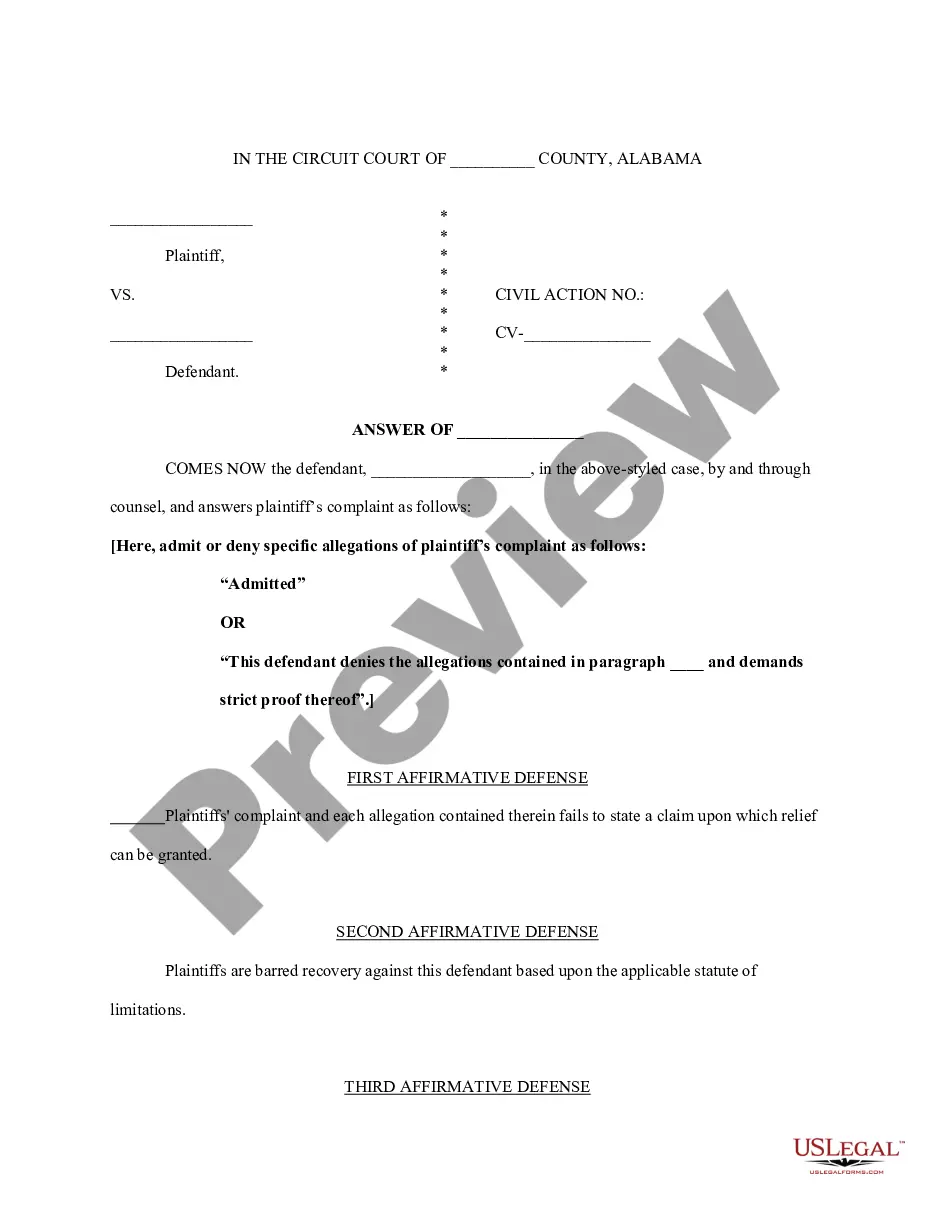
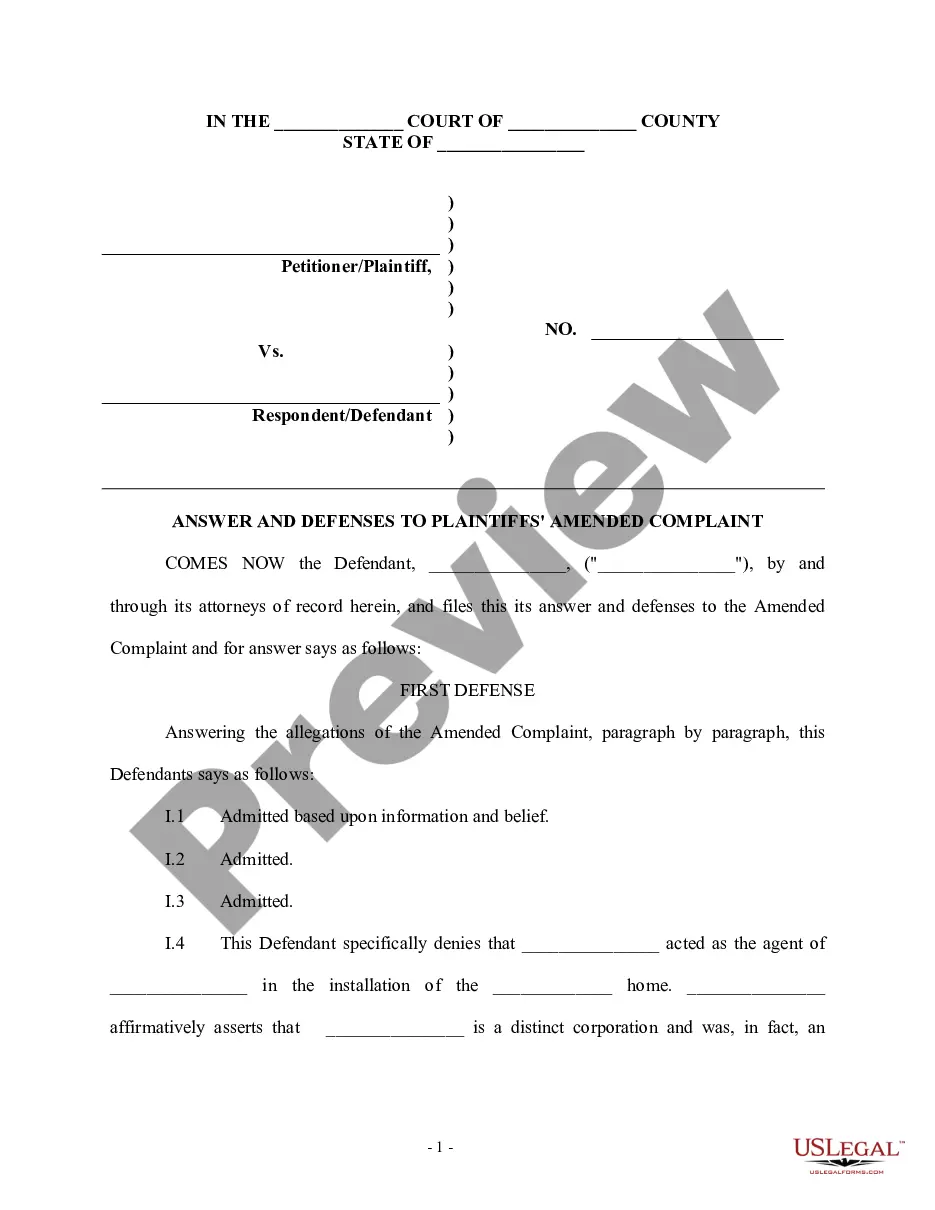
About this form
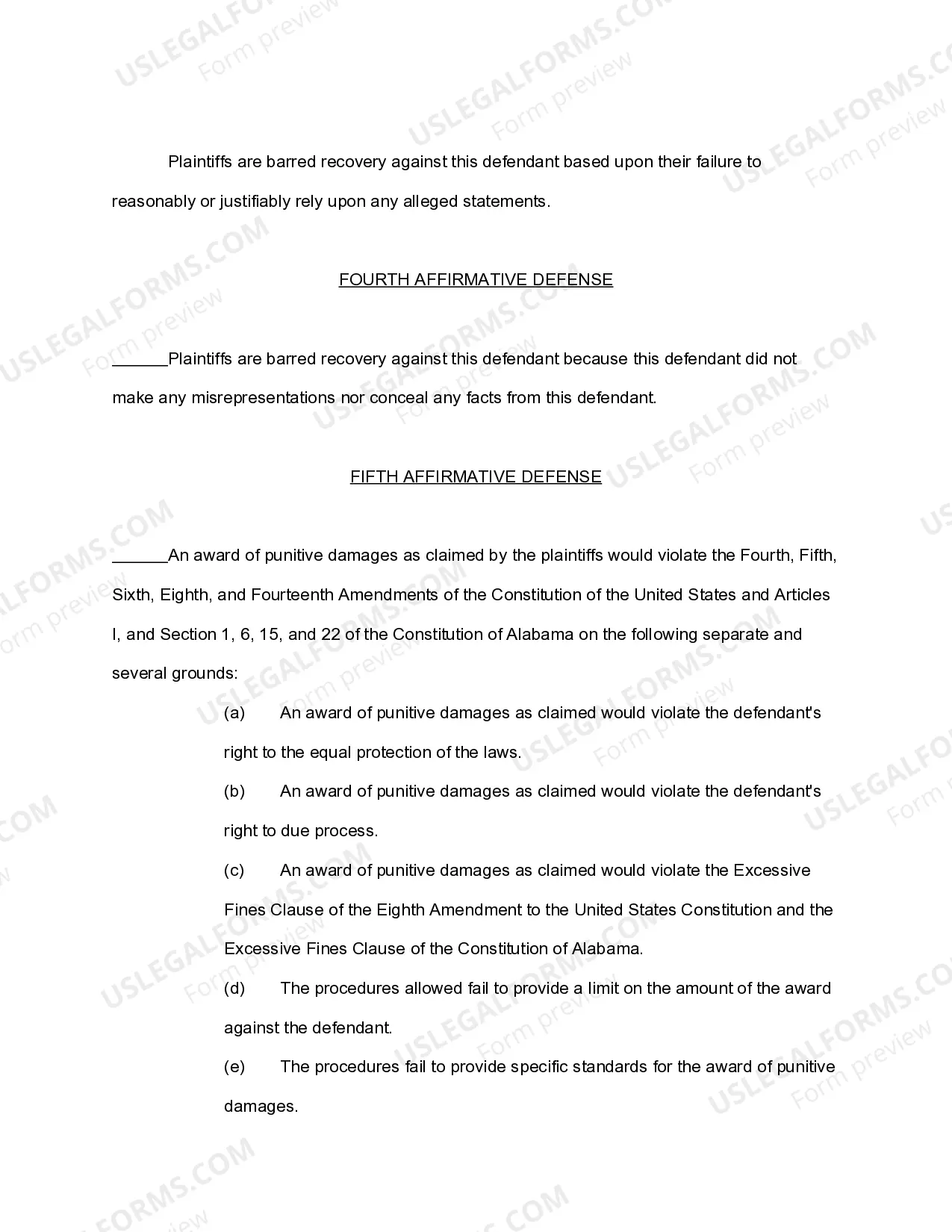
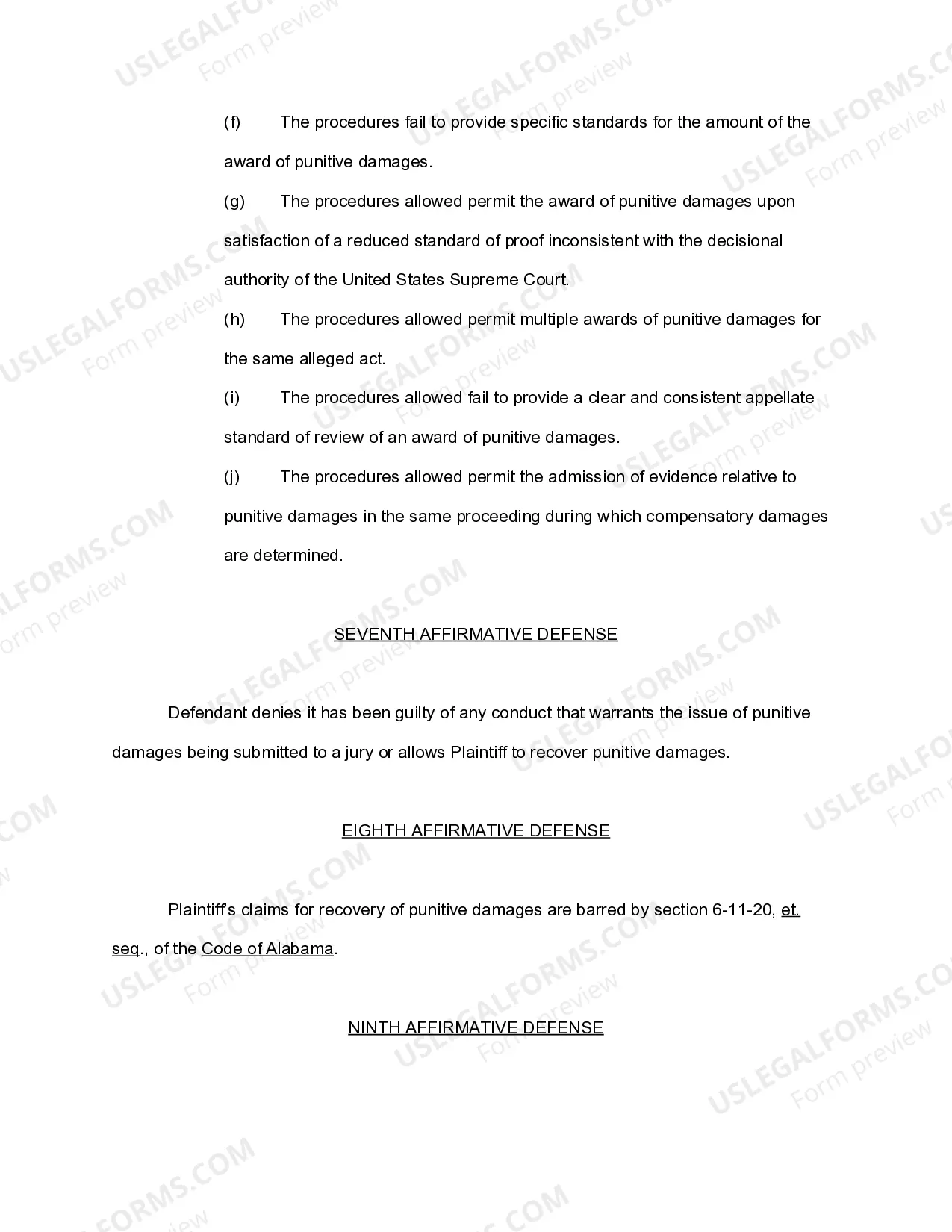
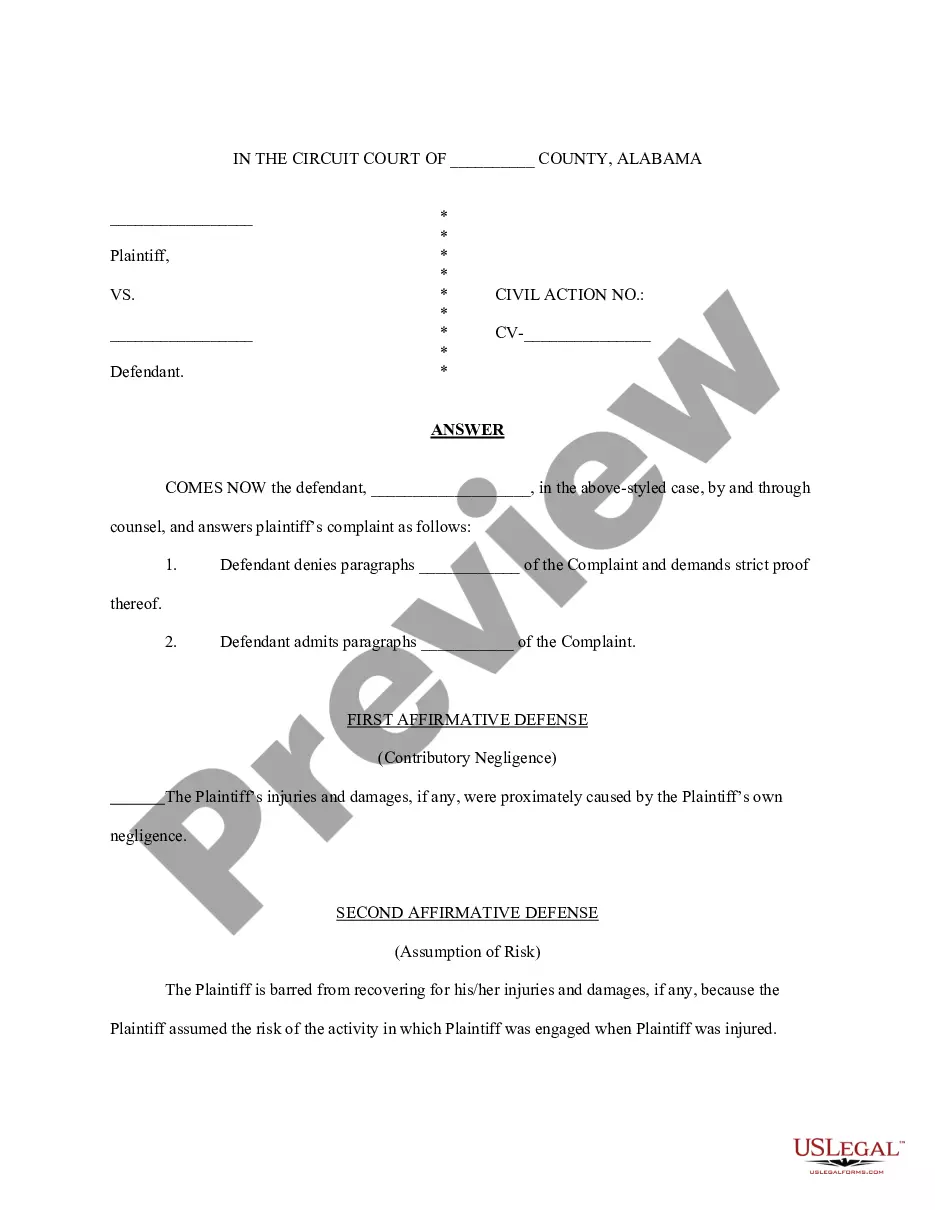
The General Answer to Tort Complaints is a legal document used in Alabama that allows a defendant to respond to allegations made in a tort complaint. This form outlines the defendant's admissions and denials of the claims and includes twenty-five affirmative defenses that the defendant may assert. It is essential for defendants to properly articulate their responses to avoid default judgments and to frame their defenses adequately in court.
Form components explained
- Identification of the parties involved in the case.
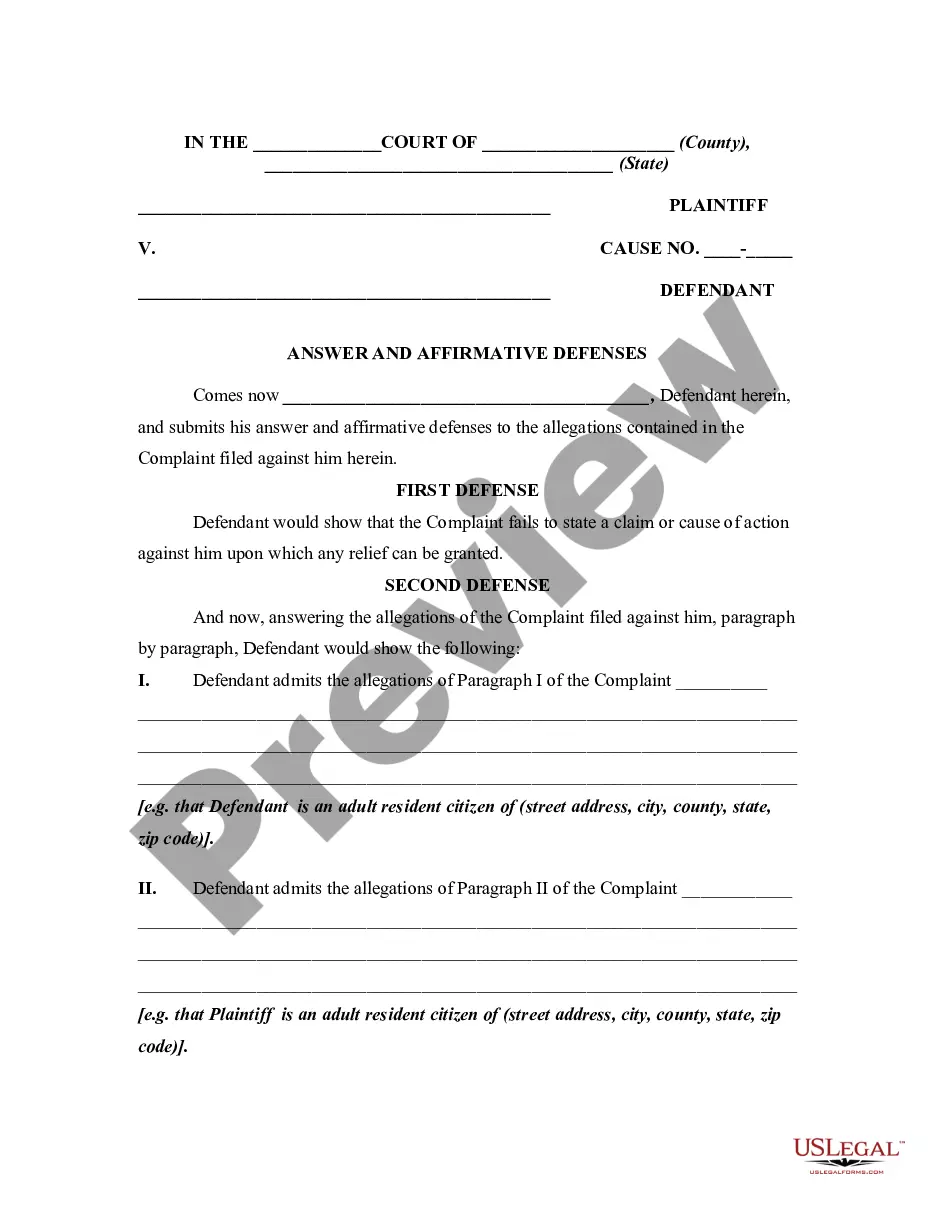
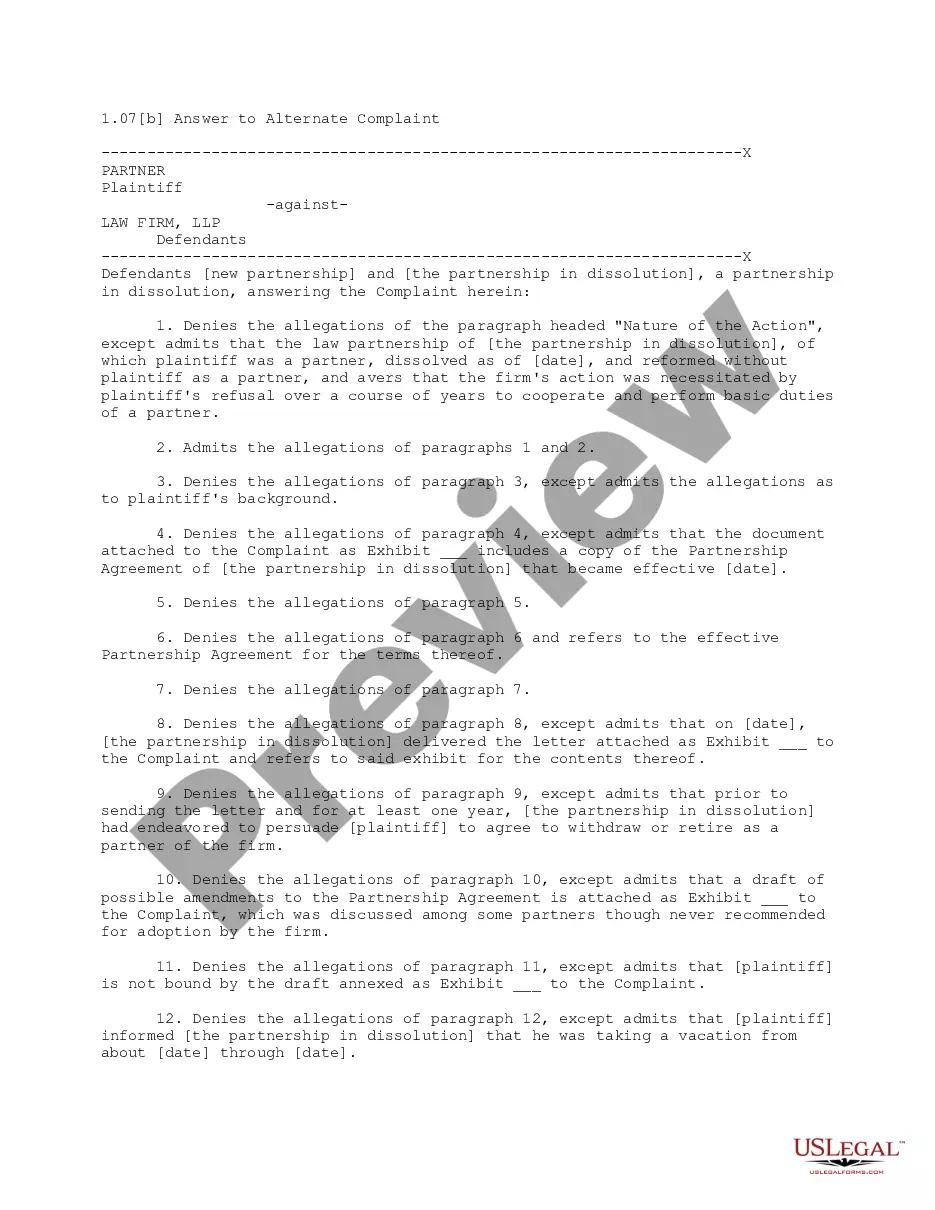
- Admissions and denials of the plaintiff's specific allegations.
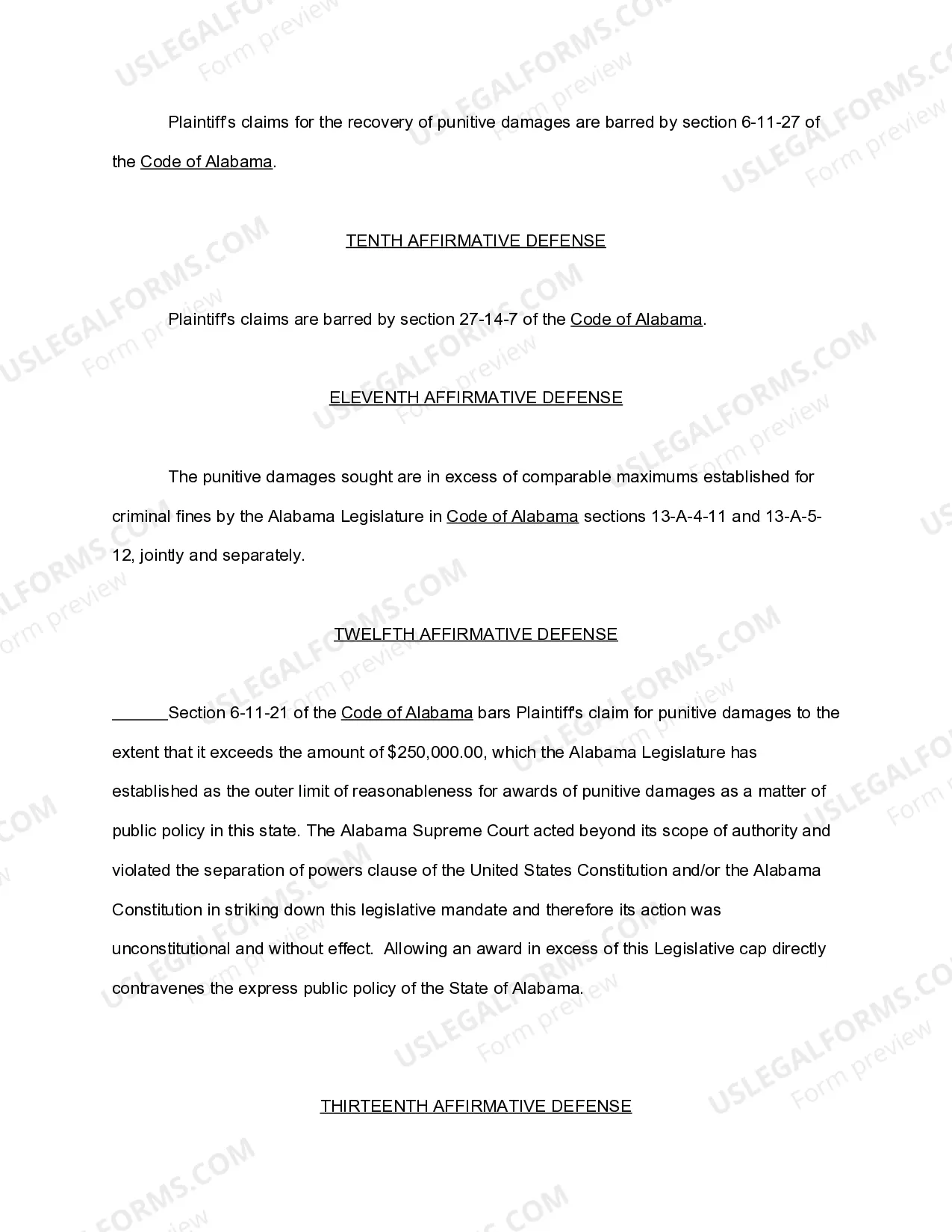
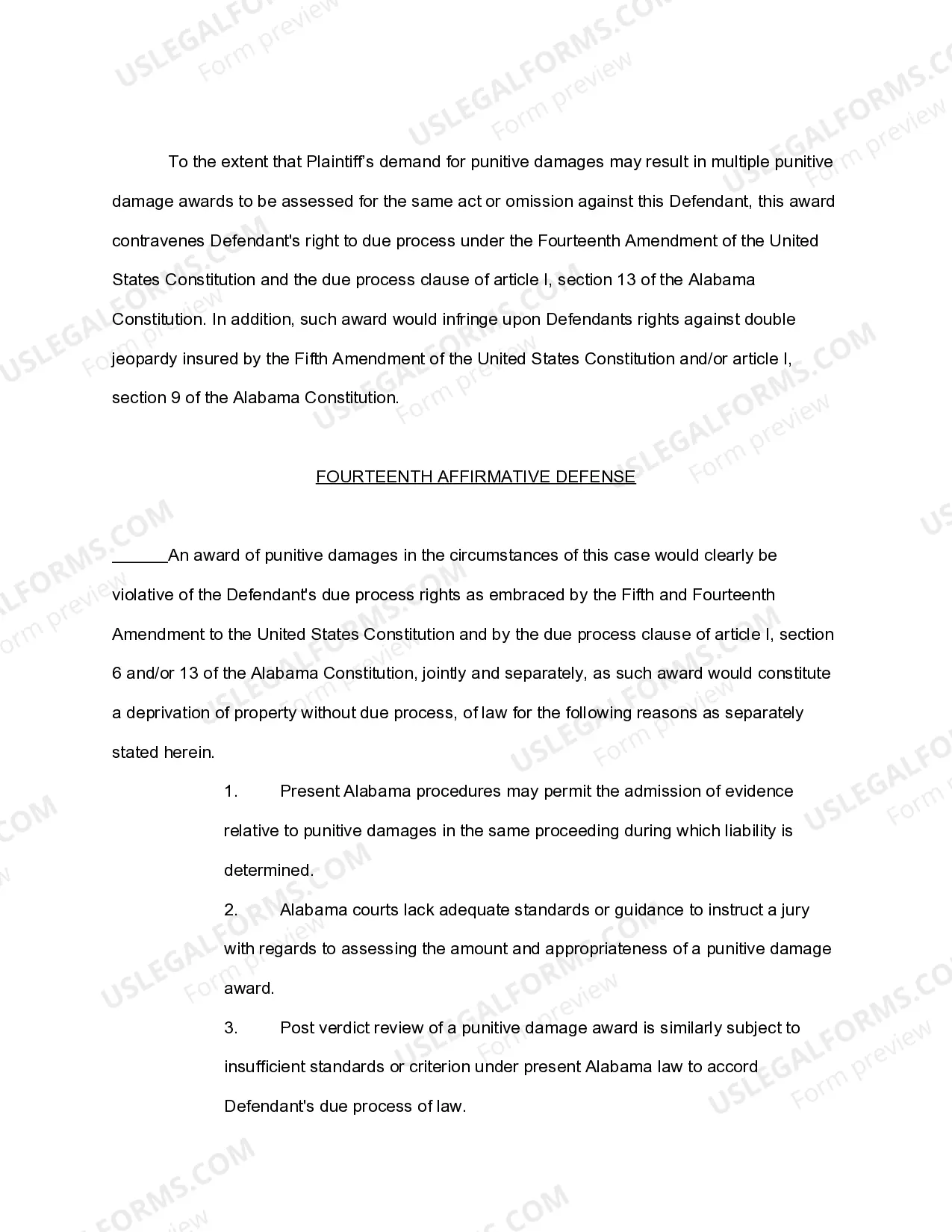
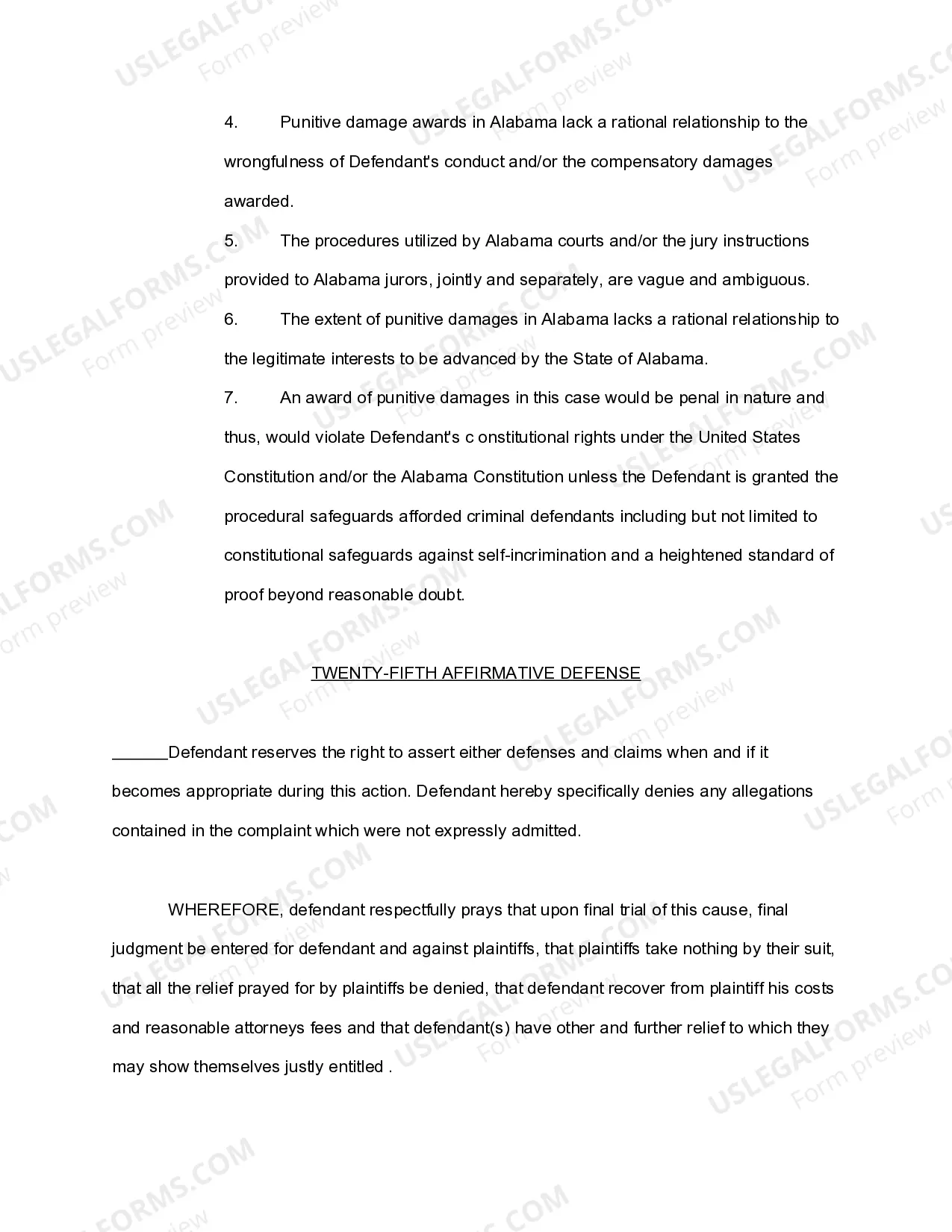
- A list of affirmative defenses that the defendant may raise.
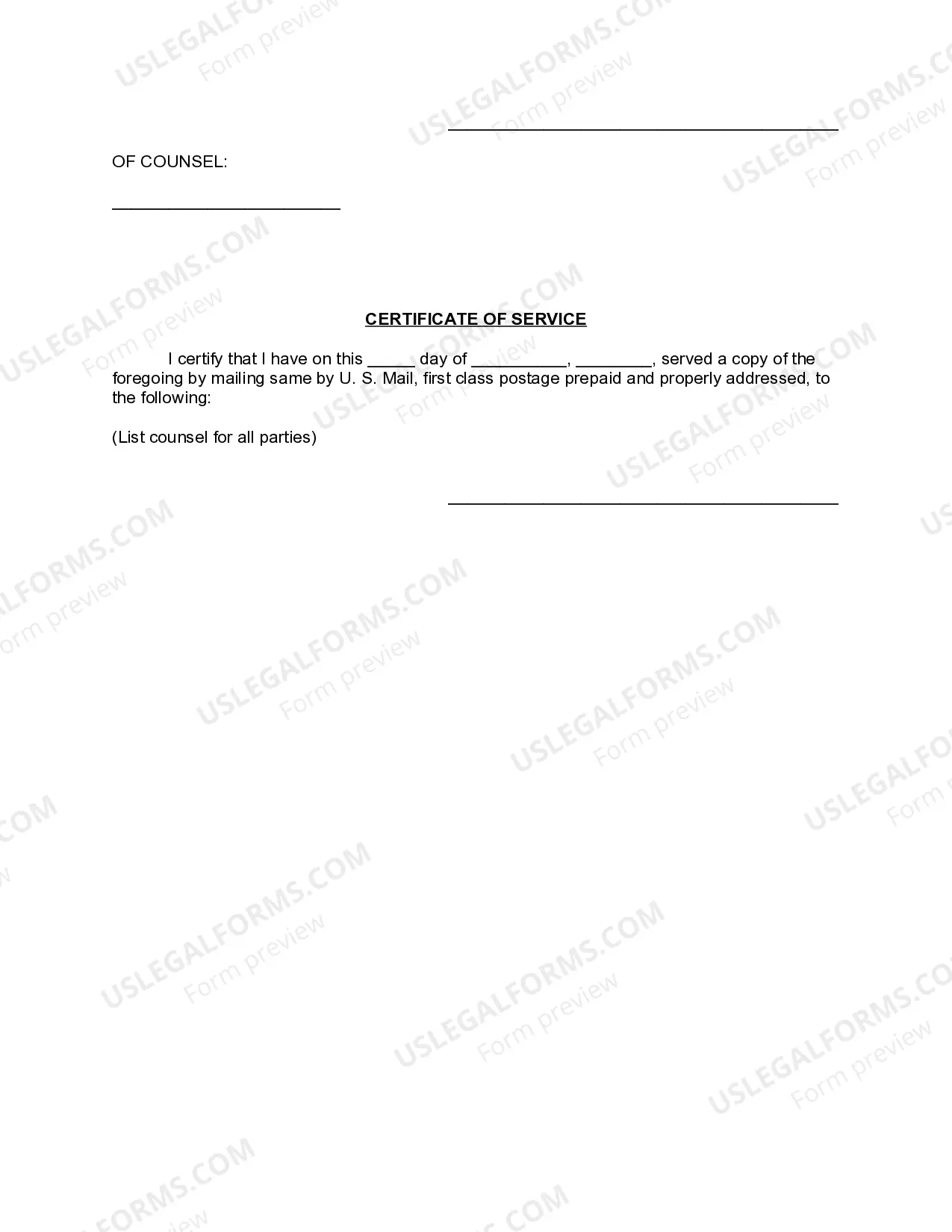
- Signature lines for the defendant and their counsel.
- A certificate of service to notify other parties of the filing.
Situations where this form applies
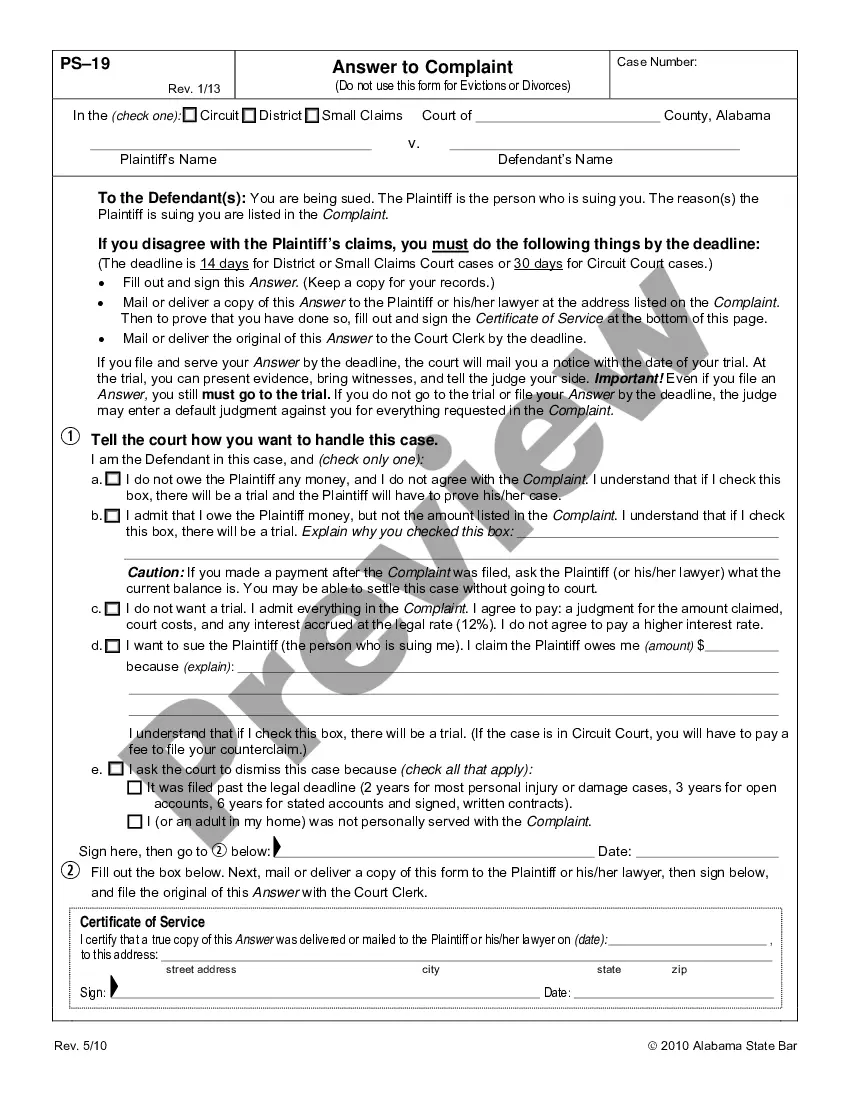
This form should be used when a defendant is responding to a tort complaint filed in Alabama. It is necessary in civil cases where the plaintiff is seeking relief for alleged wrongdoings. If a defendant does not file an answer, they risk having a default judgment entered against them, which can lead to a loss of the case.
Who needs this form
- Defendants in civil tort cases in Alabama.
- Individuals or businesses facing lawsuits for alleged tortious conduct.
- Legal representatives acting on behalf of a defendant.
Steps to complete this form
- Identify the parties by filling in the names of the plaintiff and the defendant, along with the court details.
- Clearly state whether you admit or deny each specific allegation made in the complaint.
- List any affirmative defenses you wish to assert, using the numbered format provided in the form.
- Sign the form and include the date along with the printed name of the defendant and the attorney, if applicable.
- Complete the certificate of service section to inform all parties involved about the filing.
Does this document require notarization?
In most cases, this form does not require notarization. However, some jurisdictions or signing circumstances might. US Legal Forms offers online notarization powered by Notarize, accessible 24/7 for a quick, remote process.
Get your form ready online
Our built-in tools help you complete, sign, share, and store your documents in one place.
Make edits, fill in missing information, and update formatting in US Legal Forms—just like you would in MS Word.
Download a copy, print it, send it by email, or mail it via USPS—whatever works best for your next step.
Sign and collect signatures with our SignNow integration. Send to multiple recipients, set reminders, and more. Go Premium to unlock E-Sign.
If this form requires notarization, complete it online through a secure video call—no need to meet a notary in person or wait for an appointment.
We protect your documents and personal data by following strict security and privacy standards.

Make edits, fill in missing information, and update formatting in US Legal Forms—just like you would in MS Word.

Download a copy, print it, send it by email, or mail it via USPS—whatever works best for your next step.

Sign and collect signatures with our SignNow integration. Send to multiple recipients, set reminders, and more. Go Premium to unlock E-Sign.

If this form requires notarization, complete it online through a secure video call—no need to meet a notary in person or wait for an appointment.

We protect your documents and personal data by following strict security and privacy standards.
Common mistakes
- Failing to respond within the required time frame after the complaint is served.
- Omitting to deny or admit specific allegations clearly.
- Neglecting to include all relevant affirmative defenses that may negate the plaintiff's claims.
- Not properly signing and dating the form before submitting it.
- Forgetting to serve a copy of the answer to all parties involved in the case.
Why use this form online
- Easy access to a legally compliant answer template drafted by licensed attorneys.
- Ability to download and customize the form to fit your specific case details.
- Time-saving process to prepare important legal documents from the convenience of your home.
- Instant availability of support and guidance through the document completion process.
Looking for another form?
Form popularity
FAQ
To write a summons response letter, begin by clearly stating that you are responding to the summons. Outline each point from the summons that you intend to address, and refer to the Alabama General Answer to Tort Complaints for proper format and content. It's vital to maintain a clear, calm, and professional tone throughout the letter, ensuring that all necessary information is provided to facilitate a suitable resolution.
Start your complaint letter answer by clearly identifying the complaint you are addressing. A strong opening statement acknowledges the receipt of the complaint and your intention to respond. Reference the Alabama General Answer to Tort Complaints to ensure you cover the necessary points on which you want to elaborate. This structured approach not only reflects professionalism but also shows respect for the complainant’s concerns.
A formal answer to a complaint is a written document where the defendant responds to the allegations made against them. It outlines your position on each claim and can include defenses or counterclaims. Using the Alabama General Answer to Tort Complaints ensures that your response meets legal standards and is presented correctly. Always double-check for completeness and accuracy before submission.
When drafting an answer, focus on clearly responding to each allegation within the complaint. Begin by restating the allegations and then provide your response, affirming, denying, or addressing each point. The Alabama General Answer to Tort Complaints can serve as a useful template, guiding you through the essential elements. Keep your language straightforward and direct to enhance clarity.
Drafting an answer to a complaint requires you to follow specific guidelines. Begin with an introduction that states your intention to respond and then organize your answers point by point. Utilizing the Alabama General Answer to Tort Complaints can streamline this process, ensuring you cover all necessary aspects. Be sure to clearly state your position and provide any supporting information.
To write a good response to a complaint, start by reviewing the complaint thoroughly. Acknowledge the issues the complainant raised and address them directly. In your response, refer to the Alabama General Answer to Tort Complaints for guidance on structure and content. Finally, ensure your response is clear, respectful, and written in a professional tone.
In Alabama, you generally have 30 days to file your answer after being served with a complaint. Adhering to this timeline is crucial to avoid default judgment against you. For a comprehensive understanding and tools to assist you in responding timely, consider the resources available on USLegalForms pertaining to Alabama General Answer to Tort Complaints.
In response to the plaintiff's reply, the defendant can file a rejoinder, which allows for additional comments on the points raised by the plaintiff. This legal document helps clarify positions and may affect the proceedings. Understanding this step is vital when navigating the intricacies of Alabama General Answer to Tort Complaints.
To sue a company in Alabama, start by gathering evidence to support your case. Next, file a complaint with the appropriate court, including essential information about your claim and the damages you're seeking. This process is crucial for formulating your Alabama General Answer to Tort Complaints, and you may find helpful templates and guidance on USLegalForms.
If you decide to answer a summons without an attorney in Alabama, first read the summons closely to understand the allegations. Prepare your written answer, addressing each point made in the complaint while stating your defenses clearly. For additional support, consider using resources available through USLegalForms, which can guide you through the Alabama General Answer to Tort Complaints process.