Alabama Letter from Landlord to Tenant as Notice to remove unauthorized pets from premises
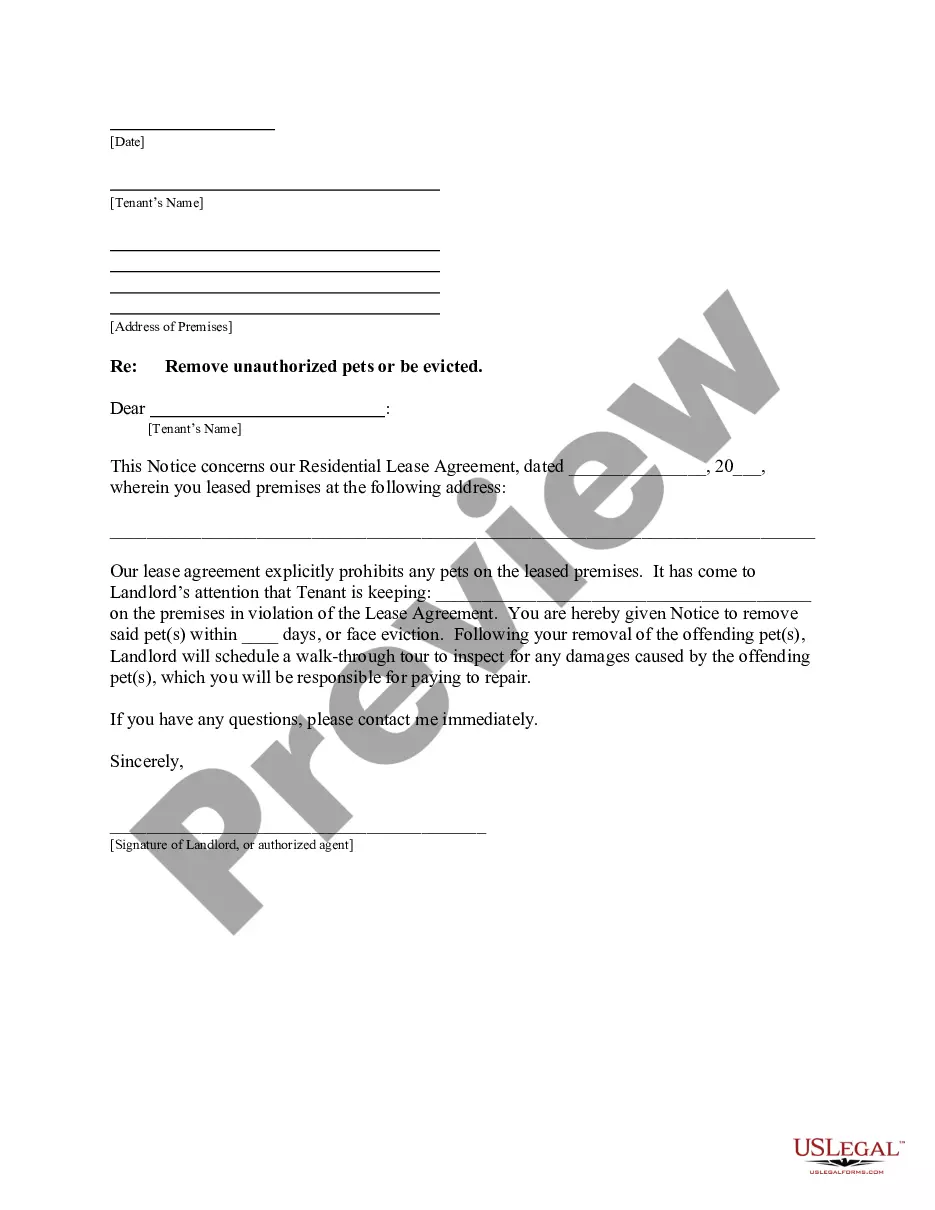
What is this form?
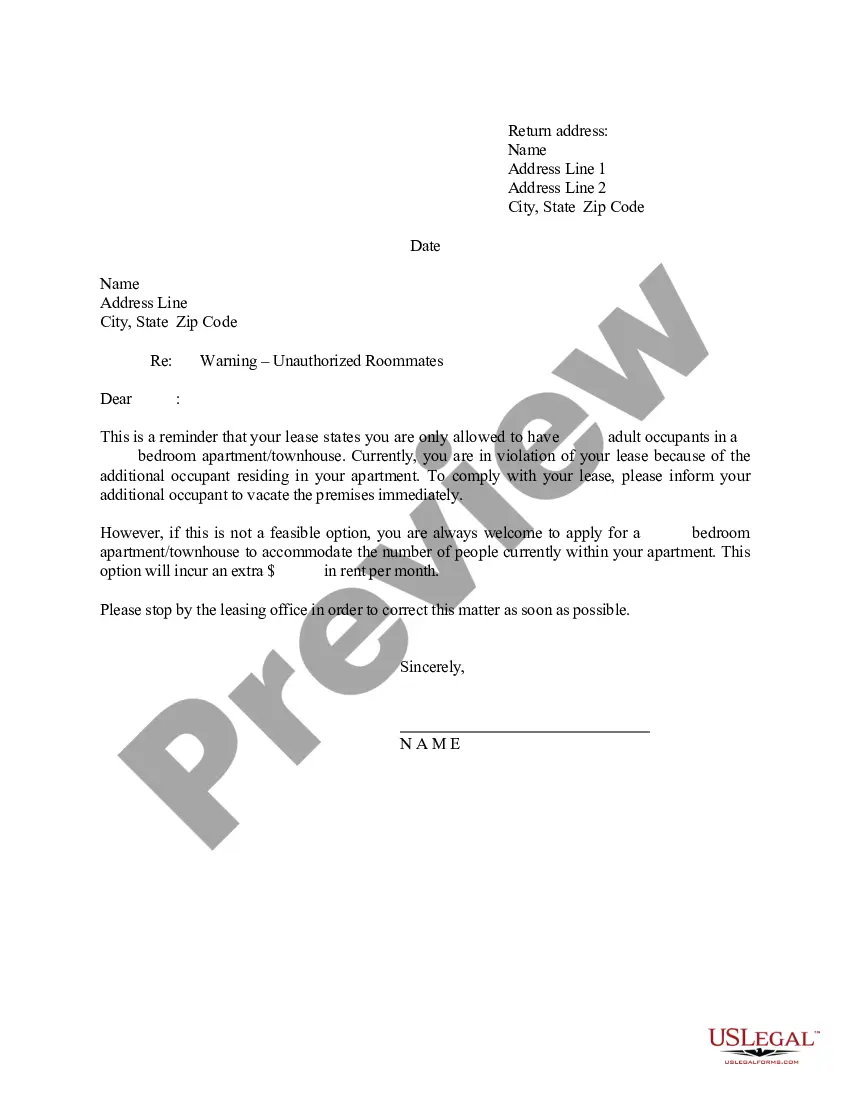
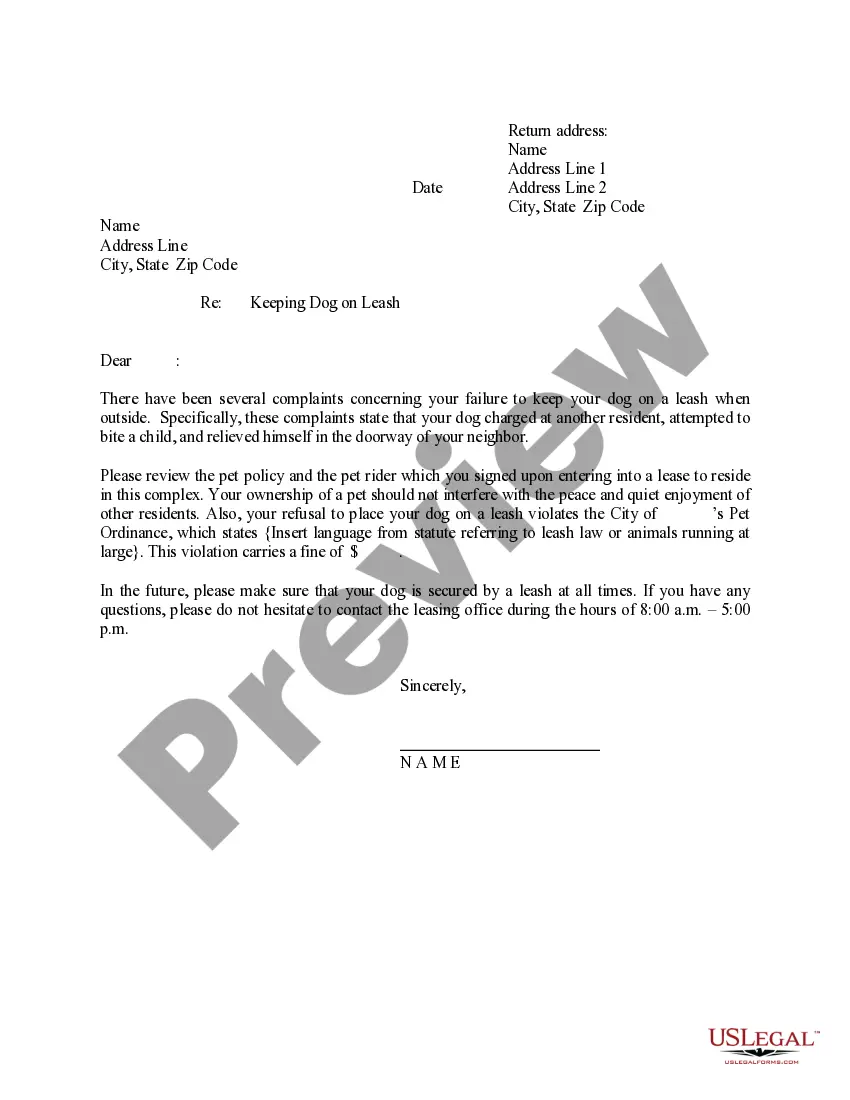
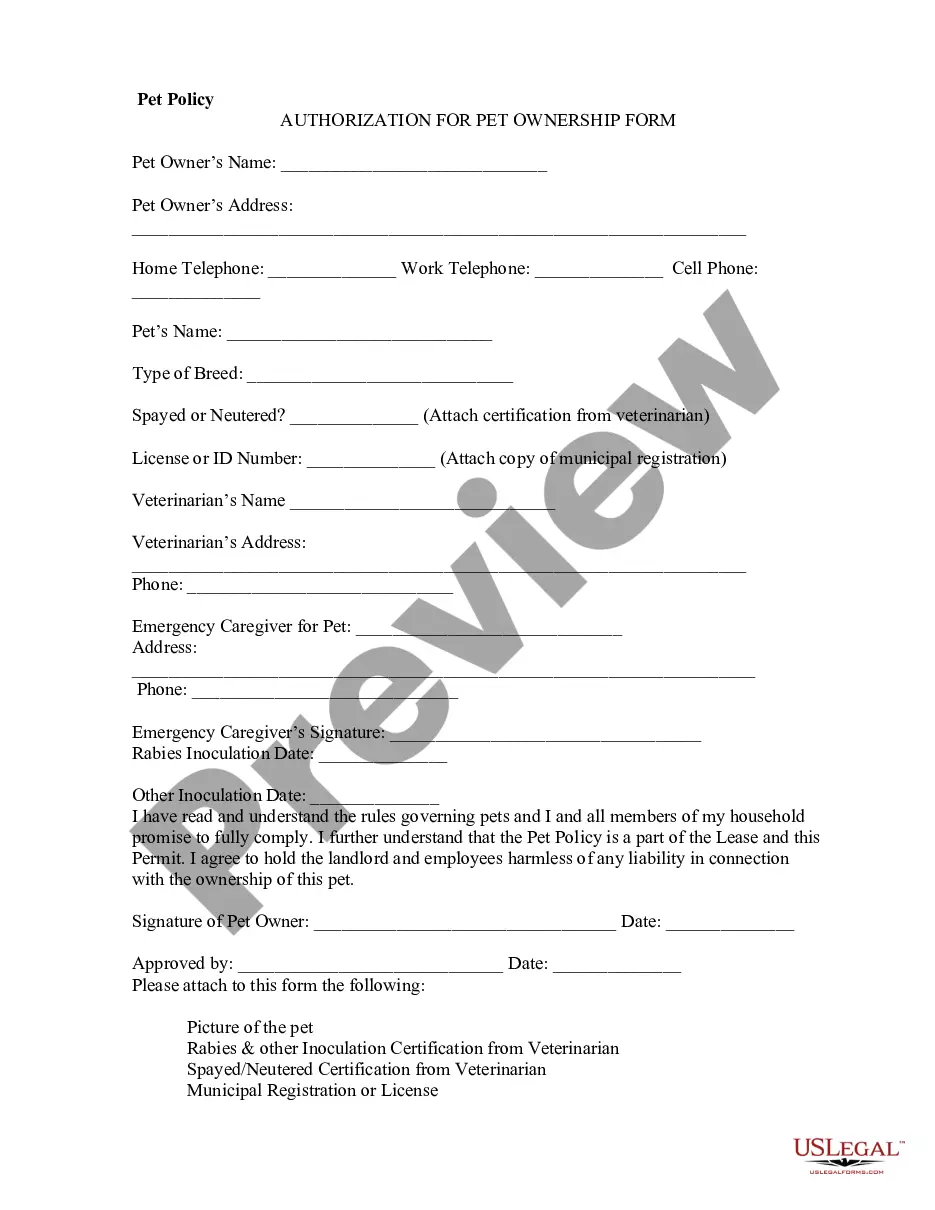
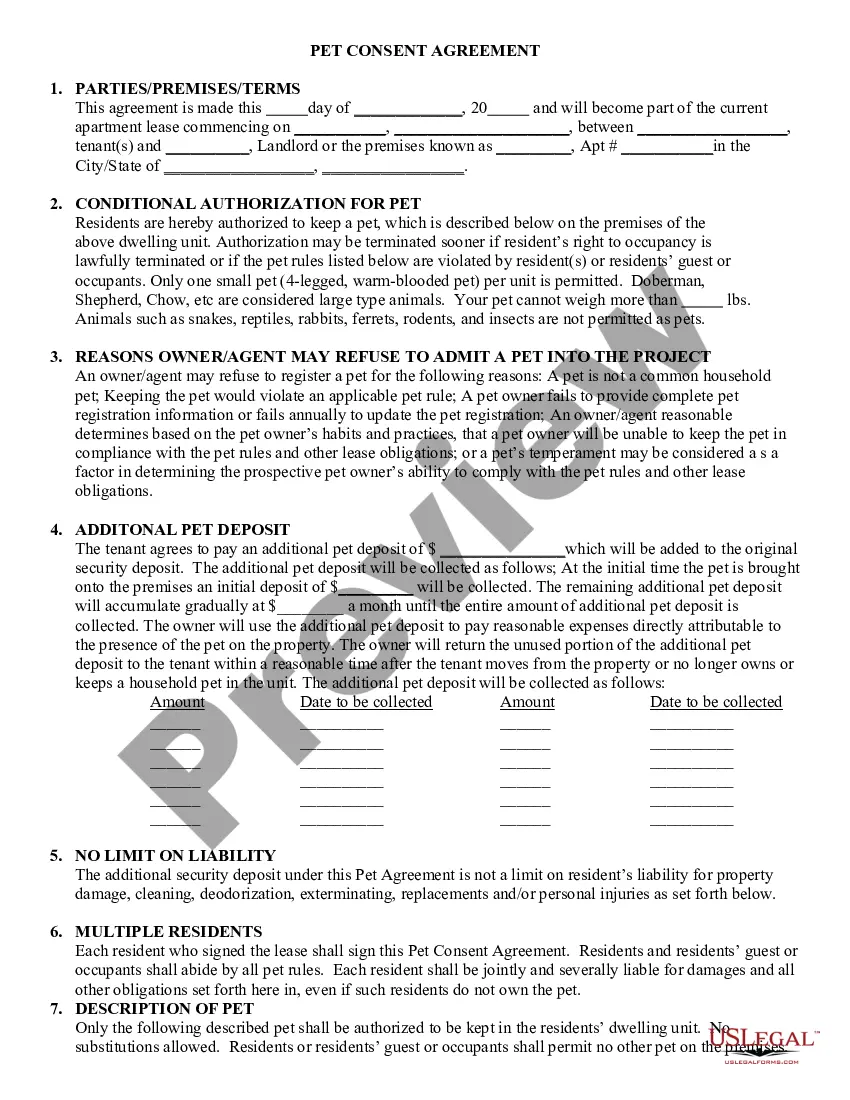
This form is a letter from a landlord to a tenant, notifying them to remove any unauthorized pets from the premises. It serves as an official warning, indicating that the tenant's housing of pets violates the lease agreement. This letter also informs the tenant of potential legal actions, including eviction, if they do not comply. Unlike a standard eviction notice, this form specifically addresses the issue of unauthorized pets, making it crucial for landlords in enforcing lease terms.
Main sections of this form
- Identification of the lease agreement and property address.
- Statement outlining the prohibition of pets in the lease.
- Description of the unauthorized pets being kept.
- Notice period for removing the pets.
- Consequences of non-compliance with the lease agreement.
- Contact information for the landlord or authorized agent.
When to use this document
This letter should be used when a landlord discovers that a tenant is keeping pets that are not permitted under the terms of their lease agreement. It is important to formally communicate this violation to the tenant, providing them with a clear timeline to rectify the situation. This form is particularly useful in preventing further legal issues down the line and ensuring compliance with lease terms.
Who should use this form
- Landlords who manage residential rental properties.
- Property managers acting on behalf of the landlord.
- Real estate professionals involved in leasing agreements.
- Landlords who want to take remedial action regarding unauthorized pets.
How to complete this form
- Identify the lease agreement date and property address.
- Specify the unauthorized pets being kept on the premises.
- Determine and enter the deadline for the tenant to remove the pets.
- Include any repairs the tenant will be responsible for due to pet damages.
- Sign and date the letter as the landlord or authorized agent.
Does this document require notarization?
Notarization is not commonly needed for this form. However, certain documents or local rules may make it necessary. Our notarization service, powered by Notarize, allows you to finalize it securely online anytime, day or night.
Get your form ready online
Our built-in tools help you complete, sign, share, and store your documents in one place.
Make edits, fill in missing information, and update formatting in US Legal Forms—just like you would in MS Word.
Download a copy, print it, send it by email, or mail it via USPS—whatever works best for your next step.
Sign and collect signatures with our SignNow integration. Send to multiple recipients, set reminders, and more. Go Premium to unlock E-Sign.
If this form requires notarization, complete it online through a secure video call—no need to meet a notary in person or wait for an appointment.
We protect your documents and personal data by following strict security and privacy standards.

Make edits, fill in missing information, and update formatting in US Legal Forms—just like you would in MS Word.

Download a copy, print it, send it by email, or mail it via USPS—whatever works best for your next step.

Sign and collect signatures with our SignNow integration. Send to multiple recipients, set reminders, and more. Go Premium to unlock E-Sign.

If this form requires notarization, complete it online through a secure video call—no need to meet a notary in person or wait for an appointment.

We protect your documents and personal data by following strict security and privacy standards.
Mistakes to watch out for
- Failing to specify the exact lease agreement referenced.
- Not providing a clear timeline for pet removal.
- Neglecting to include contact information for follow-up questions.
- Forgetting to sign the letter, which can invalidate the notice.
Advantages of online completion
- Convenience of instant downloads and edits to customize for the specific situation.
- Access to professionally drafted templates ensuring legal accuracy.
- Easy storage and retrieval for future reference.
Legal use & context
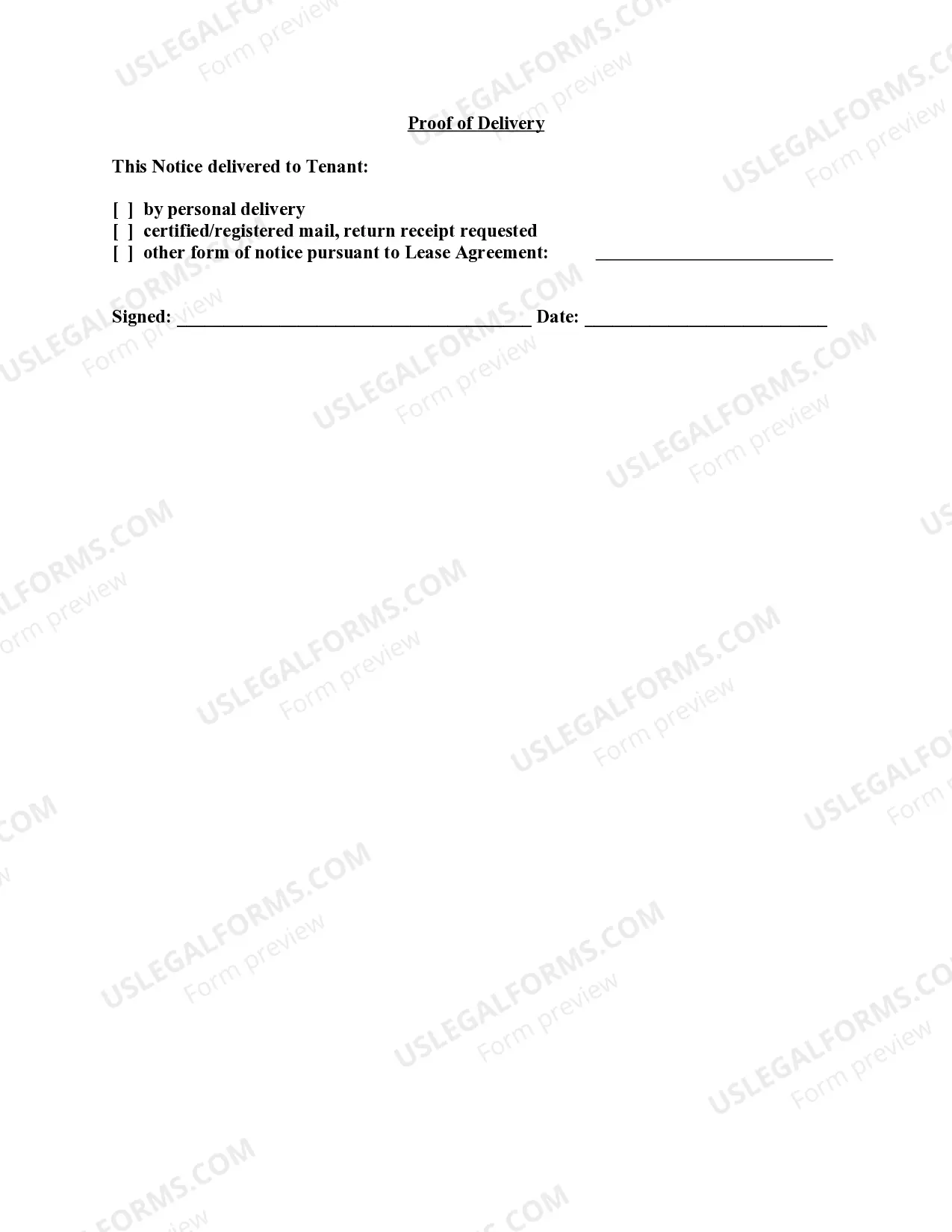
- This notice serves as an official record of the breach and any subsequent actions taken.
- Preparedness for potential eviction proceedings if the tenant does not comply.
- Maintains proper documentation required for any future legal measures.
Quick recap
- The letter formally notifies tenants of unauthorized pets on the property.
- It provides a clear timeframe for compliance to avoid eviction.
- Using this form helps ensure landlords follow legal protocols.
Looking for another form?
Form popularity
FAQ
Be calm, objective, and rational. Keep written records of everything. Teach tenants how they should treat you. Try to get your tenants on your side. Ask the terrible tenants to leave. Begin the eviction process.
There is no written agreement When your roommate has month-to-month tenancy, California state law says that you can evict them by serving 30 or 60 days' notice without any reasoning.
The terms, tenant and, occupant aren't interchangeable when leasing property, as each has a different standing in a rental transaction.The lease agreement is between the landlord and tenant only. Occupants are authorized to reside in the property with the landlord's permission.
Addresses. Date. Tenant names. Status and date of the lease. Why the eviction notice is served (clear and concise explanation) Date tenant must vacate the property. Proof of service or delivery of notice.
If the tenant refuses, you are permitted to send them a notice to agree or quit the property. The tenant refusing you access constitutes a breach in the lease agreement, so they could be evicted if they continue to deny access.
A guest who won't leave is technically a trespasser -- unless, that is, the police think he's a tenant. This situation can quickly become complicated. Houseguests who have overstayed their welcomes are technically trespassing, which is a crime.
Send a 3-day notice to fix or quit. If the tenant doesn't follow through with a fix, visit your local courthouse and begin a filing for eviction. In some states, you can file to only evict the unauthorized tenant. In others, you'll have the option to evict your tenant as well as the unauthorized occupant.
The date that the tenant warning letter was written. The name and the basic personal information of the tenant. The name of the landlord or the owner of the property. The reason why a tenant warning letter has been written.
Yes, your tenant is within their rights to refuse you access to the property. In a lot of cases, tenants will refuse because the date and time isn't convenient for them and will suggest an alternative date or ask you to rearrange. However, some tenants will persistently try to obstruct you from entering the property.
If a lodger in California refuses to leave after 30 days, they can be kicked out without going through a court-ordered eviction process, because after the 30-day mark, they are officially trespassing. At this point, you could call the police.