Alabama Quitclaim Deed from Corporation to Individual
Understanding this form
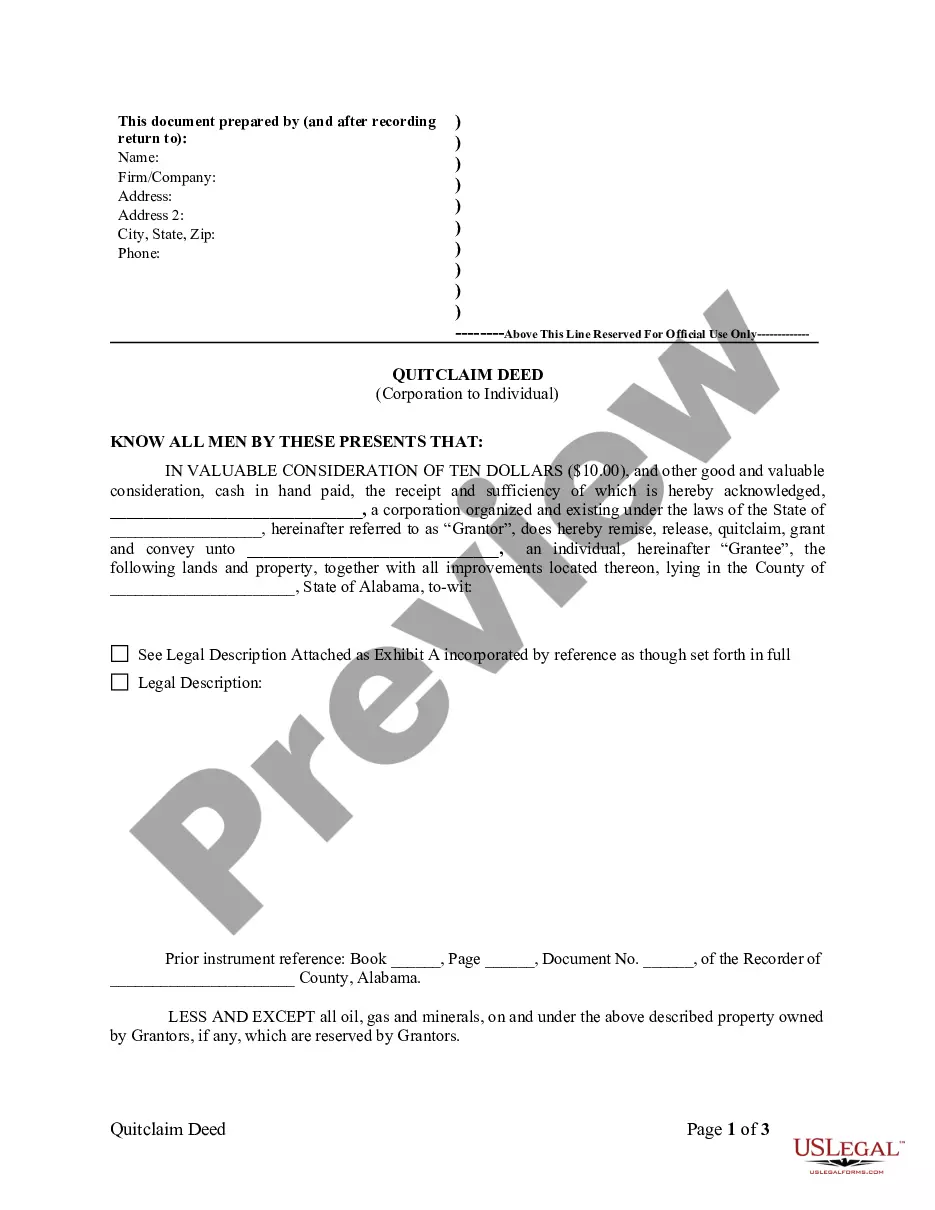
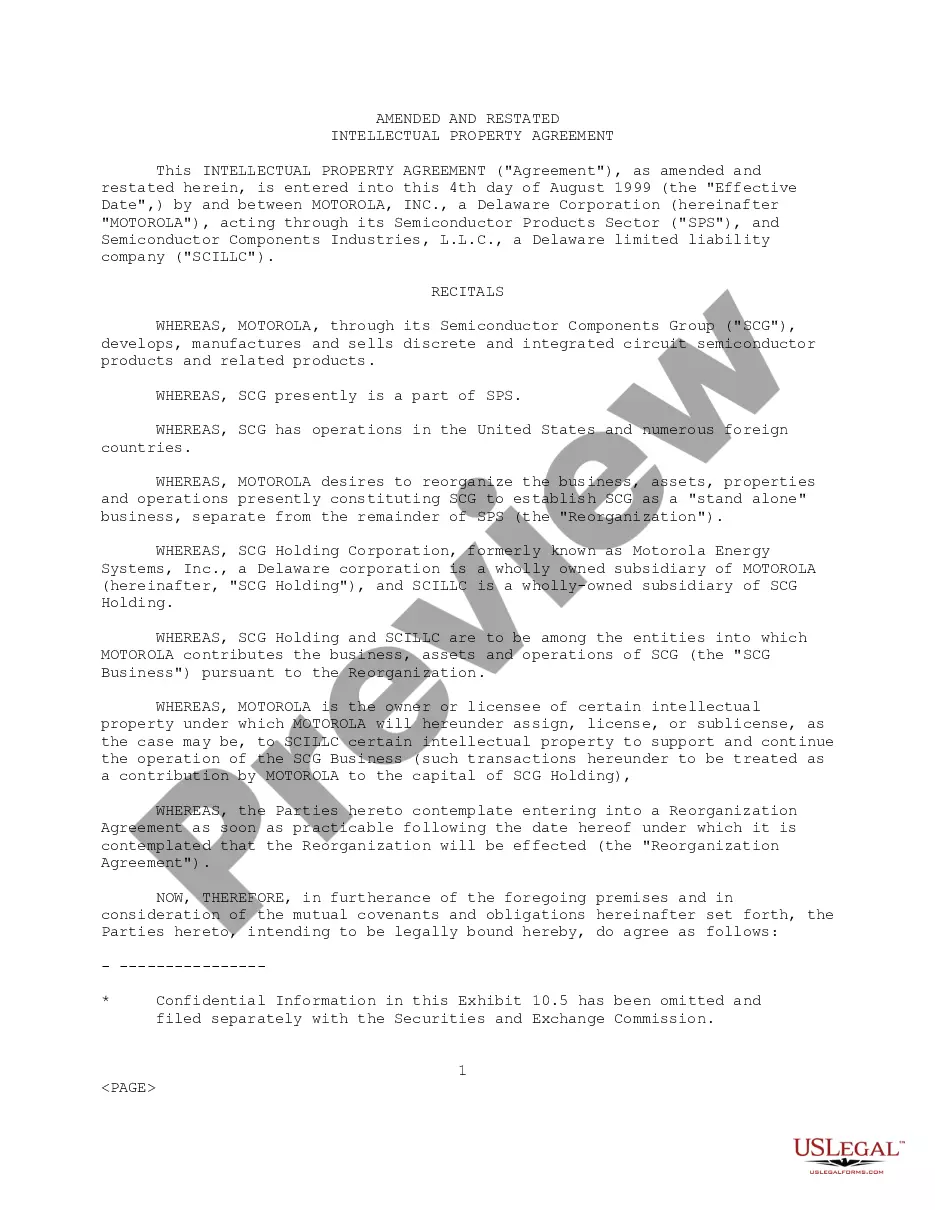
The Quitclaim Deed from Corporation to Individual is a legal document used to transfer property ownership from a corporation (the Grantor) to an individual (the Grantee). Unlike other types of deeds, a quitclaim deed does not guarantee that the Grantor holds clear title to the property; rather, it simply conveys whatever interest the Grantor may have. This makes it particularly useful in situations where the exact ownership status is not clearly established. It is important to note that this deed does not include rights to any oil, gas, or minerals on the property.
Key parts of this document
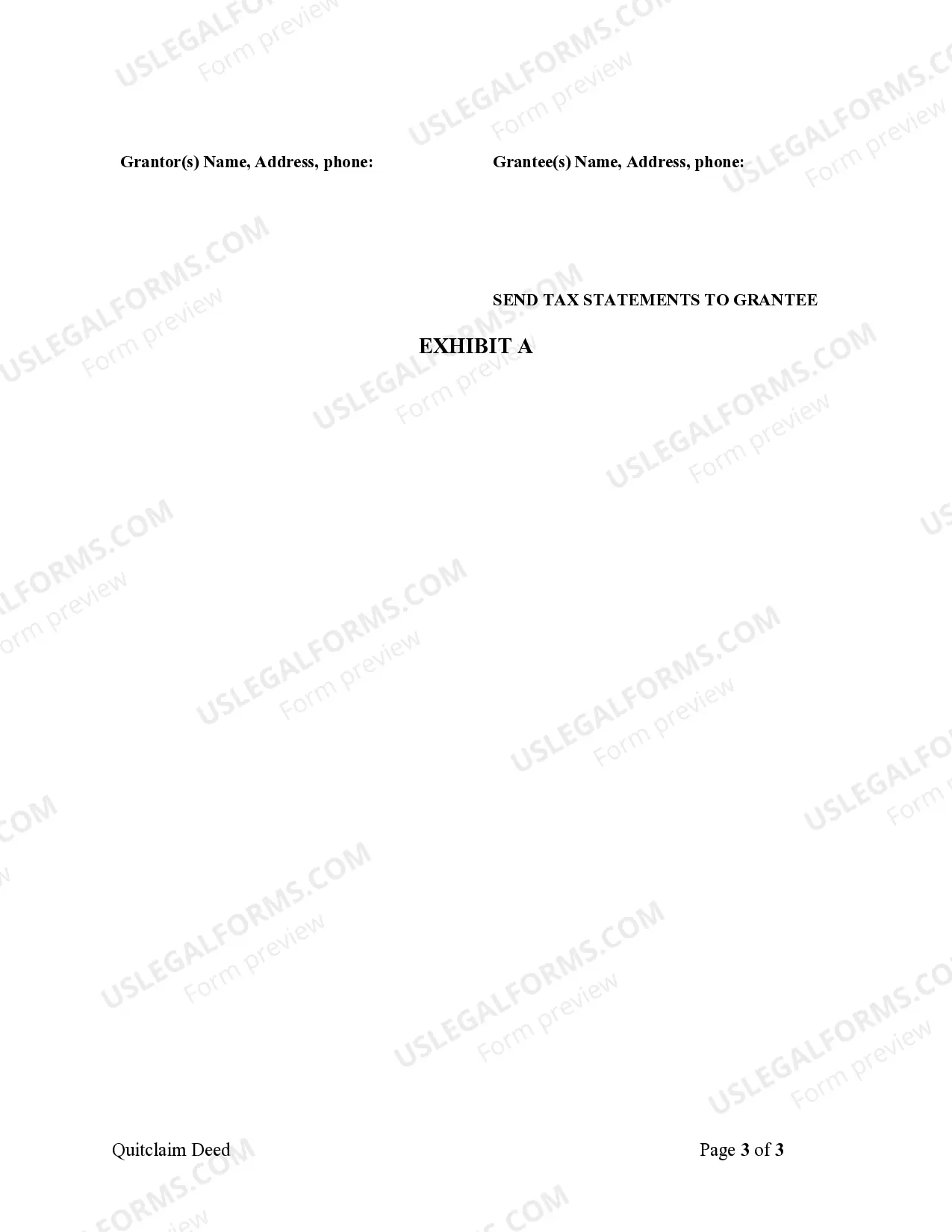
- Identification of the Grantor (corporation) and Grantee (individual).
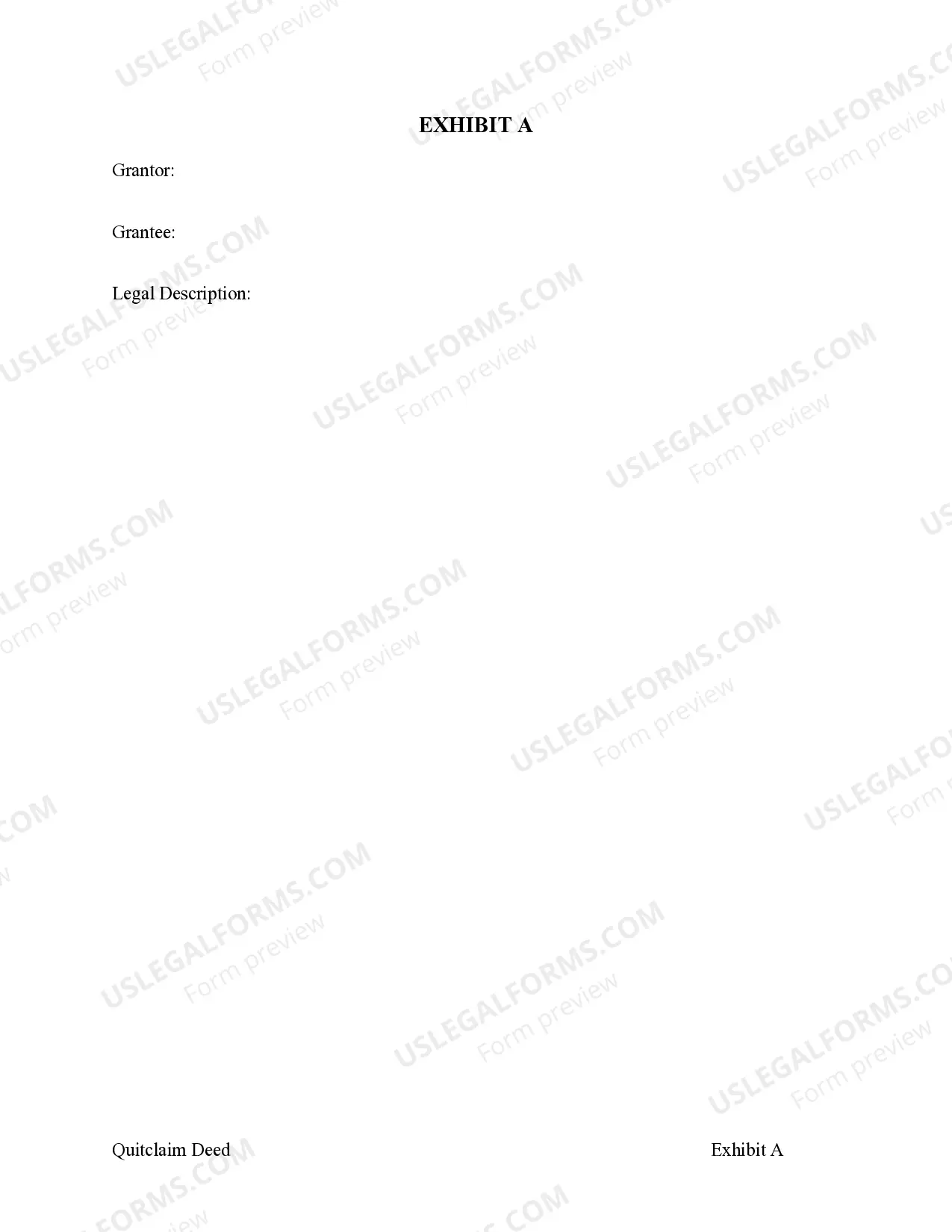
- Legal description of the property being transferred.
- Statement of the interest being conveyed, which is a quitclaim of all rights, except for reserved minerals.
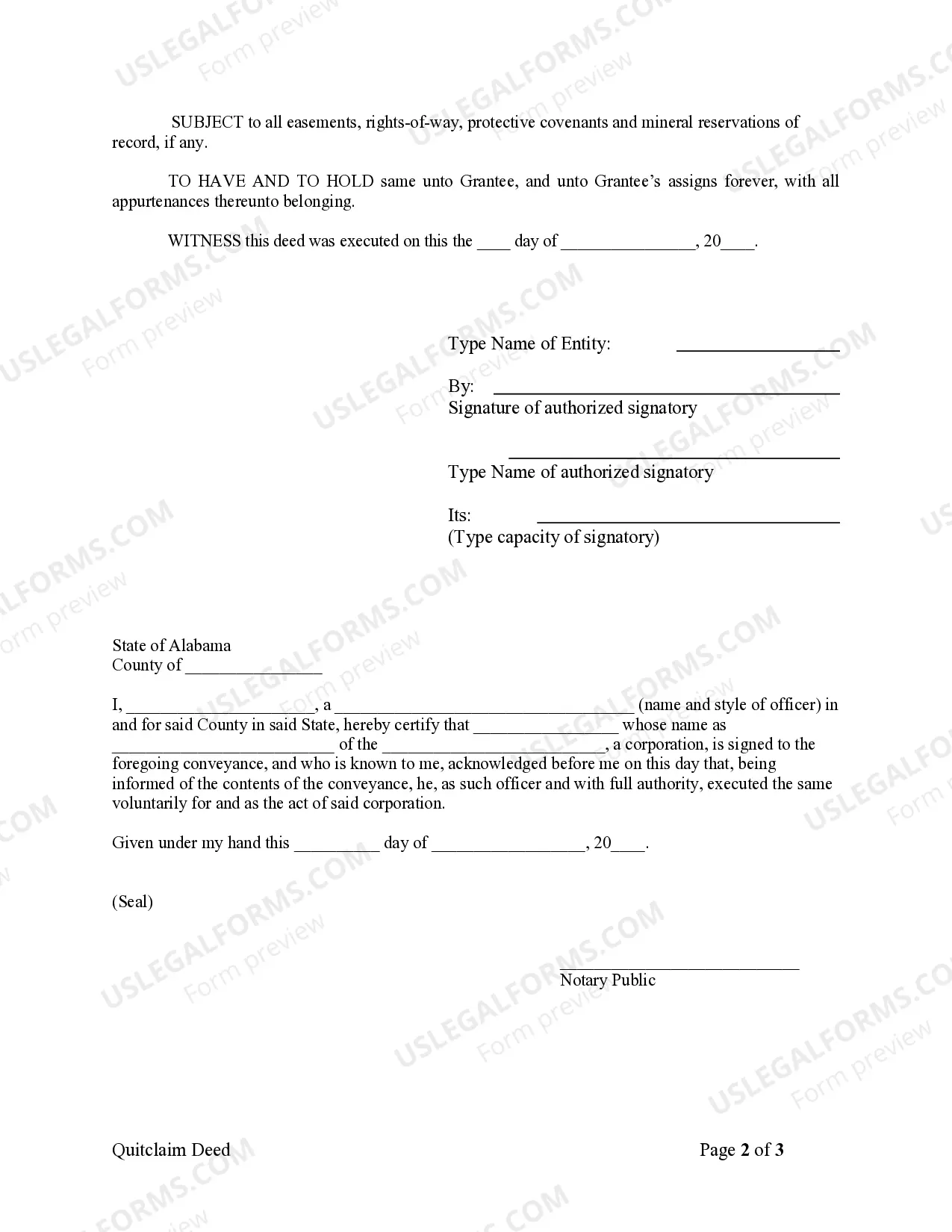
- Signatures of authorized representatives and the Grantee.
- Date of execution of the deed.


When to use this document
This quitclaim deed is typically used when a corporation wishes to transfer property to an individual without a warranty of the title. It may be appropriate in scenarios such as transferring property as part of a corporate dissolution, transferring property among family members, or completing a simple property transfer where both parties trust each other to execute the agreement responsibly.
Who needs this form
- Corporations looking to transfer property to individual owners.
- Individuals receiving property from a corporation.
- Anyone involved in the transfer of property where the corporation is the Grantor.
How to prepare this document
- Identify the parties involved: Enter the full names of the corporation (Grantor) and the individual (Grantee).
- Specify the property: Include the complete legal description of the property being transferred, as detailed in Exhibit A.
- Review mineral reservations: Confirm the reservation of any rights to oil, gas, or minerals, if applicable.
- Provide signatures: Ensure that authorized representatives of the corporation sign the deed along with the Grantee.
- Enter the date: Fill in the date when the deed is executed.
Is notarization required?
This form does not typically require notarization unless specified by local law. However, it is important to check local guidelines, as some jurisdictions may have specific requirements for property transfers.
Get your form ready online
Our built-in tools help you complete, sign, share, and store your documents in one place.
Make edits, fill in missing information, and update formatting in US Legal Forms—just like you would in MS Word.
Download a copy, print it, send it by email, or mail it via USPS—whatever works best for your next step.
Sign and collect signatures with our SignNow integration. Send to multiple recipients, set reminders, and more. Go Premium to unlock E-Sign.
If this form requires notarization, complete it online through a secure video call—no need to meet a notary in person or wait for an appointment.
We protect your documents and personal data by following strict security and privacy standards.

Make edits, fill in missing information, and update formatting in US Legal Forms—just like you would in MS Word.

Download a copy, print it, send it by email, or mail it via USPS—whatever works best for your next step.

Sign and collect signatures with our SignNow integration. Send to multiple recipients, set reminders, and more. Go Premium to unlock E-Sign.

If this form requires notarization, complete it online through a secure video call—no need to meet a notary in person or wait for an appointment.

We protect your documents and personal data by following strict security and privacy standards.
Common mistakes to avoid
- Failing to provide an accurate legal description of the property.
- Not including all required signatures from the corporation's representatives.
- Overlooking the reservation of mineral rights, which can lead to disputes later.
- Neglecting to execute the deed on the correct date.
Why complete this form online
- Convenient access to downloadable legal forms at any time.
- Edit and customize the form to fit specific needs or circumstances.
- Reliable, attorney-drafted templates ensure compliance with legal standards.
- Streamlined process for preparing legal documents without the need for in-person consultations.
Legal use & context
- Quitclaim deeds provide a way to transfer property without warranties of title.
- They are often used among family members or in transactions that require quick transfers.
- Understanding the limitations of a quitclaim deed is crucial for all parties involved.
Looking for another form?




Form popularity
FAQ
It is a real estate transfer document used to move property ownership from a corporation (the Grantor) to an individual (the Grantee). Unlike a warranty deed, it does not guarantee clear title; it conveys whatever interest the corporation holds. The deed also excludes mineral rights, and its key parts include the grantor and grantee IDs, the legal description, the quitclaim language, signatures, and the execution date.
Common quit claim deed mistakes include failing to clearly identify the Grantor (the corporation) and the Grantee (the individual), omitting the property's legal description, or misdescribing the interest being conveyed as a quitclaim of all rights. Other mistakes include missing or improperly executed signatures by authorized representatives and the Grantee, or omitting the execution date.
The form describes the essential elements but does not specify notarization. For Alabama, recording offices may require proper execution with signatures and an acknowledgment or notarization. Always verify with the local county recorder or clerk for exact requirements before filing.
The form is designed to transfer property from a corporation to an individual and requires identification of the parties, a legal description, and execution by authorized representatives and the Grantee, with a date. It does not provide step-by-step filing instructions. Check with the local county recorder or clerk for Alabama filing procedures.
A quitclaim deed conveys only the interest the Grantor has and includes no title warranties. If the corporation has no interest to convey, or if the document lacks required elements—identification of the grantor and grantee, a legal description, the quitclaim language, signatures, or a date—the transfer may be ineffective.
This form is distinct because the Grantor is a corporation and the Grantee is an individual, transferring the corporation's interest rather than private property between individuals. It still conveys only the corporation's interest and excludes minerals, and it requires signatures from authorized corporate representatives and the Grantee, along with a date.