Alabama Final Notice of Forfeiture and Request to Vacate Property under Contract for Deed
Overview of this form
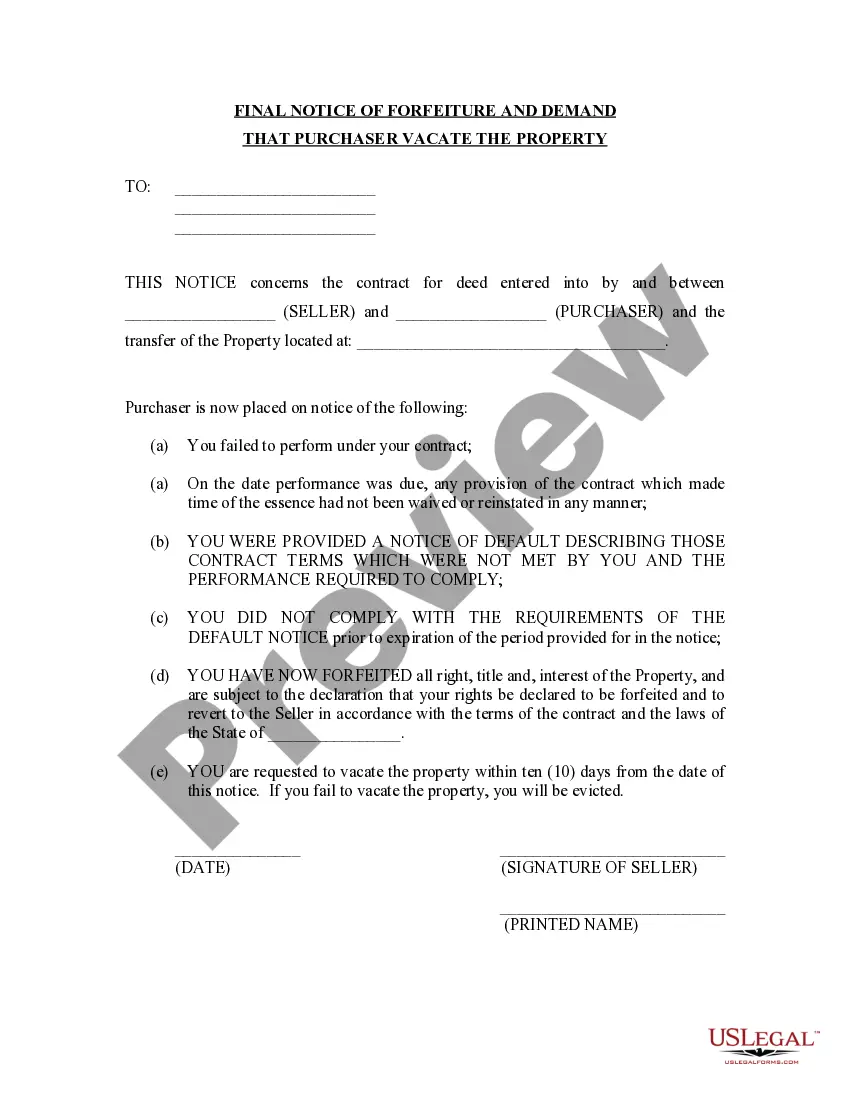
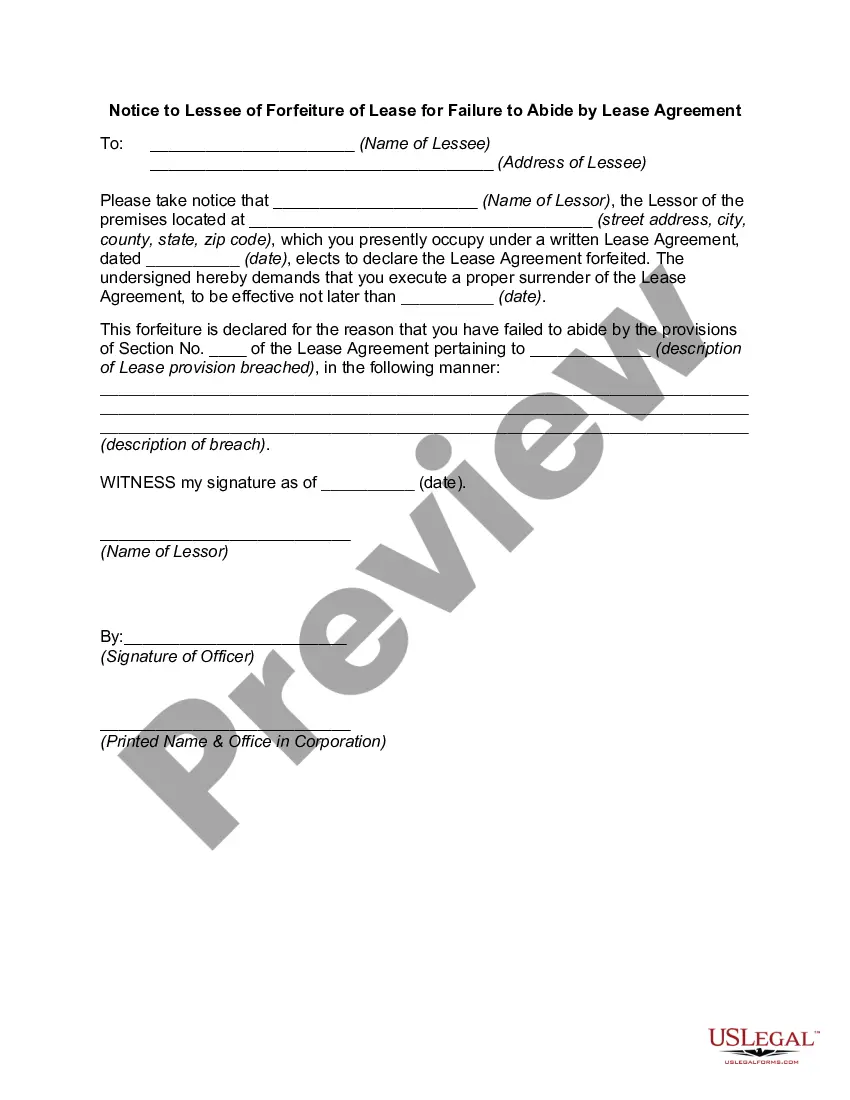
The Final Notice of Forfeiture and Request to Vacate Property under Contract for Deed is a formal document that notifies the purchaser that the seller has chosen to terminate the contract for deed due to the buyer's failure to remedy previous defaults. This form serves as a final reminder before legal action may be pursued to vacate the property, making it critical for both the seller and buyer to understand its implications and the ensuing responsibilities.
What’s included in this form
- Notification of contract cancellation: Confirms the seller's decision to terminate the agreement.
- Reference to prior notices: Indicates previous default notices that may have been issued.
- Demand to vacate: Requires the buyer to leave the property to avoid legal action.
- Forfeiture details: Highlights that all payments made by the purchaser are forfeited.
When to use this document
This form should be used after the seller has sent prior notices of default to the purchaser regarding failures to meet contractual obligations. It is suitable in situations where the time frame to cure the default has lapsed, and legal action is imminent. When the seller wishes to formally notify the buyer of the need to vacate the property, this form becomes essential.
Who should use this form
- Sellers who have entered into a contract for deed and are canceling that contract due to buyer non-compliance.
- Buyers who have received prior notices and need clarity on their rights and obligations.
- Real estate attorneys representing either party in the transaction.
How to complete this form
- Identify the parties: Clearly state the name of the seller and purchaser involved in the contract.
- Reference the contract: Include details of the contract for deed that is being canceled.
- Document the defaults: List the breaches of the contract that led to this notice being issued.
- Specify deadlines: Indicate any important dates, including the deadline for vacating the property.
- Sign and date: Ensure that the seller signs and dates the notice to validate it.
Is notarization required?
To make this form legally binding, it must be notarized. Our online notarization service, powered by Notarize, lets you verify and sign documents remotely through an encrypted video session.
Get your form ready online
Our built-in tools help you complete, sign, share, and store your documents in one place.
Make edits, fill in missing information, and update formatting in US Legal Forms—just like you would in MS Word.
Download a copy, print it, send it by email, or mail it via USPS—whatever works best for your next step.
Sign and collect signatures with our SignNow integration. Send to multiple recipients, set reminders, and more. Go Premium to unlock E-Sign.
If this form requires notarization, complete it online through a secure video call—no need to meet a notary in person or wait for an appointment.
We protect your documents and personal data by following strict security and privacy standards.

Make edits, fill in missing information, and update formatting in US Legal Forms—just like you would in MS Word.

Download a copy, print it, send it by email, or mail it via USPS—whatever works best for your next step.

Sign and collect signatures with our SignNow integration. Send to multiple recipients, set reminders, and more. Go Premium to unlock E-Sign.

If this form requires notarization, complete it online through a secure video call—no need to meet a notary in person or wait for an appointment.

We protect your documents and personal data by following strict security and privacy standards.
Typical mistakes to avoid
- Failing to reference prior default notices, leading to potential legal challenges.
- Omitting important details about the contract and prior communications.
- Not providing a clear deadline for the buyer to vacate the property.
Advantages of online completion
- Convenience: Download and complete the form from anywhere at any time.
- Editability: Fill in specific details tailored to your situation quickly.
- Reliability: Access professionally drafted forms created by licensed attorneys.
Legal use & context
- This notice is legally binding and serves as a precursor to possible eviction proceedings.
- Users must ensure that they have legally fulfilled all notification requirements prior to issuing this form.
- Failure to comply with state-specific rules regarding notice delivery and content could impact enforceability.
What to keep in mind
- The Final Notice of Forfeiture serves as a last warning to buyers before legal action.
- Proper completion and delivery of this form are critical to avoid legal complications.
- It is essential to understand state-specific requirements for compliance.
Looking for another form?



Form popularity
FAQ
It is a formal Alabama document used when a seller terminates a contract for deed after the buyer’s defaults, serving as a final notice before possible legal action. The form notifies the purchaser, references prior default notices, demands that the buyer vacate, and states that all payments made are forfeited, establishing the termination and eviction pathway.
This form specifies that all payments made by the purchaser are forfeited. In addition, it confirms contract cancellation and a demand to vacate. The forfeiture clause means previously made funds are not returned, and the contract is terminated, with the buyer expected to vacate to avoid further legal action.
This notice requires the buyer to vacate the property to avoid legal action. It also confirms the contract is terminated and that any payments already made may be forfeited. Buyers should seek immediate legal counsel to understand rights and options, including potential remedies or responses to the notice.
This form references prior default notices to show escalation from earlier noncompliance to a final cancellation. The reference helps document the seller's progression toward contract termination, reinforces the demand to vacate, and clarifies that the current notice follows earlier notices that may have prompted cure attempts.
Sellers who canceled a contract for deed due to buyer non-compliance, buyers who have received prior notices and seek clarity on their rights, and real estate attorneys representing either party may use this form. It provides explicit steps: cancellation, vacate demand, and forfeiture of payments.
This document is a final notice of forfeiture that terminates the contract and demands the buyer vacate, with all payments forfeited. A standard default notice typically requests cure and may not cancel the contract or require eviction, making this notice the escalation to contract termination and eviction.