Alaska Last Will and Testament for Married person with Minor Children from Prior Marriage
Understanding this form
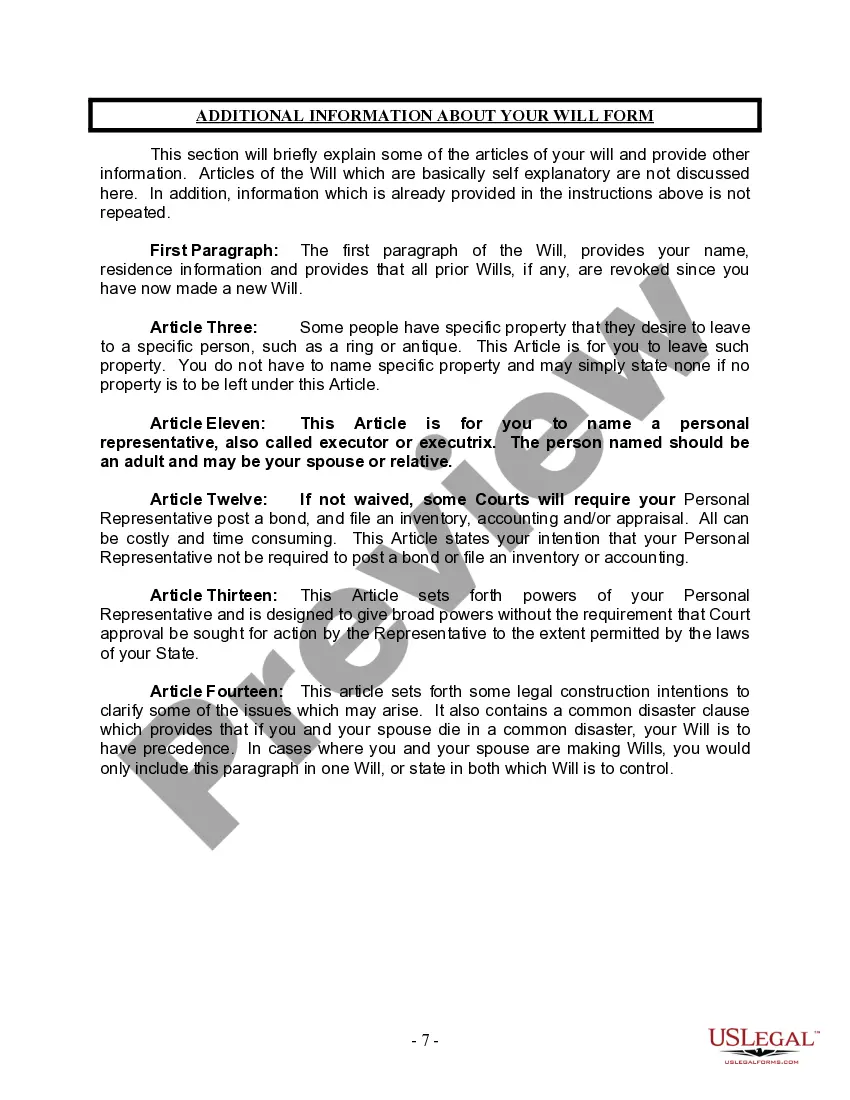
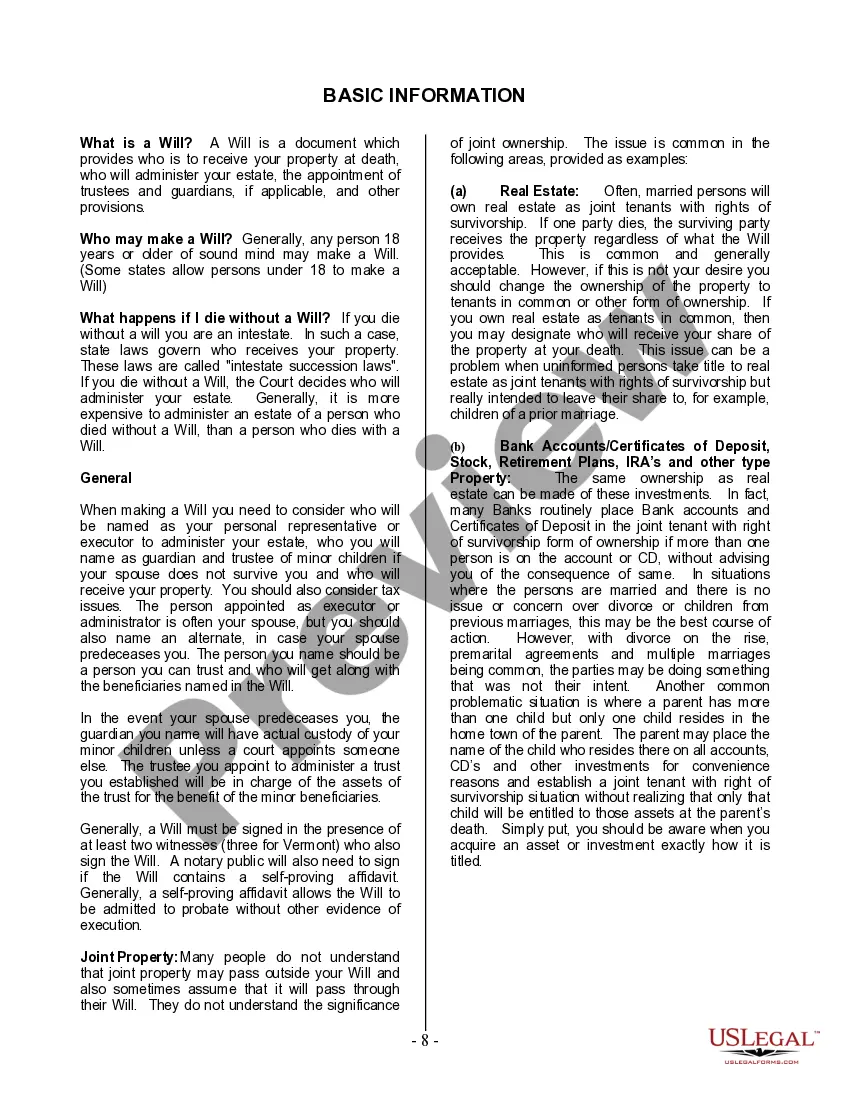
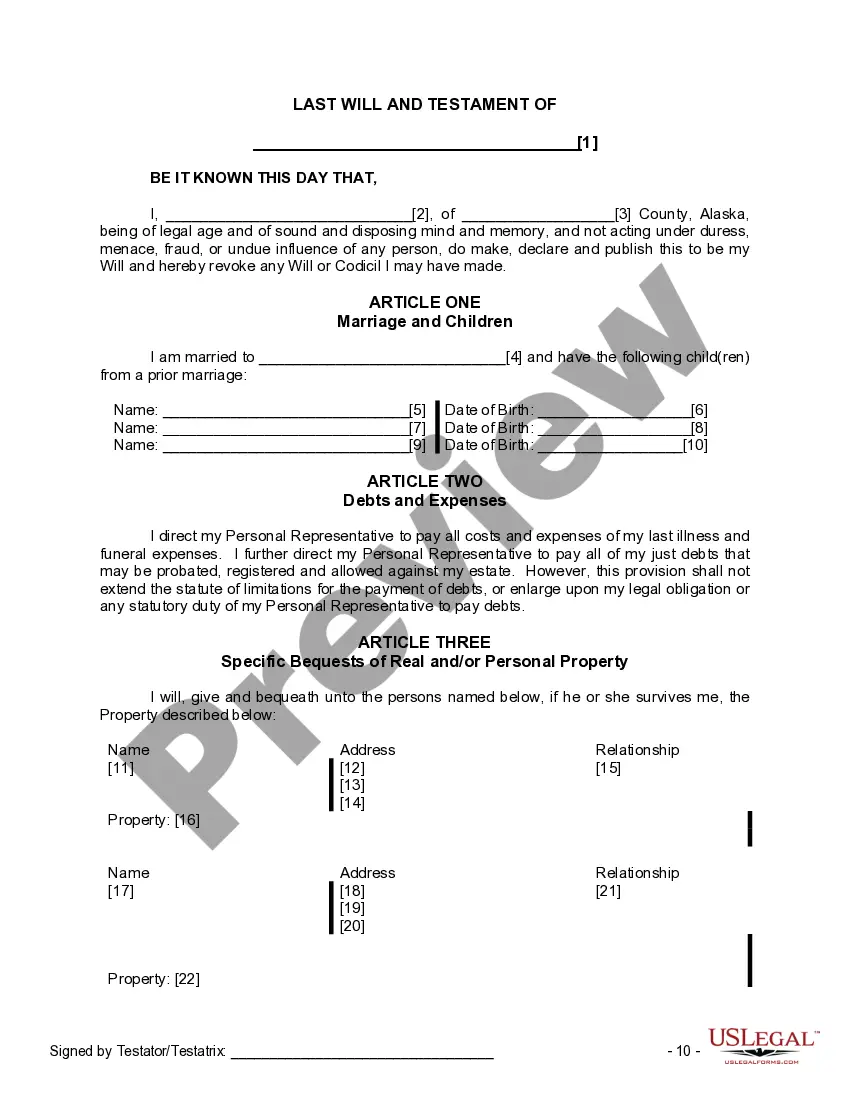
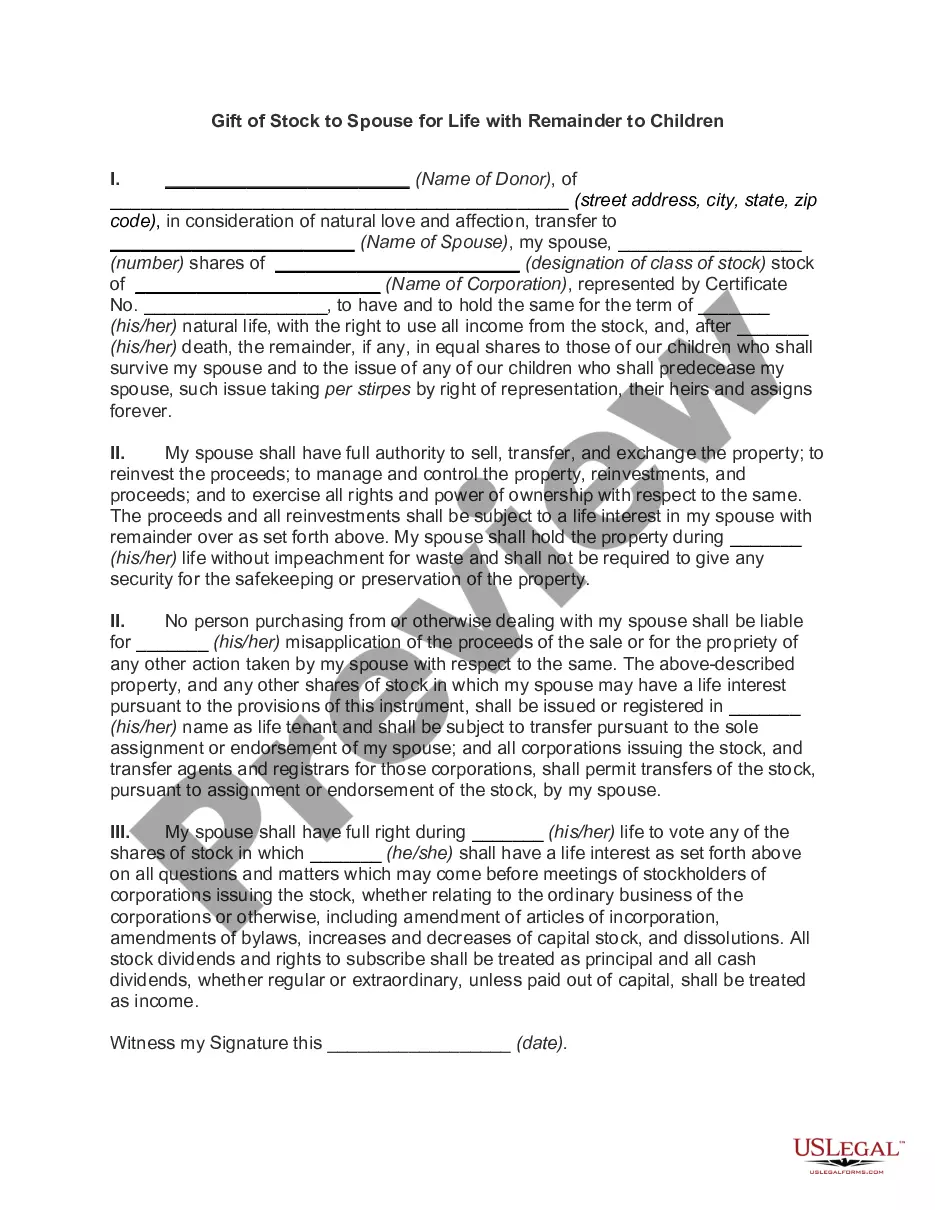
This Last Will and Testament is specifically designed for a married person with minor children from a prior marriage. It outlines how your assets will be distributed after your death, who will serve as your personal representative or executor, and specifies a trustee for assets left to minor children. This form is crucial because it ensures your wishes are clearly defined and legally binding, especially in a family situation involving children from a previous marriage.
Key parts of this document
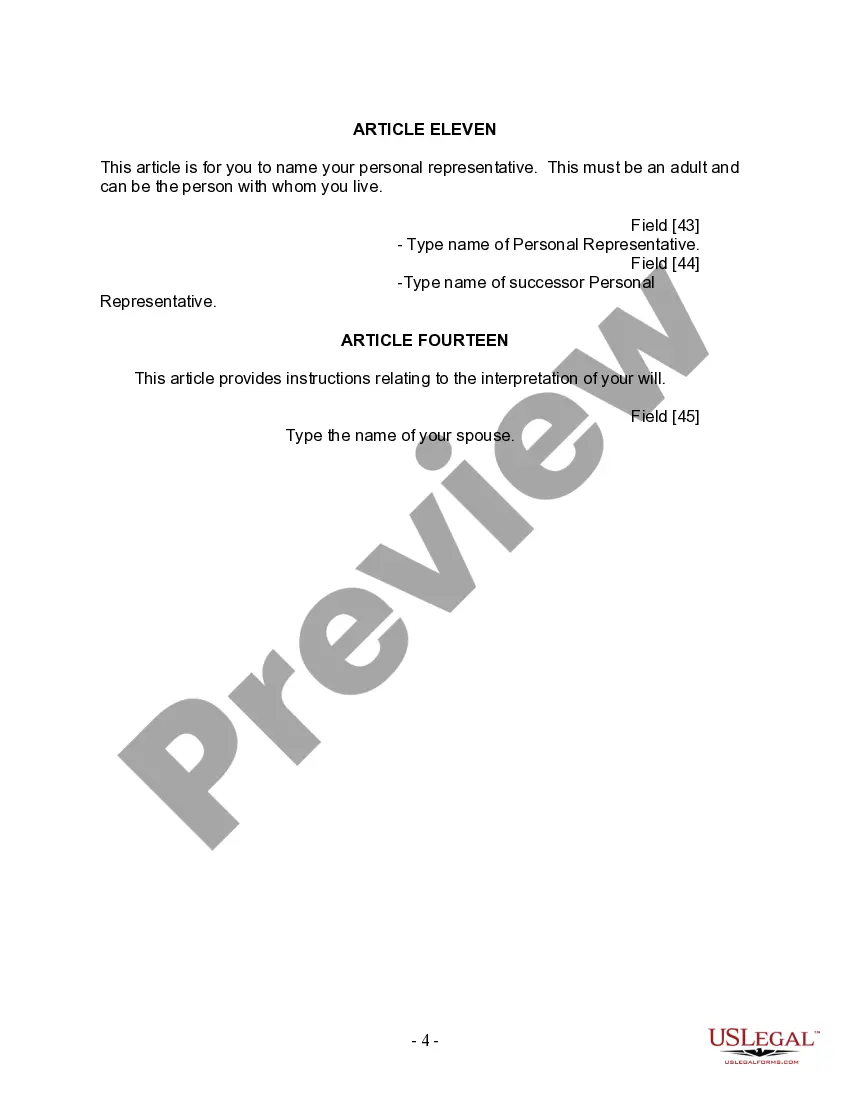
- Appointment of a personal representative to manage your estate.
- Specification of beneficiaries who will receive your property.
- Trust provisions for minor children to ensure their financial security.
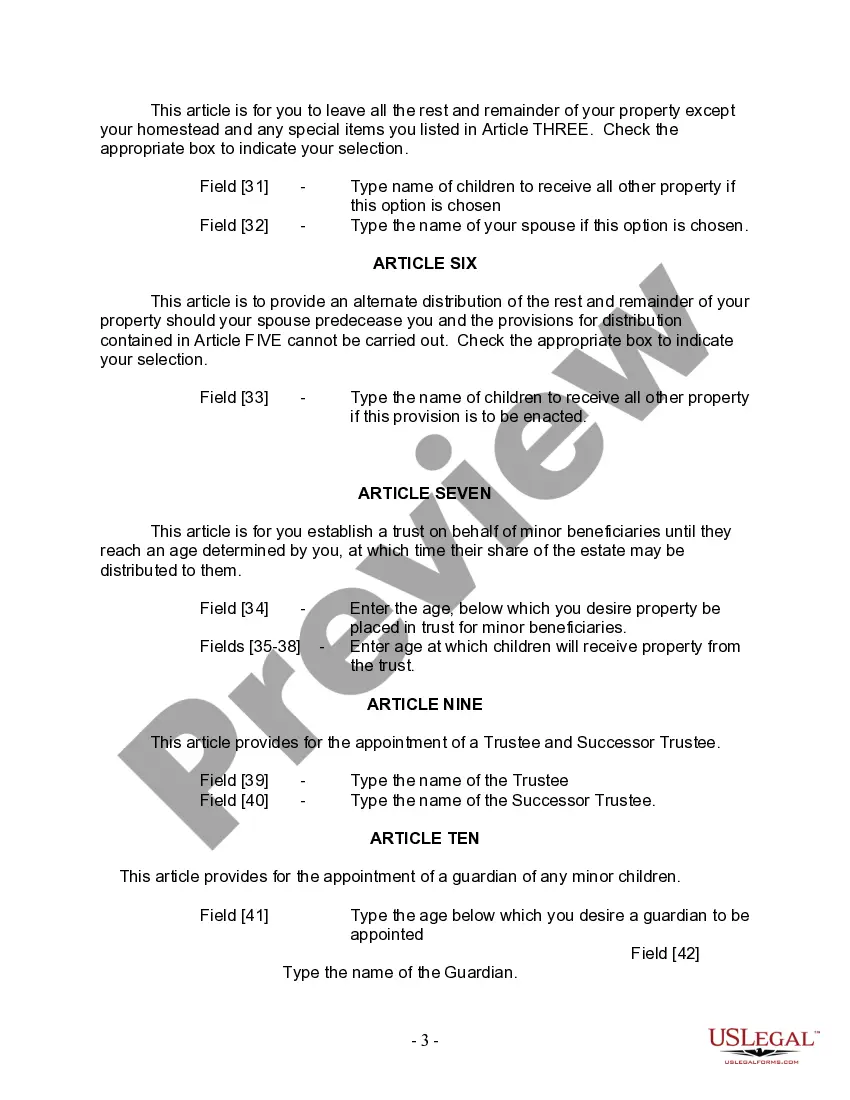
- Designation of guardians for any minor children.
- Instructions for handling debts and funeral expenses.
- Provisions for joint property and the handling of a homestead.





When to use this document
Use this Last Will and Testament when you are a married individual with minor children from a previous marriage. It is especially important in the following situations:
- You want to clarify your wishes regarding asset distribution.
- You need to appoint a guardian for your children in case of your death.
- You desire to set up a trust for your minor childrenâs inheritance.
- You wish to ensure the financial well-being of your children from a prior marriage.
Who should use this form
This form is intended for:
- Married individuals with one or more minor children from a previous marriage.
- Parents who wish to provide for their childrenâs future financial needs.
- Individuals looking to clarify inheritance and guardianship matters for their children.
Steps to complete this form
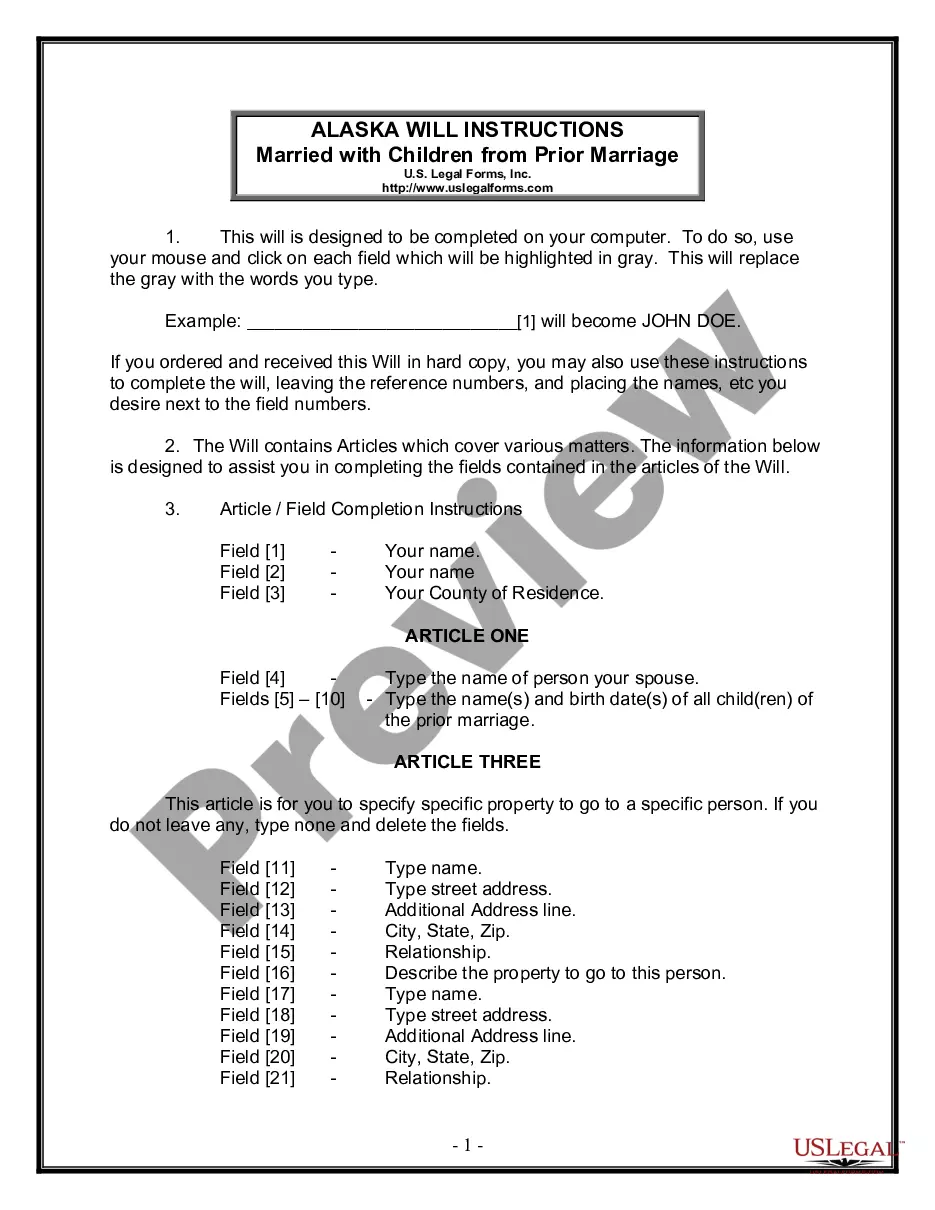
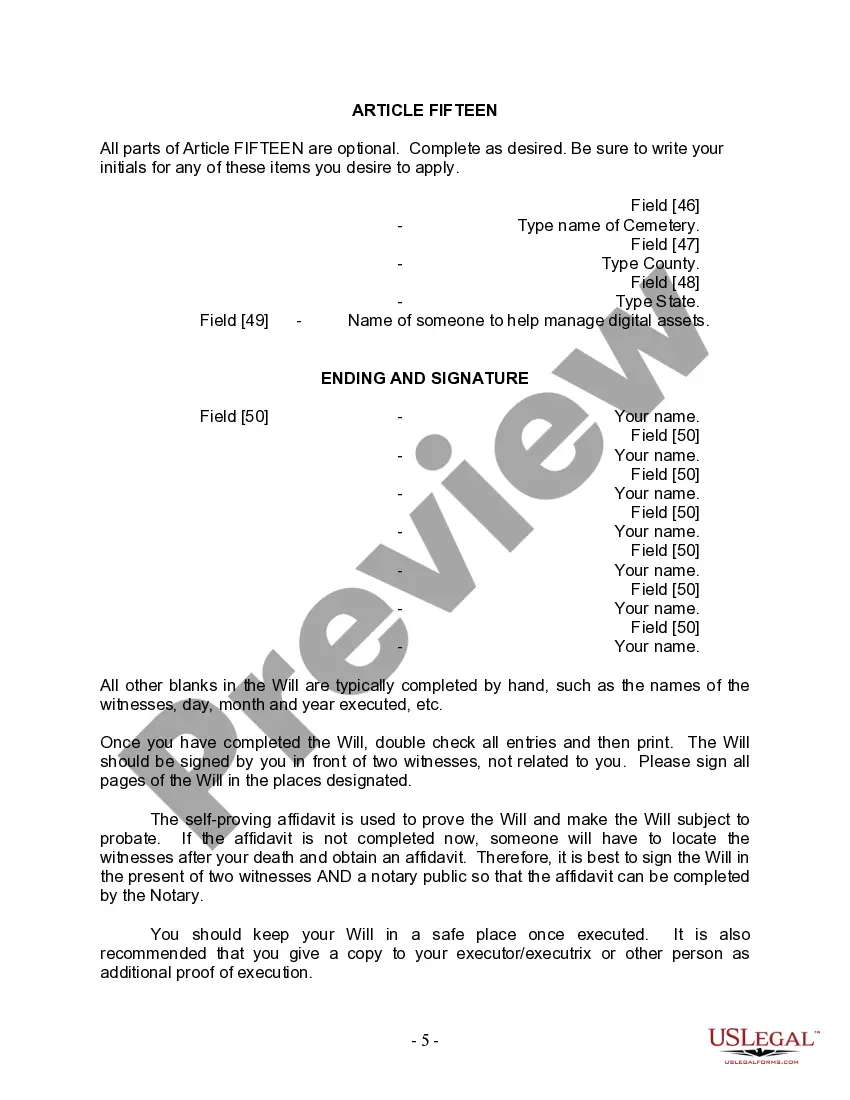
- Begin by entering your full name and county of residence at the top of the document.
- Specify your spouse's name and list all your children from a prior marriage, including their birth dates.
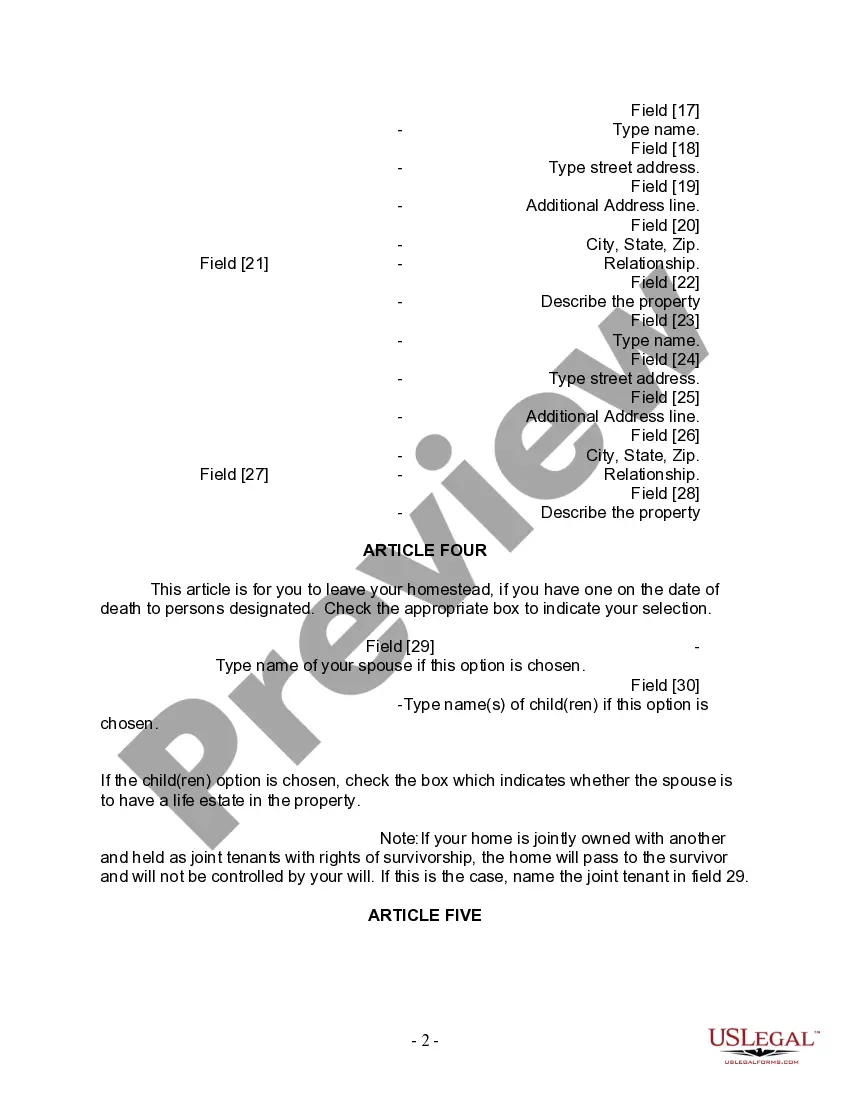
- Designate beneficiaries for specific property and provide their identifying details.
- Indicate your wishes regarding your homestead and any additional property, specifying who should receive them.
- Sign the will in front of two witnesses and ensure they also sign.
- If applicable, complete the self-proving affidavit in the presence of a notary public.
Does this form need to be notarized?
Yes, this form must be notarized to be legally valid if it includes a self-proving affidavit. US Legal Forms offers integrated online notarization, allowing you to complete the process securely via a video call without the need to travel.
Get your form ready online
Our built-in tools help you complete, sign, share, and store your documents in one place.
Make edits, fill in missing information, and update formatting in US Legal Forms—just like you would in MS Word.
Download a copy, print it, send it by email, or mail it via USPS—whatever works best for your next step.
Sign and collect signatures with our SignNow integration. Send to multiple recipients, set reminders, and more. Go Premium to unlock E-Sign.
If this form requires notarization, complete it online through a secure video call—no need to meet a notary in person or wait for an appointment.
We protect your documents and personal data by following strict security and privacy standards.

Make edits, fill in missing information, and update formatting in US Legal Forms—just like you would in MS Word.

Download a copy, print it, send it by email, or mail it via USPS—whatever works best for your next step.

Sign and collect signatures with our SignNow integration. Send to multiple recipients, set reminders, and more. Go Premium to unlock E-Sign.

If this form requires notarization, complete it online through a secure video call—no need to meet a notary in person or wait for an appointment.

We protect your documents and personal data by following strict security and privacy standards.
Common mistakes to avoid
- Failing to have the will signed by the required witnesses.
- Not specifying a guardian for minor children.
- Leaving out important details about property distribution.
- Not updating the will after significant life changes, such as a divorce or birth of additional children.
Benefits of using this form online
- Convenient access to a legally drafted document that can be completed from home.
- Editable fields make personalizing the will straightforward and error-free.
- Reliable templates created by licensed attorneys ensure legal validity.
Looking for another form?


Form popularity
FAQ
Create the initial document. Start by titling the document Last Will and Testament" and including your full legal name and address. Designate an executor. Appoint a guardian. Name the beneficiaries. Designate the assets. Ask witnesses to sign your will. Store your will in a safe place.
A. You don't have to have a lawyer to create a basic will you can prepare one yourself. It must meet your state's legal requirements and should be notarized.A do-it-yourself will that's poorly drafted can save you money but create a mess for your heirs when you're gone.
When writing a will, you might note who should take care of your animals after you die, and what money they'll use to do so. Your last will and testament form can also include your wishes regarding funeral arrangements, too. Do you have a preference on where your funeral should be held?
A will is a legal document that explains how your property will be distributed after you die.Self-written wills are typically valid, even when handwritten, as long as they're properly witnessed and notarized, or proven in court. A handwritten will that is not witnessed or notarized is considered a holographic will.
In Alaska, a handwritten Will, also called a holographic Will, can be valid and enforceable. The same rules apply to handwritten Wills as apply to typed Wills, except with respect to the witness requirement.
Choose an online legal services provider or locate a will template. Carefully consider your distribution wishes. Identify a personal representative/executor. Understand the requirements to make your will legal. Make sure someone else knows about your will. Consult a lawyer if you have a more complicated estate.
Funeral Plans. Your 'Digital Estate. Jointly Held Property. Life Insurance and Retirement Funds. Illegal Gifts and Requests.
Create the initial document. Start by titling the document Last Will and Testament" and including your full legal name and address. Designate an executor. Appoint a guardian. Name the beneficiaries. Designate the assets. Ask witnesses to sign your will. Store your will in a safe place.
Decide what property to include in your will. Decide who will inherit your property. Choose an executor to handle your estate. Choose a guardian for your children. Choose someone to manage children's property. Make your will. Sign your will in front of witnesses. Store your will safely.