Alaska Last Will and Testament for Single Person with Adult Children
Understanding this form
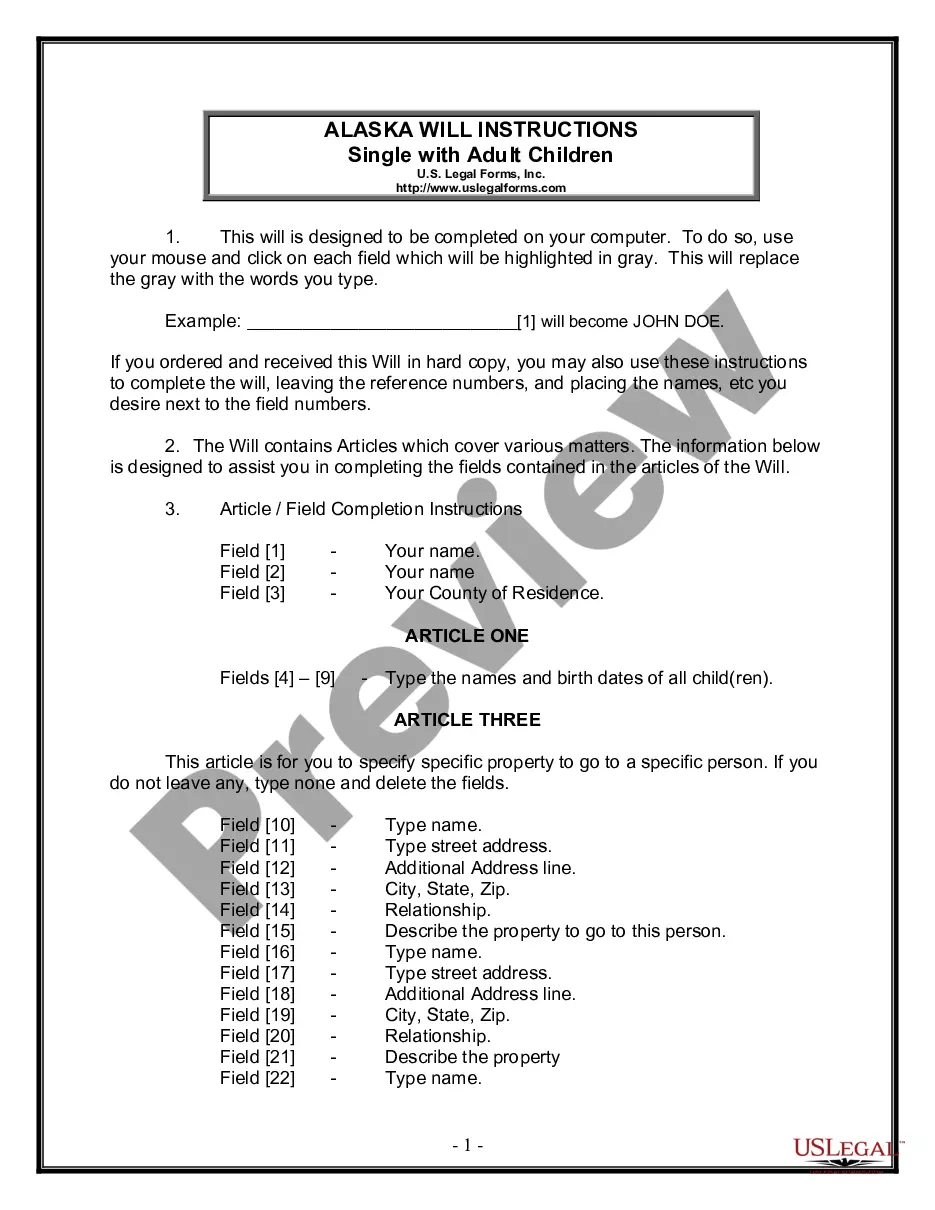
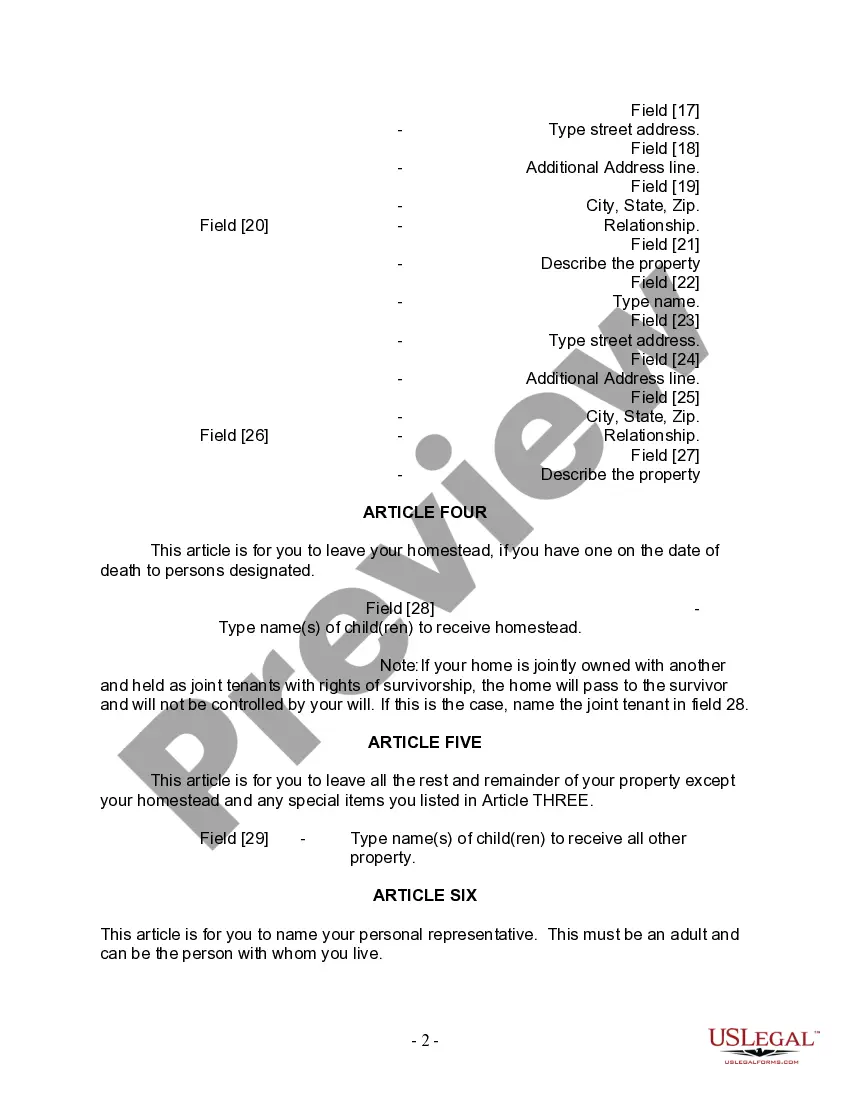
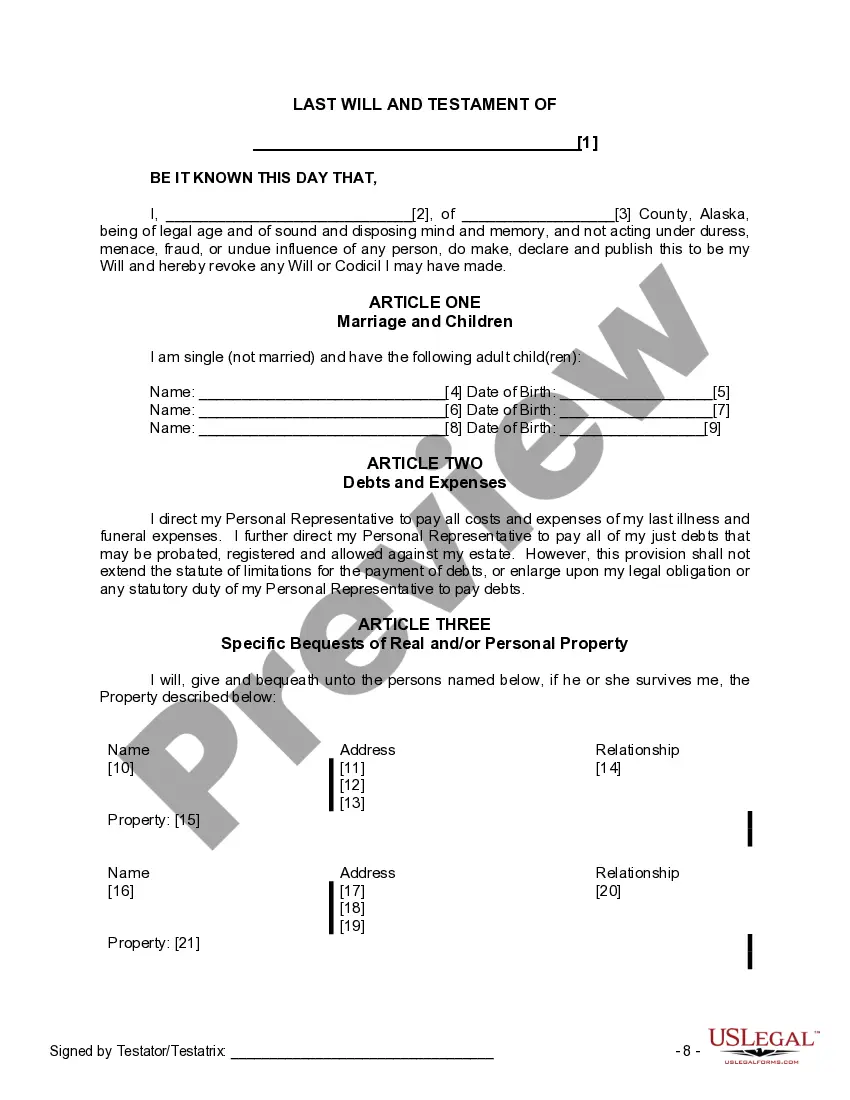
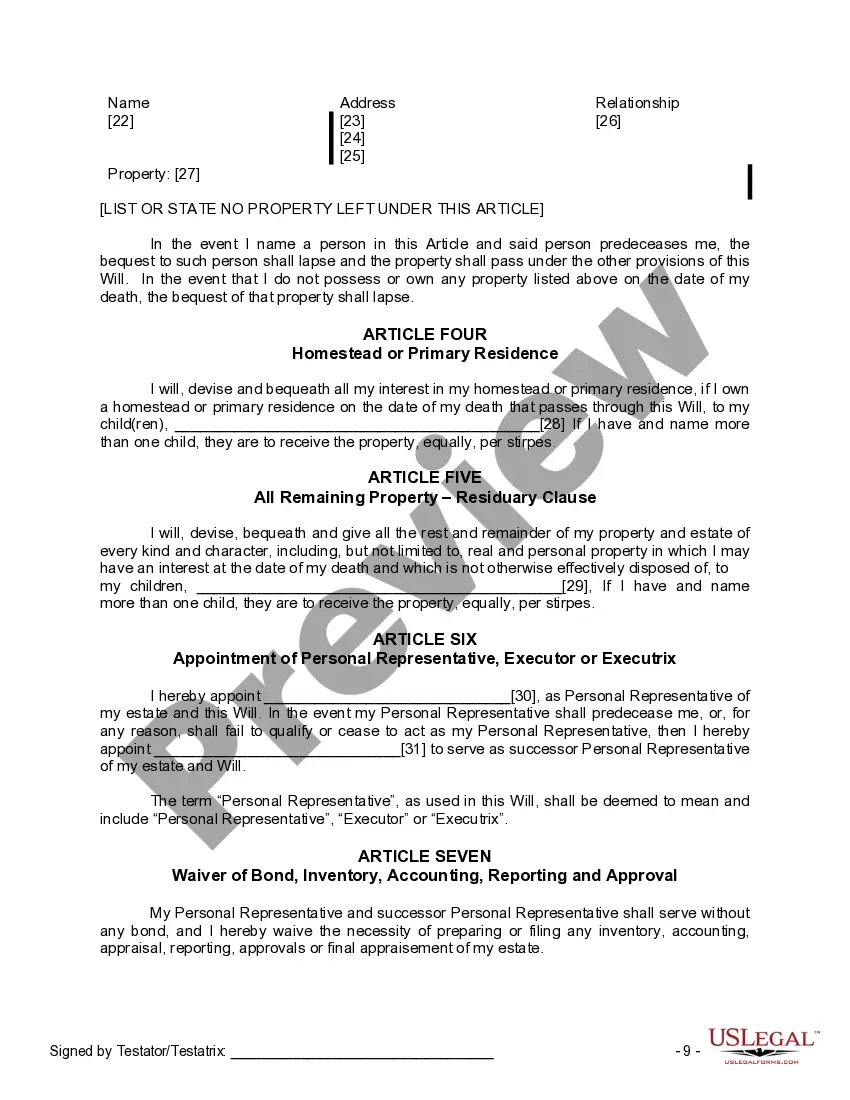
This Last Will and Testament is a legal document specifically designed for a single person with adult children. It outlines how you want your property distributed upon your death, appoints a personal representative to manage your estate, and includes provisions for specific bequests. Unlike wills for married individuals or those with minor children, this form is tailored to your unique situation, allowing you to state your wishes clearly and effectively.
What’s included in this form
- Personal details: Fields to enter your name, county of residence, and details of your adult children.
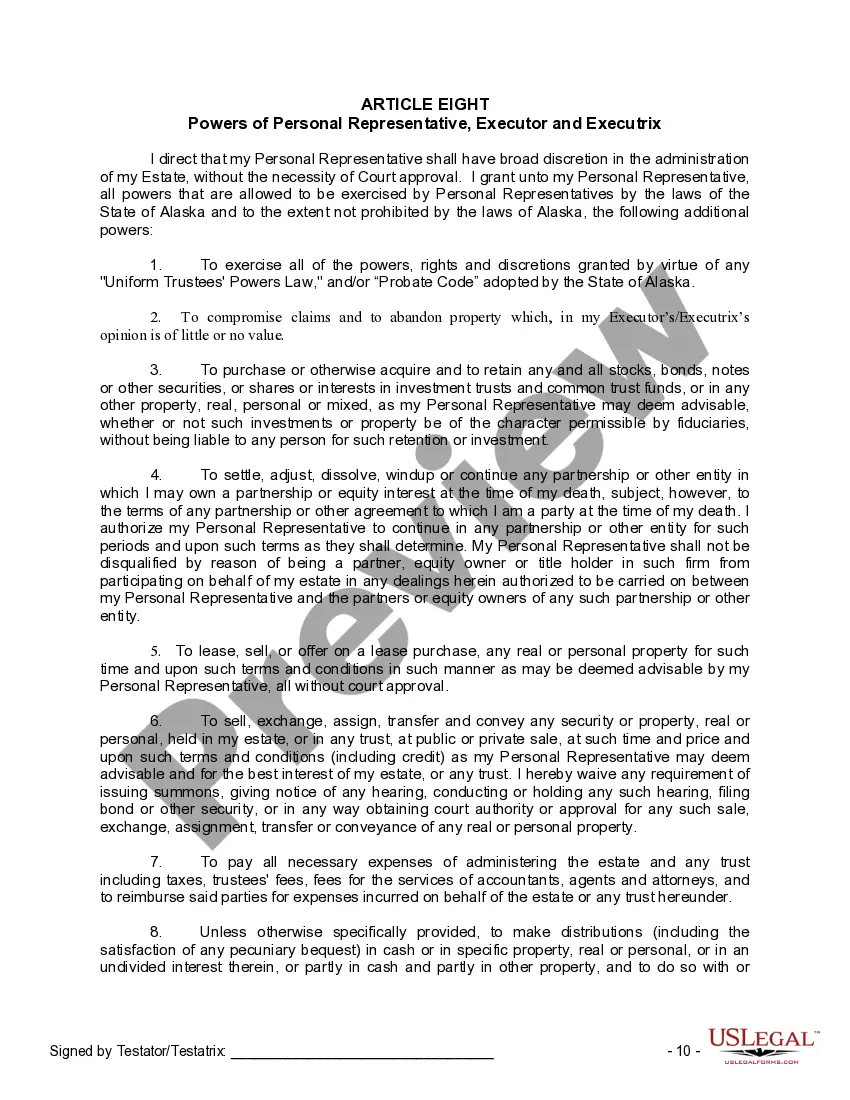
- Appointment of personal representative: Designate an executor responsible for administering your estate.
- Specific bequests: Specify particular items or properties to be distributed to chosen beneficiaries.
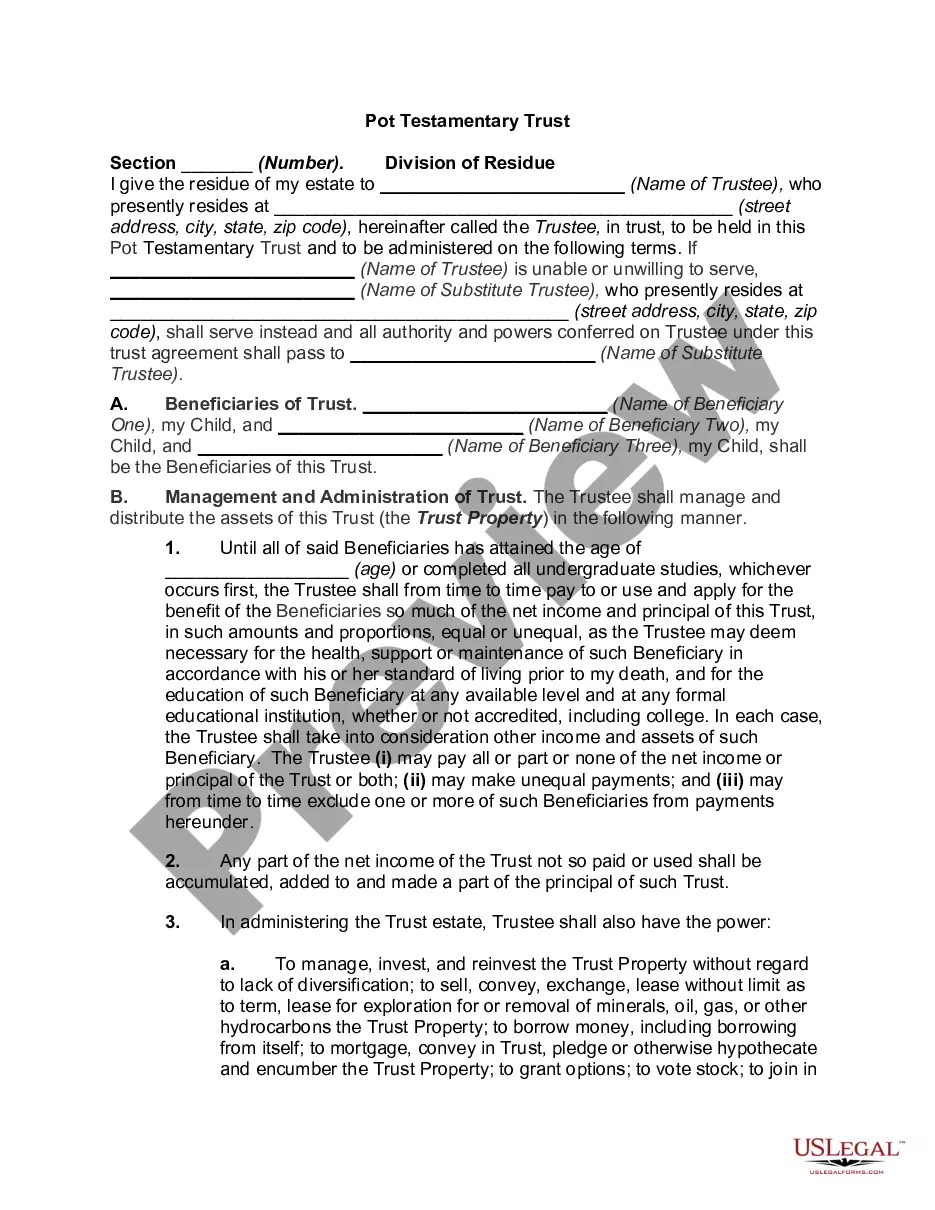
- Residue clause: Outline how the rest of your estate should be handled after specific bequests are made.
- Signature requirements: Instructions for signing the will in front of witnesses, with provisions for notarization if desired.





When to use this document
This form is ideal for individuals who are single and have adult children, looking to ensure that their wishes regarding the distribution of their property are legally documented. Use this will when you want to clarify your intentions for asset distribution and appoint an executor to handle your estate upon your passing.
Who this form is for
- Single individuals who have never been married.
- Parents of adult children wishing to provide clear instructions about their estate.
- Individuals desiring to appoint a personal representative to manage their affairs after death.
- Those seeking a legally binding will that reflects their personal circumstances.
Completing this form step by step
- Begin by entering your full name and county of residence in the designated fields.
- List your adult children's names and birth dates to ensure accurate identification.
- Designate specific properties or items you wish to bequeath to individuals, adding details such as names and relationships.
- Choose a personal representative to manage the estate and enter their information in the appropriate fields.
- Sign the will in front of at least two witnesses, ensuring they are not related to you or named in the will.
Does this form need to be notarized?
Yes, this form must be notarized to be legally valid. This ensures that your will meets the requirements for a self-proving affidavit, making the probate process smoother. U.S. Legal Forms offers integrated online notarization to securely verify your identity and signature through a video call.
Get your form ready online
Our built-in tools help you complete, sign, share, and store your documents in one place.
Make edits, fill in missing information, and update formatting in US Legal Forms—just like you would in MS Word.
Download a copy, print it, send it by email, or mail it via USPS—whatever works best for your next step.
Sign and collect signatures with our SignNow integration. Send to multiple recipients, set reminders, and more. Go Premium to unlock E-Sign.
If this form requires notarization, complete it online through a secure video call—no need to meet a notary in person or wait for an appointment.
We protect your documents and personal data by following strict security and privacy standards.

Make edits, fill in missing information, and update formatting in US Legal Forms—just like you would in MS Word.

Download a copy, print it, send it by email, or mail it via USPS—whatever works best for your next step.

Sign and collect signatures with our SignNow integration. Send to multiple recipients, set reminders, and more. Go Premium to unlock E-Sign.

If this form requires notarization, complete it online through a secure video call—no need to meet a notary in person or wait for an appointment.

We protect your documents and personal data by following strict security and privacy standards.
Common mistakes to avoid
- Failing to sign the document in the presence of two witnesses, which invalidates the will.
- Neglecting to appoint a personal representative or listing successors, which can lead to complications.
- Overlooking the requirement for a notary public if a self-proving affidavit is included.
- Using outdated information for bequest details or personal representative appointments.
Why use this form online
- Convenience of completing the form at your own pace, without the pressure of legal appointments.
- Editability allows for easy revisions and updates as your circumstances change.
- Access to legally drafted documents, ensuring compliance with legal standards.
- Immediate download options provide instant access once completed, saving time.
Main things to remember
- This Last Will and Testament is specifically for single individuals with adult children.
- Proper execution involves signatures from two witnesses and possibly a notary.
- The document guides the distribution of both specific items and remaining assets.
- Using this will reduces the risk of disputes amongst heirs.
Looking for another form?


Form popularity
FAQ
As of November 2010, the states that permit holographic wills to probate include Alaska, Arizona, Arkansas, California, Colorado, Idaho, Kentucky, Louisiana, Maine, Michigan, Mississippi, Montana, Nebraska, Nevada, New Jersey, North Carolina, North Dakota, Oklahoma, Pennsylvania, South Dakota, Tennessee, Texas, Utah,
In Alaska, a handwritten Will, also called a holographic Will, can be valid and enforceable. The same rules apply to handwritten Wills as apply to typed Wills, except with respect to the witness requirement.
A. You don't have to have a lawyer to create a basic will you can prepare one yourself. It must meet your state's legal requirements and should be notarized.A do-it-yourself will that's poorly drafted can save you money but create a mess for your heirs when you're gone.
In order for a will to be valid, it must be: made by a person who is 18 years old or over and. made voluntarily and without pressure from any other person and.signed by the two witnesses, in the presence of the person making the will, after it has been signed.
Decide what property to include in your will. Decide who will inherit your property. Choose an executor to handle your estate. Choose a guardian for your children. Choose someone to manage children's property. Make your will. Sign your will in front of witnesses. Store your will safely.
The following people are disqualified from inheriting under a will: a person or his/her spouse who writes a will or any part thereof on behalf of the testator; and a person or his/her spouse who signs the will on instruction of the testator or as a witness.