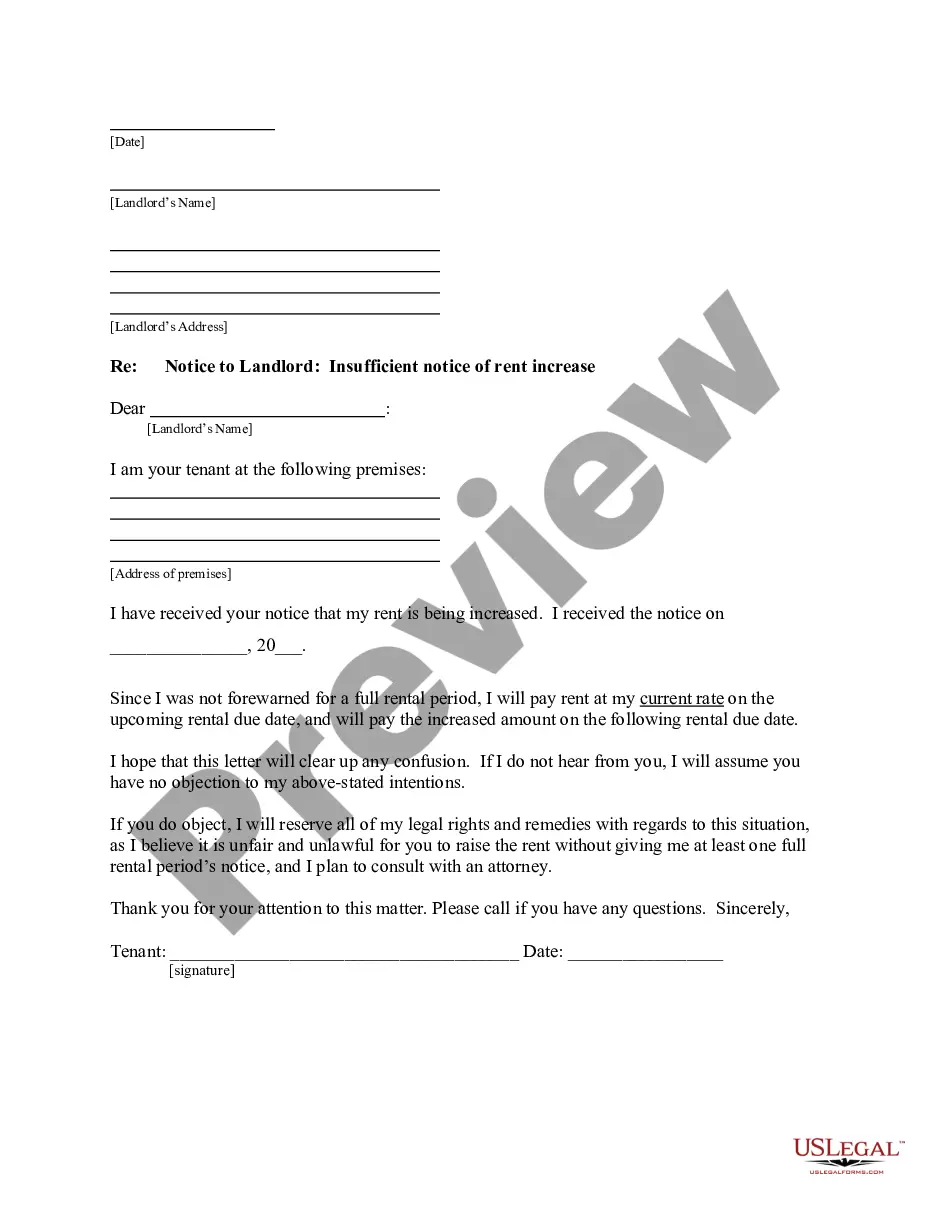
Alaska Letter from Tenant to Landlord about Insufficient notice of rent increase
What this document covers
This letter from tenant to landlord addresses insufficient notice of a rent increase. It serves to inform the landlord that the provided notice does not comply with legal notice requirements for a month-to-month lease. This form helps tenants assert their rights by specifying that the rent increase will not take effect until proper notice has been officially given.
Key parts of this document
- Identification of the tenant and landlord involved.
- A clear statement regarding the insufficient notice of rent increase.
- Details on how and when the rent will be paid following the notice.
- Reservation of legal rights if there is an objection from the landlord.
- Signature field for the tenant, along with a date line.
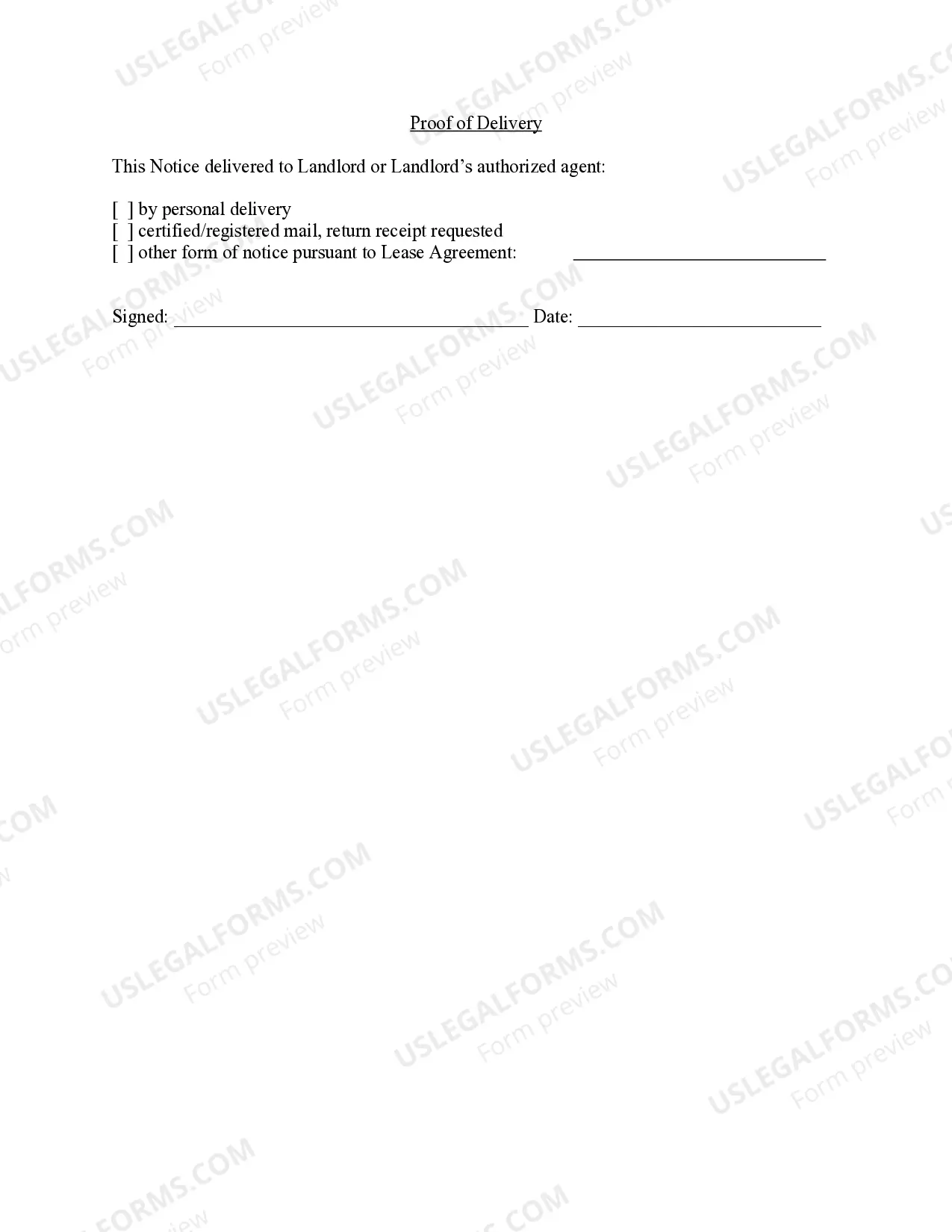
- Proof of delivery section to confirm the notice was delivered to the landlord.
When this form is needed
This letter is essential for tenants who have received a rent increase notice without adequate advance notice. If you find yourself in a month-to-month rental agreement and the landlord has not provided a full rental periodâs notice before a rent increase, this form can effectively communicate your position and intentions regarding the rent adjustment.
Who needs this form
- Tenants residing in month-to-month rental agreements.
- Individuals who have received a rent increase notice with insufficient lead time.
- Those who want to assert their legal rights regarding rental increases.
- Anyone seeking to maintain open communication with their landlord regarding rental payment terms.
How to complete this form
- Identify the parties involved by entering the names of both the tenant and landlord.
- Clearly state the date of the increased rent notice received.
- Specify the current rent amount and the new proposed rent amount in the letter.
- Express your intention to pay the current rent until proper notice is given.
- Sign the letter and enter the date of signing.
- Deliver the letter to your landlord or authorized agent, and keep proof of delivery.
Does this form need to be notarized?
This form does not typically require notarization unless specified by local law. It is advisable to check your jurisdiction's rules regarding the notarization of rental-related notices.
Get your form ready online
Our built-in tools help you complete, sign, share, and store your documents in one place.
Make edits, fill in missing information, and update formatting in US Legal Forms—just like you would in MS Word.
Download a copy, print it, send it by email, or mail it via USPS—whatever works best for your next step.
Sign and collect signatures with our SignNow integration. Send to multiple recipients, set reminders, and more. Go Premium to unlock E-Sign.
If this form requires notarization, complete it online through a secure video call—no need to meet a notary in person or wait for an appointment.
We protect your documents and personal data by following strict security and privacy standards.

Make edits, fill in missing information, and update formatting in US Legal Forms—just like you would in MS Word.

Download a copy, print it, send it by email, or mail it via USPS—whatever works best for your next step.

Sign and collect signatures with our SignNow integration. Send to multiple recipients, set reminders, and more. Go Premium to unlock E-Sign.

If this form requires notarization, complete it online through a secure video call—no need to meet a notary in person or wait for an appointment.

We protect your documents and personal data by following strict security and privacy standards.
Common mistakes
- Failing to clearly state the insufficient notice period received.
- Not including the current and proposed rental amounts explicitly.
- Neglecting to keep a copy of the notice for personal records.
- Overlooking the need for proof of delivery, which may be important in case of disputes.
Advantages of online completion
- Immediate access to a legally compliant letter template.
- Editability allows for personalization to match your specific situation.
- Convenience of downloading from anywhere at any time.
- Designed by licensed attorneys to meet legal standards.
Main things to remember
- This letter is important for asserting your rights as a tenant regarding rental increases.
- Proper completion and delivery of the form can help avoid legal disputes.
- Understanding state-specific requirements will enhance the effectiveness of your notice.
Looking for another form?


Form popularity
FAQ
In most states, a landlord must give tenants notice at least 30 days before they'll enforce a rent increase. However, in other states like California, the notice can increase to 60 days' notice if the increase is more than 10% of the current rent rate.
In some circumstances, a tenant can break a fixed-term agreement early without penalty. A tenant can give 14 days' written notice to end an agreement early without penalty if: they have accepted an offer of social housing (e.g. from DCJ Housing)
Give the landlord/agent a written termination notice and vacate move out and return the keys according to your notice, and/or. apply to the NSW Civil & Administrative Tribunal (NCAT) for a termination order.
Fails to pay rent; Violates a clause in the lease or rental agreement; Violates a responsibility imposed by law.
When there is no lease agreement (like in the case of weekly rentals), you can instead use the Alaska Notice to Vacate to inform the other party in advance that you wish to end the tenancy agreement and vacate the premises.
Alaska state law limits how much a landlord can charge for a security deposit (two months' rent, unless the monthly rent exceeds $2,000), when it must be returned (within 14 days after a tenant moves if the tenant has given proper notice to end the tenancy or 30 days if the tenant has not), and sets other restrictions
Remember you're a business. Do your research. Raise the rent all at once or incrementally. Don't negotiate or ask tenants what they think a fair rent increase would be. Be courteous and firm. Find a template you like. Send a formal letter by certified mail. Give the tenant notice.
Tenant's name. Property address. Landlord name and contact information. Date the letter is written. Date the rent increase will take effect. Amount of rent increase. Current cost of rent.
Your Landlord is legally obligated to return your deposit within 10 days of you both agreeing how much you'll get back (after the tenancy has ended, of course).