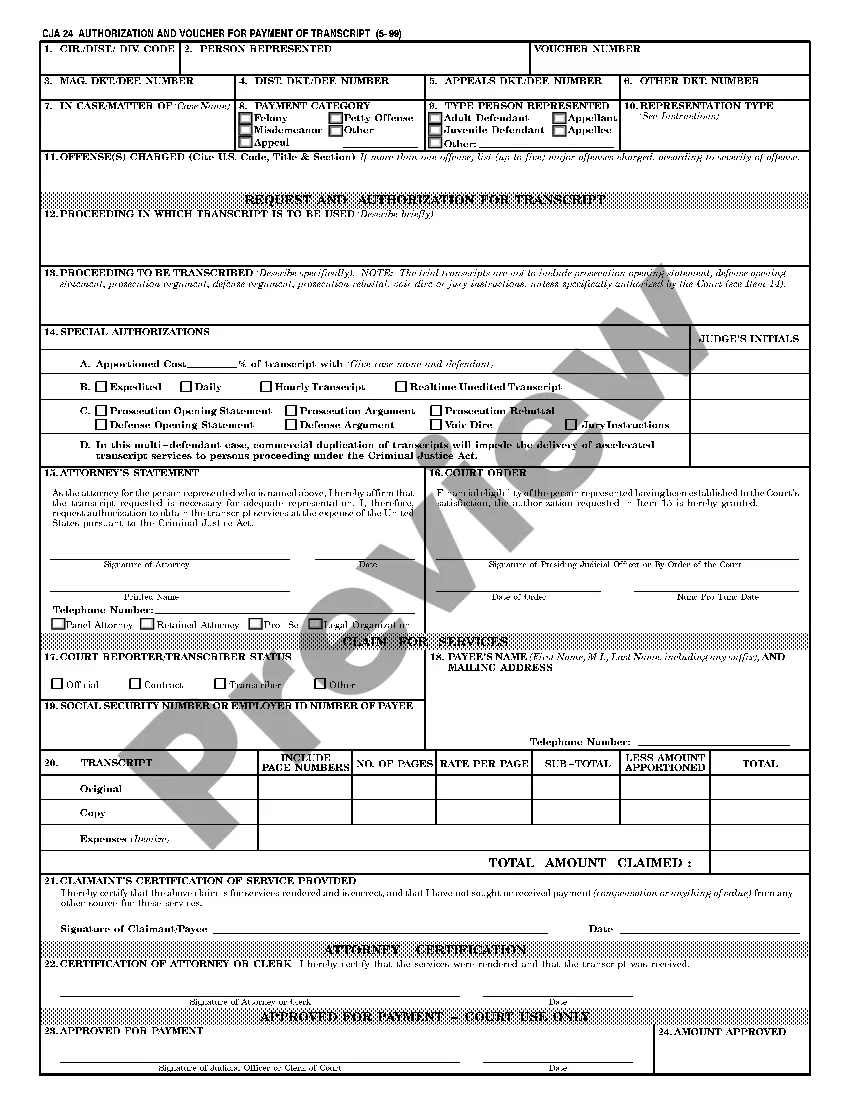
Alaska Warranty Deed from Individual to Corporation
What is this form?
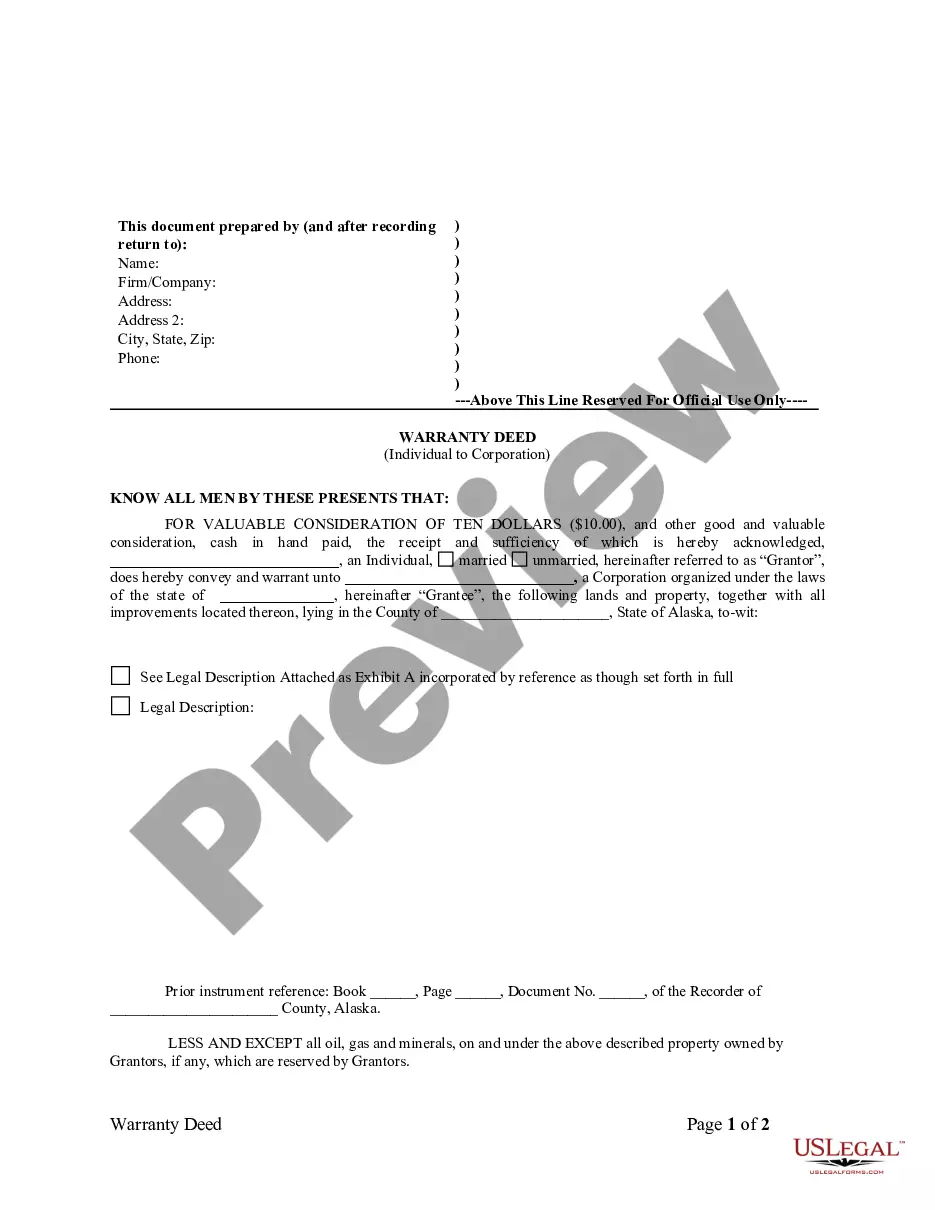
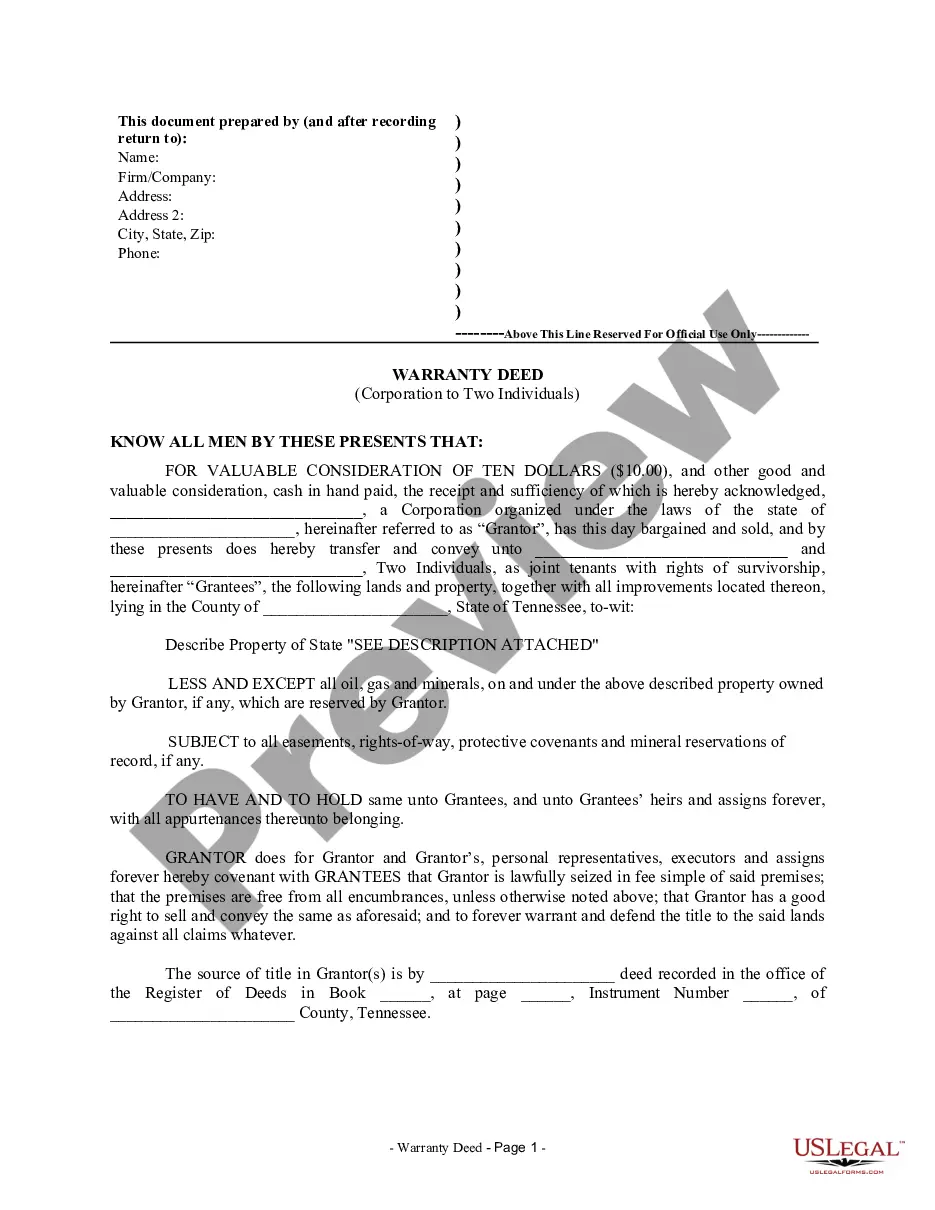
The Warranty Deed from Individual to Corporation is a legal document used to transfer ownership of property from an individual (grantor) to a corporation (grantee). This form ensures that the grantor conveys clear title to the property, free from encumbrances, while reserving certain rights such as oil, gas, and mineral interests. It is essential for formalizing property transactions where one party is an individual and the other is a corporate entity, distinguishing it from regular warranty deeds used between individuals or between individuals and other entities.
What’s included in this form
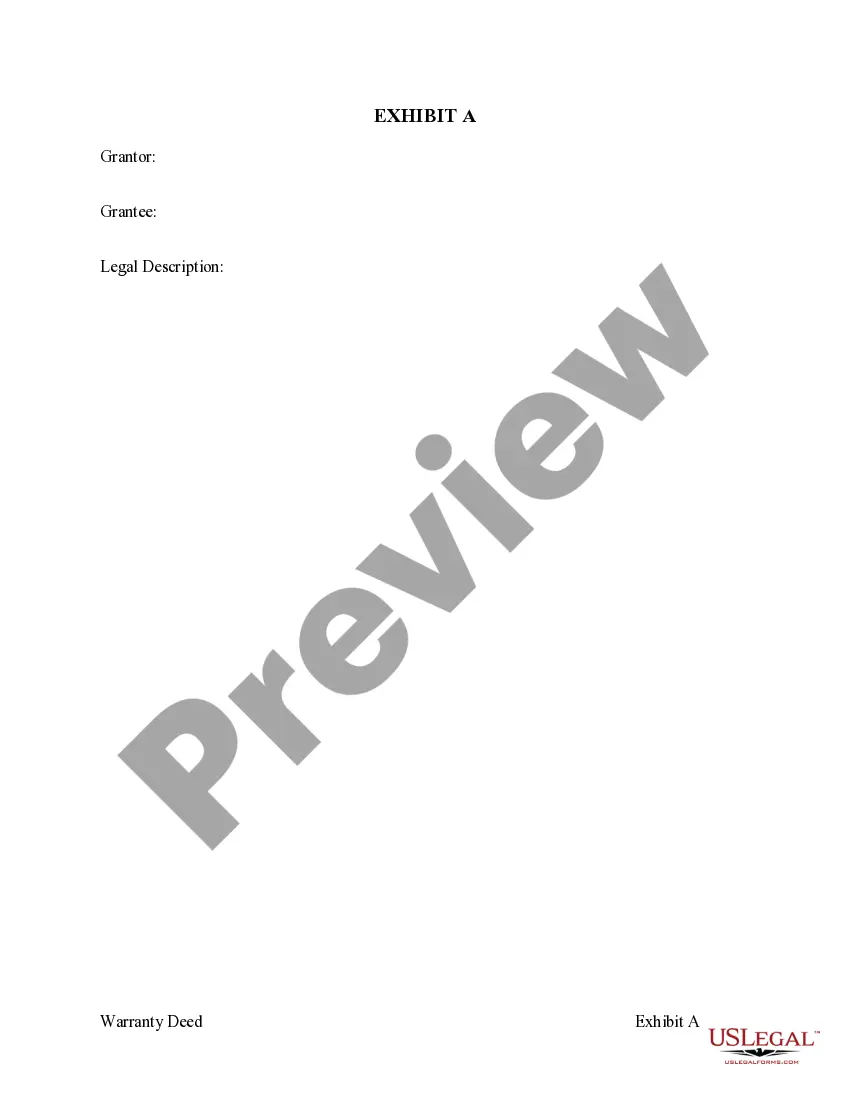
- Legal property description, typically included as an exhibit.
- Grantor's declaration of ownership and ability to convey the property.
- Reservation clause for oil, gas, and mineral rights on the property.
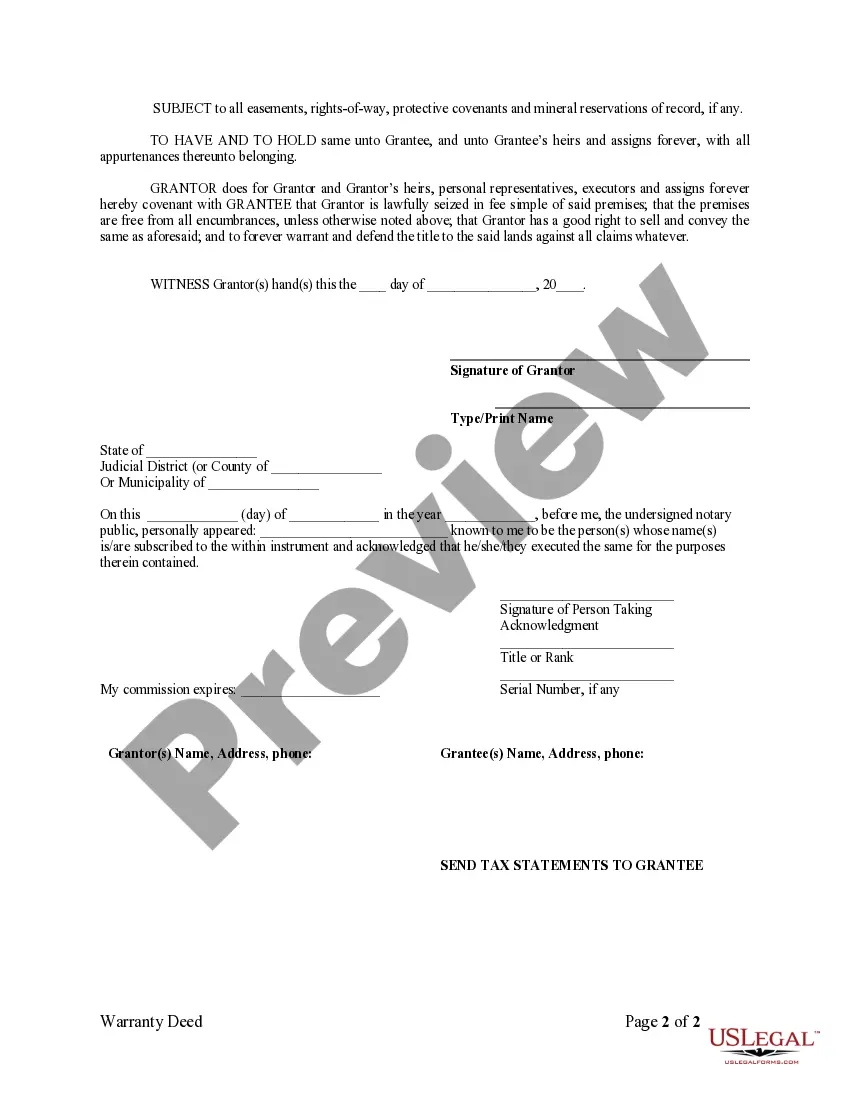
- Covenant to defend the title against claims.
- Space for notarization and signatures of the grantor and notary public.

When to use this form
This form is needed when an individual wishes to transfer property ownership to a corporation. Common scenarios include selling real estate to a corporate entity for business purposes or transferring property within a family where one member is a corporation. It is also applicable when the property needs to remain free from claims related to oil, gas, or mineral rights.
Who can use this document
- Individuals selling or transferring property to a corporation.
- Real estate agents and lawyers assisting with property transactions.
- Corporations acquiring property from individual owners.
Steps to complete this form
- Identify the parties involved: the grantor (individual) and grantee (corporation).
- Provide the legal description of the property as per the attached exhibit.
- Include any necessary reservations for oil, gas, and mineral rights.
- Fill in the date of execution and ensure all signatures are obtained.
- Have the deed notarized to comply with legal requirements.
Does this document require notarization?
Yes, this form must be notarized to be legally valid. Notarization confirms the identity of the signing parties and ensures the authenticity of the document. US Legal Forms offers integrated online notarization services, providing a secure video call option that is available 24/7, ensuring legal compliance without the need for travel.
Get your form ready online
Our built-in tools help you complete, sign, share, and store your documents in one place.
Make edits, fill in missing information, and update formatting in US Legal Forms—just like you would in MS Word.
Download a copy, print it, send it by email, or mail it via USPS—whatever works best for your next step.
Sign and collect signatures with our SignNow integration. Send to multiple recipients, set reminders, and more. Go Premium to unlock E-Sign.
If this form requires notarization, complete it online through a secure video call—no need to meet a notary in person or wait for an appointment.
We protect your documents and personal data by following strict security and privacy standards.

Make edits, fill in missing information, and update formatting in US Legal Forms—just like you would in MS Word.

Download a copy, print it, send it by email, or mail it via USPS—whatever works best for your next step.

Sign and collect signatures with our SignNow integration. Send to multiple recipients, set reminders, and more. Go Premium to unlock E-Sign.

If this form requires notarization, complete it online through a secure video call—no need to meet a notary in person or wait for an appointment.

We protect your documents and personal data by following strict security and privacy standards.
Common mistakes to avoid
- Failing to provide a complete legal description of the property.
- Not including necessary reservations for mineral rights.
- Omitting signatures or notarization requirements.
- Using outdated or incorrect forms that do not comply with state-specific laws.
Why use this form online
- Convenient access to downloadable templates drafted by licensed attorneys.
- Editability allows users to customize the form as per their needs.
- Secure transactions and completion without the need for physical paperwork.
Quick recap
- The Warranty Deed from Individual to Corporation is crucial for legally transferring property ownership to a corporation.
- Ensure the property description and reservations of rights are correctly stated.
- Both parties must sign the document, and it needs notarization for validity.
Looking for another form?

Form popularity
FAQ
The Alaska Warranty Deed From Individual To Corporation is a legal document used to transfer property ownership from a private individual (grantor) to a corporation (grantee). It conveys clear title and reserves oil, gas, and mineral rights. The form includes the legal property description, grantor declaration, reservation clause, a covenant to defend title, and spaces for notarization and signatures.
To execute and file this deed, fill in the grantor and corporate grantee details, attach the legal property description, insert the oil, gas, and mineral reservation, and include the covenant to defend title. The grantor signs, the document is notarized, and the deed is recorded with the appropriate Alaska county recorder to transfer ownership.
Yes, it can be prepared and executed without a lawyer, but given title transfer's complexity, consult a licensed attorney to verify the property description, ensure the oil/gas/mineral reservation is correct, and confirm proper notarization and recording to avoid title problems.
Use this deed to transfer ownership from an individual to a corporation. After filling in the grantor, grantee, and property description, have the grantor sign and have the document notarized. Then record the deed with the Alaska county recorder to update the public record.
This form is designed for transfers to a corporation, not an LLC. For an LLC, you would generally use a warranty deed naming the LLC as grantee or a similar form, and ensure the same components (property description, grantor declaration, reservation, and title defense covenant) are included. Consult an attorney for entity-specific steps.
It names a corporate grantee instead of an individual, and includes a reservation clause for oil, gas, and mineral rights, plus a grantor's declaration of conveyance and a space for notarization, all reflecting a transfer to a corporate entity rather than another private party.