Washington 10 Days Notice to Pay Rent or Lease Terminates for Residential Property
What this document covers
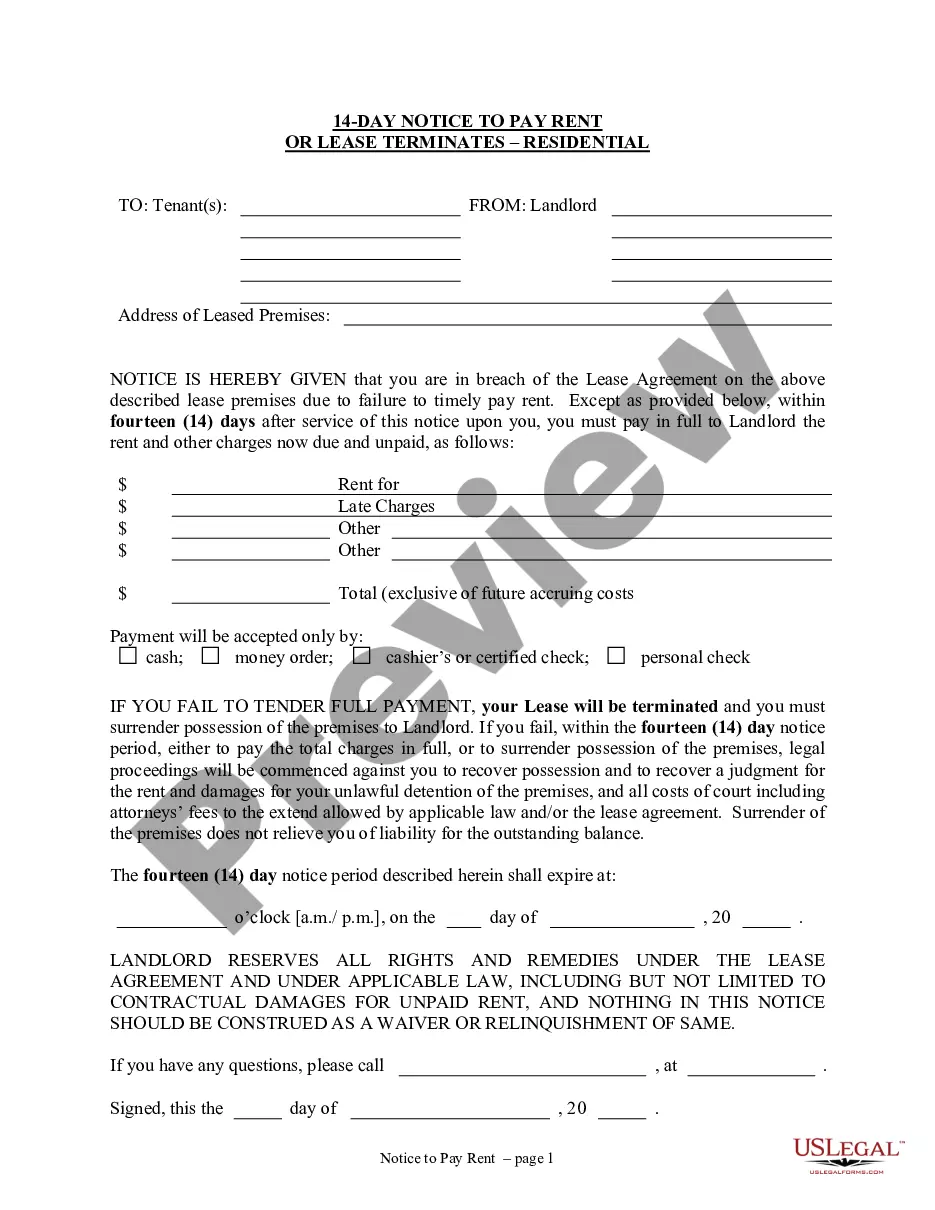
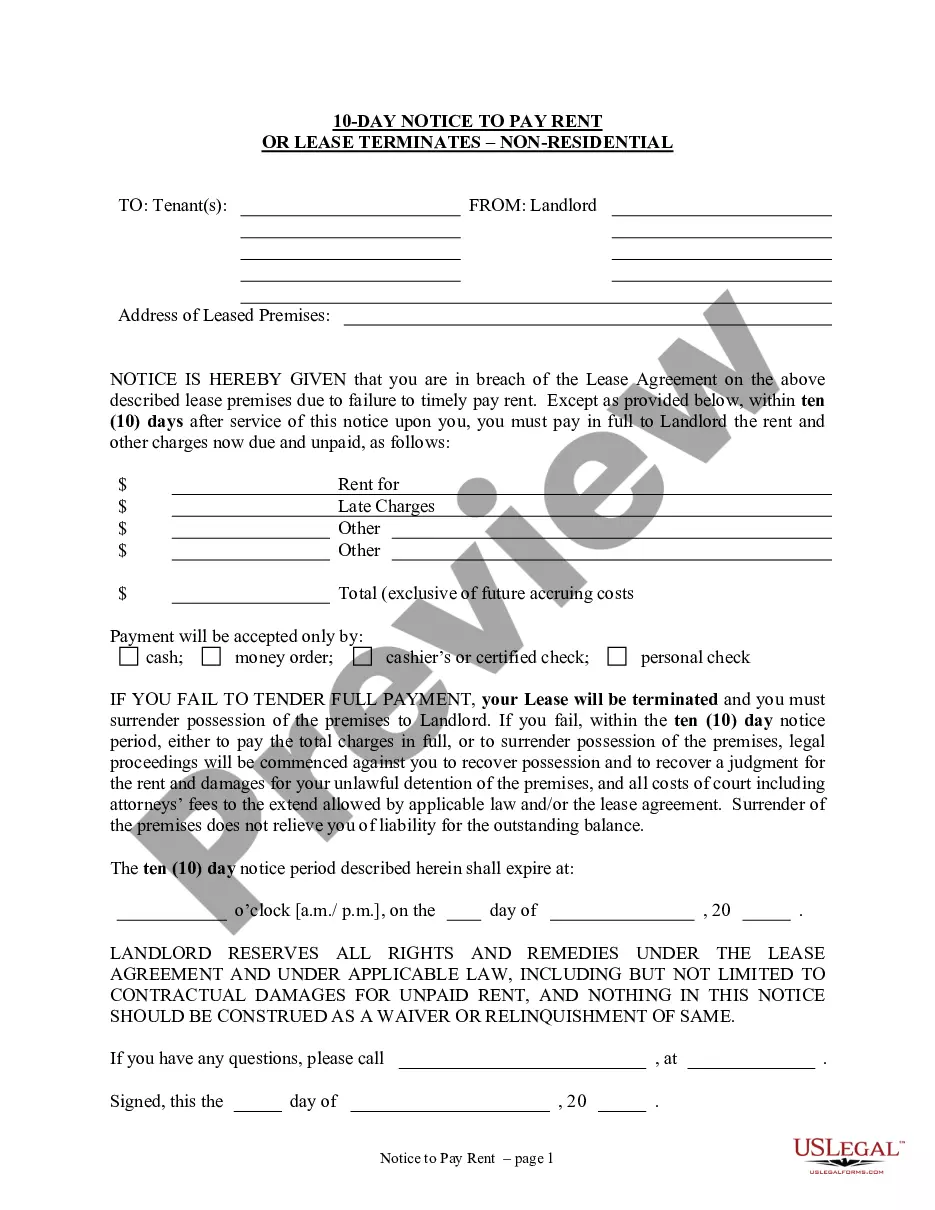
This form is a 10 Days Notice to Pay Rent or Lease Terminates for Residential Property. It is used by landlords to formally request payment of overdue rent from tenants within ten days of the notice. If the tenant does not pay within this timeframe, the landlord may terminate the lease and commence eviction proceedings. This notice highlights the urgency of rent payment and differentiates itself from other notices by specifically addressing residential properties such as houses, apartments, or condos.
What’s included in this form
- Details of the tenant(s) and landlord.
- Address of the leased premises.
- Statement of breach due to non-payment of rent.
- Ten-day period for payment of overdue rent.
- Consequences of failing to pay rent, including lease termination and possible eviction.
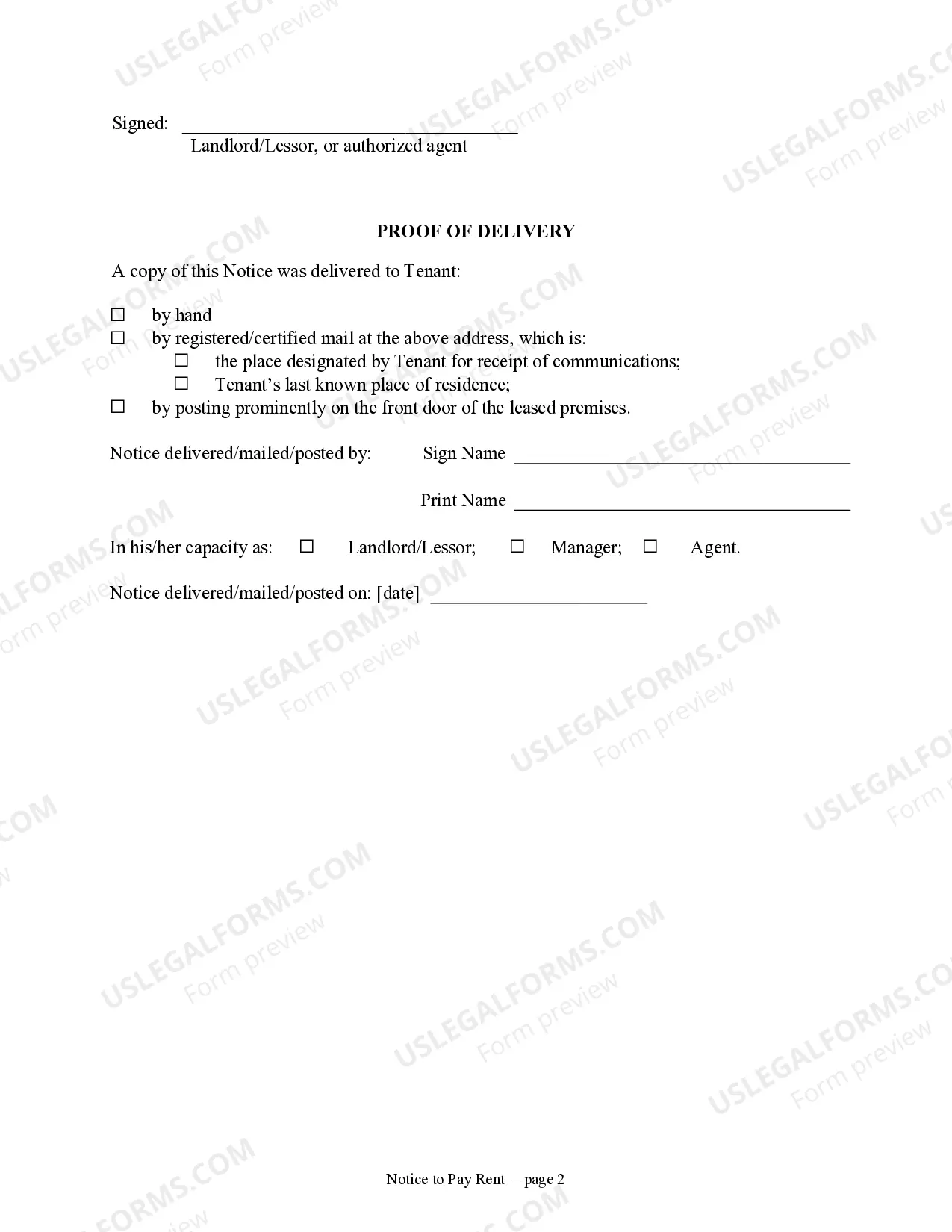
- Proof of delivery section to confirm that the notice was received by the tenant.
When to use this document
Use this notice when a tenant has failed to pay rent on time and you need to formally request payment. This form is essential if you plan to terminate the lease or initiate eviction procedures due to non-payment. It provides clear communication regarding the consequences of failing to pay rent within the specified period.
Who can use this document
This form is intended for:
- Residential landlords managing rental properties.
- Property managers acting on behalf of landlords.
- Landlords dealing with tenants who are behind on rent payments.
Steps to complete this form
- Identify and enter the names of the landlord and tenant(s).
- Provide the address of the property involved in the lease.
- Specify the overdue rent and any late charges owed.
- Indicate the method of payment and required payment timeline.
- Complete the proof of delivery section to confirm the tenant received the notice.
Is notarization required?
In most cases, this form does not require notarization. However, some jurisdictions or signing circumstances might. US Legal Forms offers online notarization powered by Notarize, accessible 24/7 for a quick, remote process.
Get your form ready online
Our built-in tools help you complete, sign, share, and store your documents in one place.
Make edits, fill in missing information, and update formatting in US Legal Forms—just like you would in MS Word.
Download a copy, print it, send it by email, or mail it via USPS—whatever works best for your next step.
Sign and collect signatures with our SignNow integration. Send to multiple recipients, set reminders, and more. Go Premium to unlock E-Sign.
If this form requires notarization, complete it online through a secure video call—no need to meet a notary in person or wait for an appointment.
We protect your documents and personal data by following strict security and privacy standards.

Make edits, fill in missing information, and update formatting in US Legal Forms—just like you would in MS Word.

Download a copy, print it, send it by email, or mail it via USPS—whatever works best for your next step.

Sign and collect signatures with our SignNow integration. Send to multiple recipients, set reminders, and more. Go Premium to unlock E-Sign.

If this form requires notarization, complete it online through a secure video call—no need to meet a notary in person or wait for an appointment.

We protect your documents and personal data by following strict security and privacy standards.
Common mistakes
- Not providing the correct tenant address, which can affect delivery.
- Failing to specify the total amount due, leading to confusion.
- Not including a clear deadline for payment.
- Overlooking local laws that may require different notice periods.
Benefits of using this form online
- Easy to download and fill out at your convenience.
- Accessible and editable, allowing you to customize the notice to your needs.
- Prepared by licensed attorneys, ensuring legal accuracy.
Legal use & context
- This notice serves as a formal declaration of a lease violation due to non-payment.
- Valid only if delivered in accordance with state laws for notice requirements.
- Can be used as evidence in legal proceedings if eviction becomes necessary.
Main things to remember
- The 10 Days Notice is essential for landlords to enforce payment terms.
- Timely delivery and accuracy are crucial for legal compliance.
- Failure to pay can lead to further legal action, including eviction.
Looking for another form?
Form popularity
FAQ
1 month's notice if your tenancy runs from month to month. 4 weeks' notice if your tenancy runs from week to week. If you live with your landlord. You don't have to give a set amount of notice (unless your tenancy agreement says otherwise).
If the tenant does not leave by the date and time given in the notice, then the landlord must apply for a court order within 10 days to end the tenancy. If the landlord does not apply within 10 days, the tenancy stays in place and the tenant can continue living in the property.
1) Eviction Notices An eviction notice must first be served properly and the tenant must have failed to comply, pay, or vacate within the specified timeframe. This must happen before the landlord can begin the eviction court process by serving you an unlawful detainer eviction lawsuit, called a Summons & Complaint.
1) Give your landlord at least 20 days written notice. The law requires that month-to-month tenants give landlords at least 20 days written notice before vacating their units. If you are unsure about what kind of rental agreement you have, see more details in Rental Agreements.
In Colorado, evictions are sometimes referred to as forcible entry & detainer (FED). Before you can file for eviction, you must generally provide 10 days' notice (increased from 3 days prior) for tenants to correct a deficiency or leave the property, except in certain circumstances.
Your name, and the landlord's name and address. The date you're writing the letter. Informing the landlord you're breaking your lease early. The reason why you're breaking your lease. The building and apartment you're vacating. The date by which you're vacating.
Dear (Name of landlord or manager), This letter constitutes my written (number of days' notice that you need to give based on your lease agreement)-day notice that I will be moving out of my apartment on (date), the end of my current lease. I am leaving because (new job, rent increase, etc.)
State law regulates several rent-related issues, including late and bounced-check fees, the amount of notice (at least 30 days in Washington) landlords must give tenants to raise the rent and how much time (three days in Washington) a tenant has to pay rent or move before a landlord can file for eviction.
A. In a month-to-month tenancy, the landlord may raise the rent after giving the tenant 45 days' written notice.