Vermont Partial Release of Property From Mortgage by Individual Holder
What this document covers
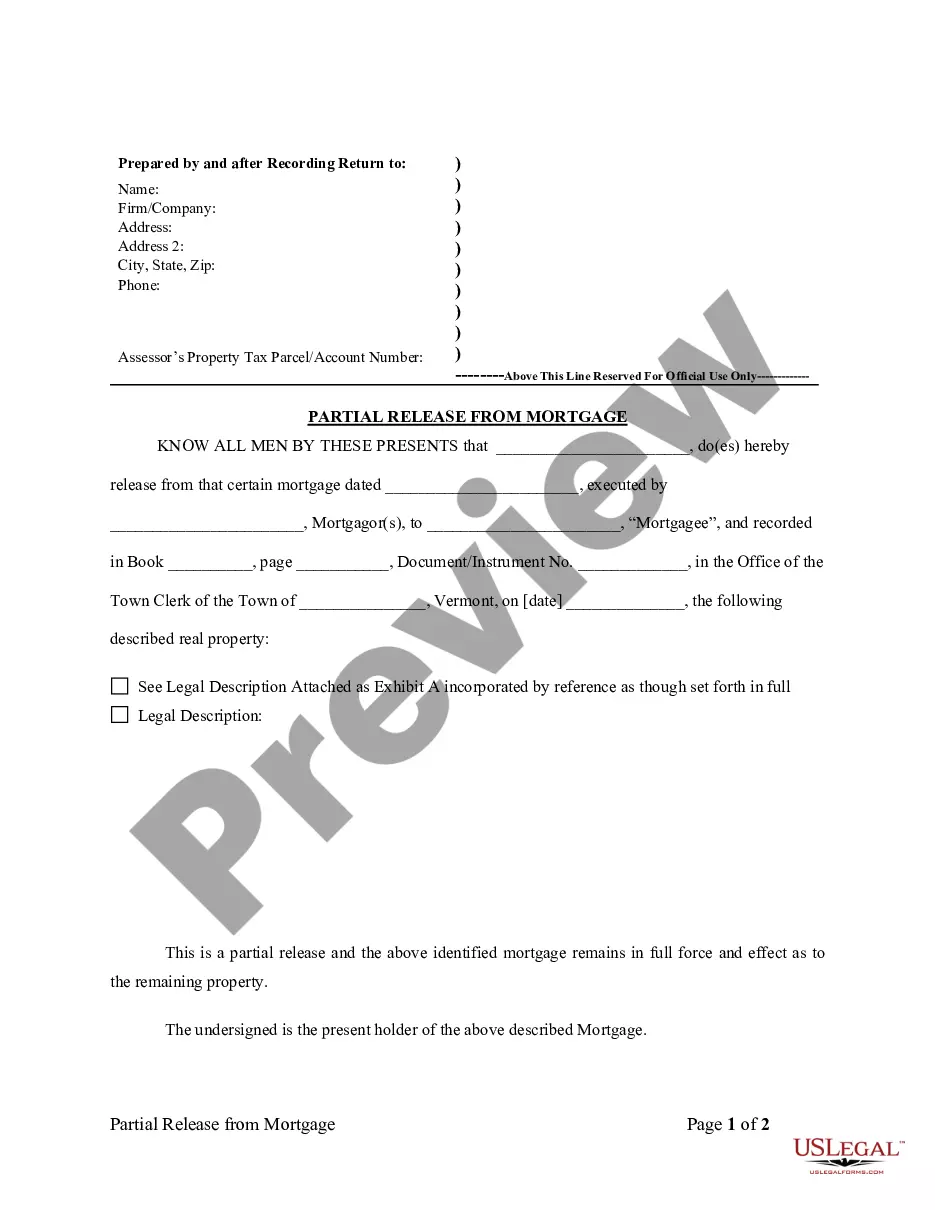
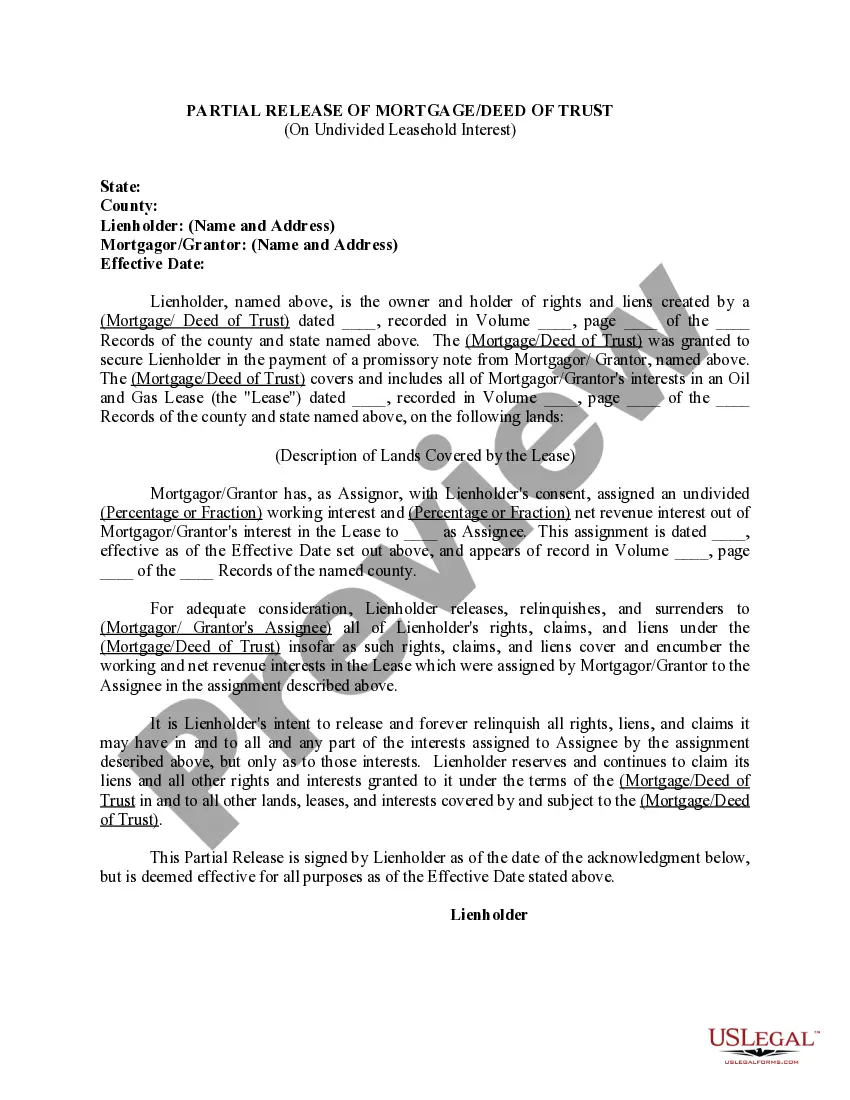
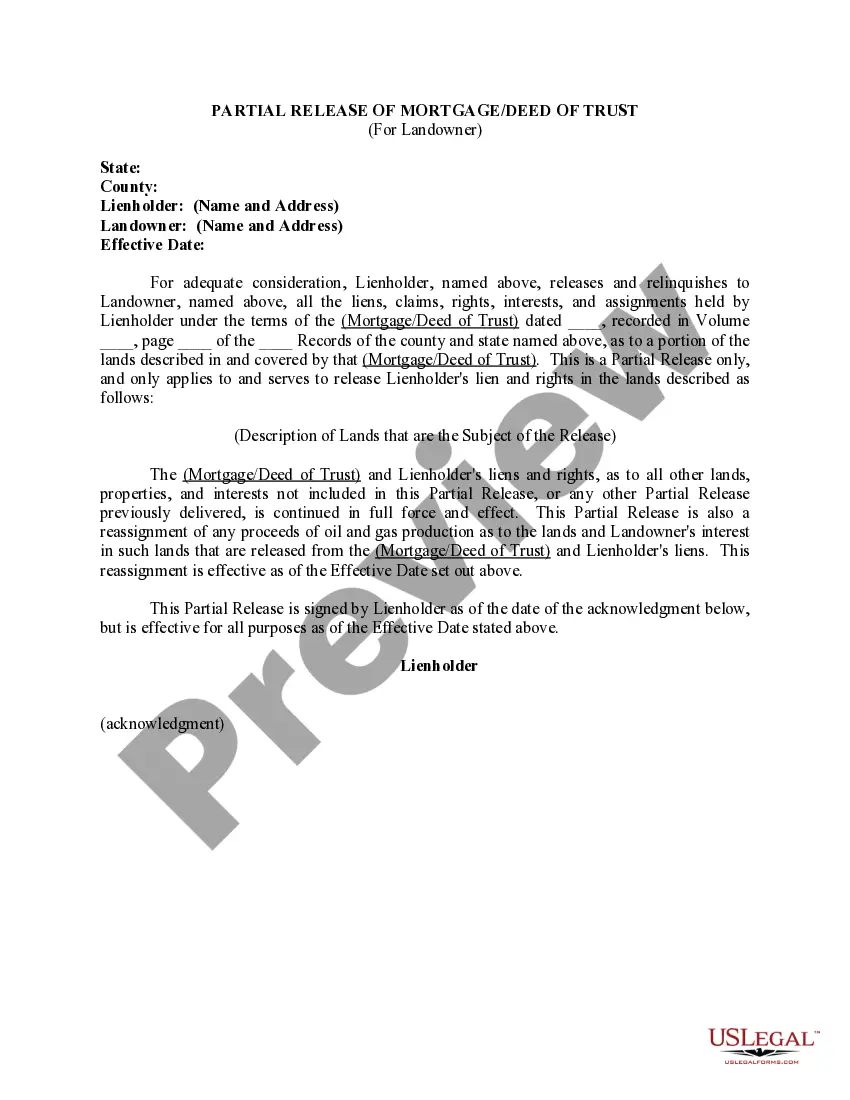
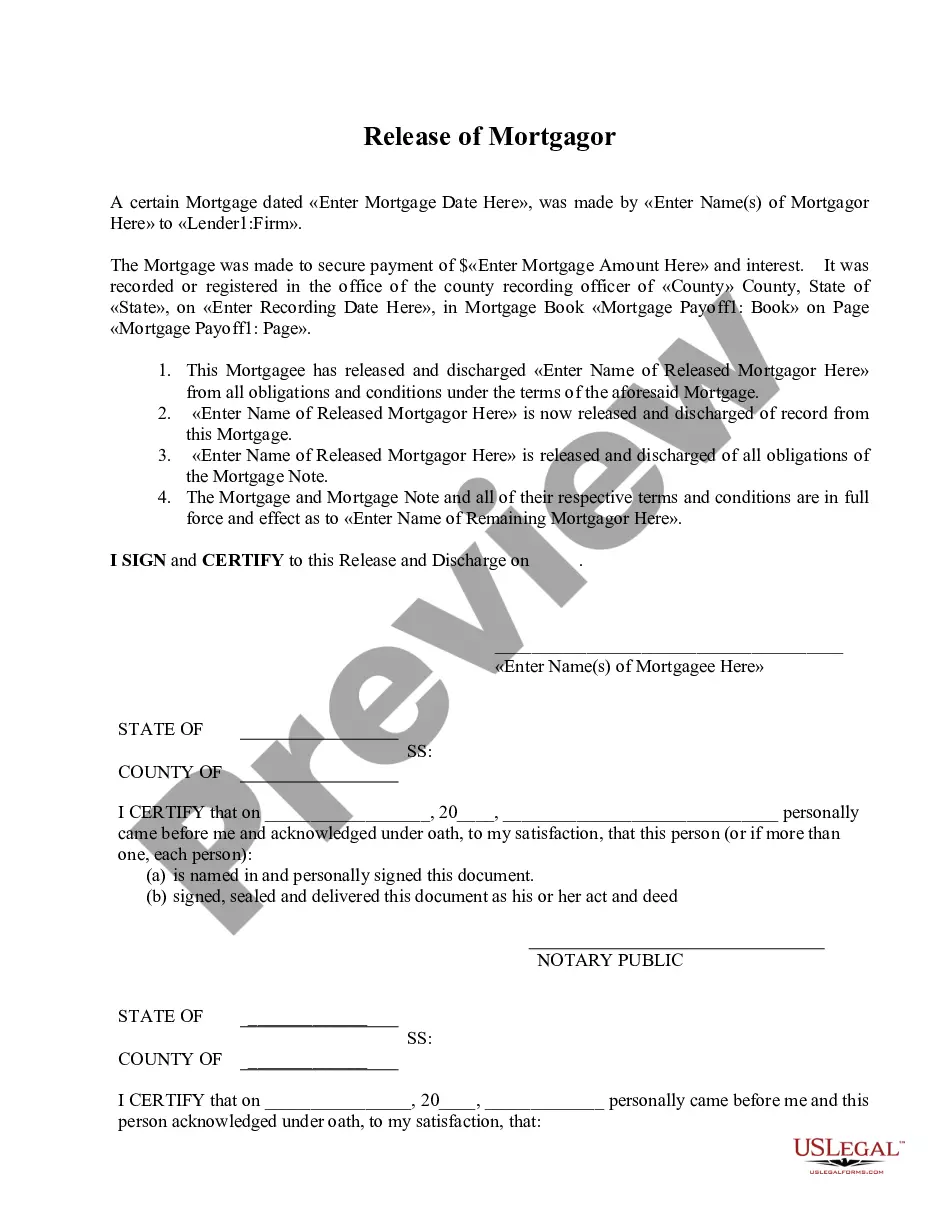
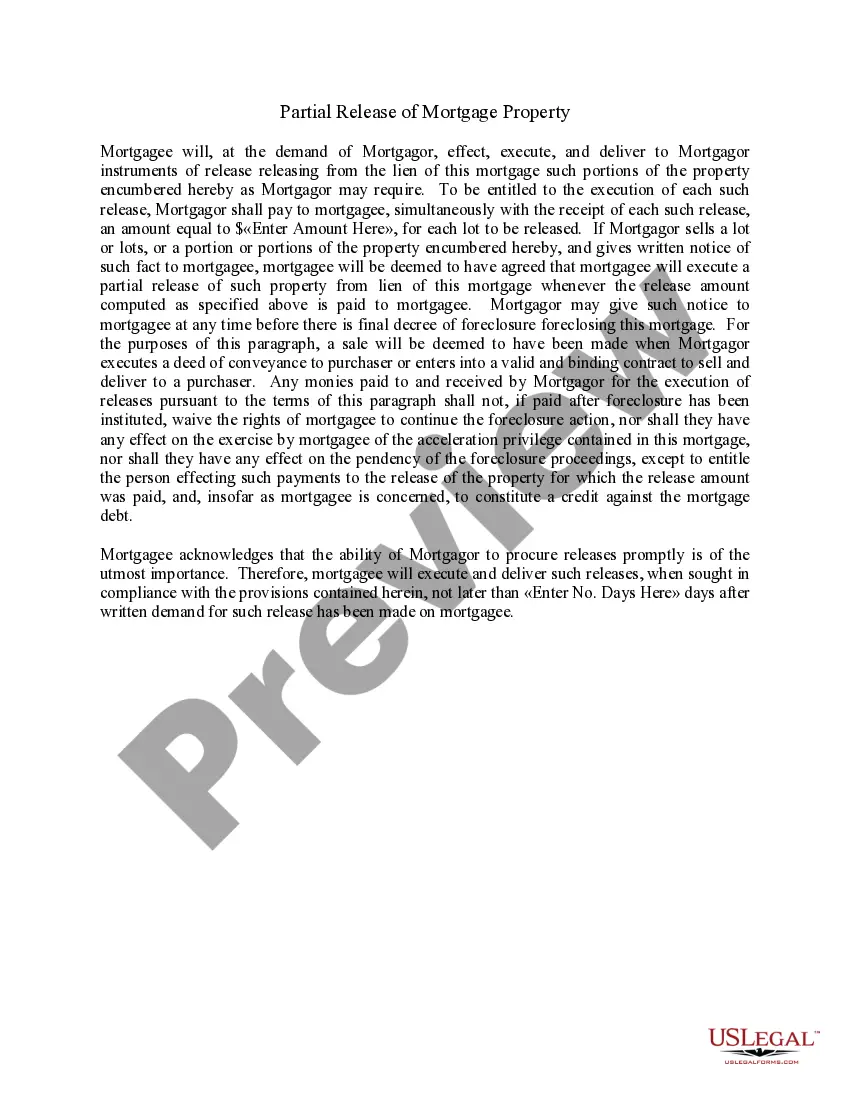
The Partial Release of Property from Mortgage by Individual Holder is a legal document used by the holder of a mortgage or deed of trust to release a specific portion of real property that was previously used as collateral. This form is essential when the holder wants to allow the release of a part of the property while maintaining the mortgage's validity on the remaining property. This differs from other forms that may also address mortgages but do not specifically facilitate partial releases.
Key parts of this document
- Identification of the mortgage holder and the specific deed of trust or mortgage.
- A detailed description of the property being released.
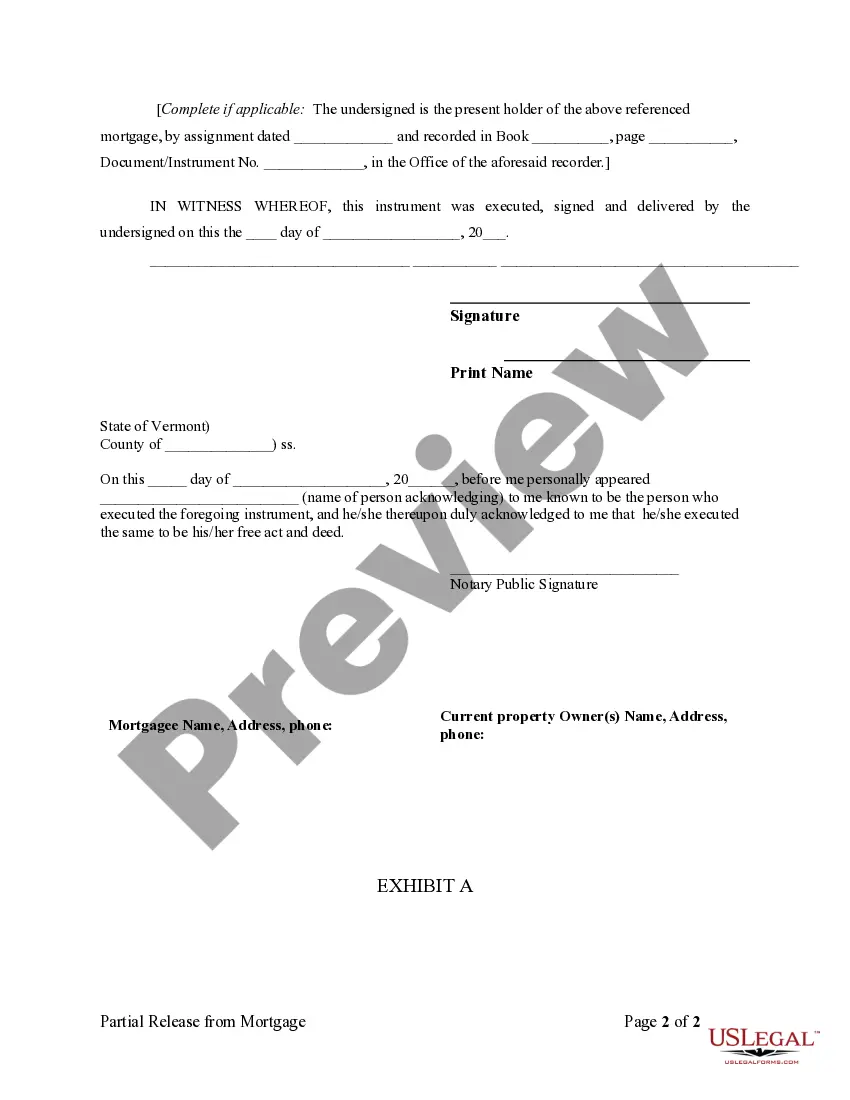
- Notation of the assignment details of the mortgage, including recording information.
- A section for notarization to validate the release of property.


When to use this form
This form is used when a mortgage holder wishes to release a portion of the property from a mortgage agreement. It's commonly employed in situations like selling part of the property, refinancing a mortgage, or when the property has been subdivided. Using this form ensures that the remaining property is still protected under the original mortgage agreement.
Who can use this document
- Mortgage holders looking to release part of their property from a mortgage.
- Individuals or entities with a deed of trust who wish to modify the terms concerning specific property sections.
- Real estate professionals involved in transactions requiring partial property releases.
How to prepare this document
- Identify the present holder of the mortgage and provide their details.
- Clearly describe the property being released from the mortgage.
- Document the assignment date and the recording information for transparency.
- Obtain the signature of the mortgage holder, ensuring they acknowledge their action in front of a notary.
- Make sure the date of acknowledgment is completed accurately.
Does this form need to be notarized?
This form must be notarized to be legally valid. US Legal Forms provides secure online notarization powered by Notarize, allowing you to complete the process through a verified video call.
Get your form ready online
Our built-in tools help you complete, sign, share, and store your documents in one place.
Make edits, fill in missing information, and update formatting in US Legal Forms—just like you would in MS Word.
Download a copy, print it, send it by email, or mail it via USPS—whatever works best for your next step.
Sign and collect signatures with our SignNow integration. Send to multiple recipients, set reminders, and more. Go Premium to unlock E-Sign.
If this form requires notarization, complete it online through a secure video call—no need to meet a notary in person or wait for an appointment.
We protect your documents and personal data by following strict security and privacy standards.

Make edits, fill in missing information, and update formatting in US Legal Forms—just like you would in MS Word.

Download a copy, print it, send it by email, or mail it via USPS—whatever works best for your next step.

Sign and collect signatures with our SignNow integration. Send to multiple recipients, set reminders, and more. Go Premium to unlock E-Sign.

If this form requires notarization, complete it online through a secure video call—no need to meet a notary in person or wait for an appointment.

We protect your documents and personal data by following strict security and privacy standards.
Common mistakes to avoid
- Failing to accurately describe the property being released, leading to legal complications.
- Not providing complete assignment details or recording information.
- Neglecting to have the document notarized when required.
Benefits of using this form online
- Convenient access to the form from any location, allowing for easy completion.
- Editable format that allows customization to meet specific needs.
- Reliability of attorney-drafted forms ensuring their legality and compliance.
Key takeaways
- The Partial Release of Property from Mortgage is crucial for legally releasing part of your property from a mortgage.
- Accurate completion and notarization are essential for the validity of this form.
- This form is versatile and can be adapted for various state-specific laws, enhancing its usefulness.
Looking for another form?
Form popularity
FAQ
A Mortgage Release is where you, the homeowner, voluntarily transfer the ownership of your property to the owner of your mortgage in exchange for a release from your mortgage loan and payments.Depending on your situation, you may be required to make a financial contribution to receive a mortgage release.
The Grantor is any person conveying or encumbering, whom any Lis Pendens, Judgments, Writ of Attachment, or Claims of Separate or Community Property shall be placed on record. The Grantor is the seller (on deeds), or borrower (on mortgages). The Grantor is usually the one who signed the document.
Pay off your debt. Fill out a release-of-lien form and have the lien holder sign it. Run out the statute of limitations. Get a court order. Make a claim with your title insurance company. Learn more:
If you can't find out which company took over, call the Federal Deposit Insurance Corporation's (FDIC) lien release number at (888) 206-4662 (toll free) or visit the Closed Banks and Asset Sales section on the FDIC's "Contact Us" page.
Take possession of all the papers. Get an NOC. Get your CIBIL report updated. Get the lien withdrawn. Get an encumbrance certificate.
A Mortgage Release is where you, the homeowner, voluntarily transfer the ownership of your property to the owner of your mortgage in exchange for a release from your mortgage loan and payments.Depending on your situation, you may be required to make a financial contribution to receive a mortgage release.
In most cases, the lien holder (the lender in this case) should send the release to be recorded within 30-90 days. If you aren't sure what the requirements are in your area, reach out to your real estate agent, title agent, or real estate attorney for guidance.
In general a discharge fee costs between $275 and $325, but may be higher or lower. Some states impose a "release of mortgage" fee.
Once your lender receives the payoff letter and funds, the loan is paid off in full. Lenders then need to prepare a release deed or release of lien to clear the title to the property. The release, once recorded, gives notice to the world that you have paid off the loan and that the lien is no longer valid.