Virginia Residential Real Estate Sales Disclosure Statement
Understanding this form
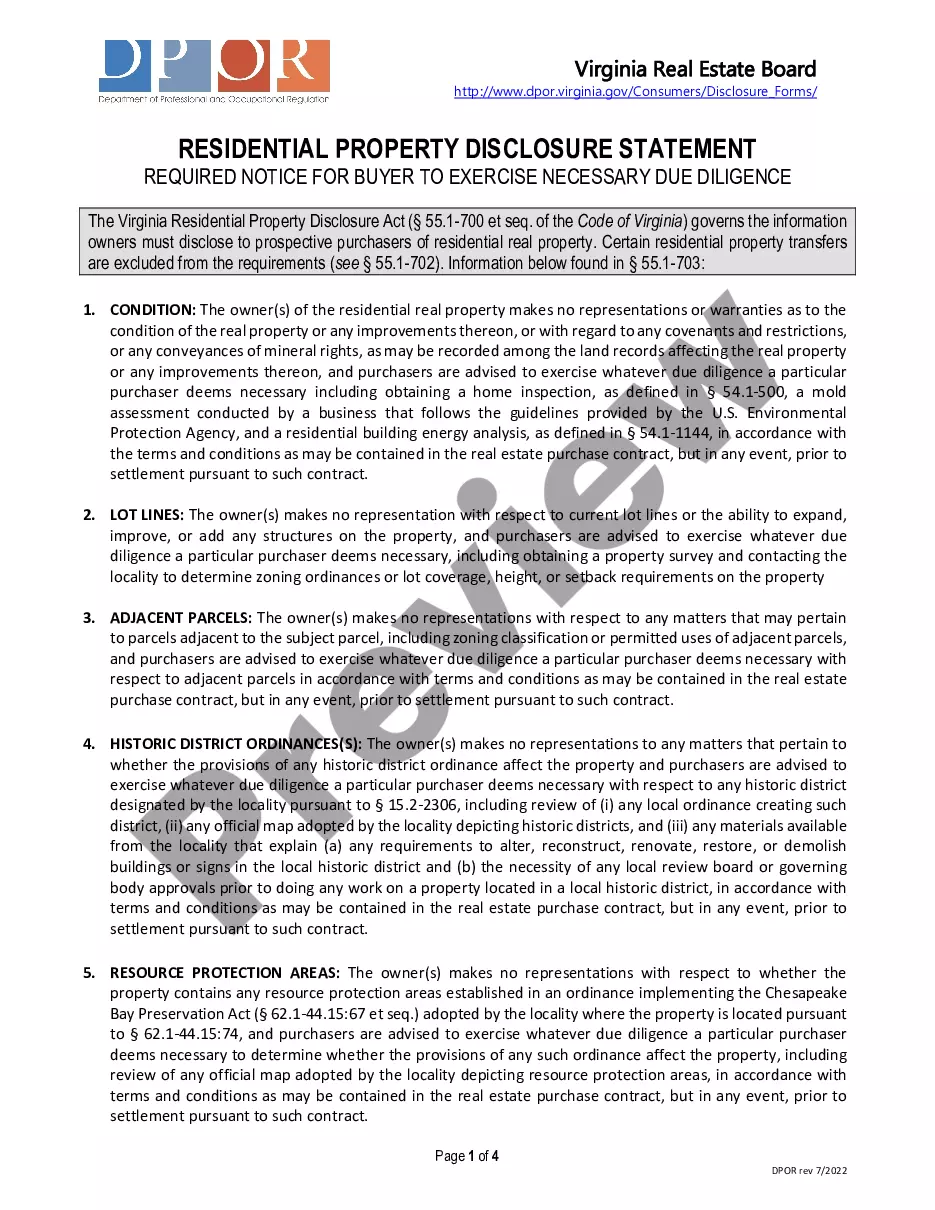
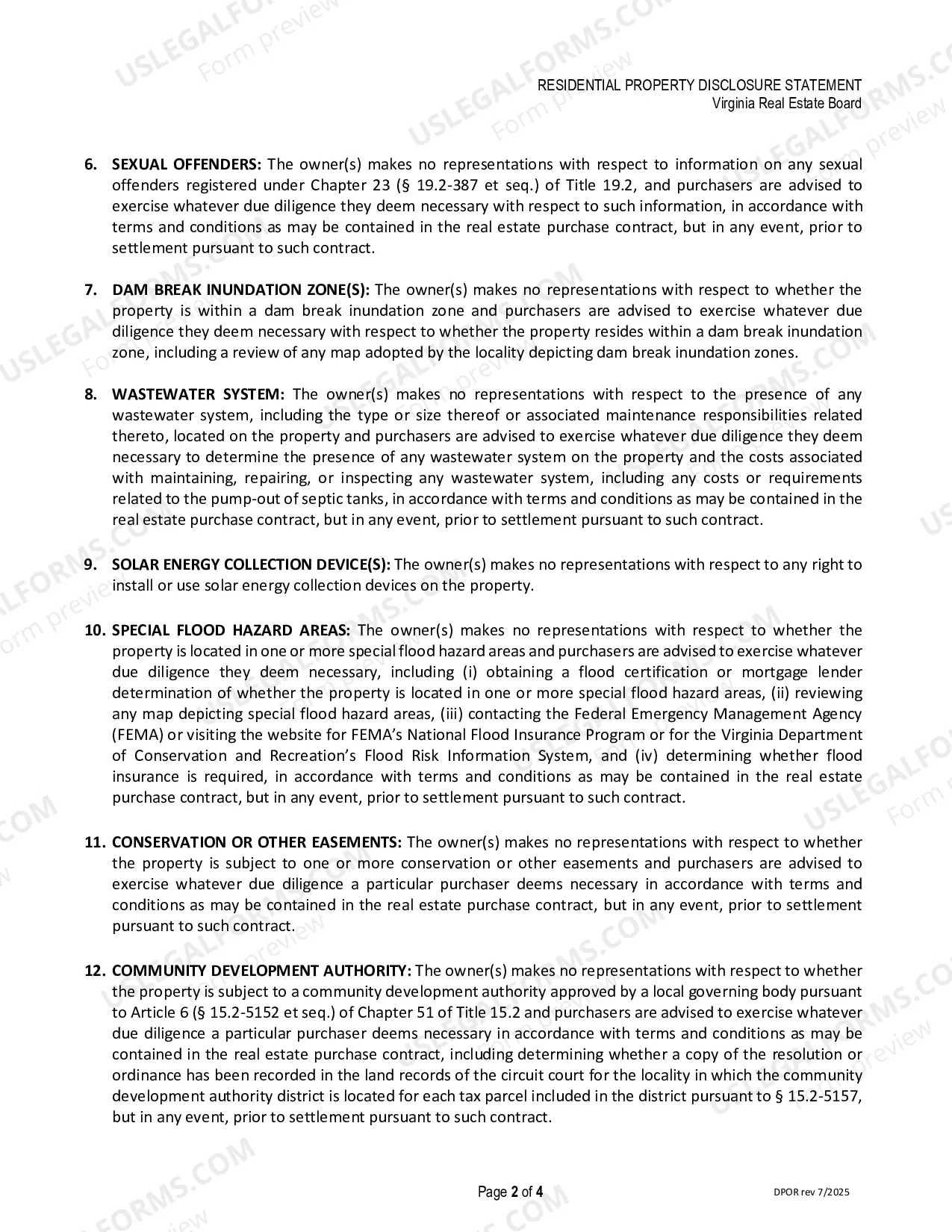
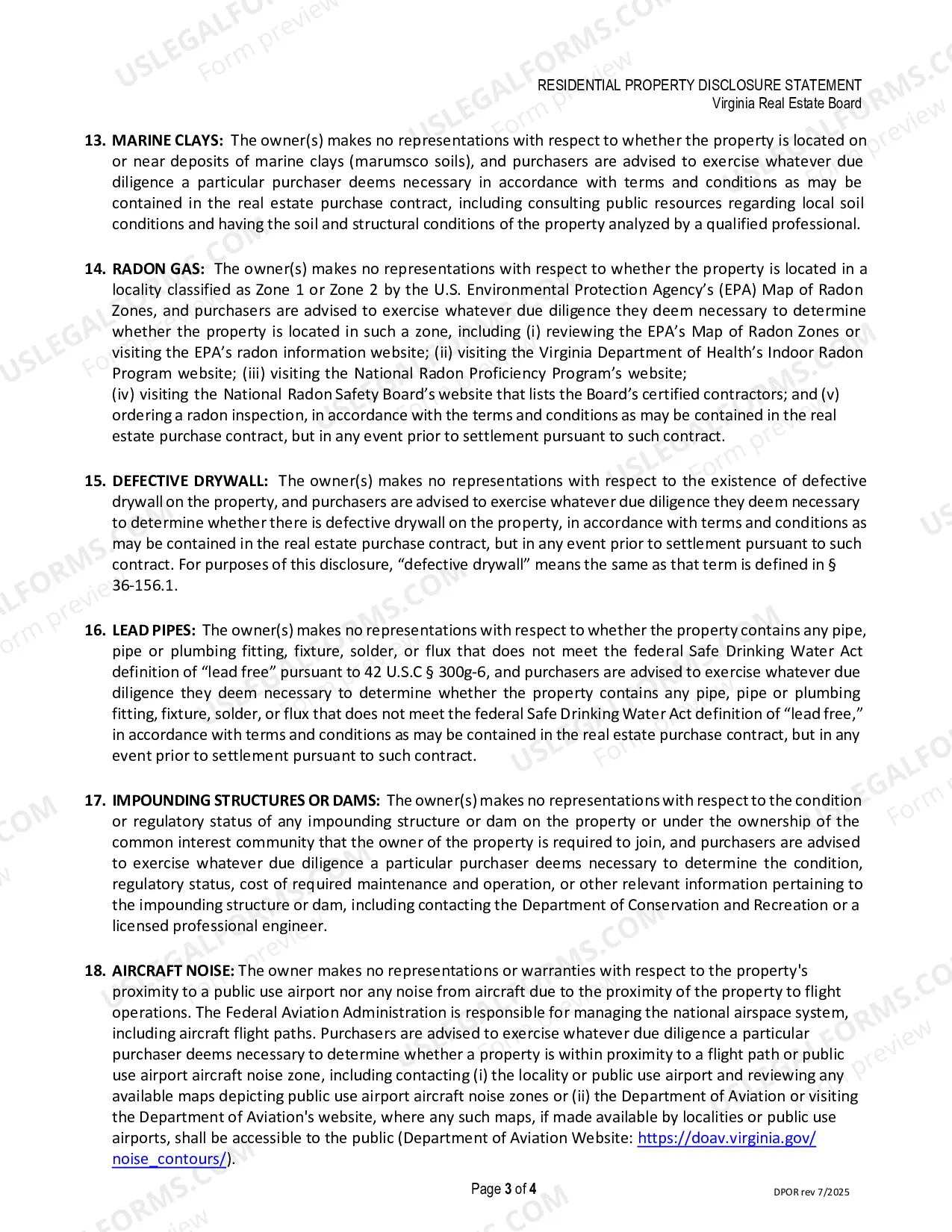
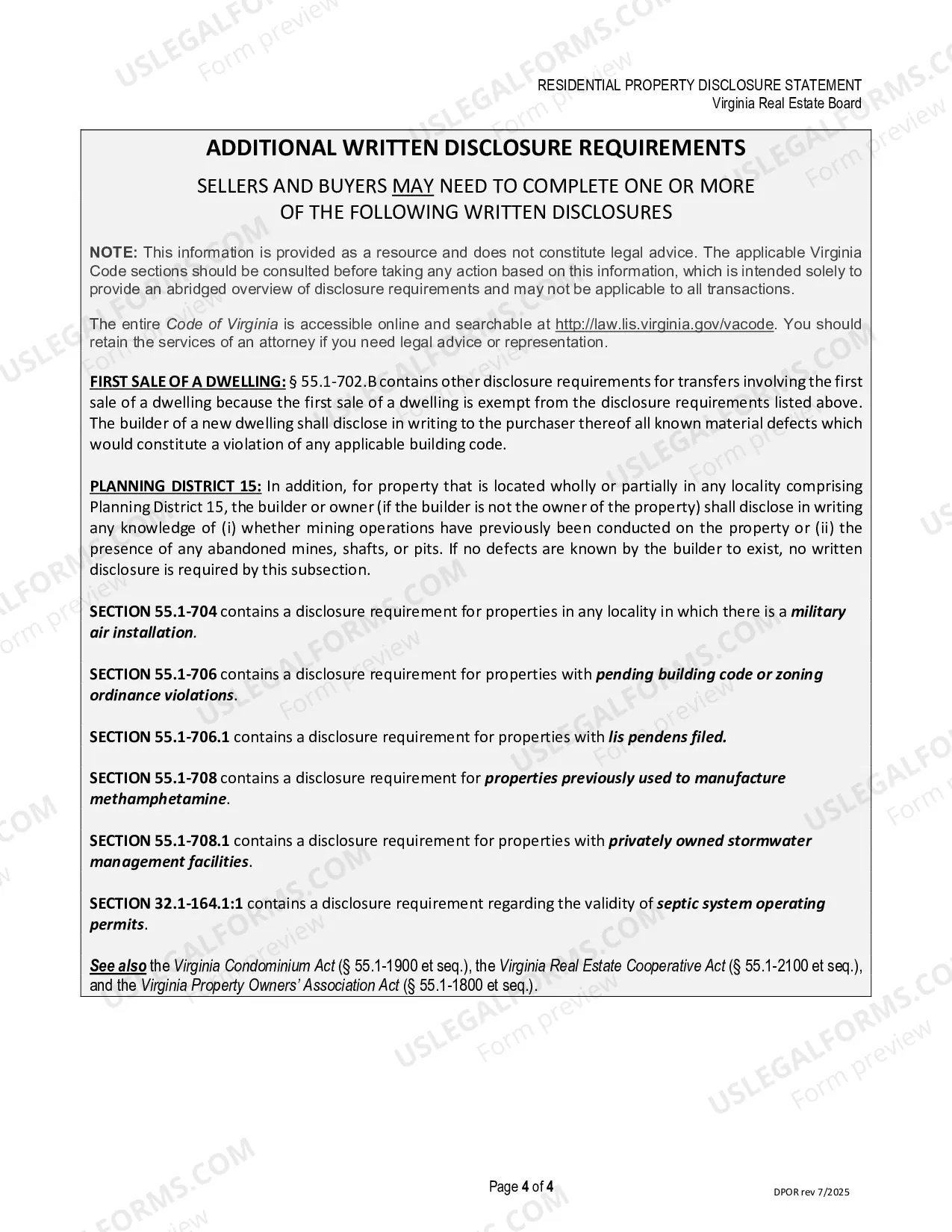
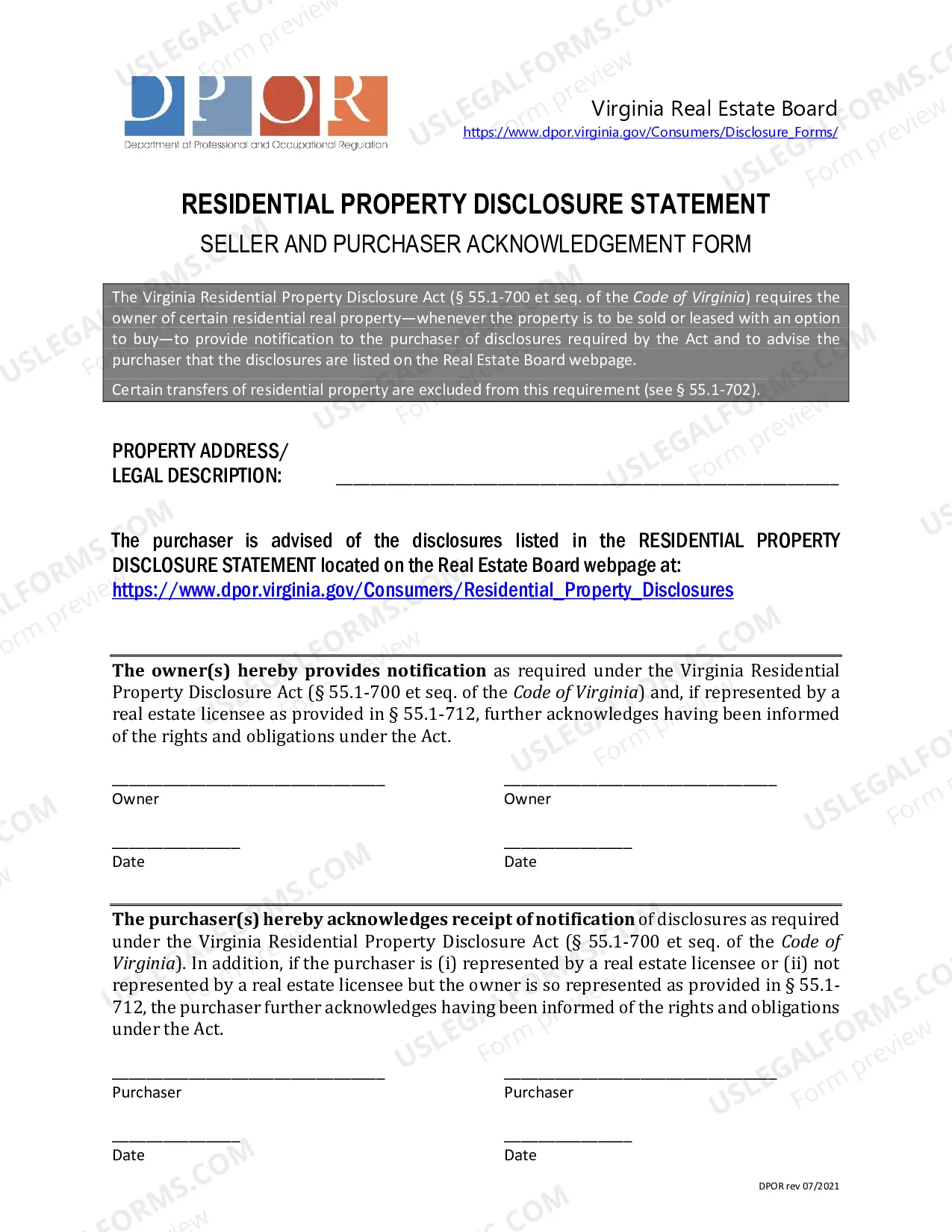
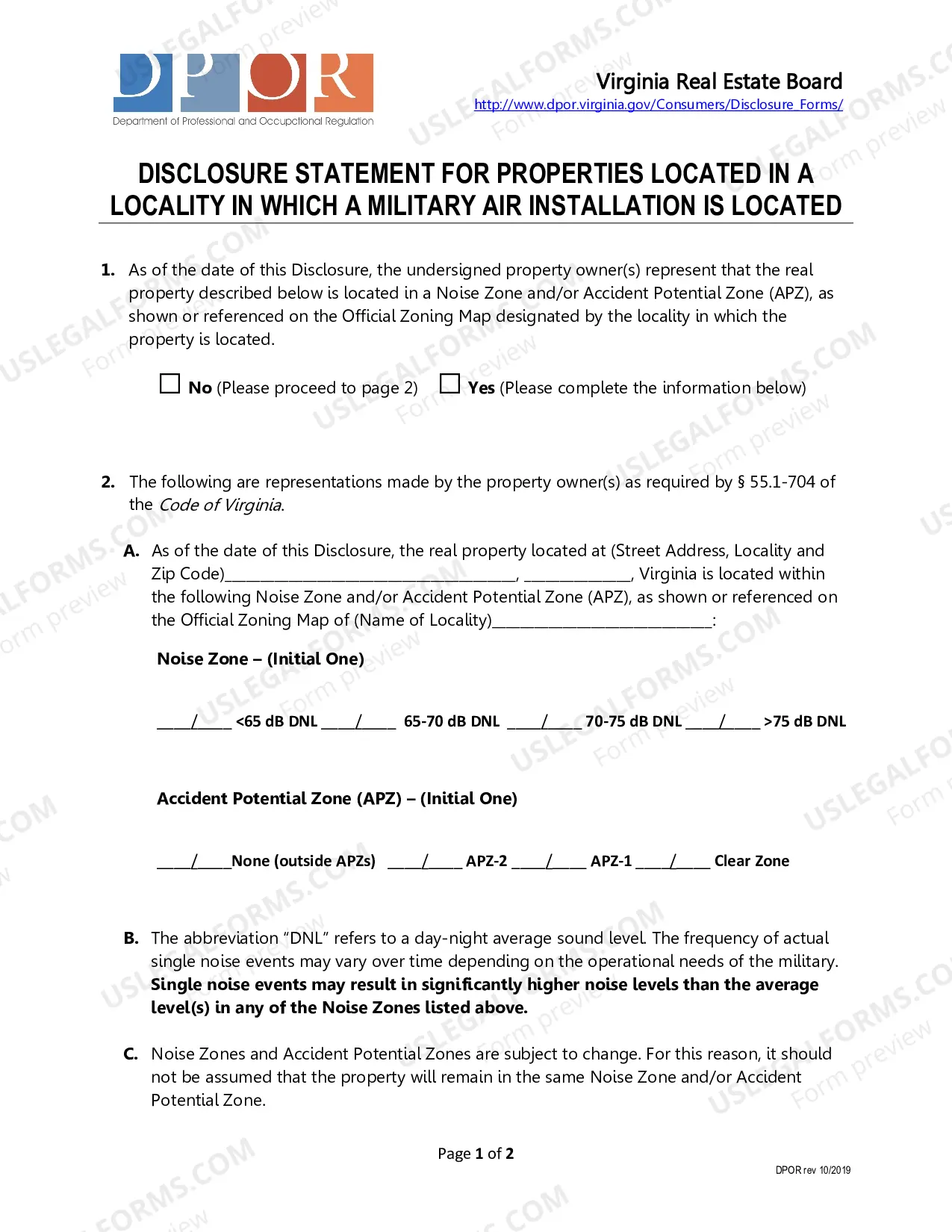
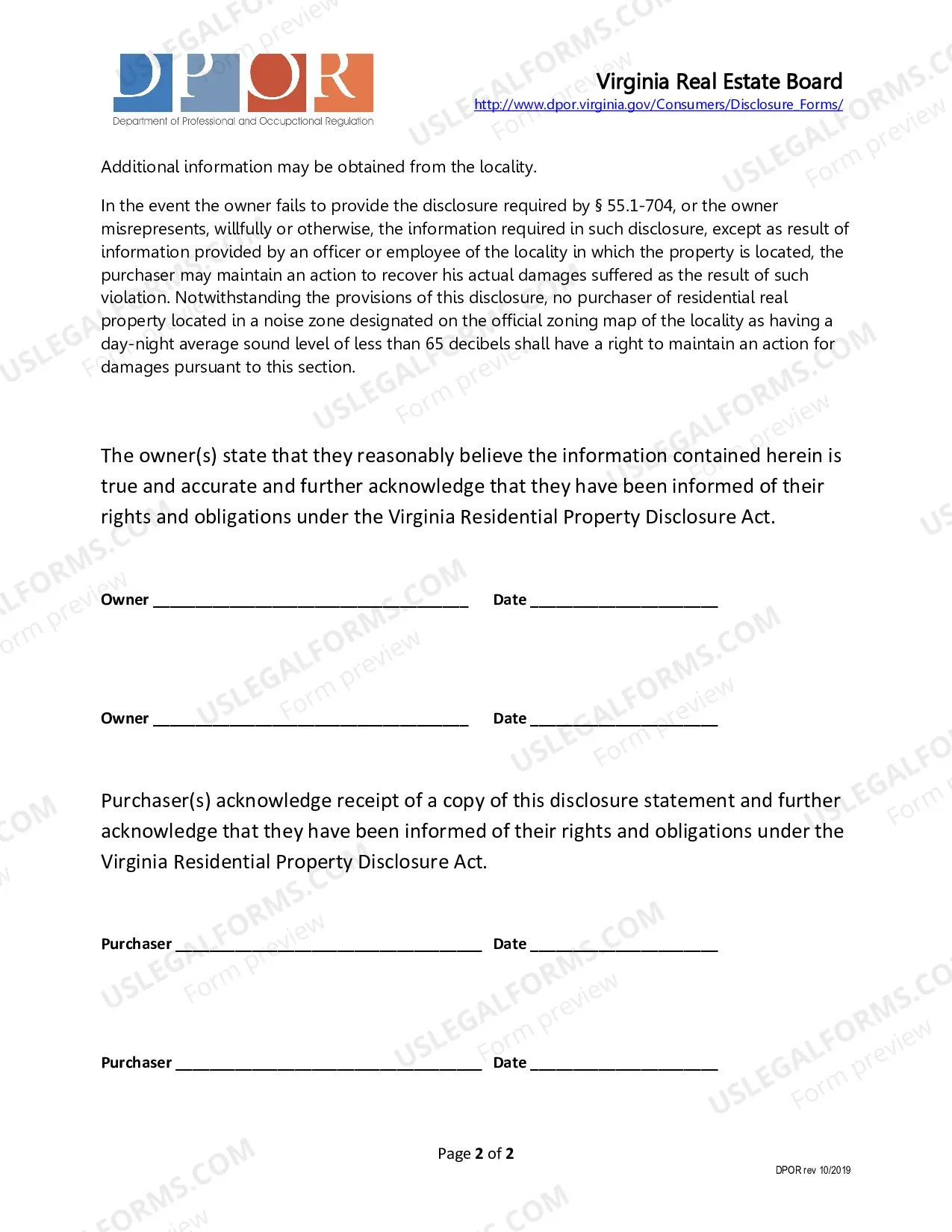
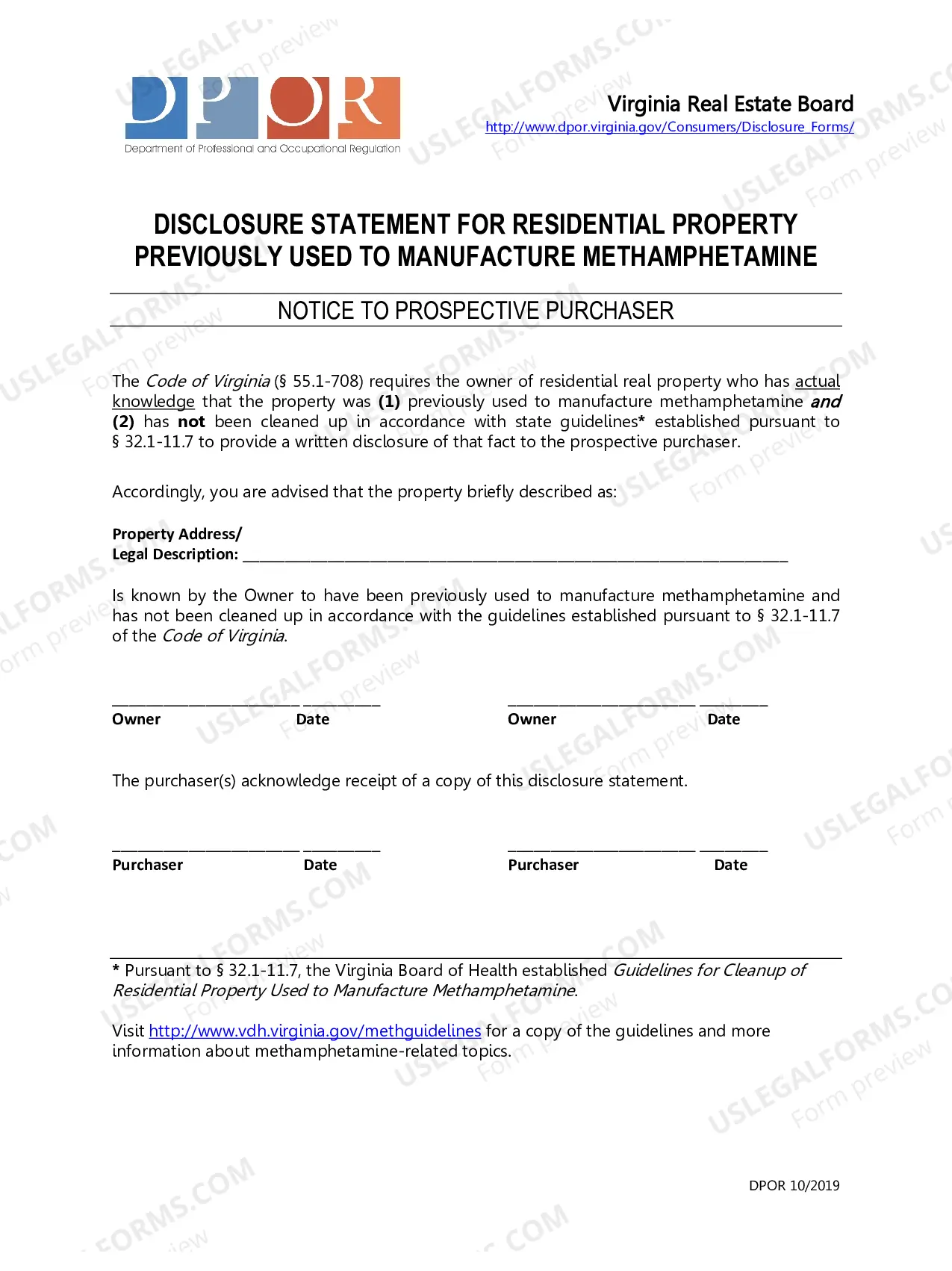
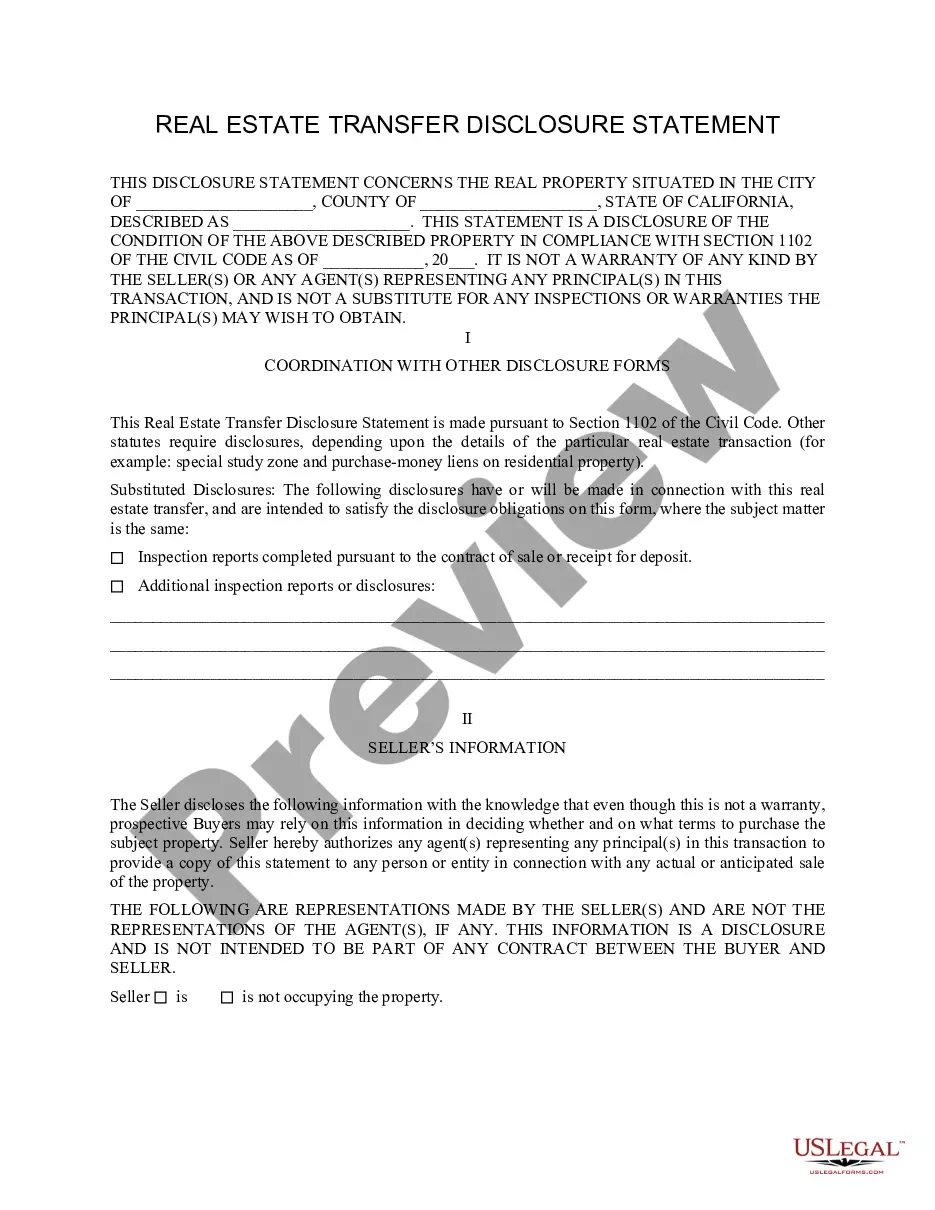
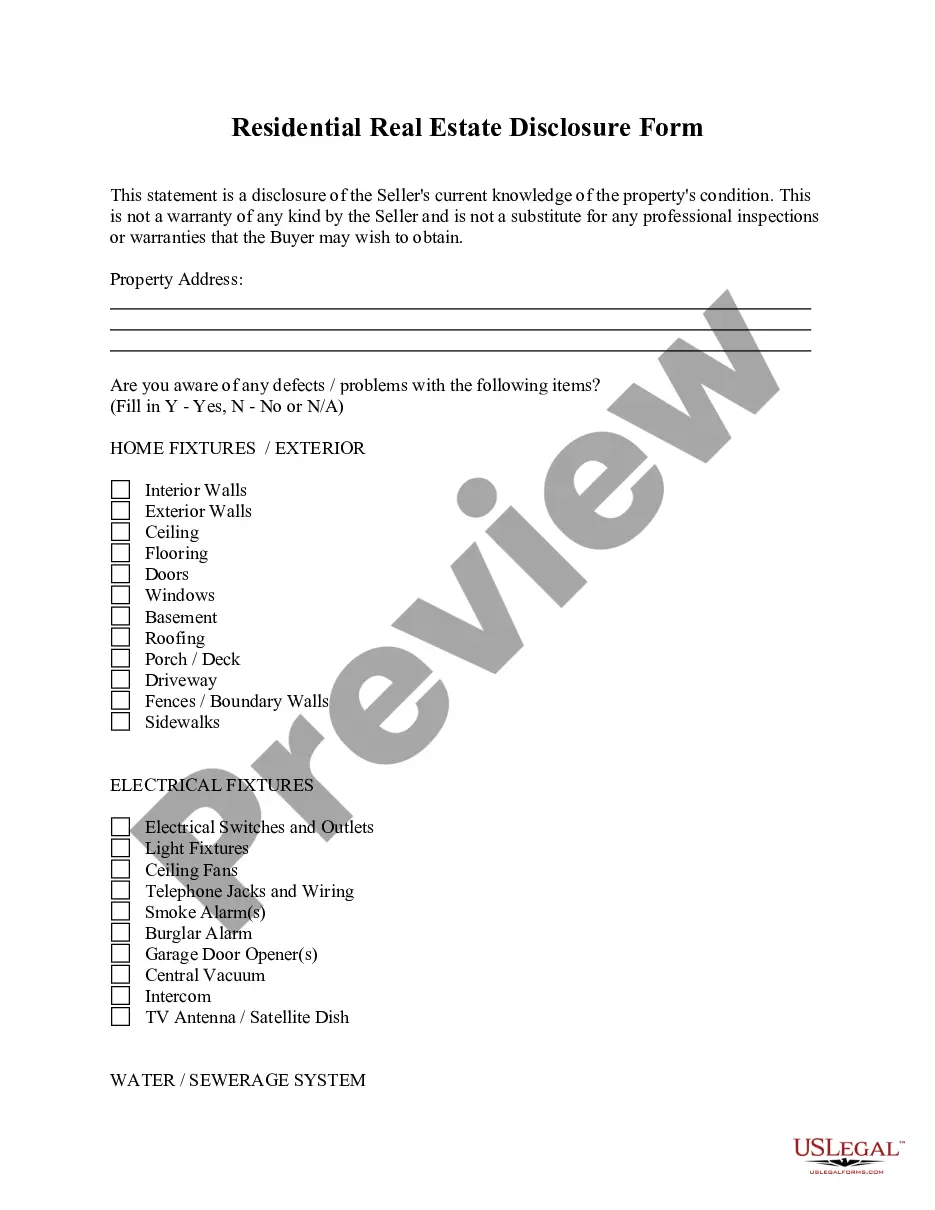
The Residential Real Estate Sales Disclosure Statement is a legally required document used in Virginia residential sales transactions. Its purpose is to inform prospective buyers about the conditions of the property, allowing them to make informed decisions. This form ensures that sellers disclose any known issues or concerns related to the property, setting it apart from other real estate forms that may not contain such specific disclosure requirements.
Main sections of this form
- Condition of the property and its improvements.
- Current lot lines and potential for property expansion.
- Information on adjacent properties and their zoning classifications.
- Disclosure of any historic district ordinance affecting the property.
- Presence of resource protection areas, such as those under the Chesapeake Bay Preservation Act.
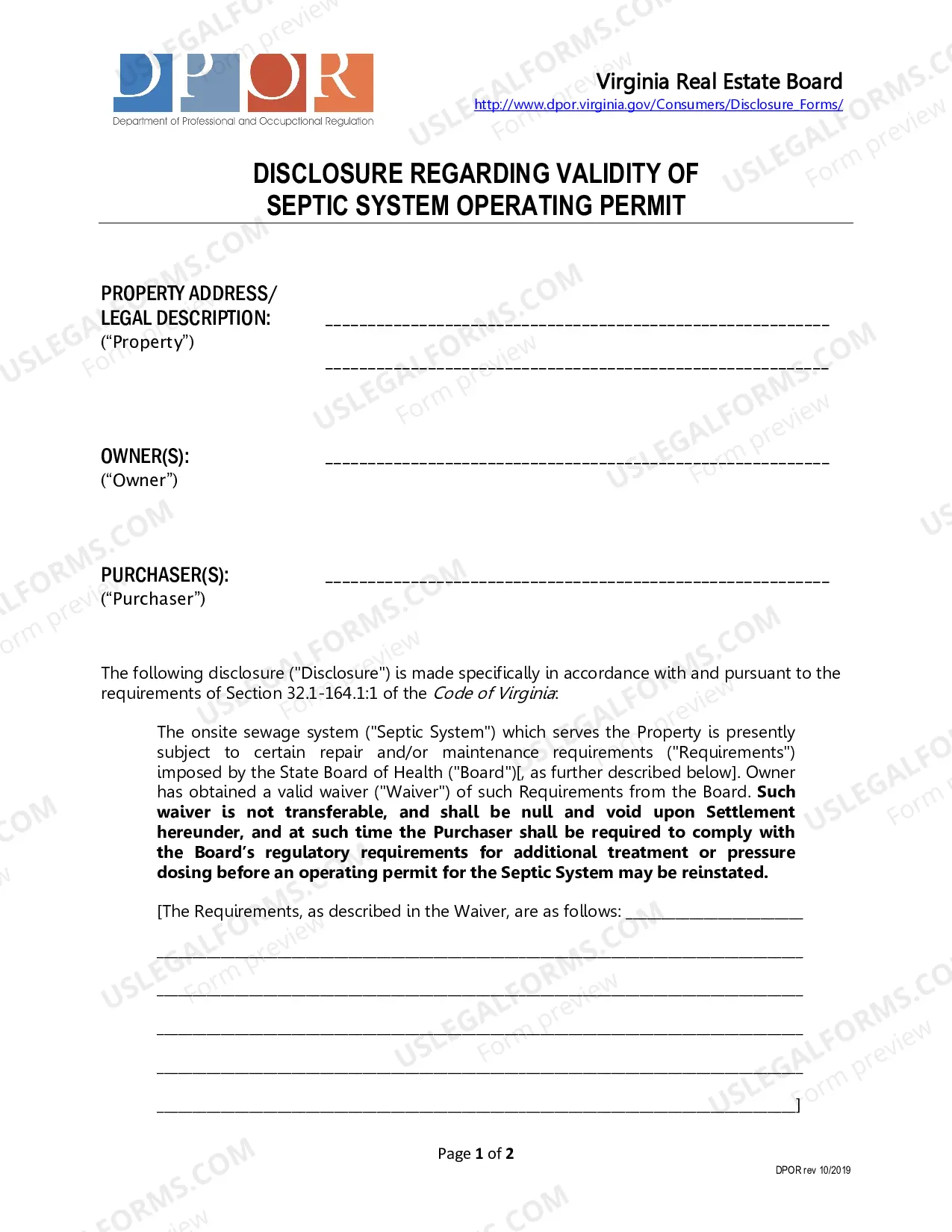
- Details on wastewater systems, flood hazard areas, and other environmental concerns.
- Disclosure of any community development authority or special assessments.

When to use this form
This form should be used whenever a residential property in Virginia is being sold. It is necessary for ensuring compliance with the Virginia Residential Property Disclosure Act, particularly for transactions involving homes where certain disclosures are mandated. The form is critical in providing transparency regarding the physical and environmental conditions of the property to prospective buyers.
Who needs this form
- Sellers of residential properties in Virginia.
- Real estate agents representing sellers in property transactions.
- Buyers of residential properties seeking essential information about the property's condition.
Steps to complete this form
- Identify and enter the property address and legal description.
- Provide necessary details about the condition of the property and any known issues.
- Document any disclosures pertaining to adjacent properties, flood risks, and environmental concerns.
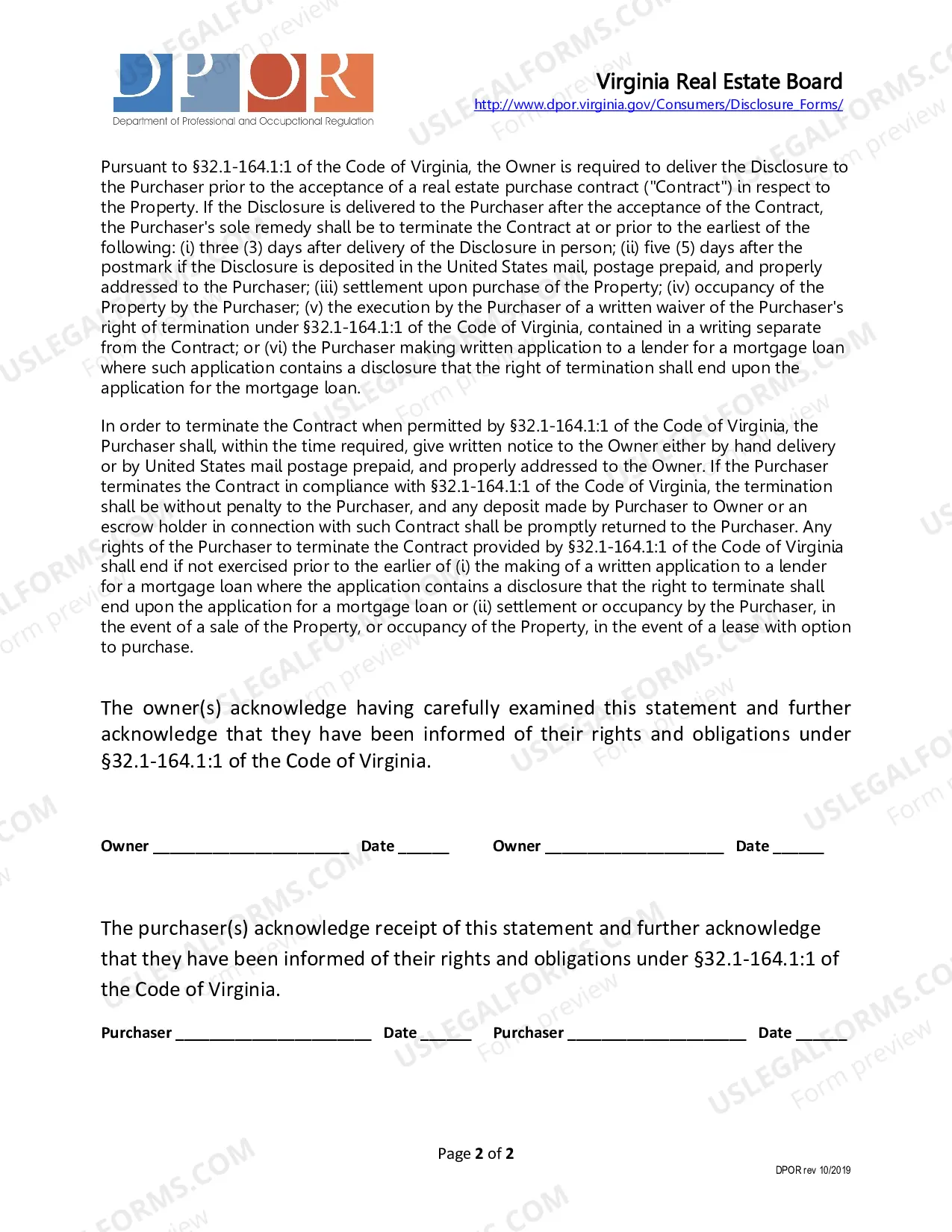
- Have all required parties (sellers and buyers) review and sign the form to acknowledge receipt and understanding.
Does this form need to be notarized?
This form does not typically require notarization unless specified by local law. However, having it notarized can enhance its legitimacy and may be beneficial in some cases.
Get your form ready online
Our built-in tools help you complete, sign, share, and store your documents in one place.
Make edits, fill in missing information, and update formatting in US Legal Forms—just like you would in MS Word.
Download a copy, print it, send it by email, or mail it via USPS—whatever works best for your next step.
Sign and collect signatures with our SignNow integration. Send to multiple recipients, set reminders, and more. Go Premium to unlock E-Sign.
If this form requires notarization, complete it online through a secure video call—no need to meet a notary in person or wait for an appointment.
We protect your documents and personal data by following strict security and privacy standards.

Make edits, fill in missing information, and update formatting in US Legal Forms—just like you would in MS Word.

Download a copy, print it, send it by email, or mail it via USPS—whatever works best for your next step.

Sign and collect signatures with our SignNow integration. Send to multiple recipients, set reminders, and more. Go Premium to unlock E-Sign.

If this form requires notarization, complete it online through a secure video call—no need to meet a notary in person or wait for an appointment.

We protect your documents and personal data by following strict security and privacy standards.
Mistakes to watch out for
- Failing to disclose known issues that could impact the propertyâs value.
- Not signing the form or obtaining the buyerâs signature.
- Using outdated versions of the form that do not comply with current laws.
Why use this form online
- Convenience of access and the ability to complete the form at any time.
- Editability allows for easy updates based on specific property assessments.
- Reliability, knowing the document is drafted in compliance with Virginia law.
Looking for another form?
Form popularity
FAQ
Virginia is a caveat emptor (buyer beware) state. This essentially means that the responsibility for conducting a thorough inspection of the property that is contemplated to be purchased is on the Buyer.
If a seller fails to disclose, or actively conceals, problems that affect the value of the property; they are violating the law, and may be subject to a lawsuit for recovery of damages based on claims of fraud and deceit, misrepresentation and/or breach of contract.
You will need to include information about all appliances in the home, including which are included in the sale as well as whether they are operational. You will also need to disclose any room additions, damage, or neighborhood noise problems.
One question all sellers are required by law to answer on the Real Estate Transfer Disclosure Statement is whether there are any neighborhood noise problems or other nuisances. If the answer is yes, the seller must explain that answer in detail.
The Virginia Residential Property Disclosure act is a statutory scheme enacted by the General Assembly of Virginia that requires a seller of real estate in Virginia to furnish to a purchaser a residential property disclosure statement for the buyer to beware of certain matters that may affect the buyer's decision to
Sellers have to disclose any occupants (ie boyfriend, grandparent), who should also sign the contract. Sellers must disclose any official letters that have been received. And it is advisable to disclose any planning matters relating to the house or the neighbourhood.
In many states, the law requires a home seller to disclose to a potential buyer any problems or defects known about the home. In Virginia, however, the seller is obligated only to provide the buyer with a Residential Property Disclosure Statement, (Code of Virginia § 55-519), which contains minimal information.