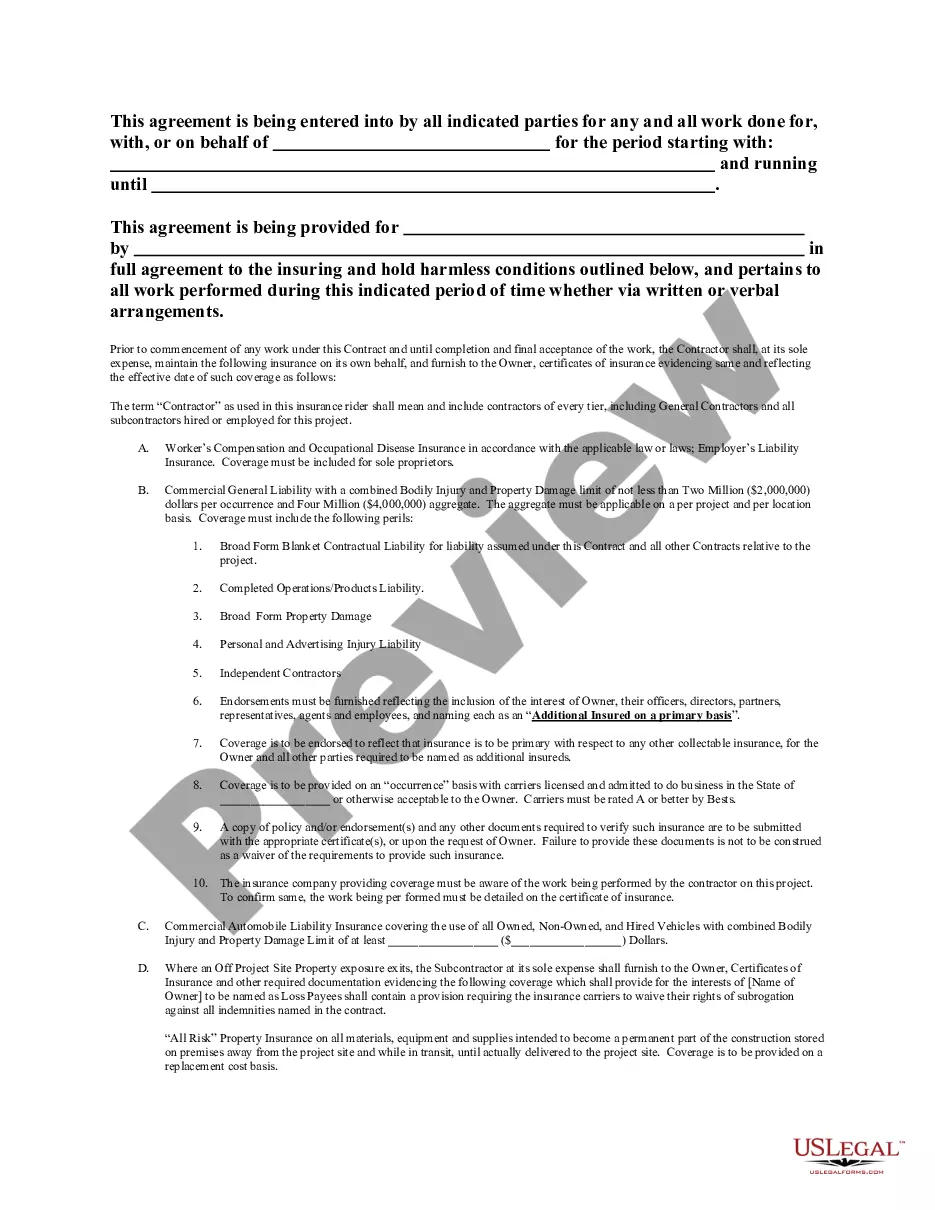
Texas Partial Release of Property From Deed of Trust for Individual
What is this form?
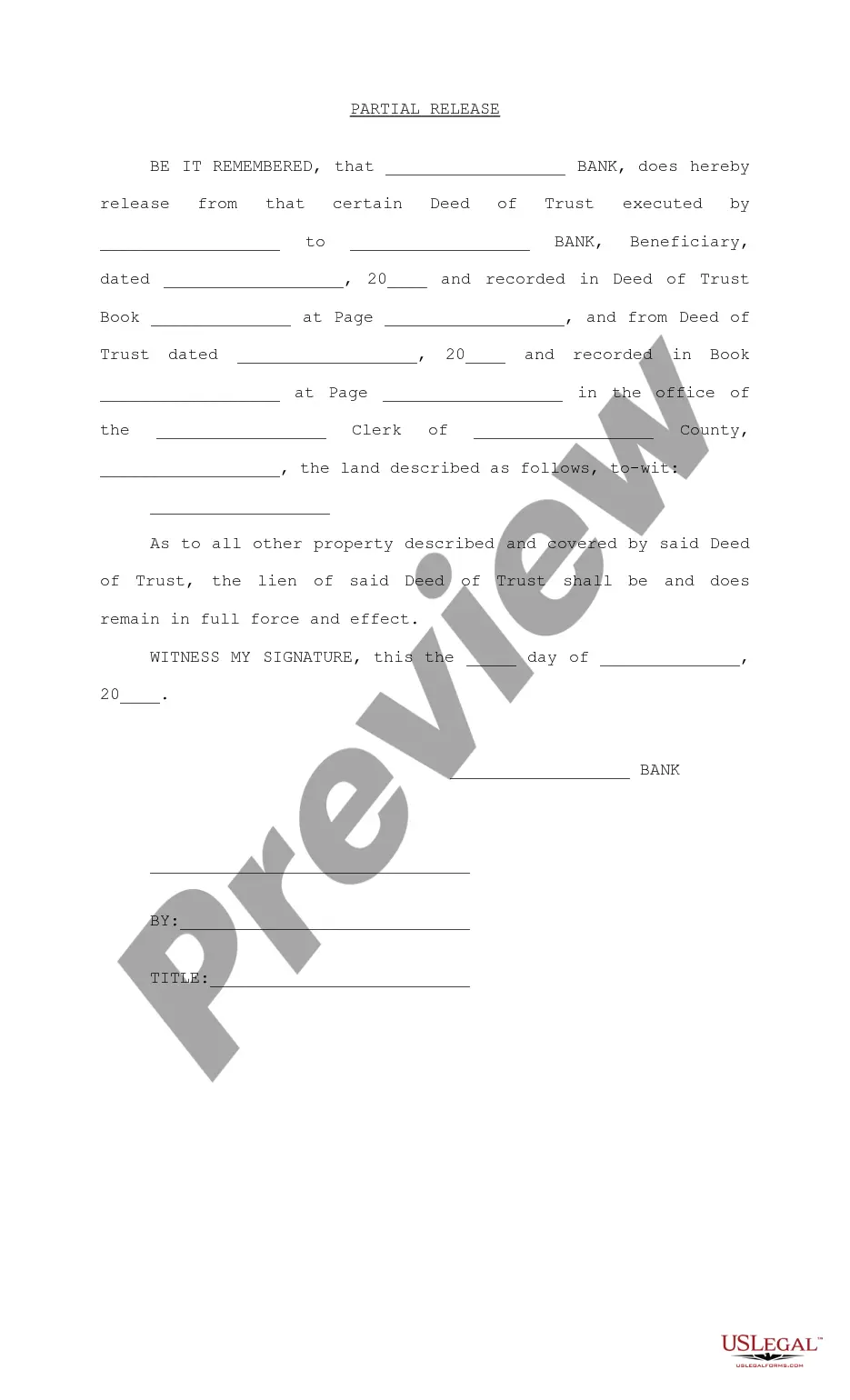
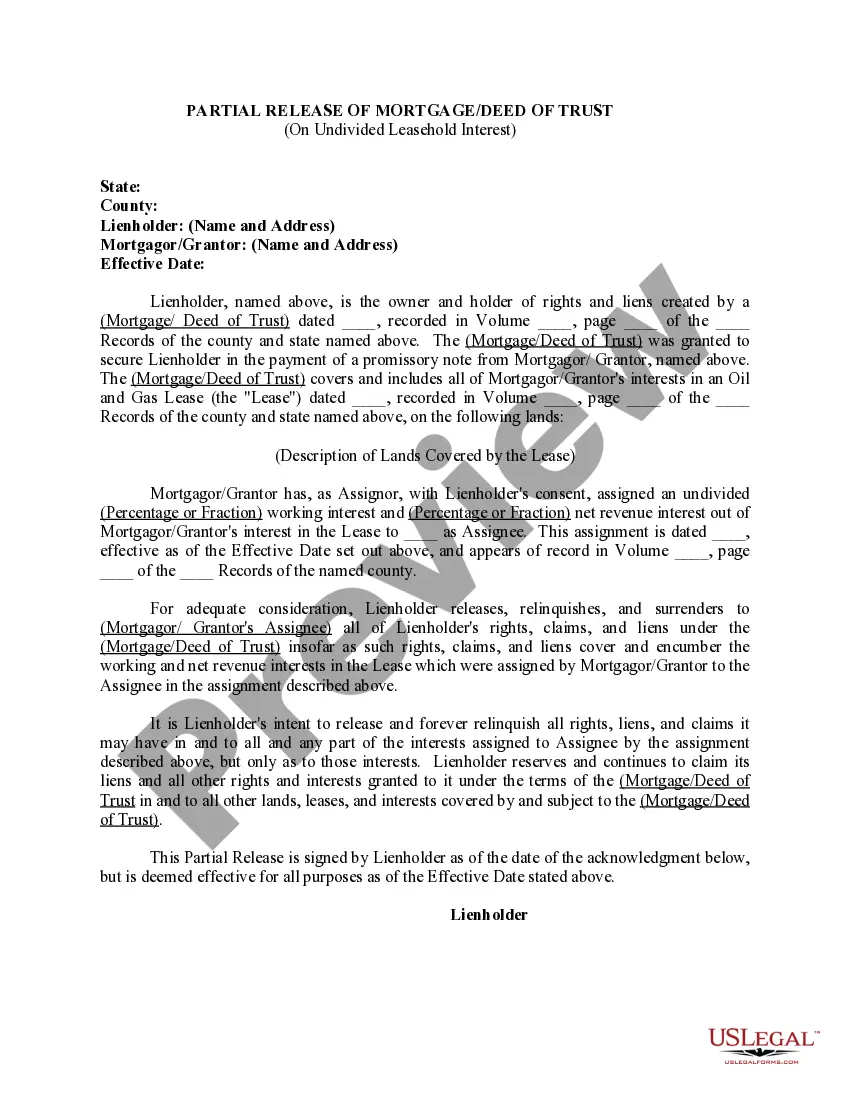
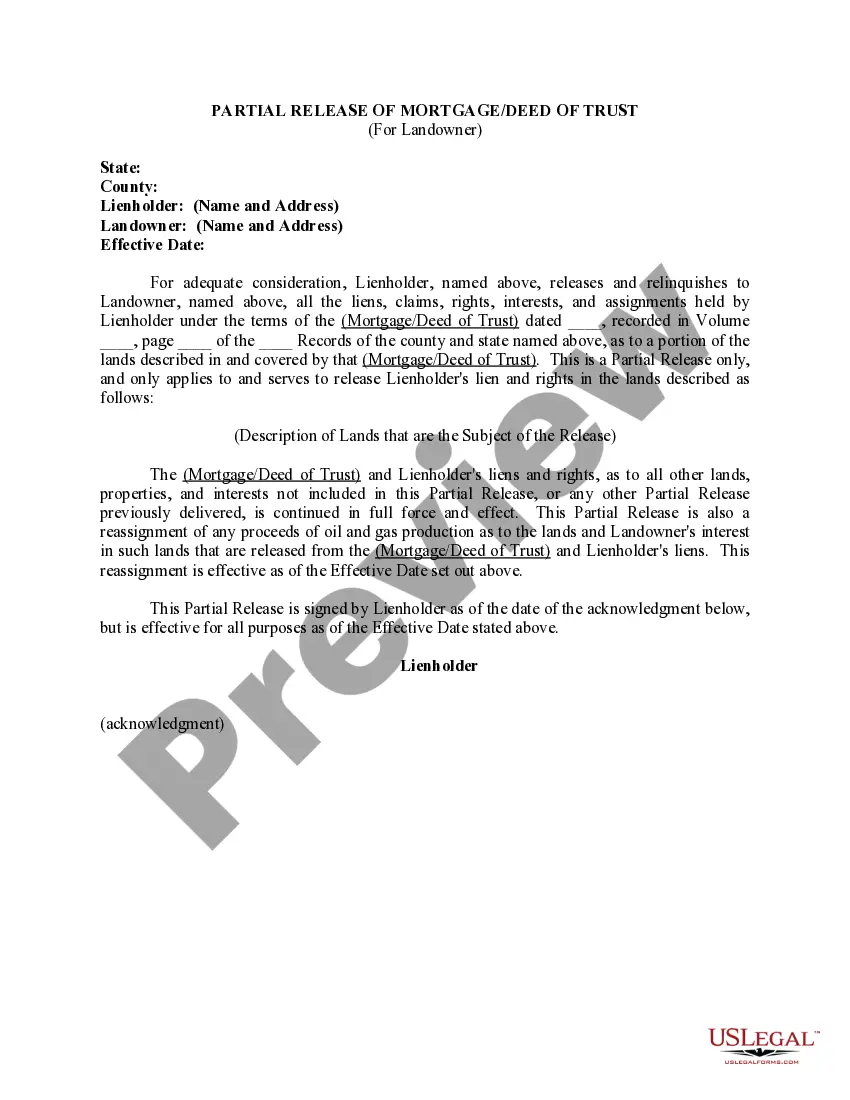
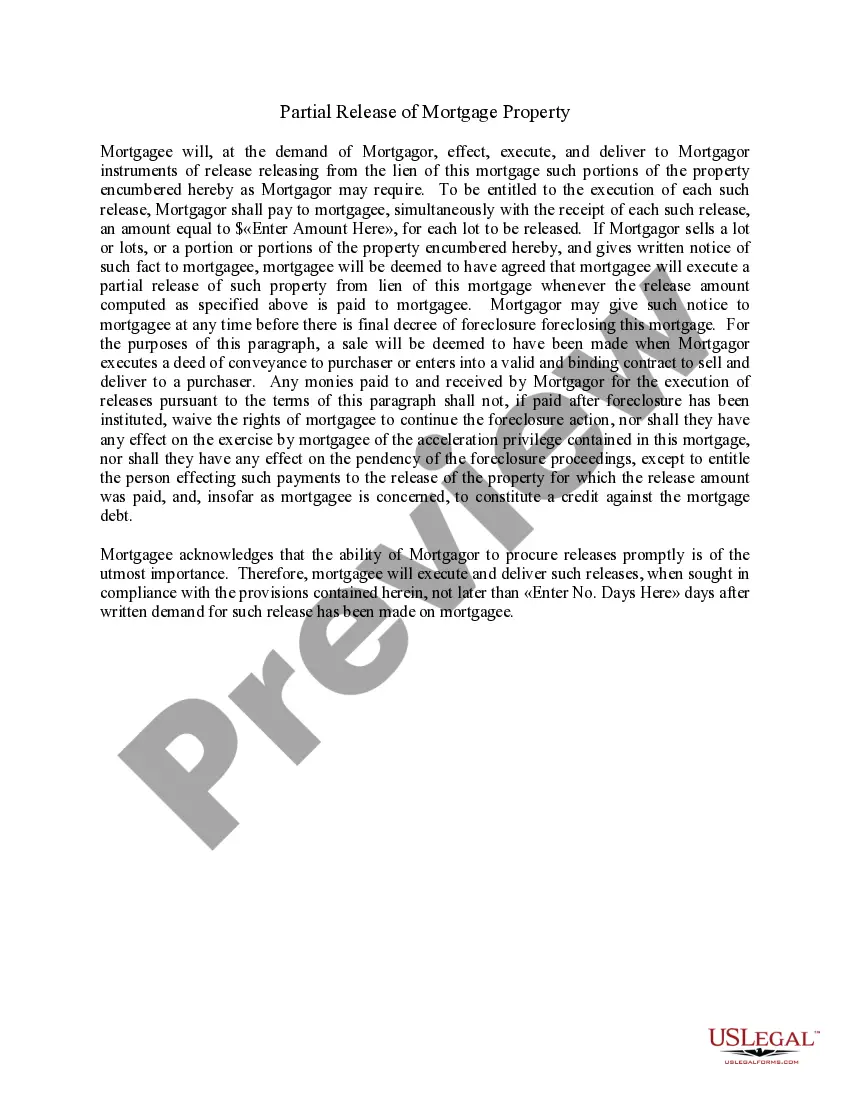
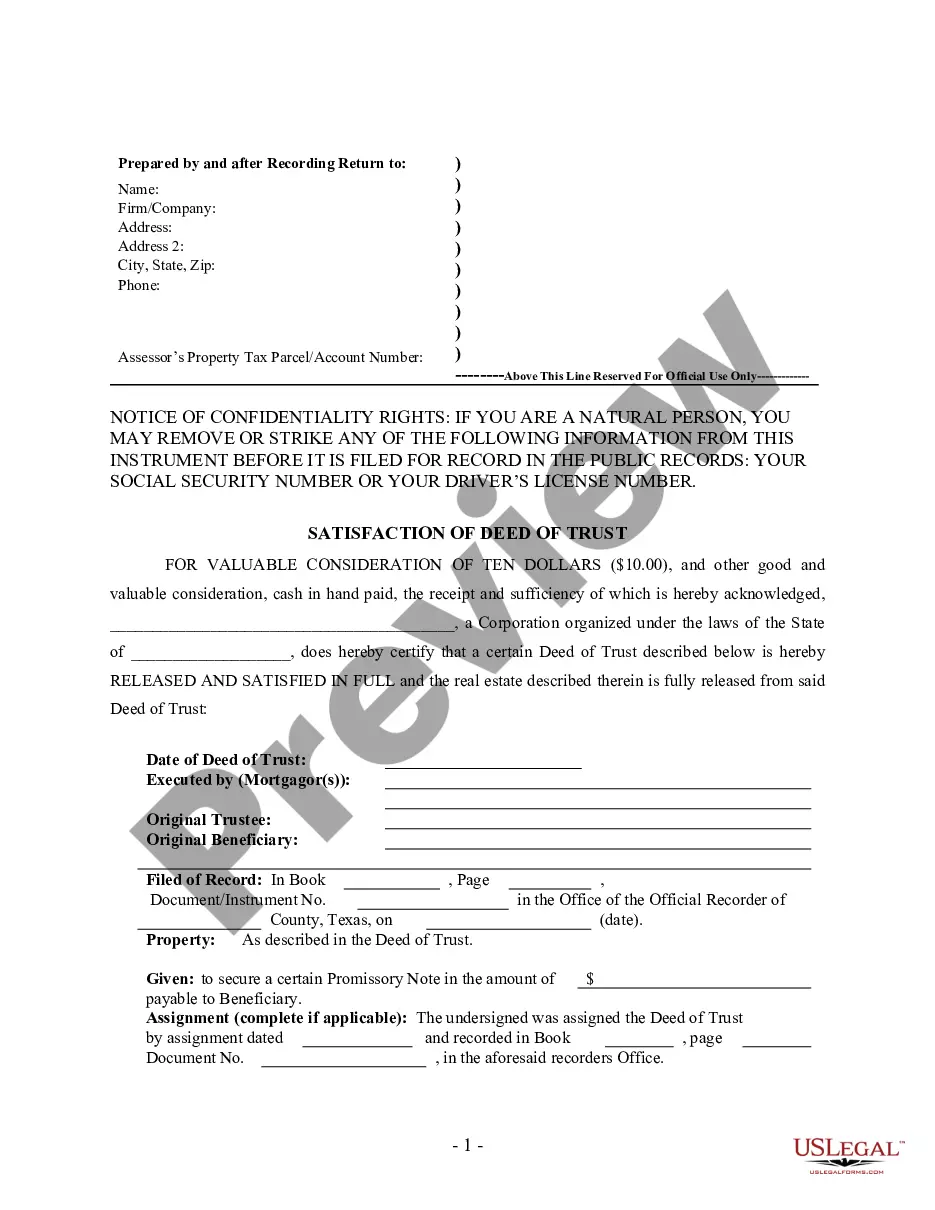
The Partial Release of Property From Deed of Trust for Individual is a legal document that allows a property owner to release a portion of real property from a deed of trust. This form is used to confirm that while part of the property is released, the remaining property still secures the existing mortgage or deed of trust. It differs from other forms in that it specifically addresses only a partial release, rather than a full discharge of the mortgage obligation.
Form components explained
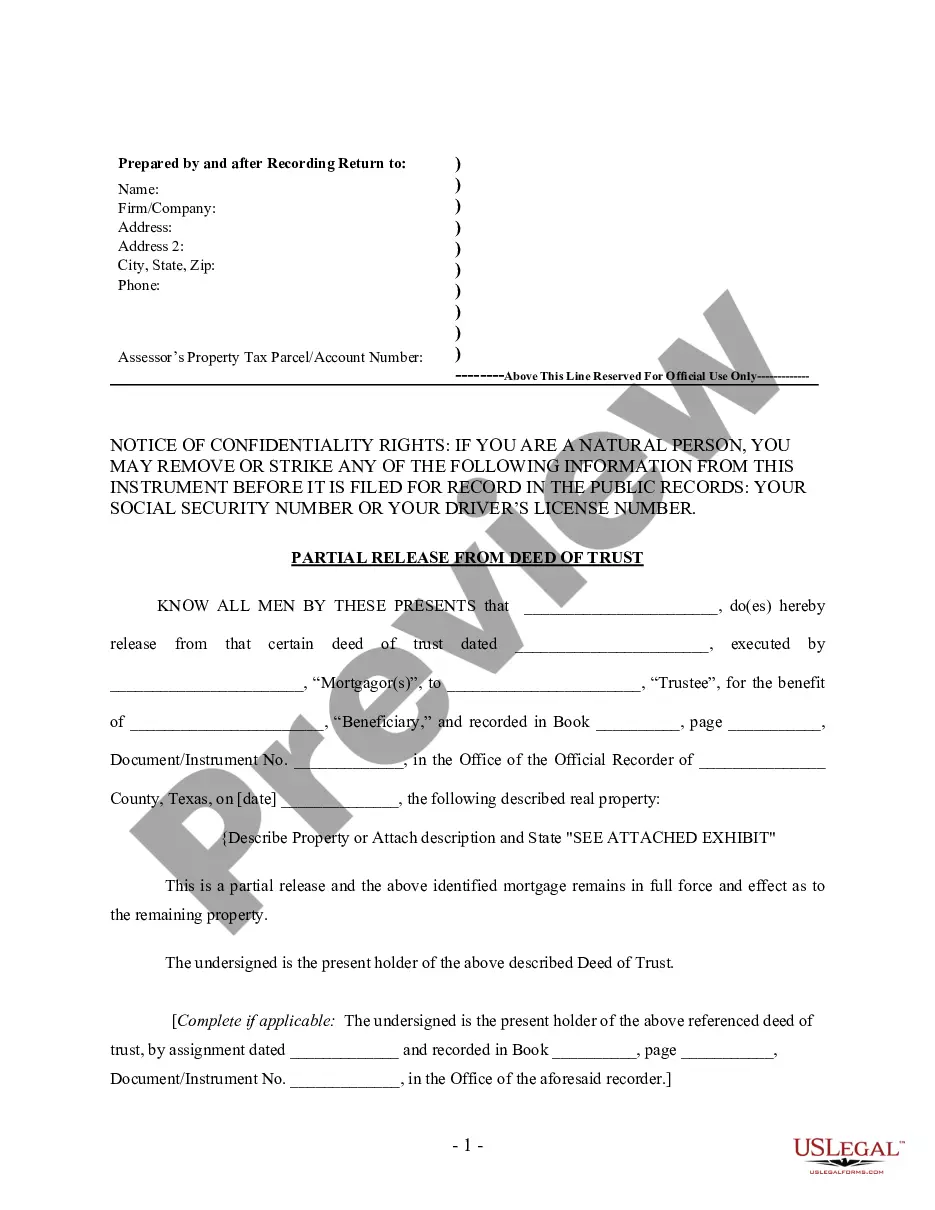
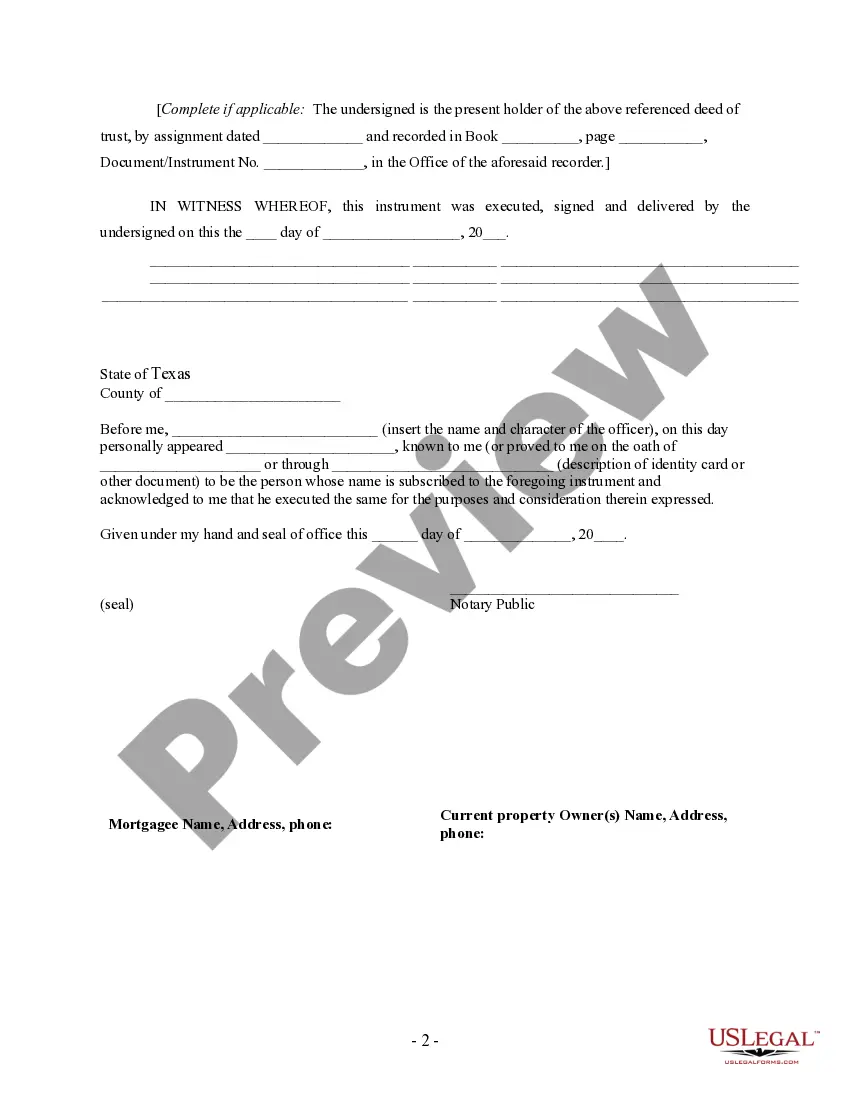
- Identification of the parties involved: mortgagor, trustee, and beneficiary.
- Date of the original deed of trust and details of its recording.
- Specific description of the property being partially released.
- Statement asserting the continued validity of the mortgage on remaining property.
- Signature lines for the parties involved, including a space for notarization.
When to use this document
This form is necessary when a property owner wants to release a portion of a property that is collateralized by a mortgage. Situations may include selling part of the property, refinancing, or fulfilling a legal settlement while maintaining the integrity of the existing mortgage on the remainder of the property.
Who this form is for
- Homeowners who wish to sell a portion of their property.
- Mortgage holders requiring a formal release of part of the property.
- Real estate professionals involved in property transactions.
How to complete this form
- Identify all parties involved, including the mortgagor, trustee, and beneficiary.
- Enter the date of the original deed of trust and its recorded details, including book and page numbers.
- Provide a clear description of the property being released or attach an exhibit.
- Sign and date the document in the presence of a notary, if required.
- Complete any applicable assignment details if the deed of trust holder has changed.
Notarization guidance
This form needs to be notarized to ensure legal validity. US Legal Forms provides secure online notarization powered by Notarize, allowing you to complete the process through a verified video call, available anytime.
Get your form ready online
Our built-in tools help you complete, sign, share, and store your documents in one place.
Make edits, fill in missing information, and update formatting in US Legal Forms—just like you would in MS Word.
Download a copy, print it, send it by email, or mail it via USPS—whatever works best for your next step.
Sign and collect signatures with our SignNow integration. Send to multiple recipients, set reminders, and more. Go Premium to unlock E-Sign.
If this form requires notarization, complete it online through a secure video call—no need to meet a notary in person or wait for an appointment.
We protect your documents and personal data by following strict security and privacy standards.

Make edits, fill in missing information, and update formatting in US Legal Forms—just like you would in MS Word.

Download a copy, print it, send it by email, or mail it via USPS—whatever works best for your next step.

Sign and collect signatures with our SignNow integration. Send to multiple recipients, set reminders, and more. Go Premium to unlock E-Sign.

If this form requires notarization, complete it online through a secure video call—no need to meet a notary in person or wait for an appointment.

We protect your documents and personal data by following strict security and privacy standards.
Common mistakes
- Failing to accurately describe the property being released.
- Not including all necessary parties' names or signatures.
- Omitting the notarization if required by state law.
- Leaving out important dates related to the deed of trust.
Benefits of completing this form online
- Your information is securely stored and easily accessible for future reference.
- Editable format allows for quick adjustments as needed.
- Access to forms drafted by licensed attorneys, ensuring legal compliance.
Looking for another form?
Form popularity
FAQ
In the context of a California mortgage transaction, a trust deed also transfer ownership. Only this time, the title is being placed in the hands of a third-party trustee, who holds the property on behalf of the lender and the homeowner-borrower until the mortgage is paid.
In Texas, a deed must be in writing and signed by the person transferring the land, otherwise known as the grantor. The person the grantor is transferring the land to is known as the grantee. No particular words must be used in order to constitute a legally effective transfer, but whatever words are used must show
Find the most recent deed to the property. It is best to begin with a copy of the most recent deed to the property (the deed that transferred the property to the current grantor). Create a new deed. Sign and notarize the deed. File the documents in the county land records.
An acknowledgment technically is not required for a deed to be valid; however, in most states, a deed without an acknowledgment cannot be recorded in the official public records. It is usually not necessary to record a deed for the transfer of title to be valid.
Find the most recent deed to the property. It is best to begin with a copy of the most recent deed to the property (the deed that transferred the property to the current grantor). Create a new deed. Sign and notarize the deed. File the documents in the county land records.
About the release form This form should be filed with the recorder's office in the Texas county where the lien was originally recorded. Texas law requires claimants to file a lien release within 10 days after the lien is satisfied, or upon request from the property owner.
Now, people can convey clear title to their property by completing a transfer on death deed form, signing it in front of a notary, and filing it in the deed records office in the county where the property is located before they die at a cost of less than fifty dollars.
Witnessedwritten, two witnesses; holographic-handwritten or typed, signed by testator; approved-on a pre-printed form approved by the state; nuncupative-written by a witness from testator's oral statement; generally not valid for real estate transfer.
Pay off your debt. Fill out a release-of-lien form and have the lien holder sign it. Run out the statute of limitations. Get a court order. Make a claim with your title insurance company. Learn more: