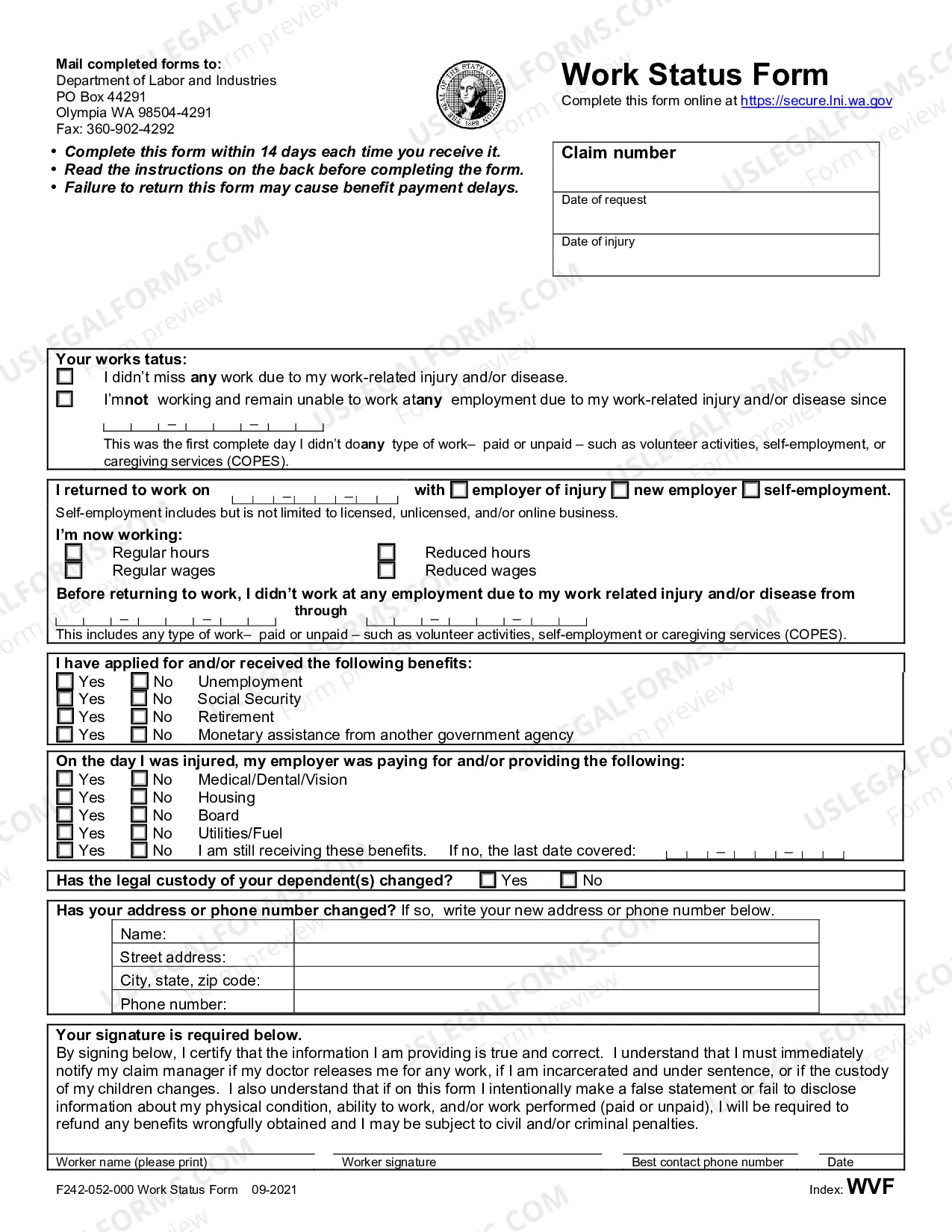
Rhode Island 90 Day Notice to Terminate Year to Year Lease Prior to End of Term - Residential
Overview of this form
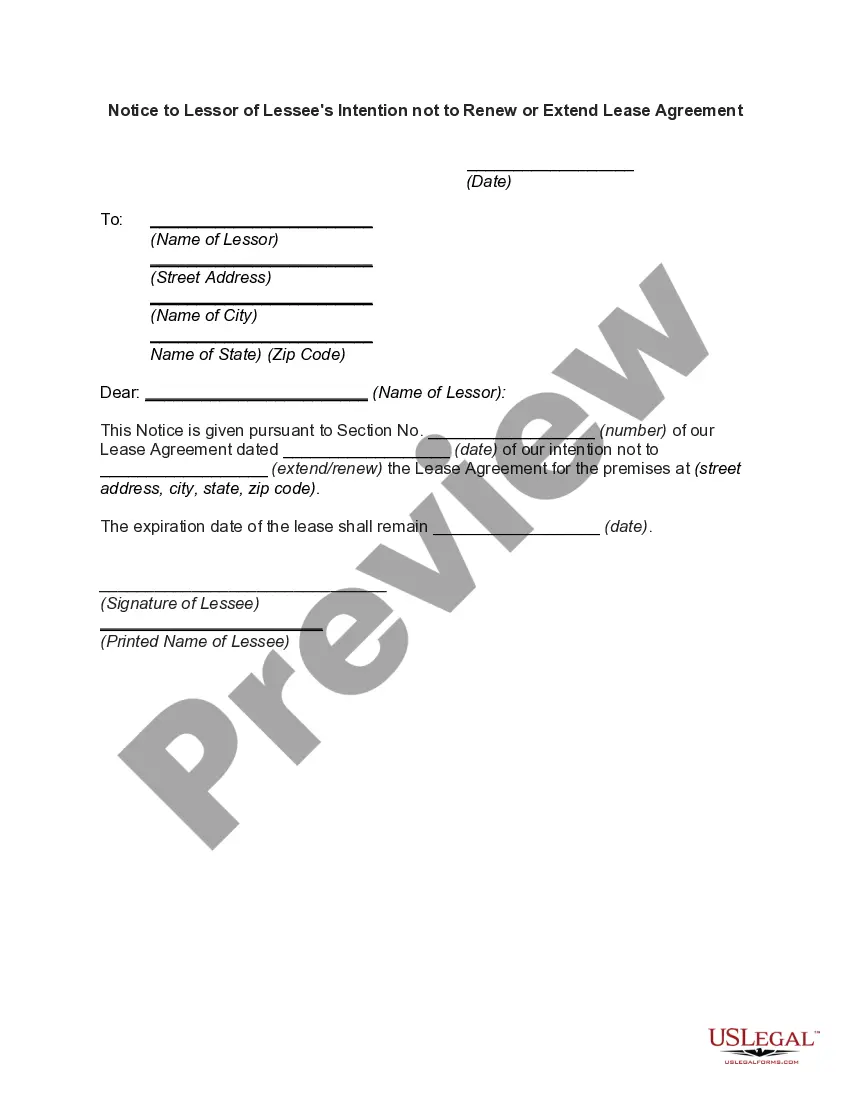
The 90 Day Notice to Terminate Year to Year Lease Prior to End of Term is a legal document used by landlords or tenants to notify the other party that they intend to terminate a year-to-year residential lease. This form is essential for ensuring compliance with legal notice requirements, which vary by state, and allows the involved parties to conclude their rental agreement properly. It differs from similar forms such as month-to-month notices by specifying an extended termination period of ninety days.
Form components explained
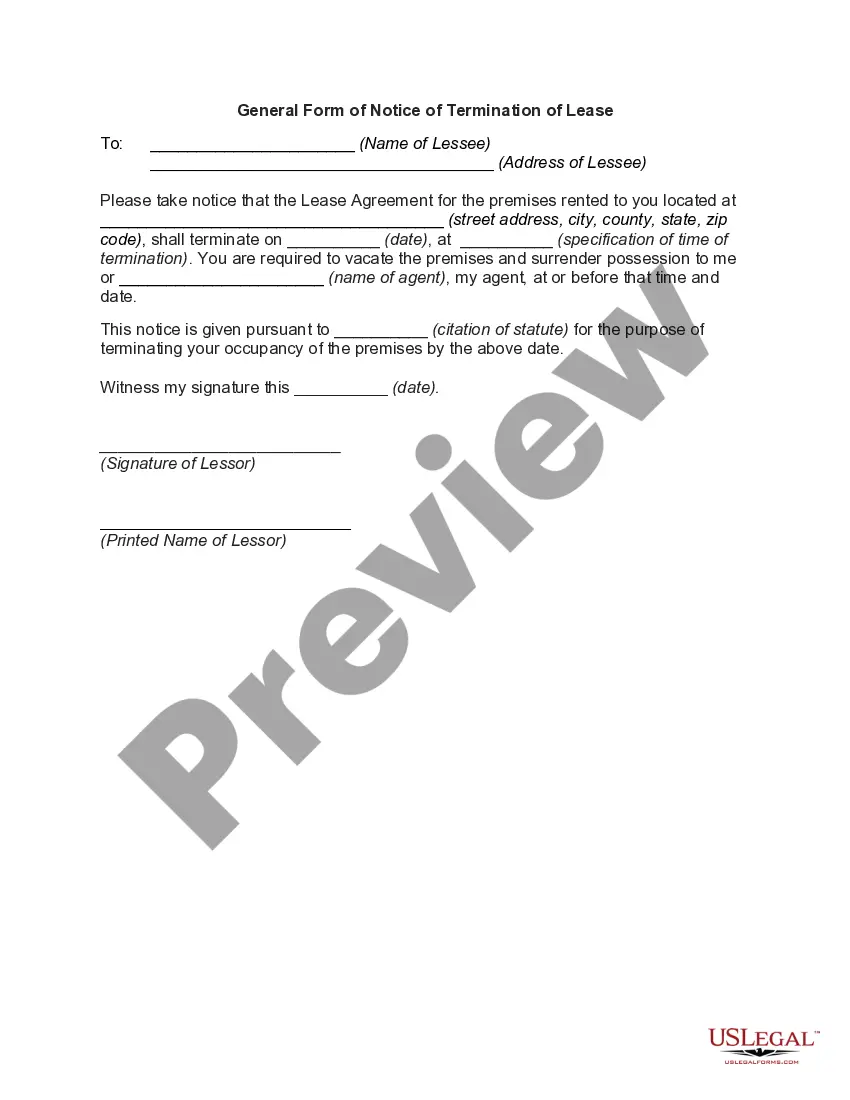
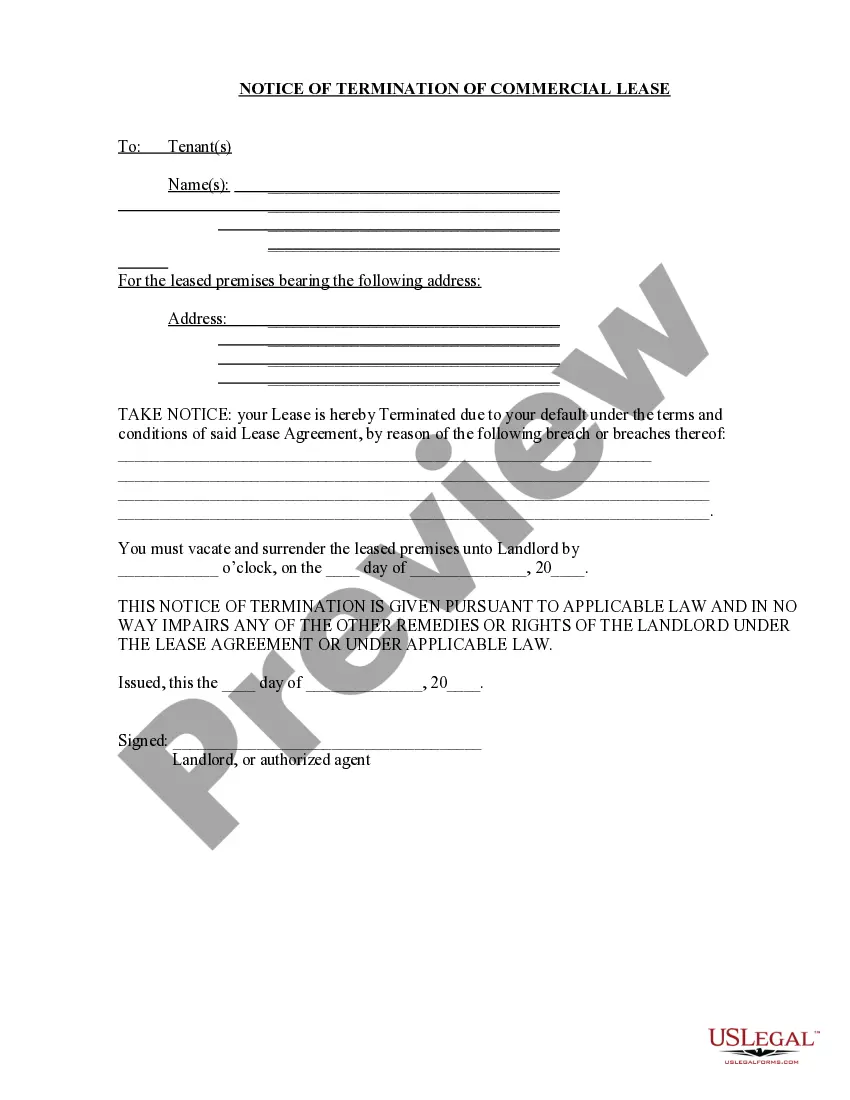
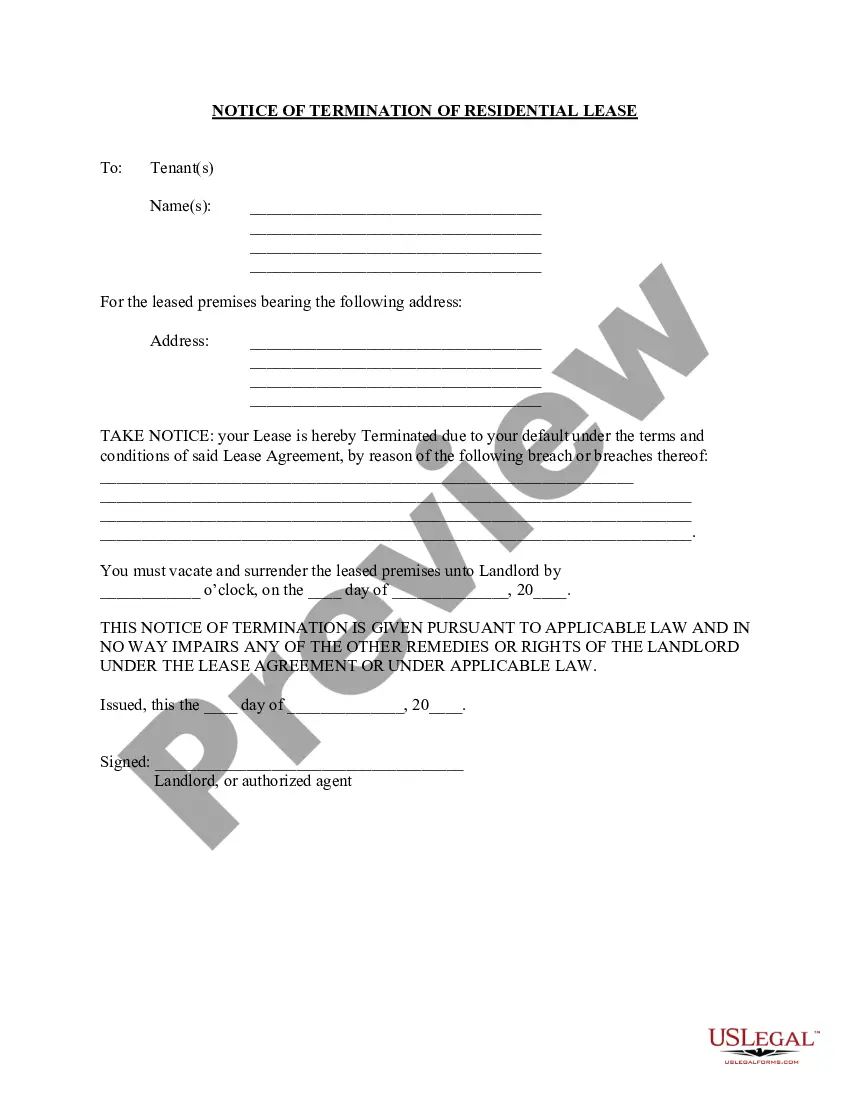
- Identification of the landlord and tenant
- Address of the leased premises
- Statement of lease termination due to default or notice
- Deadline for vacating the premises, specified with date and time
- Signature of the landlord or authorized agent
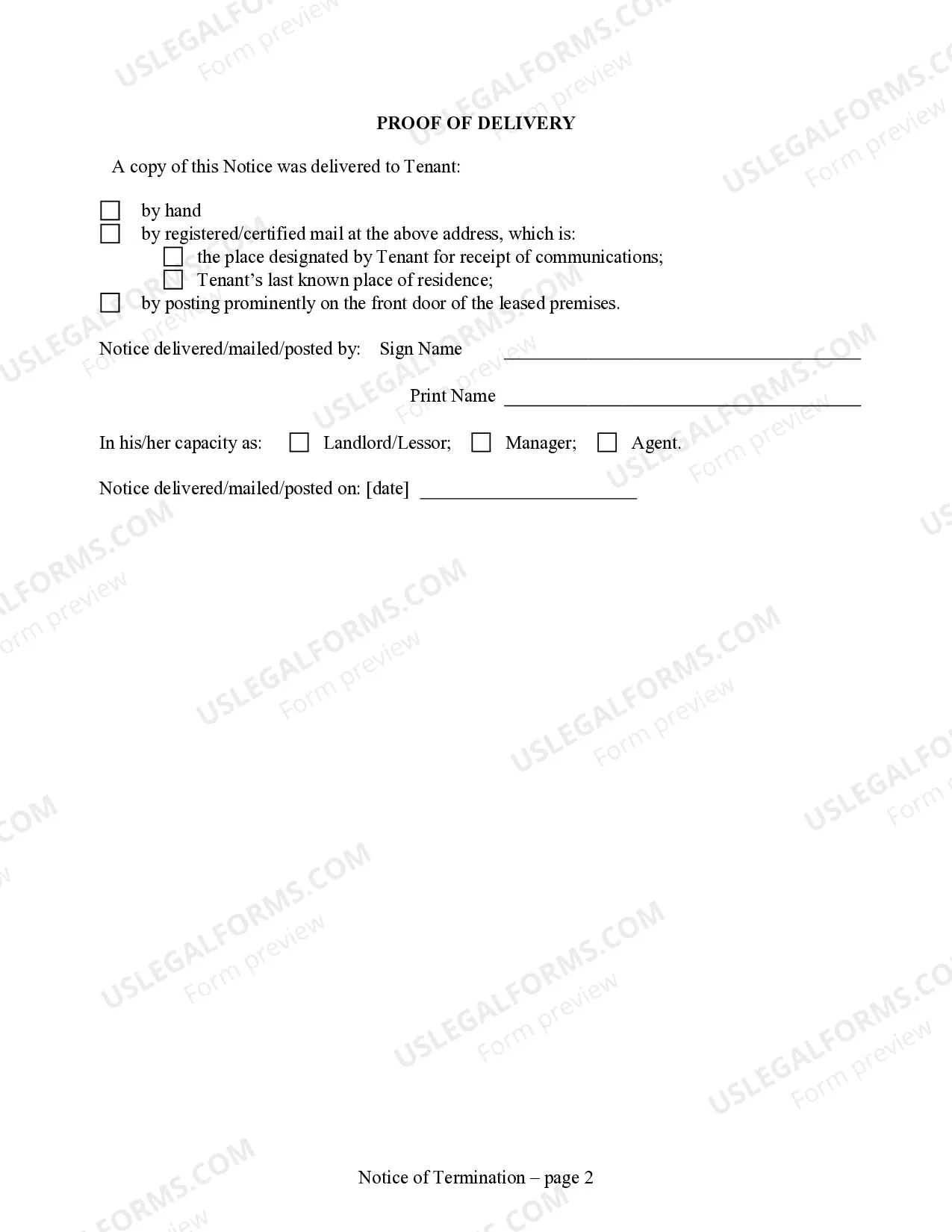
- Proof of delivery method
Common use cases
This form is used when either a landlord or a tenant wishes to terminate a year-to-year lease agreement. It is typically employed in situations such as a tenant violating lease terms, a landlord deciding to sell the property, or a mutual agreement where continuing the lease is no longer desired. Providing official notice allows the parties to prepare for the transition in a timely manner.
Who this form is for
- Landlords who need to terminate a lease due to tenant default
- Tenants who wish to vacate the premises after fulfilling notice requirements
- Property managers acting on behalf of landlords
Completing this form step by step
- Identify the parties involved by including the names and addresses of both the landlord and tenant.
- Clearly state the address of the leased premises.
- Specify the reason for terminating the lease, noting any breaches of terms.
- Enter the deadline for vacating the property, including the specific date and time.
- Have the landlord or authorized agent sign the notice and include the date of issuance.
- Document the method of delivery to the tenant, ensuring compliance with notice requirements.
Notarization guidance
In most cases, this form does not require notarization. However, some jurisdictions or signing circumstances might. US Legal Forms offers online notarization powered by Notarize, accessible 24/7 for a quick, remote process.
Get your form ready online
Our built-in tools help you complete, sign, share, and store your documents in one place.
Make edits, fill in missing information, and update formatting in US Legal Forms—just like you would in MS Word.
Download a copy, print it, send it by email, or mail it via USPS—whatever works best for your next step.
Sign and collect signatures with our SignNow integration. Send to multiple recipients, set reminders, and more. Go Premium to unlock E-Sign.
If this form requires notarization, complete it online through a secure video call—no need to meet a notary in person or wait for an appointment.
We protect your documents and personal data by following strict security and privacy standards.

Make edits, fill in missing information, and update formatting in US Legal Forms—just like you would in MS Word.

Download a copy, print it, send it by email, or mail it via USPS—whatever works best for your next step.

Sign and collect signatures with our SignNow integration. Send to multiple recipients, set reminders, and more. Go Premium to unlock E-Sign.

If this form requires notarization, complete it online through a secure video call—no need to meet a notary in person or wait for an appointment.

We protect your documents and personal data by following strict security and privacy standards.
Common mistakes
- Failing to provide the full notice period stipulated by local law.
- Not specifying the reason for termination, which could lead to disputes.
- Forgetting to include the correct date and time for vacating the premises.
- Not signing the notice or providing necessary identification of the landlord.
Benefits of using this form online
- Convenient accessibility for downloading and filling out from home.
- Editability allows customization to suit specific circumstances.
- Reliability, as forms are drafted by licensed attorneys to ensure legal compliance.
Legal use & context
- This notice is an essential legal step to terminate residential lease agreements, providing the necessary timeline for tenants to vacate.
- Failure to use a proper termination notice may lead to legal disputes or retention of security deposits.
- Landlords retain rights to other legal remedies under the lease agreement and state law in addition to issuing termination notices.
Key takeaways
- The form serves to legally notify tenants of lease termination with a required ninety-day notice.
- It is critical for landlords to comply with local laws governing lease termination.
- Proper delivery and signing of the form are essential for it to be enforceable.
Looking for another form?
Form popularity
FAQ
At-will tenancy is subject to the will of both the tenant and the landlord (hence the name). In other words, the tenant can choose to leave and stop paying rent at any time, and the landlord can choose to stop accepting rent and ask the tenant to leave at any time.
A landlord can't force you to move out before the lease ends, unless you fail to pay the rent or violate another significant term, such as repeatedly throwing large and noisy parties.For example, your landlord must give you three days' notice to pay the rent or leave (California Civ.
While some jurisdictions may have provisions that allow consumers to change their minds with no consequences, generally there is no cooling-off period for leasing real property. Once the landlord and tenant sign a lease and a copy is delivered to the both parties, it becomes a valid contract.
A lease is automatically void when it is against the law, such as a lease for an illegal purpose. In other circumstances, like fraud or duress, a lease can be declared void at the request of one party but not the other.
A landlord may legally terminate a lease if the tenant is in violation of the terms of the lease or has broken the law. The violation by the tenant must be significant, such as late rent, or having a dog despite a prohibition against pets in the premises.
Yes, you can move out before your lease ends. However, in most cases, you will have to pay an early lease termination fee, which is typically the equivalent of 2 months rent. That said, since every rental situation is unique, you should read your lease thoroughly, and talk to your landlord before moving out early.
You might be headed to court. Your former landlord might sue you for the rent due from the time you moved out until the end of the lease, or you might sue your former landlord to recover unreasonable deductions from your security deposit.
In Rhode Island, a tenant is not required to provide notice for fixed end date leases. Rhode Island tenants have to provide written notice for the following lease terms: Notice to terminate a week-to-week lease. 10-day written notice before the termination date specified in the notice (§ 34-18-37(a))
Declare a Constructive Eviction. Point Out Landlord Breaches to Reduce Your Debt. Landlords Have a Duty to Mitigate Their Damages. Consequences for Breaking Your Lease. Look for These Clauses in Your Lease. Your Landlord May Have a Duty to Mitigate. Declare a Constructive Eviction.