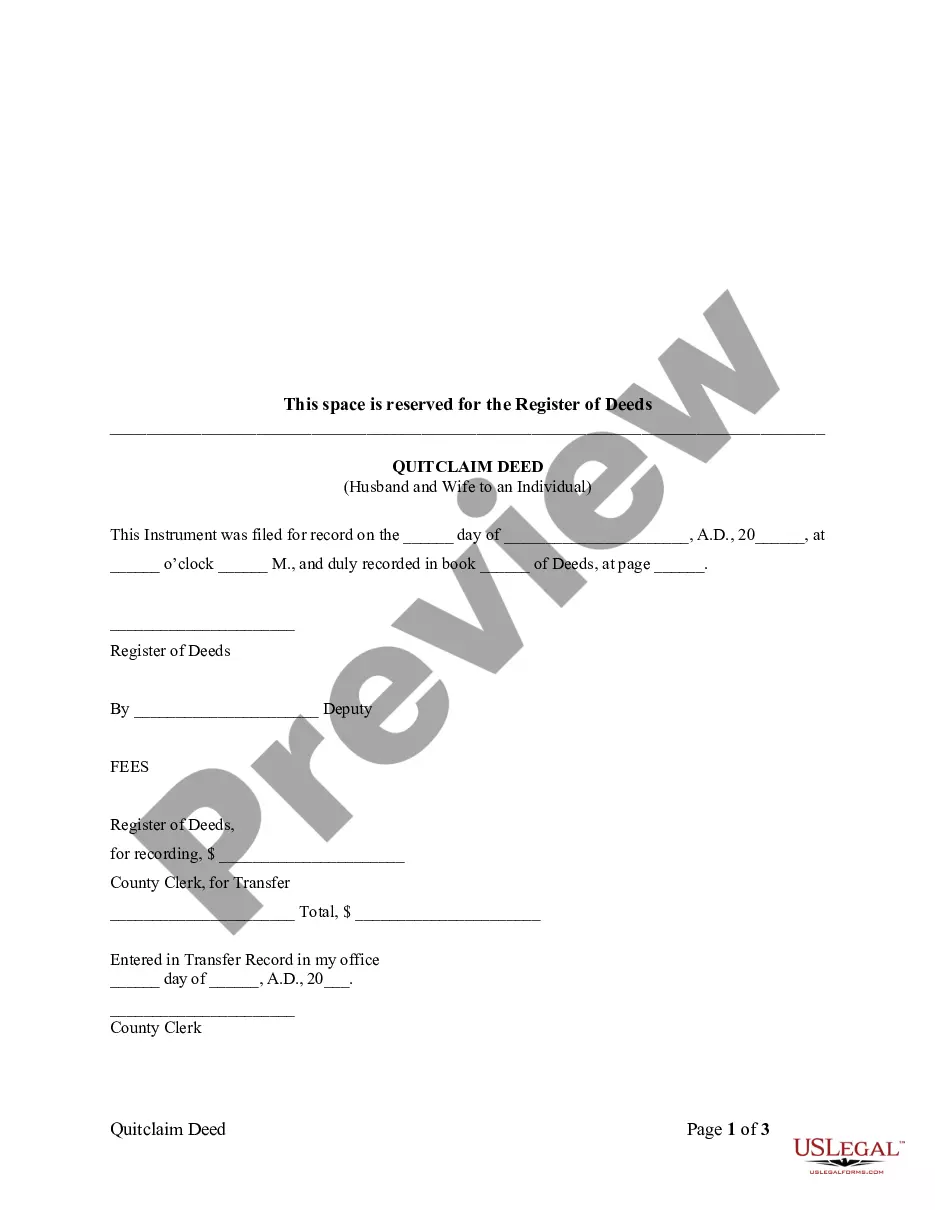
Oregon Full Reconveyance of Deed of Trust - by Corporate Trustee
Understanding this form
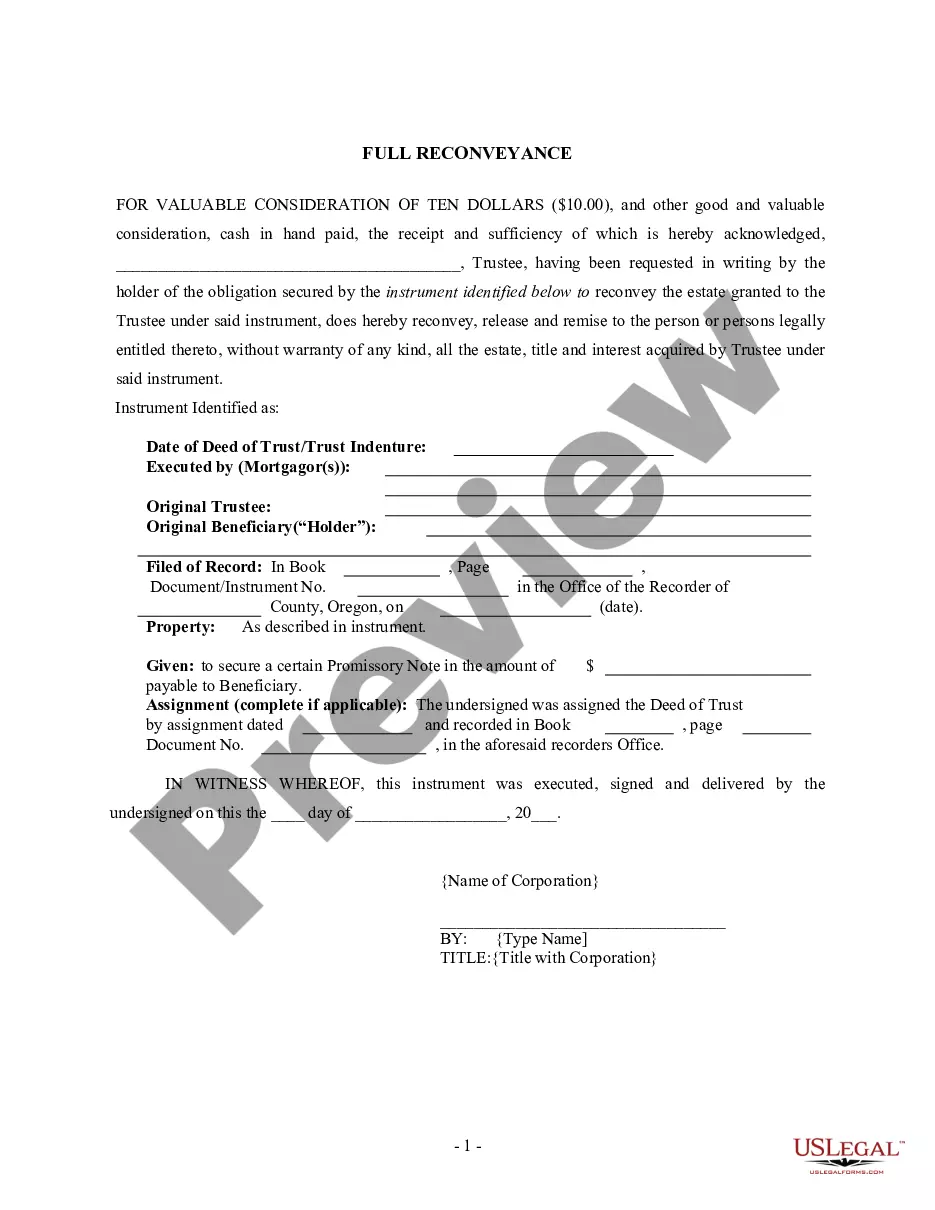
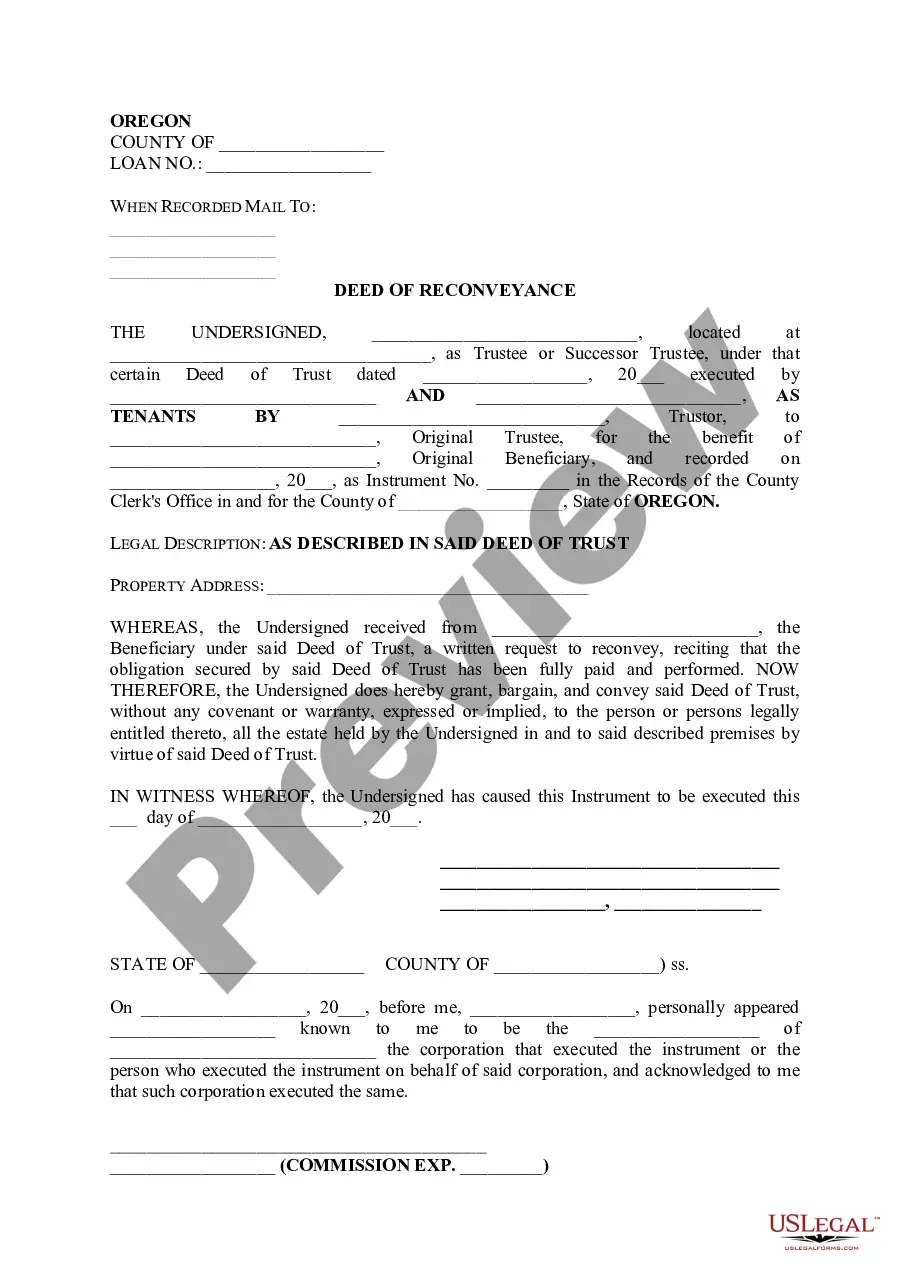
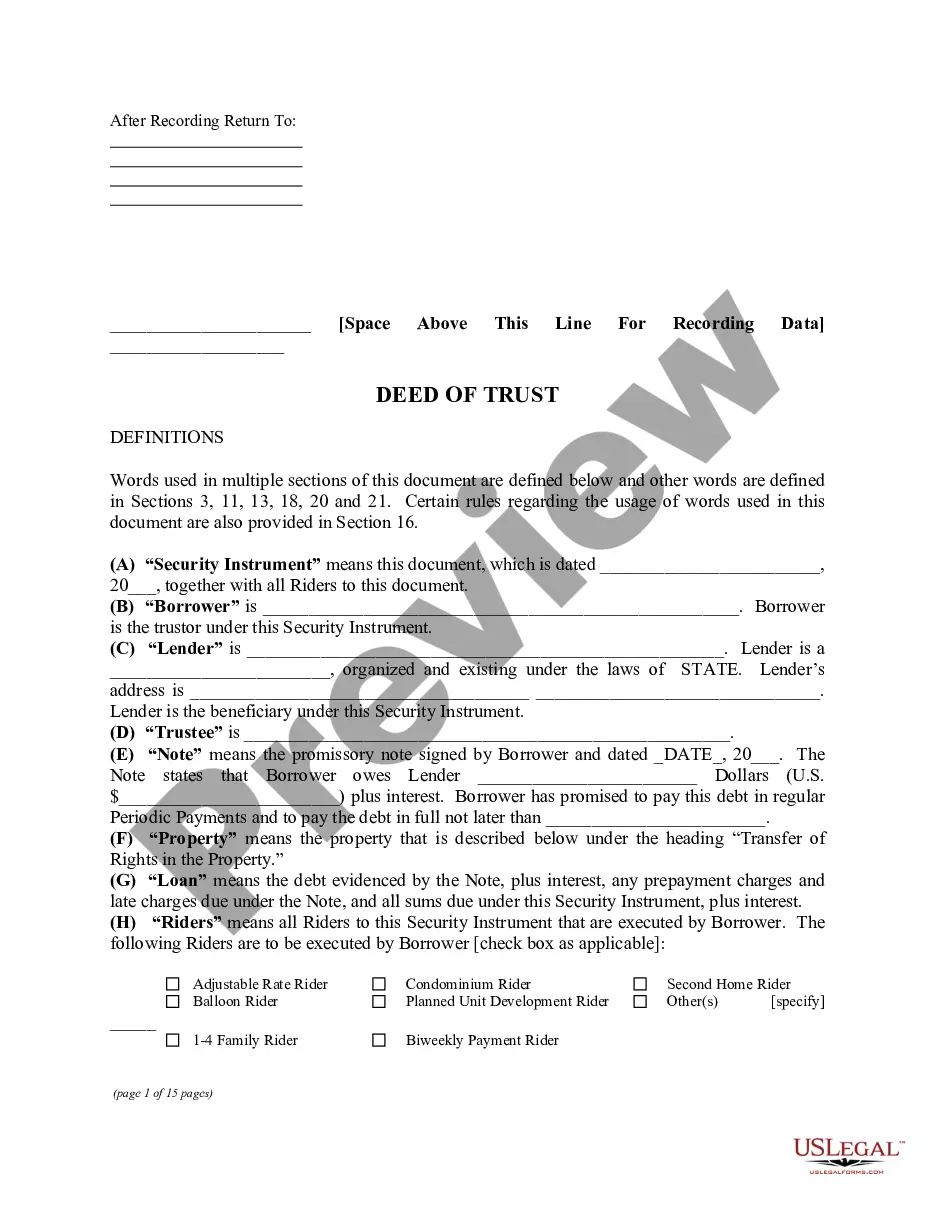
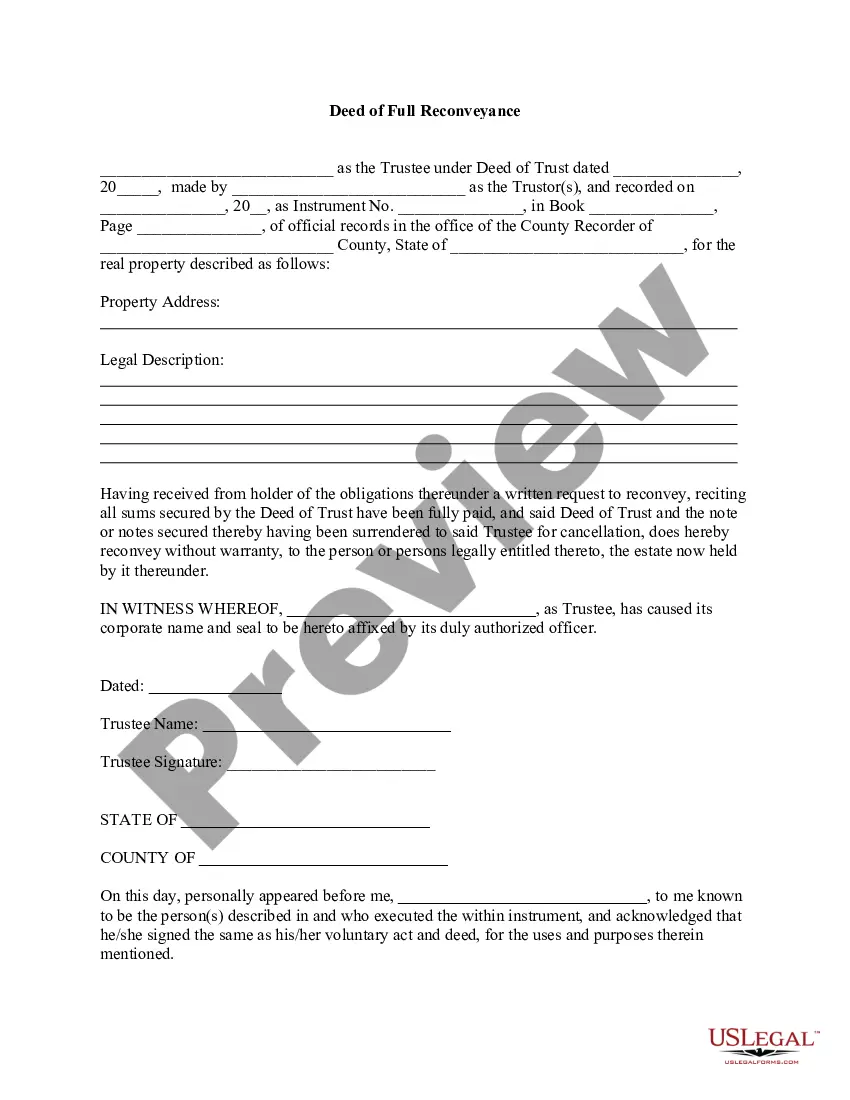
The Full Reconveyance of Deed of Trust - by Corporate Trustee is a legal document used to release a mortgage lien on real estate in Oregon. This form indicates that the mortgage has been fully satisfied, and the property is no longer encumbered by the deed of trust. It differs from a typical satisfaction of mortgage, as it specifically involves a corporate trustee and complies with Oregon's statutory requirements for such reconveyances.
Key components of this form
- Identification of the trustee, corporation, and beneficiaries.
- Details of the original deed of trust, including parties involved and recorded information.
- Statement of reconveyance and release of the mortgage on the property.
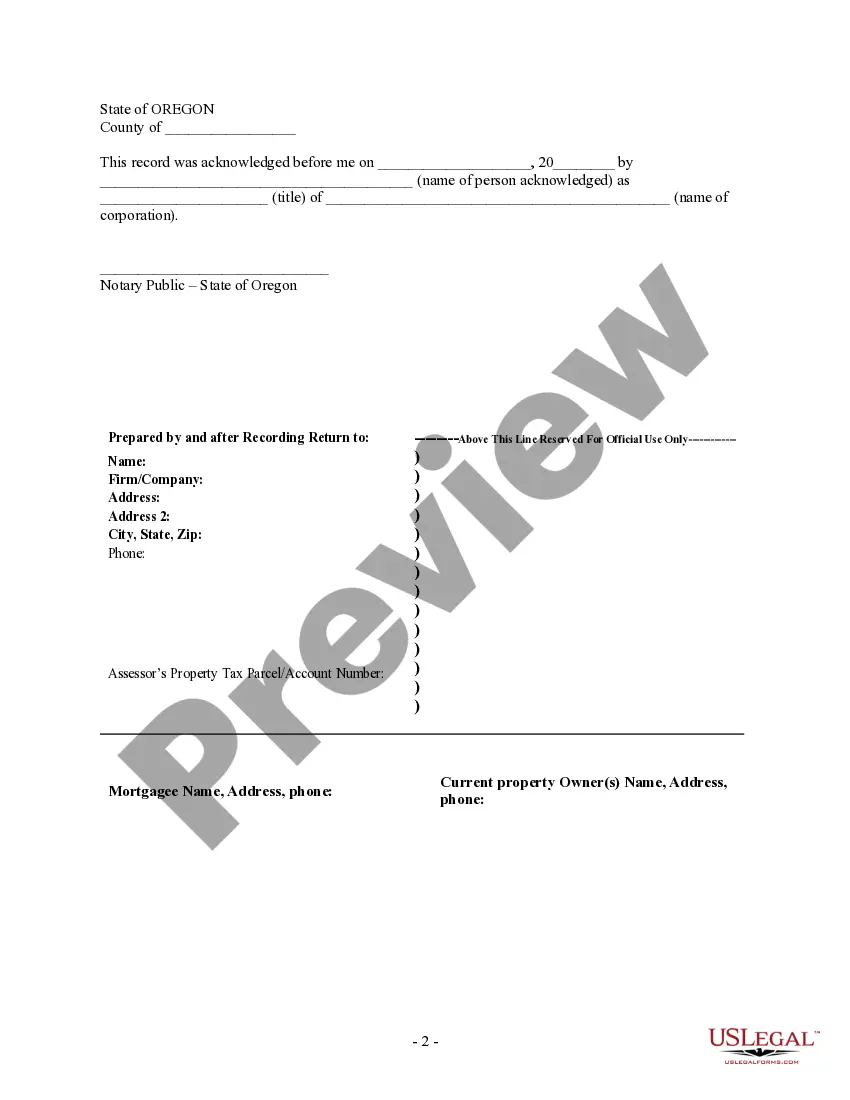
- Signatures of corporate representatives and acknowledgment before a notary public.


When to use this form
This form should be used when the obligations secured by a deed of trust have been fulfilled or satisfied, typically after the loan or mortgage has been completely paid off. It is a necessary step to clear the title of the property, allowing the owner to sell or transfer the property without any claims by the lender.
Intended users of this form
- Corporations serving as trustees for deeds of trust in Oregon.
- Corporate lenders who have fully satisfied the obligations of a borrower.
- Borrowers seeking to ensure their property is free from mortgage liens.
How to prepare this document
- Identify the corporate trustee at the top of the form and ensure their information is accurate.
- Provide details of the original deed of trust, including the date it was recorded and the involved parties.
- State the terms of the reconveyance clearly, mentioning the consideration amount.
- Include dates when the form is signed, ensuring all parties complete their signatures.
- Have the document notarized to validate the acknowledgment of signatures.
Does this document require notarization?
Notarization is required for this form to take effect. Our online notarization service, powered by Notarize, lets you verify and sign documents remotely through an encrypted video session, available 24/7.
Get your form ready online
Our built-in tools help you complete, sign, share, and store your documents in one place.
Make edits, fill in missing information, and update formatting in US Legal Forms—just like you would in MS Word.
Download a copy, print it, send it by email, or mail it via USPS—whatever works best for your next step.
Sign and collect signatures with our SignNow integration. Send to multiple recipients, set reminders, and more. Go Premium to unlock E-Sign.
If this form requires notarization, complete it online through a secure video call—no need to meet a notary in person or wait for an appointment.
We protect your documents and personal data by following strict security and privacy standards.

Make edits, fill in missing information, and update formatting in US Legal Forms—just like you would in MS Word.

Download a copy, print it, send it by email, or mail it via USPS—whatever works best for your next step.

Sign and collect signatures with our SignNow integration. Send to multiple recipients, set reminders, and more. Go Premium to unlock E-Sign.

If this form requires notarization, complete it online through a secure video call—no need to meet a notary in person or wait for an appointment.

We protect your documents and personal data by following strict security and privacy standards.
Common mistakes
- Failing to include complete details of the original deed of trust.
- Missing the notary acknowledgment, which may invalidate the form.
- Providing incorrect or outdated information regarding the property or parties involved.
Advantages of online completion
- Easy access to accurately drafted legal forms prepared by licensed attorneys.
- Convenient download options, allowing for immediate use and compliance.
- Ability to edit the template for specific needs before printing or signing.
Summary of main points
- The Full Reconveyance of Deed of Trust is important for releasing property from a mortgage lien.
- This form is specifically designed for use by corporate trustees in Oregon.
- Proper completion and notarization of the form ensure legal validity and clear property titles.
Looking for another form?

Form popularity
FAQ
When your mortgage lender decides he wants to sell your mortgage loan to another lender, your mortgage lender will sign an assignment of deed of trust in favor of the new lender. This assignment gives the new lender the same lien on your property that your original lender had under the mortgage loan.
If there's a deed of trust on a property, the lender can sell the property and pay off the loan. Whether your loan falls under the mortgage or deed of trust definition, you'll need to get approval from the lender before you sell your home for less than you owe.
Essentially, the Deed of Assignment (DOA) is a legal document that transfers the ownership of a property from one party to another.
Only until the debt is paid off by the borrower can a deed of reconveyance then be used to clear the deed of trust from the title to the property. The document is signed by the trustee, whose signature must be notarized.
Corporate mortgage assignment defined. An assignment of a mortgage occurs when a loan for a piece of property (home or otherwise) is assigned to another party.A corporate assignment of a mortgage occurs when the third party that assumes the obligation for the loan is a corporation.
An assignment of a deed of trust is simply the movement of the deed of trust from one party to another, a party that was not originally involved in the deed creation when the property was bought. A corporate assignment is simply an assignment of the deed of trust between different businesses.
Some use deeds of trust instead, which are similar documents, but they have some fundamental differences.With a deed of trust, however, the lender must act through a go-between called the trustee. The beneficiary and the trustee can't be the same person or entity.
Property cannot be conveyed to a grantee who does not exist. Thus, a deed to a grantee who is dead at the time of delivery is void. For example, a deed recorded by the grantor is presumed to have been delivered.For example, a deed is voidable if it was obtained by fraud in the inducement.
Giving the wrong legal address for the property or the wrong amount of the debt can render the deed unenforceable. In some cases, the error is easy to fix, and the court will rule the deed is enforceable.