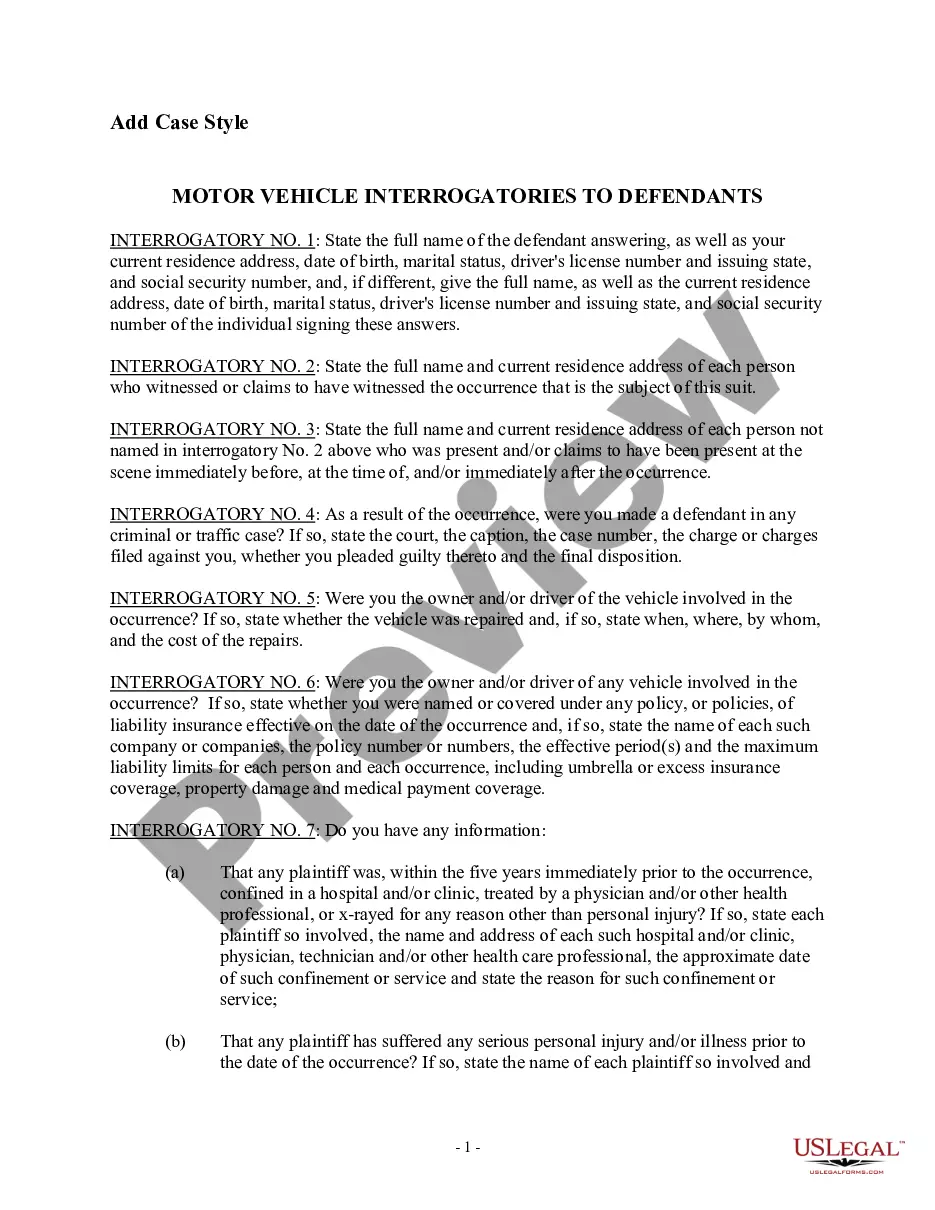
Oregon 13 Day Notice to Pay Rent or Lease Terminates for Residential Property
Understanding this form
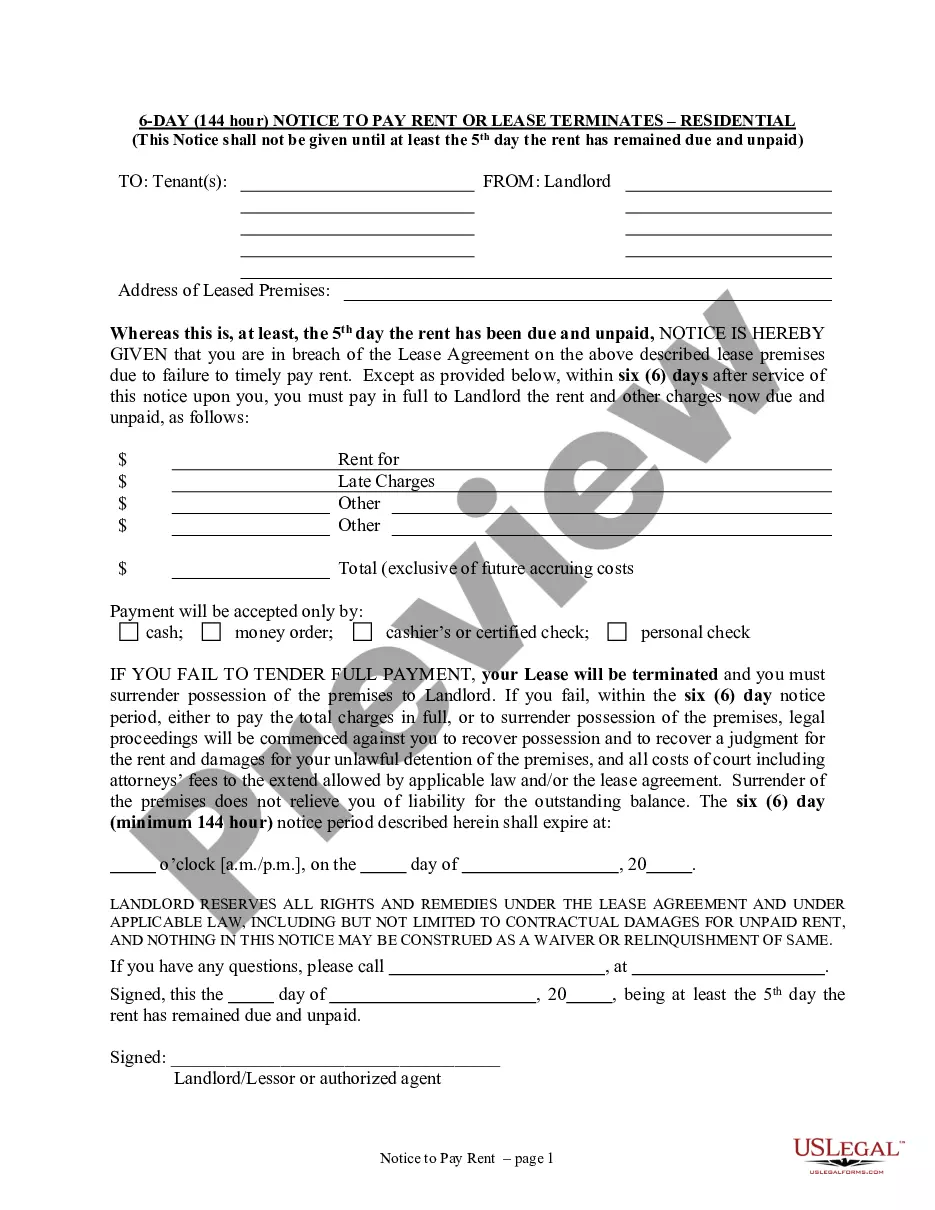
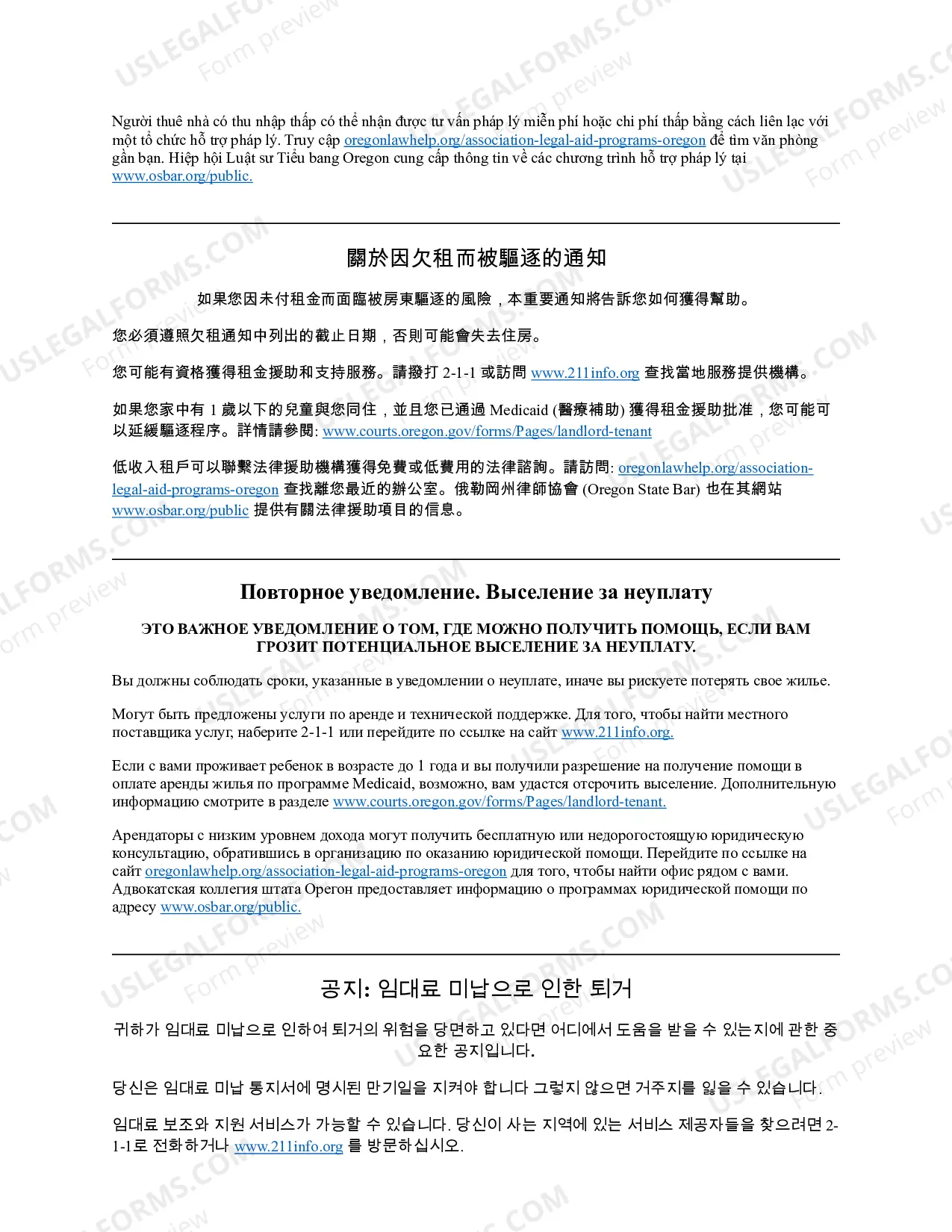
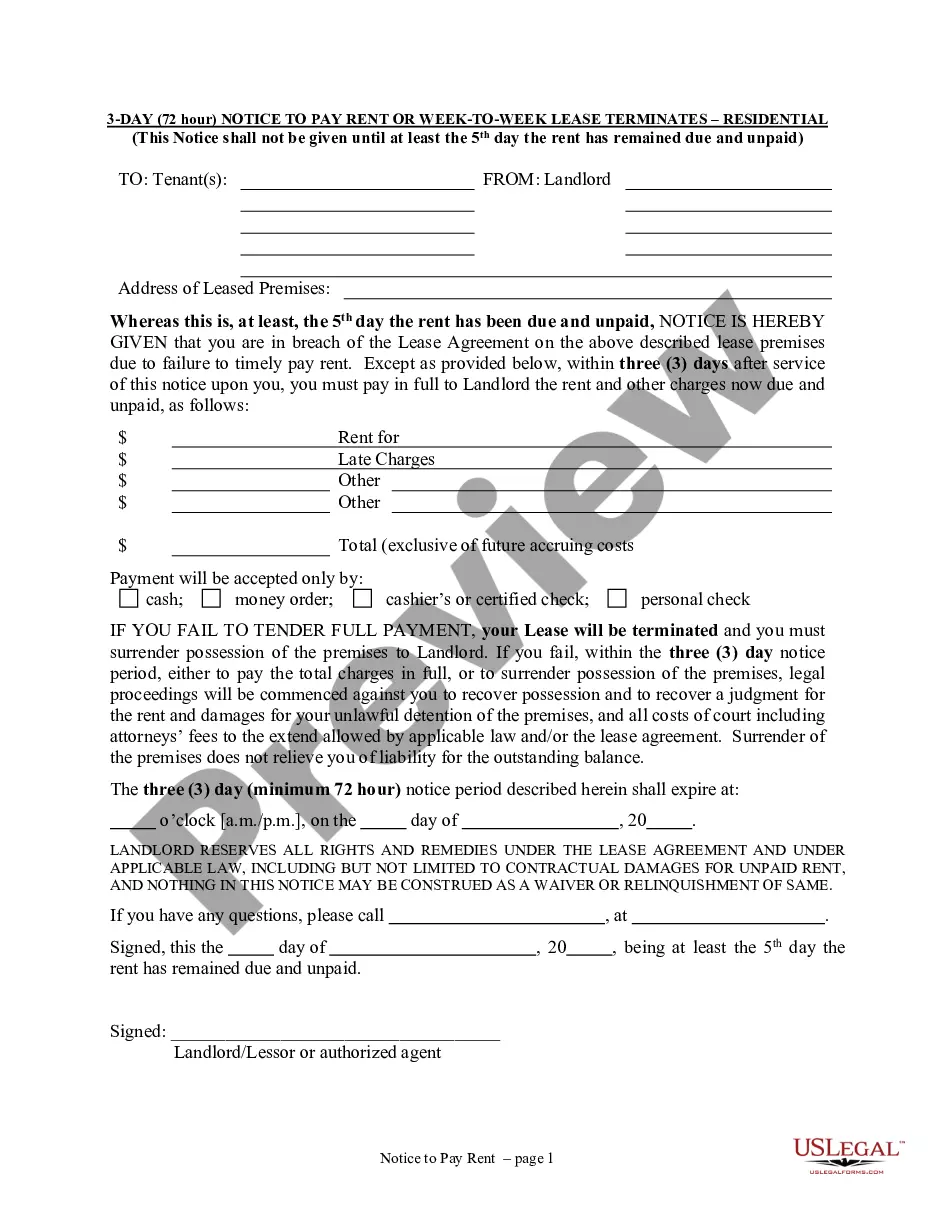
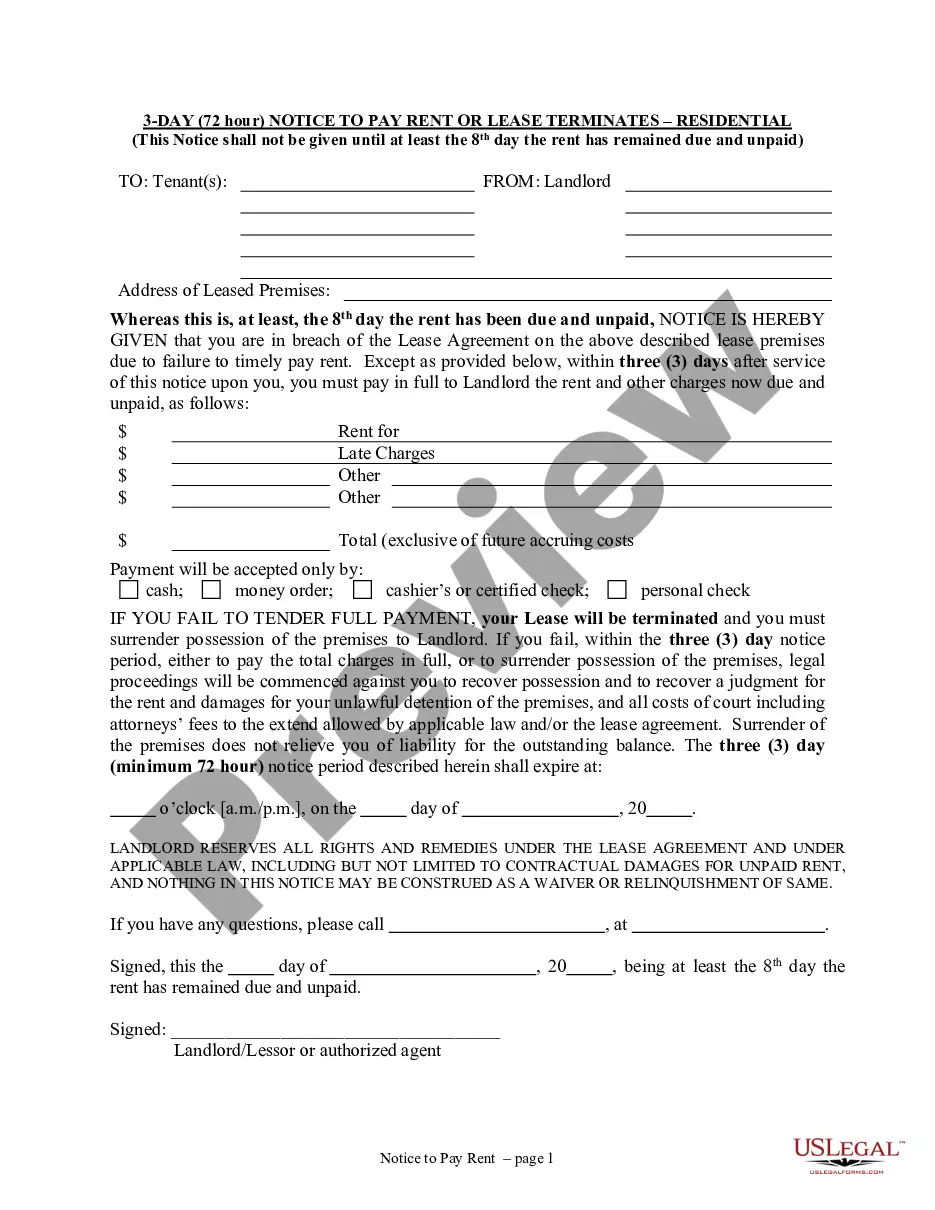
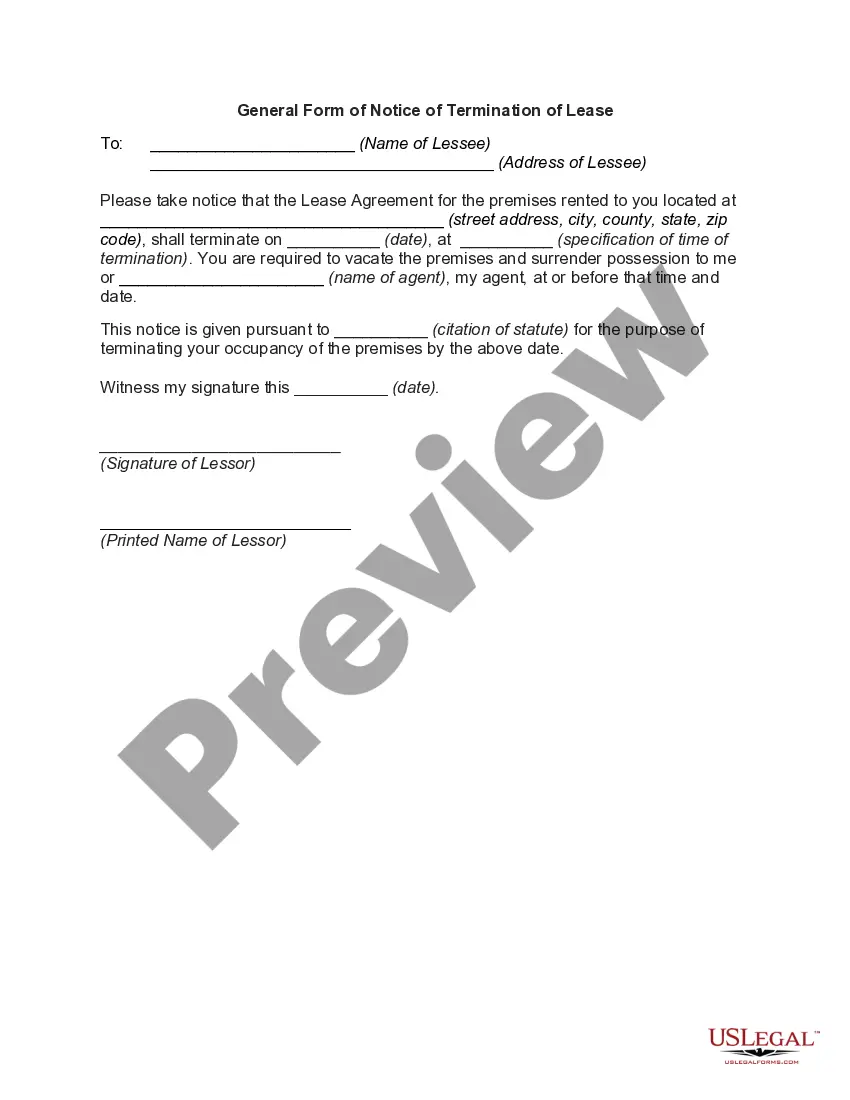
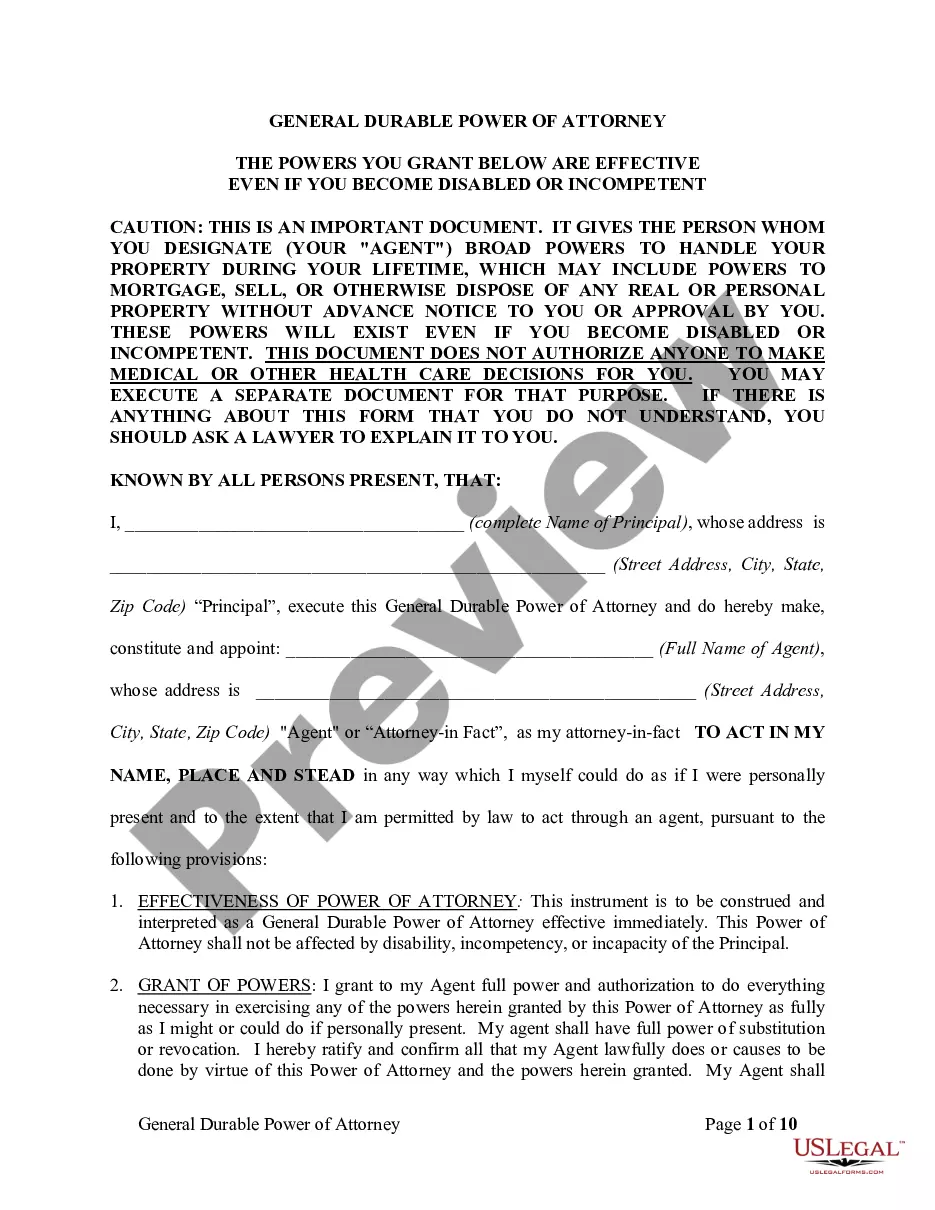
The 144 Hour Notice to Pay Rent or Lease Terminates is a legal document used by landlords in Oregon to officially inform tenants that they must pay overdue rent within a six-day period. This notice can be applied to residential leases, excluding week-to-week agreements. By issuing this notice, landlords are asserting their right to demand payment and may initiate eviction proceedings if the overdue rent remains unpaid after the notice period. This form is essential for landlords to comply with Oregon law when handling delinquent rent payments.
Main sections of this form
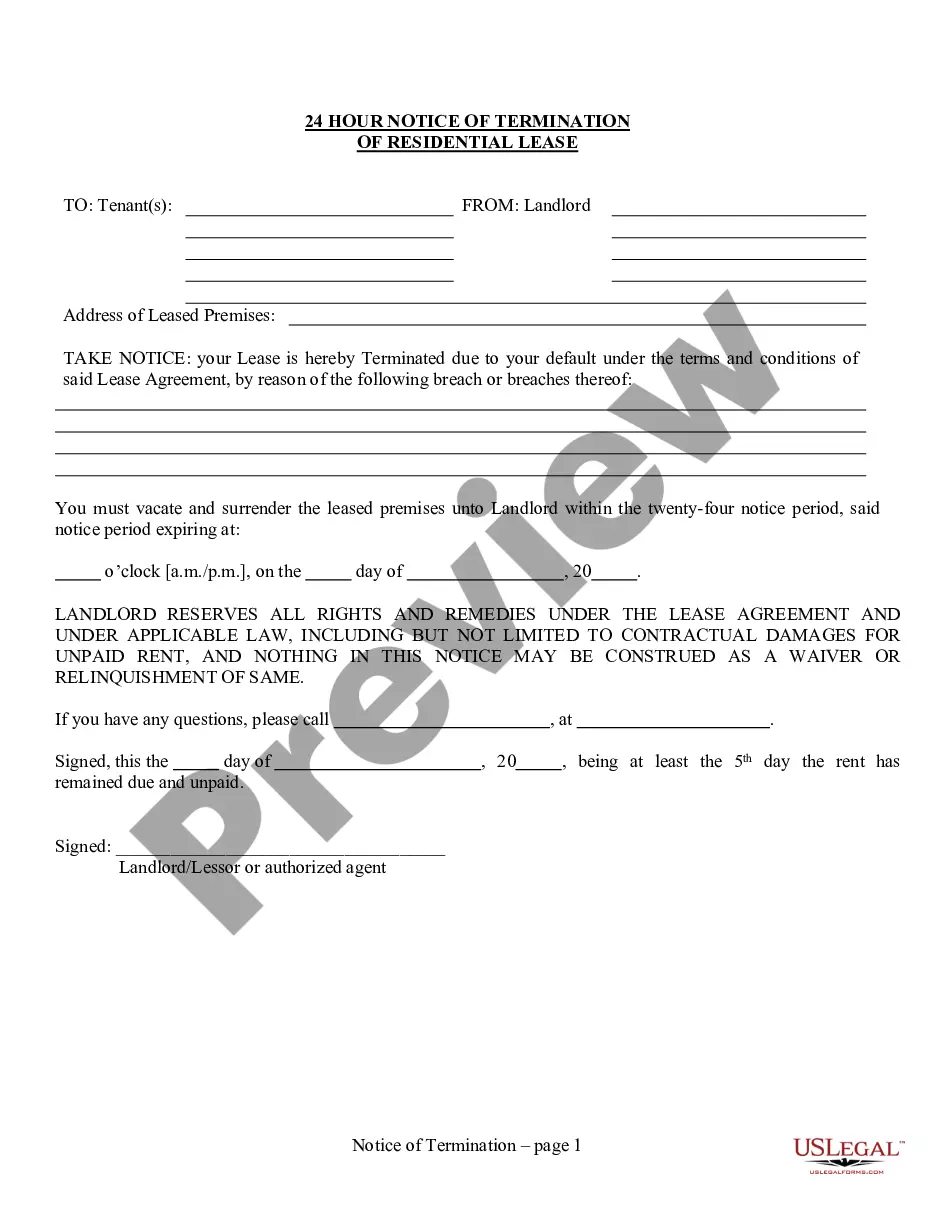
- Identification of the landlord and tenant involved in the lease agreement.
- Detailed specifications of the overdue rent amount owed by the tenant.
- Clear indication of the six-day (or 144-hour) notice period for payment.
- Consequences for failing to pay or vacate the property within the notice period.
- Instructions regarding acceptable methods of payment.


When this form is needed
This form is used when a tenant is behind on rent payments and the landlord wishes to formally demand payment. It is applicable when the rent is due and unpaid on the fifth day or later. If the tenant does not respond by making the payment or vacating the premises within six days of receiving this notice, the landlord may begin eviction proceedings to regain possession of the property.
Who needs this form
- Landlords managing residential properties in Oregon (excluding week-to-week leases).
- Property management firms acting on behalf of landlords.
- Real estate professionals guiding landlords in lease agreements.
How to prepare this document
- Identify the landlord's and tenant's full names and contact information.
- Specify the property address where the rental agreement is in effect.
- Detail the amount of overdue rent owed by the tenant.
- Enter the date when the notice is issued.
- Include the acceptable methods of payment for the overdue rent.
Notarization requirements for this form
This form does not typically require notarization unless specified by local law. Landlords can simply provide this notice to their tenants in writing to fulfill the legal requirements.
Get your form ready online
Our built-in tools help you complete, sign, share, and store your documents in one place.
Make edits, fill in missing information, and update formatting in US Legal Forms—just like you would in MS Word.
Download a copy, print it, send it by email, or mail it via USPS—whatever works best for your next step.
Sign and collect signatures with our SignNow integration. Send to multiple recipients, set reminders, and more. Go Premium to unlock E-Sign.
If this form requires notarization, complete it online through a secure video call—no need to meet a notary in person or wait for an appointment.
We protect your documents and personal data by following strict security and privacy standards.

Make edits, fill in missing information, and update formatting in US Legal Forms—just like you would in MS Word.

Download a copy, print it, send it by email, or mail it via USPS—whatever works best for your next step.

Sign and collect signatures with our SignNow integration. Send to multiple recipients, set reminders, and more. Go Premium to unlock E-Sign.

If this form requires notarization, complete it online through a secure video call—no need to meet a notary in person or wait for an appointment.

We protect your documents and personal data by following strict security and privacy standards.
Common mistakes to avoid
- Issuing the notice before the fifth day of rent being overdue.
- Not clearly specifying the amount of overdue rent.
- Failing to mention the consequences of not paying within the notice period.
- Omitting tenant and landlord contact information.
Advantages of online completion
- Convenience of immediate access and download from any device.
- Editability allows landlords to customize the form to their specific situation.
- Reliability and assurance that the document complies with current legal standards.
Legal use & context
- This notice is an important step in the eviction process in Oregon.
- It ensures compliance with state laws regarding landlord-tenant relationships.
- Failure to issue the notice properly may affect the enforceability of subsequent eviction actions.
Summary of main points
- The 144 Hour Notice is crucial for landlords to formally notify tenants of overdue rent.
- Compliance with Oregon law is essential for proper eviction processes.
- The notice can only be issued after the fifth day of unpaid rent.
- Proper completion of the form can help avoid legal pitfalls in the eviction process.
Looking for another form?
Form popularity
FAQ
You can help the situation a lot by providing as much notice as possible and writing a sincere letter to your landlord explaining why you need to leave early. Ideally you can offer your landlord a qualified replacement tenant, someone with good credit and excellent references, to sign a new lease with your landlord.
They must give the landlord at least 21 days notice of termination. Landlord Breaches the Agreement - the tenant can terminate the tenancy if the landlord breaches the agreement. If the landlord challenges the termination in the Tribunal, the breach must be serious enough to justify termination.
They must give the landlord at least 21 days notice of termination. Landlord Breaches the Agreement - the tenant can terminate the tenancy if the landlord breaches the agreement. If the landlord challenges the termination in the Tribunal, the breach must be serious enough to justify termination.
The tenant must give the landlord notice of their intention to move out within 90 days of the event causing the need to move. The notice must be given to the landlord at least 14 days before the tenant intends to move out.
The tenant will have fourteen days after receiving the thirty-day notice to fix the violation, and if the tenant fixes it, then the landlord must not proceed with the eviction. If the tenant does not fix the violation, then the landlord can proceed with the eviction after the thirty days has expired (see Ore.
For 2020, the maximum rent increase is 9.9%. Between tenants, there is no limit to how much the rent can go up (except if a short-term tenant was just evicted from the unit, a provision that discourages a revolving door of tenants for rent increases.)
A. In a month-to-month tenancy, the landlord may raise the rent after giving the tenant 45 days' written notice.
A no-cause eviction means that your landlord is not giving any reason for the eviction. The notice must clearly state the date that the tenancy will end.
In the state of Oregon, if tenants hold over, or stay in the rental unit after the rental term has expired, then the landlord must give tenants notice before evicting them. This can include tenants without a written lease and week-to-week and month-to-month tenants.