Oklahoma Living Trust for Husband and Wife with One Child
About this form
This Living Trust for Husband and Wife with One Child is a legal document that helps couples manage their assets during their lifetime and distribute them after death without the need for probate. Unlike a will, a living trust allows you to maintain control over your assets while designating a trustee to manage them on behalf of your child, making it a valuable tool for estate planning. This form is specifically tailored for a couple with one child, providing tailored provisions and instructions that meet your familyâs needs.
Key components of this form
- Name of Trust: Defines the title of the trust and the governing statutes.
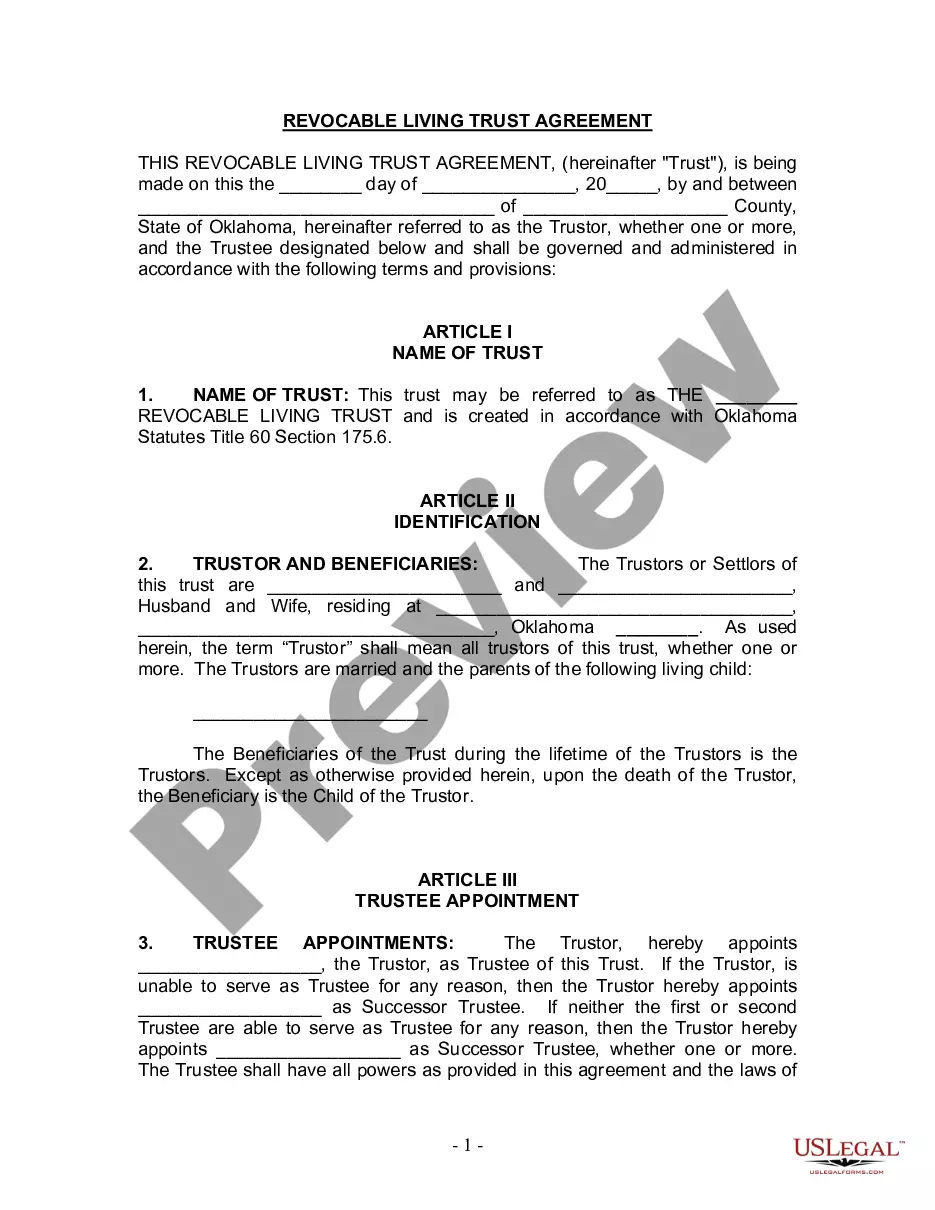
- Trustor and Beneficiaries: Details the husband and wife as trustors and their child as the primary beneficiary.
- Trustee Appointment: Appoints the primary trustee and successor trustees for asset management.
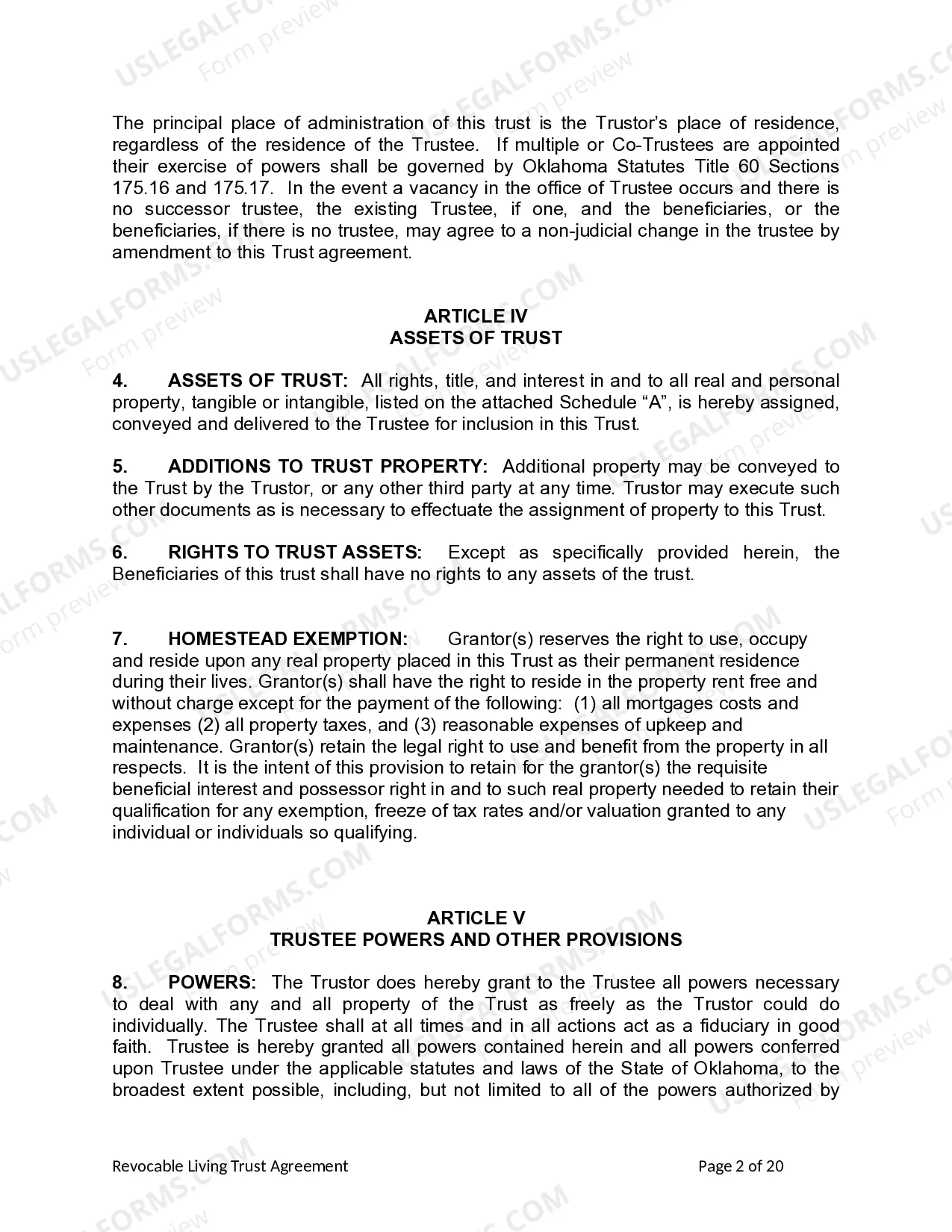
- Assets of Trust: Describes the assets included in the trust and how they can be managed or added to.
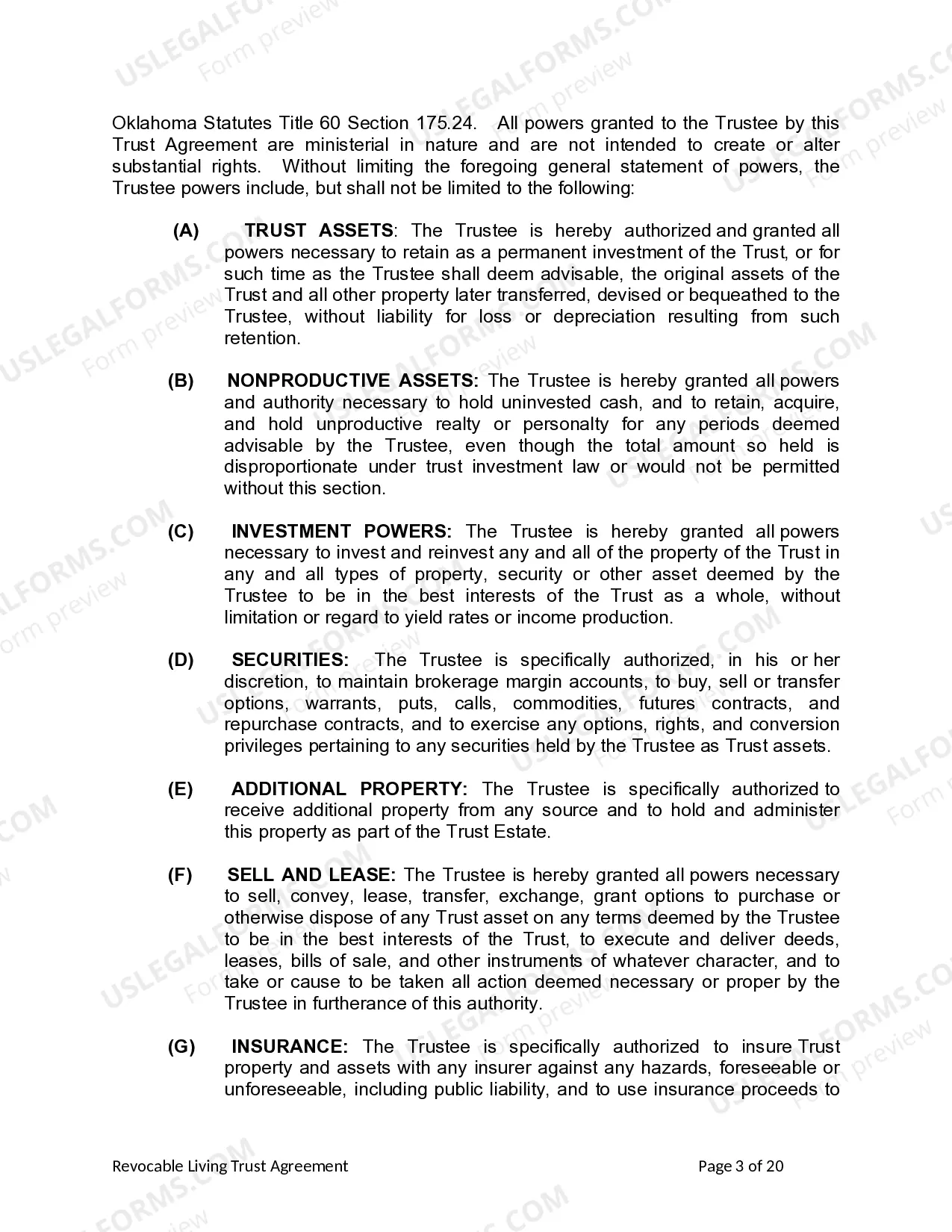
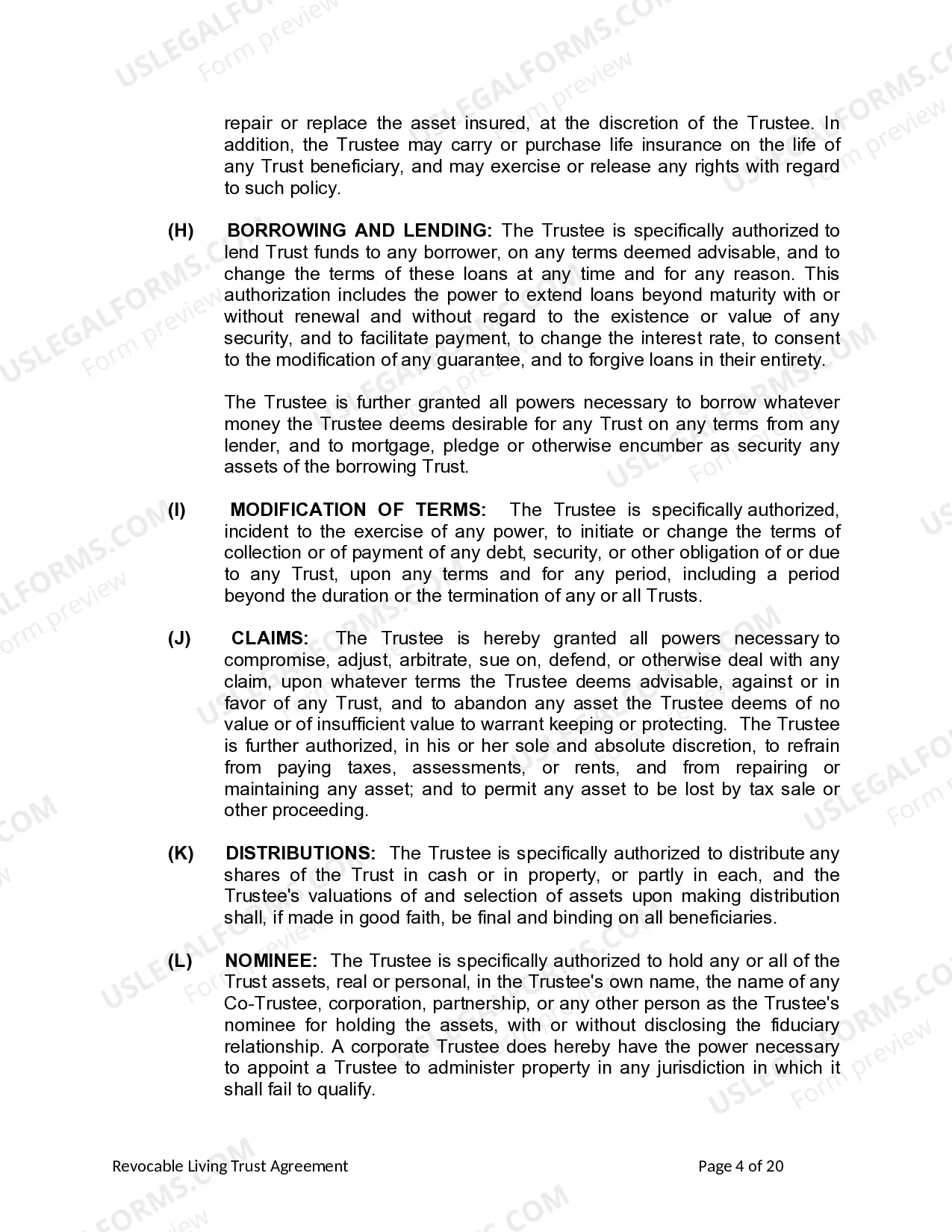
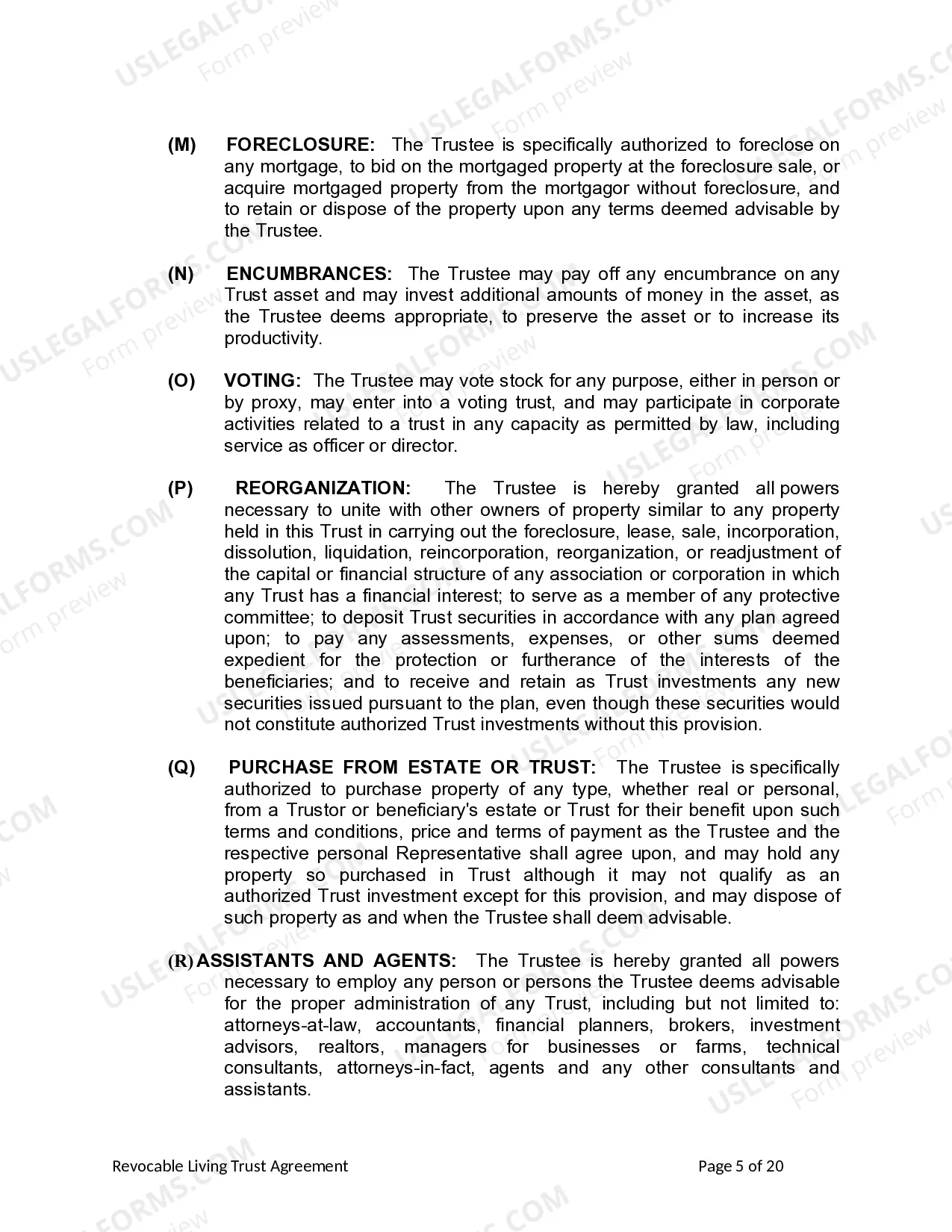
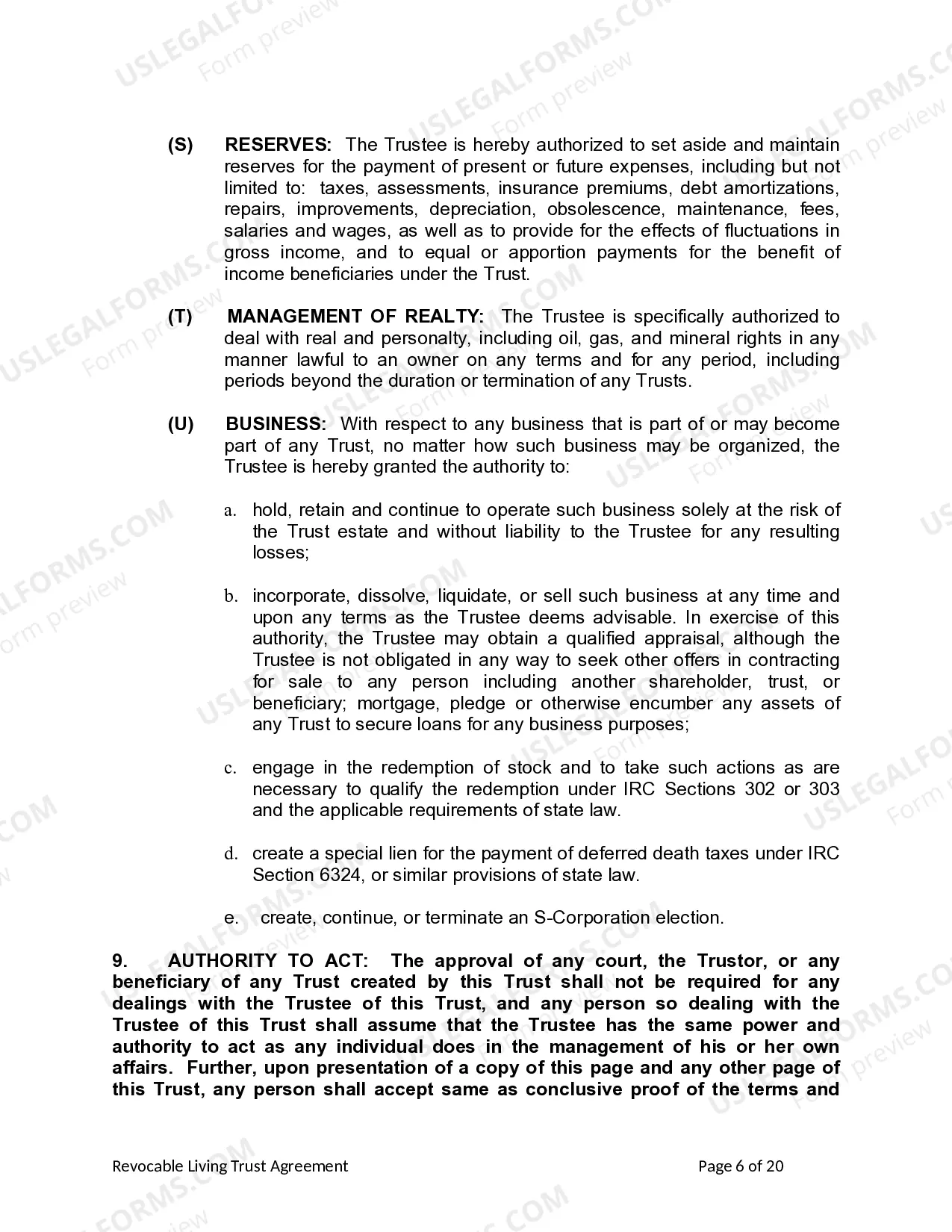
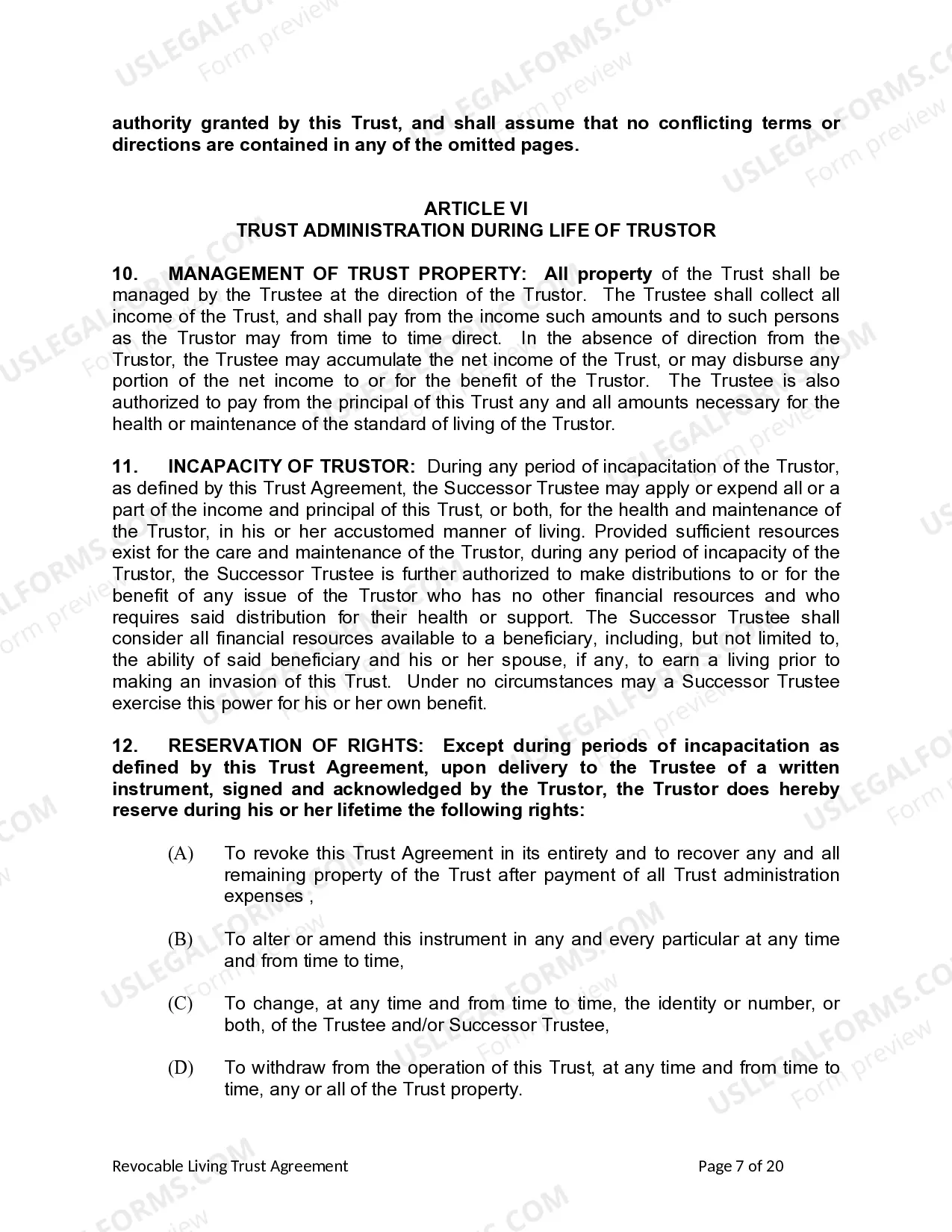
- Trustee Powers: Grants necessary powers to the trustee regarding asset management and distribution.
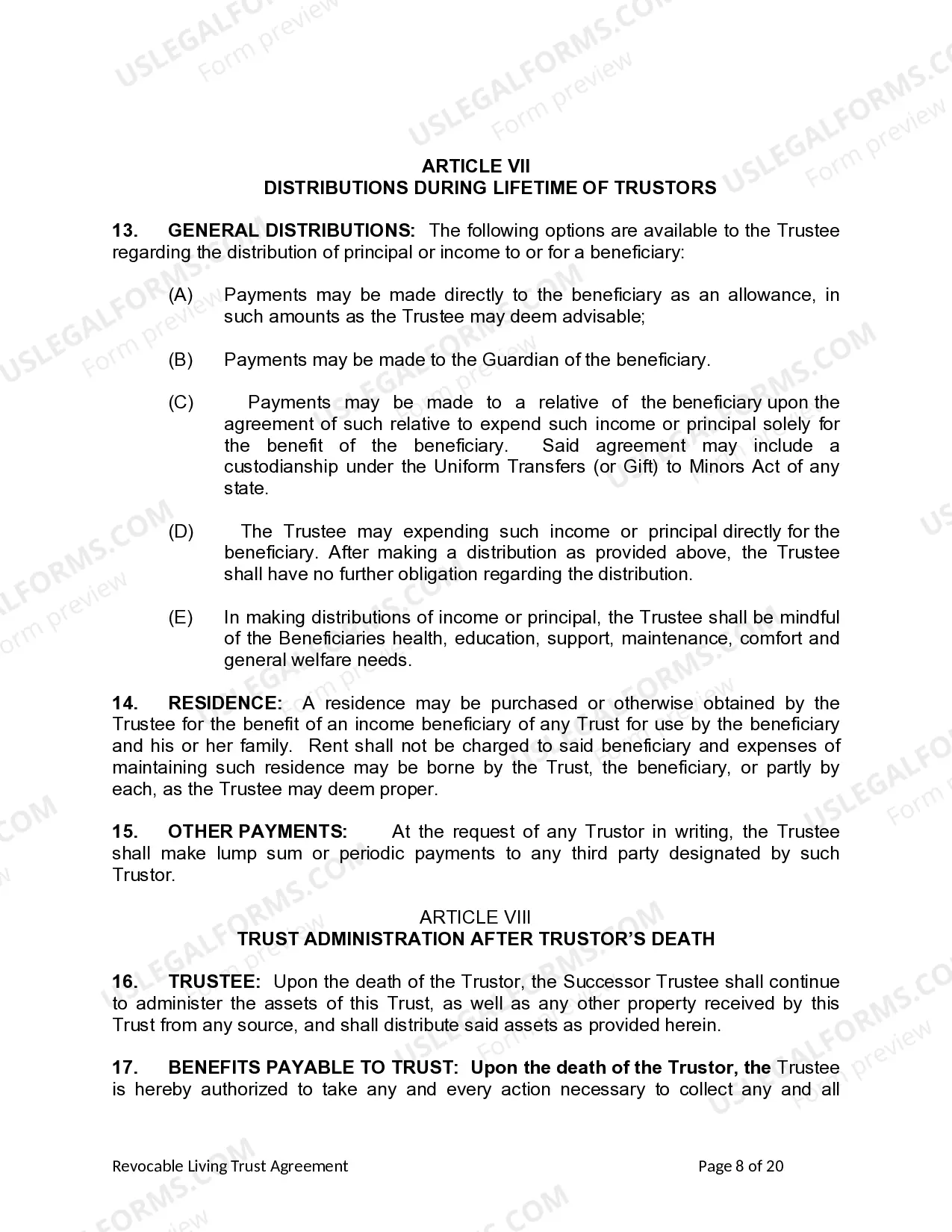
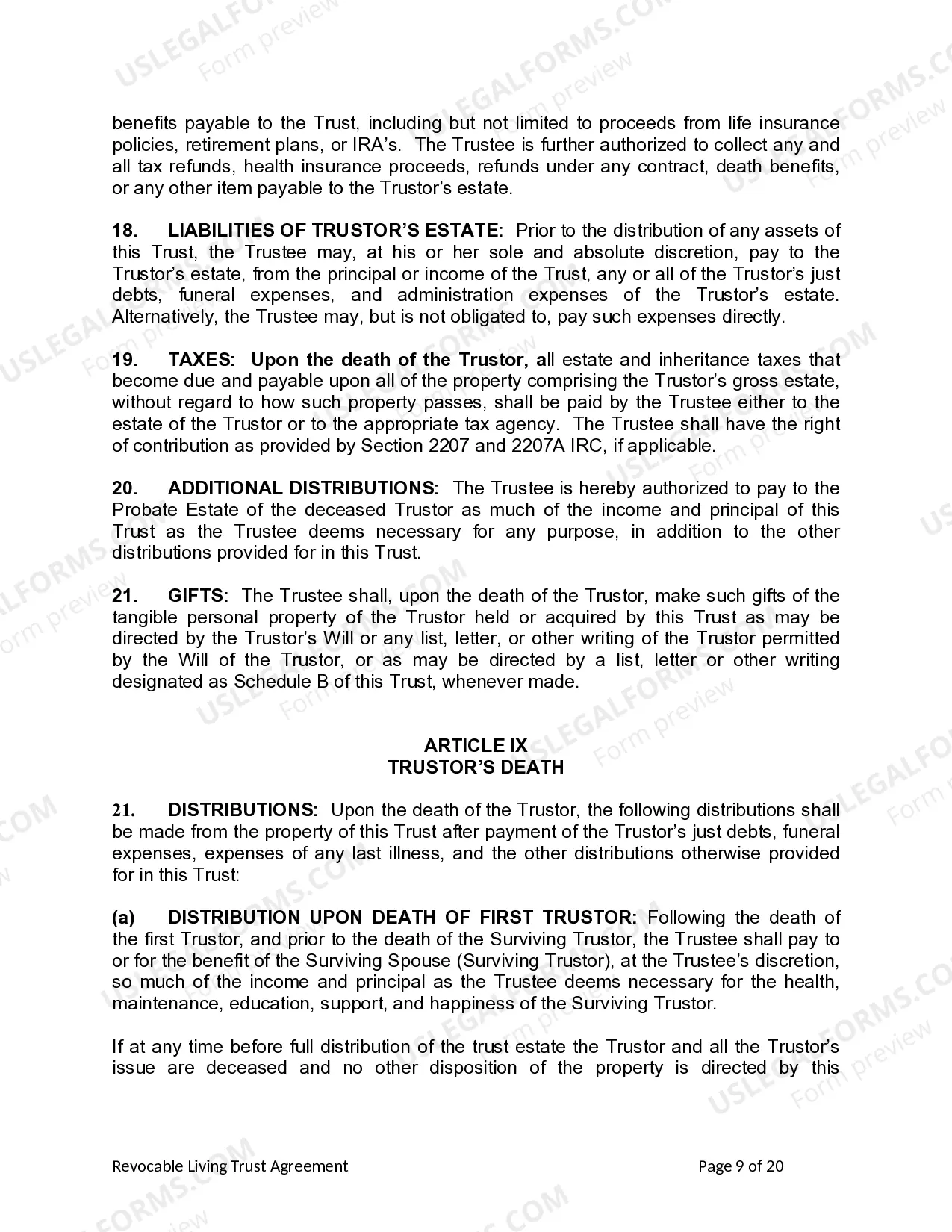
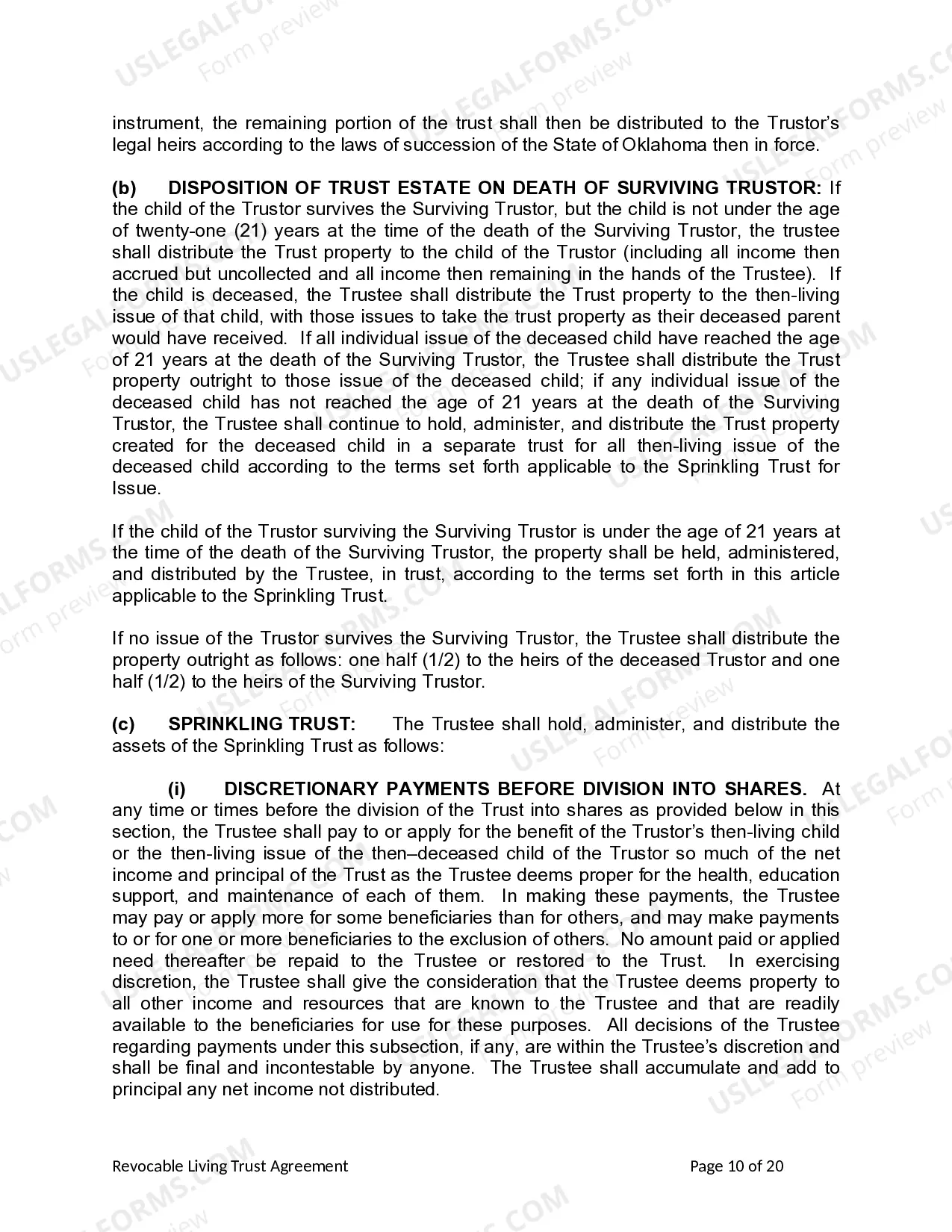
- Distributions Upon Death: Outlines how assets should be distributed upon the death of the trustors.

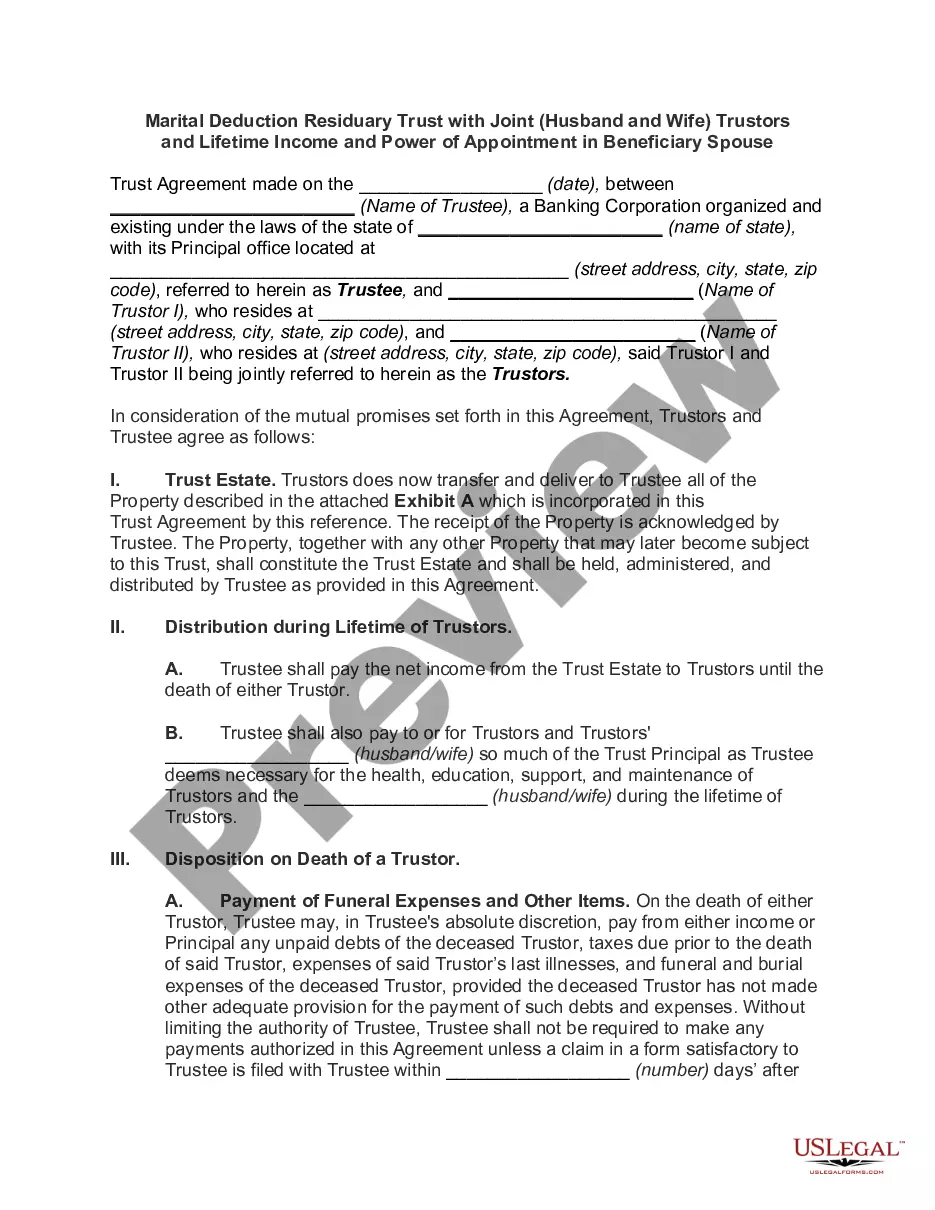



When to use this form
This living trust should be used when you, as a married couple, want to ensure that your child inherits your assets in a structured and efficient manner. It is particularly useful if you wish to avoid the lengthy probate process, manage your assets during your lifetime, and outline clear instructions for how assets should be divided after both parents pass away.
Who can use this document
- Couples who are married with one child.
- Individuals looking to manage and protect their assets for their childâs benefit.
- Families wanting to avoid the probate process after death.
- Those who wish to retain control over their assets while ensuring a planned distribution to their child.
How to complete this form
- Identify the parties involved, including the trustors (husband and wife) and the child beneficiary.
- Name the trust and appoint a trustee, specifying any successor trustees.
- List all assets that will be placed in the trust, including real estate and personal property.
- Specify the powers granted to the trustee to manage the trust effectively.
- Sign and date the document in the presence of a notary public if required.
Is notarization required?
Yes, this form must be notarized to be legally valid. US Legal Forms offers integrated online notarization services for your convenience, allowing you to notarize documents securely from home via video call, ensuring that you meet all legal requirements without the need for in-person visits.
Get your form ready online
Our built-in tools help you complete, sign, share, and store your documents in one place.
Make edits, fill in missing information, and update formatting in US Legal Forms—just like you would in MS Word.
Download a copy, print it, send it by email, or mail it via USPS—whatever works best for your next step.
Sign and collect signatures with our SignNow integration. Send to multiple recipients, set reminders, and more. Go Premium to unlock E-Sign.
If this form requires notarization, complete it online through a secure video call—no need to meet a notary in person or wait for an appointment.
We protect your documents and personal data by following strict security and privacy standards.

Make edits, fill in missing information, and update formatting in US Legal Forms—just like you would in MS Word.

Download a copy, print it, send it by email, or mail it via USPS—whatever works best for your next step.

Sign and collect signatures with our SignNow integration. Send to multiple recipients, set reminders, and more. Go Premium to unlock E-Sign.

If this form requires notarization, complete it online through a secure video call—no need to meet a notary in person or wait for an appointment.

We protect your documents and personal data by following strict security and privacy standards.
Avoid these common issues
- Failing to list all intended assets in the trust.
- Not updating the trust when circumstances change, such as the birth of additional children.
- Neglecting to appoint a successor trustee, which can complicate trust management.
- Not having the trust notarized when required.
Benefits of completing this form online
- Immediate access to legally vetted documents prepared by licensed attorneys.
- Convenient downloading and printing capabilities for personal use.
- Easy editing options to fit your specific needs and family situation.
- Reduced costs compared to hiring an attorney for custom document preparation.
Legal use & context
- This trust is legally binding and helps in the seamless transition of assets upon the trustors' death.
- Trusts typically provide privacy since they do not go through probate.
- It is essential to follow state laws to avoid legal complications or challenges after the trustors' passing.
Summary of main points
- A living trust can help ensure a fast and private distribution of assets to your child.
- Spouses can retain control of assets during their lifetimes while providing for their child after death.
- Proper execution and notarization of the trust are essential for legal validity.
Looking for another form?
Form popularity
FAQ
In California, surviving spouses already receive all of the community property upon the death of their spouse.However, creating a joint will is still an option in California, and while it might help a couple save some time and money on their estate plan, it can also lead to some complex problems.
Single and Joint Revocable Living Trusts Trusts can be both single and joint.Joint trusts are particularly useful in community property states, such as Arizona, California, Nevada, Idaho, New Mexico, Louisiana, Texas, Washington, and Wisconsin.
Separate trusts provide more flexibility in the event of a death in the marriage. Since the trust property is already divided, separate trusts preserve the surviving spouse's ability to amend or revoke assets held within their own trust, while ensuring that the deceased spouse's trust cannot be amended after death.
Joint trusts are easier to fund and maintain.In a joint trust, after the death of the first spouse, the surviving spouse has complete control of the assets. When separate trusts are used, the deceased spouses' trust becomes irrevocable and the surviving spouse has limited control over assets.
Separate trusts may offer better protection from creditors, if this is a concern. For example, at the death of the first spouse, the deceased spouse's trust becomes irrevocable, which makes it harder to access by creditors. And yet the surviving spouse can still access it for income and other needs.
Married couples should consider whether they live in a community property or a separate property state before deciding what type of trust to create. For many married couples, a basic joint living trust will meet their needs. Each person can act as both a grantor and a trustee of the trust.
Typically, when a married couple utilizes a Revocable Living Trust based estate plan, each spouse creates and funds his or her own separate Revocable Living Trust. This results in two trusts. However, in the right circumstances, a married couple may be better served by creating a single Joint Trust.
Q: Can a person have more than one trust? A: Yes, it is not that uncommon for a person to be the beneficiary of multiple trusts. However, caution should be used. Trusts come in many shapes and sizes and can serve multiple purposes and can be established by you or by someone else for your benefit.