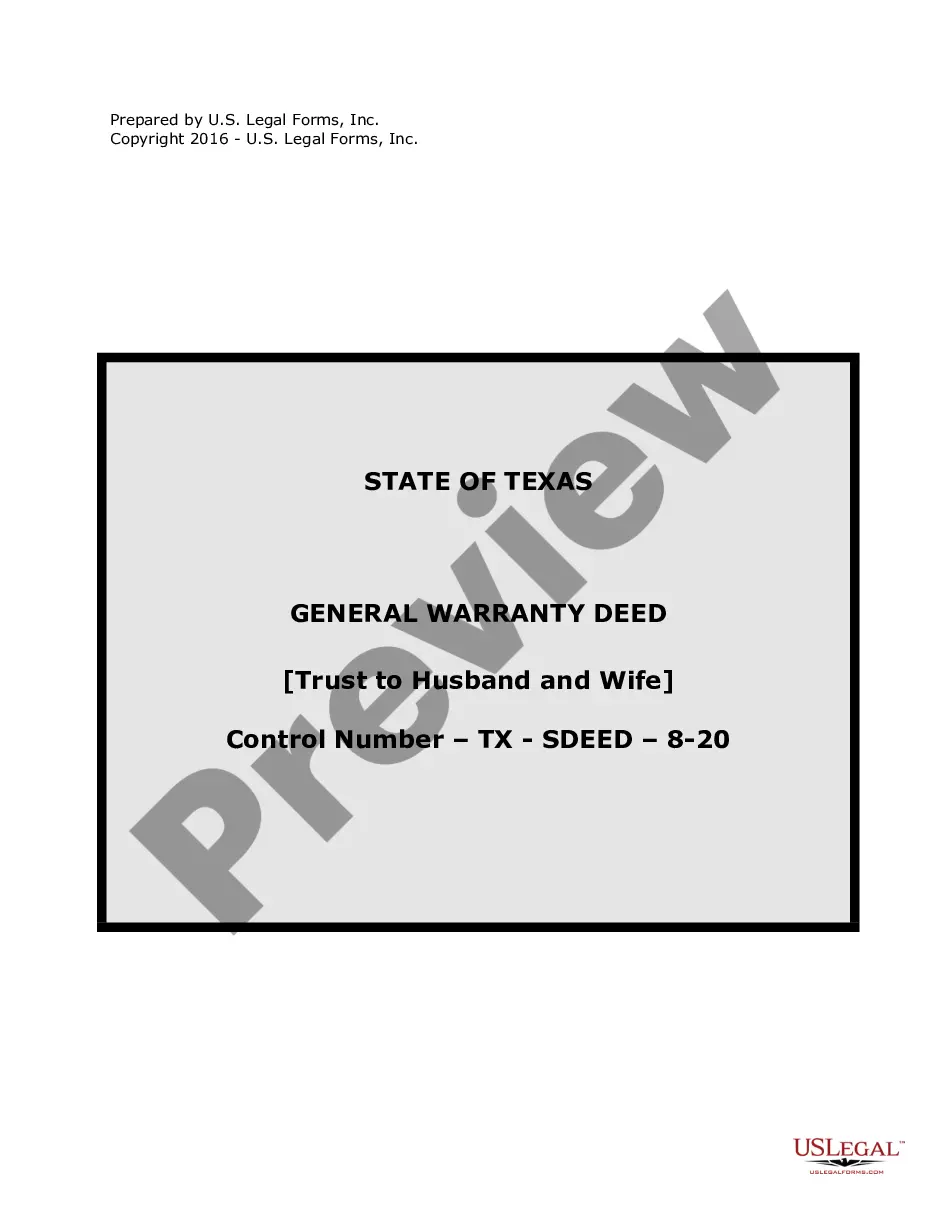
Nevada Full Reconveyance of Deed of Trust by Corporate Trustee
Understanding this form
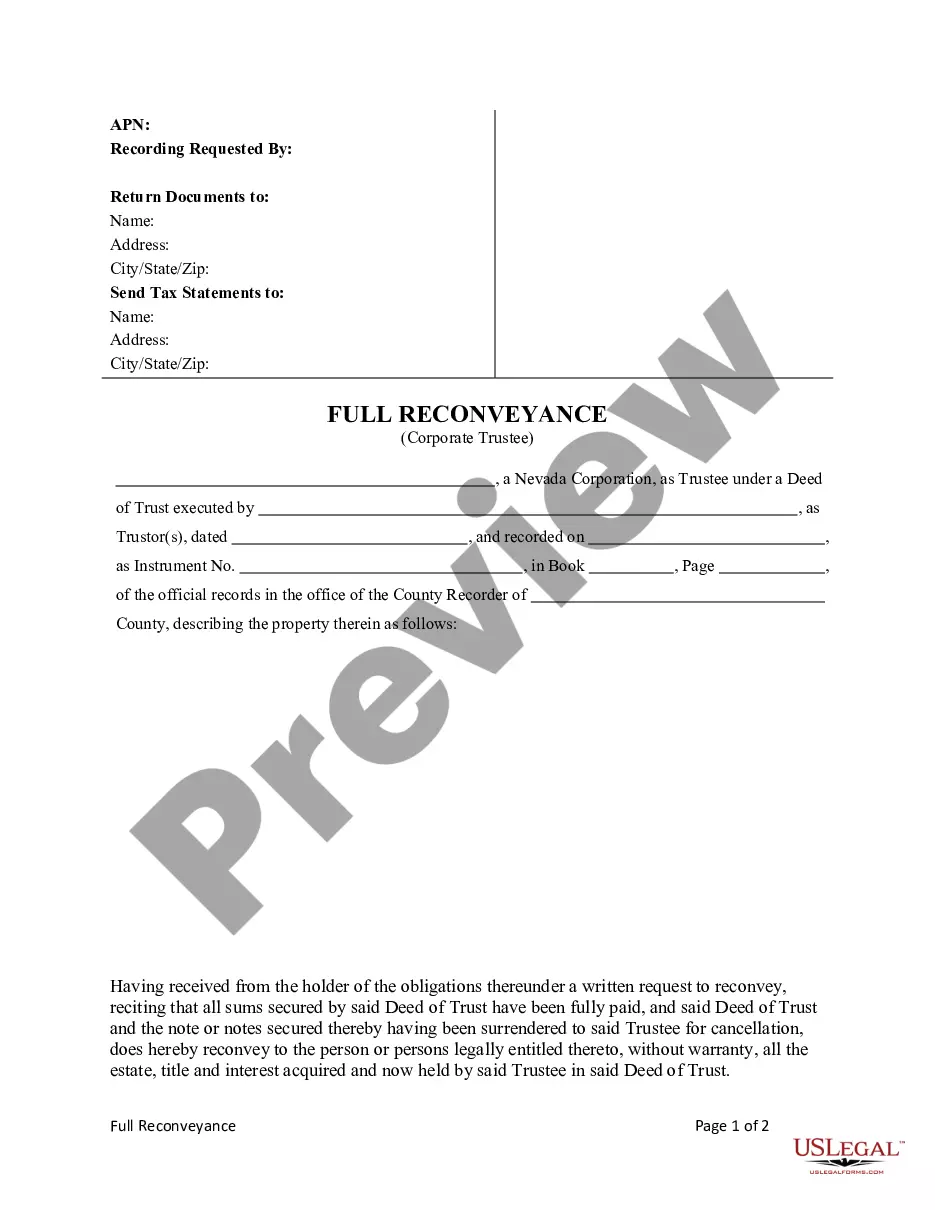
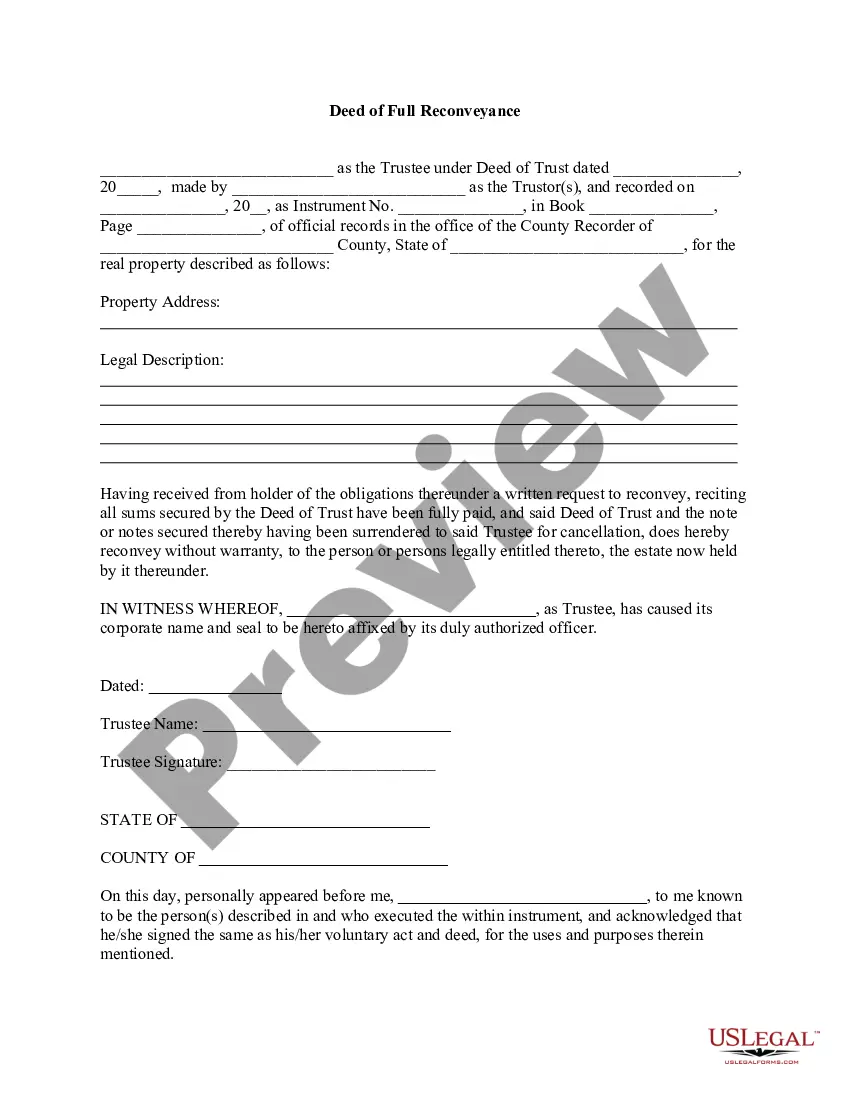
The Full Reconveyance of Deed of Trust by Corporate Trustee is a legal document used to release a mortgage lien on a property. This form is specifically designed for use by corporate lenders in Nevada, enabling them to remove their claim on the real estate once the mortgage is satisfied. Unlike other forms, this document is tailored to meet state laws and ensures that the property is officially cleared of the mortgage obligation.
Key components of this form
- Identification of the corporate lender acting as the trustee.
- Description of the property being reconveyed, including legal descriptions.
- Declaration of satisfaction of the mortgage obligation.
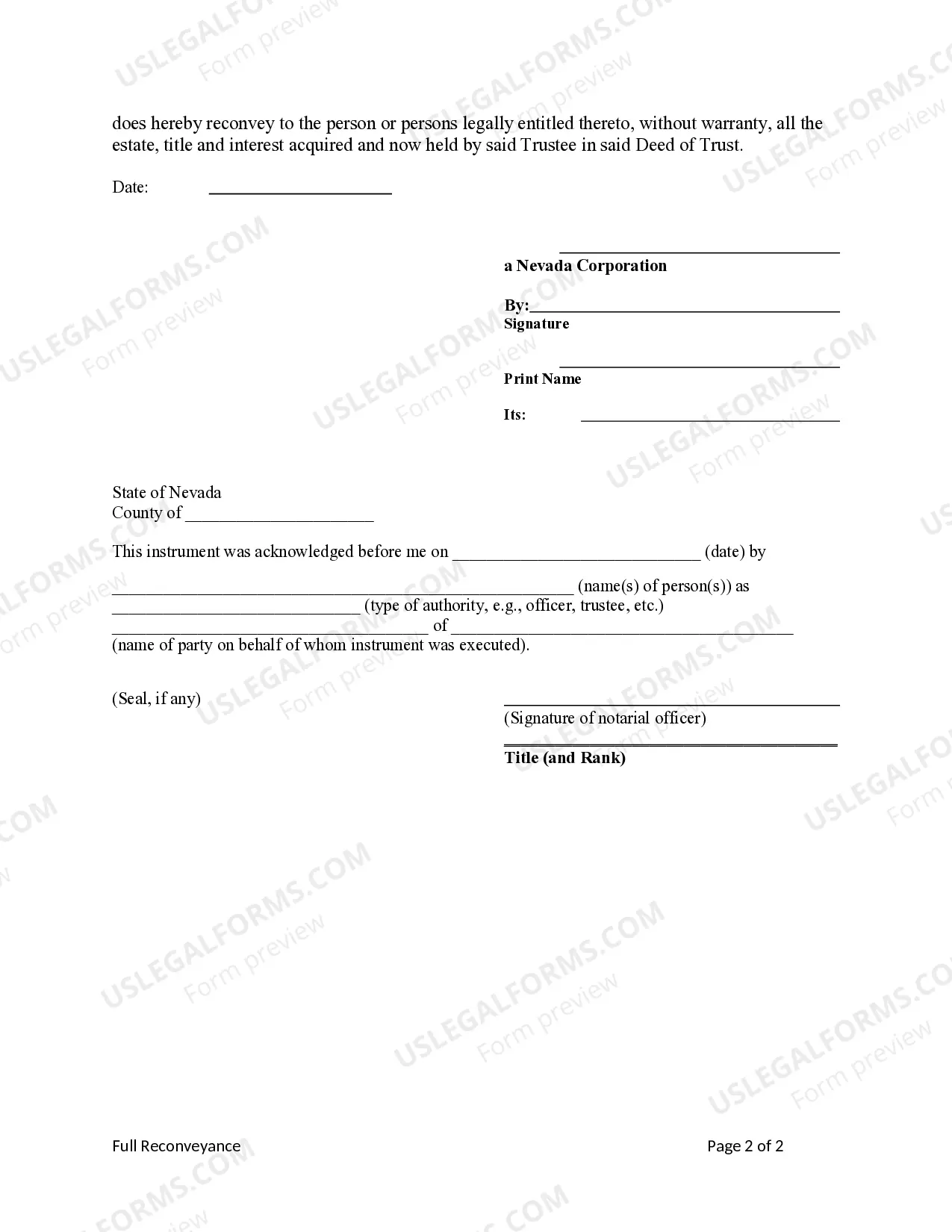
- Signature lines for the corporate lender and notary public.
- Confirmation of compliance with Nevada state statutory requirements.
Common use cases
This form should be used when a corporate lender has satisfied all obligations of a mortgage and wishes to formally release their claim on the property. Typical situations include the full repayment of a loan or an agreement between the lender and borrower to satisfy the debt. It is essential to use this form to ensure that the property title is clear and the mortgage lien is officially canceled.
Intended users of this form
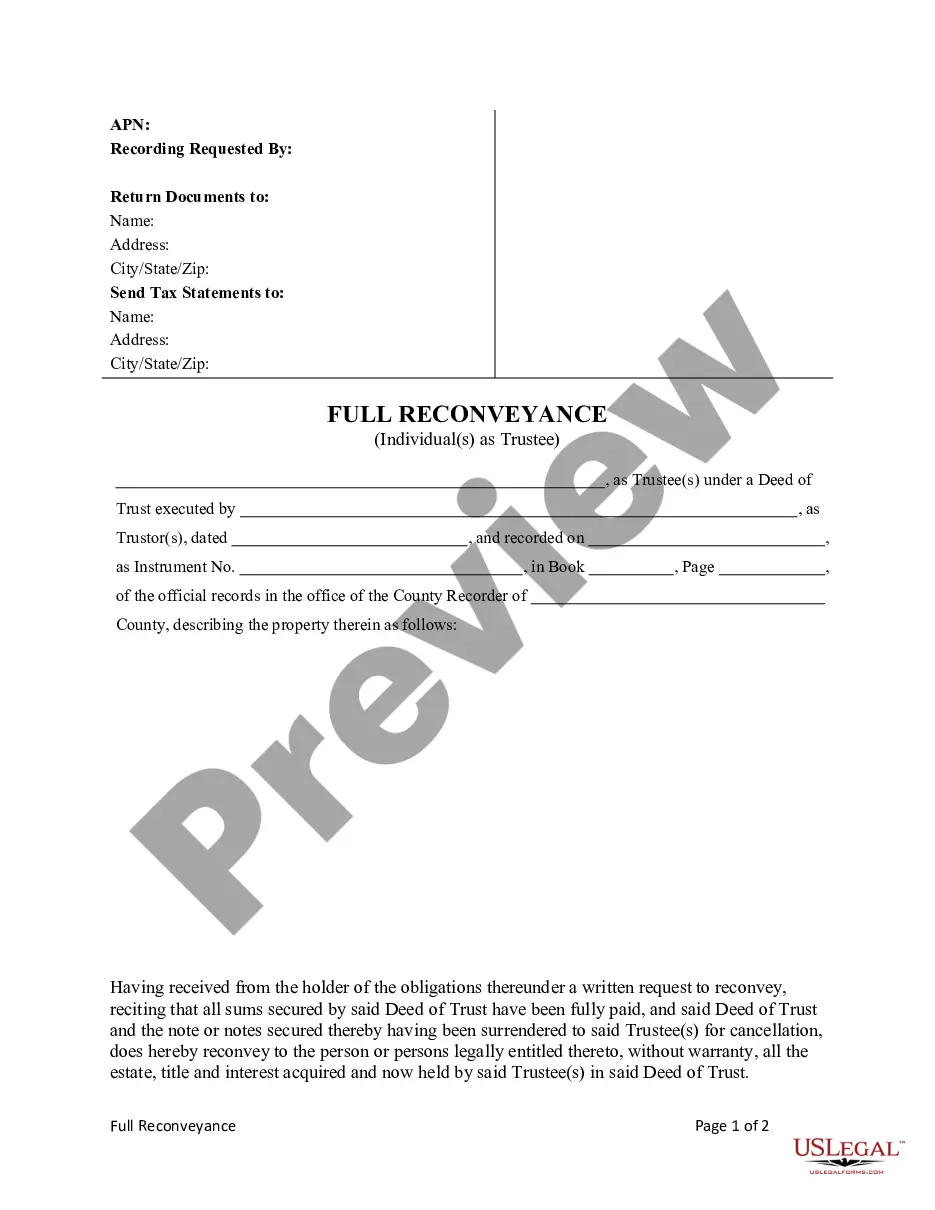
- Corporate lenders who have provided a deed of trust.
- Trustees acting on behalf of a lending institution.
- Property owners needing to confirm the release of a mortgage lien.
Completing this form step by step
- Identify the parties involved, including the corporate lender and the property owner.
- Describe the property clearly using its legal description.
- Include the necessary details to affirm that the mortgage has been satisfied.
- Sign the form in the presence of a notary public.
- Submit the completed form to the appropriate local recording authority.
Does this form need to be notarized?
This form must be notarized to be legally valid. US Legal Forms provides secure online notarization powered by Notarize, allowing you to complete the process through a verified video call.
Get your form ready online
Our built-in tools help you complete, sign, share, and store your documents in one place.
Make edits, fill in missing information, and update formatting in US Legal Forms—just like you would in MS Word.
Download a copy, print it, send it by email, or mail it via USPS—whatever works best for your next step.
Sign and collect signatures with our SignNow integration. Send to multiple recipients, set reminders, and more. Go Premium to unlock E-Sign.
If this form requires notarization, complete it online through a secure video call—no need to meet a notary in person or wait for an appointment.
We protect your documents and personal data by following strict security and privacy standards.

Make edits, fill in missing information, and update formatting in US Legal Forms—just like you would in MS Word.

Download a copy, print it, send it by email, or mail it via USPS—whatever works best for your next step.

Sign and collect signatures with our SignNow integration. Send to multiple recipients, set reminders, and more. Go Premium to unlock E-Sign.

If this form requires notarization, complete it online through a secure video call—no need to meet a notary in person or wait for an appointment.

We protect your documents and personal data by following strict security and privacy standards.
Common mistakes
- Failing to complete the legal description of the property accurately.
- Not having the document notarized as required.
- Leaving out the date or signatures, which can invalidate the document.
Why complete this form online
- Convenient and straightforward access to legal documents 24/7.
- Editability allows for tailored adjustments to meet specific needs.
- Reliability of forms drafted by licensed attorneys, ensuring legal compliance.
What to keep in mind
- The Full Reconveyance of Deed of Trust by Corporate Trustee is essential for officially releasing a mortgage lien.
- This form must be completed according to Nevada state laws, including notarization.
- Proper usage of this form ensures a clear property title and legal peace of mind for all parties involved.
Looking for another form?
Form popularity
FAQ
A deed of trust is a method of securing a real estate transaction that includes three parties: a lender, borrower and a third-party trustee.
The deed must be signed by the party or parties making the conveyance or grant; and 7.
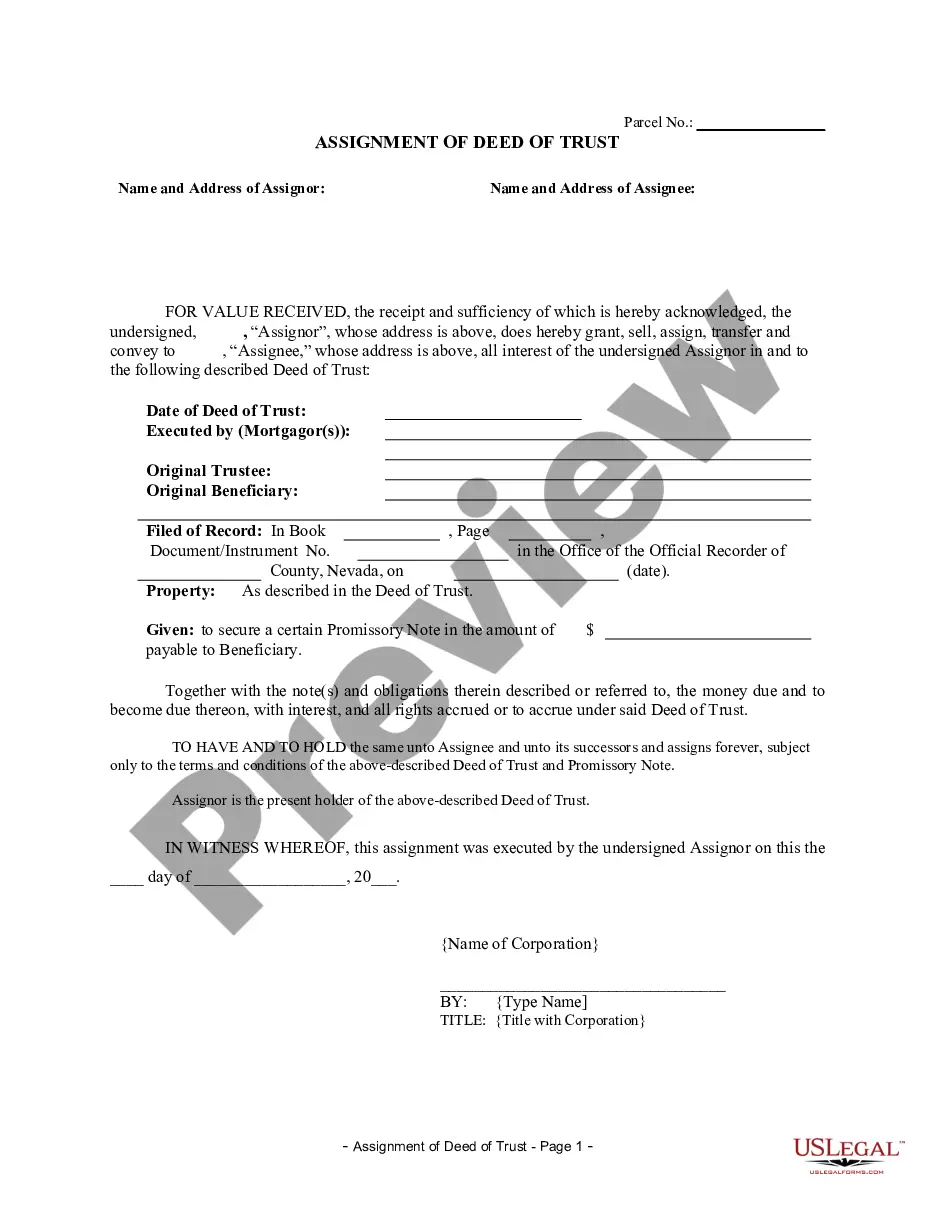
An assignment of a deed of trust is simply the movement of the deed of trust from one party to another, a party that was not originally involved in the deed creation when the property was bought. A corporate assignment is simply an assignment of the deed of trust between different businesses.
A deed of trust involves three parties: the borrower, the lender, and the trustee.The trustee holds title to the property until the trustor has fully repaid the loan to the beneficiary, at which time the lender notifies the trustee, who then transfers full title of the property to the trustor.
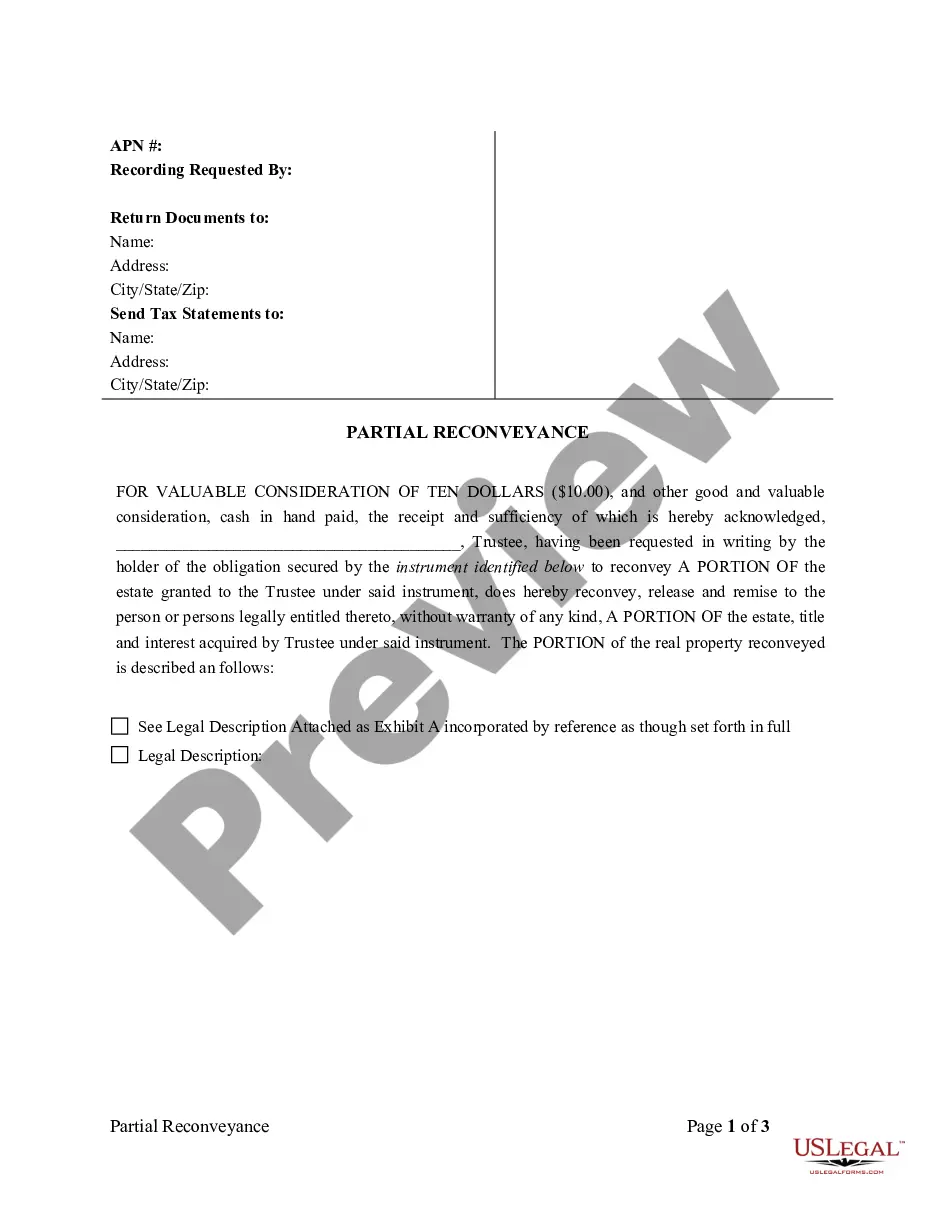
A mortgage holder issues a deed of reconveyance to indicate that the borrower has been released from the mortgage debt. The deed transfers the property title from the lender, also called the beneficiary, to the borrower. This document is most commonly used when a mortgage has been paid in full.
Giving the wrong legal address for the property or the wrong amount of the debt can render the deed unenforceable. In some cases, the error is easy to fix, and the court will rule the deed is enforceable.
Only until the debt is paid off by the borrower can a deed of reconveyance then be used to clear the deed of trust from the title to the property. The document is signed by the trustee, whose signature must be notarized.
When your mortgage lender decides he wants to sell your mortgage loan to another lender, your mortgage lender will sign an assignment of deed of trust in favor of the new lender. This assignment gives the new lender the same lien on your property that your original lender had under the mortgage loan.
In order to clear the Deed of Trust from the title to the property, a Deed of Reconveyance must be recorded with the Country Recorder or Recorder of Deeds. If the Trustee/Beneficiary fails to record a satisfaction within the set time limits, the Trustee/Beneficiary may be responsible for damages as set out by statute.