Nevada 5 Day Notice to Remedy Breach of Lease or Lease Terminates - Residential
Overview of this form
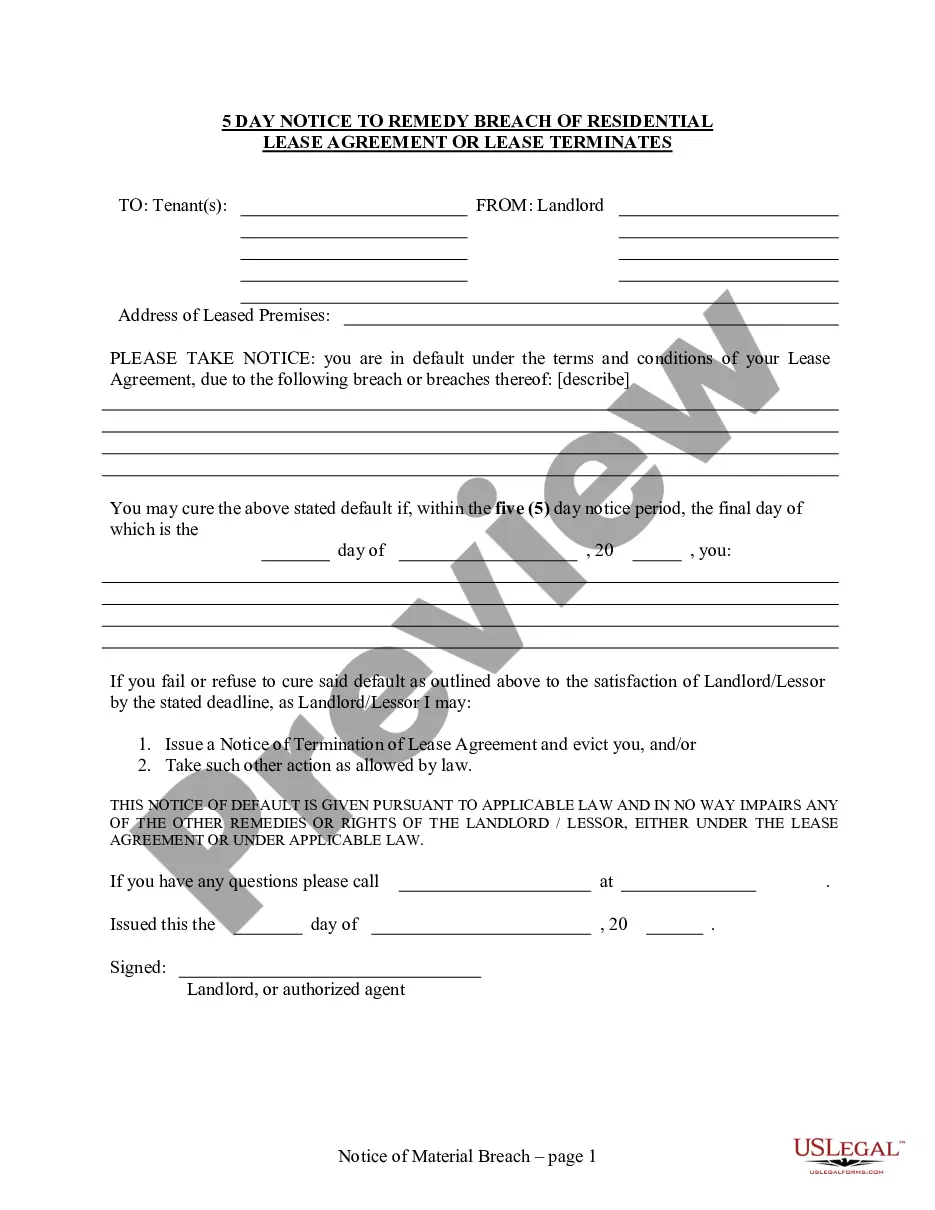
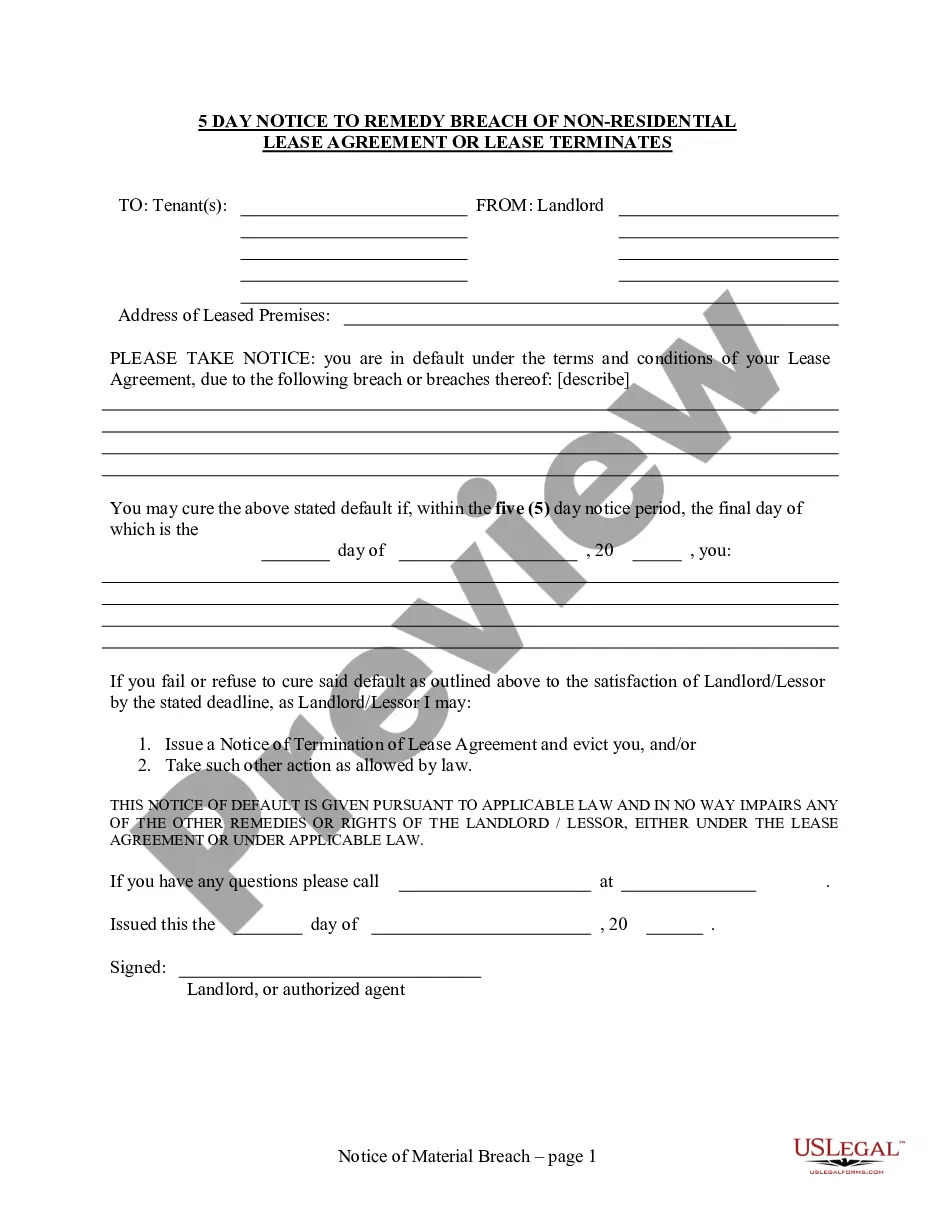
The 5 Day Notice to Remedy Breach of Lease or Lease Terminates - Residential is a legal document used by landlords to inform tenants of a lease violation. This form outlines the specific breach of the lease agreement and provides the tenant with a five-day period to remedy the issue. If the tenant fails to comply within the specified time frame, the landlord may initiate eviction proceedings. This notice is essential for landlords to communicate the seriousness of lease violations clearly and legally.
Form components explained
- Identification of the landlord and tenant parties involved.
- Address of the leased property.
- Statement detailing the specific lease breach.
- Five-day notice period for the tenant to remedy the breach.
- Consequences of failing to remedy the breach, including possible eviction.
- Signature of the landlord or authorized agent.

Situations where this form applies
This form is used when a landlord identifies a breach of the lease agreement by a tenant, such as failure to pay rent, unauthorized modifications to the property, or other violations specified in the lease. It serves as a formal notice to the tenant, outlining the breach and the timeframe for correction, and positioning the landlord for potential eviction if the tenant does not respond appropriately.
Who can use this document
- Landlords who have rental agreements with residential tenants.
- Property managers acting on behalf of landlords.
- Real estate professionals handling lease agreements.
- Tenants who have received a notice and need to understand their obligations.
How to prepare this document
- Identify and enter the names of the landlord and tenant.
- Provide the address of the leased premises.
- Clearly describe the breach of the lease agreement.
- Specify the date by which the tenant must remedy the breach.
- Sign and date the notice as the landlord or authorized agent.
Is notarization required?
This form does not typically require notarization to be legally valid. However, some jurisdictions or document types may still require it. US Legal Forms provides secure online notarization powered by Notarize, available 24/7 for added convenience.
Get your form ready online
Our built-in tools help you complete, sign, share, and store your documents in one place.
Make edits, fill in missing information, and update formatting in US Legal Forms—just like you would in MS Word.
Download a copy, print it, send it by email, or mail it via USPS—whatever works best for your next step.
Sign and collect signatures with our SignNow integration. Send to multiple recipients, set reminders, and more. Go Premium to unlock E-Sign.
If this form requires notarization, complete it online through a secure video call—no need to meet a notary in person or wait for an appointment.
We protect your documents and personal data by following strict security and privacy standards.

Make edits, fill in missing information, and update formatting in US Legal Forms—just like you would in MS Word.

Download a copy, print it, send it by email, or mail it via USPS—whatever works best for your next step.

Sign and collect signatures with our SignNow integration. Send to multiple recipients, set reminders, and more. Go Premium to unlock E-Sign.

If this form requires notarization, complete it online through a secure video call—no need to meet a notary in person or wait for an appointment.

We protect your documents and personal data by following strict security and privacy standards.
Typical mistakes to avoid
- Failing to accurately describe the breach can lead to confusion or disputes.
- Not providing sufficient time for the tenant to remedy the breach may violate local laws.
- Overlooking the need to sign and properly deliver the notice can affect its validity.
Advantages of online completion
- Convenient access to pre-drafted forms, saving time and effort.
- Editable fields allow for customization to fit specific situations.
- Instant download provides immediate access to the form when needed.
- Ensures compliance with legal standards and requirements.
Legal use & context
- This form serves as a formal notification under the lease agreement.
- Using this notice can provide legal protection for landlords when evicting tenants.
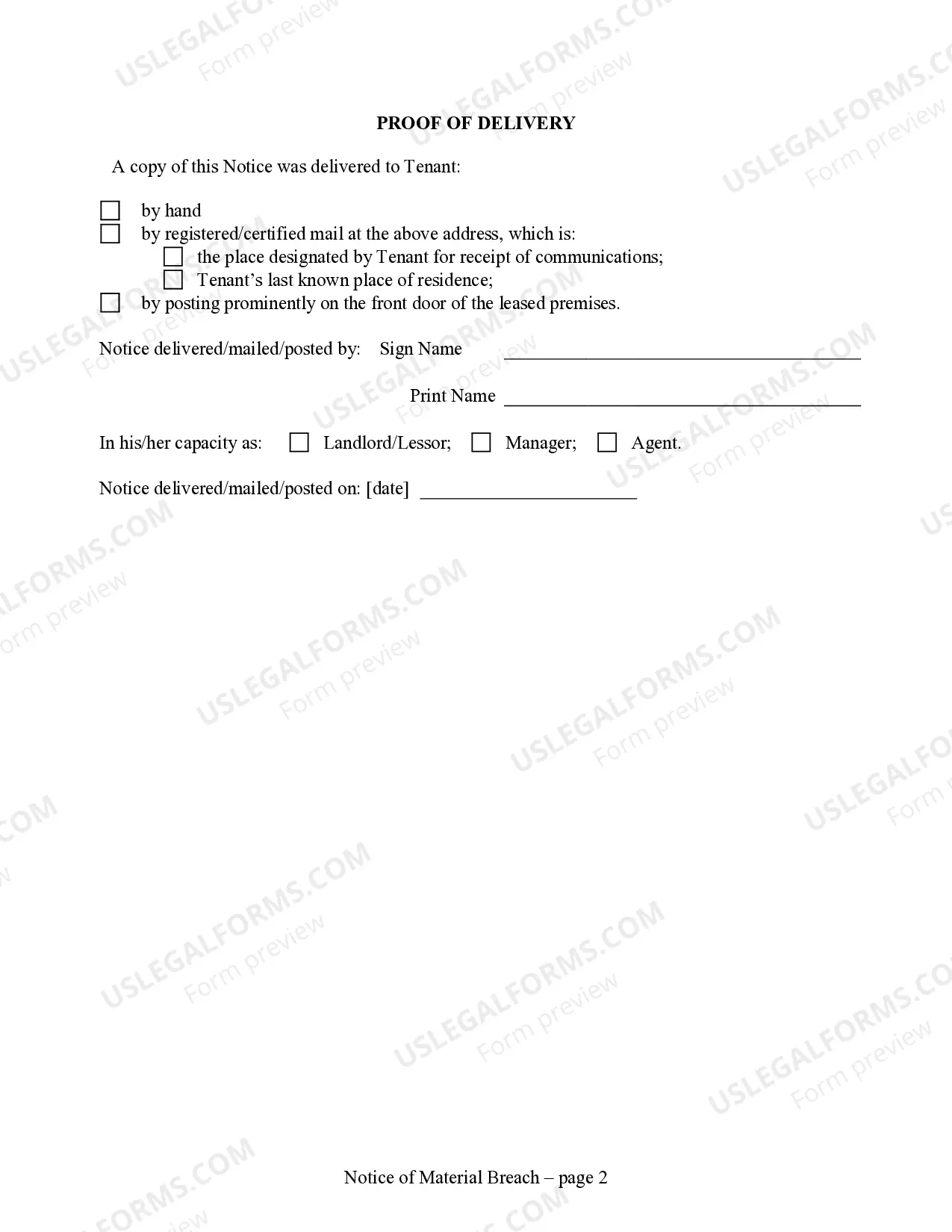
- Documenting delivery of this notice is crucial for any future legal actions.
Looking for another form?
Form popularity
FAQ
Nevada Revised Statutes require a seven-day notice to the tenant, instructing the tenant to either pay the rent or "quit" (leave) the rental property. To evict a tenant for nonpayment of rent, the landlord must "serve" (deliver) a Seven-Day Notice to Pay Rent or Quit to the tenant.
Nevada Revised Statutes require a seven-day notice to the tenant, instructing the tenant to either pay the rent or "quit" (leave) the rental property. To evict a tenant for nonpayment of rent, the landlord must "serve" (deliver) a Seven-Day Notice to Pay Rent or Quit to the tenant.
State law regulates several rent-related issues, including late and bounced-check fees, the amount of notice (at least 45 days in Nevada) landlords must give tenants to raise the rent, and how much time (five days in Nevada) a tenant has to pay overdue rent or move before a landlord can file for eviction.
In some circumstances, a tenant can break a fixed-term agreement early without penalty. A tenant can give 14 days' written notice to end an agreement early without penalty if: they have accepted an offer of social housing (e.g. from DCJ Housing)
Be required to pay the rent for the remaining months on your lease. Be subject to legal action from your landlord, and/or. Receive a negative mark on your credit report.
So you may not have to pay much, if any additional rent, if you break your lease. You need pay only the amount of rent the landlord loses because you moved out early. This is because Nevada requires landlords to take reasonable steps to keep their losses to a minimumor to mitigate damages in legal terms.
Moving out of a rental before the lease ends is referred to as breaking your lease and can potentially affect your credit score, particularly if you don't pay any remaining balance when you move out. Working with your landlord to break your lease can help you avoid damaging your credit.
In California, when a tenant becomes what is often loosely defined as a nuisance, the landlord has the right to oust them from the property upon serving up a 3-day notice for eviction. This action is legally called Termination of Tenancy Based on Nuisance.
Nevada is one of several states that allow tenants to break a lease for any reason and will not hold renters responsible for the entire amount of the remaining lease. Under Nevada Revised Statute 118.175, the landlord must make their "reasonable best efforts" to re-rent the unit as quickly as possible.