Montana 14 Day Notice of Material Noncompliance with Lease Agreement - 14 Days to Cure - Residential
About this form
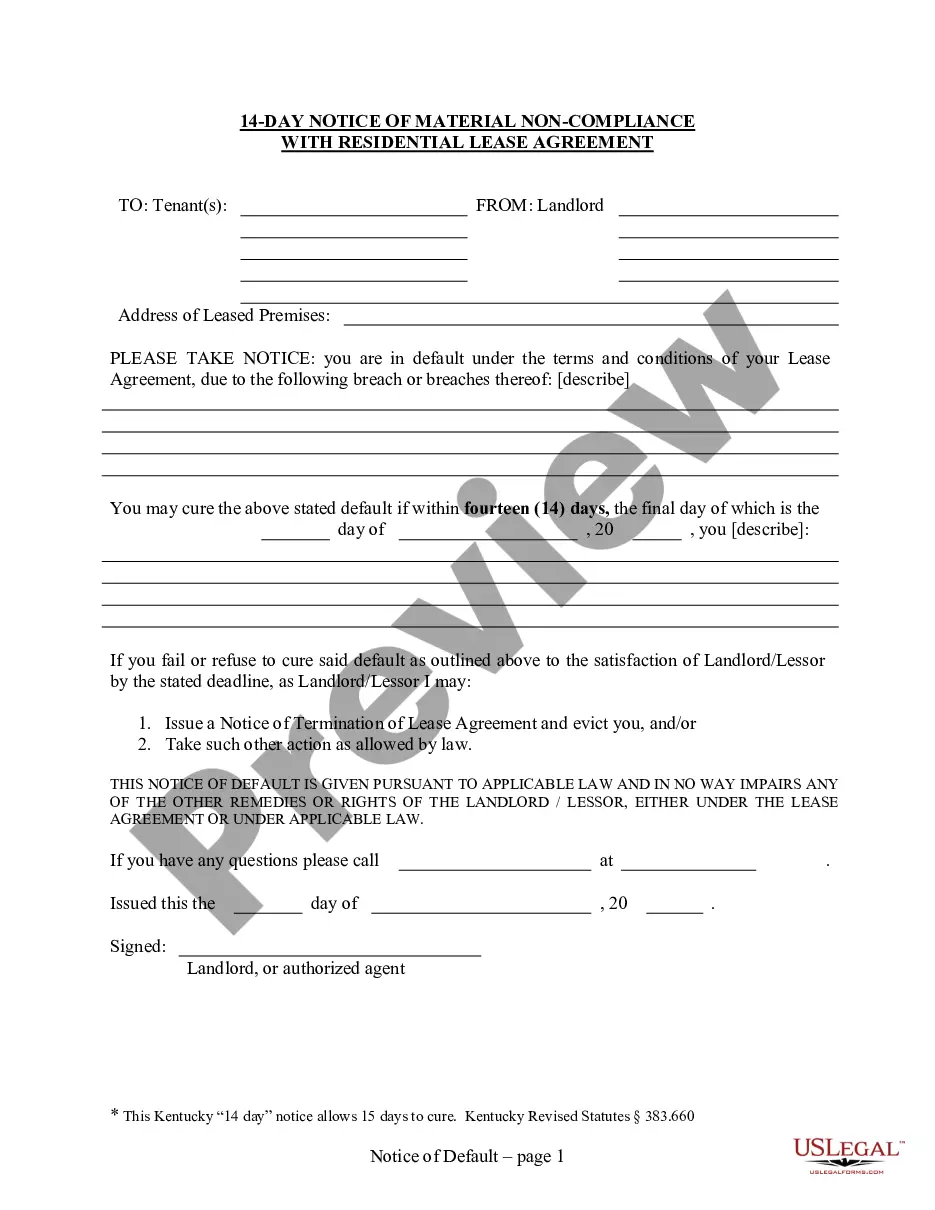
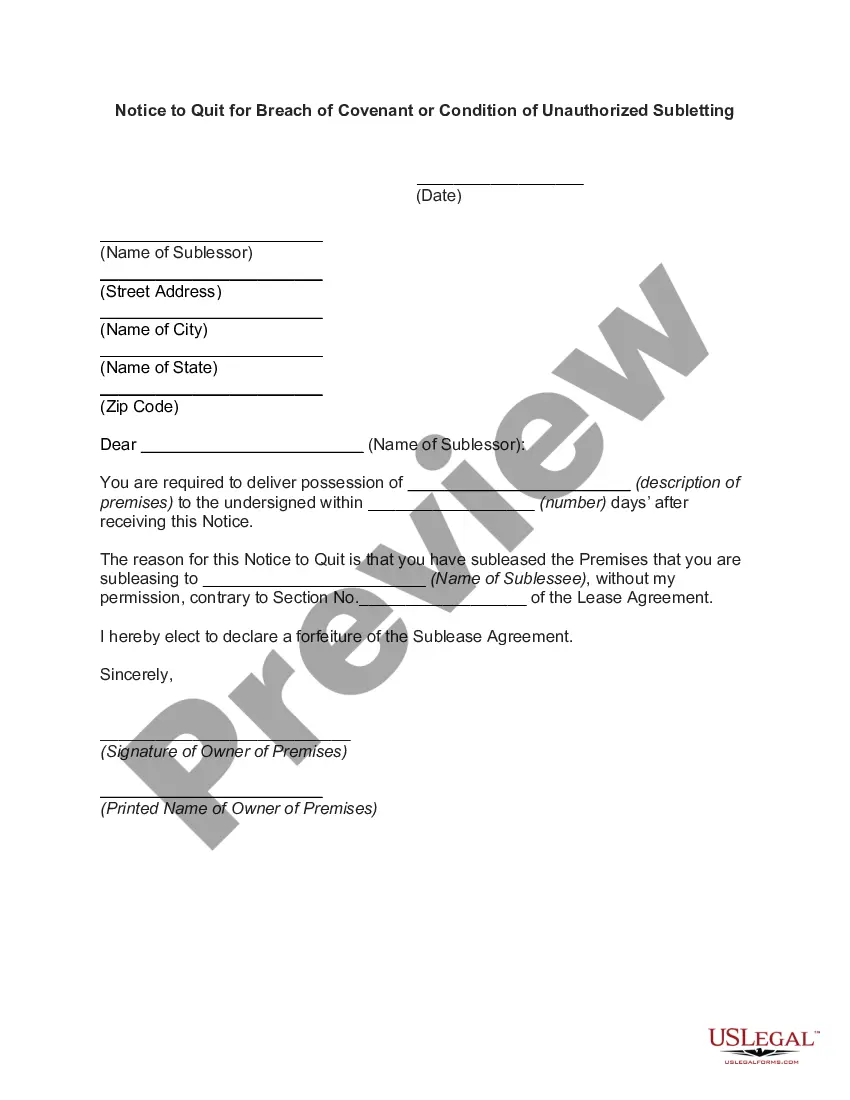
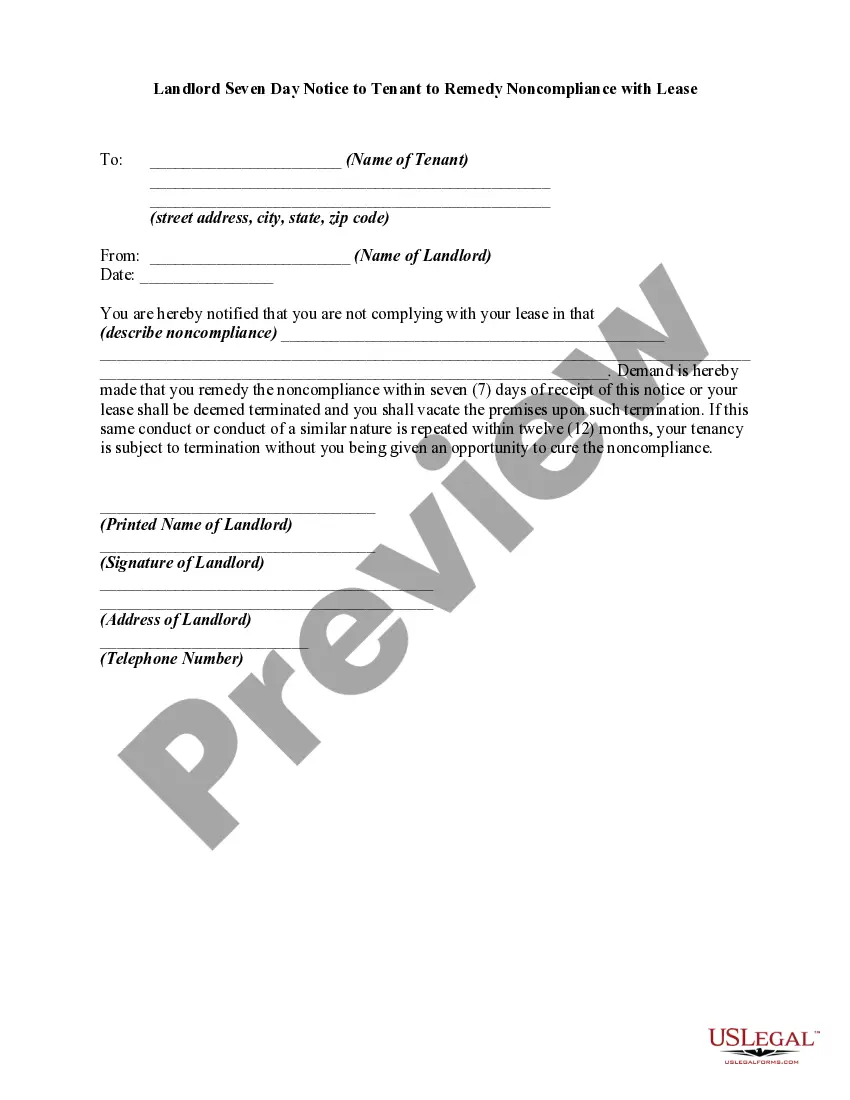
The 14 Day Notice of Material Noncompliance with Lease Agreement is a legal form used by landlords to inform residential tenants of a significant breach of their lease agreement. This form indicates specific violations and gives the tenant 14 days to remedy the issues before the lease can be terminated. It is crucial for landlords to utilize this form in a timely manner to ensure compliance with legal requirements and to protect their rights while managing rental properties. Unlike less formal notices, this form provides a structured approach to notifying tenants of serious non-compliance issues.
Key parts of this document
- Identification of parties involved: Landlord and Tenant(s)
- Description of the leased premises
- Specific breaches of the lease agreement that have occurred
- Timeframe for the tenant to cure the breach (14 days)
- Consequences for failing to remedy the default
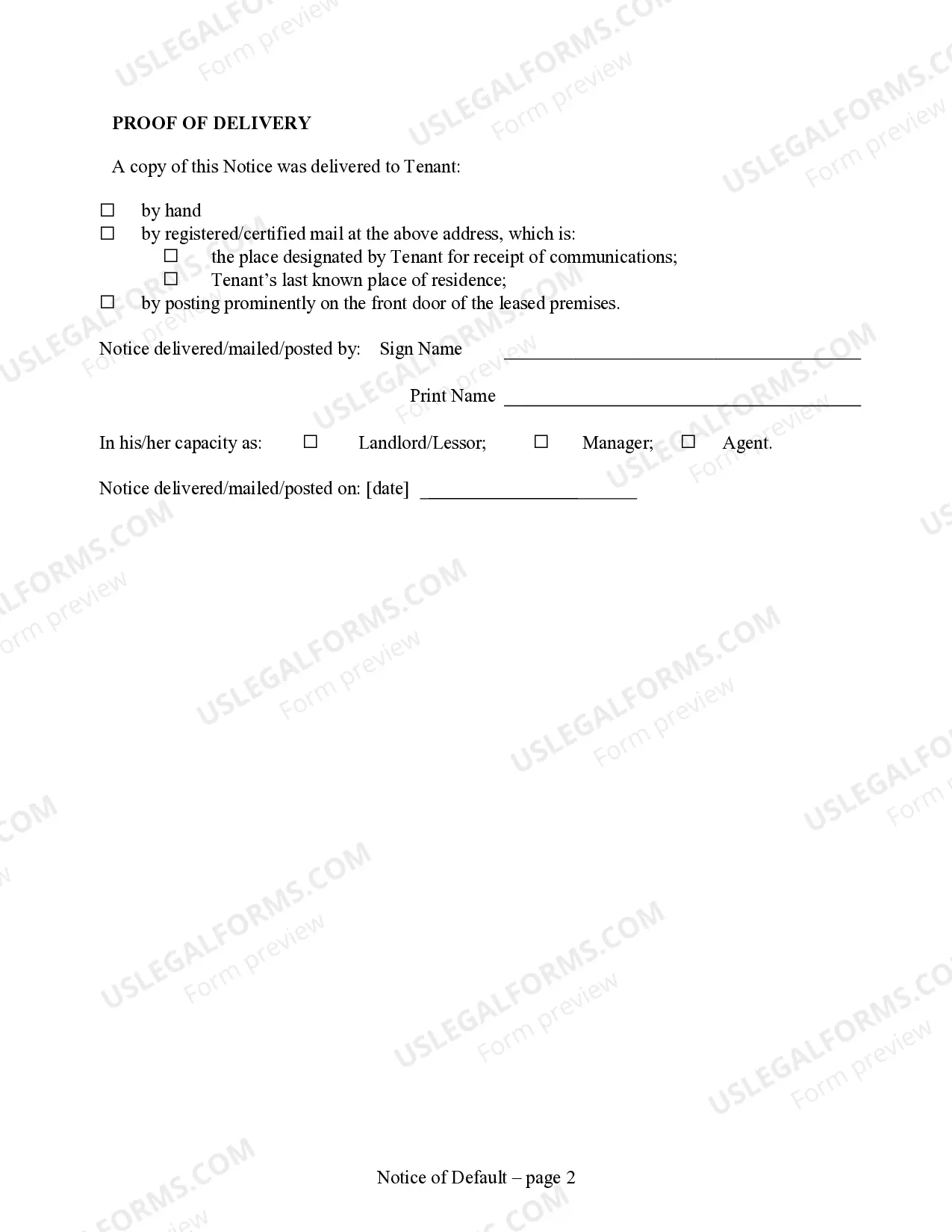
- Proof of delivery options for the notice


When to use this form
This form is necessary when a landlord identifies that a tenant has materially breached the lease agreement. Examples of breaches might include failure to pay rent, damaging the property, or violating occupancy limits. If the landlord wishes to give the tenant a chance to resolve these issues before taking further action, such as eviction, this form should be utilized to formally communicate the non-compliance and the timeframe to fix it.
Who should use this form
- Residential landlords managing rental properties, such as single-family homes, apartments, or condominiums.
- Property managers representing landlords in rental agreements.
- Tenants who have received this notice and need to understand their rights and obligations.
How to prepare this document
- Identify the parties involved: fill in the names of the landlord and tenant(s).
- Specify the address of the leased premises where the tenant resides.
- Clearly describe the breach or breaches of the lease agreement.
- Indicate the deadline for the tenant to remedy the breach, ensuring it is a 14-day period.
- Provide the date of issuance and the signature of the landlord or authorized agent.
- Complete and select the appropriate method of delivery (hand delivery, certified mail, or posting).
Does this form need to be notarized?
This form usually doesn’t need to be notarized. However, local laws or specific transactions may require it. Our online notarization service, powered by Notarize, lets you complete it remotely through a secure video session, available 24/7.
Get your form ready online
Our built-in tools help you complete, sign, share, and store your documents in one place.
Make edits, fill in missing information, and update formatting in US Legal Forms—just like you would in MS Word.
Download a copy, print it, send it by email, or mail it via USPS—whatever works best for your next step.
Sign and collect signatures with our SignNow integration. Send to multiple recipients, set reminders, and more. Go Premium to unlock E-Sign.
If this form requires notarization, complete it online through a secure video call—no need to meet a notary in person or wait for an appointment.
We protect your documents and personal data by following strict security and privacy standards.

Make edits, fill in missing information, and update formatting in US Legal Forms—just like you would in MS Word.

Download a copy, print it, send it by email, or mail it via USPS—whatever works best for your next step.

Sign and collect signatures with our SignNow integration. Send to multiple recipients, set reminders, and more. Go Premium to unlock E-Sign.

If this form requires notarization, complete it online through a secure video call—no need to meet a notary in person or wait for an appointment.

We protect your documents and personal data by following strict security and privacy standards.
Typical mistakes to avoid
- Failing to provide a clear description of the lease breach, which may lead to confusion.
- Not adhering to the 14-day notice period, which could result in legal challenges.
- Incorrectly addressing the notice or omitting the signatures required.
- Neglecting to keep proof of delivery, which is essential for legal proceedings.
Benefits of using this form online
- Immediate access to the form for quick compliance with legal requirements.
- Editable templates allow landlords to customize the notice for specific situations.
- Provides peace of mind, knowing the form is drafted by licensed attorneys.
- Convenient digital delivery options allow for timely notifications.
Legal use & context
- This notice serves as a formal communication from the landlord to the tenant regarding lease violations.
- Failure to cure the breach within the specified timeframe can lead to lease termination and possible eviction.
- This document helps protect the landlord's rights while providing the tenant an opportunity to rectify issues.
Quick recap
- The 14 Day Notice is essential for landlords facing tenant non-compliance.
- Clear documentation and adherence to legal deadlines are crucial for enforcing lease agreements.
- Understanding your rights and responsibilities as a landlord can prevent future legal issues.
Looking for another form?
Form popularity
FAQ
Your landlord can keep, sell, or throw out anything else 30 days after the Board made the order or your landlord gave you the notice. If you contact your landlord within the 30 days and say that you want to pick up your things, your landlord must let you in to pick them up at a reasonable time.
ESSENTIAL ELEMENTS OF A VALID LEASE AGREEMENT. Competent Parties. Legal Purpose. Statute of Frauds. Reversionary Right. Property Description. Mutual Assent (Offer and Acceptance) Consideration.
Your landlord can keep, sell, or throw out anything else 30 days after the Board made the order or your landlord gave you the notice. If you contact your landlord within the 30 days and say that you want to pick up your things, your landlord must let you in to pick them up at a reasonable time.
Mostbut not allstates require the lease to be in writing to be considered valid. Among the states that require written leases, valid ones must include a description of the property.Additionally, a lease must include the amount of rent that is due. It must show when rent is due, and how it should be paid.
A lease is automatically void when it is against the law, such as a lease for an illegal purpose. In other circumstances, like fraud or duress, a lease can be declared void at the request of one party but not the other.
When a landlord fails to meet these standards despite reasonable requests by the tenant, he or she may be sued for "material noncompliance." This article covers the basics of material noncompliance, which is essentially a breach of contract in the context of landlord tenant law.
If you personally deliver the notice to the tenant, then you must store the abandoned property for at least 15 days. If you mail the notice to the tenant (including email), then you must store the property for at least 18 days from the date the notice was mailed (see Cal.
Once your lease agreement is signed, it governs what the landlord and the tenant can and cannot do during the term of the lease. The lease agreement acts as a legal, binding contract between the landlord and tenant and will be used as such by the court if any legal proceedings arise between the two parties.
You'll have to follow a due process, and possibly get the local government involved depending on the total value of the abandoned property. Simply put, you'll need to inventory the belongings, safely store them, and then either return, sell, keep, donate, or trash them after a certain amount of time.