Montana Letter from Tenant to Landlord containing Notice to landlord to withdraw improper rent increase during lease
What is this form?
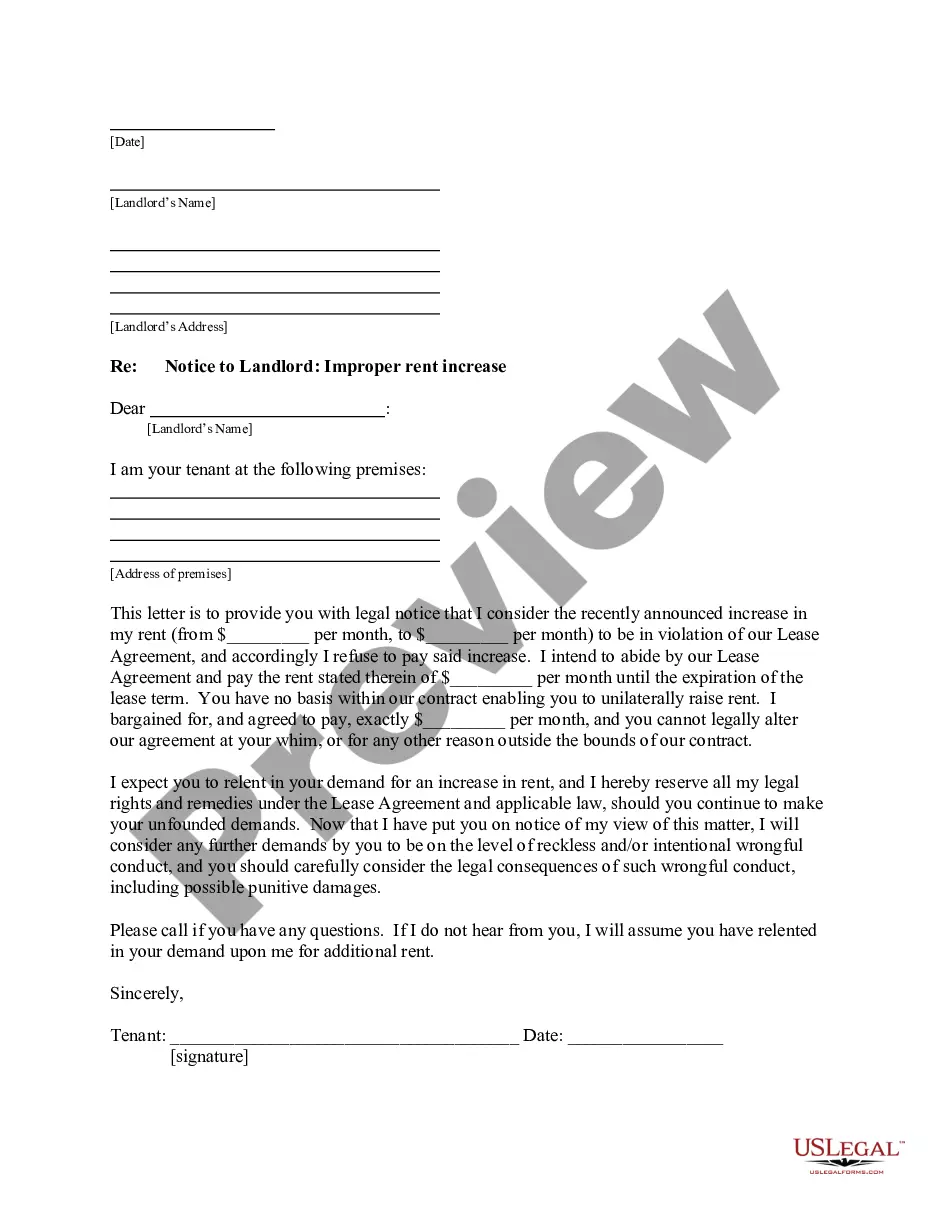
This form is a letter from a tenant to a landlord containing a notice to withdraw an improper rent increase during a lease. It allows the tenant to formally express their disagreement with a rent increase that they believe is unjustified, protecting their legal rights while seeking resolution. This form differs from general tenant complaint letters by specifically addressing a rent increase issue and the tenant's options in response to it.
Key components of this form
- Introduction stating the tenant's position on the rent increase
- Reservation of legal rights and remedies under the Lease Agreement
- Notice of potential legal consequences for the landlord's actions
- Space for tenant's signature and date
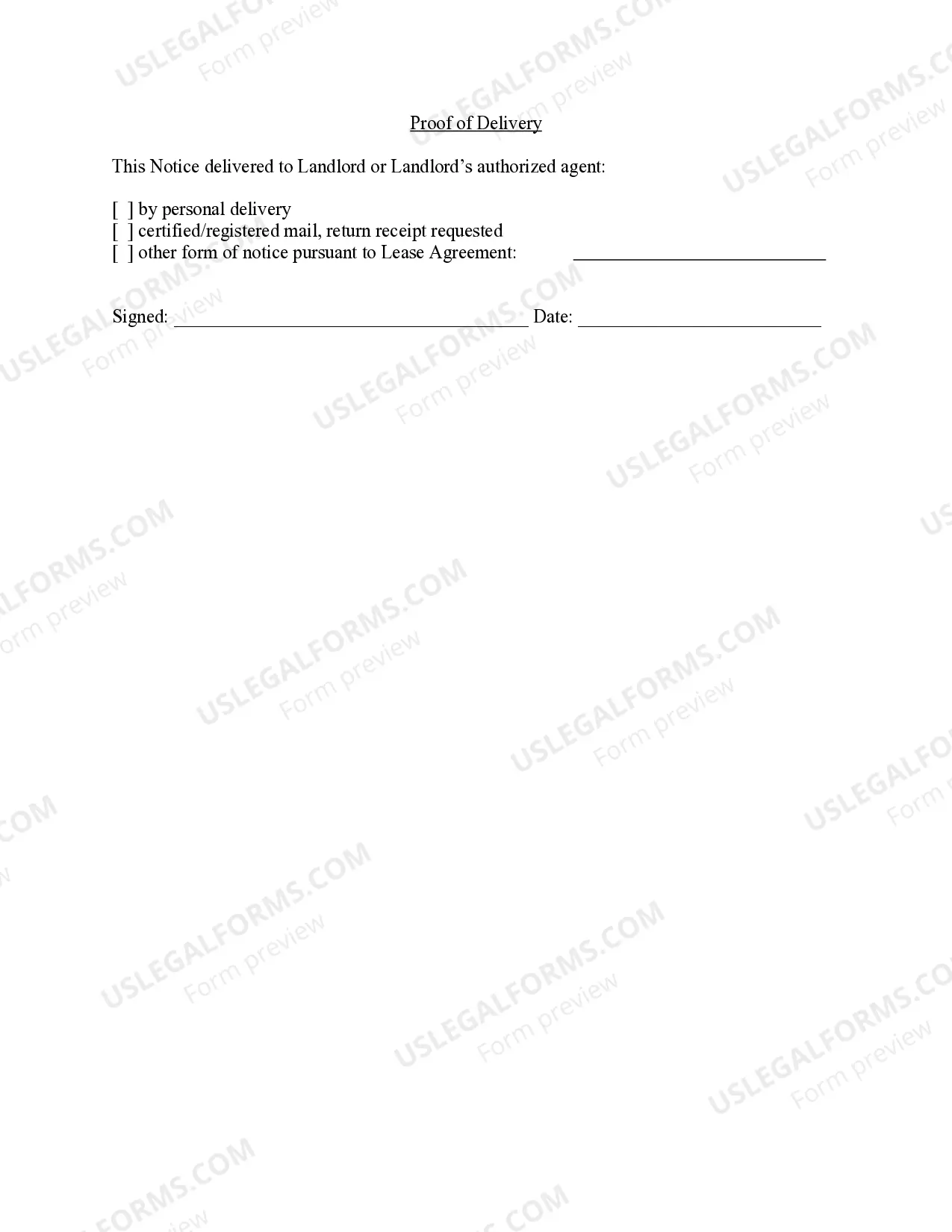
- Proof of delivery section for record-keeping


When to use this document
This form should be used when a landlord has communicated a rent increase that the tenant deems improper or unjustified. It serves as a formal notice that prompts the landlord to reconsider their demand, while also providing the tenant a clear record of their dispute. This is applicable in scenarios where the tenant wishes to remain in the property but believes the proposed rent does not align with the terms of the lease or market conditions.
Intended users of this form
- Tenants who have received a rent increase notice from their landlord
- Individuals currently under a lease agreement who wish to dispute the proposed increase
- Renters seeking to protect their rights and clarify their legal standing
How to prepare this document
- Identify the parties involved, including the tenant and landlord's names and addresses.
- Clearly state your objection to the rent increase and the reasons for this objection.
- Include a statement about reserving your legal rights under the lease.
- Sign and date the letter to provide authenticity.
- Deliver the letter in person or through a method that confirms receipt by the landlord.
Does this form need to be notarized?
Notarization is generally not required for this form. However, certain states or situations might demand it. You can complete notarization online through US Legal Forms, powered by Notarize, using a verified video call available anytime.
Get your form ready online
Our built-in tools help you complete, sign, share, and store your documents in one place.
Make edits, fill in missing information, and update formatting in US Legal Forms—just like you would in MS Word.
Download a copy, print it, send it by email, or mail it via USPS—whatever works best for your next step.
Sign and collect signatures with our SignNow integration. Send to multiple recipients, set reminders, and more. Go Premium to unlock E-Sign.
If this form requires notarization, complete it online through a secure video call—no need to meet a notary in person or wait for an appointment.
We protect your documents and personal data by following strict security and privacy standards.

Make edits, fill in missing information, and update formatting in US Legal Forms—just like you would in MS Word.

Download a copy, print it, send it by email, or mail it via USPS—whatever works best for your next step.

Sign and collect signatures with our SignNow integration. Send to multiple recipients, set reminders, and more. Go Premium to unlock E-Sign.

If this form requires notarization, complete it online through a secure video call—no need to meet a notary in person or wait for an appointment.

We protect your documents and personal data by following strict security and privacy standards.
Mistakes to watch out for
- Failing to deliver the notice in an acceptable manner, which can negate proof of receipt.
- Not clearly stating the reason for disputing the rent increase.
- Neglecting to sign and date the letter, which may lead to disputes about its validity.
Benefits of using this form online
- Convenient access to a legally drafted letter that simplifies the process of disputing a rent increase.
- Editable templates allow for quick customization to fit specific circumstances.
- Reliability of professionally prepared forms to ensure compliance with legal standards.
Quick recap
- This form is vital for tenants to formally contest an improper rent increase.
- It preserves the tenant's legal rights and outlines potential consequences for the landlord.
- Completing the form accurately is crucial for it to act as effective notice.
Looking for another form?
Form popularity
FAQ
A lease is automatically void when it is against the law, such as a lease for an illegal purpose. In other circumstances, like fraud or duress, a lease can be declared void at the request of one party but not the other.
Every tenant has a right to enjoy peaceful possession of the property without any disturbance or encumbrance from anyone including the owner. At no point of time under your tenancy can your landlord ask you to evict or leave the premises without assigning a valid reason.
Pay any delinquent rent that is due to the landlord within the allotted time of the notice. Move out of the premises within the allotted time of the notice. File an answer with the judicial court. File a motion to stay with the court.
If the tenant refuses, you are permitted to send them a notice to agree or quit the property. The tenant refusing you access constitutes a breach in the lease agreement, so they could be evicted if they continue to deny access.
Your name, and the landlord's name and address. The date you're writing the letter. Informing the landlord you're breaking your lease early. The reason why you're breaking your lease. The building and apartment you're vacating. The date by which you're vacating.
While tenants cannot unreasonably deny access to a landlord, landlords must also follow all of the state and local rules regarding access to tenants' apartments. Roughly half of states have rules governing landlord entry into tenants' apartments.
The rental property address, including unit number (if applicable) The names of all tenants on the lease agreement. The date the lease violation notice was written. The specific reason for the notice. The time and date the violation occurred (if applicable)
Showing the premises to prospective tenants 'reasonable' notice / number of times. The law does not say what 'reasonable' means.If you refuse access, the landlord/agent can apply to the Tribunal for an order that authorises them or any other person to enter the premises.
Generally, you have all the rights of a month-to-month tenant. Your landlord must give you 30 days' notice to terminate your rental agreement, unless the landlord alleges some violation that allows for shorter notice. For example, if you are behind on rent, the landlord could give you a 3 day notice to pay or vacate.