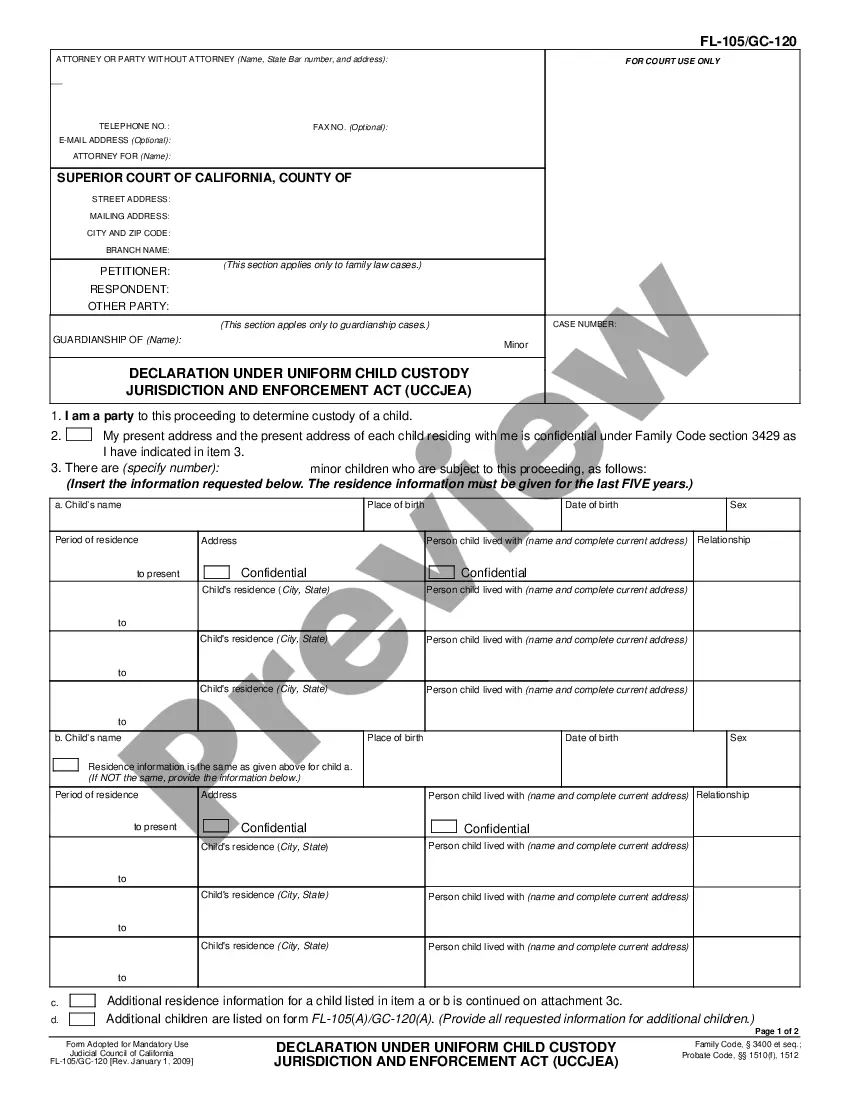
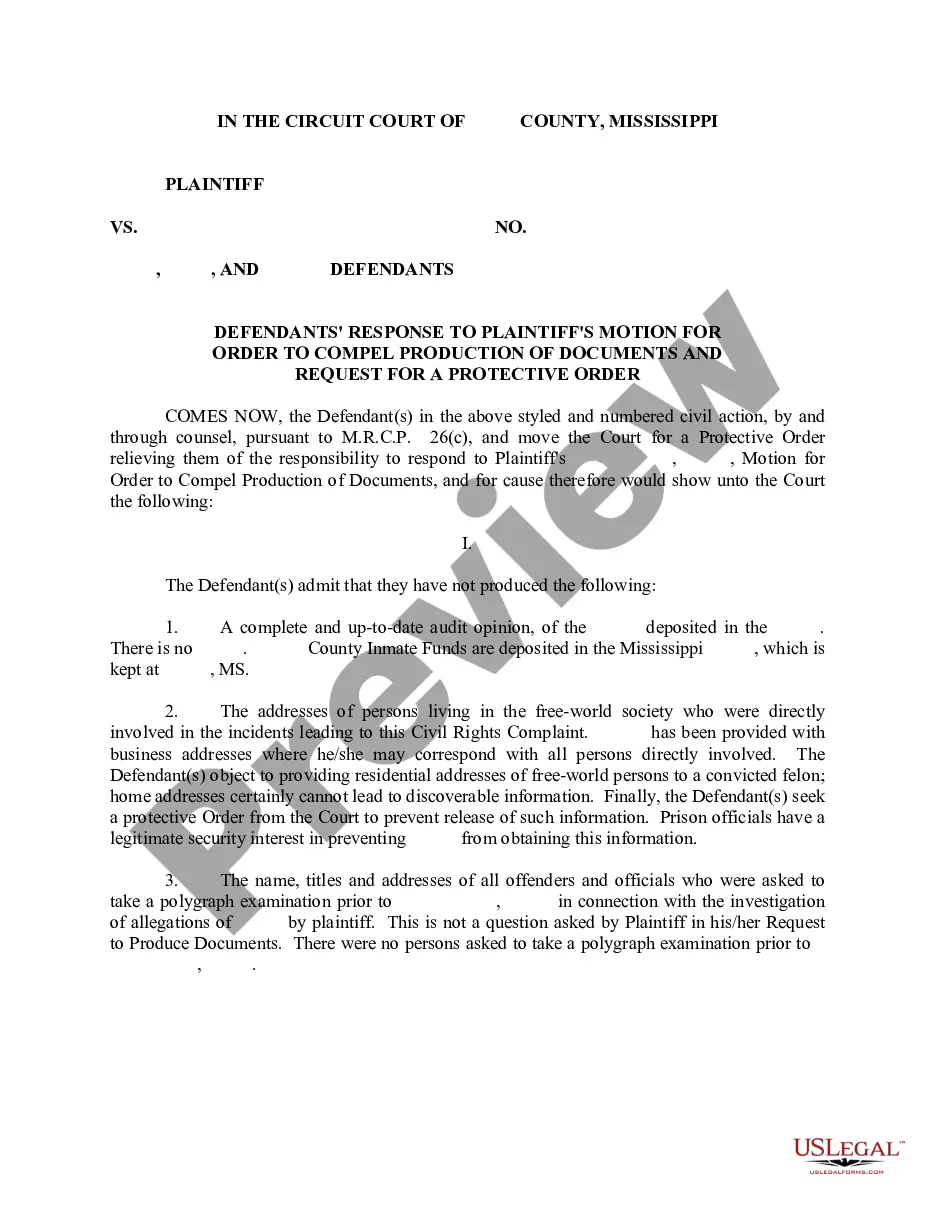
Mississippi Defendant's Response to Plaintiff's Motion to Compel Production of Documents
About this form
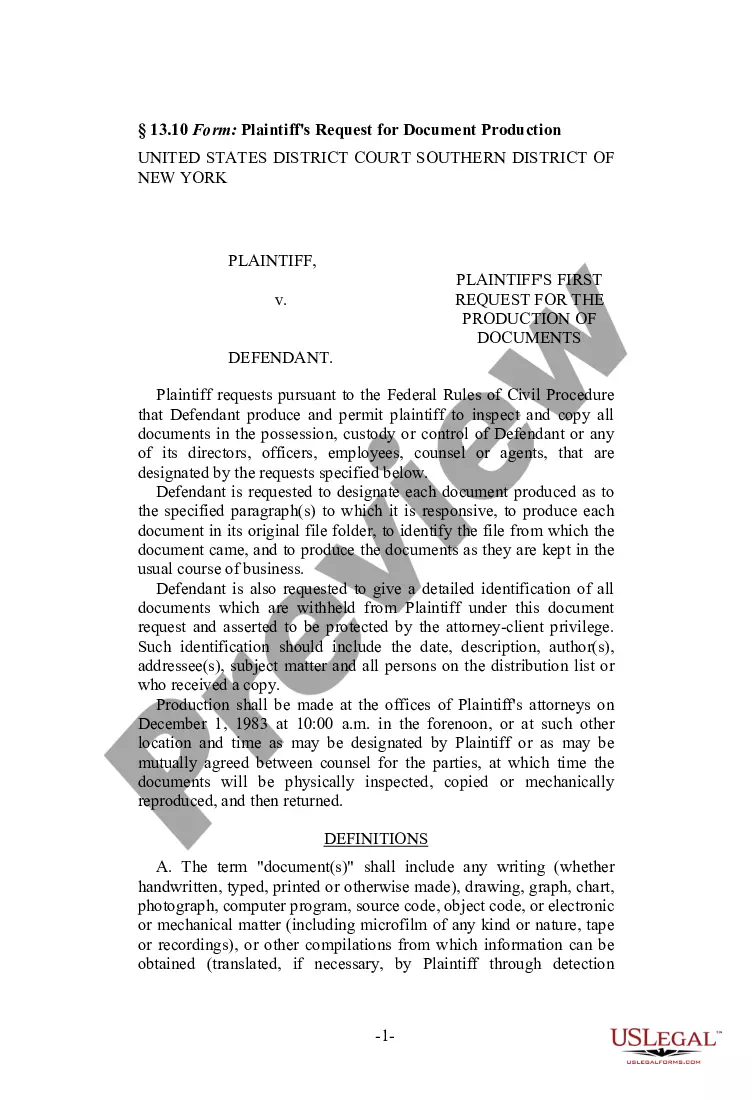
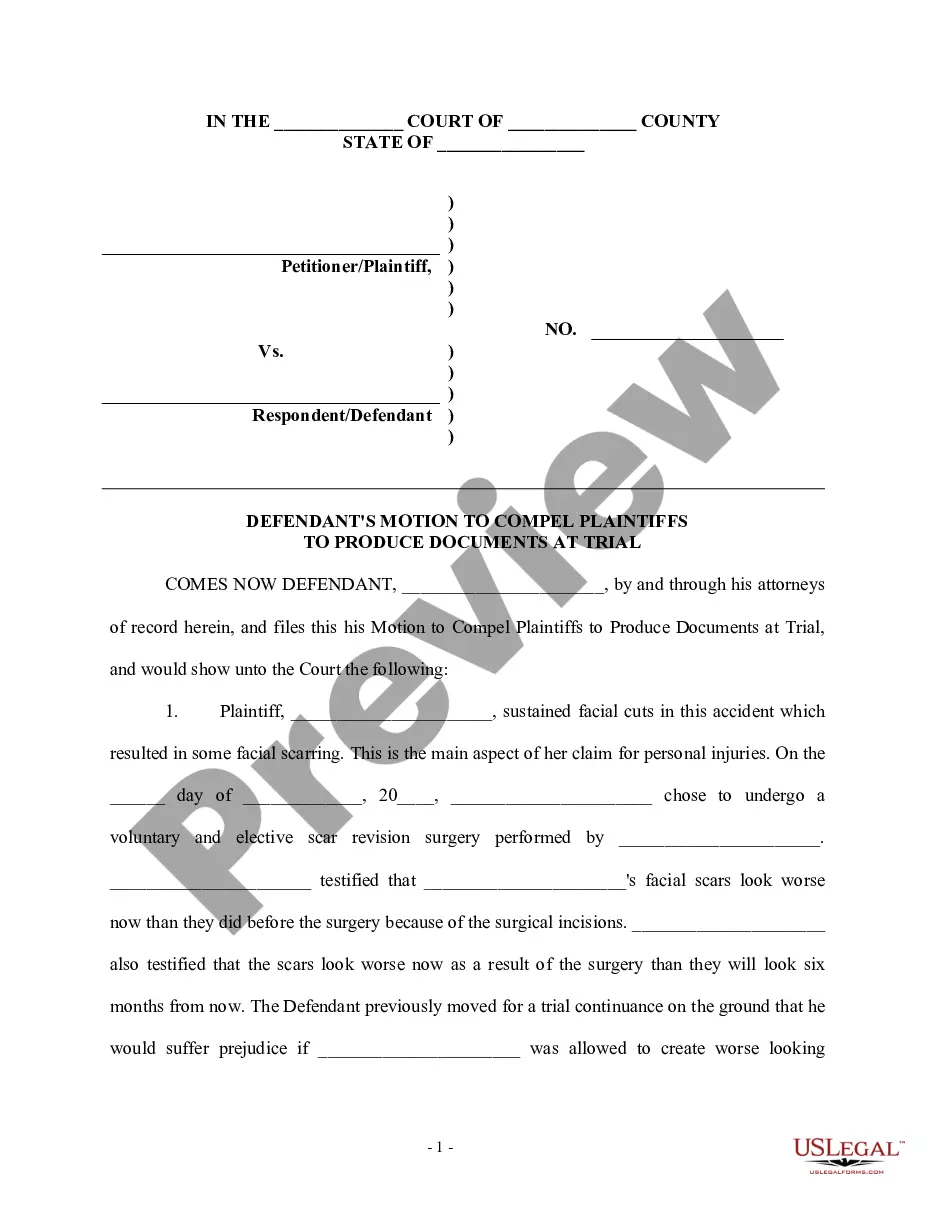
The Defendant's Response to Plaintiff's Motion to Compel Production of Documents is a legal template designed for defendants to formally respond when a plaintiff requests documents in a legal case. This response form is distinct because it specifically addresses the motion to compel, allowing defendants to articulate their objections or agreements regarding the document requests. This document aims to facilitate communication and resolution between parties while ensuring compliance with legal obligations.
Main sections of this form
- Caption: Includes the case name and number for identification.
- Introduction: A brief statement indicating the defendant's response to the plaintiff's motion.
- Objections: Sections where the defendant can outline specific objections to the requested documents.
- Agreement: Any statements regarding documents the defendant agrees to produce.
- Conclusion: A respectful closing statement submitted to the court.

When this form is needed
This form should be used when a plaintiff has filed a motion compelling the defendant to produce specific documents in a legal case. It is typically necessary during the discovery phase of litigation, where parties exchange information pertinent to their claims or defenses. If you receive such a motion and need to provide an official response, this form will guide how to articulate your position regarding the requested documents.
Who should use this form
- Defendants in civil litigation who have received a motion to compel from a plaintiff.
- Individuals or entities involved in a dispute requiring formal responses to document requests.
- Attorneys representing defendants needing a structured format to respond to motions.
Steps to complete this form
- Fill in the caption with the case name and number.
- Clearly state your response to the plaintiff's motion, expressing any objections.
- Detail any documents you agree to produce, including timelines if applicable.
- Include a respectful closing statement with your signature.
- Ensure all required fields are completed according to local rules.
Is notarization required?
This form does not typically require notarization unless specified by local law. Always check local court requirements to ensure compliance and validity.
Get your form ready online
Our built-in tools help you complete, sign, share, and store your documents in one place.
Make edits, fill in missing information, and update formatting in US Legal Forms—just like you would in MS Word.
Download a copy, print it, send it by email, or mail it via USPS—whatever works best for your next step.
Sign and collect signatures with our SignNow integration. Send to multiple recipients, set reminders, and more. Go Premium to unlock E-Sign.
If this form requires notarization, complete it online through a secure video call—no need to meet a notary in person or wait for an appointment.
We protect your documents and personal data by following strict security and privacy standards.

Make edits, fill in missing information, and update formatting in US Legal Forms—just like you would in MS Word.

Download a copy, print it, send it by email, or mail it via USPS—whatever works best for your next step.

Sign and collect signatures with our SignNow integration. Send to multiple recipients, set reminders, and more. Go Premium to unlock E-Sign.

If this form requires notarization, complete it online through a secure video call—no need to meet a notary in person or wait for an appointment.

We protect your documents and personal data by following strict security and privacy standards.
Common mistakes
- Failing to provide a complete list of objections or agreements.
- Not adhering to the required format as specified by local court rules.
- Missing signatures or required dates.
- Submitting the form after the deadline set by the court.
Why use this form online
- Convenient access for immediate download and completion.
- Editability allows for personalization to fit specific case details.
- Crafted by licensed attorneys for reliability and legal accuracy.
Legal use & context
- This form serves as an official document in legal proceedings.
- Failure to respond appropriately can lead to adverse legal consequences.
- It's important to understand the implications of each objection or agreement presented.
Quick recap
- The form helps defendants formally respond to document requests efficiently.
- Accuracy and clarity are crucial to ensure legal compliance.
- Understand your obligations when dealing with discovery requests in litigation.
Looking for another form?
Form popularity
FAQ
The motion to compel is used to ask the court to order the non-complying party to produce the documentation or information requested, and/or to sanction the non-complying party for their failure to comply with the discovery requests.
Possible outcomes following a motion to compel discovery The requesting party tells the judge why the requested Discovery is pertinent to the case. They demonstrate that the good faith attempt was made to resolve the issue before filing the motion to produce.
You need to give the court a reason to deny the other side's motion to compel. There are many different reasons you could give. Take out your Response to the discovery request. You should have identified reasons in your Response for why you weren't turning over certain information.
The motion to compel further responses has to be brought within 45 days of service of the response. (C.C.P. § 2030.300) Sounds simple enough, but it's not. You have to understand when something is deemed served.
You need to give the court a reason to deny the other side's motion to compel. There are many different reasons you could give. Take out your Response to the discovery request. You should have identified reasons in your Response for why you weren't turning over certain information.
The motion to compel further responses has to be brought within 45 days of service of the response. (C.C.P.
Consequences of Refusing to Provide Evidence Requested in a Motion to Compel. If the court issues an order that compels your spouse to produce the discovery you are seeking but your spouse still refuses to provide evidence, the judge may impose further sanctions such as: A verdict in your favor.
Motion for Sanctions If the court issues an order compelling discovery, and the party fails to comply with that order, then the court may sanction the party in numerous ways such as refusing to let in the party's evidence at trial, dismissing their lawsuit or striking their defense to a lawsuit, and imposing