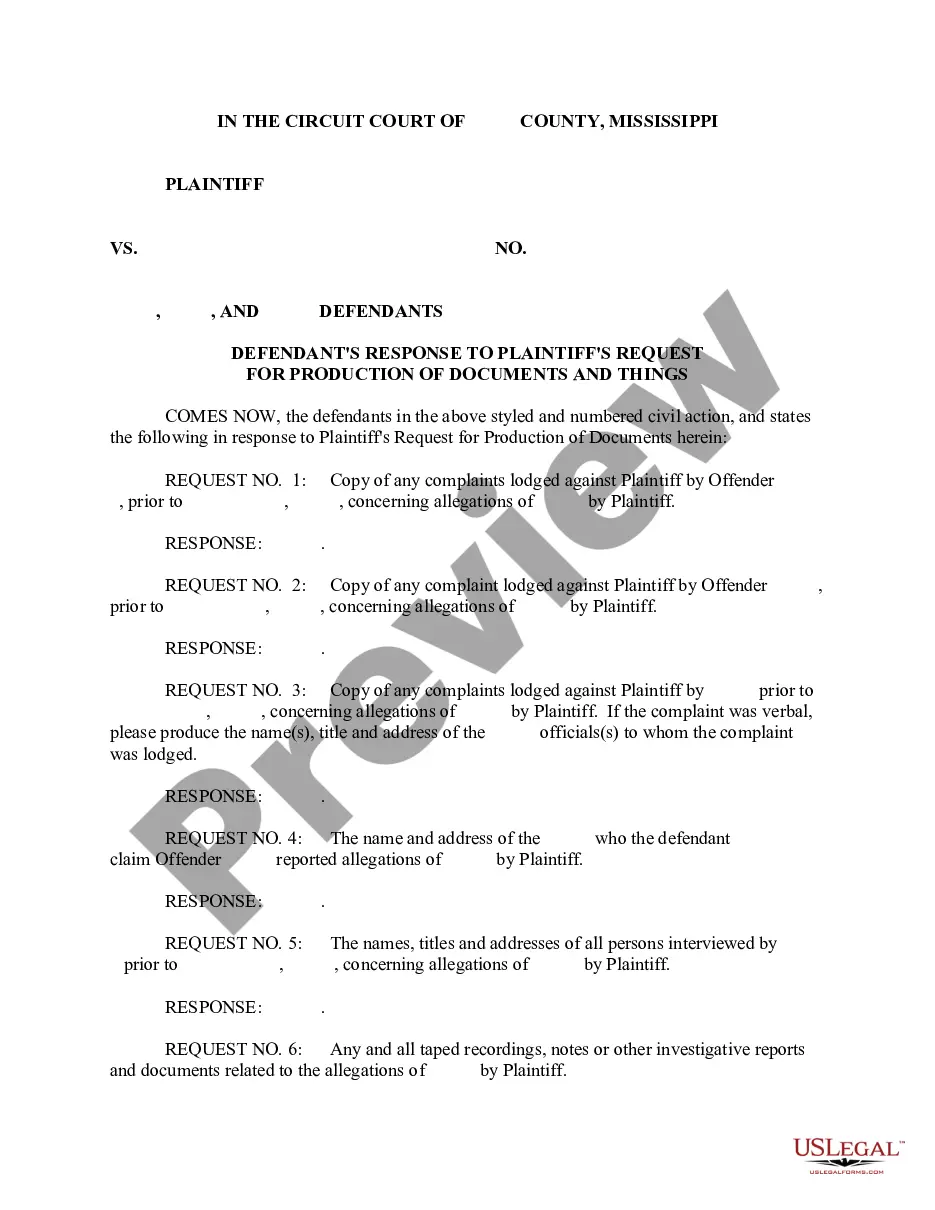
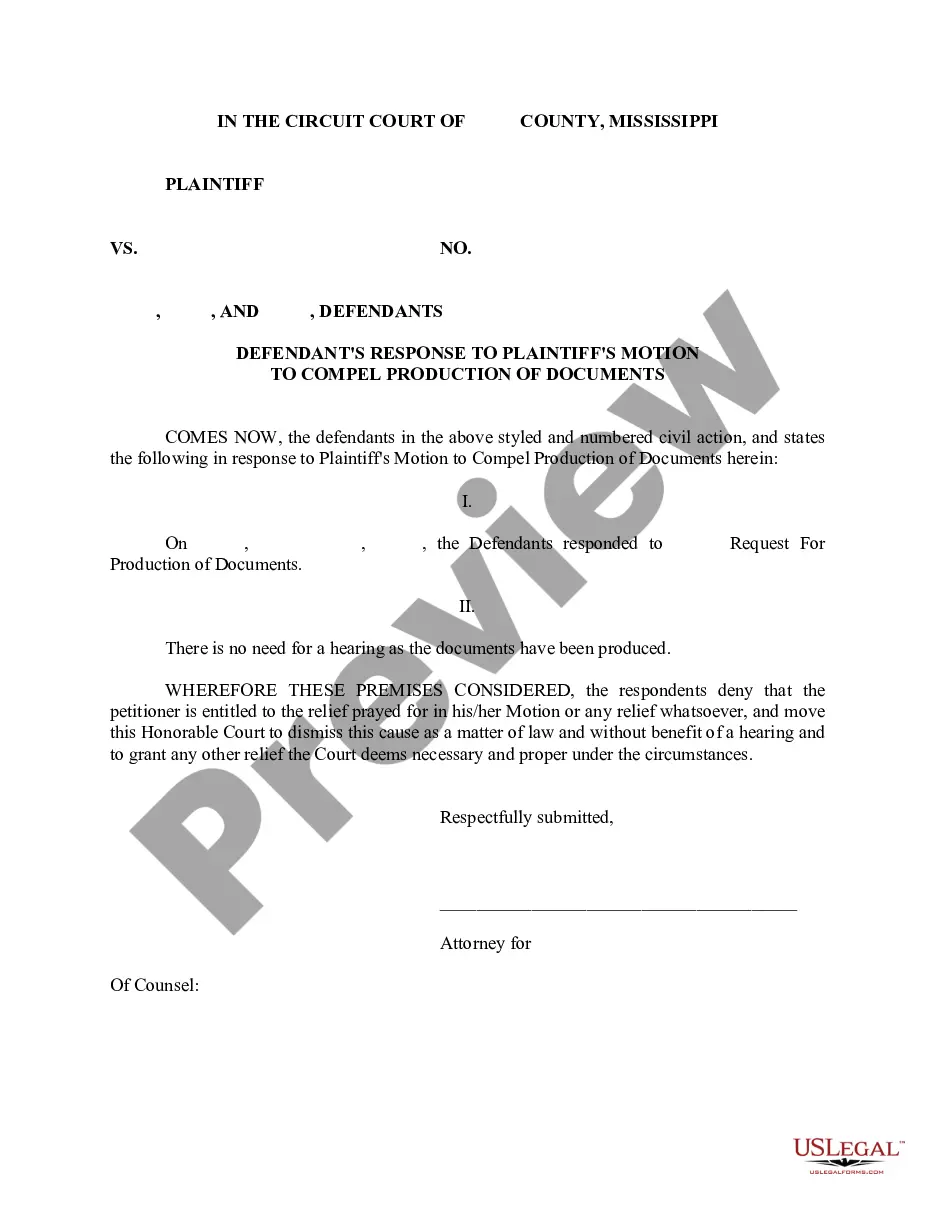
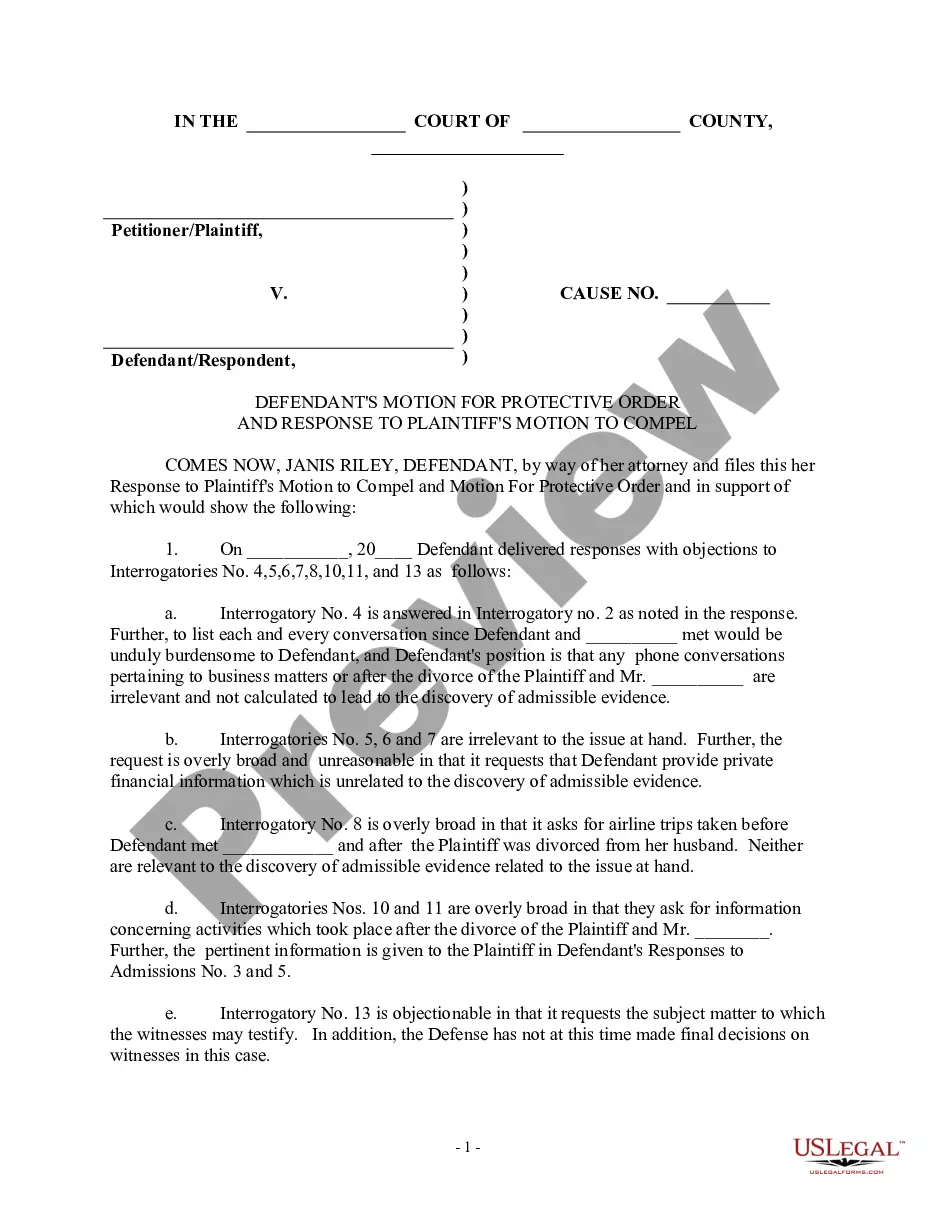
Mississippi Defendant's Response to Plaintiff's Motion for Order to Compel Production of Documents and Request for Protective Order
Overview of this form
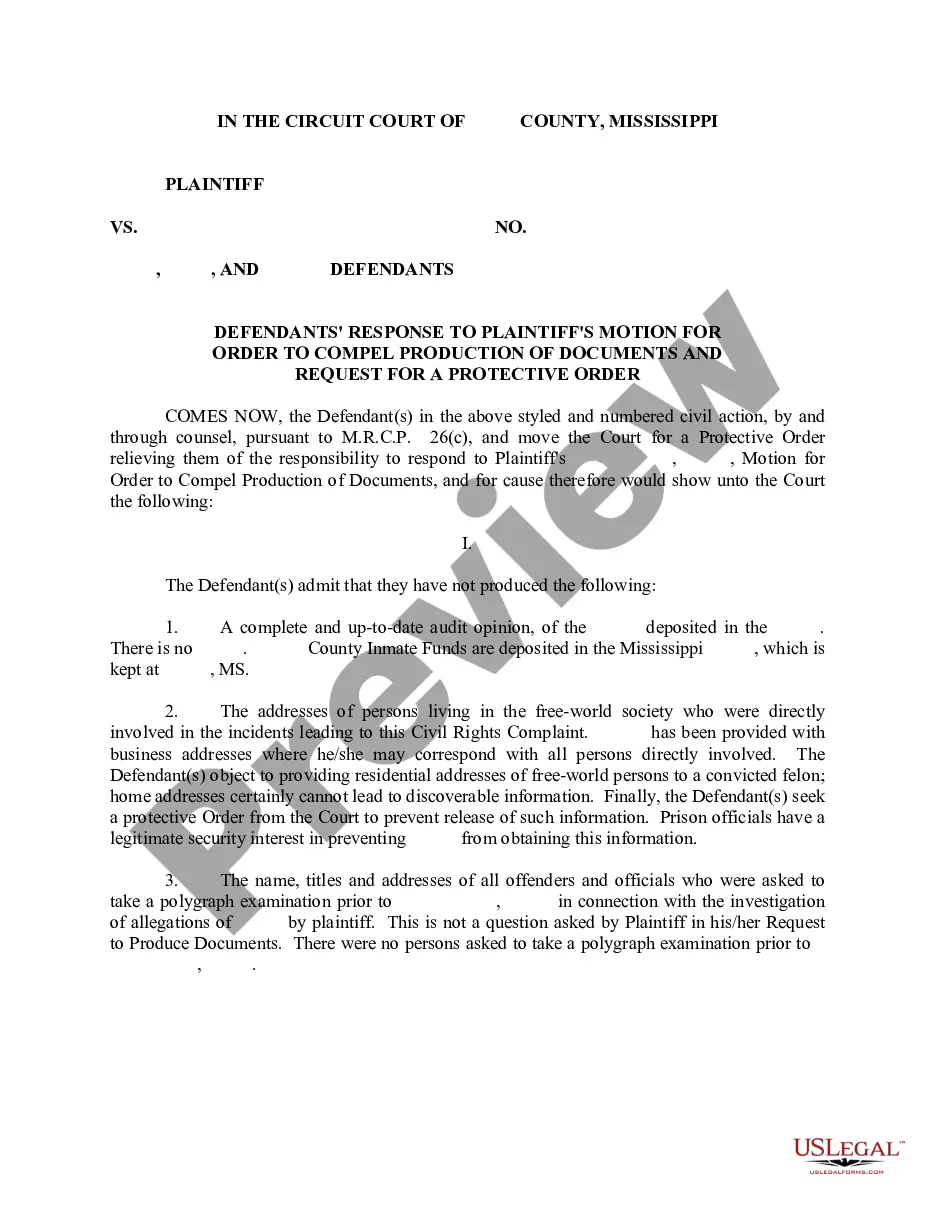
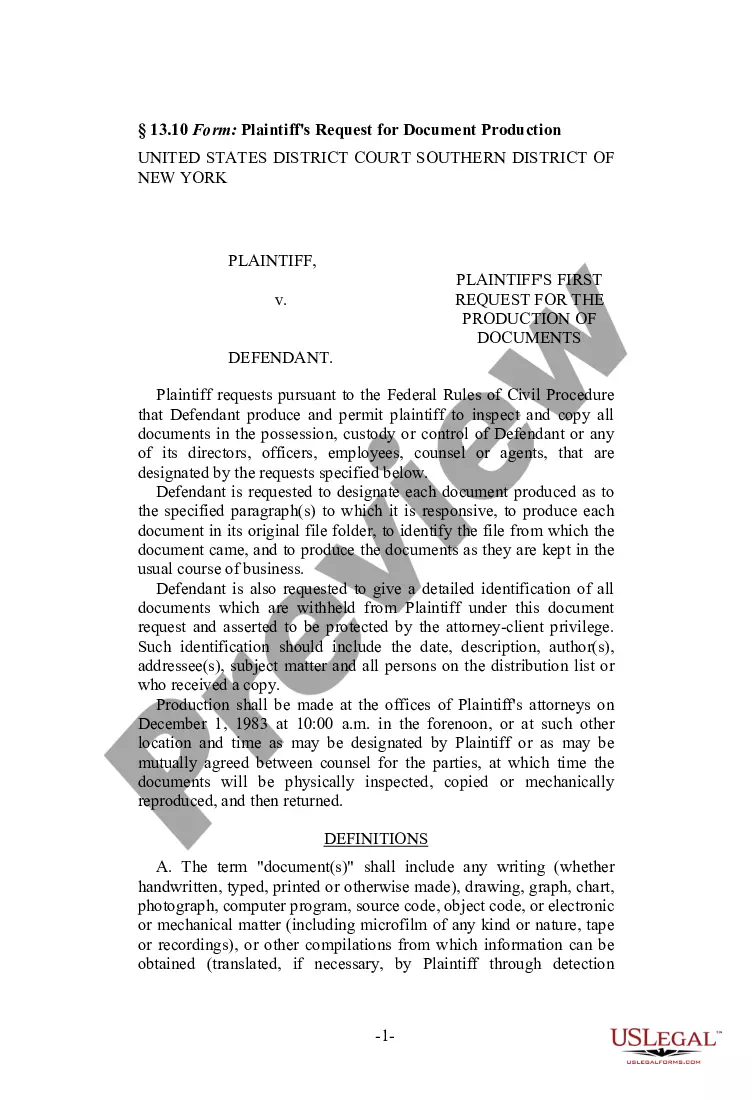
The Defendant's Response to Plaintiff's Motion for Order to Compel Production of Documents and Request for Protective Order is a legal document typically used in civil litigation. This form allows a defendant to formally respond to a plaintiff's request for the production of documents, as well as to seek protective measures regarding the confidentiality of the information during the discovery process. It differs from other responses by including provisions specifically relating to document production and protective orders, making it essential for defendants who wish to protect sensitive information.
Main sections of this form
- Identification of parties involved and their roles in the case.
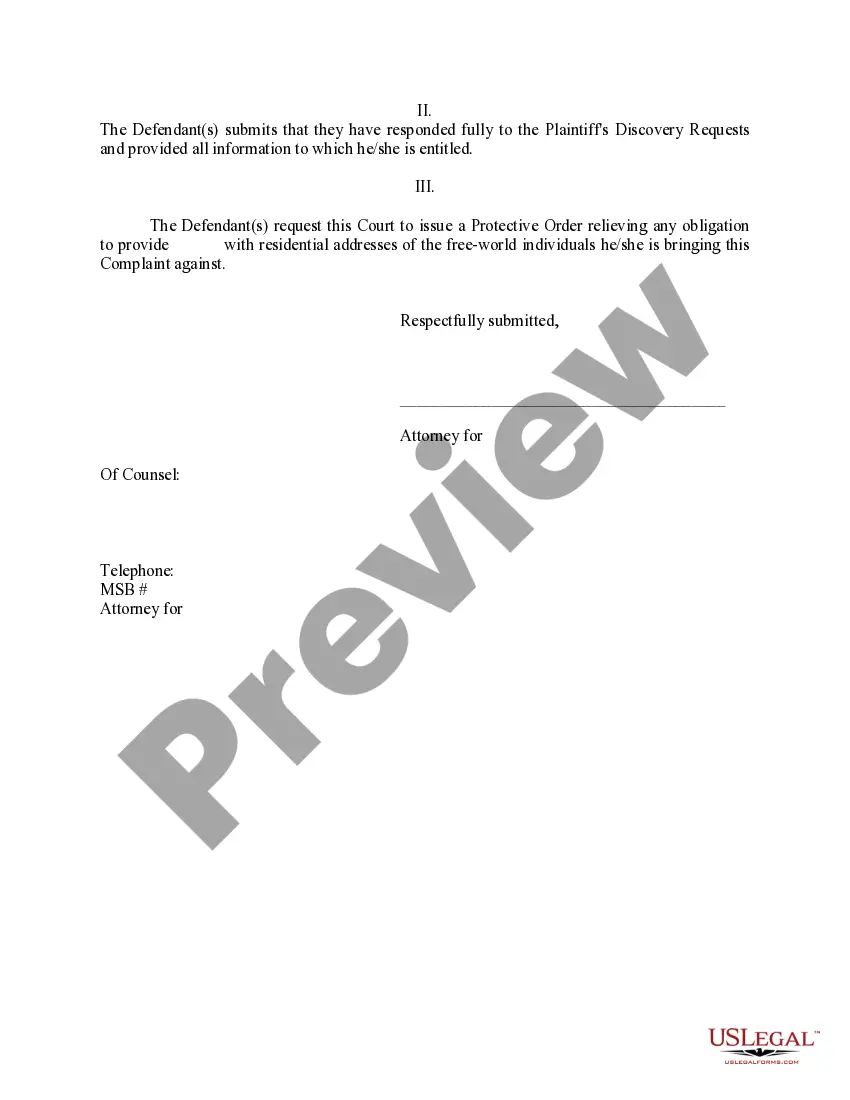
- A section for stating the reasons for opposing the motion to compel document production.
- Requests for specific protective orders regarding the documents in question.
- Signature field for the defendant or their legal representative.
- Date of the response submission.
When to use this form
This form is needed when a plaintiff has filed a motion to compel a defendant to produce certain documents as part of the discovery process. It is especially important if the defendant believes that producing the requested documents would violate their privacy or involve confidential information. This response is crucial for ensuring that the defendant's legal rights and interests are protected throughout the legal proceedings.
Who can use this document
- Defendants in civil litigation who have received a motion to compel document production.
- Individuals or organizations seeking to protect sensitive information related to their case during the discovery phase.
- Legal professionals representing defendants in matters involving a motion to compel.
Instructions for completing this form
- Identify the parties involved by providing their names and legal designations.
- Clearly state your objection to the motion to compel document production, specifying any relevant reasons.
- Include any requests for a protective order regarding the documents the plaintiff is seeking.
- Sign the document, ensuring that it is signed by the defendant or their attorney.
- Enter the date on which the response is being submitted.
Notarization requirements for this form
This form does not typically require notarization unless specified by local law. Always verify any additional requirements based on jurisdiction.
Get your form ready online
Our built-in tools help you complete, sign, share, and store your documents in one place.
Make edits, fill in missing information, and update formatting in US Legal Forms—just like you would in MS Word.
Download a copy, print it, send it by email, or mail it via USPS—whatever works best for your next step.
Sign and collect signatures with our SignNow integration. Send to multiple recipients, set reminders, and more. Go Premium to unlock E-Sign.
If this form requires notarization, complete it online through a secure video call—no need to meet a notary in person or wait for an appointment.
We protect your documents and personal data by following strict security and privacy standards.

Make edits, fill in missing information, and update formatting in US Legal Forms—just like you would in MS Word.

Download a copy, print it, send it by email, or mail it via USPS—whatever works best for your next step.

Sign and collect signatures with our SignNow integration. Send to multiple recipients, set reminders, and more. Go Premium to unlock E-Sign.

If this form requires notarization, complete it online through a secure video call—no need to meet a notary in person or wait for an appointment.

We protect your documents and personal data by following strict security and privacy standards.
Typical mistakes to avoid
- Failing to address each point made in the plaintiff's motion.
- Not including specific legal grounds for objection.
- Omitting the signature or date on the response.
- Using vague language instead of clearly articulating the reasons for objections and requests.
Why complete this form online
- Convenient access to a legally sound template tailored for your stateâs requirements.
- Ability to complete and modify the form easily before printing or filing.
- Time-saving format allows for quick assembly of necessary legal documents.
Legal use & context
- This form is legally binding upon submission and should accurately represent your position regarding document production.
- Failure to respond appropriately may result in the court granting the plaintiff's request to compel production.
Looking for another form?

Form popularity
FAQ
Possible outcomes following a motion to compel discovery The requesting party tells the judge why the requested Discovery is pertinent to the case. They demonstrate that the good faith attempt was made to resolve the issue before filing the motion to produce.
You need to give the court a reason to deny the other side's motion to compel. There are many different reasons you could give. Take out your Response to the discovery request. You should have identified reasons in your Response for why you weren't turning over certain information.
The motion to compel further responses has to be brought within 45 days of service of the response. (C.C.P.
The motion to compel further responses has to be brought within 45 days of service of the response. (C.C.P. § 2030.300) Sounds simple enough, but it's not. You have to understand when something is deemed served.
Motion for Sanctions If the court issues an order compelling discovery, and the party fails to comply with that order, then the court may sanction the party in numerous ways such as refusing to let in the party's evidence at trial, dismissing their lawsuit or striking their defense to a lawsuit, and imposing
Consequences of Refusing to Provide Evidence Requested in a Motion to Compel. If the court issues an order that compels your spouse to produce the discovery you are seeking but your spouse still refuses to provide evidence, the judge may impose further sanctions such as: A verdict in your favor.
The motion to compel is used to ask the court to order the non-complying party to produce the documentation or information requested, and/or to sanction the non-complying party for their failure to comply with the discovery requests.
You need to give the court a reason to deny the other side's motion to compel. There are many different reasons you could give. Take out your Response to the discovery request. You should have identified reasons in your Response for why you weren't turning over certain information.