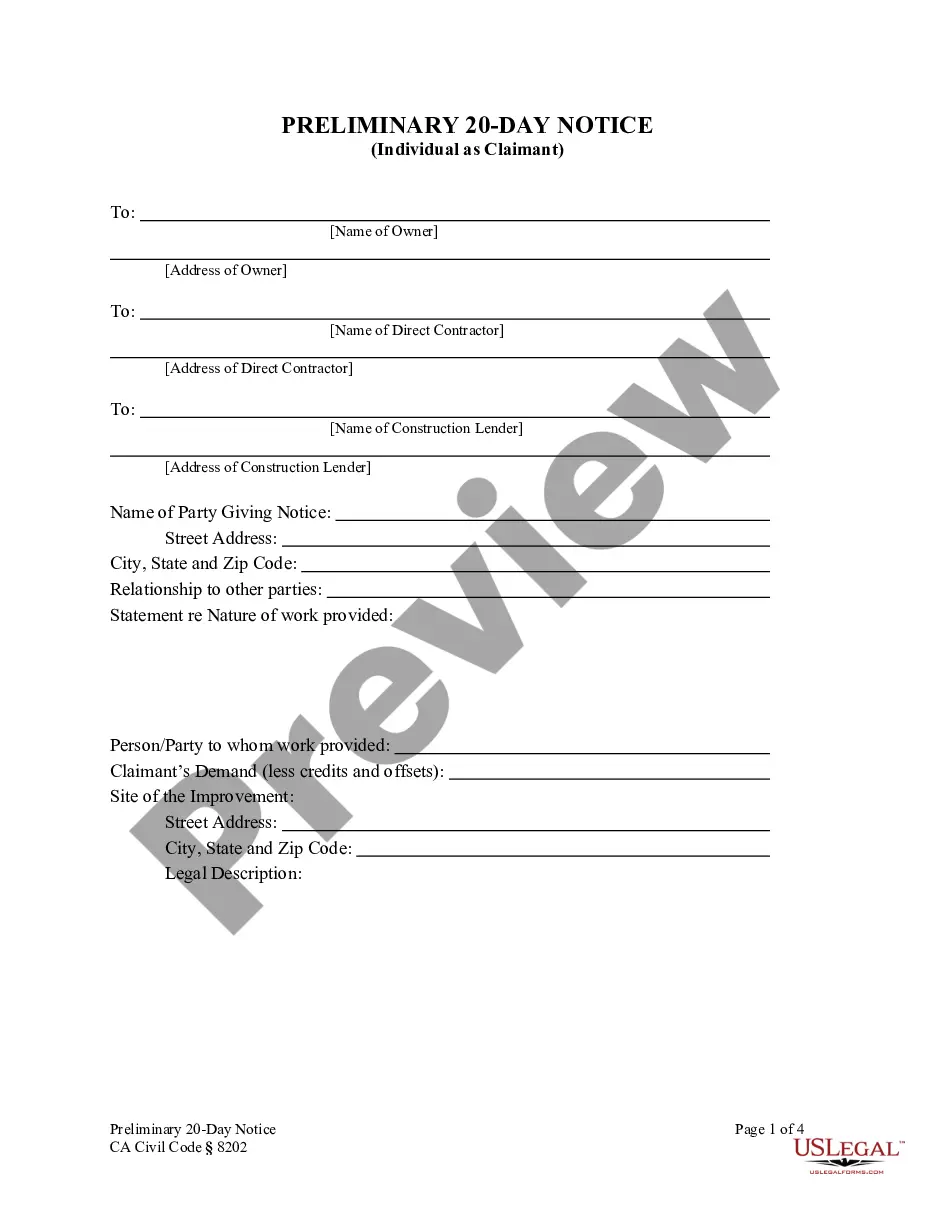
Mississippi Order of Supreme Court Appointing Judge
Understanding this form
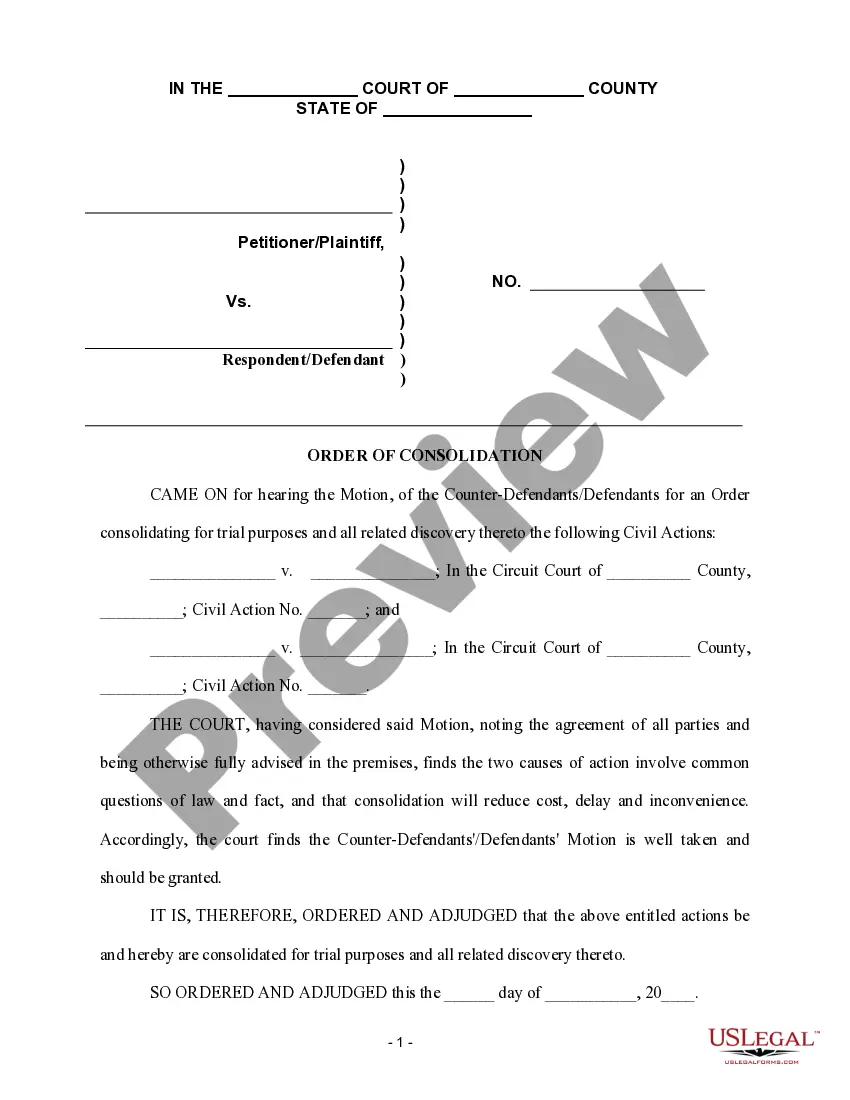
The Order of Supreme Court Appointing Judge is an official document issued by the court, directing specific actions regarding the appointment of a judge. This order is signed by a judge and must be followed; failure to comply may lead to contempt of court. This form serves as a model to draft an order for submission requested by the court, making it a vital tool for legal processes involving judicial appointments.
Key components of this form
- Case caption: Includes court name, case number, and parties involved.
- Order details: Specific actions required by the order, including the appointment of a judge.
- Signature line: Place for the judge's signature, validating the order.
- Date of the order: Indicates when the order is issued.
- Compliance clause: Outlines the consequences of failing to comply with the order.



Common use cases
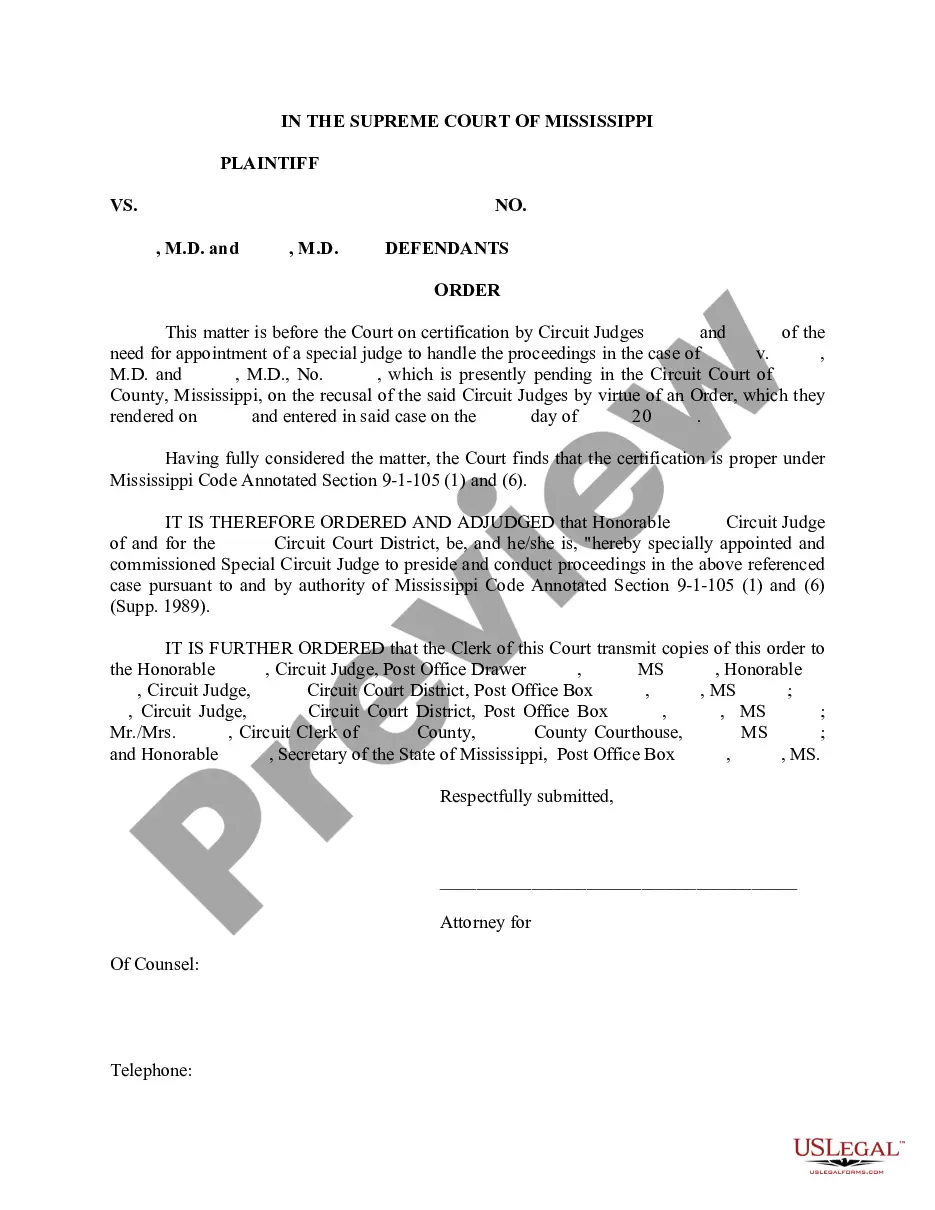
This form is typically utilized when the court requires an official order for the appointment of a judge in a particular case. Scenarios include trials where the appointment of a judge is essential for proceedings, or when an existing judge is unable to continue handling a case. It ensures clarity and legal backing for any judicial appointments made during ongoing litigations.
Who can use this document
The following individuals or entities may benefit from this form:
- Attorneys representing parties in court seeking the appointment of a judge.
- Judicial administrators responsible for drafting court orders.
- Parties involved in litigation requiring judicial appointments.
Completing this form step by step
- Identify the case: Fill in the case number and names of the parties involved at the beginning of the order.
- Specify the judge's details: Indicate the name of the judge being appointed and any relevant qualifications.
- Include the order details: Clearly state the required actions or instructions in the body of the order.
- Enter the issuing judge's information: Ensure the signature line includes the name and title of the issuing judge.
- Review for accuracy: Check all information for correctness before filing.
Does this form need to be notarized?
Notarization is not commonly needed for this form. However, certain documents or local rules may make it necessary. Our notarization service, powered by Notarize, allows you to finalize it securely online anytime, day or night.
Get your form ready online
Our built-in tools help you complete, sign, share, and store your documents in one place.
Make edits, fill in missing information, and update formatting in US Legal Forms—just like you would in MS Word.
Download a copy, print it, send it by email, or mail it via USPS—whatever works best for your next step.
Sign and collect signatures with our SignNow integration. Send to multiple recipients, set reminders, and more. Go Premium to unlock E-Sign.
If this form requires notarization, complete it online through a secure video call—no need to meet a notary in person or wait for an appointment.
We protect your documents and personal data by following strict security and privacy standards.

Make edits, fill in missing information, and update formatting in US Legal Forms—just like you would in MS Word.

Download a copy, print it, send it by email, or mail it via USPS—whatever works best for your next step.

Sign and collect signatures with our SignNow integration. Send to multiple recipients, set reminders, and more. Go Premium to unlock E-Sign.

If this form requires notarization, complete it online through a secure video call—no need to meet a notary in person or wait for an appointment.

We protect your documents and personal data by following strict security and privacy standards.
Typical mistakes to avoid
- Failing to include necessary case information in the caption.
- Leaving out the issuing judge's signature line.
- Not stating the consequences of non-compliance clearly.
- Overlooking to validate the order with the correct date.
Advantages of online completion
- Instant access: Download the form anytime, providing immediate convenience.
- Editability: Customize the form to fit the unique needs of your case.
- Professionally drafted: Ensures compliance with legal standards and requirements.
Looking for another form?








Form popularity
FAQ
The Supreme Court consists of the chief justice of the United States and eight associate justices. The president has the power to nominate the justices and appointments are made with the advice and consent of the Senate.
The Mississippi Supreme Court is the court of last resort among state courts.Nine Supreme Court justices are elected from three districts. Non-partisan elections are staggered so that not all positions are up for election at once. Supreme Court justices serve eight-year terms.
The method of appointing federal judges, that is, by the Governor-General in Council, has remained unchanged since Federation.The Judges of the Supreme Court and of the other Courts of the Commonwealth shall be appointedby the Governor-General by and with the advice of the Federal executive Council.
How are Supreme Court Justices selected? The President nominates someone for a vacancy on the Court and the Senate votes to confirm the nominee, which requires a simple majority. In this way, both the Executive and Legislative Branches of the federal government have a voice in the composition of the Supreme Court.
The Supreme Court consists of the chief justice of the United States and eight associate justices. The president has the power to nominate the justices and appointments are made with the advice and consent of the Senate. You can search for Supreme Court cases on .
Describe the three decision-making tasks of a Supreme Court justice. The three tasks are deciding which cases to hear, deciding individual cases, and determining an explanation for the decision of the Court.
According to the Congressional Research Service, the average number of days from nomination to final Senate vote since 1975 is 67 days (2.2 months), while the median is 71 days (or 2.3 months). Some believe this is because Congress sees Justices as playing a more political role than in the past.
Circuit Court judges are selected in non-partisan elections to serve four-year terms. Trials are heard with a 12-member jury and usually one or two alternate jurors.
In order to be appointed as a Judge of the Supreme Court, a person must be a citizen of India and must have been, for atleast five years, a Judge of a High Court or of two or more such Courts in succession, or an Advocate of a High Court or of two or more such Courts in succession for at least 10 years or he must be,