Mississippi Renunciation and Disclaimer of Property received by Intestate Succession
Understanding this form
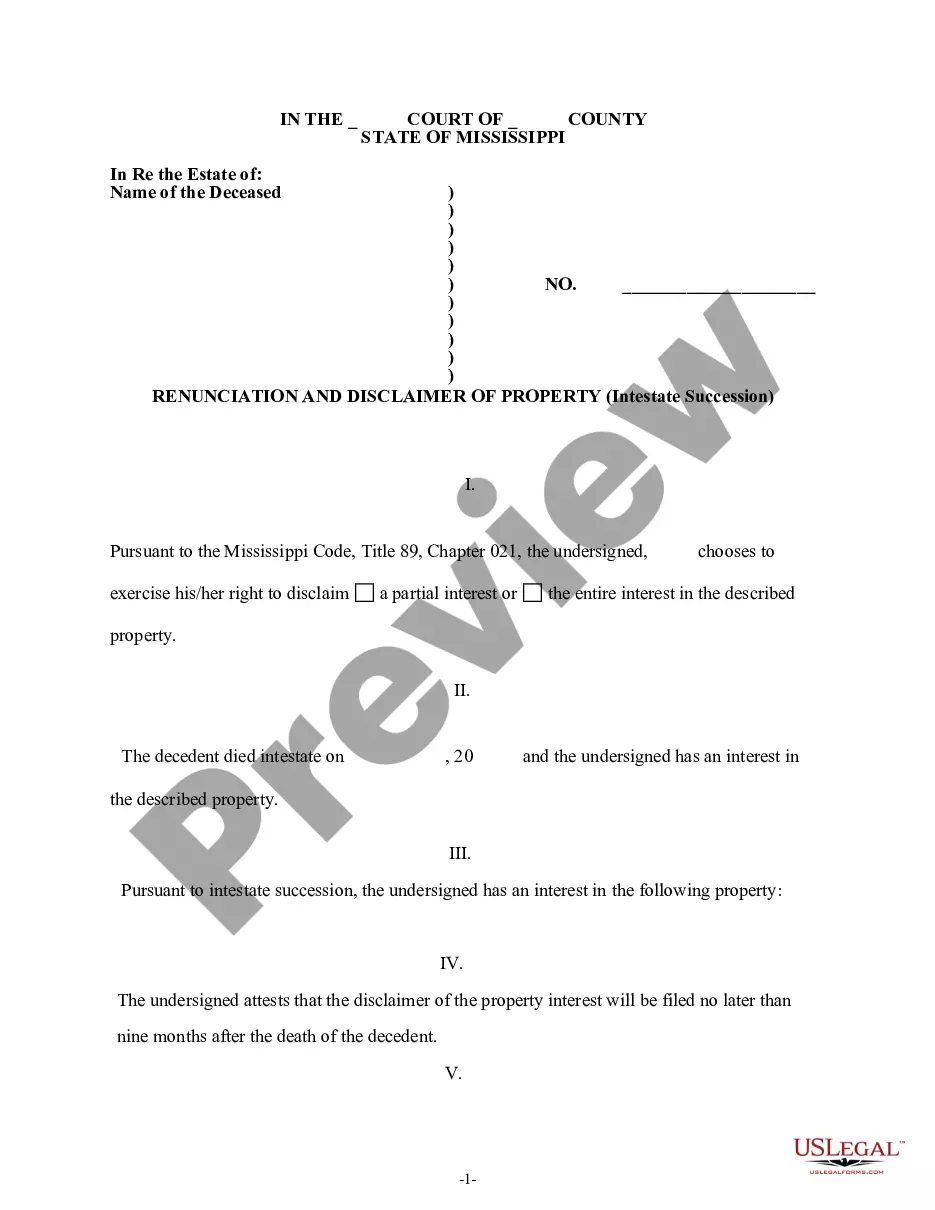
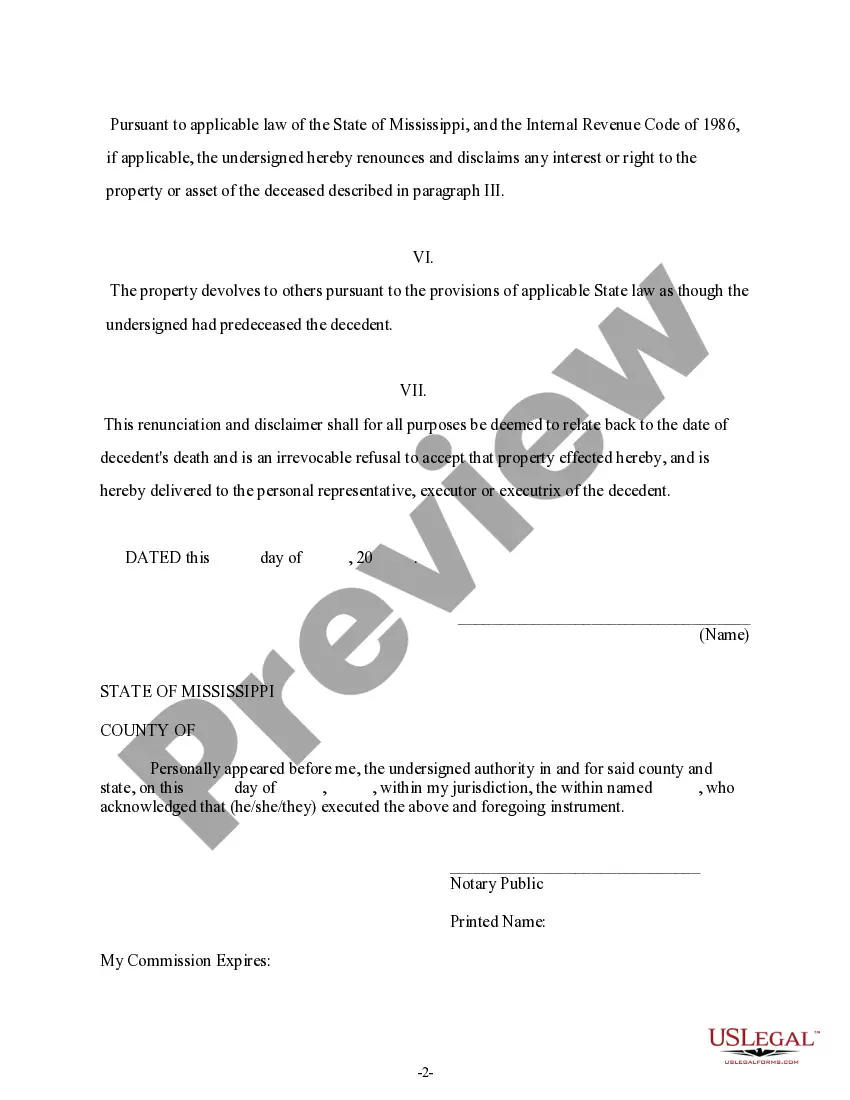
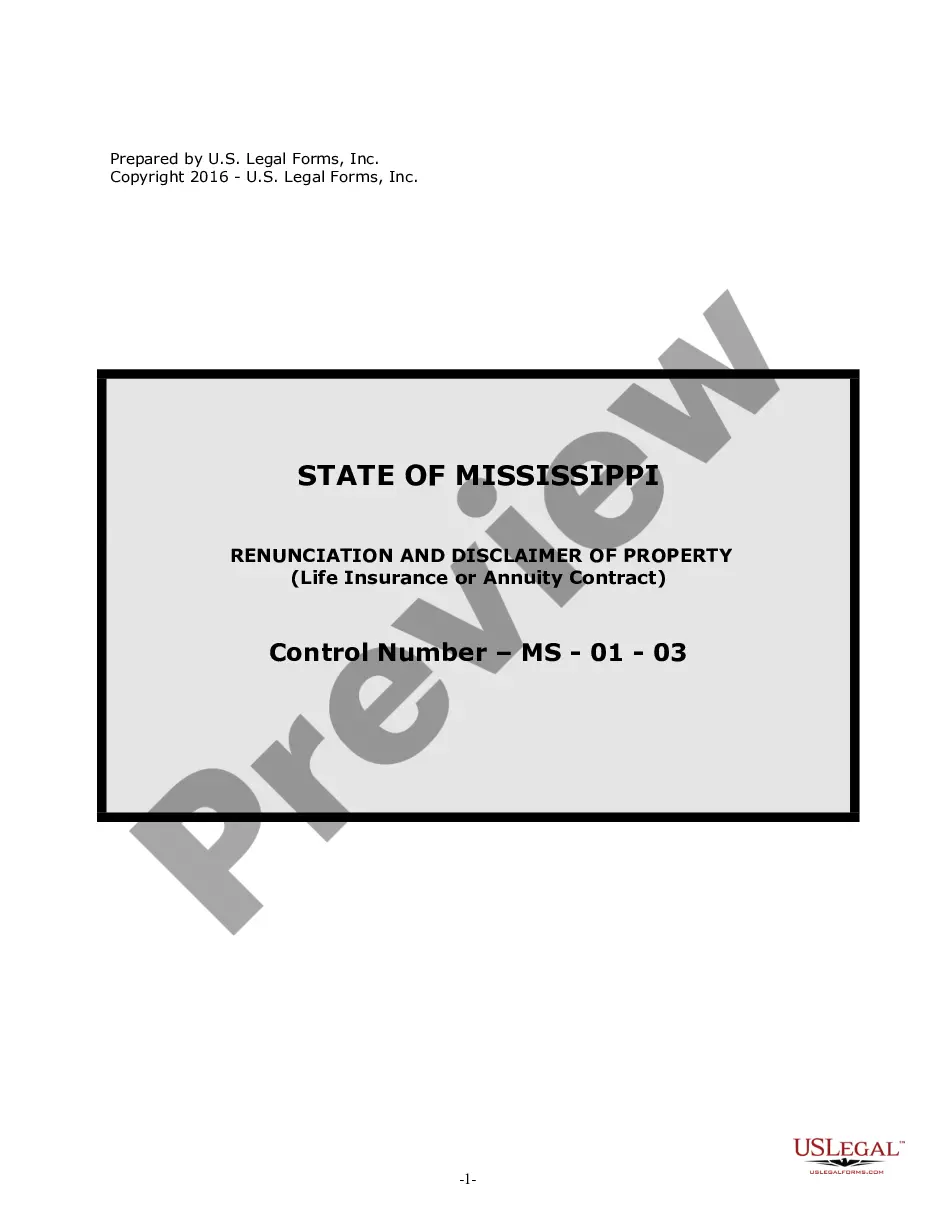
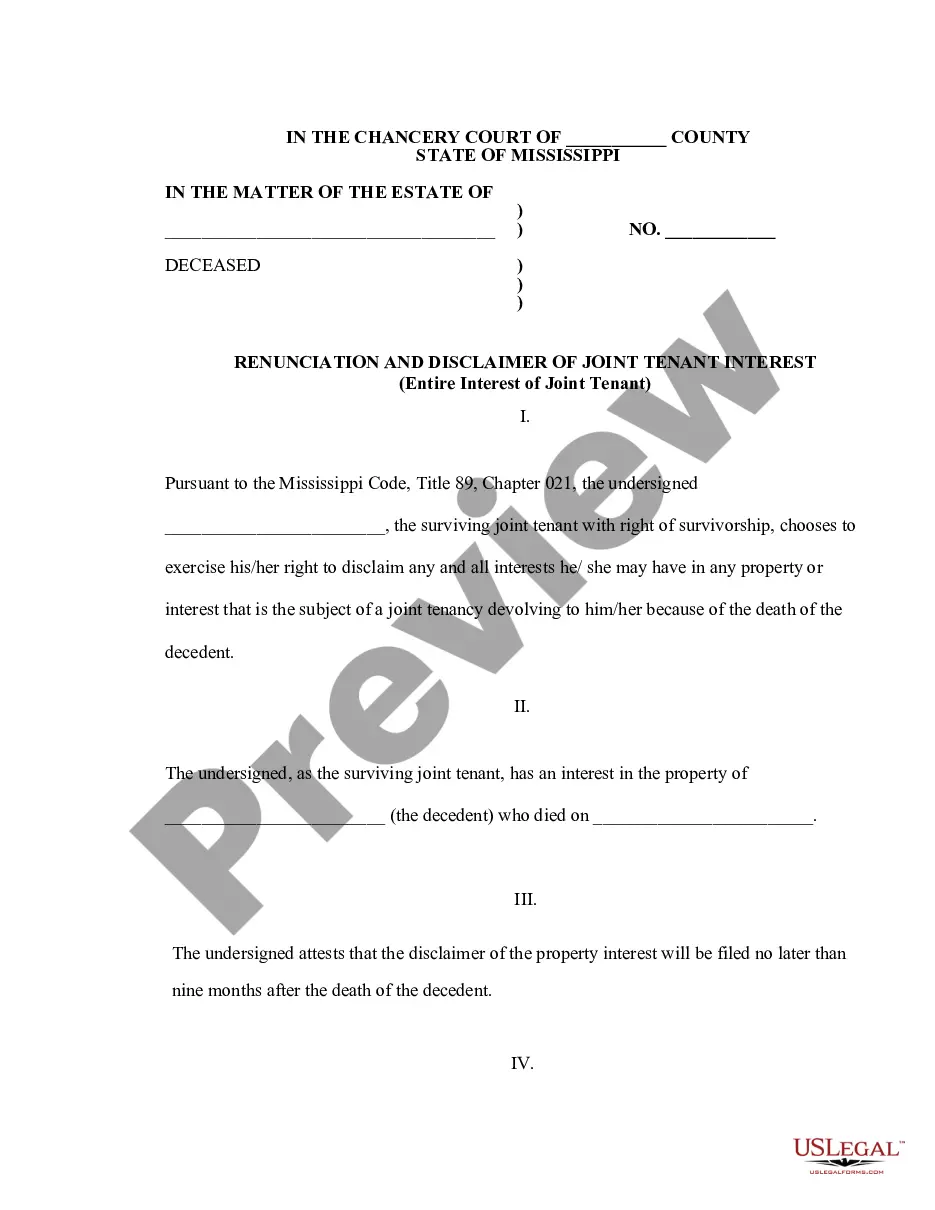
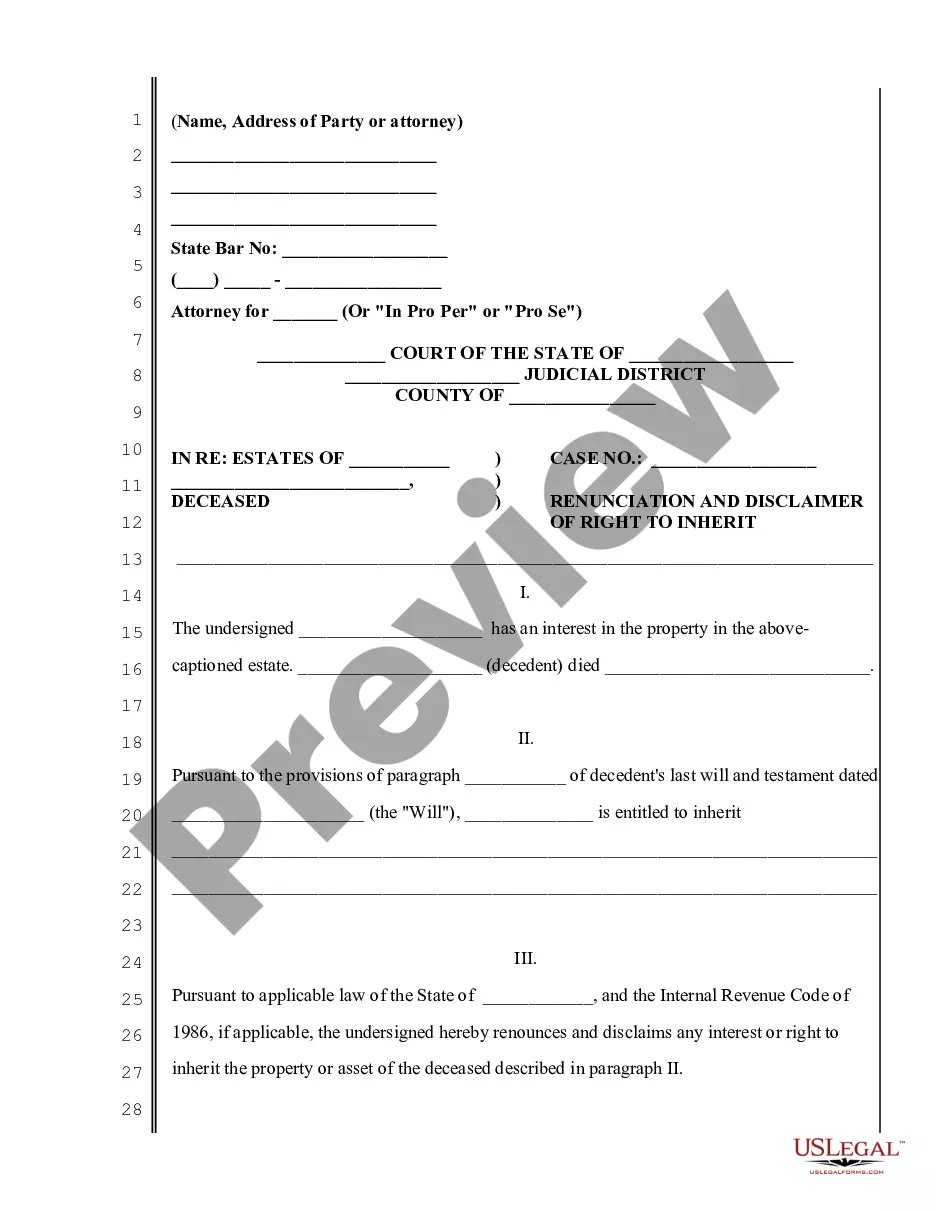
The Mississippi Renunciation and Disclaimer of Property received by Intestate Succession is a legal document that allows a beneficiary to formally refuse an inheritance received from a deceased person's estate when the person died without a will (intestate). This form ensures that the beneficiary can relinquish their rights to the property, allowing it to pass to other heirs as though the beneficiary had not survived the decedent. This process is governed by Mississippi law, distinguishing it from other estate planning forms such as wills or trusts, which involve direct transfer of assets according to the decedent's wishes.
Key parts of this document
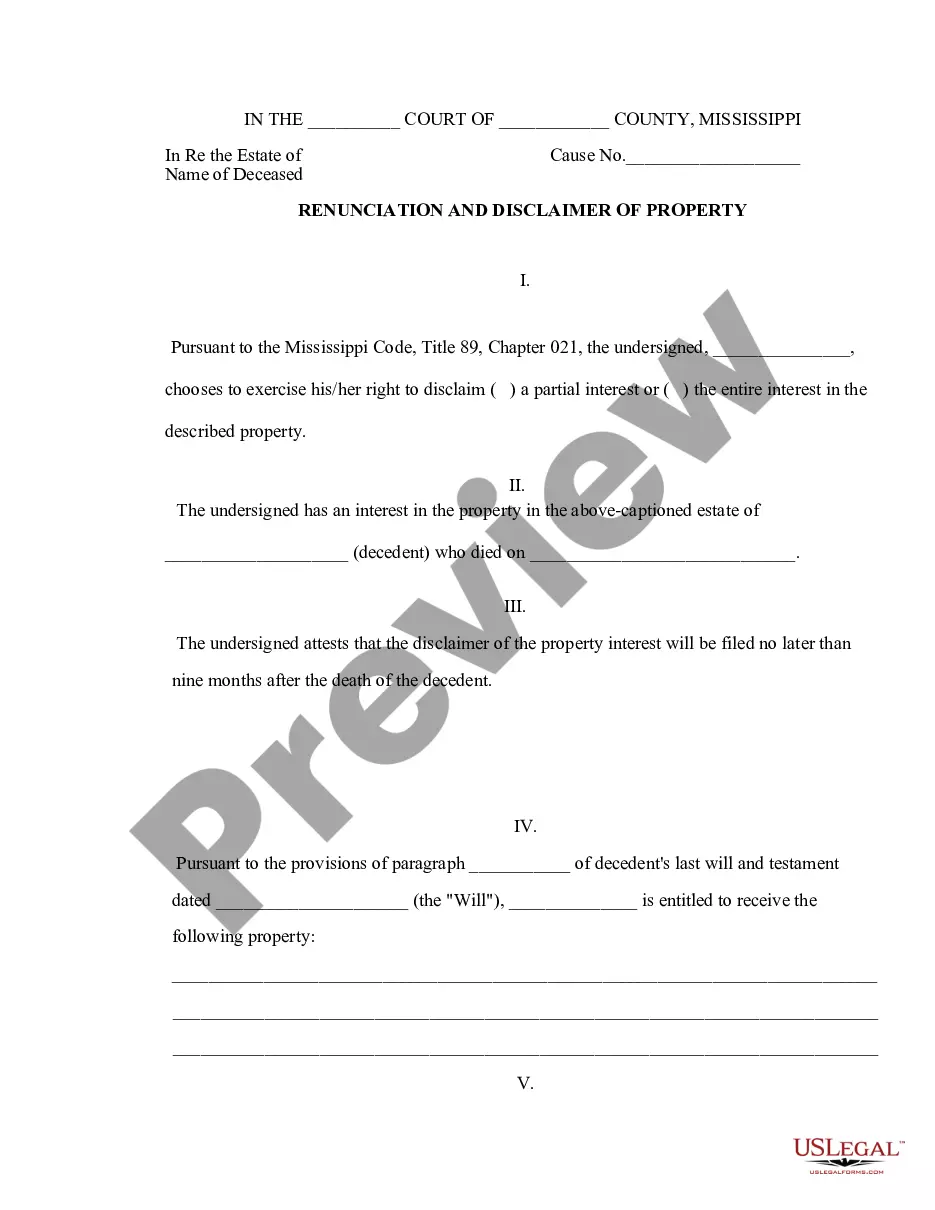
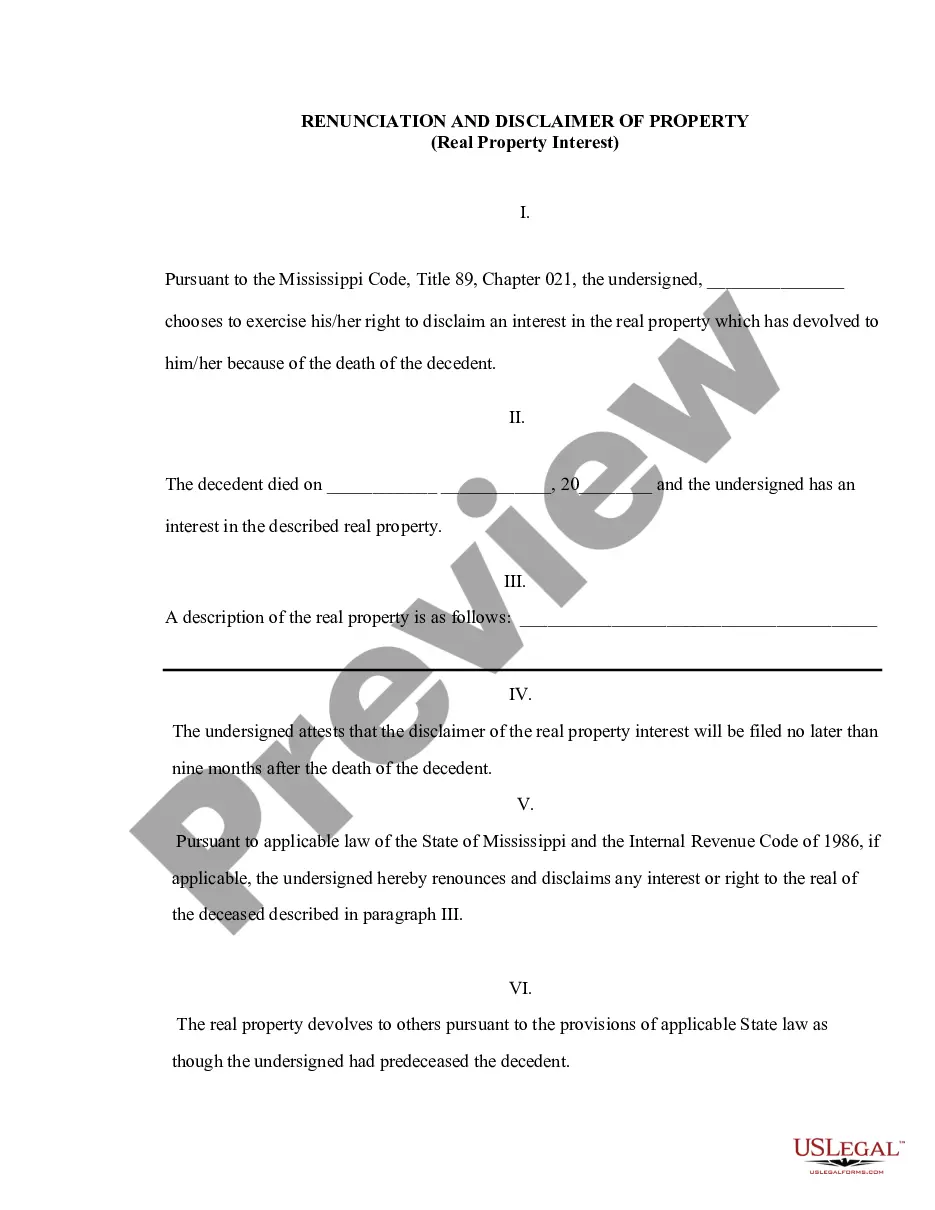
- Statement of renunciation: A declaration by the beneficiary to disclaim any interest in the described property.
- Effect on property distribution: Explanation of how the property will be handled under state law after the disclaimer.
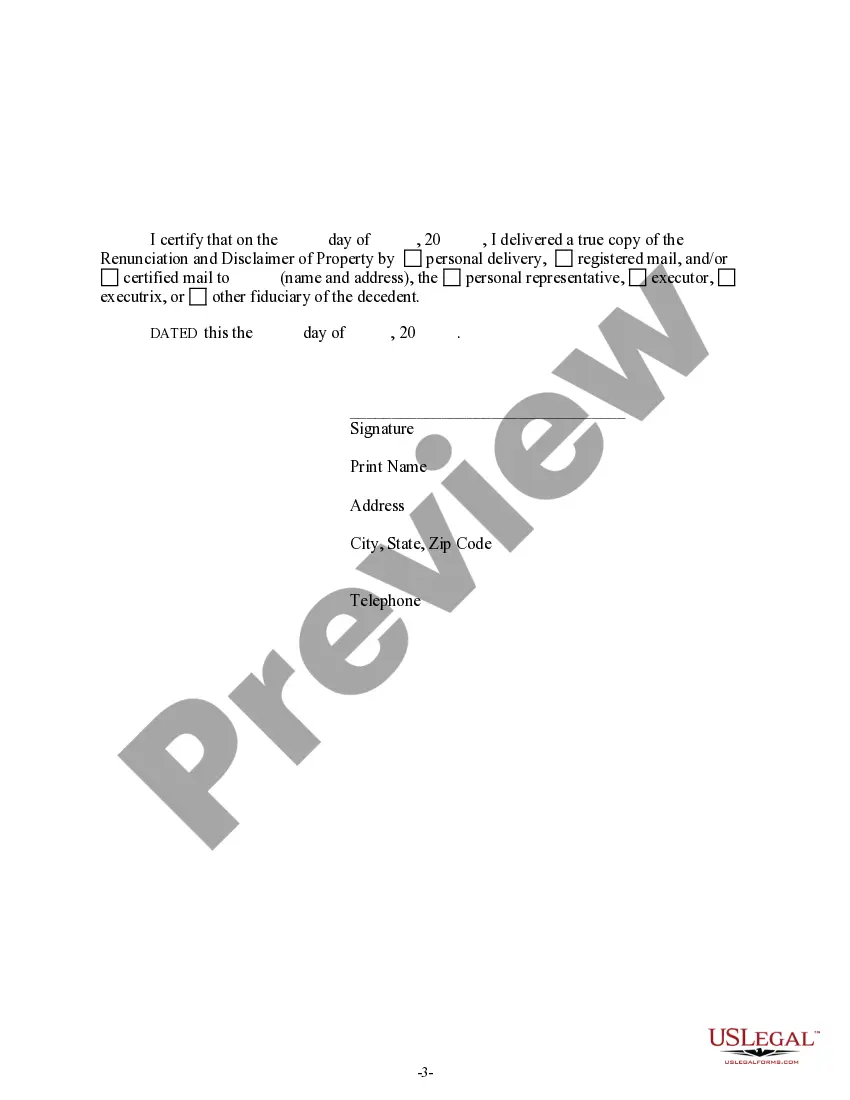
- Certification of delivery: A certificate to verify that the form has been delivered to the necessary parties.
When this form is needed
This form is used when a beneficiary of an intestate estate decides not to accept their inheritance. Scenarios may include situations where accepting the property would result in a financial burden, such as debt liabilities tied to the estate. Additionally, a beneficiary who wishes to ensure that the property passes to another heir rather than retaining any interest may also use this form.
Who needs this form
The following individuals may benefit from using this form:
- Beneficiaries named in an intestate estate who wish to disclaim their inheritance.
- Heirs who want to prevent liabilities associated with inherited property.
- Individuals seeking to transfer their inherited interest to other heirs.
Steps to complete this form
- Identify the beneficiary: Clearly state your name and relationship to the decedent.
- Specify the property: Include a detailed description of the property you are renouncing.
- Sign the form: Provide your signature to complete the disclaimer process.
- Deliver the form: Ensure that the completed form is delivered to the appropriate parties as required by law.
- Retain a copy: Keep a copy of the form for your records as proof of the renunciation.
Does this form need to be notarized?
To make this form legally binding, it must be notarized. Our online notarization service, powered by Notarize, lets you verify and sign documents remotely through an encrypted video session.
Get your form ready online
Our built-in tools help you complete, sign, share, and store your documents in one place.
Make edits, fill in missing information, and update formatting in US Legal Forms—just like you would in MS Word.
Download a copy, print it, send it by email, or mail it via USPS—whatever works best for your next step.
Sign and collect signatures with our SignNow integration. Send to multiple recipients, set reminders, and more. Go Premium to unlock E-Sign.
If this form requires notarization, complete it online through a secure video call—no need to meet a notary in person or wait for an appointment.
We protect your documents and personal data by following strict security and privacy standards.

Make edits, fill in missing information, and update formatting in US Legal Forms—just like you would in MS Word.

Download a copy, print it, send it by email, or mail it via USPS—whatever works best for your next step.

Sign and collect signatures with our SignNow integration. Send to multiple recipients, set reminders, and more. Go Premium to unlock E-Sign.

If this form requires notarization, complete it online through a secure video call—no need to meet a notary in person or wait for an appointment.

We protect your documents and personal data by following strict security and privacy standards.
Common mistakes to avoid
- Failing to properly identify the property being disclaimed.
- Not signing the form, rendering it invalid.
- Neglecting to deliver the form to all necessary parties.
Advantages of online completion
- Convenient access to the form that can be downloaded and completed at your own pace.
- Easy editing capabilities to ensure that all details are correct.
- Reliable legal formats that comply with Mississippi law, giving peace of mind.
Main things to remember
- The form allows a beneficiary to renounce their inheritance from a deceased individual's estate.
- Completing this form ensures that the beneficiary's interest in the property is legally disclaimed.
- Understanding state-specific laws is crucial in the renunciation process.
Looking for another form?
Form popularity
FAQ
Mississippi probate is usually required if a deceased person died with Mississippi assets in his or her name and those assets do not pass automatically at the person's death.There are some alternatives to probate that may apply in limited circumstances.
Who Gets What: The Basic Rules of Intestate Succession.Generally, only spouses, registered domestic partners, and blood relatives inherit under intestate succession laws; unmarried partners, friends, and charities get nothing. If the deceased person was married, the surviving spouse usually gets the largest share.
Children - if there is no surviving married or civil partnerIf there is no surviving partner, the children of a person who has died without leaving a will inherit the whole estate. This applies however much the estate is worth. If there are two or more children, the estate will be divided equally between them.
4. Siblings If the person who died had no living spouse, civil partner, children or parents, then their siblings are their next of kin.
If one dies, the other partner will automatically inherit the whole of the money. Property and money that the surviving partner inherits does not count as part of the estate of the person who has died when it is being valued for the intestacy rules.
In Mississippi, you can make a living trust to avoid probate for virtually any asset you ownreal estate, bank accounts, vehicles, and so on. You need to create a trust document (it's similar to a will), naming someone to take over as trustee after your death (called a successor trustee).
Many married couples own most of their assets jointly with the right of survivorship. When one spouse dies, the surviving spouse automatically receives complete ownership of the property. This distribution cannot be changed by Will.
If a person dies without a will, Mississippi's laws of intestacy distribute the person's estate to his or her heirs at law.To establish heirs, the probate attorney files a Petition to Establish Heirs with the chancery court in the county where the decedent died or owned property.
The laws are different in every state, but if you're married and die without a will, your estate will probably go to your spouse if you both own it.If he passes away without a will, the law says his surviving spouse will inherit the first $50,000 of his personal assets (not any shared assets) plus half the balance.