Massachusetts 14 Day Notice to Pay Rent or Lease Terminated for Nonresidential or Commercial Property
What is this form?
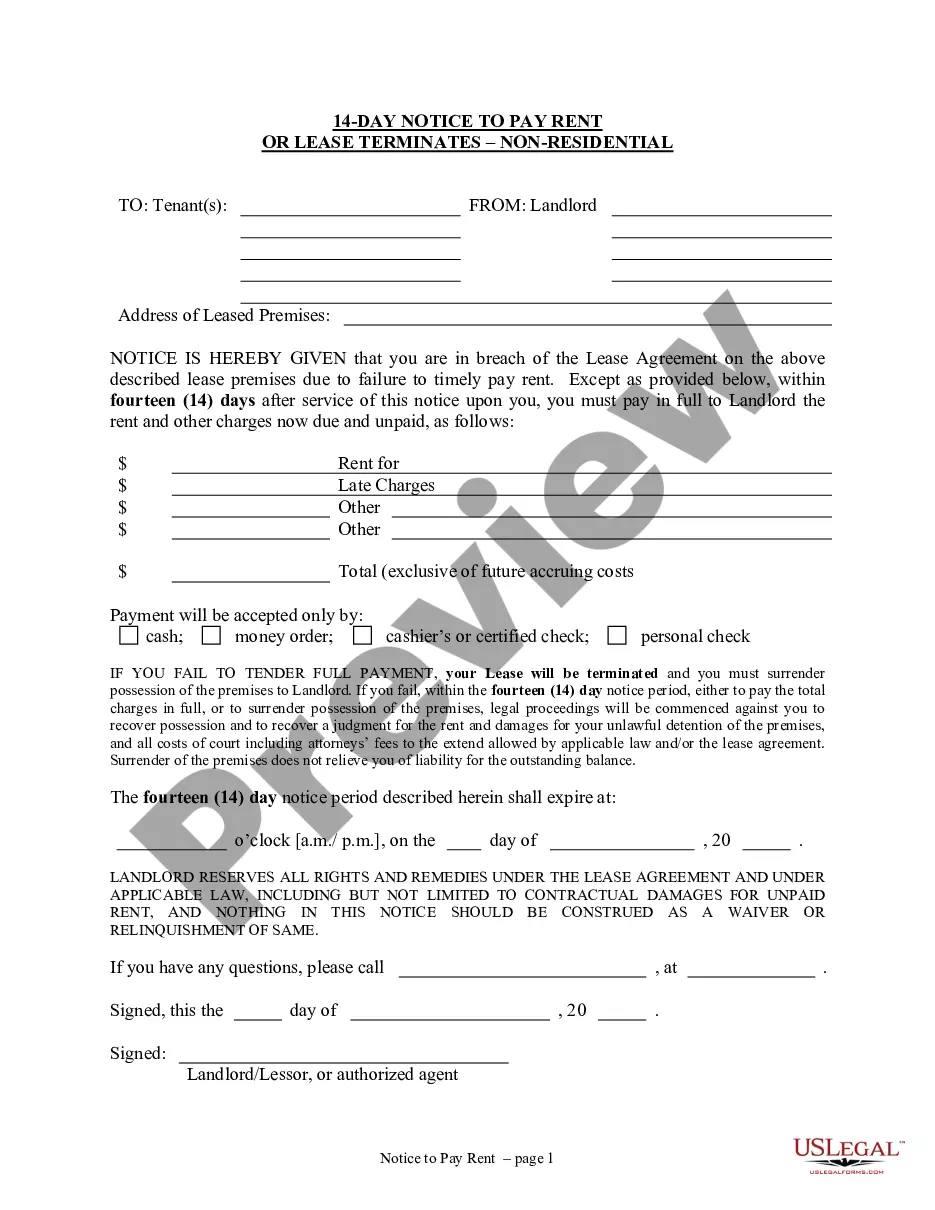
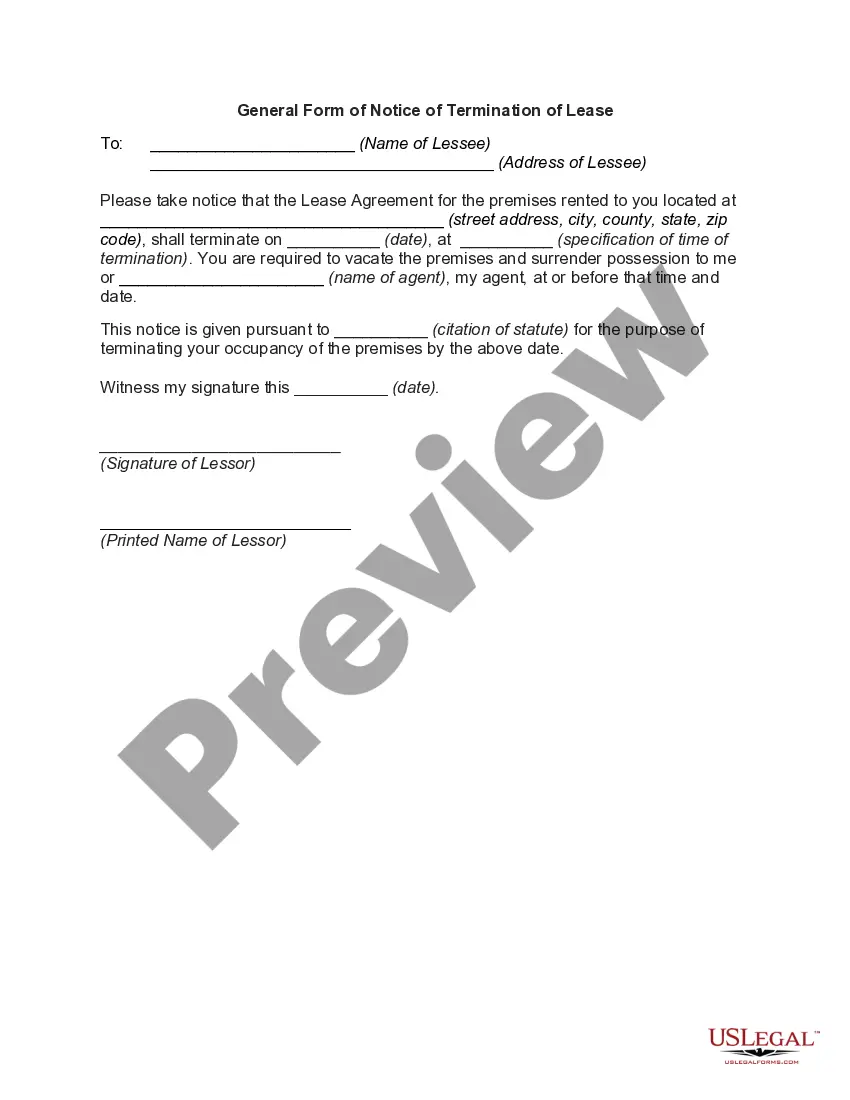
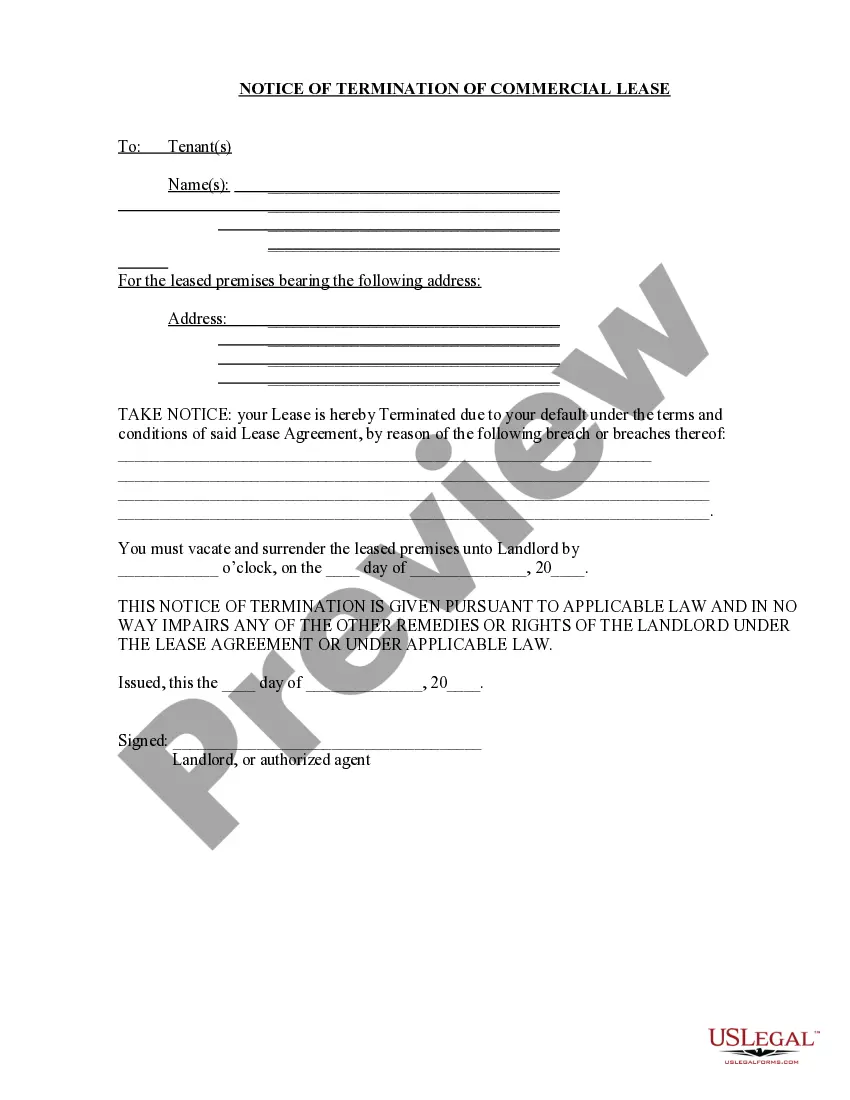
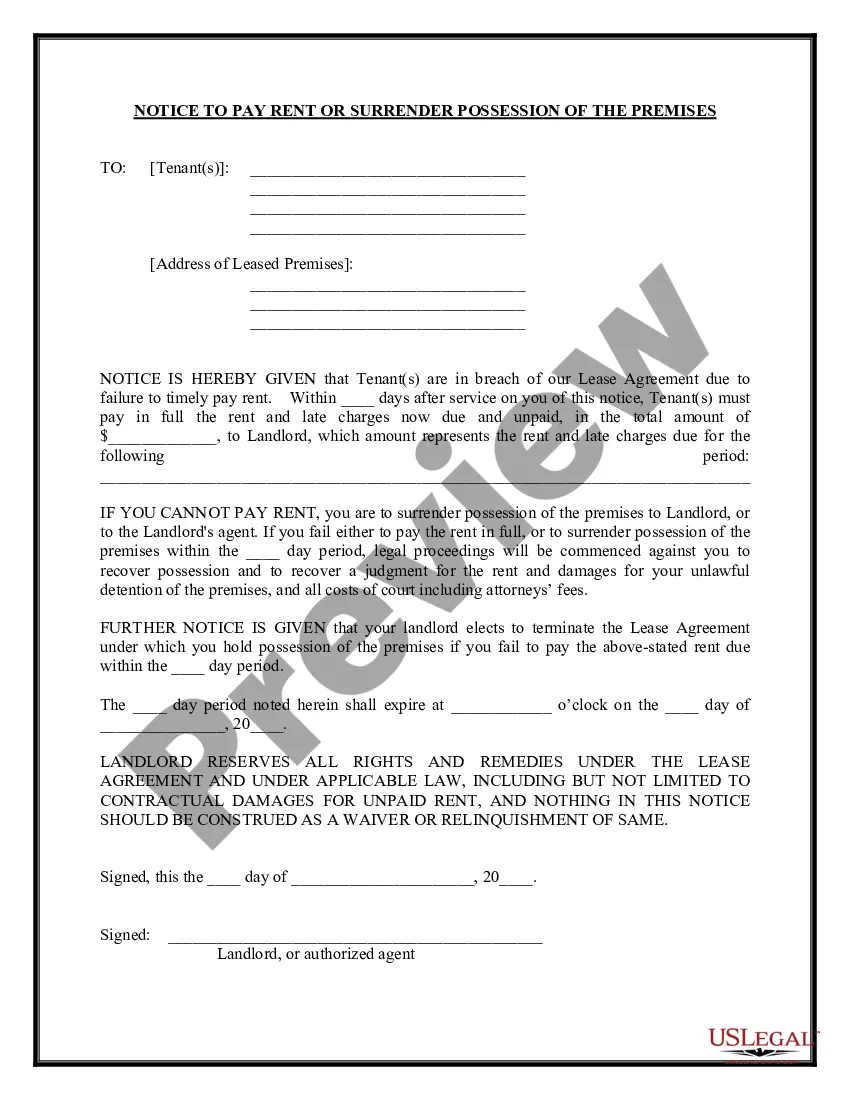
The 14 Day Notice to Pay Rent or Lease Terminated for Nonresidential or Commercial Property is a legal document used by landlords to inform tenants of overdue rent. This notice gives the tenant fourteen days to pay the outstanding rent or face potential lease termination and possible eviction. This form specifically addresses non-residential properties, which include commercial and industrial spaces, and is essential for landlords looking to enforce lease agreements regarding unpaid rent effectively.
What’s included in this form
- Tenant Identification: Information about the tenant(s) who are being notified.
- Landlord Identification: Details of the landlord or authorized agent issuing the notice.
- Leased Premises: Description of the property subject to the lease agreement.
- Outstanding Charges: A breakdown of overdue rent, late charges, and any other applicable fees.
- Payment Instructions: Guidelines on how and where to make the payment.
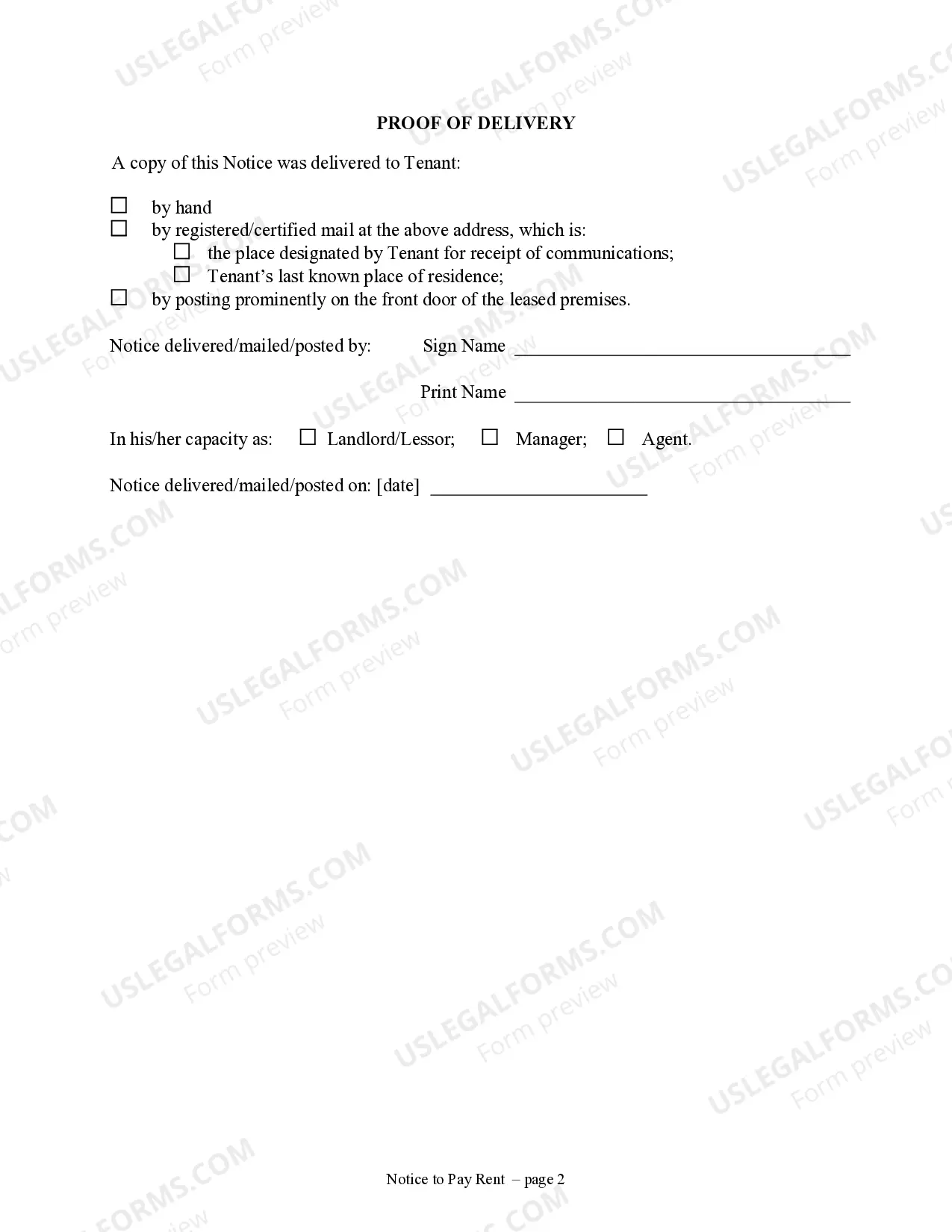
- Proof of Delivery: Verification section for how the notice was delivered to the tenant.

When this form is needed
This form is needed when a landlord has not received rent payments from a commercial tenant and wishes to formally demand payment. It is particularly used when the law requires a specific notice period before further actions, like eviction, can be taken. Situations that might prompt this action could include unpaid rent for a previous month, ongoing late payments, or a failure to adhere to rental terms.
Who this form is for
- Landlords managing non-residential properties.
- Property managers acting on behalf of the landlord.
- Commercial property owners needing to enforce lease agreements.
- Any authorized representative dealing with tenant leases for commercial premises.
Completing this form step by step
- Identify the parties involved by entering the landlord's and tenant's names and addresses.
- Specify the property by including the address of the leased premises.
- List the overdue rent and any other charges owed by the tenant.
- Clearly state the method of payment that will be accepted.
- Indicate the date by which the tenant must make full payment to avoid lease termination.
- Provide signature and date from the landlord or authorized agent and complete the proof of delivery section.
Does this form need to be notarized?
This form does not typically require notarization unless specified by local law. However, it is crucial to review your jurisdictionâs specific requirements regarding lease notices to ensure compliance.
Get your form ready online
Our built-in tools help you complete, sign, share, and store your documents in one place.
Make edits, fill in missing information, and update formatting in US Legal Forms—just like you would in MS Word.
Download a copy, print it, send it by email, or mail it via USPS—whatever works best for your next step.
Sign and collect signatures with our SignNow integration. Send to multiple recipients, set reminders, and more. Go Premium to unlock E-Sign.
If this form requires notarization, complete it online through a secure video call—no need to meet a notary in person or wait for an appointment.
We protect your documents and personal data by following strict security and privacy standards.

Make edits, fill in missing information, and update formatting in US Legal Forms—just like you would in MS Word.

Download a copy, print it, send it by email, or mail it via USPS—whatever works best for your next step.

Sign and collect signatures with our SignNow integration. Send to multiple recipients, set reminders, and more. Go Premium to unlock E-Sign.

If this form requires notarization, complete it online through a secure video call—no need to meet a notary in person or wait for an appointment.

We protect your documents and personal data by following strict security and privacy standards.
Typical mistakes to avoid
- Failing to specify the correct amount owed can lead to disputes.
- Not providing accurate delivery proof, which could invalidate the notice.
- Using an incorrect notice period that does not comply with state law or lease terms.
- Neglecting to include clear payment instructions, making it difficult for tenants to comply.
Benefits of completing this form online
- Easy access to your form anytime and anywhere.
- Edit and customize the form to fit your specific situation.
- Reliable and secure templates drafted by licensed attorneys.
- Saves time with instant downloads that can be filled out and used immediately.
Legal use & context
- Can be used to initiate formal proceedings for eviction due to non-payment of rent.
- Establishes a clear record of the landlord's attempt to collect overdue rent.
- Helps maintain a legally compliant process for lease termination.
Key takeaways
- The 14 Day Notice to Pay Rent is essential for enforcing payment from commercial tenants.
- Landlords must adhere to their state's requirements when using this form.
- Clear communication and accurate completion are vital to avoid mistakes.
Looking for another form?
Form popularity
FAQ
To fill out a notice to terminate a tenancy, begin with the date, then add the tenant's details and the property address. Clearly articulate the reason for termination and the effective date. If applicable, mention the Massachusetts 14 Day Notice to Pay Rent or Lease Terminated for Nonresidential or Commercial Property to ensure the tenant understands the urgency of the situation and their obligations.
When filling out an eviction notice template, start with the tenant's name, property address, and the reason for eviction. Clearly state the demands, including any rent owed or other lease violations that warrant eviction. To keep the process aligned with the Massachusetts 14 Day Notice to Pay Rent or Lease Terminated for Nonresidential or Commercial Property, ensure you include appropriate timelines and references to comply with state laws.
To give notice to end a tenancy, deliver a written notice that includes the date, tenant's name, and property address. Specify the termination date and relevant details about the tenancy. Utilizing the framework of a Massachusetts 14 Day Notice to Pay Rent or Lease Terminated for Nonresidential or Commercial Property can help ensure that your notice meets legal requirements and is respected.
To write a notice to end a tenancy, begin with the date, followed by the tenant's name and property address. Clearly state your intent to terminate the tenancy and outline any necessary steps the tenant must take. If you are issuing a Massachusetts 14 Day Notice to Pay Rent or Lease Terminated for Nonresidential or Commercial Property, include all relevant details and comply with legal guidelines.
When you receive a 14-day notice, it indicates that you have 14 days to address the issue outlined in the notice, typically overdue rent. If you pay the owed amount within this time frame, you may avoid further action. However, if you fail to respond, the landlord may proceed with eviction proceedings. Knowing your rights and responsibilities under Massachusetts law is essential when dealing with such notices.
To write a letter to terminate a lease, include the date, the tenant's name, and the property address. Clearly state your intent to terminate the lease, the reason for termination, and the effective date. Consider mentioning the Massachusetts 14 Day Notice to Pay Rent or Lease Terminated for Nonresidential or Commercial Property if applicable, as it may influence your lease termination process.
A 14-day notice to quit for nonpayment of rent in Massachusetts is a formal document that informs the tenant of their overdue rent. This notice gives them 14 days to pay the owed rent or face potential eviction. It serves as a critical step in the eviction process and must comply with Massachusetts law. Understanding this notice is essential for landlords managing nonresidential or commercial properties.
To write a notice to a tenant, start by clearly stating the reason for the notice. Include the tenant's name, the property address, and the date. Specify the action required, such as payment or lease termination, and provide a deadline. If you are addressing a Massachusetts 14 Day Notice to Pay Rent or Lease Terminated for Nonresidential or Commercial Property, ensure that all necessary legal language is included.
The most common method of terminating a lease in Massachusetts is through a written notice. Landlords often use a Massachusetts 14 Day Notice to Pay Rent or Lease Terminated for Nonresidential or Commercial Property when tenants fail to pay rent. This formal approach ensures that both parties are clear on the terms and conditions. By following the proper procedure, you can prevent misunderstandings and avoid potential legal disputes.
In Massachusetts, a landlord must generally provide a minimum notice period of 30 days for terminating a tenancy. However, if issuing a Massachusetts 14 Day Notice to Pay Rent or Lease Terminated for Nonresidential or Commercial Property due to rent non-payment, the notice period can be reduced to just 14 days. Understanding these timelines can help you better navigate your lease agreements and know your rights as a tenant. Always keep a record of the notice received for future reference.