Idaho Certificate of Trust by Individual
Overview of this form
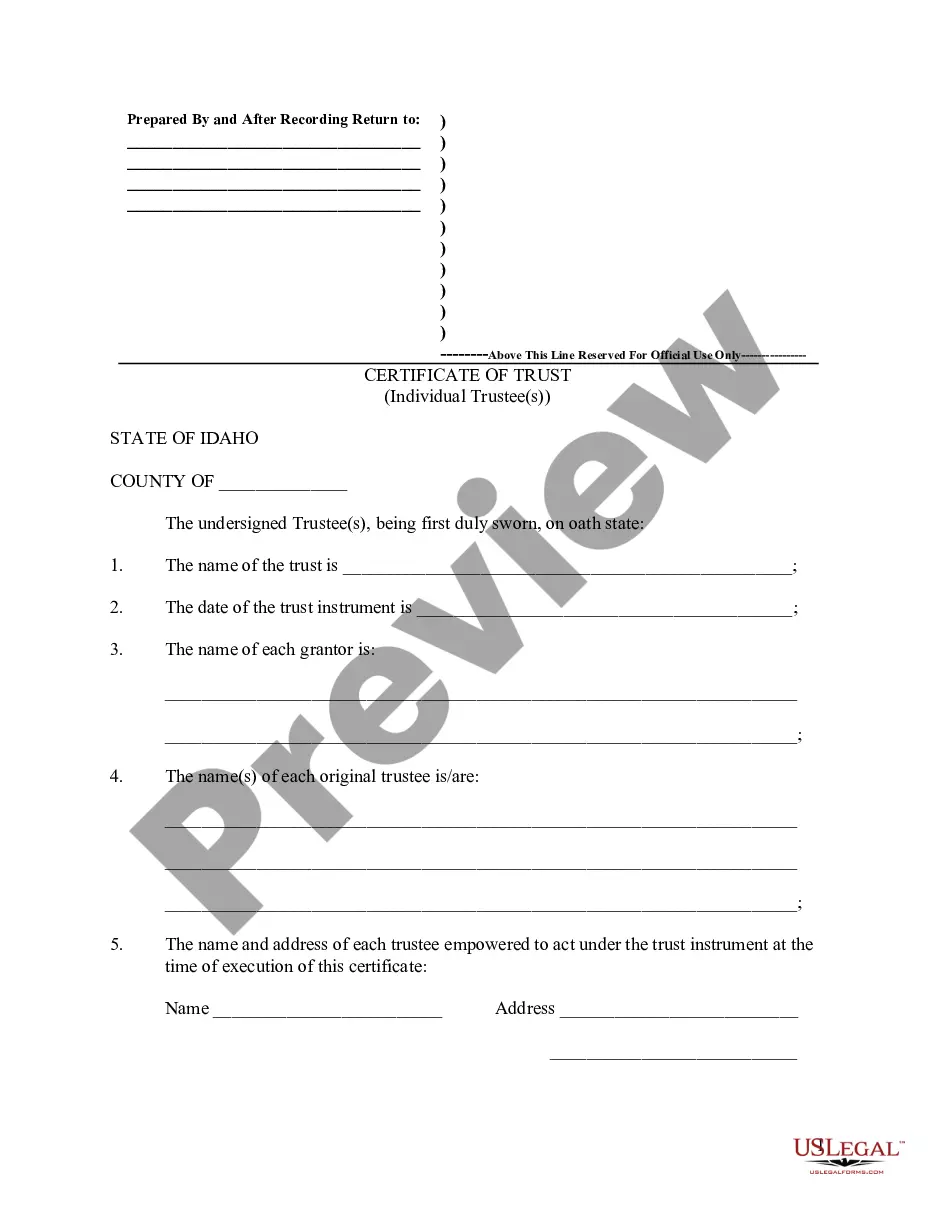
The Idaho Certificate of Trust by Individual is a legal document that certifies the existence of a trust without requiring the entire trust document to be filed. This certificate allows an individual trustee to provide proof of the trust's terms and existence to third parties, such as banks or real estate agents, without disclosing the complete trust details. It simplifies the process by providing essential information in a concise format, distinguishing it from full trust documents.
Key components of this form
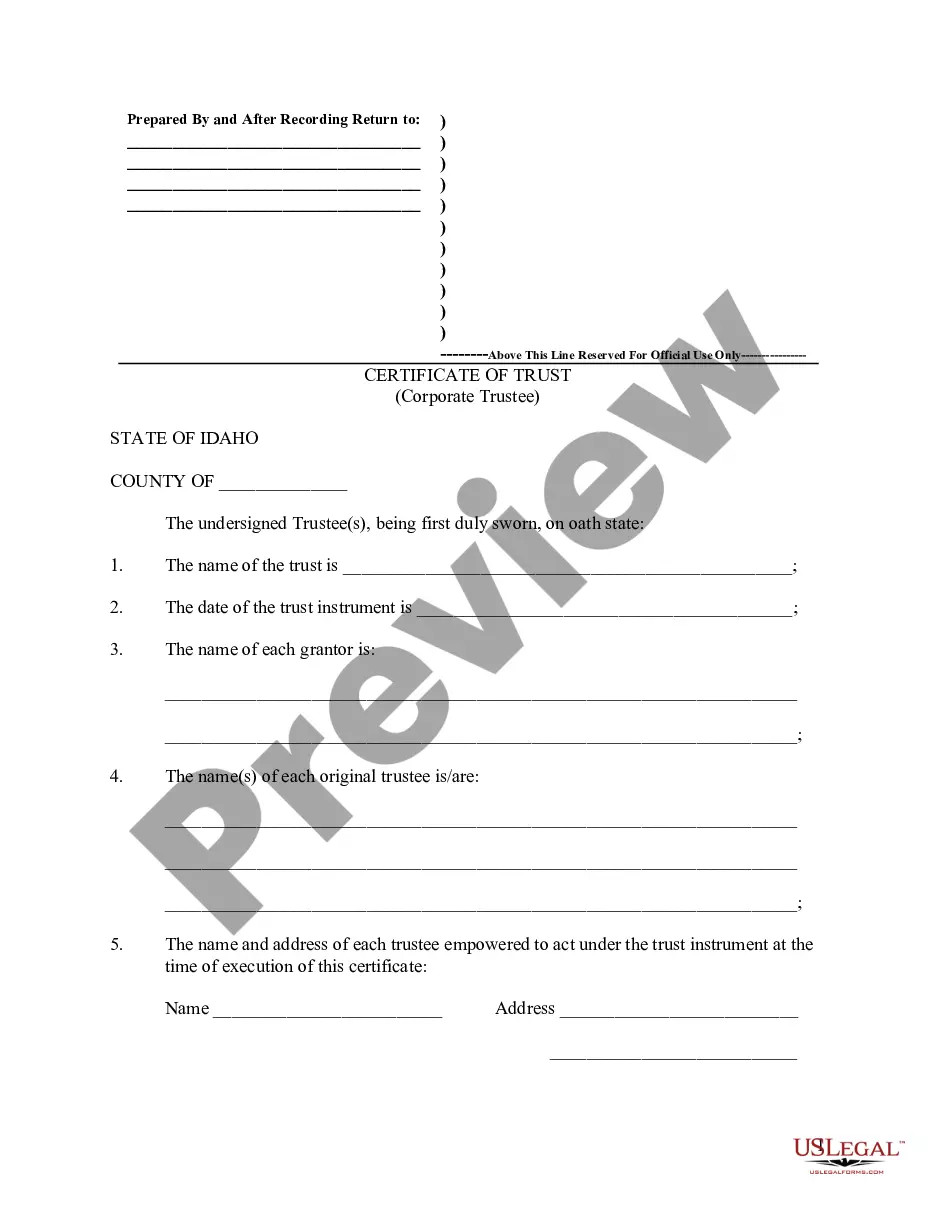
- Name of the trust and the date of the trust instrument.
- Identification of the grantors and original trustees.
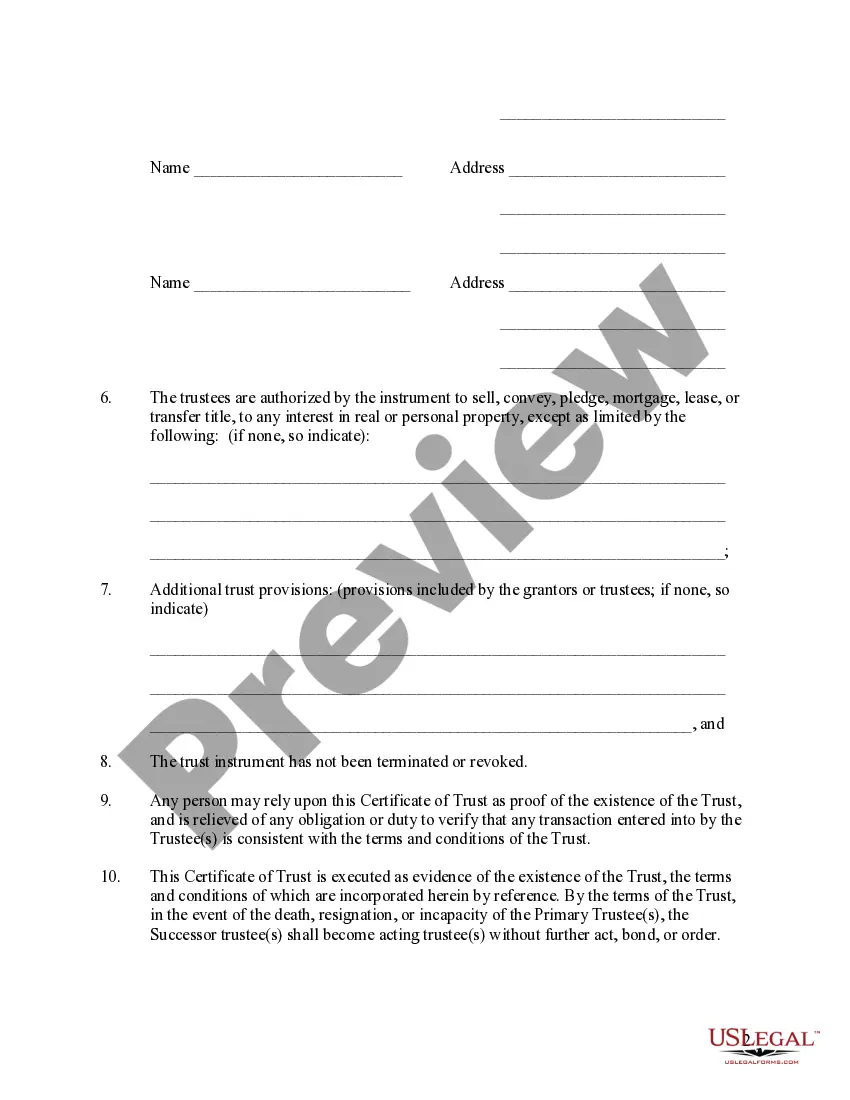
- Details of the currently acting trustees, including their addresses.
- Authorization of trustees regarding trust property transactions.
- Permanent acknowledgment of the trust's existence, including provisions for successor trustees.
When this form is needed
This form is beneficial when you need to prove the existence of a trust to third parties without revealing the full trust agreement. It is often needed in real estate transactions, financial matters, or when dealing with third parties who require assurance of the trust's authority and terms. Additionally, if a trustee is approached about conducting business on behalf of the trust, this certificate can streamline the verification process.
Who should use this form
The following individuals should consider using this form:
- Individual trustees who need to provide evidence of their authority to act on behalf of a trust.
- Grantors who wish to facilitate transactions involving the trust.
- Financial institutions or real estate agents requiring trust documentation to complete transactions.
Completing this form step by step
- Enter the name of the trust and the date of the trust formation.
- List all grantors and original trustees involved in the trust.
- Provide the names and addresses of the currently acting trustees.
- Specify any limitations on the powers of the trustees, if any exist.
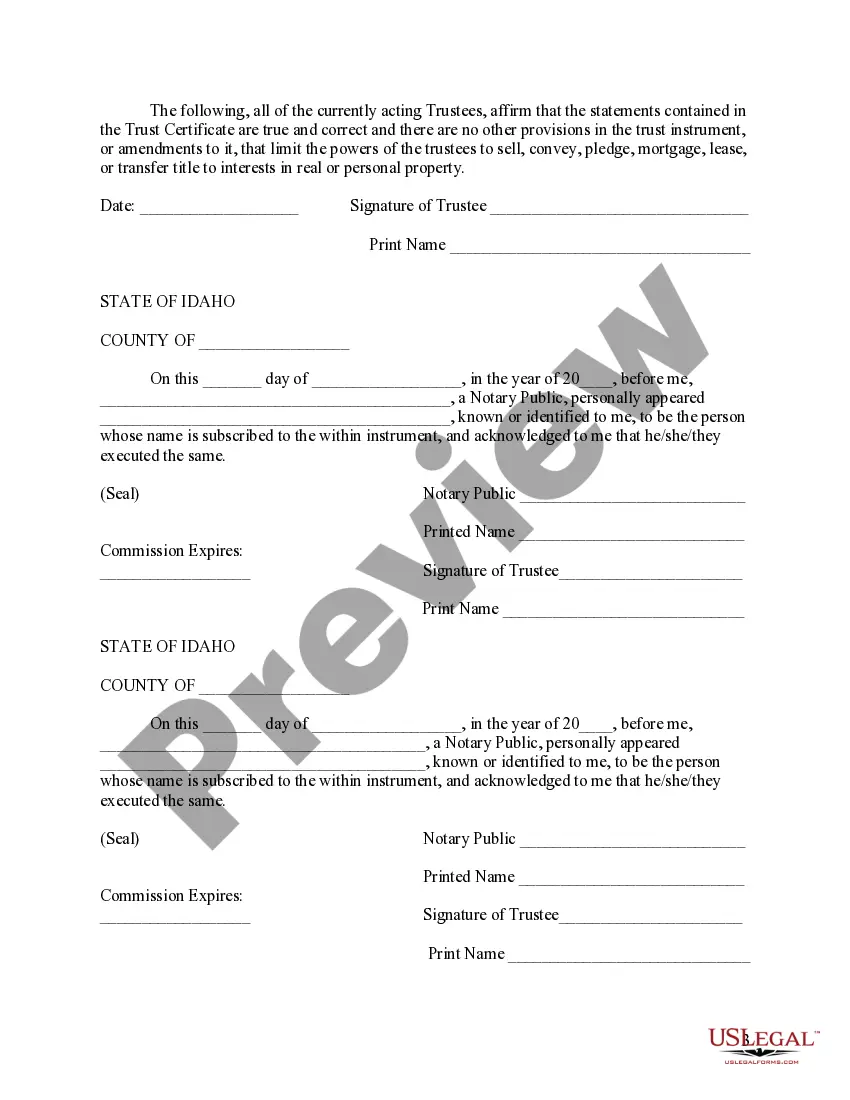
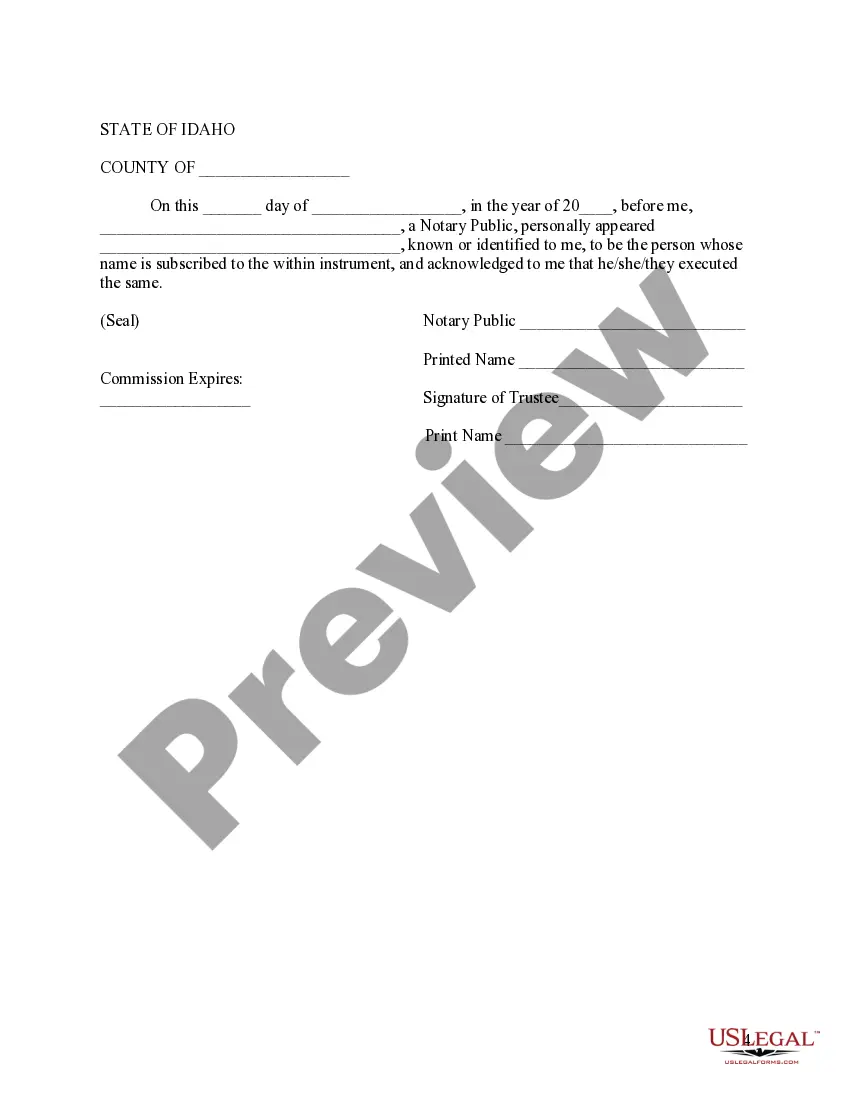
- Sign the certificate in the presence of a notary public to affirm its validity.
Notarization requirements for this form
This document requires notarization to meet legal standards. US Legal Forms provides secure online notarization powered by Notarize, allowing you to complete the process through a verified video call, available 24/7.
Get your form ready online
Our built-in tools help you complete, sign, share, and store your documents in one place.
Make edits, fill in missing information, and update formatting in US Legal Forms—just like you would in MS Word.
Download a copy, print it, send it by email, or mail it via USPS—whatever works best for your next step.
Sign and collect signatures with our SignNow integration. Send to multiple recipients, set reminders, and more. Go Premium to unlock E-Sign.
If this form requires notarization, complete it online through a secure video call—no need to meet a notary in person or wait for an appointment.
We protect your documents and personal data by following strict security and privacy standards.

Make edits, fill in missing information, and update formatting in US Legal Forms—just like you would in MS Word.

Download a copy, print it, send it by email, or mail it via USPS—whatever works best for your next step.

Sign and collect signatures with our SignNow integration. Send to multiple recipients, set reminders, and more. Go Premium to unlock E-Sign.

If this form requires notarization, complete it online through a secure video call—no need to meet a notary in person or wait for an appointment.

We protect your documents and personal data by following strict security and privacy standards.
Typical mistakes to avoid
- Failing to provide accurate names or addresses of trustees.
- Neglecting to indicate any limitations on trustees' powers.
- Not signing the certificate in front of a notary public.
Benefits of using this form online
- Convenience of accessing and downloading the form anytime.
- Editability allows customization to fit specific trust details quickly.
- Reliable templates drafted by licensed attorneys ensure compliance with Idaho law.
Key takeaways
- The Idaho Certificate of Trust by Individual allows trustees to prove trust authority without revealing complete details.
- Accurate completion is crucial to avoid common mistakes.
- This form requires notarization to ensure its legal standing.
Looking for another form?
Form popularity
FAQ
Choose whether to make an individual or shared trust. Decide what property to include in the trust. Choose a successor trustee. Decide who will be the trust's beneficiaries who will get the trust property. Create the trust document. Sign the document in front of a notary public.
Trusts that hold property will, like other trusts, only need to be registered if the trustees incur a liability to tax. Thus, if the property is occupied by a beneficiary and is not income-producing - no requirement for registration will exist unless a taxable event occurs for IHT, CGT or SDLT purposes.
A Memorandum of Trust is a synopsis of a trust that is used when transferring real property into a trust.A Certification of Trust is used in place of the actual trust to open up an account on behalf of a trust at a financial institution.
A trust document isn't required to be filed. If you are transferring real estate into a trust, a deed will need oo be filed at the county recorder's office.The declaration will detail the terms and conditions of the living trust, including who will serve as the Trustee.
All UK trusts will have to register whether or not they have tax liabilities. Those trusts which are already registered will have to provide some additional information about their beneficial owners.
California Trust Certificates Law. Delaware Trust Certificates Law. Idaho Trust Certificates Law. Iowa Trust Certificates Law. Minnesota Trust Certificates Law. Mississippi Trust Certificates Law. Nevada Trust Certificates Law. Ohio Trust Certificates Law.
Registration of a living trust doesn't give the court any power over the administration of the trust, unless there's a dispute.To register a revocable living trust, the trustee must file a statement with the court where the trustee resides or keeps trust records.
A Certificate of Trust is recorded in the Official Records of the county in which any trust real property is located. It aids in clearing title to the property. Generally, where the trust owns no real property, there is no need to record a Certificate...
Choose whether to make an individual or shared trust. Decide what property to include in the trust. Choose a successor trustee. Decide who will be the trust's beneficiaries who will get the trust property. Create the trust document. Sign the document in front of a notary public.