Colorado 3 Day Notice of Substantial Violation of Lease or Rental Agreement - Residential
What this document covers
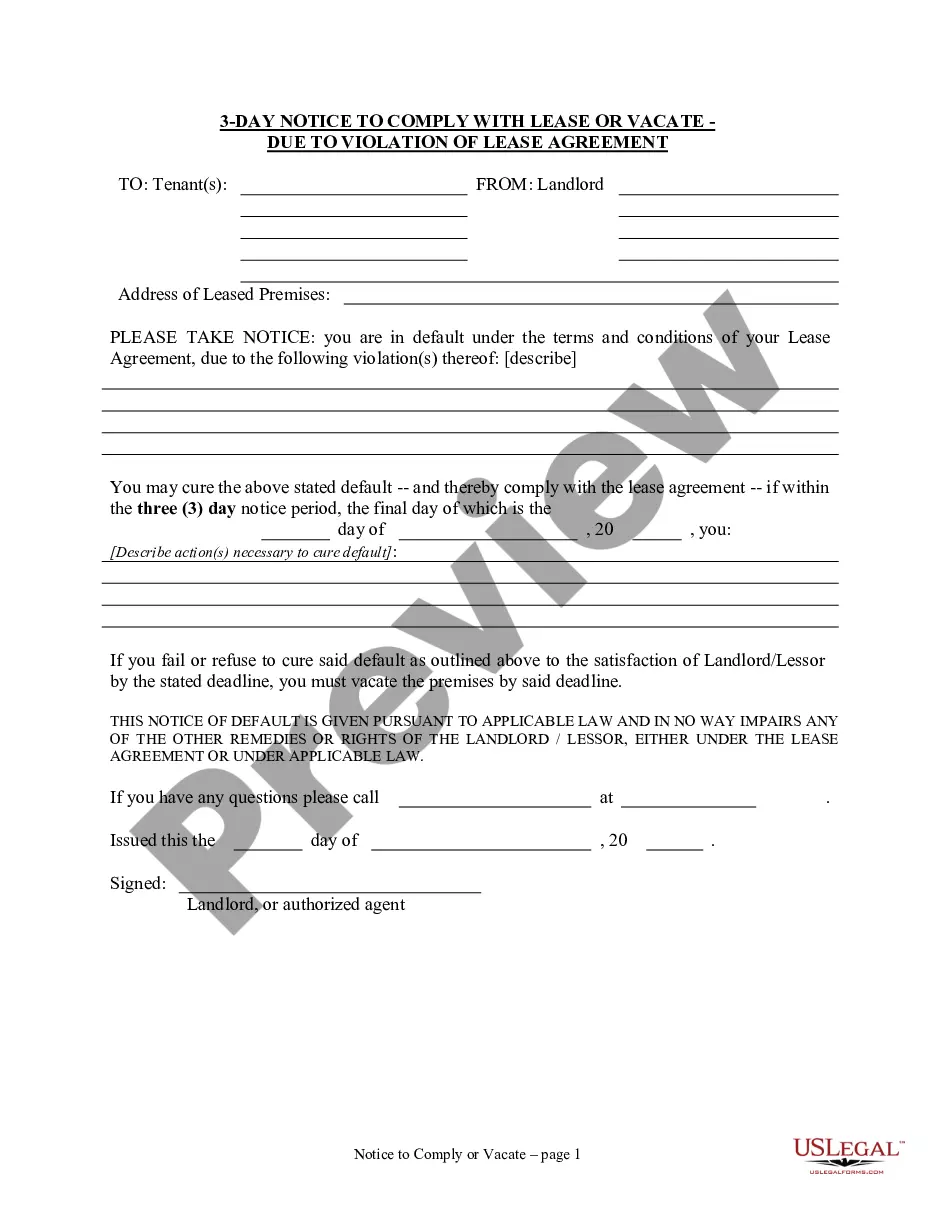
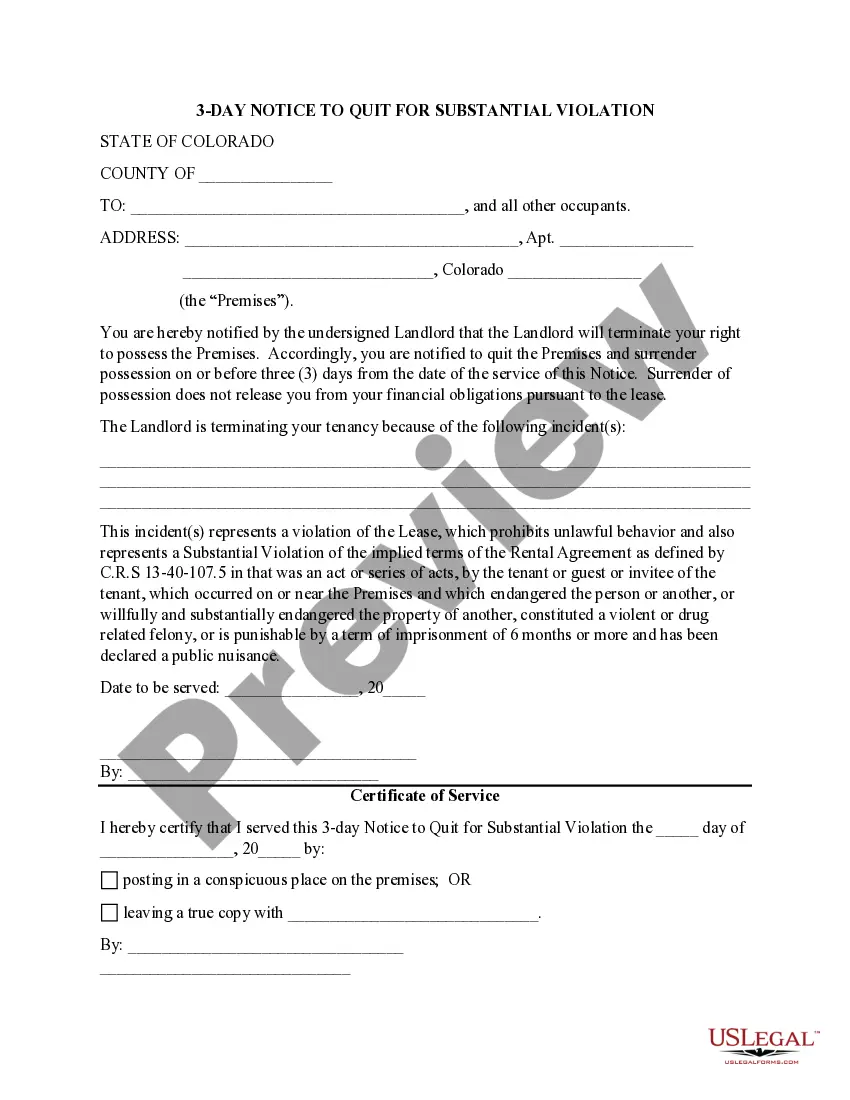
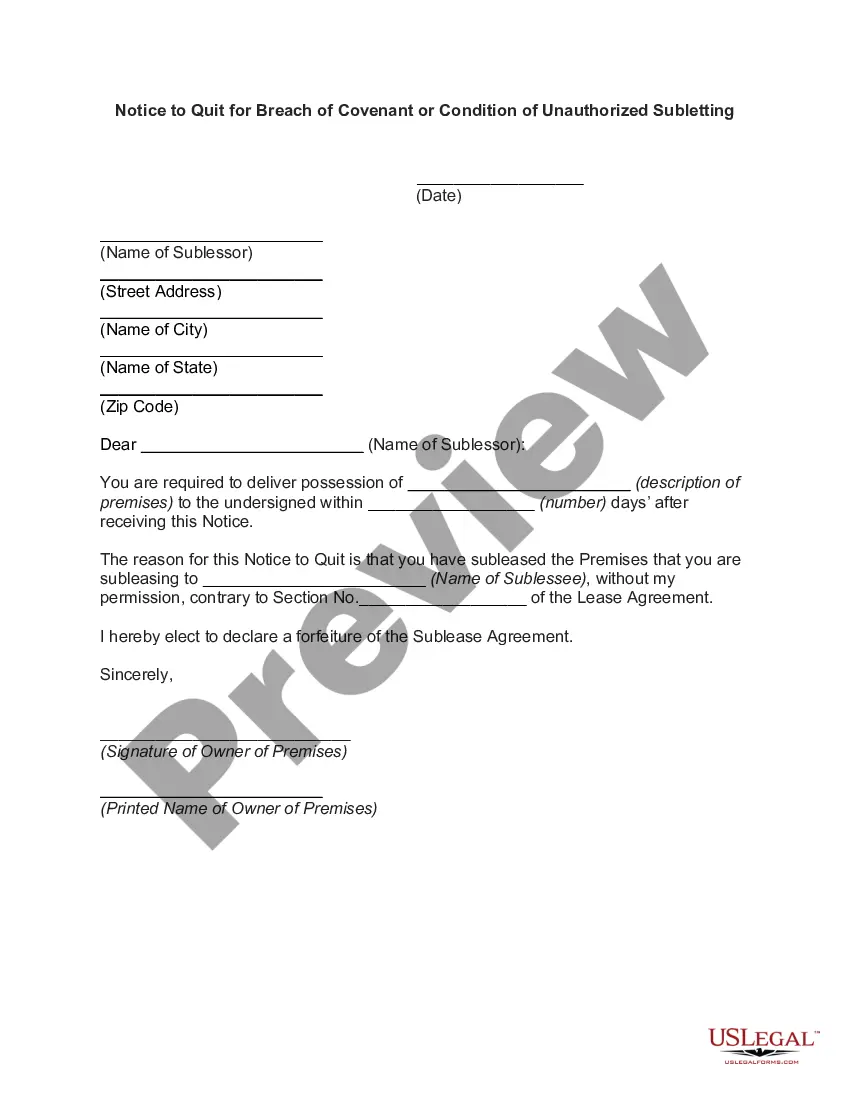
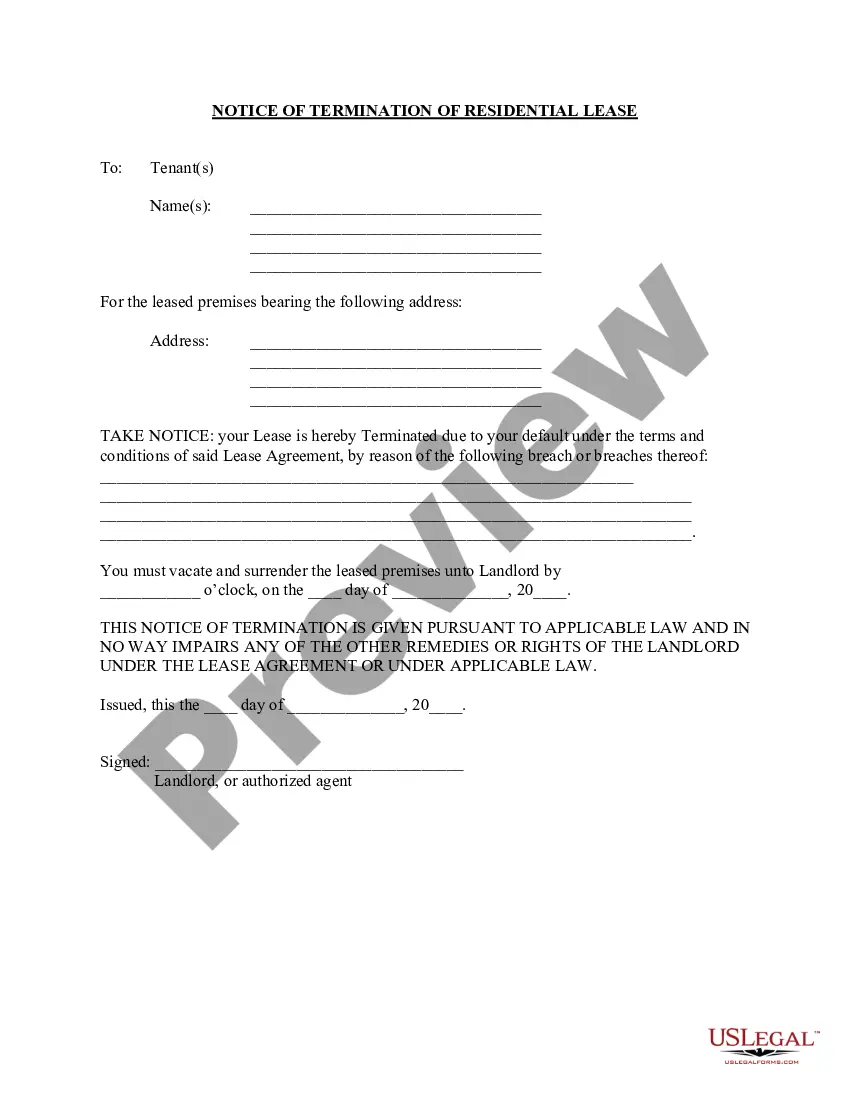
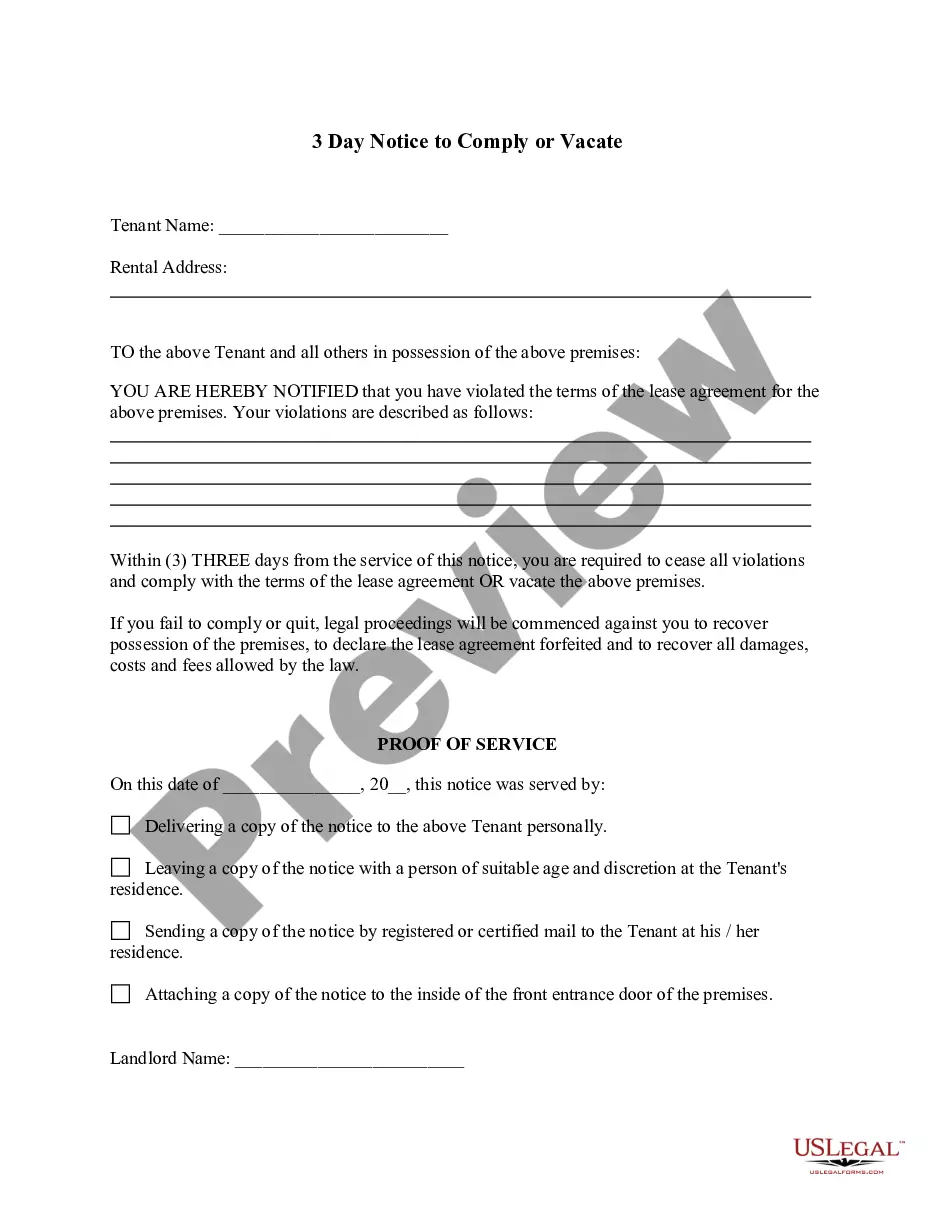
The 3 Day Notice of Substantial Violation of Lease or Rental Agreement - Residential is a legal document that a landlord uses when a tenant breaches the rental agreement, aside from failure to pay rent. This form notifies the tenant of the specific violation and provides them with a three-day notice period to remedy the breach. If the tenant does not fix the issue within this timeframe, they must vacate the rental property by the end of the third day.
Key components of this form
- Identification of the tenant(s) and landlord.
- Address of the leased premises.
- Description of the violation(s) of the lease agreement.
- Details on how the tenant can remedy the violation.
- The deadline by which the tenant must vacate if the breach isn't resolved.
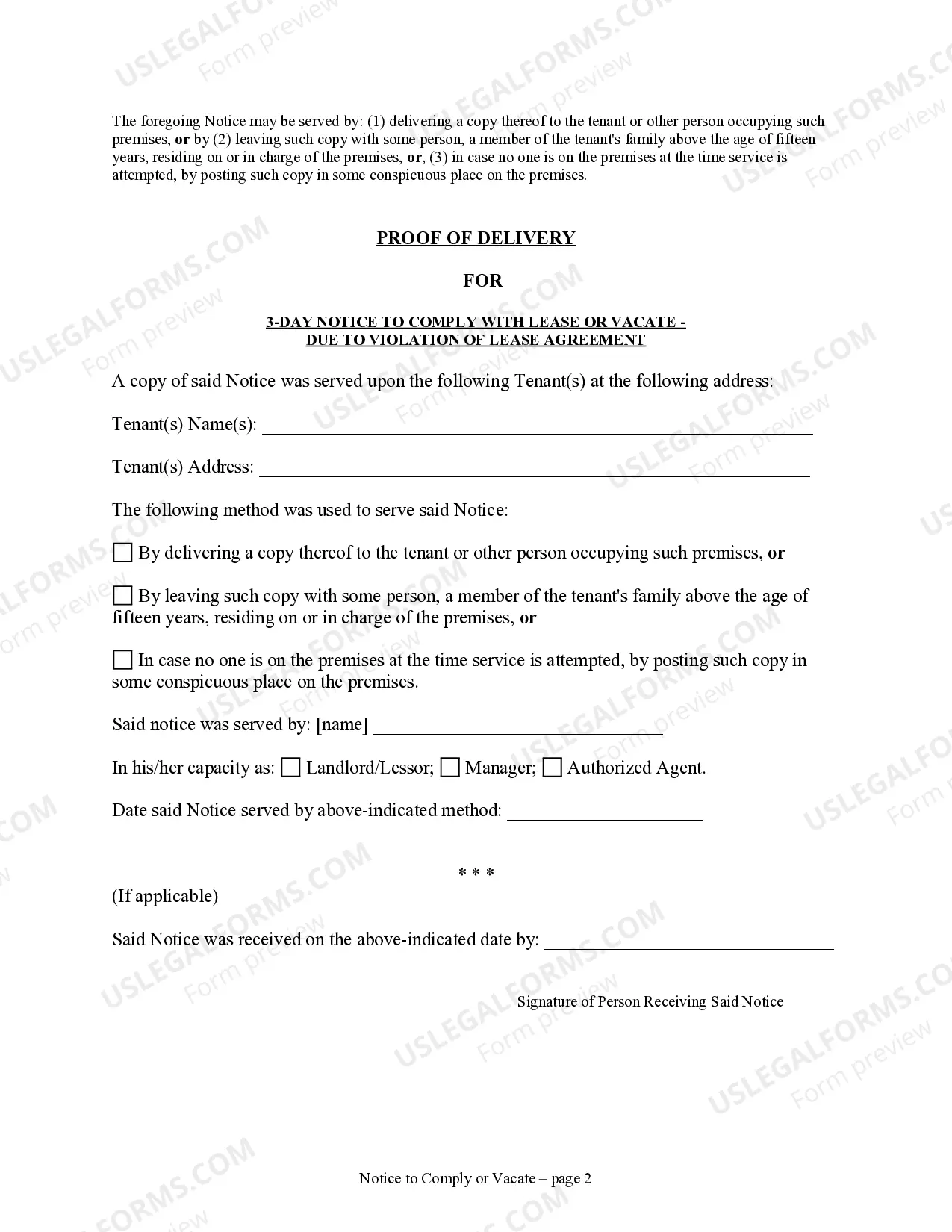
- Proof of delivery section to confirm the notice was served.

Common use cases
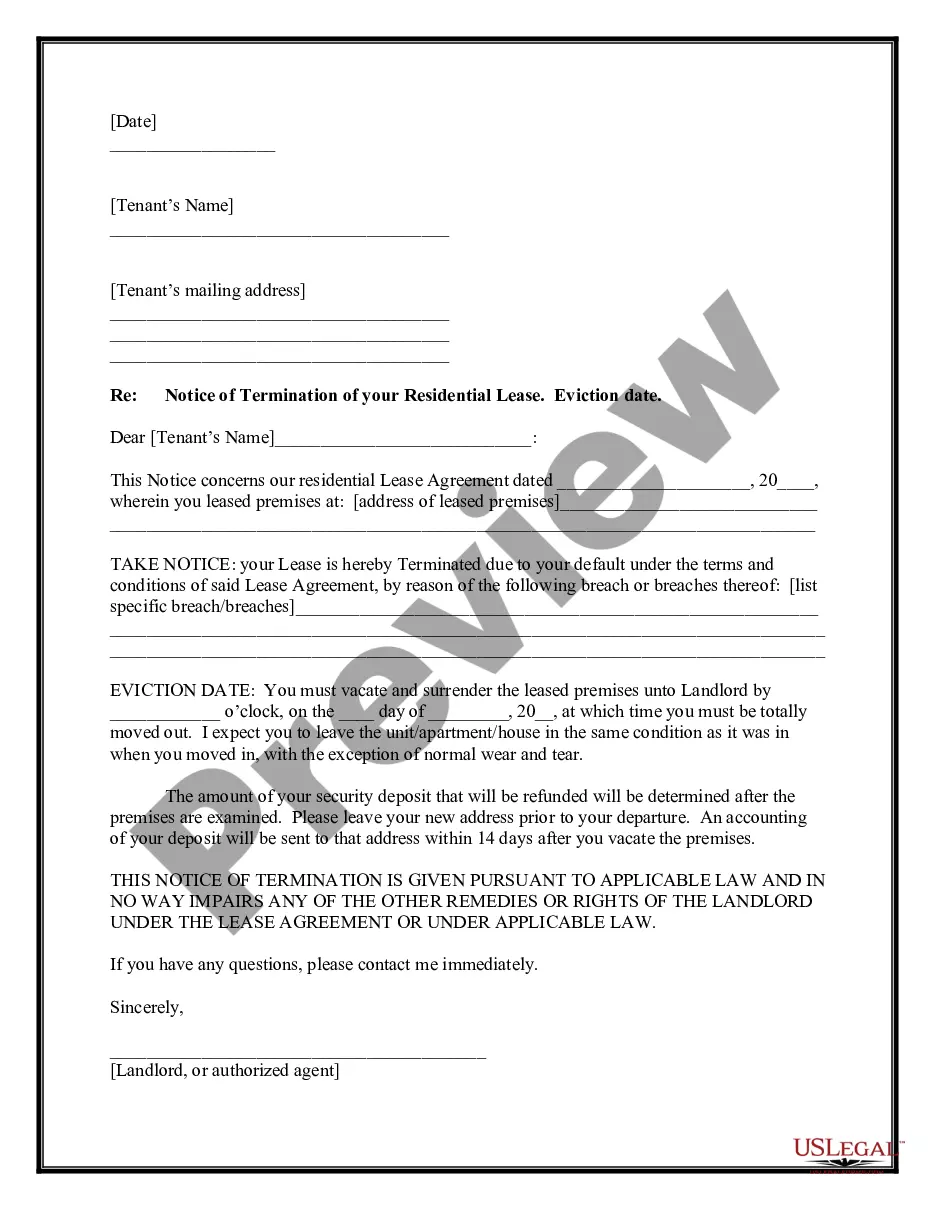
This form is necessary when a tenant fails to comply with specific terms of a lease agreement, leading to a substantial violation. Scenarios may include unauthorized alterations to the property, keeping pets contrary to the lease terms, or engaging in illegal activities on the premises. It serves as a formal notification to the tenant that they have a limited time to correct their actions or face eviction.
Who should use this form
- Landlords who lease residential properties.
- Property managers acting on behalf of landlords.
- Real estate professionals involved in rental agreements.
- Tenants who wish to understand violations cited by their landlord.
Instructions for completing this form
- Identify and enter the names of the tenant(s) and the landlord.
- Specify the address of the leased premises clearly.
- Describe the violation(s) in detail, ensuring clarity.
- State what actions the tenant must take to rectify the situation.
- Insert the date by which the tenant must cure the breach or leave the premises.
- Sign the form, providing the date of issuance and contact information if necessary.
Does this document require notarization?
This form usually doesn’t need to be notarized. However, local laws or specific transactions may require it. Our online notarization service, powered by Notarize, lets you complete it remotely through a secure video session, available 24/7.
Get your form ready online
Our built-in tools help you complete, sign, share, and store your documents in one place.
Make edits, fill in missing information, and update formatting in US Legal Forms—just like you would in MS Word.
Download a copy, print it, send it by email, or mail it via USPS—whatever works best for your next step.
Sign and collect signatures with our SignNow integration. Send to multiple recipients, set reminders, and more. Go Premium to unlock E-Sign.
If this form requires notarization, complete it online through a secure video call—no need to meet a notary in person or wait for an appointment.
We protect your documents and personal data by following strict security and privacy standards.

Make edits, fill in missing information, and update formatting in US Legal Forms—just like you would in MS Word.

Download a copy, print it, send it by email, or mail it via USPS—whatever works best for your next step.

Sign and collect signatures with our SignNow integration. Send to multiple recipients, set reminders, and more. Go Premium to unlock E-Sign.

If this form requires notarization, complete it online through a secure video call—no need to meet a notary in person or wait for an appointment.

We protect your documents and personal data by following strict security and privacy standards.
Typical mistakes to avoid
- Failing to provide a detailed description of the violation.
- Not specifying the correct deadline for compliance.
- Inaccurate identification of the involved parties.
- Neglecting to sign the notice or provide proof of delivery.
Benefits of using this form online
- Convenience of downloading and filling out the form at any time.
- Editability allows landlords to customize the notice to specific situations.
- Reliability of forms drafted by licensed attorneys.
- Instant access to the latest legal requirements and guidelines.
Legal use & context
- This form serves as a legally recognized method of notifying a tenant about lease violations.
- It is essential for landlords to follow proper legal procedures to ensure enforceability.
- Failure to use this notice correctly can lead to complications in eviction processes.
Main things to remember
- The 3 Day Notice is crucial for formalizing the breach of a lease agreement.
- Tenants are given a chance to remedy violations within a strict timeframe.
- Proper execution and delivery of this notice is essential for legal validity.
Looking for another form?
Form popularity
FAQ
In Colorado, a landlord typically must provide you with a written notice of at least 3 days if you are facing eviction for a substantial violation of your lease. This notice is known as the Colorado 3 Day Notice of Substantial Violation of Lease or Rental Agreement - Residential. It outlines the specific issues that need to be addressed. Being informed about these requirements can make the transition smoother for both landlords and tenants.
In Colorado, a landlord cannot legally evict you without a court order. The eviction process requires the landlord to provide a valid reason for eviction, often detailed in a Colorado 3 Day Notice of Substantial Violation of Lease or Rental Agreement - Residential. This notice gives you a chance to address the violation before the landlord can seek a court judgment for eviction. Understanding your rights can help you navigate this process more effectively.
To file an eviction answer in Colorado, first draft a response that addresses the eviction notice and outlines your defense. Make sure to include your personal information, the case number, and any supporting evidence. When referencing a Colorado 3 Day Notice of Substantial Violation of Lease or Rental Agreement - Residential, ensure that your response is timely and file it with the court, as well as serving a copy to the landlord.
Writing a lease violation notice involves clearly identifying the violation, such as late rent payments, damage to the property, or noise complaints. State the specific section of the lease that has been violated and provide a timeline for rectification. Utilize the Colorado 3 Day Notice of Substantial Violation of Lease or Rental Agreement - Residential format if the situation escalates, ensuring that the tenant understands the seriousness of the matter.
When writing a letter to your landlord about breaking the lease, express your intent clearly and professionally. Mention the reasons for your decision, and refer to any relevant clauses in the lease that may apply. Including a mention of the Colorado 3 Day Notice of Substantial Violation of Lease or Rental Agreement - Residential can strengthen your case if there are mitigating factors in your favor.
If your landlord violates the lease, document all incidents and communicate your concerns in writing. You can send a letter stating the specific violations, referencing the Colorado 3 Day Notice of Substantial Violation of Lease or Rental Agreement - Residential if applicable. If your landlord does not resolve the issues, you may need to consider legal action or local tenant's rights organizations for further assistance.
A breach of a lease agreement occurs when either the landlord or tenant fails to fulfill any terms or conditions outlined in the contract. Common violations include non-payment of rent, unauthorized alterations to the property, or disturbance of other tenants. Understanding what constitutes a breach is vital for both parties, especially in the context of a Colorado 3 Day Notice of Substantial Violation of Lease or Rental Agreement - Residential.
To write a warning letter for a tenant regarding a Colorado 3 Day Notice of Substantial Violation of Lease or Rental Agreement - Residential, start by clearly stating the date and the recipient's name. Outline the specific lease violation in detail, and include a timeline for compliance. Be professional and objective, ensuring that the letter serves as a formal notice and provides the tenant with an opportunity to rectify the issue.
Yes, under certain circumstances, a tenant can be evicted in 3 days in Colorado. This typically occurs when the tenant has significantly violated the lease terms, prompting a Colorado 3 Day Notice of Substantial Violation of Lease or Rental Agreement - Residential. Understanding the eviction process is crucial for tenants to protect their rights and respond appropriately.
Uninhabitable living situations may include severe plumbing issues, lack of heat, or significant pest infestations. Tenants in such conditions have the right to seek remedies, including ending the lease. Colorado law requires landlords to provide safe and livable housing. If a tenant faces these challenges, they should consider filing a complaint or utilizing legal resources, such as US Legal Forms.